Novella a Day in May 2022 No.21

Mr Fox – Barbara Comyns (1987) 175 pages

Having read Barbara Comyns recently for the 1954 Club, I was delighted to pick her up again for this reading project. How I loved Mr Fox – there is no-one with a voice quite like Barbara Comyns.

The novella opens with Caroline and her small daughter living in a flat with Mr Fox. They are not romantically involved, but the pragmatic Mr Fox suggests it would work as a financial arrangement. His work is sporadic, varied, and not always entirely legal:

“It wasn’t always holidays Mr. Fox was enjoying when he went away. Sometimes he went to prison, not for crime but because he didn’t pay his rates to the borough council. He thought it a pity to waste money on rates and preferred going to prison – it was Brixton he went to. He once suggested I went to prison instead of paying my rates, but I didn’t like the thought of being shut up and when I made a few enquiries about Holloway I heard it was perfectly beastly there and not to be compared to Brixton.”

I really enjoy Comyns’ characters which she somehow manages to make guileless yet never fey. They are survivors but never in a remotely aggressive or self-pitying way.

Caroline’s husband has left and she’s not sorry. She is caring for her small daughter Jenny and worried about money. Mr Fox is a savvy and useful friend, but can also be moody and unreasonable.

“I hoped Mr. Fox didn’t think I’d runaway and left Jenny on his hands; he might even put her in an orphanage and it would take months to get her out again.”

This is the end of the 1930s, and so we know times are going to get much more difficult for these London-dwellers. Comyns captures the bombing in her own inimitable way:

“So I had to spend the day wandering about without any shoes. I passed some of the time filling sandbags in the street; heaps of people were doing it and it seemed a fashionable thing to do.”

Of course, the war brought opportunities for people like Mr Fox, and essentially he is a spiv. Caroline seems both aware and entirely unaware of what Mr Fox is up to, and helps him in the unlikely trade of second-hand pianos. After a time in the suburbs which makes them miserable, they return to the city:

“I began to enjoy an almost empty London. Shopping became almost a pleasure and sometimes we would go to the theatre and there would be hardly anyone there; and it was the same in restaurants. Often in the evening we would take the dogs for a walk in Hyde Park and it would be deserted and lovely. Once when we were walking home a flying bomb stopped right over our heads, and as we turned and ran in the opposite direction a great explosion came and then an enormous amount of dust. The dogs were more upset than we were.”

Comyns has such a unique and unlikely view on things I’ve no idea how typical the experiences in Mr Fox are, but I understand it was based on her real-life situation during that time. She doesn’t shy away from the difficulties of life but presents them in such a surprising way I’m often astonished rather than saddened. Mr Fox was still an emotionally affecting novel though, and such an entertaining one. I was sorry to reach the end.

“Perhaps it was just as well to get the sad part of my life over at one go and have all the good things to look forward to.

Novella a Day in May 2022 No.20

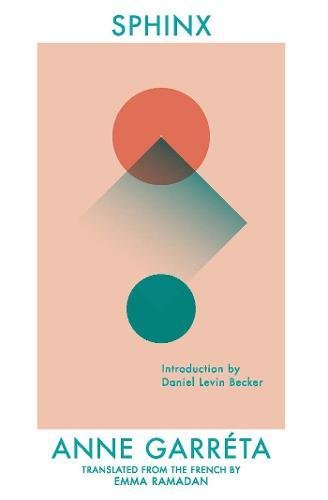
Sphinx – Anne Garréta (2015, trans.Emma Ramadan 2015) 121 pages

Sphinx is a novella which details a young protagonist falling in love with A***. Anne Garréta is a member of the OuLiPo and the particular constraint that she writes to in Sphinx is for both for lover and beloved to be genderless.

The narrator is taken to a club on Place Pigalle where they immediately fall for the charms of the dancer A***. Garréta evokes a seedy and glamorous nightlife that is both enticing and repellent:

“The wheezing of the ceiling fan, the rumble from the nearby stage, the sight of the red velvet sofa covered in holes, burned through buy cigarettes, and the feeling of exile between blue walls defiled with the imprints of dirty hands, brought me all the closer to that single, splenetic feeling so difficult to define: melancholia. I relished it to the point of drunkenness.”

Sphinx is a love story which I felt engages the mind rather than the emotions of the reader. This is because the narrator – although currently working as a DJ – is an academic and seems to approach documenting affairs of the heart in the same way as they would writing a research paper.

“I can’t define A*** as being anything other than both frivolous and serious, residing in the subtle dimension of presence without insistence.”

This includes some overblown, tortured sentences at times:

“Is there anything more vertiginous than gustative reminiscence?”

In her fascinating translators note at the end of the novella, Emma Ramadan explains how the constraints around gender (which is much more demanding for a French writer than an English-language writer) means that this tone needs to be adopted, and then:

“It becomes part of the narrator’s identity – he or she is a rather pretentious bourgeois(e) scholar who does not shy away from praising his or her own intelligence”

So although not overt, there is a thread of humour running through Sphinx, whereby we are not supposed to take the narrator nearly as seriously as they take themselves. And it is a novella that is definitely all about the narrator, not about A***. While limiting the characterisation of A*** serves the constraints around which Sphinx is written, it also succeeds in capturing the self-obsession that can be projected onto a supposed loved one.

“Perhaps I had only ever delighted in my own suffering, which I considered the purification of passions that, deep down I judged as absurd.”

Although Sphinx made me think more than it made me feel, and generally I hope for a reading experience that does both, I did find myself drawn into the narrator’s story, in spite of their distancing voice. I also thought the night-time scene was captured beautifully.

“I was about to turn 23, and for the three years the night crowd had passed before my eyes, I had seen reputations be made and dismantled. I had seen temporary passions transport places and individuals to the apex, and then, burning what they had once adored, those notorious night owls who make up the club scene would abandon them for no apparent reason for other idols destined for glory just as brief.”

Novella a Day in May 2022 No.19

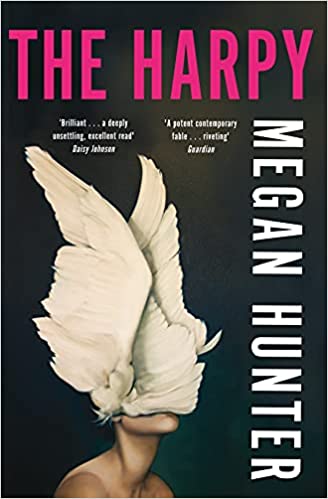
The Harpy – Megan Hunter (2020) 194 pages

I really enjoyed Megan Hunter’s The End We Start From when I read it for Novella a Day in May back in 2019. I have a bias towards novels written by poets, as I always assume they will be precise, with inventive imagery. This was certainly my experience with The Harpy.

Lucy lives with her husband Jake in a rented house with their two sons Paddy and Ted. She has a job to pay the bills, giving up her PhD to write technical information in layman’s language. She isn’t especially resentful of this and her main focus running the house and raising their boys.

“That afternoon he was being kind to his little brother, his gentleness a relief like a blessing. Ted so keen at every moment to stay in his good light, the almost mystical clearness of it, like sunshine at the bottom of a swimming pool.”

Then she finds out but her husband has been having an affair with his older married colleague. She remembers the woman, Vanessa, from a party.

“A raised eyebrow, plucked to a wisp, the tail of a tiny animal. I notice that I felt sick; I notice this as you would notice a book fallen from a shelf: impartially at a distance.”

Lucy’s anger at Jakes betrayal is felt on a deeply visceral level.

“Something became untethered inside me, as I had often feared it would, one organ seeming to break free from the rest, left to float, uprooted, around my body.”

Her fury is such that the two of them make an unorthodox arrangement: Lucy will be able to hurt Jake three times, without any warning in advance.

“There were no kisses, but there was something else, something that seemed better: a promise, a plan. A way to make things right.”

The affair and the plan for retribution cause Lucy to question everything. Her anger and her need to punish seem to surprise her, but at the same time it feels like a return to something essential, including her childhood obsession with the mythical harpy.

“I had become one of those women. The ones I’d read about, who have slipped away from the world, who exist on their own plane of scorn.”

The Harpy is a powerful exploration of women’s roles, choices and conditioning in contemporary society. It demonstrates how close domestic violence can be, how fragile family can be, and how easily the identities of those within can shatter.

Novella a Day in May 2022 No.18

Explorers of the New Century – Magnus Mills (2005) 184 pages

I remember really enjoying Magnus Mills’ debut novel The Restraint of Beasts when it was published to great acclaim at the end of the 1990s. I know I read some of his work after that, but then lost track. Explorers of the New Century reminded me of what I had enjoyed so much previously: the dry deadpan humour, the unnerving slightly surreal setting, the feeling that anything could happen, among a group of men brought together by work.

Much in Explorers of the New Century is left unexplained. As we follow two expeditions attempting to reach the “Agreed Furthest Point” first, we have no idea when or where this is. It is very reminiscent of the Antarctic explorations in the early 20th century; one group have resolutely English-sounding names, led by Johns who speaks in the most English of ways:

“Now it’s far too cold to stand here making speeches. I’ve no time for such flummery, so without further ado I think will make an immediate start.”

The other group have names that sound more Scandinavian, led by a man called Tostig. Mills is drawing on our knowledge of Scott and Amundsen but there’s nothing to suggest that this is alternative history, or taking place in any known geographical location.

“The sun was already part way through its slow crawl along the southern horizon. It appeared as a dull red orb offering little in the way of warmth, and providing light for only a few short hours.”

Initially the descriptions of the two expeditions seem fairly familiar, despite an unnerving, unknowable quality that Mills is so good at. The setting up of camp, the annoyances and friendly gestures shared by the men, the rationing and struggles with the terrain, are all reminiscent of imperialist exploration narratives.

“Johns is a true man of enterprise, but like other great explorers he is also fragrantly self-seeking. In his case, I’m afraid ambition has achieved the upper hand.”

However, just over halfway through the story features a significant twist, bringing the darkness of colonialism to the fore. This twist means I can’t say much more about the novella, but I greatly enjoyed reacquainting myself with Mills’ unique vision. Although Explorers of the New Century is a bleak tale, there is a lot of dry humour too.

“Suddenly Medleycott sat up and peered through the slit of the tent flaps.

‘It’s pitch blackout there now,’ he announced. ‘Yet what sights we’ve beheld since our journey began! Think of them! The leaden moon floating on a shimmering sea! Sunrise and sunset rolled together into one fiery hue! The burnished skies! The majestic beams spreading over the dip of the hill! Don’t they make a wonderful spectacle?’

‘Can’t say I’ve ever noticed,’ replied Sargent.”

Mills never allows the humour to let his characters off the hook though. Explorers of the New Century could be read as a fable, and like a fable it has a strong moral core. It isn’t heavy-handed in the telling, but remains challengingly elusive.

Novella a Day in May 2022 No.17

Don’t Look At Me Like That – Diana Athill (1967) 187 pages

I was aware of Diana Athill’s incredible career at Andre Deutsch but it wasn’t until Granta re-issued her only novel in 2019 that her fiction work was on my radar. I have a bias in favour of editors writing novels due to my love of William Maxwell, and Don’t Look at Me Like That is certainly an interesting exploration of character.

It opens with Meg Bailey, daughter of a clergyman, nearing the end of her school career in the 1950s. As she explains: “When I was at school I used to think that everyone disliked me, and it wasn’t far from true.”

Athill brilliantly captures the trials of adolescence and how the clever and pretty Meg is “aggressively self conscious”, convinced simultaneously of both her inferiority and superiority to everything around her.

It is a time on the brink of huge social change and the difference is between generations is coming into sharp relief. Meg’s parents lead an ordinary life, making the best of their privations.

“Rationing and austerity in general deprived my father of nothing he valued… And my mother who had suffered because of their poverty, hating the drab life they were compelled to lead, felt a release of tension when everyone’s life became equally drab.”

But Meg wants something more. Roxane is probably her only friend and seems to lead a much more glamorous life with her widowed mother, Mrs Weaver. At first entranced by Roxane’s mother, Meg later sees beyond the façade, when she lives with them while studying art.

“There was something feverish in the energy she devoted to her play-acting, and without understanding what longings drove her to it I could feel their uncomfortable presence.”

Mrs Weaver is a brilliant piece of characterisation, a beguiling and somewhat menacing mix of vulnerability and pretention.

Things change when Roxanne marries the man her mother wants her to, family friend Dick. Athill portrays the shifting sexual mores in this time before the 1960s sexual revolution so well. While there is sex before marriage for some, there is still a great deal of naivety, and limited awareness that women are entitled to sexual pleasure. As such, Roxane does not have the best start to married life.

“Roxane had accepted something which I had never before thought of: that life could be as it ought not to be, and that one still had to live it.”

Meg meanwhile begins carving out a successful career in London and starts seeing Dick without Roxane.

“Without knowing it, I had learned what Dick was really like, and he was like me.”

Inevitably they begin an affair. Athill’s subtle writing means that while neither Meg nor Dick are particularly likeable, they are very believable. They are both selfish and weak but also young, naive and a bit lost.

We see the rest of their affair play out within the setting of Meg’s 1950s bedsit London life, and Dick and Roxane’s suburban family life.

“There was no change in my feelings for Roxanne: she was still the girl I knew best and whom I loved for her innocence, affection, and vulnerability. And there was no doubt in my mind about me: I was betraying her. These two facts simply coexisted, without seeming to affect each other. I was appalled by myself, but of course I could meet her.”

Don’t Look at Me Like That is so evocative of a particular time and place. I thought the characterisation was complex but done with a light touch. While I didn’t particularly care for any of the characters in the love triangle, I found myself very affected by Meg’s kind and bewildered parents. The following passage broke my heart:

“When my father got a book on abstract painting out of the library so that he could talk to me about modern art I was so embarrassed that I let some milk boil over on purpose to end the conversation.”

A very readable novella that is brave enough to show its characters with all their flaws and without judging them harshly.

Novella a Day in May 2022 No.16

Frangipani House – Beryl Gilroy (1986) 109 pages

Frangipani House tells the story of the indomitable Mama King in her twilight years, and her rebellion against the titular nursing home:

“The occupants of Frangipani House were a lucky few – lucky to escape the constipated, self-seeking care which large, poor families invariably provide. After much heart-searching, children who have prospered abroad and bought what was considered superior care for their parents, when distance intervened between anguished concern and the day-to-day expression of that concern.”

Set in Guyana, it is also one more stop on my Around the World in 80 Books reading challenge.

Mama King’s family place her in the care of nursing home under the deeply unlikable matron Olga Trask. Mama King has the measure of Olga and doesn’t cut her any slack.

“Since I come here I look but all I see is what passed and gone. You have now, all I have is long ago. Go and count you money. It got old people blood on it!”

The total disregard of anything beyond the inhabitants’ basic needs by the home means that unsurprisingly Mama King deteriorates significantly. She starts asking for her husband Danny, who disappeared several decades earlier.

“As she had done many years before she once again wrapped their secret tightly round herself. That way it gave her comfort in bed each night, and sustained her wherever she went each day.”

It is only when her old friend Miss Ginchi visits her that we learn the truth of Danny’s abuse of Mama King.

Mama King was highly respected in her community as a hard worker and a kind person. Her friends and family are distressed to see her deterioration and disorientation away from her own home, but no one has any plans change the situation.

Mama King escapes from Frangipani House and is taken into the care of a group of homeless people. Although life is hard, Mama King thrives:

“They was kind. They was good – sharing, protecting – giving me respect and friendship. They have little but they give a lot. They give me back my senses because they treat me like I was somebody. Their heart shine out to me like clean clear glass.”

Frangipani House is a plea for kindness alongside sensitive care of older members of society. It highlights the dangers of disregarding the human dignity of individuals. Yet it never comes across as preachy, or pushes its themes at the cost of its characters.

I’ve not read Beryl Gilroy before but on the basis of this novella I definitely plan to again. Frangipani House was told with such energy and lightness of touch. I’ll be really interested to see what else Beryl Gilroy wrote – I know that it includes an autobiography of her extraordinary life.

Novella a Day in May 2022 No.15

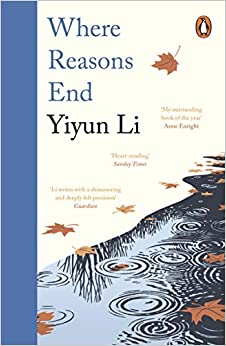
Where Reasons End – Yiyun Li (2019) 170 pages

Trigger warning: mentions suicide

Where Reasons End is a novella without a driving plot. It is written from the point of view of a grieving mother in dialogue with her dead son.

“I was a generic parent grieving a generic child lost to an inexplicable tragedy.”

The mother is a writer and is trying to make sense of what has happened in the only way she knows how.

“It was not a world of gods or spirits. And it was not a world dreamed up by me; even my dreams were mundane and landlocked in reality. It was a world made up by words, and words only. No images, no sounds.”

She does this with the full knowledge that she will never make sense of such an immense tragedy. Her son Nikolai died by suicide aged 16. In the space they occupy together on the page he is just as argumentative and contrary as any other teenager. It’s hard to know if Nikolai’s attitude is the mother/writer trying to convey how her son was in life, or if his harsh judgements are in fact the judgments and anger she feels towards herself.

“Since when have you become an avid consumer of inane analogies and inept metaphors? Nikolai said.”

As the title suggests, Where Reasons End does not aim for facile conclusions. There’s no way to reason out something so horrific that it is beyond all reason. This means that Nikolai is not a fully rounded character. We know certain facts of his life and we get a sense of who he may have been, but Li does not allow us the easy escape of trying to piece together why he would do such a thing. He remains out of reach to the reader in a reflection of how he was and is out of reach to those who love him.

“You cannot demand that everyone be perfect.

I can forgive everyone, he said, for being imperfect.

But not yourself.

I tried, Mommy, I did try.”

if I’ve made Where Reasons End sound a very heavy read I’ve done it an injustice. It concerns an immensely painful subject but there is humour in it too, such as the mother/child arguments between an exhausted parent and a petulant teenager. Nikolai’s unhappy that his mother has bought a real Christmas tree the first festive season after he died:

“Whatever, he said.

Oh, judgemental as ever, I protested in my thought. And unforgiving. And unyielding.

Yieldingly and forgivingly I inquire, he said, Did you decorate it?”

This is not the novella to read when you want a plot-driven story. But it is a sensitive and painfully real exploration of grief. Very sadly, from the in memoriam dedication at the start of the book, I believe that it is also drawn from real life experience.

“There is no good language when it comes to the unspeakable, I thought. There is no precision, no originality, no perfection.”

Novella a Day in May 2022 No.14

Madame Verona Comes Down the Hill – Dimitri Verhulst (2006 trans. David Colmer 2009) 145 pages

Madame Verona Comes Down the Hill has been on my radar since Kate’s review four years ago – I’m slow but I get there in the end, hopefully 😉

It’s a fable, but a recognisably real one. The titular beauty lives with her husband “in a house that could have been lifted from a biscuit tin” on top of a hill on the outskirts of the remote town of Oucwègne, where there has only been one female baby in recent generations.

When her husband dies, the townsfolk – including the vet who doubles as the town doctor, the man who pays his local shop tab in full after decades, overseen by a cow who is mayor – expect Madame Verona to leave. Instead she stays, mourning her husband, waiting out her time and growing old with her memories.

“the trees had their rings; Madame Verona did not begrudge her skin its wrinkles, the signature of all her days.”

Until one snowy day, she burns the last of the logs her husband cut for her and descends the hill into the town, knowing she will not have the strength to return.

“She is counting on strength of will to die today”

Madame Verona Comes Down the Hill has its share of whimsy but it also has a spikiness to it and it isn’t remotely sentimental. It’s about the different ways we live alongside grief, and how a life with a lot of sadness does not mean a life of misery.

“The one characteristic element with which she would summarise her eighty-two years of existence was that dogs had always sought out her company.”

“What goes on in the twisted, tortuous minds of women would baffle anyone.” (Daphne du Maurier, Rebecca)

This week is Daphne du Maurier Reading Week, hosted by Ali who shares a birthday with the author today. It’s always a wonderful event so do check out the posts!

I’m a bit consumed with Novella a Day in May at the moment, but Ali said you can participate in DDMReadingWeek with a short story, which was very tempting. I was so impressed when I read the NYRB Classics short story collection Don’t Look Now for DDMReadingWeek back in 2019, and I have the Virago collection The Breaking Point in my TBR (luckily they only have one story in common, The Blue Lenses). The Alibi is the first story in the Virago collection.

The story opens with James Fenton and his wife Edna taking their usual Sunday stroll along Albert Embankment. A picture of middle-class contentment, but you know that this being du Maurier, anything remotely safe and familiar is about to be undermined.

And it is. Passing a nanny “pushing a pram containing identical twins with round faces like Dutch cheeses”, his wife mentions arranging dinner with their friends, and among all this domesticity Fenton suddenly feels entirely disassociated. He could kill someone.

“‘They don’t know,’ he thought, ‘those people inside, how one gesture of mine, now, at this minute, might alter their world. A knock on the door, and someone answers – a woman yawning, an old man in carpet slippers, a child sent by its parents in irritation; and according to what I will, what I decide, their whole future will be decided. Faces smashed in. Sudden murder. Theft. Fire.’ It was as simple as that.”

He decides he will murder someone entirely at random. In order to undertake his nefarious plan, he takes a room in a seedy flat, sublet by Madame Kaufman, a woman worn down by life, living with her small son Johnnie.

To justify his taking of the room he claims to be a painter, and goes as far as buying canvases and oils. At this point, his plan starts to go awry…

Everything that I love about du Maurier was in this story. The creepily destabilising of the familiar; the resolute ordinariness of evil; the sense that anything could happen and that whatever it is would be horribly believable. There was also some humour in the portrayal of the deeply unpleasant James Fenton:

“If there was one thing he could not stand it was a woman who argued, a woman who was self-assertive, a woman who nagged, a woman who stood upon her rights. Because of course they were not made for that. They were intended by their Creator to be pliable, and accommodating, and gentle, and meek. The trouble was that they were so seldom like that in reality.”

The end of the story completely reframed all that had gone before – du Maurier is certainly a writer that keeps her readers on their toes.

I’m really looking forward to finishing the collection once I’ve stopped consuming novellas at quite such a rapid rate. Many thanks Ali, for hosting this wonderful event, and a very happy birthday to you!

Novella a Day in May 2022 No.13

Love – Hanne Ørstavik (1997, trans. Martin Aitken, 2018) 136 pages

It’s been six years since I read Hanne Ørstavik’s powerful novella The Blue Room and I had high expectations when I picked up Love from one of my favourite publishers AndOtherStories.

Like The Blue Room, Love features a dysfunctional parent/child relationship, although not one as determinedly destructive as Johanne and her mother in The Blue Room. Whereas that was suffocating and controlling, Jon and his mother Vibeke are almost at the opposite extreme with a child at risk of neglect.

I don’t have kids but I would say that having your eight year-old son roam the snowy streets in northern Norway alone in the depths of the night with no gloves on, while you prevaricate over whether to sleep with a man who picked you up at a funfair, is probably not the best parenting style…

Jon is waiting for his mother Vibeke to return from work. Tomorrow is his birthday and he believes she is going to bake him a cake.

“And then she comes, and he recognises the sound in an instant; he hears it with his tummy, it’s my tummy that remembers the sound, not me, he thinks to himself.”

Although in the same house and having dinner together, they’re not overly communicative. Vibeke has a shower and makes herself look good should she bump into her attractive work colleague in town. Jon leaves the house, returns again, then leaves again, with Vibeke only vaguely conscious of his whereabouts.

The town is far north and it has been snowing. Jon wanders the dark streets:

“Sounds become weightless in the cold. Everything does. As if he were a bubble of air himself, ready at any moment to float into the sky and vanish into the firmament.”

Meanwhile Vibeke has found the library closed, so she wanders round the newly arrived fairground. An attractive fairground worker picks her up and takes her back to his caravan.

“She feels like they share something now. It feels like pushing a boat from the shore, the moment the boat comes free of the sand and floats, floats on the water.”

We know Vibeke had Jon when she was young and that it has been the two of them for a while. However, Vibeke seems pretty oblivious not only to the safety of her son but to the feelings and motivations of other people. Despite being attracted to one another, the situation between Vibeke and the man never really takes off. She keeps holding back because she thinks that talking too much has hampered previous relationships.

“My mistake is to think too much when I talk, it slows everything down, repartee just isn’t there for me.”

However, there comes a point where you do actually have to communicate in some way. When they go to a bar and he chats to the barmaid, then disappears back inside leaving Vibeke in the car outside, she thinks:

“Maybe he’s working on keeping a hold on himself, and the control he thereby achieves is something he needs to cling to.”

Um, no. He’s just lost interest and moved onto the next pretty and more available girl.

Meanwhile Jon has spent some time with a schoolfriend (whose parents are happy to have him leave and wander back home alone at midnight) and ends up getting into a stranger’s car, which at least offsets hypothermia for a while.

Although remarkably self-possessed and bright, Jon is clearly suffering from his mother’s lack of care. He is trying to stop himself blinking and people comment it.

“He wishes no one noticed and that what was wrong with him was under his clothes or inside him.”

Throughout, he clings to the idea that Vibeke is at home baking him a birthday cake which I found completely heart-breaking.

The narrative of Love alternates between Vibeke and Jon almost paragraph by paragraph. This isn’t nearly as confusing as it sounds, it works well as the two of them have evenings that echo and reflect each other in surprising ways. They also both put themselves in risky situations and the story is tense and very believable. It’s a novella that creeps under your skin and stays there.

“She wishes she could read all the time, sitting in bed with the duvet pulled up, with coffee, lots of cigarettes and a warm nightdress on.”