After a slightly disappointing golden age mystery yesterday with When the Wind Blows, I’m back on track today with Still Waters by ECR Lorac. There’s a lot of love for this author in the blogosphere, and I’m delighted that the 1949 Club hosted by Simon and Kaggsy means that I have finally picked her up.
It opens with Caroline Bourne, an artist and writer, looking at a property in the Lake District to be closer to her cousin Kate Hoggett, and Kate’s husband Giles. These two made an appearance along with Lorac’s Inspector Macdonald in an earlier book, but I felt Still Waters worked fine as an entry Lorac novel. I just hope I forget the spoilers for The Theft of the Iron Dogs before I read it (I definitely will forget).
Caroline buys Broadgarth, a smallholding, and negotiates for adjoining woodland with a ruined cottage and a deep quarry pool. This is despite the auctioneer initially ignoring her bid, and although she elevates the price she’s immediately offered £100 more than she paid outside the auction. Already it seems something is afoot…
Yet Caroline is not so suspicious and starts planning her move and which land to work, which to let. Lorac clearly has a love of the Lakes and a knowledge of smallholding, and evokes her scenes beautifully, with just enough detail but not so much as to slow the story down.
The 1949 setting is apparent not only in the £2000 that it cost Caroline to buy all this property and land, but also in references to the post-war smuggling and contraband that is still thriving. Caroline’s cottage has been looted for timber, and people gift each other precious cigarettes. As Caroline teases the serious-minded Giles:
“I have been the instrument which prevented a possible black market malefactor settling in your midst, cornering your eggs and cockerels, bidding for your bacon, skimming your cream, poaching your trout and salmon…”
It’s chasing contraband that brings Inspector Macdonald from Scotland Yard back to Lunesdale. But he quickly finds himself bound up in another mystery. Caroline’s architect friend has been attacked by the quarry:
“He left the ruin and walked on to the quarry pool, and was surprised, as Caroline had been, by its size. It looked ominous, dark and dangerous, with its enclosing ridge of rock, the dripping trees, the rain-pocked water. Macdonald noted the treacherous slippery rocks, the steep fall from the ridge, the brambles and briars, the creak and whisper of swaying boughs and shivering leaves.”
And one of the local husbands is missing:
“Abandoned wives are quite numerous, and Giles knew it, but for a farmer in Lunesdale—or anywhere else for that matter—to leave his land and his cattle was absolutely unheard of. Everybody in the neighbourhood agreed on that point.”
Lorac gently ribs the sexism woven through so many attitudes, throughout the book. Caroline observes:
“I’m a single woman, and I’ve noticed that single women are regarded as less than the dust in these parts.”
Yet women in Still Waters are intelligent, capable, good farmers, witty… Lorac makes her point with the lightest touch.
“‘You are conservative to a degree which is inconsistent with both reason and experience, Giles,’ said Kate.
He smiled tolerantly, quite unoffended with his wife’s vigorous attack.”
There is plenty of humour in the novel, yet any violence is treated with utmost seriousness.
The mystery is well-paced with a believable denouement, and I whizzed through this in an enjoyable afternoon. My high expectations were fully met and I’m looking forward to reading more Lorac soon.
I really loved An English Murder by Cyril Hare when I read it the Christmas before last, so I was excited to pick up his novel When the Wind Blows for the 1949 Club this week, hosted by Kaggsy and Simon.
The story opens with barrister Francis Pettigrew in a self-congratulatory mood, having married a younger, affluent woman. But his music-loving wife Eleanor is no doting push-over:
“Pettigrew had, of course, taken a ticket for the concert; but it was not until the morning of the event that he learned that he was expected to attend the rehearsal as well. Eleanor broke the news to him at breakfast, while they were discussing the arrangements for the day.
“Mr. Dixon asked me at the party yesterday whether you could come,” she remarked. “You were busy talking to someone else at the time, but I told him that you would be delighted.”
“I wonder how you guessed,” said Pettigrew thoughtfully.
“Honestly,” Eleanor persisted, “it will be quite amusing, and I know you haven’t anything else to do.”
“To answer your second allegation first, I had promised myself a delightful day with the current Law Quarterly Review. There’s an article in it entitled ‘Prolegomena to Pufendorf’ that simply cries out to be read.”
Eleanor’s brilliant blue eyes expressed the liveliest sympathy.
“Do take the Quarterly with you to the rehearsal then, darling,” she said. “You needn’t listen if you don’t want to. Shall I fetch it for you? I think it’s still where you put it last month to prop up the leg of your dressing table.””
Eleanor is part of the local orchestral society and somehow Pettigrew has been drawn in too, with all their internal politics and tensions. There’s a brilliant scene of one of their meetings whereby the reader is introduced to the main characters: Mrs Bassett, obsessed with Debretts and, for reasons no-one really understands, also fairly fixated on the conductor Mr Evans; Mr Dixon whose wife is expecting their first baby, just as his inheritance comes in for a large estate; and Mr Ventry, a cad and a bounder.
At a party to welcome the guest of honour for the upcoming concert – violinist Lucy Carless and her husband – tensions run high. New first clarinettist Tadeuz Zbartorowski knew her before in a tangled history, and she also used to be married to Mr Dixon. Pettigrew is frustrated:
“He felt that he had been pitchforked into a business which he did not in the least understand and about which he really cared nothing, merely through yielding to a fatal impulse of good nature. Why had he ever allowed himself to be connected with the confounded Orchestral Society? Why had he consented to come to the rehearsal, instead of staying quietly at home, reading the Prolegomena to Pufendorf? He was feeling distinctly allergic to clarinets, and didn’t care two hoots whether Mendelssohn’s violin concerto was played with one of them or two, or none. What was more, he was morally certain that nobody in the audience would notice the difference.”
It doesn’t take much guesswork to decide that Lucy Carless’ days are numbered, and she’s found strangled with a silk stocking in her dressing room. Enter Inspector Trimble and Sargeant Tate…
It’s here that I started to enjoy When the Wind Blows less. The set-up is great, the characters well-established, and there’s plenty of humour. Hare was a judge, and very knowledgeable about music, and this shows too. The difficulty is, Pettigrew is his detective and he more or less disappears.
While Inspector Trimble stumbles, Chief Constable MacWilliam brings in Pettigrew, reputation established from previous crime-solving (this is Pettigrew’s third appearance, but I didn’t feel a lack of having not read the others.) We’re told that Pettigrew pretty quickly has the whole thing sewn up, but the explanation happens in a conversation the reader isn’t privy to. To work out motive and means, the reader needs to know mid-twentieth century law, David Copperfield, and the orchestral arrangement of Mendelssohn. I managed one out of three 😀
It’s a bit odd and unsatisfying but there’s still plenty to enjoy and I definitely wouldn’t want to put anyone off (there are plenty of enthusiastic reviews on Goodreads). The characters, readable style and humour carry it through. I particularly enjoyed a cameo appearance by Jenkinson, the clarinettist who was supposed to fill in but was sent on a wild goose chase to a neighbouring village and is distinctly unhappy about it:
“”To add insult to injury, the fellow suggested that I should, as he put it, ‘join the boys’ and take part in, and even add to, the hideous riot of cacophony which had by then broken out in another part of the building. After disabusing him of this idea, which was not easy, I set about looking for a conveyance to bring me here. There appeared to be no cars to be obtained in Didford Parva, and I was eventually reduced to waiting in a queue … for the local omnibus, which finally brought me to the door of this police-infested place. That is my story, sir, and if its recital has been as valuable as its experience was distressing, it should rank as the most important piece of evidence ever recorded. Have I your leave to go?””
So, a wee bit disappointing after the heights of An English Murder which is probably my favourite GA mystery so far. But I still enjoyed this and I’d be interested to read more Hare and meet Pettigrew again.
To end, for people around my age, When the Wind Blows will always mean one of the most harrowing viewing experiences of childhood:
This is my second post for the 1949 Club hosted by Simon and Kaggsy and I’m continuing with a theme of sinister men…
Not so long ago I read Miss Pym Disposes by Josephine Tey and now I’m returning to her once again for Brat Farrar. I’m beginning to realise that Tey doesn’t seem to do traditional golden age mysteries! In Brat Farrar we know that the titular character is pretending to be the heir to a family fortune. So the mystery isn’t whether he is Patrick Ashby, missing since age 13 after the death of his parents, but rather, will he get away with it? And as readers, do we want him to?
Aunt Bee raised Patrick’s twin Simon, their sisters Eleanor and twins Ruth and Jane, after their parents died in a plane crash. At the start of the book she is reflecting on Simon about to come of age and inherit:
“But always there had been an Ashby at Latchetts; and they had done well by the land. Here and there came a ne’er-do-well—like her cousin Walter—but Providence had seen to it that the worthless quality had been confined to younger sons, who could practise their waywardness on subjects remote from Latchetts.
No queens had come to Latchetts to dine; no cavaliers to hide. For three hundred years it had stood in its meadows very much as it stood now; a yeoman’s dwelling. And for nearly two of those three hundred years Ashbys had lived in it.”
She also considers the difference between Simon and his – presumed dead – brother.
“All she really remembered, now she thought about it, was that he was solemn and kind.
Kindness was not a common trait in small boys.
Simon had a careless generosity when it did not cost him inconvenience; but Patrick had had that inner kindness that not only gives but gives up.”
It’s eight years since Patrick vanished; struggling actor Alec Loding knows the family and thinks he has found a way to make some money. I really enjoyed how Tey introduced this reprehensible character:
“He had a pink, collapsed face that reminded one of the underside of fresh mushrooms. The flesh hung away from his good Ledingham bones with a discouraged slackness, and the incipient pouches under his eyes detracted from their undoubted intelligence. Managers who had once cast him for gay young rakes now offered him nothing but discredited roués.”
He has spotted Brat Farrar’s resemblance to Simon, and therefore Patrick, and has offered to coach him in return for a regular salary once Brat inherits. Brat isn’t sure, but he is struggling to find the work he wants. This is an interesting choice for the 1949 Club, because Brat’s circumstances are directly informed by the post-war situation:
“It seemed that there were far more people interested in stable jobs in England than stables to accommodate them. The horse world contracted as the horse lovers expanded. All those men who had lost their main interest in living when the cavalry was put down were still hale and active, and besieged stable entrances at the mere whiff of a vacancy.”
Tey loved horse racing, and there is a lot about it in this novel. I hate it, so I must admit I skipped these passages. But even if you don’t mind racing, you may want to skim – I think her editor should have been more assertive!
Brat heads to the country pile and manages to convince most people most of the time that he is Patrick. He’s helped by the ambiguity of Patrick’s note: “I’m sorry, but I can’t bear it any longer. Don’t be angry with me. Patrick.” and the fact that similarly to Patrick, he is a lot more likeable than Simon. People want him to be Patrick.
“He had an odd feeling of identity with Patrick.
Even he himself noticed this, and found it strange. He should have been filled with guilt when he considered Patrick. But his only emotion was one of partisanship; almost of alliance.”
He also doesn’t overly struggle with guilt as he takes a strong dislike to his supposed twin:
“It was because there was something about Simon Ashby that repelled him. There was something unaccountable about Simon. There he sat, being light-hearted and charming, and there sat his relations and friends silently applauding his nobility and his courage. They were applauding an “act,” but they would all be staggered to know what an act Simon was really putting on for their benefit.”
And so ultimately, Tey is exploring the moral challenges that Val McDermid mentioned in her discussion of Miss Pym Disposes. Brat Farrar is pleasant, responsible and would make a good heir to run the estate. Simon is none of those things. But he is the rightful heir, and Brat Farrar is a con man who is using an intensely painful experience in a family to his own advantage. Tey positions the reader in a way that we question what we want the outcome to be, and why.
There’s also some nice gentle humour to enjoy, lightening what is essentially quite a dark tale. My favourite characters were stubborn, scruffy, horse-obsessed little Jane, and the bookish, seemingly naïve Rector, who made a surprise marriage to a beautiful debutante, and is more worldly than people give him credit for:
“”I know,” Nancy said, agreeing. “Like walking on jelly.”
“I was going to say picking one’s way over a bog, but I think the jelly is a better description.”
“Or one of those uneven floors at fun fairs,” the Rector said unexpectedly, as Bee took her leave.
“How do you know about fun fairs, George?” his wife asked.
“They had one at the Westover Carnival a year or two ago, I seem to remember. A most interesting study in masochism.”
“You see now why I have stuck to George,” Nancy said, as she walked with Bee to the garden gate. “After thirteen years I am still finding out things about him. I wouldn’t have believed that he even knew what a fun fair was. Can you picture George lost in contemplation of the Giant Racer?””
Brat Farrar was adapted as Paranoiac in 1963 by Hammer films. From this trailer I would say it’s a very loose adaptation indeed 😀
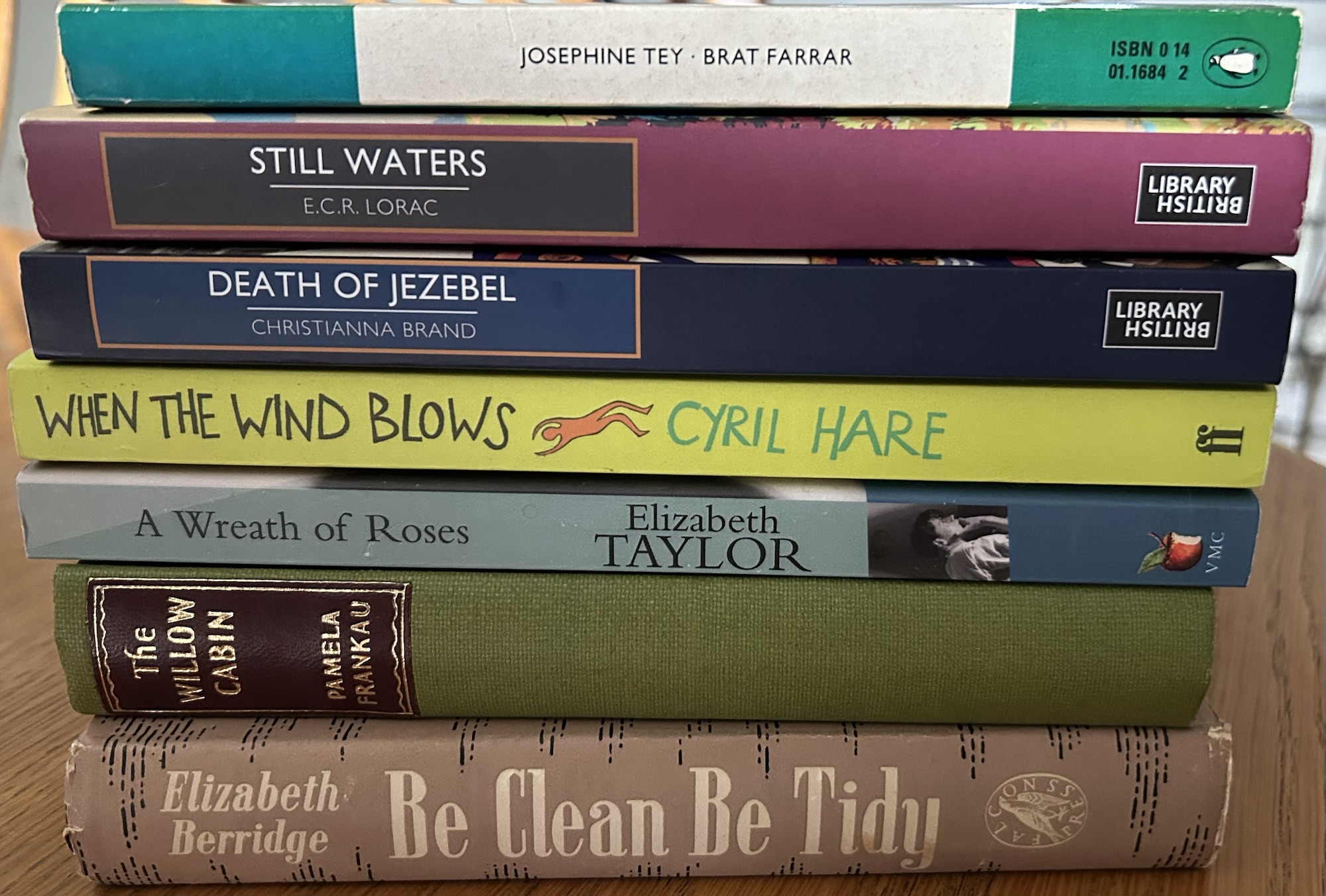
When Kaggsy and Simon announced the 1949 Club I went scurrying off to the TBR to see what I could find:
As it turns out, I missed one – I also have The Far Cry by Emma Smith. I’ve read some in preparation for the week and I’m hoping to read a few more throughout, although I won’t get to them all, so any suggestions gratefully received!
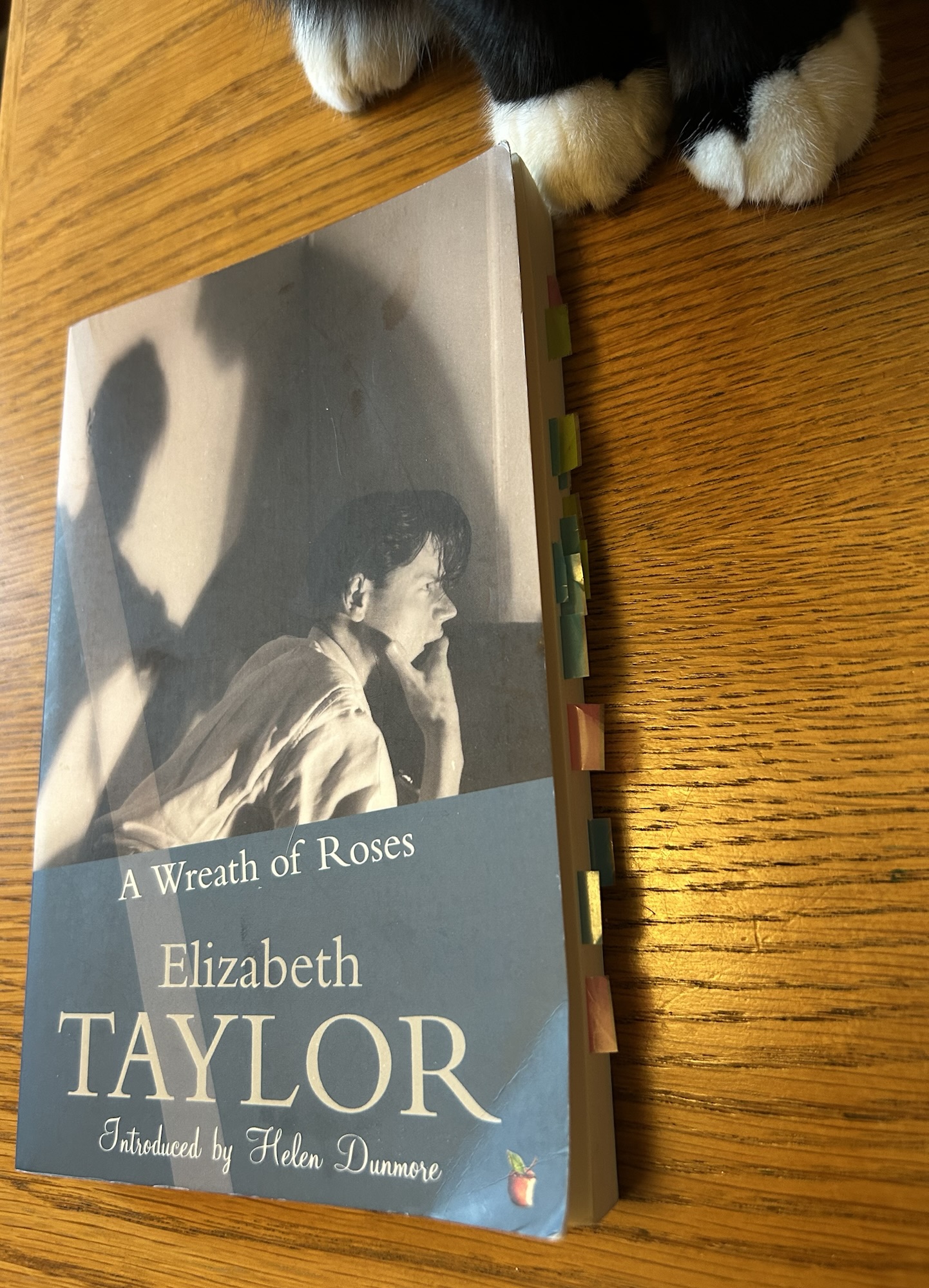
Knowing how highly JacquiWine rates A Wreath of Roses by Elizabeth Taylor, this was my first stop. I thought it was an absolute knock-out, and filled the short novel with page markers which I’ve tried to picture, but was impeded by Fred taking a great interest and headbutting my phone repeatedly, so this is the best I managed:
It opens:
“Afternoons seem unending on branch line stations in England in summer time. The spiked shelter prints an unmoving shadow on the platform, geraniums blaze, whitewashed stones assault the eye. Such trains as come only add to the air of fantasy, to the idea of the scene being symbolic, or encountered at one level while suggesting another even more alienating.”
And so I settled in, knowing I was in the hands of a masterful writer. On first reading I found it striking, now looking back on it I think it’s perfect. English summertime: so often memorialised, sentimentalised, filled with nostalgia for warm, temperate days… and immediately Taylor has identified spikes, shadows, assaults, alienation. It concisely and expertly introduces everything about A Wreath of Roses.
Camilla Hill is catching a train to spend her holiday with her schoolfriend Liz and Liz’s governess Frances, now a painter. On the way there she witnesses something shocking, and so she finds herself talking to the other witness, Richard Elton, a man she initially judged as too obviously good-looking and too young for her.
She also recognises that he is not entirely honest, as does Liz when she meets him:
“I thought he seemed to be acting. It was as if he had learnt the words by heart first. They seemed not to belong to him, nor to match the look in his eyes.”
Yet Camilla finds herself drawn towards him. Liz and Frances have both changed a lot since the previous year; Liz now has baby Harry and despite her protestations that “Marriage is such a sordid, morbid relationship!”, she and her husband Arthur, a vicar, reach renewed understanding. Frances is aloof, and is embracing “ferocity” in both her changing painterly style and her enormous bull mastiff dog Hotchkiss. But her arthritis is getting worse and she is fearful she will not paint for much longer:
“So intent was she on being a normal elderly woman, so much trouble did she take, that she would always rather be praised for her crab-apple jelly than her painting, for the first was a marvel in her, the other natural to her and inevitable.”
Camilla barely admits her sexual attraction to Richard, but it is there, as he manipulates her with dishonesty and dissembling. She scarcely believes his stories of wartime heroics, yet she is so desperate for change, romance and hope that she recognises her cognitive dissonance as she continues to seek him out.
“No man would understand what life is like for so many women. How can we take any of the things we want, that you expect to have—freedom, adventure, experience—without being taxed intolerably, or making ourselves ridiculous in other people’s eyes, or in our own?”
There is a constant sense of menace in A Wreath of Roses. Richard is clearly sinister and unpredictable, but there is anger in the domestic scenes too. The three women talk to each other quite brutally at times, even when they are not in disagreement. Camilla observes to Frances about Liz’s husband:
“Arthur seems to have a genius for cutting himself up into little pieces. He hands himself round among the ladies as if he were a plate of scones.”
When Morland Beddoes arrives, he simultaneously provides some relief but also racks up the tension. He is a gentle, quiet, observant middle-aged man and an admirer of Frances’ work. It’s a masterstroke by Taylor, as Beddoes recognises Richard’s danger and brings both the power and the vulnerability of kindness to the situation. The story remains entirely believable as it becomes unbearable.
I absolutely loved A Wreath of Roses. Every sentence is carefully crafted, yet the novel still flows and never feels overwritten. Taylor’s descriptive powers for scenes and acute insights with people mean she is precise and perceptive, without being cold. I’ve not done justice to her brilliance at all, but I’m delighted to have made such a memorable start to the 1949 Club.
“There are great paintings which offer everybody, and then there are lesser pictures which will reflect the light only here and there, rather capriciously, to individuals. Life itself shifts round a little and what we had thought all whiteness, or all darkness, flushes suddenly, from this new angle, with violet and green and vermillion.”
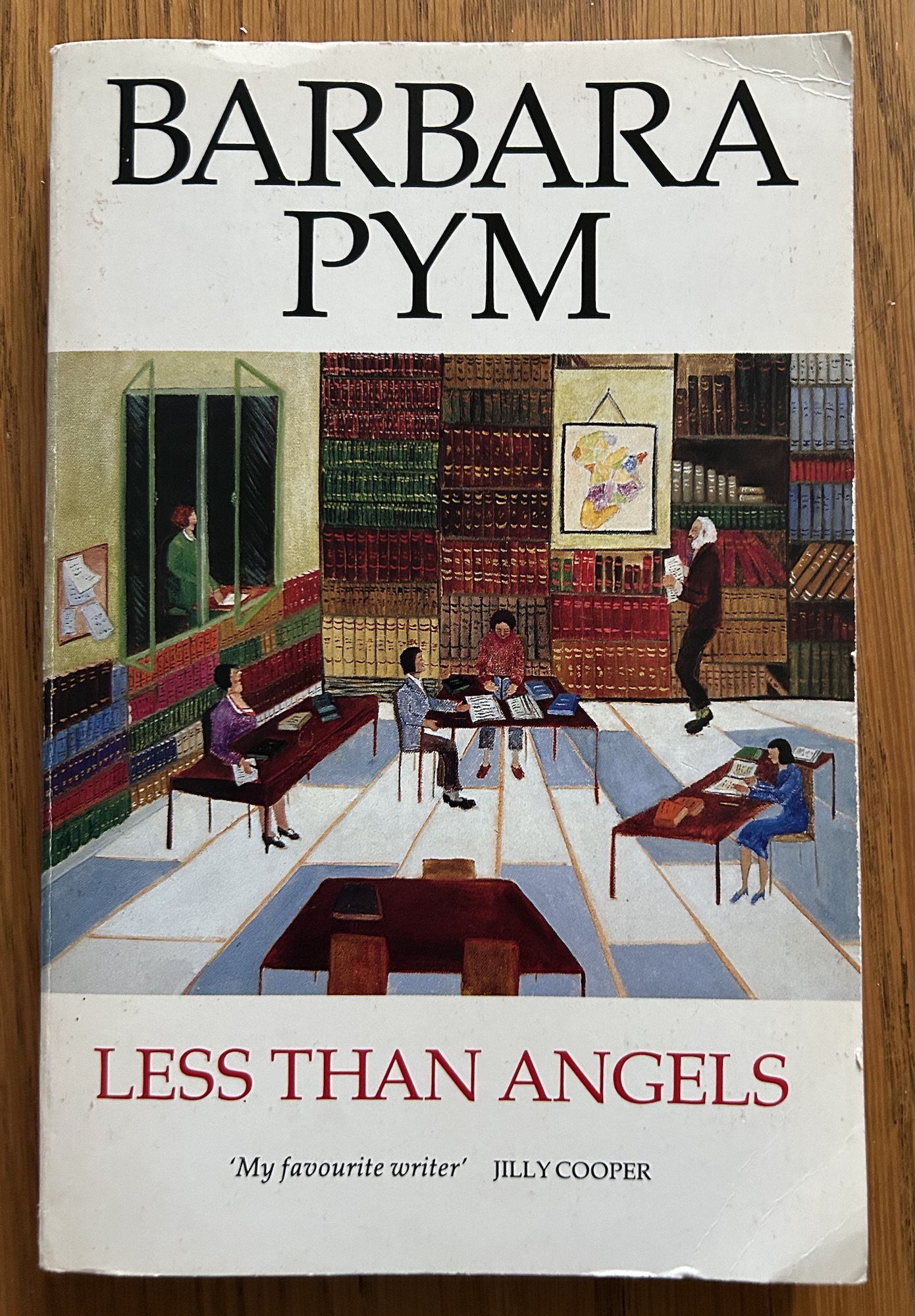
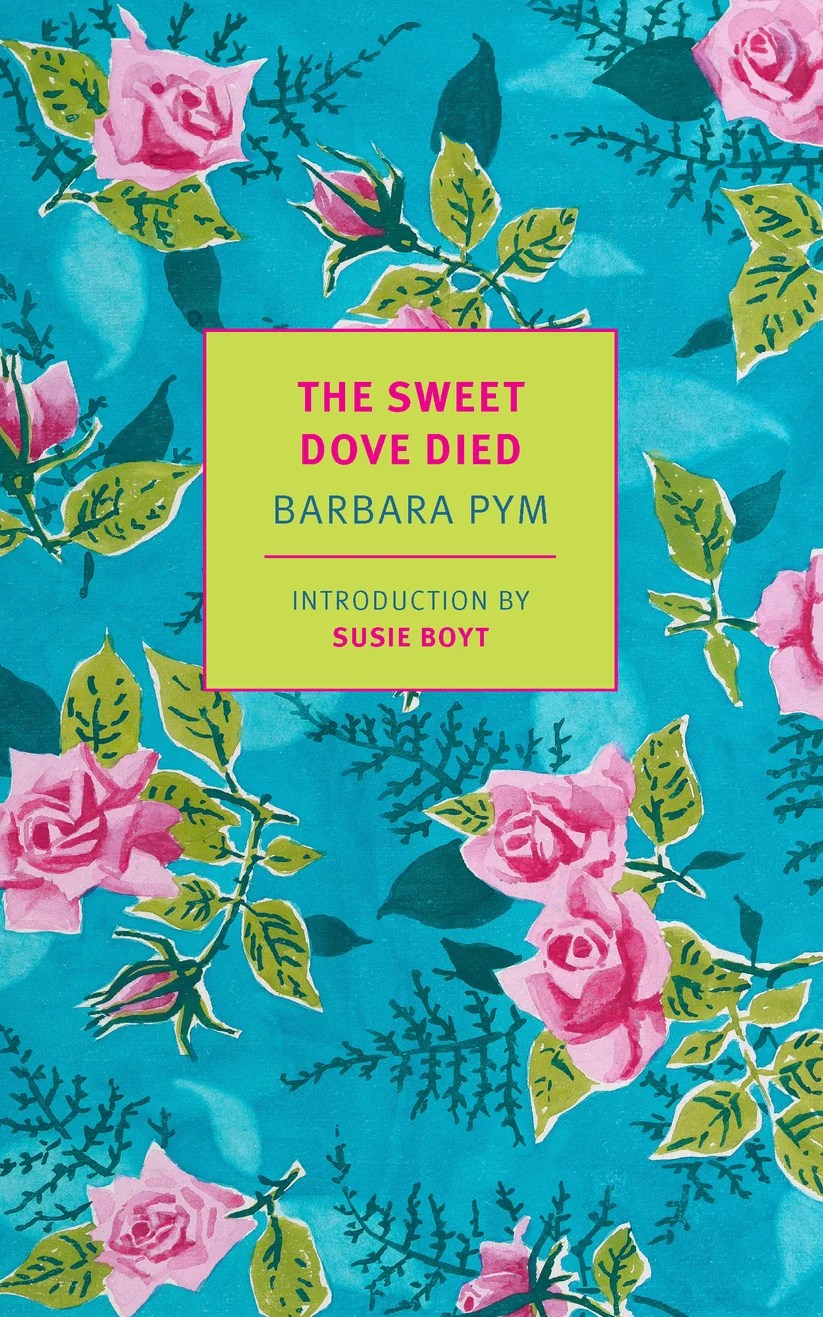
Earlier in this month of #SpinsterSeptember hosted by @pear-jelly, I read The Sweet Dove Died by Barbara Pym. I wanted to try and squeeze in another Pym before the end, and I really enjoyed reading Less Than Angels (1955), an earlier novel and more typical in tone, with its comic portraits of a group of anthropologists and their small dramas of daily life.
The novel opens with one spinster, Catherine Oliphant:
“she earned her living writing stories and articles for women’s magazines and had to draw her inspiration from everyday life, though life itself was sometimes too strong and raw and must be made palatable by fancy, as tough meat may be made tender by mincing.”
I wondered if that was a commentary by Pym on her own art? Who knows, but it was striking for its visceral imagery which felt untypical to me.
Meanwhile, Deirdre Swan is nineteen years old and living with her spinster aunt Rhoda and widowed mother Mabel.
“Deirdre was different, clever and moody, rather like she herself had been at the same age, before marriage to a good dull man and life in a suburb had steadied her.”
Deirdre is desperate for life to begin: to get away from the London suburb, to fall passionately in love rather than go on boring dates with suitably staid suitors. When she sees handsome young anthropologist Tom Mallow, she hopes there is opportunity for dramatic change. But Tom lives with Catherine…
“On the bus she wondered whether Tom had high principles, like Bernard. She was sure, somehow, that he had a delightful lack of them.”
In fairness to Deirdre’s suburb, it’s not entirely dull. Her neighbour is Alaric Lydgate, an anthropologist refusing to share his (likely useless) notes with Tom, closely observed by Mabel and Rhoda, confounding them by undertaking eccentric behaviour such as leaving rugs out on his lawn overnight.
Pym has a lot of fun exploring the department where Tom has returned after time overseas, where academics jostle for grants and wonder if they are spending time writing up interminable theses which will be forever unread.
She also draws parallels between daily life of women in post-war Britain and the more lauded anthropologists. Rhoda and Mabel are close observers of societal structure and ritual, and of a way of life that is disappearing rapidly. They just aren’t making a career from it. In fact, they feel guilty for not being serious-minded and instead borrowing novels from the library:
“And so it came about that, like many other well-meaning people, they worried not so much about the dreadful things themselves as about their own inability to worry about them.”
Tom, part of landed gentry, later wonders:
“When really, when one came to consider it, what could be more primitive than the rigid ceremonial of launching a debutante on the marriage market?”
We follow the department’s inhabitants for a time, their gentle professional and personal frustrations and triumphs. Less Than Angels is a quick read, expertly drawing the reader in to this small circle.
For Pym fans, there are references to other works here. Everard Bone and Mildred from Excellent Women are mentioned, and Catherine reflects:
“I’m not one of those excellent women, who can just go home and eat a boiled egg and make a cup of tea and be very splendid, she thought, but how useful it would be if I were! She thought wistfully of herself like this.”
To me this didn’t quite have the sparkle of that novel, or my favourite Pym so far, Quartet in Autumn. But there was still so much to enjoy here: the astute but compassionate characterisation, the close observation, the gentle humour. I’m so pleased to have got back to Pym throughout #SpinsterSeptember and it’s encouraged me not to leave it so long in future.
“What odd turns life does take! And how much more comfortable it sometimes was to observe it from a distance, to look down from an upper window, as it were, as the anthropologists did.”
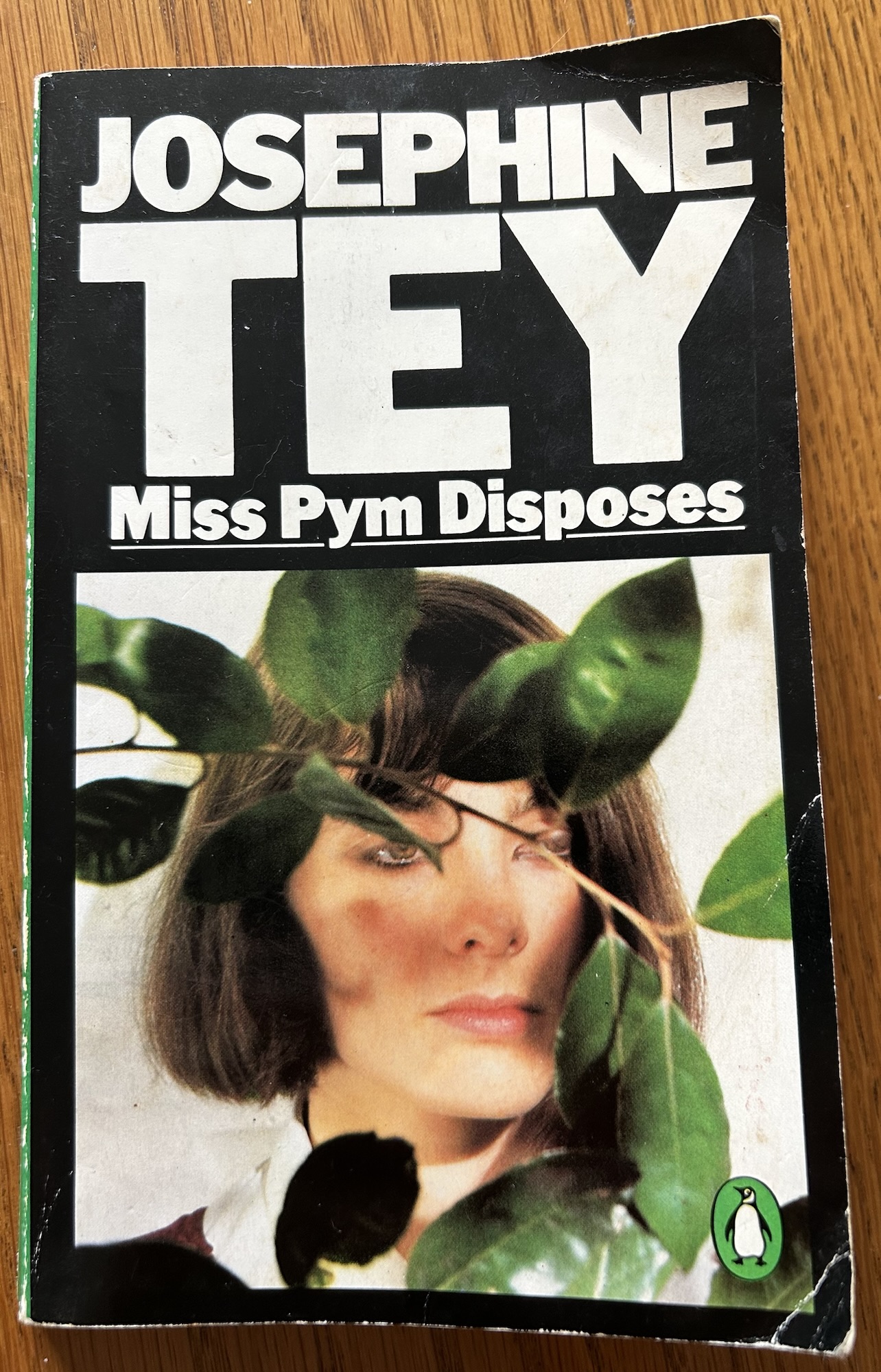
I dithered a bit about posting on Miss Pym Disposes by Josephine Tey (1946) as although I enjoyed it, I wasn’t really sure if I could recommend it onwards. It’s an unusual novel written by an established author of the era of golden age detectives, where the murder doesn’t take place until page 157 of 208. There’s also a lot of dated stereotyping and language so do bear that in mind if you decide to pick it up.
My edition is from what I think of as the golden age of soft-focus cheese from the Penguin art department, circa mid 1970s-1980s.
But it’s perfect for #SpinsterSeptember hosted by @pearjelly, set as it is in Leys Physical Training College for young ladies, where the teachers are single women, and with a titular character who is also a spinster. Lucy Pym initially works as a French teacher:
“But after four years of that her remaining parent had died, leaving her two hundred and fifty pounds a year, and Lucy had dried her eyes with one hand and given in her resignation with the other.
[…]
She read her first book on psychology out of curiosity, because it seemed to her an interesting sort of thing; and she read all the rest to see if they were just as silly. By the time she had read thirty-seven books on the subject, she had evolved ideas of her own on psychology; at variance, of course, with all thirty-seven volumes read to date. In fact, the thirty-seven volumes seemed to her so idiotic and made her so angry that she sat down there and then and wrote reams of refutal. Since one cannot talk about psychology in anything but jargon, there being no English for most of it, the reams of refutal read very learnedly indeed.”
I did enjoy Tey’s humour around Lucy leaving her job! Clearly she was highly sceptical of psychology though, which is quite surprising given that in many ways this is a psychological study. Much of the novel is spent building her cast of characters and the insular environment of the college.
“College was a bright gateway to the future for deserving youth; and if one or two found the gateway a hazard rather than an opening, then it was unfortunate but no reflection on the builders of the gateway.
“Like a convent,” Nash had said yesterday morning. “No time to think of an outside world.” That was true. She had watched a day’s routine go by. She had also seen the students’ two daily papers lying unopened in the common-room last night as they went in to supper. But a nunnery, if it was a narrow world, was also a placid one. Uncompetitive. Assured. There was nothing of the nunnery about this over-anxious, wildly strenuous life. Only the self-absorption was the same; the narrowness.”
Lucy is there because she was asked by old schoolfriend Henrietta to give a talk, and at first the 5.30am bell ringing and horrific institutional food means she plans to leave as soon as possible. But gradually she begins to enjoy herself, and decides to stay for the end of term gymnastic demo. She enjoys the company of the senior girls, including charismatic head girl Pamela ‘Beau’ Nash; her best friend, the accomplished but self-effacing Mary Innes; and Teresa Desterro who is there to study dance only and hone her considerable talent. There is also Barbara Rouse, who people are wary of although it’s not clear why, and is the favourite of the headmistress, also for reasons unclear.
“In the last few years [Lucy] had been ignored, envied, admired, kow-towed to, and cultivated; but warm, personal liking was something she had not had since the Lower Fourth said goodbye to her, with a home-made pen-wiper and a speech by Gladys Someone-or-other, shortly after her legacy. To stay in this atmosphere of youth, of liking, of warmth, she was willing to overlook for a space the bells, the beans, and the bathrooms.”
The girls are waiting to find out which jobs have been found for them by their headmistress, and there’s a shock when the plum job at “Arlinghurst. The school for girls, of course. A sort of female Eton.” goes to an unexpected candidate.
So, someone gets killed, and Lucy uses, I would say, one and a half pieces of flimsy evidence to work out who did it. But actually, I don’t think the puzzle element is of particular interest to Tey. There’s a great Backlisted podcast episode on this novel from back in 2021, with Val McDermid who is really enthusiastic about Miss Pym Disposes. She argues Tey is more interested in morality; the motivations of it and the conundrums around it, and I think she’s right. The reasons I find golden age detective novels a comfort read – a puzzle worked out neatly, justice and order restored – are not present here. The ending is really quite stark, and readers are unlikely to find the outcome reassuring although it is believable.
I do recommend MissPym Disposes, but surprisingly, not as one to be read when you’re in the mood for a golden age mystery!
To end, initially nothing sprung to mind for a suitable song, before I realised that because Teresa is Brazilian, I could include a legendary musician from that country, Caetano Veloso:
I’ve been meaning to get back to reading Barbara Pym, and what better time than #SpinsterSeptember, hosted by @pear-jelly. Pym fills her novels with ‘excellent women’ spinsters, although the character of Leonora Eyre in The Sweet Dove Died (1978) is a bit of a departure. Pym observed in a letter to Phillip Larkin“I didn’t try to make it so, but tended to leave out boring cosiness and concentrate on the darker side.”
The novel opens with Humphrey Boyce, a middle-aged antique dealer and his young nephew James, helping Leonora Eyre from a Bond Street salesroom and taking her to lunch. Leonora has been overcome placing the winning bid for a Victorian flower book (!)
Everything about Leonora is performatively Victorian, summed up brilliantly in this description of her bedside table:
“Browning and Matthew Arnold—her favourite poets—took their place with her Guerlain cologne, a bottle of smelling salts, soft aquamarine paper tissues, a phial of brightly coloured pills to relieve stress and strain, and presiding over all these the faded photographs of a handsome man and a sweet faced woman in late-Victorian dress. Leonora had long ago decided that her grandparents were much more distinguished looking than her father and mother whose photographs had been hidden away in a drawer.”
Her romanticising of the bygone era doesn’t ever acknowledge that during that time, she would not have been allowed to inherit her parents estate or own property, two things which allow her to live out her entirely self-focussed twentieth-century life.
There is absolutely no generosity to Leonora, everything and everyone is about meeting her own needs. Thus as a love triangle of sorts emerges between the three, her motives are not inspired by who Humphrey or James are, but what they can do for her.
In fairness, James has no idea who he is either. He is in his twenties but remains curiously unformed, even allowing for his young age.
“James was not yet sure what he wanted from life, and had so far tended to avoid violent extremes of any kind.”
He has sexual dalliances with Phoebe, a young woman who he cares for very little, and Ned, a visiting American academic who is entirely uncommitted to him despite James wanting more. There is a lack of intimacy in James’ closest relationships, which is perhaps why he and Leonora are well-suited. She likes the flattery of an attentive younger man, but really wants very little else. Proud of her history of male suitors, none of them seem to actually have amounted to a relationship.
Aware she is losing her looks, Leonora still has admirers:
“One day, Humphrey flattered himself, she would become bored with the novelty of James’s youth and realise the more lasting qualities—virtues, almost—of a man nearer her own age who was tall and kept his figure and was bald only in the most distinguished kind of way.”
But even Humphrey is beginning to lose interest towards the end of the novel.
As we follow these curious three for a while, there is all of Pym’s brilliant social observation around English niceties and the exposure of character in the smallest of details. Yet there is more cruelty portrayed in this novel than I expect with Pym. Leonora behaves appallingly at times, and is truly unpleasant. Ned is in many ways her match, a young man at ease with hurting others to get what he wants. However, the author’s eye remains compassionate to them all, and so there is never a bitter taste left by what the reader witnesses. Rather it is all the foibles and follies Pym usually turns her attention to, but with a darker edge.
Although less humorous than some of her earlier novels, there is still humour to enjoy here, such as Humphrey’s vanity over his baldness, or the check he places on one flight of fancy:
“But he soon dismissed the picture from his mind as impossible and ludicrous. A woodland seduction scene between two middle-aged protagonists could only end in disaster.”
Towards the end, there is a real sense of impending, true sadness for Leonora, unless she mends her ways:
“She had always cared as much for inanimate objects as for people and now spent hours looking after her possessions, washing the china and cleaning the silver obsessively and rearranging them in her rooms.”
But Pym’s light touch remains, and so situations and people remain unresolved but not without hope.
This would be a great choice for a book group, as the characters remain somewhat enigmatic. No great insights or changes occur, their motivations and feelings oblique and unknown even to themselves. It would be interesting to hear a group discussion of how they each interpreted them…
I really enjoyed returning to Pym’s world, masterfully drawn, sharply observed, sympathetically portrayed without sentimentality. I’m hoping to get to Less Than Angels before the month is out!
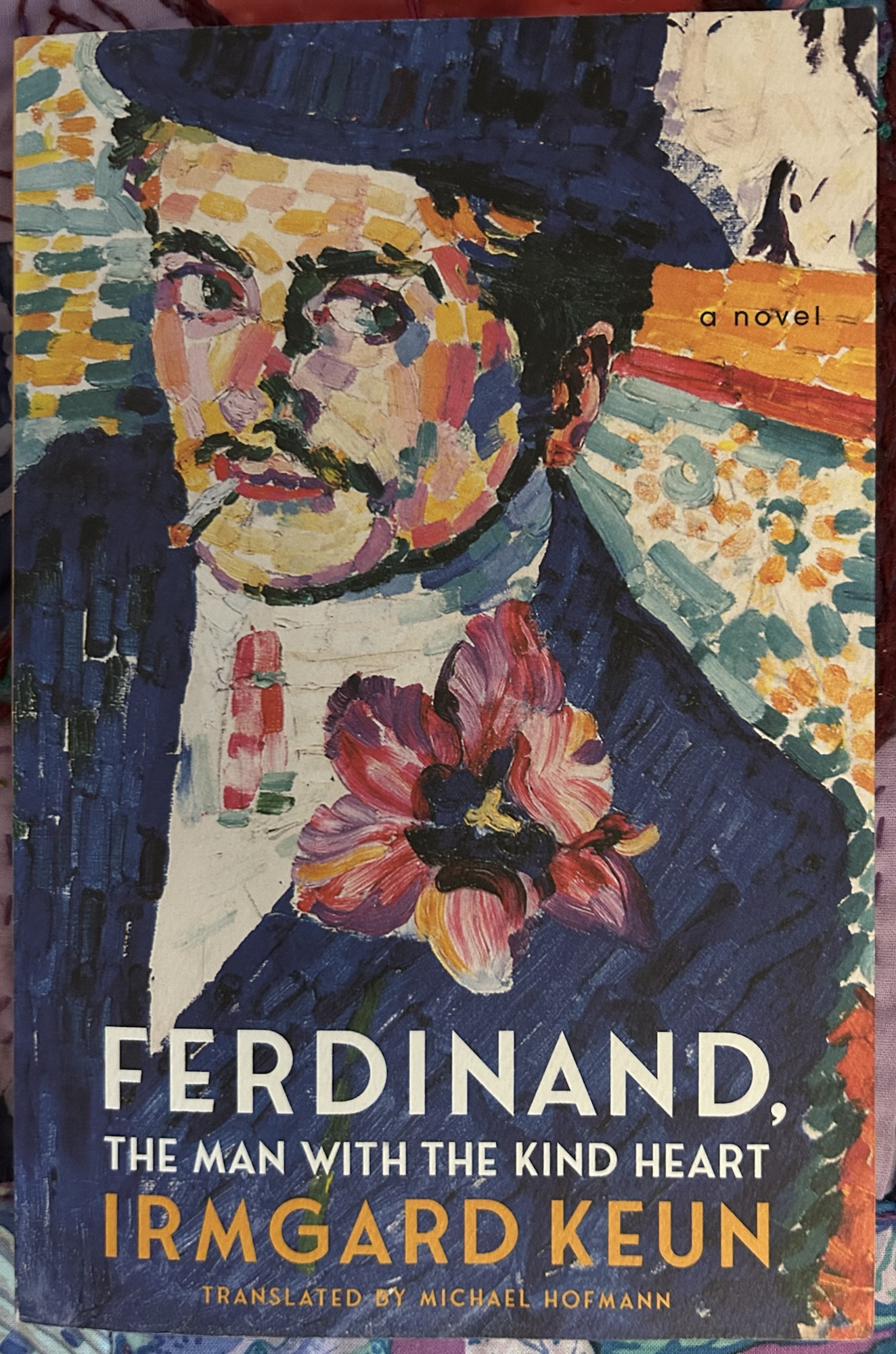
I really enjoyed my first experience of Irmgard Keun when I read Child of All Nations last year, and so I was looking forward to picking her up again. Women in Translation Month provided the perfect opportunity. Ferdinand, The Man With the Kind Heart (1950, transl. Michael Hoffman 2020) was her final novel, written not long after the end of World War Two, and just a year after the division of Germany. (There is some dated language in the novel).
The story is told from the point of view of titular Ferdinand as he somewhat listlessly makes his way around war-torn Köln (Cologne). The privations continue and the illicit economy thrives. Keun is so witty and gives her narrator an inventive turn of phrase:
“The Moselle tastes as flaccid and murky as the decayed philanthropy of an unhappily married vintner. The Belgian cigarettes taste of rancid hay.”
His landlady Frau Stabhorn is thriving in her own way, renting her hallway to him as a room, making jam to sell and caring for her grandchildren. Ferdinand’s experience of this brood is expressed with a degree of tolerant irony:
“Children are the bonny little blossoms in the mouldering garden of life. As I write, a couple of the bonny little blossoms are trying to spread a mixture of jam and plaster of paris all over my arms and legs.”
The book is really a series of portraits, with the plot mainly existing as the passage of time. We meet fellow lodgers:
“Lily is the victim of her beautiful feet. She studies chemistry and earns money on the side from knitting sweaters and writing.”
And poverty-stricken Ferdinand is later employed by a snake-oil salesman:
“Liebezhl draws horoscopes, reads palms, swings crystals, lays cards, sells amulets, and does a little podiatry.”
Who offers him work as a sort of agony uncle:
“Waiting for me outside my office I had, among others, a man with broken fingernails, a wine grower who wanted to get married for the fourth time … five deserted wives, and a sixth who wished to be deserted because her husband snored. I had my work cut out for me.”
Meanwhile, Ferdinand is trying to work out how to get out of his engagement, again observed with a certain ironic detachment:
“There are three items that Luise managed to hang onto throughout the war: a stove, an electric iron, and me. All three of us are a little impaired, and not quite good as new. But Luise is hanging tenaciously, not to say grimly, on to all of us. Her favourite is the stove, and next, even ahead of the iron, is me.”
So, there is a lot of humour in Ferdinand, but there are some very serious points that Keun makes too. And in fact I found the listless, plotless, artless quality to the character and the story to be a serious point too. Ferdinand was a solder and a prisoner of war. To me, his narrative style, his detachment, numbness, ironical distancing, lack of real interest in anything, was a portrait of trauma.
He doesn’t dwell on his past, but when mentioned it is striking:
“My only feeling was fear. I was swimming in an ocean of fear… I was afraid of the NCOs, headquarters, uniforms, barracks, corporals, the officers’ voices—the whole massive machinery of it.
I no longer saw human beings, all I saw were the mechanical manifestations of a force that hypnotised me to the point of crippling despair.”
There is also disgust and cynicism regarding former Nazis living their daily lives, such as Luise’s father:
“He settled down among the spoils of his wife and pouted. His wife and daughter waited on him, the household was his to command, and gradually he clambered back up to the temporarily vacant throne of the family dictator, and everyone tried to be as satisfied and dissatisfied as they’d been previously, in the good old days.”
And sadly of course, his observations have not dated, although specifics change:
“Dictatorships are always very strict about what they understand as morals and public ethics. Our former unlimited German dictatorship has, in the way of lower life forms, procreated by simple fission, and is now called democracy.”
All in all, I found Ferdinand an intriguing read. There was a sense at the end that despite being the titular character and first-person narrator, he had slipped through my fingers. But as I thought about how this was the point, I found this very affecting. Cologne and its citizens were in a process of recovery, trying to understand what remained and how to live after devastation (60% of the city was bombed). As an exploration of the aftermath of war on individuals and on society, it was skilled, subtle and truly moving.
“There are people to whom the whole world is a toy, and who love it and take it as seriously and carefully as they take their toys.”
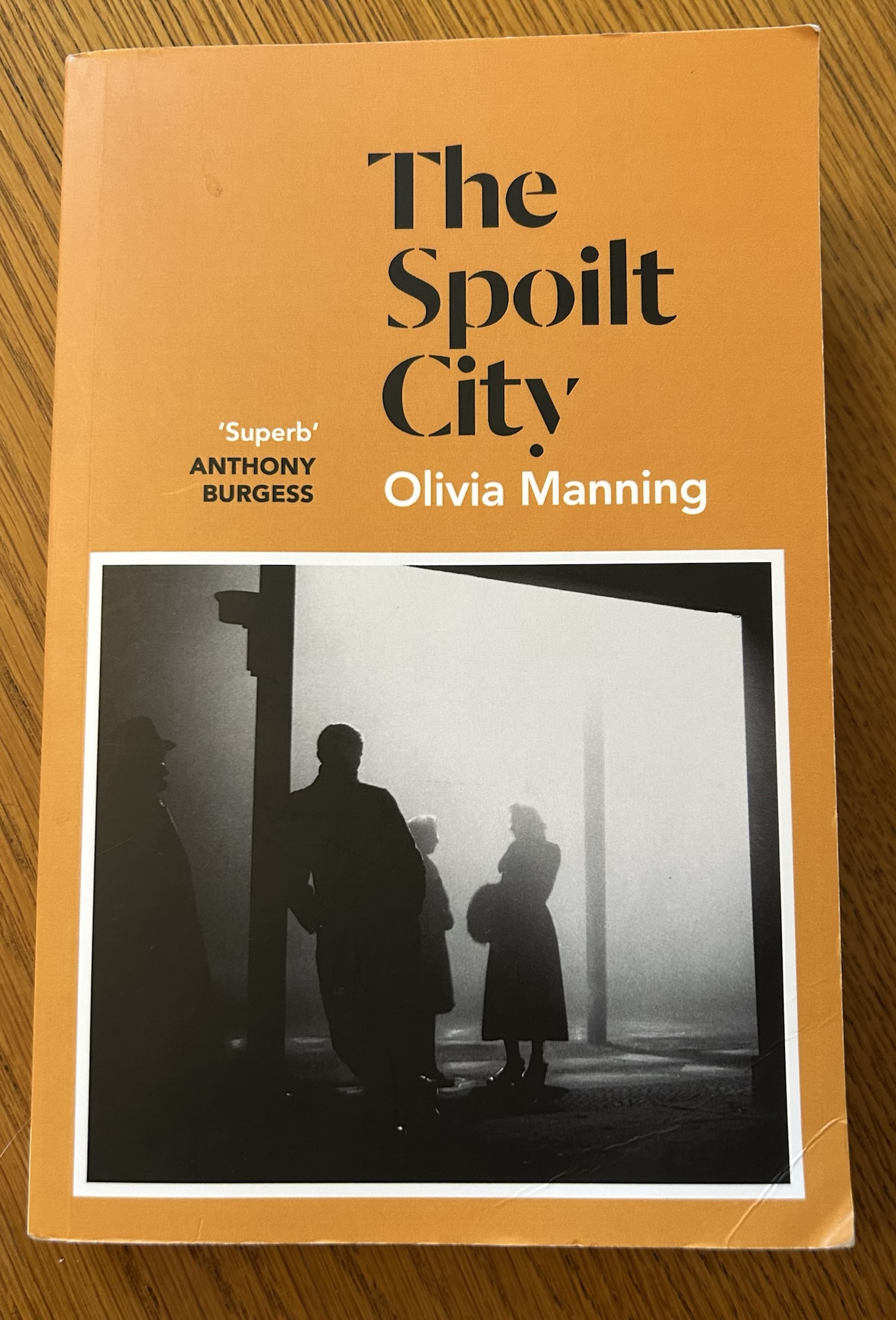
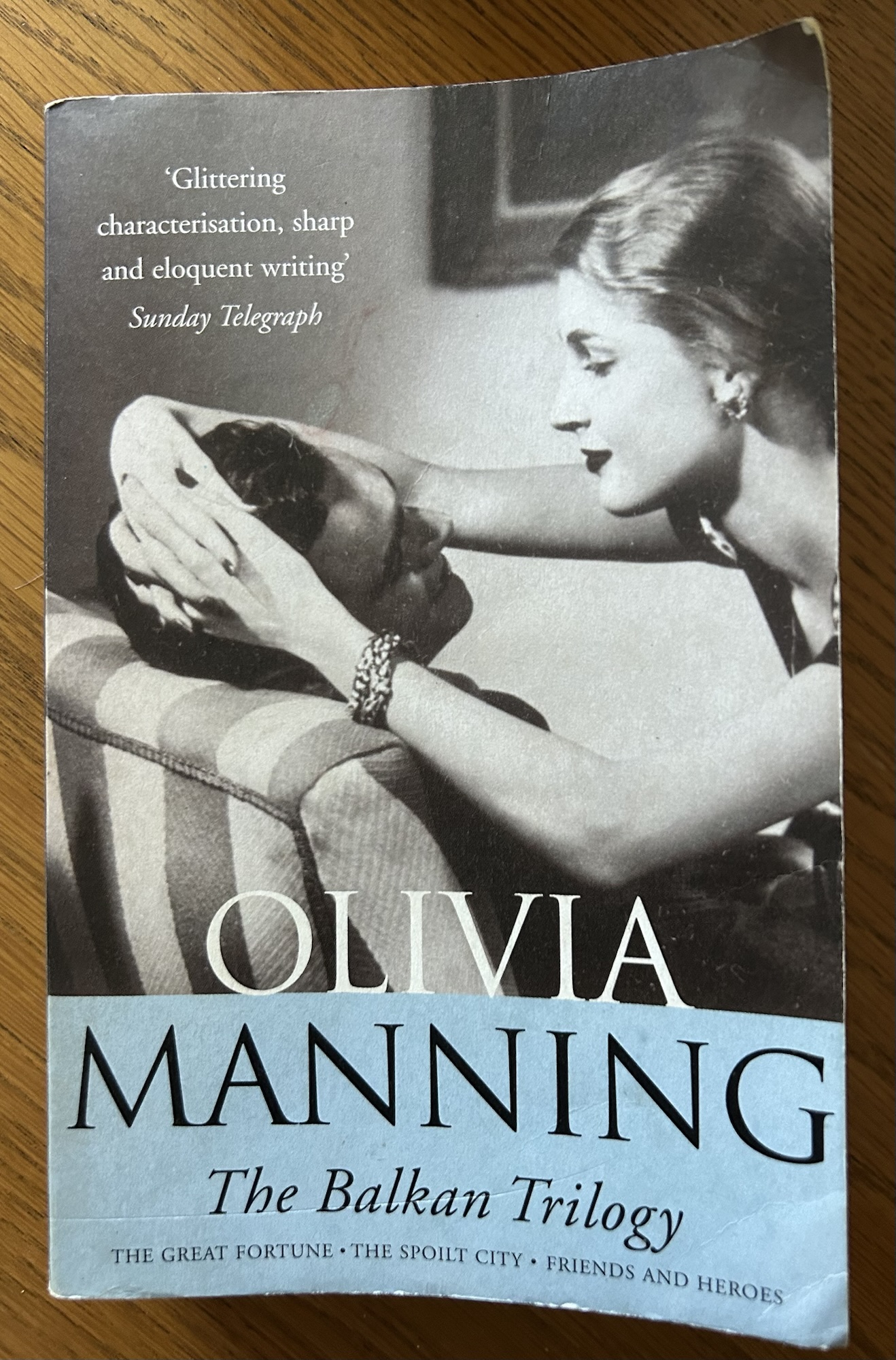
It was a conversation with Marcie in the comments of Jacqui’s Levant Trilogy post which led to us doing a buddy read for all three volumes of Olivia Manning’s Balkan Trilogy this year. We started with The Great Fortune (1960) in June, and now onto the second instalment, The Spoilt City (1962).
It took me a while to get into The Great Fortune, but by the end I was whizzing through and couldn’t wait to start The Spoilt City. I’m clearly in the rhythm of Manning’s writing now because I sank right in and absolutely loved this second volume.
(What I decided I didn’t love was the omnibus edition I started with, so I’ve bought these Windmill Editions now and I’m much happier).
The city is Bucharest in 1940, and we follow still-fairly-recently married Guy and Harriet Pringle as the physical and social environment they are used to disintegrates around them.
“On the pavement the Guardist youths with their banners and pamphlets, were still trying to rouse revolt. Although a sense of revolt agitated the nerves like an electric storm that would not break, the city was lethargic, the palace dormant, its white blinds drawn down against the tedium of the afternoon.”
This volume is increasingly tense, the Nazi threat growing ever-closer. Guy is still teaching English at the university, but both students and the staff group are rapidly dwindling.
“With uncomplaining enthusiasm, Guy did much more than was expected of him; but he was not imposed upon. He did what he wanted to do and did it, Harriet believed, to keep reality at bay.”
Guy’s boss Inchcape is also determined to keep the Department open, even as dangers grow. This volume is more emotionally affecting than the first, I found this particularly true in a scene with the older single women of the department being forced to leave for their own safety, as well as Inchcape having to face his vulnerabilities to a shocking extent.
This forms the shifting and stressful background to the Pringles’ early marriage. Both Harriet and Guy have to acknowledge their profound differences in how they approach life and see things:
“It was probably significant that he was physically short-sighted. He could not recognise people until almost upon them. Their faces were like so many buns. good-natured buns, he would have said, but Harriet did not agree. She saw them in detail and did not like them any the better for it.”
“He saw her muddled and lost in anarchy and a childish mysticism.”
Guy’s belief in communism gives him more certainty, a grounding as the ground constantly shifts beneath them. Still, their marriage seems underpinned by a great deal of love for each other, although the reader is not privy to any declarations.
My favourite character Yakimov is still racketing around, trying to sell his beloved Hispano-Suiza car even as no-one has money for fuel. He is still living with the Pringles and Harriet despairs.
“If she wanted to get rid of him, she would have to pack his bags herself and lock him out. And if she did that, he would probably sit on the doorstep until Guy brought him back in again.”
Yaki behaves appallingly in the first part of the novel, before redeeming himself beautifully at the end, making his portrayal one of the most comedic, disturbing and complex in The Spoilt City. Apparently based on Julian Maclaren-Ross, I really should learn more about this Fitzrovian dandy poet. Anthony Powell based X Trapnel on him in A Dance to the Music of Time, and he certainly seems a character…
What struck me most in this volume, apart from the evocation of physically crumbling environs, was the ambivalence, or perhaps resignation, of most of the people Harriet interacts with. As long as they are safe and their lives continue in a way that works for them, they don’t seem to particularly care who is in charge. This made me realise the oppositional Second World War narratives I’ve taken for granted until now; I am used to films and books where people are firmly on the side of the Allies or the Axis powers, not indifferent between the two.
This is brought into sharp focus by Harriet’s English friend, Bella:
“Her skin apricot, her hair bleached by the sun, Bella was looking extremely handsome and seemed almost intoxicated by the night’s happenings.
‘How wonderful to have a strong man in power!’ she said. ‘Everyone is saying that Romania will regain her territory.’
‘What makes them think that?’
‘Because Antonescu is a real dictator. He knows how to deal with Hitler and Musso. He’s one of them. I don’t mind betting, within three months, this country will be on its feet again.’”
Later they meet again, Bella delighting in all she can buy as prices tumble, when they run into each other under a newly erected swastika flag:
“Elated by her rising fortune, she looked up and smiled at the flag and the clear pale sky beyond it. ‘I love this time of year,’ she said. ‘so delicious after the fug of summer. It makes one feel so alive.’
She seemed aglitter with life, almost dancing in her new green lizard skin shoes.”
Astonishingly, it is only Guy who overtly acknowledges what is behind the flag, the only one who says “I couldn’t stand it. I kept thinking of the concentration camps.”
Manning leaves spaces in her narrative so we assume Harriet is of a similar mind, although her primary worry is for the safety of Guy, vulnerable under the new regime because of his communist beliefs and willingness to teach Jewish students.
The Pringles are also at risk as they still have sweet Sacha Drucker in their flat, and early on we know they have been betrayed and are likely to be raided…
“Truth is a luxury. We can only afford it now and then.”
The Spoilt City is a novel which conveys the physical and human devastation wreaked by war for those not directly caught in conflict. It is deeply moving without being remotely sentimental, and feels entirely believable. I found myself completely caught up in the Pringles’ lives and even (shock horror!) warming to Guy. I’m impatient to read volume three, Friends and Heroes.
I wound up googling Hispano-Suiza cars as Yaki describes his so lovingly. I can’t drive and I’m entirely uninterested in cars, but even I can see this is a lovely machine:
It was JacquiWine’s enthusiasm for Olivia Manning’s Balkan Trilogy which caused me to add it to the TBR, and a conversation with Marcie in the comments of Jacqui’s Levant Trilogy post which led to me finally getting the first instalment read! I’m delighted that Marcie and I are doing a buddy read for all three volumes this year, starting with The Great Fortune (1960) in June.
I’d originally planned to get this read by good time starting in April, but life took over, then novellas, and I’ve ended up finishing it on 29 June – one day spare! It says something for Manning’s writing that even my terrible memory and total inability with names kept her pretty large cast of characters straight despite a gap of about 8 weeks or so…
Guy and Harriet Pringle are newly married. The book opens with their arrival in Bucharest, a new experience for Harriet, but Guy has been there a year, working for the British Council at the university. It is 1939 and the new war across Europe looms large.
“‘Who is that?’ Harriet whispered. ‘Does he know us?’
‘Everyone knows us. We are the English. We are at war.’
‘But who is he?’
‘lonescu, the Minister of Information. He’s always here.’
‘How odd to live in such a small capital!’
‘There are advantages. Whatever happens here, one is in the midst of it.’”
It’s a time of adjustment to a new life and each other, against a rapidly changing, unstable background. Harriet begins to realise they are not easily compatible, with Guy’s relentless sociability at odds with her need for intimacy:
“They had slipped into marriage as though there could be no other possibly resolution of such an encounter. Yet — supposing she had known him better? Supposing she had known him for a year and during that time observed him in all his other relationships? She would have hesitated, thinking the net of his affections too widespread to hold the weighty accompaniment of marriage.”
The characterisation of these two young people is complex. Although Guy is constantly in company, this is motivated by his communist beliefs and a general generosity of spirit, rather than any particular interest or warmth regarding individuals.
“Guy said: ‘He leads his life, as we all do. What do you care what he does?’
‘Naturally I’m interested.’
‘Why be interested in people’s private lives? What they are pleased to let us know should be enough for us.’
‘Well, I just am. You’re interested in ideas; I in people. If you were more interested in people, you might not like them so much.’
Guy did not reply. Harriet supposed he was reflecting on the logic of her statement, but when he spoke she realised he had not given it a thought.”
My experience of Guy was that he was one of the most irritating, infuriating characters I’ve ever come across. His generosity paradoxically made him entirely selfish, as he seemed to have no real consideration for Harriet at all. She isn’t particularly likeable either, often xenophobic and begrudging with people. But as their relationship matures, she is more forgiving than me, recognising “a husband made unreliable only by his abysmal kindness”.
Manning makes them both so real (apparently based on her and her husband) that it became of little consequence that I didn’t like them – I wanted to hear about their lives at this time. Guy does live by his ideals, so he is not a deliberately unkind person, just utterly oblivious. He has enough redeeming qualities for Harriet’s love to be understandable:
“We must help him, not because he’s a good person but because he needs help. You understand that.”
Through Guy, we meet a range of characters who have ended up in Bucharest at this particular moment. These include but are not limited to:
Sophie, a student Guy considering marrying in order for her to have a passport – in his usual way he is unconcerned regarding her being in love with him; Sacha is another of his students, part of an immensely rich family called the Druckers; Harriet makes friends with Bella, an English woman married to a Romanian, Nikko Niculescu; we meet staff at the university, and journalists at the English Bar. Manning handles her large cast deftly, and even the less prominent characters are sketched distinctly.
There is also my favourite character – in many ways equally irritating as Guy – Prince Yakimov, an Irish/Russian prince. Yakimov is perpetually sponging off his friends, promising an always due to arrive remittance, pleading with them to pity “poor Yaki”. He is preoccupied by fine food, and starving most of the time. His English is peppered with phrases that sound almost Wodehouseian. He is utterly ill-equipped to deal with life in any way whatsoever, and yet somehow he endures on his own terms:
“Had Yakimov been content to eat modestly, he could have existed from one remittance to the next, but he was not content. When his allowance arrived, he ate himself into a stupor, then, penniless again, returned, a beggar, to the English Bar. It was not that he despised simple food. He despised no food of any kind. When he could afford nothing more, he would go to the Dâmbovița and eat the peasant’s staple food, a mess of maize. But food, rich food, was an obsessive longing. He needed it as other men need drink, tobacco or drugs.”
The progress of the war is documented, but never heavy-handed. The characters stop by a publicly displayed map of Europe which shows the fall of Poland and the invasion of Denmark, Norway, and the Low Countries. Through the journalists in the English bar, the Battle of Dunkirk is relayed.
As the risk to Harriet and Guy grows, he responds surprisingly by becoming entirely wrapped up in producing a performance of Troilus and Cressida. I found this an intriguing choice by Manning. One of Shakespeare’s less well-known plays, it is tonally deeply odd. A tragedy but filled with unpleasant characters, a comedy but in bad taste a lot of the time. Harriet observes that everyone seems to be playing themselves. Yaki is commended for his portrayal of Pandarus, but Pandarus is a pimp. The play ends with that character wishing venereal disease on the audience – yuck. I love Shakespeare but Troilus and Cressida tests that assertion more than any other of his works.
It is a play about the Trojan war, so in a way it shows again how young and naïve so many of the characters are, play-acting while a very real war grows ever-more threatening. It also adds to the general sense of uncertainty, with very little to secure your knowledge or hope upon.
“Guy came hurrying in behind them. […] His size gave her an illusion of security — for it was, she was coming to believe, no more than an illusion. He was one of those harbours that prove to be too shallow: there was no getting into it. For him, personal relationships were incidental. His fulfilment came from the outside world.”
This volume ends in June 1940, and so as readers we know that these characters still have so much conflict to live through.
I’ve only scratched the surface of The Great Fortune, but this post is already far too long! It took me a while to get back into this novel, before something clicked and I whizzed through the remainder. I’m really looking forward to carrying on the story with The Spoilt City.
In 1987, the BBC made both trilogies into a seven-part series, which seems a lot to squeeze in. I think I might give it a try, once I’ve finished reading them all…
If anyone would like to join us for this buddy read, please do! We’ll be posting in The Spoilt City in August and Friends and Heroes in October.