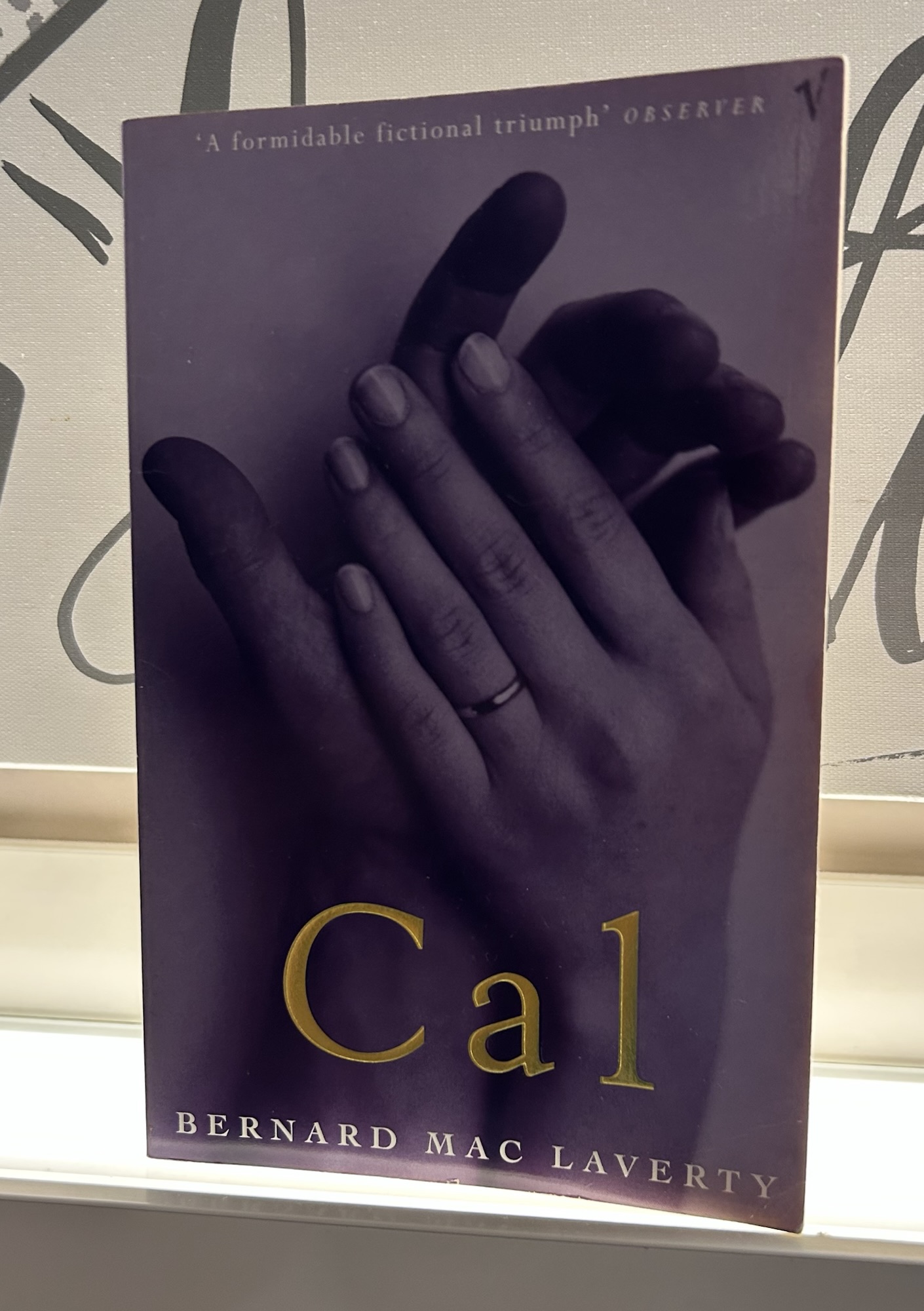
For the second day running, a novella from when Simon and I went book shopping. Cathy commented on the post that I was in for a treat with Cal by Bernard MacLaverty (1983), and how right she was.
(I’m currently in a budget hotel for a work thing, hence the uplighting available 😀 )
I read Midwinter Break by this author a few months ago, which I really loved. Cal is a very different story but features the same closely observed characterisation and concise yet lyrical style.
Cal is nineteen years old and lives outside Belfast with his father, after both his mother and older brother have died. His father Shamie works at the local abattoir, but Cal was unable to stomach such work and is unemployed. As the only Catholics in a Protestant area during the Troubles, Cal lives with the constant fear of a beating at best and what he believes more likely, being killed outright by Loyalists.
This fear led Cal’s father to get a gun for protection from Crilly, a bully who Cal grew up with, now part of what seems to be the IRA, although they’re not named in the book. For Cal, this means he owes Crilly, and the organisation he works for, a favour.
“Cal knew that in his father’s mind it was all a bit like the Westerns he so liked to watch on TV—that he had right on his side and it was the baddies who would die. He knew the old man felt safe with his notion and Cal did not want to disillusion him.
He knew that if somebody had marked you out it would all be over in a blinding flash and a bang before you could take your hands out of your pockets, and you would be bleeding into the carpet when you thought you were still standing up.”
Cal spies Marcella working at the local library. Older than him and a single mother, he finds her attractive, but there is a history between them which she seems oblivious to, but which causes Cal a great deal of distress.
He ends up working at her in-laws farm, and the two of them grow closer. Over all this hangs the threat of Crilly, his senior Skeffington, and Cal being pulled towards carrying out the violence he finds abhorrent, or being on the receiving end himself. The constant tension and oppression is palpable.
“Cal for the first time in years felt safe. No one knew he was in this pensioner’s house. He was sure he would sleep. If only he could get away from himself as well.”
Cal behaves in ways that are impossible to condone, but MacLaverty asks the reader to understand the pressures exerted on, and lack of choices available for, a man living in these circumstances who is still a teenager. I don’t want to say much more as Cal is tightly plotted and inevitably I would include spoilers…
Cal shows how political violence can permeate communities and entirely destroy people, both in an instant and by corroding over time. MacLaverty depicts this with a clear-sighted, measured tone, the tragedy in no way lessened for his determinedly non-sensational approach.
To end, a hilariously dreadful trailer for the film adaptation. The film itself may be very good, but what on earth they were thinking with this voiceover and music I cannot begin to guess:
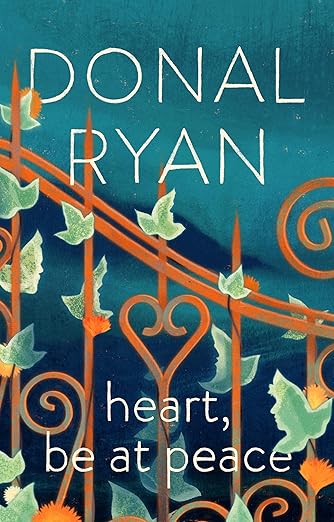
It’s been seven years since I read his polyphonic debut, The Spinning Heart, so I came to the follow up, Heart, Be At Peace, with only a hazy recollection of the characters and plot. Like its predecessor, Heart, Be At Peace has twenty-one chapters, each narrated by a different inhabitant of a County Tipperary town.
While the first novel considered the fallout of the economic crash on a cross-section of the town, Heart, Be at Peace looks at how illegal drugs and associated money, violence and desperation impact so many.
Both books are centred on, and begin with, Bobby Mahon. He is struggling, and there is a sense of it only being a matter of time before he either explodes or implodes:
“There’s this thing that happens me now nearly every day. It feels like a stab of something in my middle, not pain exactly, just a kind of force that takes the air out of me so that I have to stop what I’m doing for a few seconds until it passes. It only comes on me when I let my thoughts drift.”
This is the uniting thread that pulls the various narratives together. Gradually a picture builds of Bobby becoming more and more enraged at the audacity shown by the shameless drug dealers. Despite the different narrators and their varying concerns, bubbling in the background is Bobby and his Achilles’ heel, observed by older man Jim:
“Bobby Mahon Is one of these rare men who measures himself against the well-being of the people around him.”
I was glad to see Lily the witch/sex worker return, this time worrying about her granddaughter Millicent who is caught up with abusive dealer Augie Penrose. It’s not just Lily who has a sixth sense though – I thought this had more supernatural beliefs and encounters than its predecessor, but maybe my memory is failing!
Although this novel included one chapter narrated by a ghost, if you’re not keen on the supernatural in books, rest assured there are many grounding elements. Lily herself observes “belief itself is a kind of magic.”
While later in the novel Brian realises: “I always work off impressions, and my impressions, it turns out, are mostly shite.”
There’s a lot of sadness in Heart, Be at Peace as is to be expected given the themes, but Ryan leaves it to the reader to piece some events together and draw their own conclusions, which stops it being sanctimonious or sentimental. A reported death is truly sad, and to the reader seems suspicious, but is accepted as a heart attack by the characters.
There’s also the endurance of Pokey Burke, instrumental in the in local desolation caused by the building crash and now finding ways to make money off the poorest people again. His is a cynical presence but an entirely believable one.
There is resilience too. Rory, one of Bobby’s young workers, is madly in love and expecting his first child:
“all things tend towards chaos. I close my eyes against the mad torrent of panic. This is okay, I think. This is life, this is life, this is how it’s meant to be.”
And also humour. A standout voice for me was Trevor, self-aggrandizing and clinically delusional but with an interesting turn of phrase:
“the bus stopped and he was gone, and I was left to writhe beneath the gaze of some kind of a working-class Medusa.”
And there is kindness, experienced by Vasya, an immigrant camping on land at the edge of town. His observation suggests Bobby may not be wrong in seeing himself inextricably bound to his community:
“I was reminded of how small this world is, how closed-in this country is, like a bowl containing berries that you can pick up and swirl so that each berry touches another berry in the space of an instant.”
By the end I felt there was a possibility Ryan may revisit this town and the people again. I hope so.
I read Grace Notes by Bernard MacLaverty when it came out in 1997 – nearly 30 years ago! I really loved it and although generally with books I remember themes, atmosphere and how I felt reading it, I rarely remember specifics such as characters or plot. With Grace Notes I can still remember some of the exquisite sentences, so it is a mystery to me why I have only just returned to this writer. Thank goodness for Reading Ireland Month, hosted by Cathy at 746 Books giving me a push!
Midwinter Break (2017) follows Gerry and Stella, a long-term couple now in late middle-age, as they spend a short city break in Amsterdam. Without explicitly stating their situation, but rather presenting it for the reader to observe, MacLaverty conveys their shared history, love and sense of humour.
“I suppose we’re lucky to have each other to ignore.”
They are entirely used to each other’s presence as a constant, both used to considering the other as much from habit as from affection.
“He had to cross the main road rumbling with traffic and reached out to take Stella by the hand before realising she wasn’t with him.”
Yet over the space of the weekend, tensions from deep-rooted differences and past trauma will come to the fore. Stella is undergoing an existential crisis:
“There are important questions to be answered. How can we best live our lives? How can we live good lives?”
She is a lifelong Catholic, while Gerry is an atheist. There is a sense that this need not be an insurmountable difference, except Gerry is dismissive of her beliefs and his drinking is becoming problematic. He foolishly believes his various deceptions go unnoticed by his wife. She has given up trying to get him to understand what religion gives her:
“Prayer was summoned intensity, held there in the head and in the heart. Something good, something spiritual. Articulated, spoken inwardly, wished to the point of aching.”
As they visit tourist destinations such as the Rijksmuseum (where a long description of the old woman reading portraits sounded very much like my avatar picture!) they talk, bicker, laugh, eat, drink. It is a testament to MacLaverty’s excellent characterisation and subtle evocation of their relationship that these surface behaviours exist alongside deeper crises without lessening their seriousness.
He portrays this couple with such a light touch, so although the reader feels they have reached a point of no return in their marriage, where after this mini-break nothing will be the same, it never feels melodramatic.
Similarly, MacLaverty crafts passages of such precise beauty, yet Midwinter Break never feels overwritten.
“Gerry’s hands lay in his lap and his eye was drawn to the window. The end of the daylight striking the glass obliquely created a glittering, grisaille effect. Like ground glass, a layer of dust activated by almost horizontal light transformed the window into Waterford crystal. No expense spared for the Irish pubs of Amsterdam.”
I thought that was just stunning: perfectly evoking an everyday scene so clearly, so poetically, and then undermining it with the gentle comedy of the prosaic final line.
Another description I found so tenderly observant was Gerry meeting his son for the first time:
“You are mine and I will love you till the day I die. He kissed his fingertips and conveyed the kiss to the baby’s face slowly, as if it could be spilled on the way down.”
Midwinter Break is just shy of 250 pages yet it captures the big questions of life alongside finely observed evocations of the everyday. I thought it was entirely wonderful.
The adaptation of the novel is in cinemas now and I’m going to see it on Sunday. Given the two leads, I have high hopes…
I’m late joining Reading Ireland Month, hosted by Cathy at 746 Books which is such a shame as I really enjoy this event every year. But I’m hoping to squeeze a few reads in before the end of the month and so far I’ve manged two novellas by a new-to-me author.
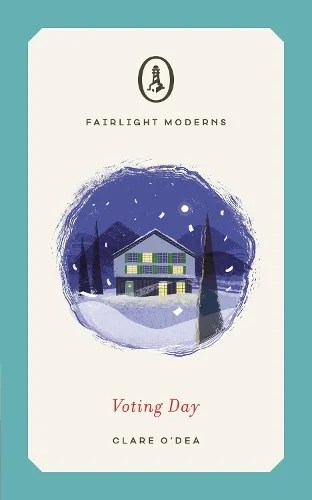
Voting Day by Clare O’Dea (2022), is published by indie Fairlight Books. The author is originally from Dublin but has been living in Switzerland for more than two decades. The novella explores the failure of women’s suffrage in the referendum of 1959; Swiss women didn’t get the vote until 1971.
We start the day of the referendum with Vreni, exhausted wife of a farmer, who believes:
“The system worked well and women didn’t know enough about politics.”
She is travelling to Bern, for surgery on her prolapsed womb. I really felt for her when she reflected:
“Rest was the word that jumped out at her when he explained the ins and outs. She was giddy about the prospect of rest. She would be looked after, two weeks in hospital and one week in the convalescent home.”
Meanwhile, her daughter Margrit is one of the first generation of young single women to work independently in the city, encountering misogynistic assumptions from male colleagues about what this means for her sexual availability:
“They did not profess their profound respect for you before beginning a campaign of casual touching that seemed to reflect special understanding between you […] nor were they handsome and cultured, these dangerous men. They hid their claws until it was too late.”
On her admission to hospital, Vreni catches the eye of the cleaner Esther, who is from the Yenish traveller community. She has suffered under the racist policies of social services:
“Somebody somewhere decided that our little home was too full and too free. They took three of us away and left the younger ones. They wanted to see children in straight lines with clean dresses and plaited hair.”
Esther subsequently struggled as a single mother:
“I had to solve my problem during Ruedi’s naps before the money ran out. When he fell asleep in my arms after a feed, I would gently place him in the playpen where he would be safe if he woke. And I would run, run from one end of the town to the other, looking for solutions.”
And we realise that Ruedi is Vreni’s foster child. The situation is so heart-rending, Vreni unintentionally exacerbating Esther and Ruedi’s pain. Pivotal is Beatrice, Esther’s boss and the only one of the four protagonists truly concerned with the referendum.
“She thought she had braced herself for this, but hope would always wriggle in, that treacherous friend.”
Voting Day effectively demonstrates the way women’s rights are circumscribed in society by both formal and informal systems of power. It does so without losing sight of its characters and conveys so much of their individual stories in an incredibly short space. I found it highly readable, whizzing through it to an end that was reassuring without being entirely unrealistic.
“Can you be content and heartbroken in the same bed on the same night? It seems you can.”
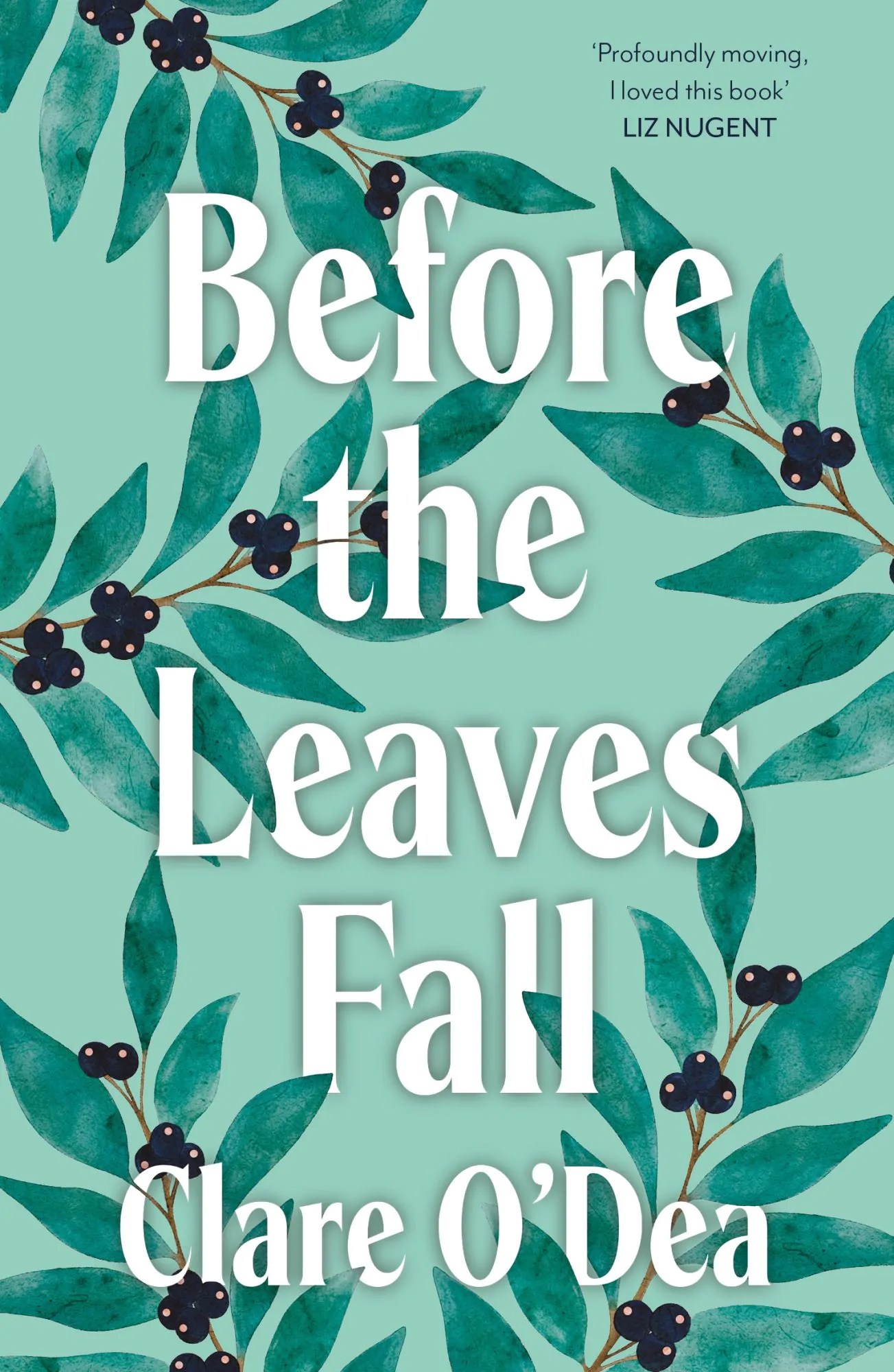
In Before the Leaves Fall (2025, also Fairlight Books) O’Dea revisits Ruedi and Margrit, now both in old age. There are some lovely echoes throughout, such as the opening scenes of rösti, Vreni’s homemade expertise contrasting with Ruedi’s ‘slimy’ shop-bought version.
Margrit is in a care home, spiky and determined to avoid the enforced social niceties at all costs:
“Better this than the nonsense Nadja was peddling, yoga and meditation. Margrit had been caught in a talk about mindfulness the other day because her legs were acting up, and she hadn’t been able to leave the dayroom quickly enough. You had to be vigilant in this place.”
Ruedi is retired, widowed and now working for Depart, an assisted dying organisation. This is the decision Margrit has taken, reluctant to live through another winter (hence the title) and struggling with her significantly reduced mobility and lack of independence. Ruedi is her assigned volunteer, to ensure she is comfortable with her decision. He mustn’t become emotionally involved.
“She was not only escaping. She was also reaching for something. Not freedom necessarily, not oblivion, but the feeling of putting herself first. She wanted to own herself once and for all, regardless of what the others – her husband, had children, the experts, even the people in this home – might think or want.”
But of course, once they realise who one another are, feelings are quick to grow. Margrit was a beacon of kindness and compassion in Ruedi’s difficult childhood.
“Margrit, a person who finally looked at him and saw something worth kindling. Margrit Sutter with the lovely wavy hair and smart clothes, the girl who smiled and played Ludo with him and told stories of Bern.”
He now becomes one of the few she allows beyond her tough carapace, as they remember the old days and learn who one another became. Both are disappointed in the relationships they have with their children and grandchildren. Both are grieving their spouses, particularly Ruedi who had a happy marriage.
“‘I grew old.’
‘It happens to the best of us.’ She smiled for the first time since he had met her.”
O’Dea is very good at writing children – sweet Ruedi in Voting Day and now his grandson Florian, perhaps less likeable but entirely believable.
Before the Leaves Fall follows the developing friendship between Margrit and Ruedi, as they both reflect on seemingly uneventful lives and how well these have been lived, as well as what living there is left to do. It’s deeply moving in its portrayal of how we hurt the ones we love and how insurmountable gaps in communication can seem.
As different relationships grow and develop through Before the Leaves Fall, they are evoked with compassion but without sentimentality.
Both novellas tackle Big Issues but without any didacticism. The interest is not in what should or shouldn’t be happening, but in what does happen and how this affects ordinary people.
“The bottle of grief was never empty. Always another sip to take, and another sip after that. You got used to the taste.”
To end, how I first learnt of women’s suffrage, dubbed into the language of the characters of these books:
I heard about The Amendments by Niamh Mulvey (2024) through Susan’s review. It was so appealing I decided it would be my indie bookshop purchase of the month (I need to stop saying I have a resolution to buy one book a month from an indie bookshop or publisher, because it’s never just one 😀 ) and it was a great choice.
There are three main timelines throughout the novel. In London, 2018 Nell’s partner Adrienne is pregnant with their first child and Nell is spiralling with anxiety and ambivalence.
“Adrienne, unfortunately, was not just an object, not just a saviour, not just a happy ending. Adrienne, it turned out, was a person with her own dreams and needs and desires. And those were: more life, more love, which was to say, which is to say – a baby.”
In Ireland, 1982 Nell’s mother Dolores has left home and moved to Dublin, where she becomes involved in a feminist group campaigning for pro-choice reproduction rights (one of the amendments of the title, the other taking place in 2018).
“‘The biggest problem in this country is that people are so scared of asking questions. I don’t know why we’re all so afraid of each other.’
Mary laughed suddenly as if she had only just realised this. She looked at Dolores, as if they were both sharing in this joke, this realisation, together, and Dolores laughed too, though she was uncertain, she felt there was so much she did not yet see.”
In Ireland 2001, studious Nell is struggling with her sexuality and has joined an all-female religious organisation hoping for answers:
“She returned to school that September feeling as if the things she used to count on were all changing in ways she did not at all approve of and this disapproval extended to include her own feelings.”
It is the escalation of events at this time which drive the novel. Nell is so confused, so full of feelings she doesn’t know what to do with, and this builds to a tragedy truly awful and very believable.
Loving Adrienne and recognising that her unresolved feelings from this time threaten her present, Nell agrees to couples therapy. But in order to be entirely honest with both herself and Adrienne, Nell needs to return home to Dolores.
Dolores has deep regrets from her past too, as well as her contemporary worries about Nell. What Mulvey demonstrates so clearly is how much can go unsaid even in relationships grounded in a deep love, and how damaging this can be.
“Dolores wakes up every day of her life with a feeling of worry around Nell, the pain is like a muscle that aches with overuse.”
In exploring the characters’ past and moving them towards a more hopeful future, Mulvey juggles the timelines and the themes with great subtlety. Multiple timelines are always tricky but these were finely balanced throughout and each enhanced the understanding of the other.
The healing that occurs felt hopeful without being sentimental. Nell achieves self-acceptance, if not quite self-forgiveness; resolution if not redemption.
I thought The Amendments was hugely accomplished and very readable. The various female characters were all well-realised and the plotting tight. Mulvey treats her characters with such humane compassion and I was rooting for them to be able to do the same.
“She looks at herself in the mirror and she reflects that all living things want to survive. And it is such a relief to include herself in that humble category of all living things.”
To end, an interesting interview with the author expanding on the societal context of The Amendments:
I was a bit wary approaching Service by Sarah Gilmartin (2023) as I’d not long finished an issue-driven novel which I thought never quite managed to create characters who existed believably beyond the issue itself. Service has been described as a #MeToo novel, looking as it does at sexual assault and the structures that enable predators to not only get away with it, but thrive. However, when I saw it in my much-beloved charity bookshop during Cathy’s Reading Ireland Month it seemed perfect timing, and I also remembered that Susan had rated it.
The story is told from the point of view of three characters in alternating chapters.
Hannah, now in her thirties and selling her home as she and her husband divorce, looking back on time when she was a student and a waitress at T, a swanky restaurant reaping the rewards of boomtime Dublin;
“And there was Daniel, of course, we all loved Daniel. The skill, the swagger, the hair, even the naff red bandana that he sometimes wore during prep. We were in awe of him, of the fact that he didn’t seem to care about anything except the food. Serious cooking and good times, that was the dream we sold at T, over and over again.”
Daniel, the celebrity chef who oversaw T, now accused on Facebook of rape by an employee and facing criminal trial;
“Tomorrow the farce begins in earnest. Tomorrow I’ll see that ungrateful wench in person for the first time since she sat at her computer and pressed destroy.”
And his wife Julie, there throughout it all and trying to keep a home running for their teenage sons.
“I knew that you were not the kind of man who would come in the door of an evening and ask about your family. You were too full of your own stories, your voice set to megaphone inside your head, while the rest of us whispered asides. I knew this and I still said yes.”
This isn’t a he said/she said thriller – the way the stories and voices are presented it’s clear that Daniel did it. I thought this was a clever decision, as it frees Gilmartin instead to really focus on the characters’ lives within the various systems of enablement surrounding Daniel. He doesn’t see himself as a predator: why would he, when he is venerated – his toxic, controlling behaviour lauded?
“In that long, hot room that was fuelled by aggression and banter and occasional lines of speed, everything was sexualized.”
Daniel’s narrative is unreliable of course, and Gilmartin cleverly presents it in a way that the reader isn’t sure if he believes it himself. Is he consciously lying, or does he not recognise his actions as rape? He’s deluded enough to think all women want him really, and whether they say ‘no’ to him is a matter of indifference – like everything else they say. In a misogynistic culture where women are commodified and discardable the minute they reach thirty, their careers in front-of-house dependent not on skills or talent but on the approval of the straight-male gaze, where his own wife refers to ‘sluts’, he probably sees what he does as his entitlement.
I’ve seen some readers saying they vacillated with regard to the characters, but this wasn’t my experience with Hannah or Daniel. Where I did change somewhat was with Julie. I found her internalised misogyny infuriating, along with her astounding naivete that somehow a man who has plenty of women willing to sleep with him would therefore not assault anyone.
“How did I not know my husband was a predator? Somehow, I have no answer, beyond some ferocious thought, that all these years have meant nothing, marriage to mirage.”
“How do you weigh up the infinite exhibits of a decades-long marriage?”
But ultimately I saw her as a victim in the situation too, and it is Julie who pinpoints a fundamental societal attitude, so long ingrained, which silences women:
“I always had that ability, learned at such a young age – not to make a scene, not to dramatise, not to look for attention. Only the wrong kind of girls looked for attention.”
There is real tension in Hannah’s narrative as you know what is going to happen while desperately wishing it wouldn’t, and I thought the scene was handled sensitively and entirely non-gratuitously. The immediate fallout and enduring trauma are both believably portrayed.
When I initially read Service, I wondered if a limitation was the voices not being overly distinct from one another, but now, a few days on, I find Daniel’s voice has really stayed with me, the insidious toad (except I quite like toads). So unfortunately through not being able to shake him off I’ve realised my mini-criticism was mistaken!
The ending offered some hope while not being entirely unrealistic which I appreciated, not needing unrelenting bleak narratives right now. In an Author’s Note, Gilmartin explains that the barriers in the current legal system mean that the trial in the book would be unlikely to even occur in real life.
I felt quite intimidated approaching A Ghost in the Throat by Doireann Ní Ghríofa (2020) for Cathy’s Reading Ireland Month. A piece of auto-fiction woven around a 18th century Irish-language lament, it sounded quite a challenge. Well, I picked it up and absolutely whizzed through it, finding it so compelling and intensely readable.
“When we first met, I was a child, and she had been dead for centuries.”
At the start of the book, Doireann Ní Ghríofa has three small children and is in the relentless, hazy, exhausting world of trying to keep a home for her family. She captures brilliantly the physical and emotional demands – particularly on women and on women’s bodies – of parenting. I’ve never had children and her visceral (but not shocking or gratuitous) portrait felt very real and immersive.
She loves motherhood and she finds pleasures in the domestic day to day, despite the pressures and demands of both:
“I coax many small joys from my world: clean sheets snapping on the line, laughing myself breathless in the arms of my husband, a garden slide bought for a song from the classifieds, a picnic on the beach, three small heads of hair washed to a shine, shopping list after completed shopping list – tick tick tick – all my miniscule victories.”
But we are in no doubt that Ní Ghríofa’s life is not easy. She needs support, female support, and she finds it with eighteenth-century poet Eibhlín Dubh Ní Chonaill and her lament for husband – Caoineadh Airt Uí Laoghaire (The Keen for Art Ó Laoghaire) – who was killed by the British.
As Doireann Ní Ghríofa reads and re-reads the poem she has loved since childhood, she despairs at the limited translations and lack of information about the author:
“How swiftly the academic gaze places her in a masculine shadow.”
As an Irish-language poet herself, Ní Ghríofa has translated her own poems and so she begins to translate the lament. It becomes something of an obsession, or at least a preoccupation, haunting her sleep-deprived life:
“between the twin forces of milk and text, weeks that soon pour into months, and then into years.”
She also juggles the demands of her own writing:
“I watched poems hurrying towards me through the dark. The city had lit something in me, something that pulsed, vulnerable as a fontanelle, something that trembled, as I did, between bliss and exhaustion.”
Ní Ghríofa brilliantly weaves in aspects of the lament alongside her own life. We learn of the difficulties she experienced in the past, as well as the challenges of her life now. There is a repeated refrain “this is a female text” as she explores how women’s lives have been obscured and disregarded throughout the centuries, and particularly women’s narratives:
“literature composed by women was not stored in books but in female bodies, living repositories of poetry and song.”
One of my favourite examples was this one:
“A family calendar scrawled with biro and pencil marks, each in the same hand – this is a female text.”
Ní Ghríofa writes about her family while keeping them obscured, respecting their privacy. This echoes her attempts to piece together Eibhlín Dubh Ní Chonaill’s life, existing as it did in spaces between the records of the men in her family. Eibhlín Dubh Ní Chonaill remains obscure and Ní Ghríofa has to use her imagination to fill in the considerable gaps.
Another echo is that Ní Ghríofa clearly adores her husband and children, and at one point rues the fact that she can’t write poetry for her husband the way Eibhlín Dubh Ní Chonaill does for hers. But actually I thought these very simply expressed sentences were a lovely tribute to him:
“With him, at last, I began to laugh. He entered my life with neither fanfare nor glamour. There was no elopement. He simply fell into step by my side, with his easy smile, his old t-shirts, his worn jeans, and his steady footfall.”
Although time is never specified, there is a sense of Ní Ghríofa’s family growing older and her work on the translation nearing an end, despite the frustrations:
“Such dedication, if nothing else, has permitted me to grow in slow intimacy with the poet herself, to discover the particular swerve of her thoughts and the pulse of her language.”
The translation is given at the end of the book.
I thought A Ghost in the Throat was incredibly accomplished. It manages to simultaneously convey the horrors witnessed by Eibhlín Dubh Ní Chonaill for English-speaking readers; the challenges of twenty-first century motherhood and female artistry; and the broader themes of women’s voices, lives and creativity being marginalised, with such a light touch. The writing is poetic but never overwritten and Ní Ghríofa’s voice so warm, honest and engaging.
“I have held her and held her, only to find that she holds me too, close as ink on paper and steady as a pulse.”
To end, the author reading from her work while sat in her car:
I really enjoyed August is a Wicked Month by Edna O’Brien when I read it a few years ago, and resolved to read The Country Girls trilogy. Admittedly it’s taken me a while but I have finally picked up the first in the trilogy, and O’Brien’s debut novel, The Country Girls (1960). Cathy and Kim are also hosting A Year with Edna O’Brien throughout 2025 so I’m joining in with that too 🙂
The girls of the title are Cait and Baba, growing up in 1950s rural Ireland, and the tale is told by Cait. Once again, I found O’Brien so intensely readable. She is great at small details that illuminate so much, without overwriting:
“Slowly I slid onto the floor and the linoleum was cold on the soles of my feet. My toes curled up instinctively. I owned slippers but Mama made me save them for when I was visiting my aunts and cousins; and we had rugs but they were rolled up and kept in drawers until visitors came in the summer-time from Dublin.”
Cait lives with her parents and man-of-all-work Hickey, on their farm which is hanging on by a thread, not helped by her father going on frequent alcohol benders. Her mother is loving but they all live in fear of her father’s return and the violence he brings.
“Her right shoulder sloped more than her left from carrying buckets. She was dragged down from heavy work, working to keep the place going, and at night-time making lampshades and fire-screens to make the house prettier.”
Baba’s family is better off financially, but they have their own sadnesses including her mother also self-medicating with alcohol. Baba can be a spiteful bully, but Cait experiences a growing awareness of how much Baba needs her too.
“Coy, pretty, malicious Baba was my friend and the person whom I feared most after my father.”
Village life is not idyllic in O’Brien’s world. There is a lot of poverty, there is violence, deep unhappiness and gossip. The girls are subject to the sexual attentions of much older men, even as they are at school.
Cait is academic and wins a scholarship to a convent school. Baba’s family pay for her to have a place too, and so the girls leave their village for the first time.
Baba despises the school with her whole being:
“Jesus, tis hell. I won’t stick it for a week. I’ll drink Lysol or any damn thing to get out of here. I’d rather be a Protestant.”
O’Brien brilliantly creates the cold, the disgusting food, the boredom and the oppressive rules laid down by the nuns.
“The whole dormitory was crying. You could hear the sobbing and choking under the covers. Smothered crying.
The head of my bed backed onto the head of another girl’s bed; and in the dark a hand came through the rungs and put a bun on my pillow.”
Eventually Baba engineers a way for her and Cait to leave, which to my twenty-first century eyes was very funny, but perhaps contributed to the banning of the book in Ireland and the burning of it by a priest when it was first published.
So in disgrace, the girls make their way to Dublin and all the seductions of city life, which Baba in particular is keen to embrace.
“Forever more I would be restless for crowds and lights and noise.”
The scandal The Country Girls created in 1960 seems very dated now. The only part I found concerning was a relationship that Cait begins with Mr Gentleman, a married man much older than she is, when she is still at school. This continues throughout the novel; it remains unconsummated but is wholly inappropriate and what we would now call grooming.
Apparently O’Brien wrote this in three weeks which is just extraordinary. Her evocations of environment and people, her ear for dialogue and her fluidity of style are all so well observed.
The novel ends on an anti-climax which initially I found an odd decision, but reflecting on it I think it is one of its strengths. It emphasises O’Brien’s choice to write about the realities of life for young women at that time, the life she knew. It insists on its truth, more than overly dramatic scenes, to engage the reader.
I’m looking forward to catching up with Cait and Baba in The Lonely Girl – hopefully it won’t take me another two years!
“I was not sorry to be leaving the old village. It was dead and tired and old and crumbling and falling down. The shops needed paint and there seemed to be fewer geraniums in the upstairs windows than there had been when I was a child.”
To end, a great interview with the author from the time of her memoir being published. She discusses The Country Girls around 11 minutes in:
I never take enough books away with me. So having finished The Garden of Evening Mists during my New Forest weekend, I ducked into the Oxfam Bookshop in Lymington and was gratified to find a copy of The Queen of Dirt Island by Donal Ryan (2022). Ryan is one of my favourite contemporary authors and I was yet to read his most recent novel.
Characters from his previous novel Strange Flowers make a reappearance here, but they are not the main focus. The story belongs to Saoirse Aylward, her mother Eileen, and her paternal grandmother Nana who all live together in Nenagh, County Tipperary.
We follow Saoirse from her 1980s childhood to her thirties, with the tensions and strains, and unwavering warmth and love that the women create within their family home.
Saoirse’s father died a few days after she was born and she sometimes feels guilty for not feeling his loss.
“Every other house in the small estate that had children in it also had a father, a living one.
None of them looked like they were of much use except for cutting grass with the same shared lawnmower, taking turns to cut the verges in the small green area at the front of the estate and the smaller green at the back.”
The Aylward women are an enclosed, loving unit, viewed as somewhat eccentric by the rest of the town. Eileen is uninterested in men for the most part, her heart lying with her dead husband. She is sweary and gruff and no-one understands why she and her mother-in-law are living together.
“She realised that she and her mother rarely spoke properly at all. That most of mother’s speech was indirect, utterances flung around like fistfuls of confetti, vaguely aimed and scattering randomly. But she supposed this to be the way of all parents and child relationships. Her mother told her every single night that she loved her.”
Nana might be less sweary, but in her own way she is just as direct, such as when speaking to Saoirse about her Uncle Chris:
“Whatever he was at inside me he made a pure hames of my pipework. He started as he meant to go on, anyway, that’s for sure.”
His brother Paudie has a dramatic and mysterious life, helping on the farm until he is suddenly arrested and sent to prison.
“They never looked comfortable down here in the angular lowlands of the estate. They were shaped to the contours of hills and hedgerows, their feet only sure on giving ground.”
Yet it is Saoirse’s teenage years that bring the most disruption to the house. Ryan is excellent at capturing this time, such as this description of Saoirse’s first boyfriend:
“His miasma of Lynx and sweat and stolen cigarettes, his uncertain swagger, his damp hand in hers.”
But Saoirse is learning about the darker sides of life too, which have previously not infiltrated her safe home: self-harm, domestic abuse, suicide, sexual assault. Her mother and Nana can’t protect her from everything.
And within her family, there is a threatening presence: her uncle Richard. He is her mother’s brother, and while Eileen is estranged from her family, her father has left her the titular land. Richard wants it back, and this tension bubbles in the background through the years.
The tone of The Queen of Dirt Island felt very well-balanced, not shying away from trauma but not unrelentingly bleak either. Nana in particular provided humorous moments. The women all felt fully realised and believable, their voices beautifully evoked.
This is not a novel to read for positive portrayals of men, however. Nana advises young Saoirse:
“You only get one life, and no woman should spend any part of it being friends with men. That’s not what men are for.”
The Queen of Dirt Island is a warm-hearted book, compassionate to its flawed characters, which was a joy to read. I could have spent another 200 pages at least with the Aylward women.
Ryan writes with a poetic restraint, and the story is told through a series of vignettes. Each section is 500 words including a title, and at just 242 pages it’s a really quick read. Thankfully I’d also found a collection of Dorthe Nors short stories in the Oxfam bookshop so I managed to keep myself going on the return journey home 😉
“She was glad of mother’s unwavering impolitic nature, her peculiar loving manner, and she knew that Nana loved mother with the same gruff constancy.”
To end, the author reading one of the vignettes, which I read in an interview was based on a childhood experience with his mother:
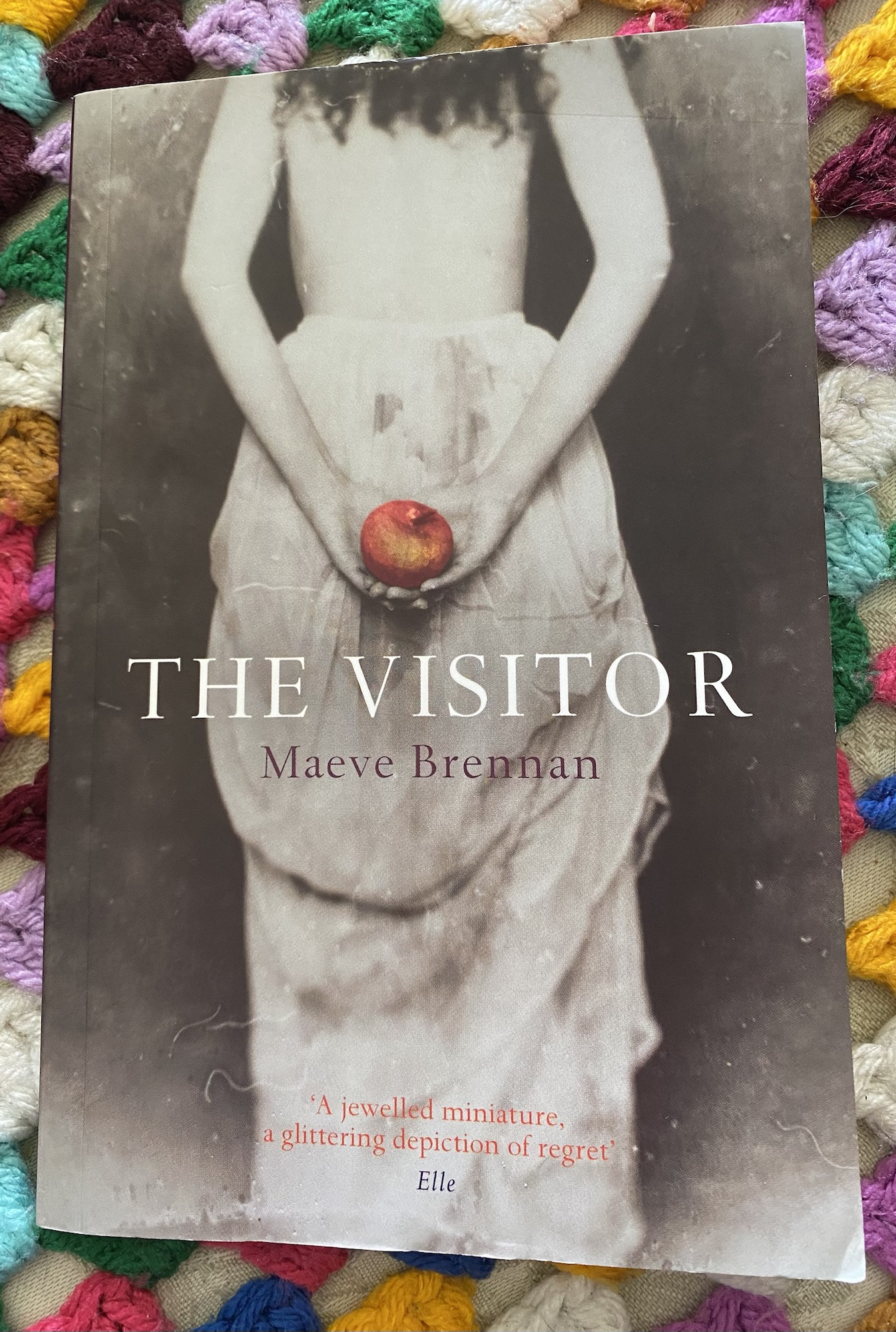
I received my copy of The Visitor by Maeve Brennan (written in the 1940s, published after her death in 2000) from lovely Karen at Kaggsy’s Bookish Ramblings, having read her wonderful review. I’d not read Brennan before and I was really keen to; having now read this 81 page novella I definitely want to explore her writing further.
Twenty-two year old Anastasia King returns to her grandmother’s house in Dublin, having spent six years in Paris with her mother who has now died.
“She was still the same, with her delicate and ruminative and ladylike face, and her hands clasped formerly in front of her. Anastasia thought, She is waiting for me to make some mistake.”
Little does Anastasia know she has already made the mistake by leaving with her mother. Her grandmother is entirely unforgiving and inflexible about the hurt caused to her son who has also died, and makes no allowances for Anastasia having been the child of the marriage.
Anastasia expects to be able to live with her grandmother as she has nowhere else to go, but her grandmother has other ideas. She does not view this house as Anastasia’s home any longer and is determined to keep her in the titular role. Her imperviousness and lack of welcome border on Gothic and I was reminded of Janet in O Caledonia by Elspeth Barker. The Visitor lacks the overt Gothic tones of that novel but they share the dislocation of a young adult in her own home and the almost eeriness that evokes.
“She turned and looked at the mirror, but it reflected only empty chairs, and the firelight played indifferently on polished furniture as it had once across her parents’ faces. There is the background, and it is exactly the same.”
Her grandmother’s elderly housekeeper Katharine does her best to welcome Anastasia, but her kindness is vastly outweighed by Mrs King’s seemingly endless bitterness. Brennan adds complexity to the tale with the introduction of old family friend Miss Kilbride. Anastasia’s actions towards Miss Kilbride stop the story becoming fairytale-like or straightforward. By portraying human beings in all their complexities Brennan doesn’t allow trite conclusions to be reached.
I don’t want to say too much about the novella as it’s so short, but its length doesn’t mean it lacks power. The loveless, withholding atmosphere that Mrs King creates is masterfully drawn and really gets under the reader’s skin. The ending is ambiguous and adds to the feeling of dislocation throughout the story. Brennan doesn’t waste a single word.
“Home is a place in the mind. When it is empty, it frets. It is fretful with memory, faces and places and times gone by. Beloved images rise up in disobedience and make a mirror for emptiness.”