Novella a Day in May 2026 – No.29

It was Kate’s review right at the end of 2024 which alerted me to Loved and Missed (2021), Susie Boyt’s seventh novel but my first time of reading her.

Loved and Missed is told primarily from the point of view of Ruth, whose daughter Eleanor is addicted to heroin.

“I sometimes thought what I minded most was that all the kindness had gone from her face. The way she had profaned her body.”

Set in a recognisable London, it’s not explicitly stated when the story is set but feels like the early noughties, with Eleanor born in the late 70s/early 80s.

Ruth is sad and self-blaming, but she’s also sparky, funny and resilient. When Eleanor’s baby Lily is born in need of morphine , it is Ruth who tires herself ragged at NICU. Eleanor and her boyfriend Ben are not presented as terrible people, just entirely incapable of taking care of themselves or anyone else.

I’m already making this sound much heavier than it is, so how is this for when Ruth realises she adores her granddaughter compared to other children?

“I sometimes found babies a bit cynical around the edges. Their been-here-before auras often registered as smug.”

Ruth decides to take on the care of Lily. How she engineers this is a move of breathtaking cynicism which Eleanor and Ben entirely live up to. It is presented matter-of-factly while being heartbreaking.

“Eleanor shrugged, which was often how she agreed with me anyway.”

Eleanor is filled with fury, which means Ruth steps on eggshells the whole time, terrified of alienating her further. As a reader I found Eleanor’s behaviour passive-aggressive, and aggressive, to an infuriating level, but Ruth’s deep love for her daughter and grandchild is palpable.

Over time, we see Lily grow into a teenager, repeatedly let down by her mother, unwaveringly loved and supported by Ruth.

“The world was Eleanor’s widow, I sometimes thought.”

Lily is old before her time, unsurprisingly. Meanwhile, her mother sinks further, as Ruth observes:

“She no longer looked at me with defiance and those jets of fury; There was a mild bewilderment to her and hardly any harshness at all. We were in a different phase. Her atmosphere was entirely sad.”

I adored Loved and Missed. It was so believable in presenting the singular focus of addiction without demonising Eleanor in any way, or attempting reductive explanations for why she is as she is. Ruth’s narrative does not let herself off the hook, even when she really could, and at the same time she has to approach life with love and humour to be present for Lily. The two of them laugh a lot.

It’s pacily written with so much wit, there were many sentences I marked – this post could easily have been a series of quotes.

It’s also got a brilliant character in Ruth’s best friend Jean, a pithy, clear-sighted, literature-loving, uncompromising powerhouse.

“’Sometimes in life,’ she said, ‘a really quite good book is what you need more than an excellent one.’ That scared me. It was so un-Jean.”

Loved and Missed is a testament to love, and the messy realities of love – how it is lived in an imperfect world by imperfect people, and how it is entirely fundamental. The novel is wholly devoid of sentiment but made me cry more than once, which given I was on an intercity train was not ideal! Highly recommended, and I’ll definitely be exploring Boyt’s other novels.

Novella a Day in May 2026 – No.26

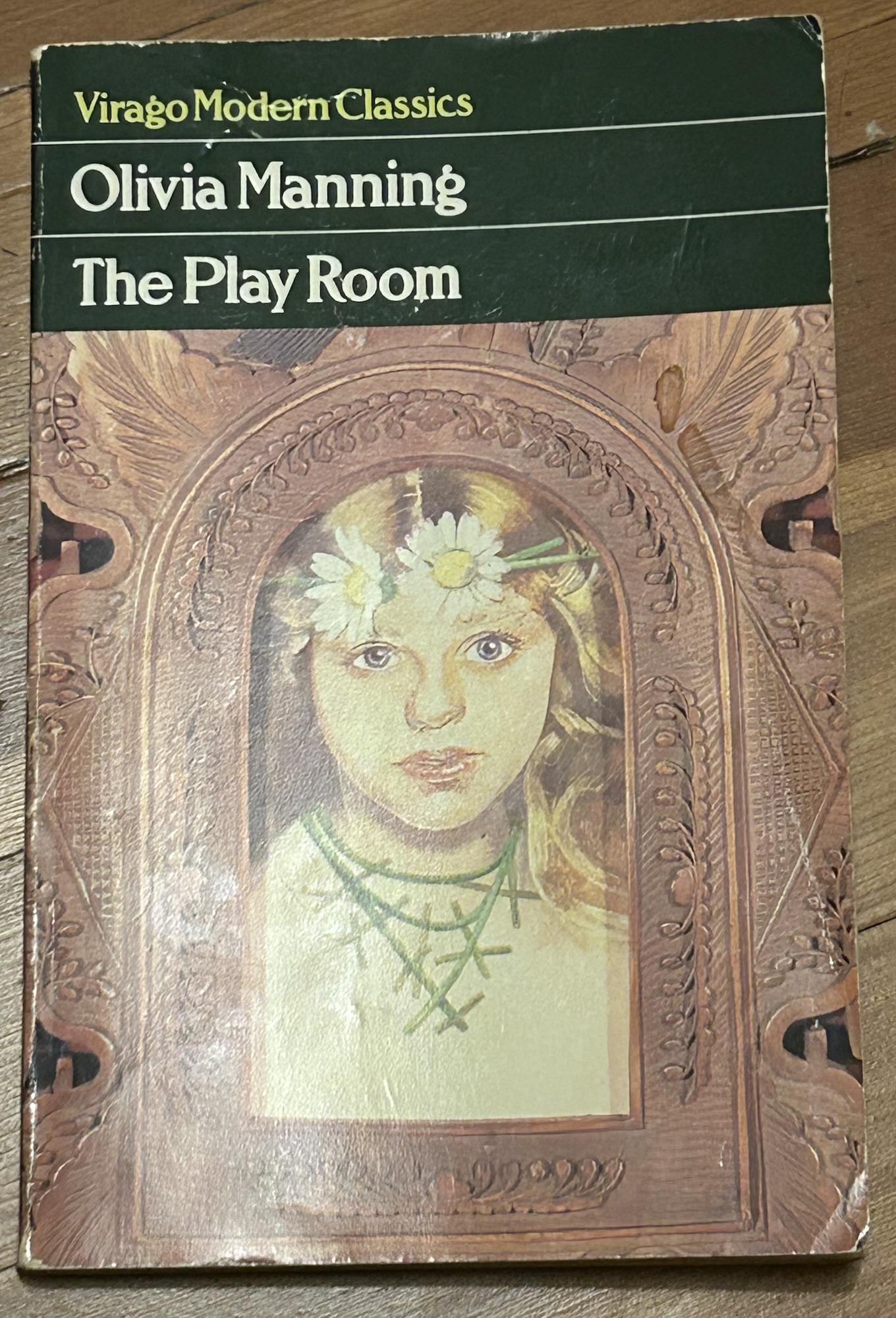
Today a novella that I picked up when Simon and I went book shopping last month. The Play Room by Olivia Manning (1969) is an unnerving evocation of young womanhood with inherent hurt and dangers, in a brilliantly evoked 1960s small town setting.

Laura Fletcher is about to sit her O’Levels (Year 11) and is deeply unhappy at her girls school in the small town of Camperlea near Portsmouth. The other girls don’t like her, which is partly understandable given Laura’s tendency towards boastful lying to cover up how inadequate she feels. The teachers are not sympathetic. When Vicky Logan, an older, beautiful girl lends her a handkerchief, she earns Laura’s utter devotion.  

“Over the years, observant and admiring, Laura had noted her Vicky remained aloof from schoolroom pettiness so she seemed to Laura above human weakness.”

Vicky seems pretty aloof from everything, including her own life, happy to drift along:

“Everyone knew that should she choose to earn her living, she could at once become a film star or a model or something like that.”

I love that “something like that” – so wistful and naïve, so teenage.

Laura is desperate to be friends with Vicky but she is wrapped up in being Best Friends with a girl called Gilda. The reader realises that their friendship may be something more, but Laura remains oblivious.

“She imagined she knew everything but had to admit there was more to life than knowledge. Experience was what she needed.”

Laura’s leverage arrives through an experience she has while on holiday on the Isle of Wight with her brother. This event has dated badly and would not be written now. If you get past it, it serves as a plot point by giving Laura a true story for once and a way into Vicky and Gilda’s world.

Their world is one of motorbikes, dances and men, and Laura is out of her depth and simultaneously desperate to be part of it all. She hates where she lives and can’t wait to leave:

“She blamed her mother for it. She would, she felt, have been a totally different person had she not been born in this dreary town, in this dreary avenue and in a house perpetually fretted by the winds of anxiety.”

Her mother Mrs Fletcher is an intriguing character. She is highly anxious, controlling, self-pitying. She is dismissive to everyone. Yet although unlikable, I wondered about her – one of that generation of women who married immediately post-war, and then saw the world change beyond all recognition with women having choices barely thought of previously.

“Although she controlled everything, although she said ‘I have to take every responsibility,’ it was true that someone had to look after her. She felt too much; lived with too much difficulty; met every situation with nervous dread. Someone had to help her bear her ineptitude for life.”

To me, both she and Laura were united by their anger at their world and its limitations, although neither could see it. One of the rare scenes not from Laura’s point of view is when they shop together for a dress. Mrs Fletcher can see it is ugly, doesn’t suit her daughter, and how young and vulnerable she looks in trying to be older. Yet she knows that because of her way of behaving, nothing she can say will be given any weight by determined Laura. It is one of the most moving scenes in the book.

When Gilda goes to Malta for the summer, Laura sees her chance with Vicky. They start going to dances no longer chaperoned by the local vicar, and events soon spiral out of control. Vicky is drawn to a violent man and Laura is too young to know what to do, or even realise that anything needs to be done.

The Play Room shows how vulnerable young people are when they think they have all the answers but with no idea of what the world could ask of them. A darkness runs through the story; there is no nostalgia for school or young adulthood here. It captures the intensity of feeling in adolescence, but is not entirely without humour:

“Were she asked to die for Vicky she would, she decided, die. At least, she would give the proposition serious thought.”

I found The Play Room highly readable and evocative. I felt the holiday on the Isle of Wight is given too much space within such a short novel, but the bullying, isolated school days and Laura’s worship of an older girl she really doesn’t know at all was well realised. I hoped she would make it to London one day and not be too disappointed…

“Laura, discouraged, dropped down on the rug and shutting her eyes, saw herself walking in night-time Soho through a street a-dazzle with light, where nobody slept. There were discotheques and dance clubs and cafes and coffee bars and young men by the dozen: young men beyond dreams, with lean pliable bodies and hair curling on their shoulders, as beautiful as archangels, in clothes or colours. And she could imagine Vicky walking beside her! Everyone would look at them. Everyone.

Novella a Day in May 2026 – No.17

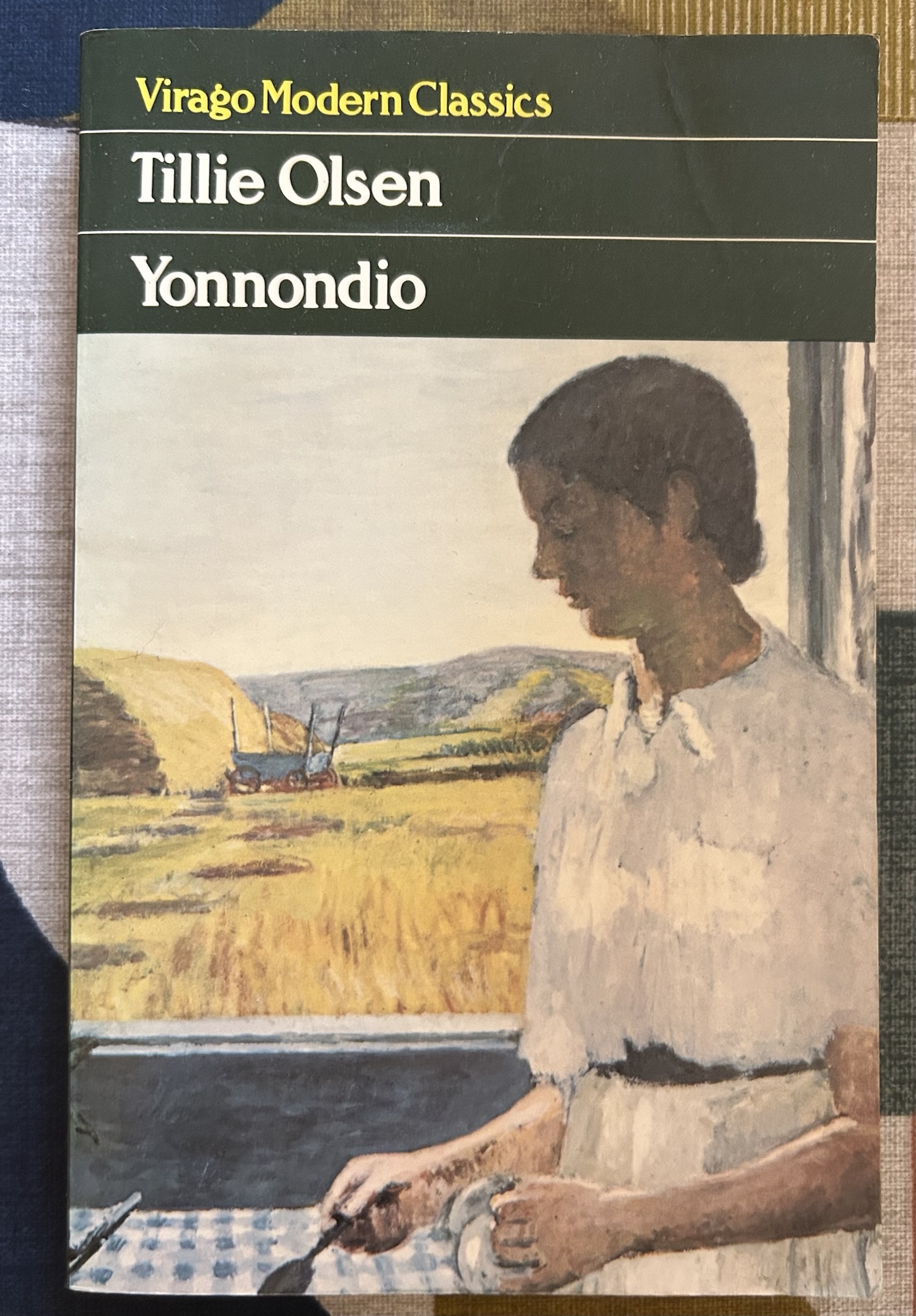
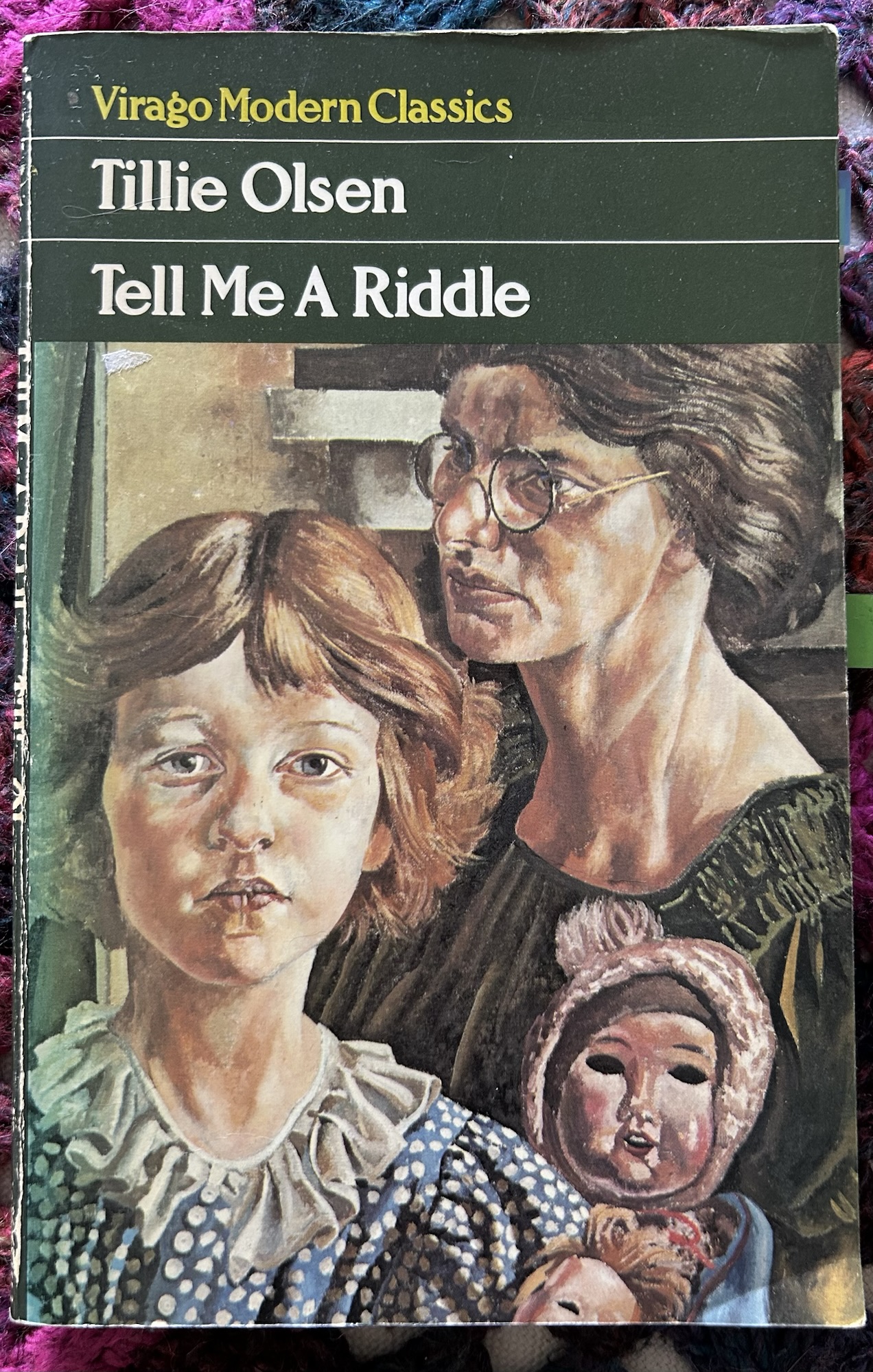
Earlier this year I read Tillie Olsen’s Tell Me a Riddle for the 1961 Club. I was so impressed I was encouraged to finally get Yonnondio: From the Thirties off the shelf for this month of novellas. Olsen started writing this during the Great Depression when she was only 19, but she put it aside to raise her family and later published it in 1974, although it remains unfinished.

I only write about books I recommend, and I do recommend Yonnondio because it brilliantly evokes the grinding poverty of itinerant workers in 1930s America. But good grief, it is bleak. Unrelentingly, grindingly bleak. Which is the whole point, but it did make it a bit of a slog at times, even for such a short book.

It opens with the Holbrook family living in Wyoming. The father Jim works in the mine, where the prospect of mine collapse/explosion looms large over the whole town. His wife Anna is raising their family of four children (more by the end) on no money, not helped by the fact that Jim drinks a lot of his wages.

“Mazie pushed her mind hard against things half known, not known. ‘I am Mazie Holbrook,’ she said softly. I am a-knowen things. I can diaper a baby. I can tell ghost stories. I know words and words. Tipple. Edjication. Bug dust. Supertendent. My poppa can lick any man in this here town. Sometimes the whistle blows and everyone starts a-running. Things come a-blowen my hair and it is soft, like the baby laughing.”

It is a terrifying event with Mazie which stops Jim going to the bars and the family move to South Dakota to work as tenant farmers. Here they achieve the nearest they have to happiness, with Jim working outdoors, the children enjoying school, and Mazie drawing the attention of their elderly neighbour who recognises her intelligence and lends her books.

“After a long while Anna would laugh, a strange mirthless laugh, and rise to go into the house. Then Jim, too, would follow, knocking the ashes out of his pipe onto the vine, giving a last broad look over the night and the earth. Sometimes seeing them sit so in the night, a sharp unhappiness would pierce the golden haze in Mazie’s heart; but the blur of days descending so swiftly would wash it out again.”

However, as they were warned, tenant farmers work themselves ragged to earn practically nothing and usually end up owing money. As this occurs, Mazie’s books are sold and the family move again to Omaha. Now they are in a city, near a slaughterhouse which we are repeatedly told, makes the whole area stink of vomit. The family really seem doomed now – the children hate school and all become ill, Anna has a miscarriage, Jim is drinking again.

Olsen brilliantly portrays the hopelessness of the Holbrook’s situation. All they want is to earn enough money to feed their family and live comfortably – not too much to ask. Anna is desperate for her children to increase their chances through education, but the moving around risks this. The casual domestic violence, illness and stress also incrementally destroys the children, even when they don’t fully understand it:

“Ben saw too – but in the confused, entangled way of a small child whose mind is a prism through which the light shatters into a thousand gleams and shadows that can never come whole. Say rather, a weight, an oppression dragged always in his chest; a darkening shadow hovered over his days in that in moments descended on pierced sharp claws on his heart. Only he did not know why or how – he but knew there was a darkening where there had been light, he but felt there was a weight where there had been a lightness.”

Where the novel finishes actually offers a glimmer of hope, but this wasn’t the intended ending. In Yonnondio, Olsen has written a powerful portrait of the failure of society to allow all its members the potential to thrive. She demonstrates how poverty degrades and brutalises, and how the biggest impact is inevitably felt by the most vulnerable. I’m glad I read it but I’m also hoping I have a comic novella somewhere on the shelves to help me recover, maybe some Wodehouse…

Novella a Day in May 2026 – No.7

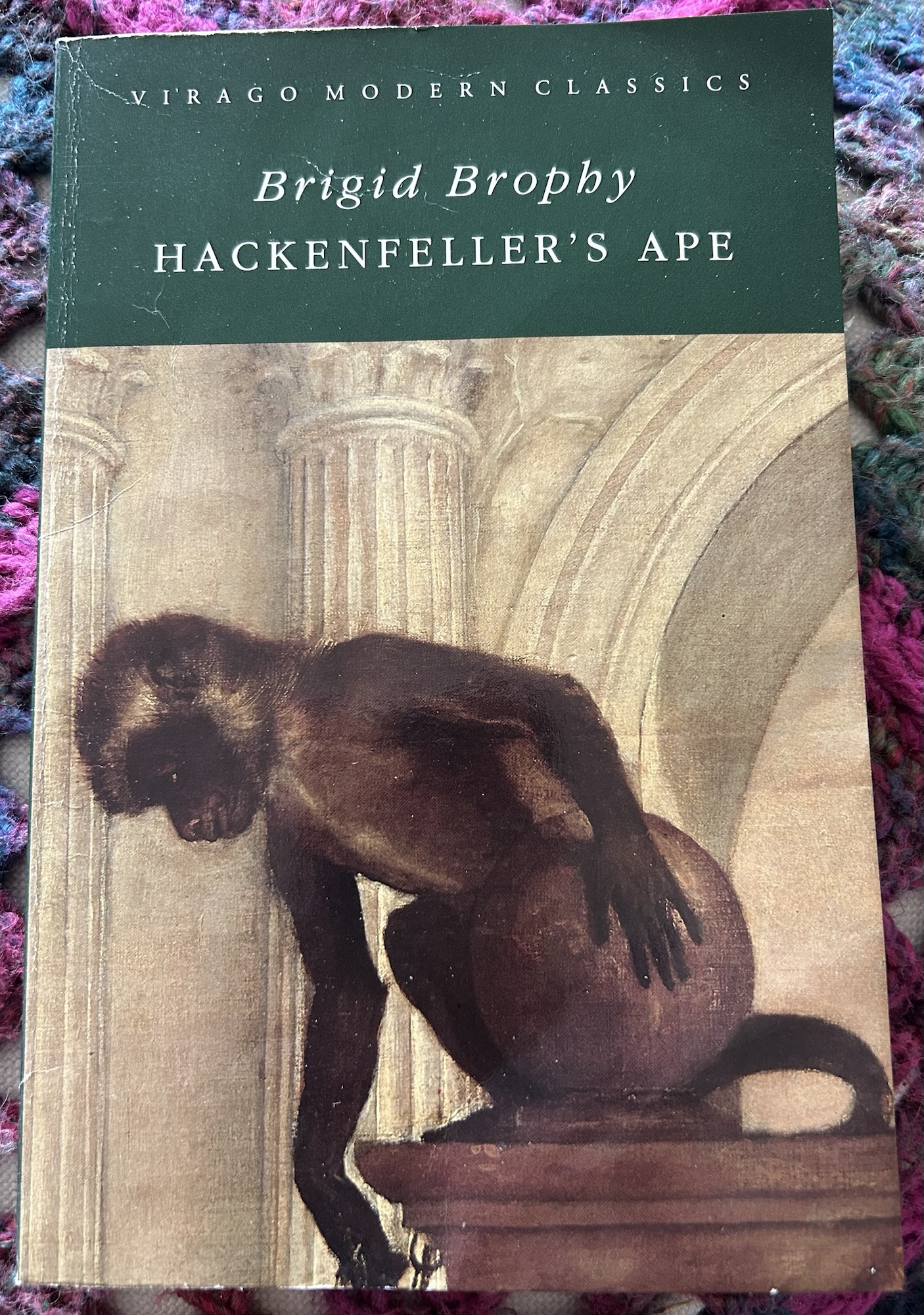
Last year for this project I read Brigid Brophy’s The Snow Ball, which made me keen to read more. Hackenfeller’s Ape (1953) was her debut novel and already demonstrates what an accomplished stylist and storyteller she was.

Professor Clement Darrelhyde is at London Zoo watching two Hackenfeller’s apes, Percy and Edwina. The apes are thought to be the closest to humans, and Brophy draws her parallels with a light comic touch.

“In captivity it moved on all fours; but in the jungle, as Hackenfeller had noted, it ran erect with its hands holding onto branches overhead. Children sometimes used a similar method when they learn to walk, but in the adult man it was forgotten until he had to relearn it in crowded buses and trains.”

Both the Professor and Edwina hope for a mating to occur, but Percy is not obliging, despite the Professor’s ritual of singing Mozart to them.

“Here was an animal discontent with his monkeydom, already exercising the first characteristic of Man, which Man had never satisfactorily explained, self-restraint.”

Very quickly we learn that the Professor is under time pressure. An arrogant young researcher named Kendrick wants to send Percy to space in a rocket. The Professor is outraged, disparagingly drawing parallels in his mind between Kendrick and Rossini! He has only a few days to try and rescue Percy (although, keeping him in a cage is an odd kind of rescue).

“He looked like a scholastic grasshopper, crossing Regent’s Park and shattering its pastoral calm.”

The Professor undertakes interviews of comic misunderstanding with a journalist, and the inappropriately named Colonel Hunter at the League for the Prevention of Unkind Practises to Animals. Brophy has great fun satirising the press bias and well-meaning inactivity of organisations.

Eventually the Professor is aided by Gloria, a young pickpocket and burglar who, having been in prison, is up for setting Percy free.

But what does Percy want? Brophy takes us inside his mind in a way that works perfectly. It never seems clunky or whimsical, and she never sentimentalises Percy. I particularly enjoyed this reflection of his:

“Physically, he was exhausted. The Professor had not let him have his sleep out; and that at first seemed typical of the Professor’s nattering officiousness.”

The Professor and Gloria seemed doomed to failure and I couldn’t work out how Brophy would end this tale, but it is surprising and sensational, and she carries it off with aplomb.

I should warn readers there are some upsetting moments with the animals, but these are sentences not scenes. Brophy was a leading campaigner for animal rights and she knows how to make her points without didacticism or horror.

This really is an astonishing novel, finely balancing serious issues with comedy, philosophy with outright silliness.

Hackenfeller’s Ape has been reissued by Faber as one of their wonderful Editions series. More than 70 years after it was written, I’m sure it will resonate with a new generation of readers.

“Every woman who writes is a survivor.” (Tillie Olsen)

Simon and Kaggsy are running one of their marvellous Club events all week, this time it is the 1961 Club. I’m hoping to do a few posts, and I’m starting with a short story.

Tell Me a Riddle by Tillie Olsen is a collection of four stories, with the titular tale published in 1961, so that is the one I will concentrate on. But all four are expertly realised with distinct narrative voices and I really recommend the whole collection.

Tell Me a Riddle looks at the last year or so together of a couple who emigrated from Russia (as the author’s parents had done). It opens:

“For forty-seven years they had been married. How deep back the stubborn, gnarled roots of the quarrel reached, no one could say – but only now, when tending to the needs of others no longer shackled them together, the roots swelled up visible, split the earth between them, and the tearing shook even to the children, long since grown.”

This antagonistic couple are not mellowing with age. He wants to move to supported accommodation, the Haven, she is determined to stay put. The fury of the sacrifices she has made throughout married life spill out, as he tries to entice her:

“A reading circle. Chekhov they read that you like, and Peretz. Cultured people at the Haven that you would enjoy.”

“Enjoy!” She tasted the word. “Now, when it pleases you, you find a reading circle for me. And forty years ago, when children were morsels and there was a Circle, did you stay home with them once so I could go? Even once? You trained me well. I do not need others to enjoy. Others!” Her voice trembled. “Because you want to be there with others. Already it makes me sick to think of you always around others. Clown, grimacer, floormat, yesman, entertainer, whatever they want of you.”

Having not spoken her resentments previously, she now digs her heels in:

“Enough. Now they had no children. Let him wrack his head for how they would live. She would not exchange her solitude for anything. Never again to be forced to move to the rhythms of others.”

The impasse escalates, with neither seeming to be anywhere close to winning, until events overtake them and her health begins to deteriorate:

“A bellyful of bitterness and every day the same quarrel in a new way and a different old grievance the old quarrel forced her to enter and relive. And the new torment: I am not really sick, the doctor said it, then why do I feel so sick?”

They move around the USA, visiting children and grandchildren, both reflecting on what they left behind and what lives they have enabled their children to create. Olsen analyses the promises and shortfalls of the American Dream through ordinary lives.

At the start of the story the husband has called his wife “Mrs Word Miser”, among other epithets. But by the end, as she lays dying in bed:

“The week Lennie and Helen came, the fever returned. With it the excited laugh, and incessant words. She, who in her life had spoken but seldom and then only when necessary (never having learned the easy, social uses of words), now in dying, spoke incessantly.”

The deathbed scenes are vivid and affecting. In a short space of around 50 pages Olsen brings her characters into noisy, awkward being and achieves what takes some writers ten times the space. She has absolute command of the short story and uses it expertly.

I realise I’ve made the story sound quite depressing, but while it is sad, I didn’t find it bleak. The characters are so strong and determined, and the voices so true and clear, that Tell Me Riddle conveys an energy which isn’t depleting.

I have Olsen’s novella Yonnonido in the TBR which I keep putting off – I’m really looking forward to picking it up now.

To end, a song from 1961 that I thought was much later in the decade, probably because it is such a timeless classic:

“The power of books, this marvellous invention of astute human intelligence.” (Mariama Bâ)

My Around the World in 80 Books reading challenge is much neglected, so I was pleased to find a novella from a Sengalese writer in my local charity bookshop/goldmine, in time for Novellas in November hosted by Cathy and Bookish Beck.

So Long a Letter by Mariama Bâ (1980, transl. Modupé Bodé-Thomas, 1981) is only 89 pages long but covers major themes, around choices available to women in 1970s Senegal; polygamous marriage; Sengalese society emerging from colonialism; and generational difference. It is framed as a letter from Ramatoulaye to her long-term friend Aissatou, but as one long letter with no reply, it doesn’t really feel like an epistolary novel.

At the start of the novel, Ramatoulaye’s husband Modou has just died. As she undertakes four months and ten days of mourning as part of her Islamic faith, she reflects on the pain caused when Modou took his second wife, Binetou, a friend of their eldest daughter.

“I have enough memories in me to ruminate upon. And these are what I am afraid of, for they smack of bitterness. May their evocation not soil the state of purity in which I must live.”

Ramatoulaye trained as a teacher and works at the university, but finds herself considering what she gave up for married life:

“How many dreams did we nourish hopelessly that could have been fulfilled as lasting happiness and that we abandoned to embrace others, those that have burst miserably like soap bubbles, leaving us empty handed?”

Having met her husband during training, she has been married for thirty years and raised twelve children. Now the children are older and with her husband gone, she finds herself caught between generations:

“It was the privilege of our generation to be the link between two periods in our history, one of domination, the other of independence. We remained young and efficient, for we were the messengers of a new design.”

Yet her daughters are the ones achieving a marriage of equal partners, and while Ramatoulaye welcomes this, she struggles with other behaviours such as wearing trousers and smoking:

“The unexpectedness of it gave me a shock. A woman’s mouth exhaling the acrid smell of tobacco instead of being fragrant.”

The full extent of Modou’s disregard of Ramatoulaye emerges later in the novel: he didn’t tell Ramatoulaye he was courting Binetou or considering marriage, but leaves one day not to return. His friends arrive at the house to explain he has married again and left the family.

A strength of the story is Ramatoulaye’s refusal to outright condemn the young second bride. She recognises that Binetou has been pushed by her mother to marry for financial gain.

“Binetou, like many others, was a lamb slaughtered on the altar of affluence.”

And when Binetou doesn’t behave kindly, Ramatoulaye frames it thus:

“A victim, she wanted to be the oppressor. Exiled in the world of adults, which was not her own, she wanted her prison gilded. Demanding, she tormented. Sold, she raised her price daily. What she renounced, those things which before used to be the sap of her life which she would bitterly enumerate, called for exorbitant compensations, which Modou exhausted himself trying to provide.”

There is a strong sense of sisterhood running through So Long a Letter. In writing to her recently divorced friend, the narrative remains between two women, creating an intimacy and a focus on unmediated female experience.

“I am not indifferent to the irreversible currents of women’s liberation that are lashing the world. This commotion that is shaking up every aspect of our lives reveals and illustrates our abilities.

My heart rejoices each time a woman emerges from the shadows.”

To end, a film adaptation was released this year. From the trailer, it looks faithful to the book:

Novella a Day in May 2025: No.15

The Skin Chairs – Barbara Comyns (1962) 200 pages

I really enjoy Barbara Comyns. Her voice is so distinct, uniquely hers. She can present traumatic events – in The Skin Chairs, parental death, bullying and poverty – with an equanimity of tone which offers an idiosyncratic resilience.

The Skin Chairs is narrated by ten-year-old Frances. It opens with her going to stay with horrible relatives to give her mother a break from her six children; four girls and two boys. Frances’ Aunt Lawrence is a bully and her daughter Ruby is completely cowed by her, while her daughter Grace is her favourite and as such, completely unbearable.

“It was no wonder that the Lawrence family were so spiteful; it was dreadfully catching and gave one such a feeling of power.”

Frances’ stay with her relatives is extended as while she is away, her father dies. Ultimately her mother and her siblings move into a new house nearby called The Hollies. This gives the Lawrences a distressing amount of power over Frances’ mother, who struggles to adapt to her straitened circumstances.

“She never went shopping, although she ordered meat when the butcher called at the house (the fishmonger soon stopped calling because he said it wasn’t worth it when we always ordered herrings), and I think she would have considered it the final degradation to have been seen carrying a shopping basket.”

Her mother does learn to cook, but even that isn’t quite right:

“Mrs Hand prepared vegetables and we washed up, so she had none of the drudgery. Delicious iced cakes appeared on the table at teatime, vol-au-vent, lobster croquettes and chicken soufflés at midday and savoury supper in the evening. The little ones became bilious and, when Polly discovered that we had spent nearly a month’s supply of money in a week, we went back to stews and rice puddings, fish pie and baked apples.”

There isn’t much plot, except as Frances takes us through her days. Dramas are generally short-lived. The family struggle for money, and Frances struggles with her schoolwork.

We get to know others on the village. There is an appalling ongoing thread with a mother neglecting her child so she can have an affair with a Major. There is also the utterly eccentric Mrs Alexander who bombs around in a bright yellow car, wears gold shoes polished daily by her chauffeur, and keeps a menagerie of animals in cages:

“She had once kept a bear, but people had complained because it used to break into church during the services, and it had to be given to a zoo. ‘I sometimes wonder why I ever returned to England, so many unpleasant things happen here’.”

As with all the Comyns I’ve read there is cruelty present. Not least with the chairs, belonging to a General and said to be made from human skin. The cruelty is never dismissed although no-one is demonised, and Frances’ child’s view doesn’t obfuscate. It is presented without sensation.

Thankfully there is kindness too. Mr Blackwell arrives in the village, incredibly rich and kind to Frances during a time of acute distress. He doesn’t meet the Lawrences’ standards however:

“Then Aunt Lawrence told us the man was not a ‘gent’ at all, but a retired brass-founder. He was rolling in money, he owned an appalling Birmingham accent and would be quite impossible to know. I imagined him rolling in brassy coins all alone and felt sorry for him planning to live in a village where no one would know him.”

The horrible central image of The Skin Chairs suits Comyns well. She is so clever at presenting the domestic, but making it unnerving and almost Gothic. Yet The Skin Chairs is also gentle, and the characters – even the dreadful ones – treated with compassion. I’ve a few other Comyns’ languishing in the TBR and this made me keen to get them!

“Good authors don’t seem to do much good these days. Books have got so psychological.” (Laura Talbot, The Gentlewomen)

This is a contribution to Kaggsy and Simon’s1952 Club, running all week. One of the many great things about the Club weeks is that they encourage me to raid the TBR and get to books which could have languished there forever. Today’s book is a perfect example: an author and a novel I knew nothing about but which I greatly enjoyed.

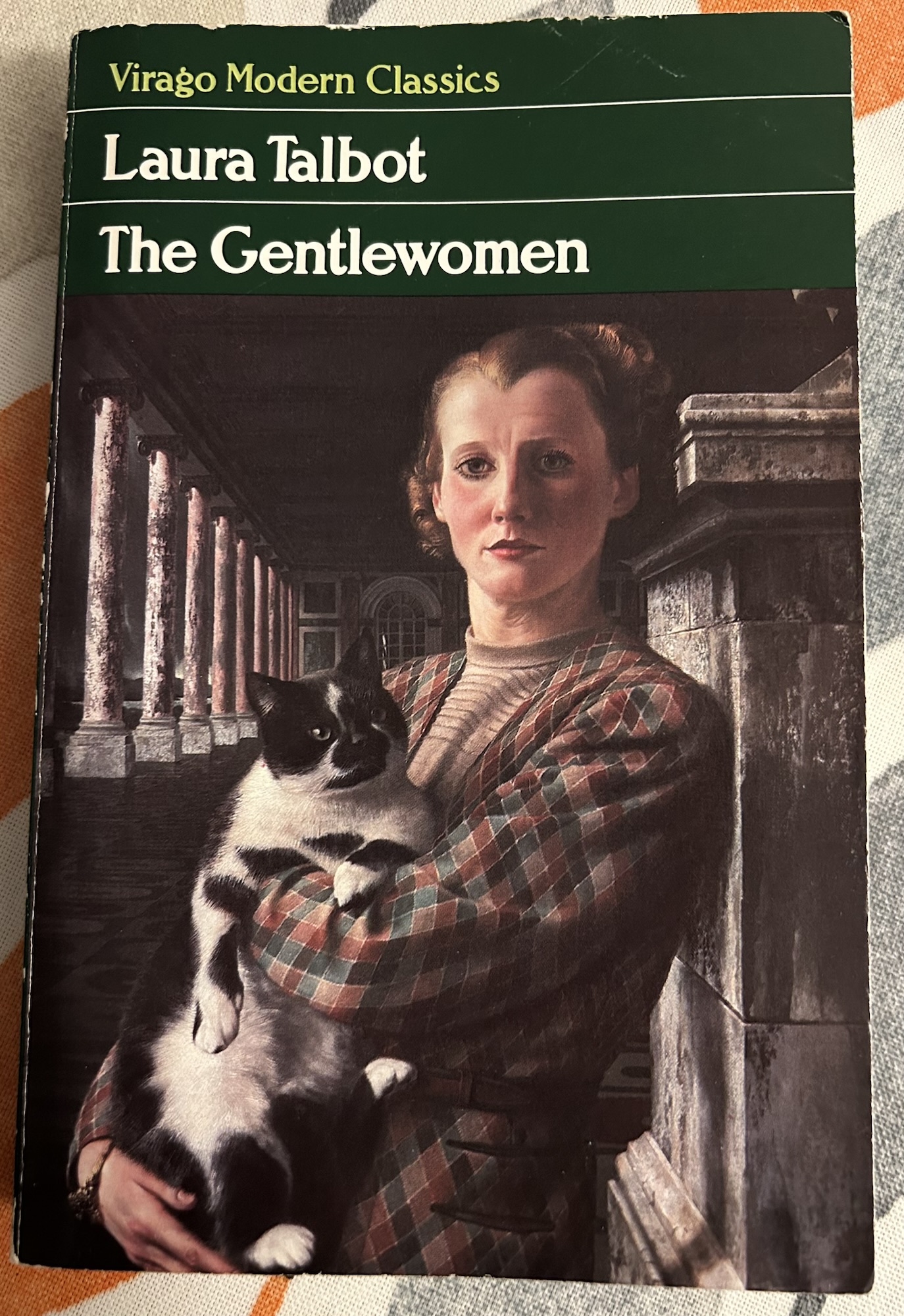
Laura Talbot was the pen-name of Lady Ursula Chetwynd-Talbot, and her knowledge of the land-owning classes informs The Gentlewomen throughout. It tells the story of Miss Roona Bolby, a single woman growing older who has to earn her living as a governess. She clings desperately to her family’s genteel background and colonialism while around her the world changes irrevocably.

“When she had been sent back to England she had been seven. She had been told so much since that memories which had been sharp had become blurred by that which she had been told. It was difficult now to sort her own from Sita’s and Mavis’s. India had not faded with the journey home; from then on it had grown, it had become as much a part of her own life as of her Mother’s and Sita’s and Mavis’s.”

Thus she will tell anyone – repeatedly and incessantly – that she was born in India, as she wears gold Indian bangles and uses an Indian silver brush set. She remains oblivious to the fact that her background is a matter of utter indifference to everybody.

At the beginning of the novel she leaves her shabby boarding house Hillstone in Birmingham, (filled with characters which could have made a great novel in itself!) and heads to the country seat of the Rushford family.

The Second World War is ongoing, and so the house is not as it once was. Lord Rushford is overseas, there are two Italian POWs and Land Girls have working on the estate, and my favourite character, straight-talking Reenie, has never been a kitchen maid before.

Miss Bolby has been employed to tutor to the various children from both parents’ first marriages, while Nanny Becca cares for the younger toddler Bella. Jessy, Barby, Louisa and Ruth dislike their tutor, and why wouldn’t they? She is completely devoid of any warmth towards them, won’t call them by the names they use, and seems a pretty dull teacher.

In Miss Bolby, Laura Talbot has not created a likable protagonist. She is so bound up in outdated societal structures, she entirely fails to respond to people as people. Her snobbery infects all her thoughts and actions:

“I always think it helpful to know from what milieu people come, especially in these days when one so frequently find the unexpected.”

The Introduction to my edition suggests that the portrait of Miss Bolby is without compassion, but I disagree. While she is petty, silly and resentful, we see how thwarted she is through her memories. Her mother used phrases like “rather deuxième” about those she deemed socially inferior, failing to recognise the crassness of such a phrase – one which Miss Bolby echoes later in the novel. She also wished to be a singer, which her mother prevented.

And so while she declined suitors in her youth as never good enough, it is really only she who suffered, and continues to do so. She was beautiful, but rejected the chances that this gave her, and now when roles and opportunities for women are still so circumscribed, she is losing her looks too. Her world is getting smaller and smaller, and she exacerbates this.

“Drawing-rooms and dining-rooms were as passages, her presence in them transitory: she had been forced to grope as a moth gropes before flying out into the night.”

When Miss Pickford arrives at Rushford, the reader is shown another way for someone in similar circumstances to live. The other gentlewoman of the title, Miss Pickford has little advantages in her favour, but she enjoys people and is interested in them, is entirely without Miss Bolby’s pettiness and relentless judgements, and has genuine skill in her work as secretary. The children warm to her and call her Picksie, and no-one seems to consider her an “old bag” – an epithet frequently associated with Miss Bolby.

As this disparate group rub along together, there is a threat to Miss Bolby’s fragile sense of worth, grounded as it is on meaningless external attributes rather than who she is as a person. Her sister Sita made a marriage to Arthur Atherton-Broadleigh and lives abroad, so Miss Bolby puts great store by the connection (and by constantly referring to it) despite little knowledge of the actual realities of the relationship. Unfortunately for her, there is someone who knows Arthur’s past very well…

At the same time her Indian bracelets go missing, and this additional pressure on her psyche means she starts to behave quite viciously. While there is never quite the psychological disintegration that occurs in William’s Wife or Wish Her Safe at Home, The Gentlewomen did remind me of these novels, with the portrayal of societal pressure and delusion for women who wanted so much more from life.

The war is far away physically, but the drudge of various privations and the frequent noise of aeroplanes bearing down to the local airbase add an atmosphere of bleak strain, which becomes almost Gothic as it turns out Rushford has been burned out from fire in many places, and sits in overgrown, unmanageable grounds.

“War was a lonely battle for the lonely, for those not urgently connected with it, and in her case a lonely battle for what?”

In case this sounds very heavy, I should say I disagree with the Introduction in another way, when it says Talbot had no humour.  I think she is easy to underestimate because she is not interested in drawing attention to her writing at all; there is no strong authorial voice. Her style is to present the characters, and leave judgement to the reader. Often Miss Bolby’s pretentious assertions go ignored by her interlocutors which speaks volumes.

And so I found there were various moments of humour, from the wonderful Reenie, to the neighbour Lady Archie who consistently baffles her devoted husband by acquiring modern slang from the Squadron-Leader at the RAF base. Needless to say, this doesn’t fit in Miss Bolby’s schema at all:

“She had wondered all evening about Lady Archie, and who Lady Archie was and why she used such phrases as ‘It seems to ring a bell’ and ‘Same here’, which one expected from a Mr Billings, but not from a woman such as Lady Archie.”

“ ‘Wizard!’ said Lady Archie. ‘But I’ll have to consult Hughie about the car.’”

The tension builds in The Gentlewoman towards a somewhat melodramatic climax, but while I felt this came close to clumsy, it was also a real page-turner. On the strength of this novel, I would definitely be interested in reading more by Laura Talbot. (And although I’m not usually bothered by writer’s biographies particularly, I’m also intrigued by her third marriage, which took place two years after she published this novel, to Patrick Hamilton. How on earth did that come about?!)

Sadly, ultimately Miss Bolby’s harshest judgements are in the fleeting ones she puts upon herself:

“A failure, who had not lived fully in any sphere – who had always lived up on the fringe.”

“We may safely assume that all tales are fiction.” (Margaret Atwood)

This is the first of what I’m hoping will be two posts for Margaret Atwood Reading Month 2024 (#MARM2024) hosted by Marcie at Buried in Print, as I aim to read the two short story collections I have in the TBR.

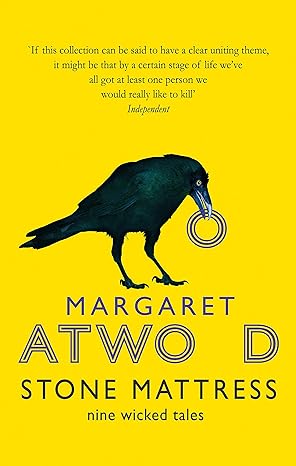
Stone Mattress: Nine Wicked Tales (2014) turned out to be perfect autumn reading with its edge of darkness, verging on Gothic at times.

The first three tales are connected. Alphinland sees fantasy writer Constance negotiate heavy  snow after the death of her husband; in Revenant, the poet she loved in her youth, Gavin, tries to manage the frustrations and isolations of older age; in Dark Lady one of his lovers with whom he cheated on Constance is back living with her twin brother.

All of these are grounded in reality, but Atwood weaves through touches of unreality to destabilise any certainty the reader has about what is being portrayed. Constance’s fantasy world is entirely real to her, and there are hints that it is an effective means of controlling people. But is this psychological or metaphysical?

“How did he manage to work his way out of the metaphor she’s kept him bottled up in for all these years?”

Atwood’s portrayal of Constance and Gavin allows for some light satire as to the vagaries of literary trends, and the uses writers make of their art. Gavin enjoyed the male privilege of 1960s bohemianism and is disappointed that the world has moved on alongside his aging body:

“His regret is that he isn’t a lecherous old man, but he wishes he were. He wishes he still could be. How to describe the deliciousness of ice cream when you can no longer taste it?”

Dark Lady portrays the life of an aging muse, using the Shakespeare reference to make Jorrie a slightly ghoulish presence. As her brother Tin reflects on her appearance:

“at least he’s been able to stop her from dyeing [her hair] jet black: way too Undead with her present day skin tone, which is lacking in glow despite the tan-coloured foundation and the sparkly bronze mineral-elements powder she so assiduously applies, the poor deluded wretch.”

“He has to keep reminding her not to halt the sparkly bronze procedure halfway down her neck: otherwise her head will look sewed on.”

Gavin’s nostalgia for the sexual politics of the 1960s is given further short shrift in the titular tale. I was delighted to learn that the idea came about on an Artic cruise, where Atwood’s late husband started to work out how to murder someone on a ship and get away with it. Atwood decided to finish the tale and the logistical details are closely observed.

All the tales are memorable, and the collection finishes on one that feels truly terrifying as an external threat builds towards vulnerable people in a nursing home. Like the tales that have preceded it, Torching the Dusties is touched with the fantastical while staying rooted in the recognisable. Wilma has Charles Bonnet syndrome, hallucinating due to her failing eyesight:

“she locates the phone in her peripheral vision, ignores the ten or twelve little people who are skating on the kitchen counter in long fur-bordered velvet cloaks and silver muffs, and picks it up.”

Atwood relentlessly builds the tension in the tale, ending it on a jovial note that is brilliantly inappropriate.

There’s so much here for Atwood fans to enjoy: the sharp observations (particularly on ageing), the wry societal commentary; the mischievous humour, and of course the fierce intellect. She’s clearly having fun here and encouraging her readers to have fun too. I’m looking forward to the other collection I have to read, Old Babes in the Wood (2023).

“I loved all of Harlem gently.” (Louise Meriwether, Daddy Was a Number Runner)

The 1970 Club is running all week hosted by Karen at Kaggsy’s Bookish Ramblings and Simon at Stuck in a Book. The Club weeks are always great fun, so do check out the posts!

Whenever the club weeks are announced I always go straight to the TBR to see what I’ve got available. 1970 didn’t yield as many fruits as 1937 Club back in April, but it did offer four choices. Unfortunately I don’t think 1970 is my year as far as my TBR pile goes…two DNFs and a third I wish I had DNF’d rather than ploughed through. Thankfully the fourth I found to be excellent!

Daddy Was a Number Runner was the first novel by Louise Meriwether and widely acknowledged to be bona fide classic in its evocation of 1930s Harlem, through the eyes of a twelve-year-old girl, Francie Coffin. In the Foreword, James Baldwin writes:

“she has so truthfully conveyed what the world looks like from a black girl’s point of view, she has told everyone who can read or feel what it means to be a black man or woman in this country. She has achieved an assessment, in a deliberately minor key, of a major tragedy.”

From the opening lines as Francie helps her father with his titular illegal lottery, her voice is so direct and distinctive. As she runs home to try and get to school on time, we are thrust into a hot summer’s day in Harlem.

“The air outside wasn’t much better. It was a hot, stifling day, June 2, 1934. The curbs were lined with garbage cans overflowing into the gutters, and a droopy horse pulling a vegetable wagon down the avenue had just deposited a steaming pile of manure in the middle of the street.

 The sudden heat had emptied the tenements. Kids too young for school played on the sidewalks while their mamas leaned out of their windows searching for a cool breeze or sat for a moment on the fire escapes.”

Francie’s family are incredibly poor, and running the numbers brings some money in. If lotteries are a tax on hope, Harlem is full of hope. It’s also full of bed bugs, rats and roaches. Poor Francie is eaten alive every night and has to go armed into her favourite pastime:

“I was sitting at the dining room table reading a library book, armed with my usual supply of weapons. Tonight I had a hammer, a screwdriver, and two hairbrushes. When I heard a noise I threw the hammer toward the kitchen and the rats scurried back into their holes. When I got down to my last piece of ammunition I would give the dining room up to the rats and go on to bed.”

Reading and schooling are seen as a way out of the ghetto. Francie’s older brother Sterling is bright and just about staying in school. Her other brother, James Junior, found school hard and, much to the worry of his loving parents, he is running with the local gang:

“He wasn’t mean enough to be an Ebony Earl nohow. How could he ever mug anybody, good-natured and nice as he was. Why, when he smiled his whole face laughed. He wasn’t like old Sterling who didn’t like anybody and whose narrow, old man’s face was full of dark, secret shadows.”

Francie’s parents are loving and kind, and how they hold onto those traits against the relentless grind of poverty is a miracle.

“[Mother] was always either soaking clothes or scrubbing them or hanging them out on the line. With all of that activity we should have been super clean but somehow we weren’t.”

“Daddy played by ear and could swing any piece after he heard it only once.”

Francie’s father is proud and doesn’t want to accept state relief or for his wife to work. But eventually he has to give in on both counts:

“They don’t give you enough money to live on so you have to bootleg some kind of work, then they deduct that from your relief check, too. I wonder how they expect you to live. Didn’t I tell you I didn’t want to mess with those people?” But for once he didn’t shout, seeming to be more tired than angry.”

The structural racism faced by Francie, her family, and everyone she knows is brilliantly evoked. Meriwether displays it through various characters, and there is an enormous tragedy looming for several families. The fallout on children is vivid, through Francie but also her peers. Her best friend Sukie is always filled with fury, which young Francie fails to see is due – at least in part – to Sukie’s father seeking release in alcohol and her sweet sister China Doll working for a violent pimp who beats her in front of onlookers.

Meriwether also articulates issues directly to the reader in her portrayals of, or references to, real life characters who Francie encounters, such as Reverend Adam Clayton Powell, Father Divine, Marcus Garvey, and the Scottsboro case.

There is so much hardship in Daddy Was a Number Runner, and outside of the home Francie has to navigate violence and sexual attention from many that grows into assaults. There’s also a horrible scene with a cat. What stops the novel being unremittingly bleak is her loving parents; her love of books; and Francie’s resilient, honest, humorous, indignant voice.

“I walked to 110th St and looked across Central Park at the lights twinkling in the skyscrapers. That was another world, too, all those lights way over there and this spooky park standing between us. But what good would those lights do me anyway?”