Trigger warning: mentions suicide
After a focus on cats last week, I thought this week I’d look at a book with dog, The Friend by Sigrid Nunez (2018).
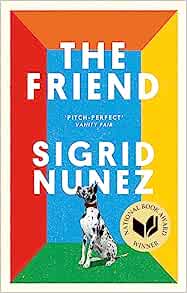
The novel is addressed to ‘you’ throughout: a friend and mentor of the narrator who has died by suicide. They were friends for many years and her grief is deep.
“The dead dwell in the conditional, tense of the unreal. But there is also the extraordinary sense that you have become omniscient, that nothing we do or think or feel can be kept from you. The extraordinary sense that you are reading these words, that you know what they’ll say even before I write them.”
The person was a writer and teacher, as is the narrator. What I thought worked well was that the dead person didn’t sound particularly likeable – a vain, slightly arrogant man who used his moderate fame and academic position to sleep with lots of women, and became angry and bitter when his looks faded and the world moved on. The narrator doesn’t seek to excuse or validate this behaviour. She didn’t approve of it, but she valued her friend and the relationship they had for many years. She is grieving an imperfect person and she is wise enough not to try and make him anything other than who he was.
Wife Three visits her and pulls a guilt trip about the man’s Great Dane dog, who is pining.
“You can’t explain death.
And love deserves better than that.”
And so Apollo, the only named being in the story, moves into her tiny apartment, where her lease forbids dogs. And he is a lot of dog:
“Thirty-four inches from shoulder to paw. A hundred and eighty pounds. Attached was a photograph of the two of you, cheek to jowl, the massive head at first glance looking like a pony’s.”

The descriptions of the grieving dog, of his subdued, baffled silence are heartbreaking, and an effective display of grief alongside a human who is expected to get up, go to work, smile and be polite, do her shopping, clean her home. Apollo can behave more honestly:
“He walks with his head lowered, like a beast of burden.”
As the narrator talks to her friend, we get a sense of her emerging relationship with Apollo, his learning to trust her, and their deepening bond. There is no doubt the relationship is bound up in her deep grief and Apollo becomes a focus for her feelings.
Unlike the narrator’s friends though, I didn’t think it was particularly unhealthy or dysfunctional. There is a sense of the narrator as a writer trying to work through her feelings, sometimes intellectually by falling back on the writers and books she has spent her entire working life with, (including JR Ackerley’s My Dog Tulip, which I thought documented a much stranger relationship with a dog) and at other times by physically massaging the enormous canine.
“The friend who is most sympathetic about my situation calls to ask how I am. I tell him about trying music and massage to treat Apollo’s depression, and he asks if I’ve considered a therapist. I tell him I’m sceptical about pet shrinks, and he says, That’s not what I meant.”
This gentle humour runs throughout The Friend and stops it becoming mawkish. As the story is one writer talking to another, there are some spiky observations about the literary scene, such as at his funeral:
“It was not very different from other literary gatherings. People mingling at the reception were heard talking about money, literary prizes as reparations, and the latest die, author, die review.”
And also a repeated motif of the relief of writers who have found Something Else to do:
“Are you kidding? says a friend who raises goats on a farm upstate and makes award-winning chèvre. Writers block was the best thing that ever happened to me.”
I’ve seen The Friend described as stream of consciousness. It is a conversation with a silent interlocutor (apart from one section, the only part that felt a bit clunky to me) but it has a structure, if not a plot. To me this was an effective portrayal of grief, which isn’t linear or logical.
“Is this the madness at the heart of it? Do I believe that if I am good to him, if I act selflessly and make sacrifices for him, do I believe that if I love Apollo – beautiful, ageing, melancholy Apollo – I will wake one morning to find him gone and you in his place, back from the land of the dead?”
Nunez mentions more than once: “There’s a certain kind of person who, having read this far, is anxiously wondering: Does something bad happen to the dog?” I am definitely that kind of person. If you are too, I don’t want to give spoilers but what I will say is that The Friend is a book about grief, and so it is a sad read, but it’s not a traumatic one.
The Friend isn’t a book to read for plot, or even for story. It is a reflection on friendship, writing, reading, aging; and a meditation on grief and grieving, and joys and pains of sharing our lives with humans and with animals. There is sadness and there is humour, and there is never a sense that grief is a price not worth paying, however painful.
“Your whole house smells of dog, says someone who comes to visit. I say I’ll take care of it. Which I do by never inviting that person to visit again.”
To end, a total legend:

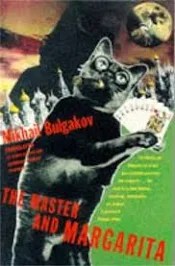
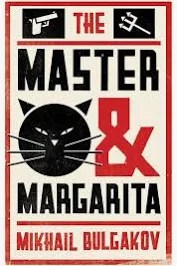


 madame bibi lophile recommends