“The story of our lives still isn’t finished, and it never will be.” (Beatriz Bracher, Antonio)

Trigger warning: mentions mental illness and infant death.

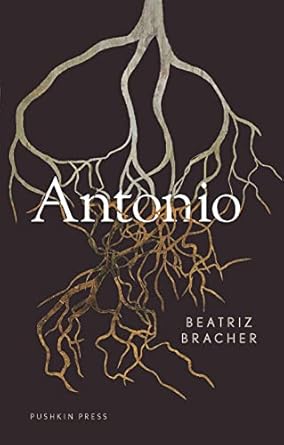
Stu over at WinstonsDad’s blog is hosting Spanish Portuguese Lit Month for the whole of July and so this was the perfect opportunity to get to a novella by Brazilian author Beatriz Bracher which had been languishing in the TBR: Antonio (2007, transl. Adam Morris 2021) published by the wonderful Pushkin Press.

I want to start with the disclaimer that I don’t think I’ve really got to grips with Antonio, so this post is just some initial impressions. Although only 187 pages long it is incredibly densely written and it took me a week to read. Admittedly work has been really demanding lately, but usually it still wouldn’t take me that long to read a book of that length.

Also looking online, there are many effusive reviews praising the socio-political commentary of Antonio, which I’m sure I didn’t fully comprehend. I did pick up some, but I’m certain I need to re-read Antonio at some point.

The novella is told through the alternating viewpoints of three people: Raul, Isabel and Haroldo. Their silent interlocutor is Benjamim, who is awaiting the birth of his first child, the titular Antonio. The imminent arrival of his son has prompted Benjamim to probe into his family history in more depth.

“I’d like to think your mother was also a free person, and maybe you can hold onto that thought, instead of clinging to fear and rage.”

Benjamim knows that his father was Teodoro and that his mother was  Elenir.  Elenir had a son with Benjamim’s grandfather Xavier first, who they also called Benjamim and who died very young. The second Benjamim was raised by his father after his mother died in childbirth.  

Raul is his father’s friend, Isabel is his paternal grandmother, and Haroldo was Benjamim’s grandfather’s friend. They all provide histories of Benjamim’s family that echo and contradict each other, and none seem any more reliable or authoritative than any other. Each has their own truth.

The family is well-off and privileged in São Paulo, but their history is a troubled one. Both Xavier and Teodoro had periods of intense mental illness.

For Xavier, this occurred after the death of Benjamim. As Haroldo recalls:

“[Elenir] looked like a bent piece of wood. She didn’t cry. She received each condolence with correct politeness. Xavier was the total opposite: he was in pieces […] I managed to gain entry to that hell three times. The last time, I brought a team of nurses, to drag my friend out of there and take him to a sanatorium.”

Later, Xavier meets and marries Isabel and they raise a family. They are the generation that came of age in the 1950s and 1960s, idealistic and, in Isabel’s case, driven:

“In a family we’re always a me or and I who’s scattered and complex. It’s only at work, especially work that has to do with ideas, but it’s possible to feel ourselves out and let the contours assume the shape.”

Their youngest son Teo rejects the urban privilege he is born into and goes to live in rural Minas. He throws himself into village life but ultimately becomes rudderless and unwell. Isabel reminds Benjamim of his early childhood:

“You’re from this family, so you are this family. Your father wanted to be rid of all that, and shed himself along with it. The history that he crafted for himself in Minas was a non-history. He went too deep. By the time I brought him back, there was nothing left to hold onto, no handle I could use to hoist him back out: only damaged pieces.”

This is one of central themes of Antonio: how to live an authentic and conscious life, but not be overwhelmed by the search for meaning. How to truly find who you are, alongside the demands of daily life. Isabel believes the answer is hard work, but only Big Work. Haroldo points out:

“She raised a bunch of irresponsible ingrates who are incapable of the most basic displays of solidarity, like visiting their dying mother. Isabel cultivated a true horror of responsibility in them, and at the same time overloaded them with the responsibility to be nothing but the best.”

Isabel recognises that privilege brings responsibility, but she also remains an elitist. When she observes: “I never understood any language that wasn’t well spoken Portuguese.” she is being both literal and metaphorical. The family’s wealth isn’t what it once was and she is unhappy at her children’s middle-class existence.

To me Isabel was the strongest of the three narrators and I got a real sense of her. But Raul, living an ordinary life and baffled by what happened to his childhood friend, and the somewhat reprehensible, colourful Haroldo were also distinct characters if not entirely differing voices, and Bracher balances the three viewpoints well.

I’ve focused on some of the ideas rather than the events of Antonio and that is partly because the novella has some graphic scenes in it – of extensive mental breakdown, one of pig-killing and one of caring for a dead body by someone who doesn’t know what they are doing. None of these are gratuitous but they mean Antonio can be very difficult to read in places.

Bracher avoids conclusions about the causes of Xavier and Teo’s ill health and whether there is a genetic component or whether it is the demands of society on the individual. She vividly, sometimes viscerally, evokes the pressures of family and the search for self in late twentieth-century Brazil.

“To live long and stay well, stay away from your relatives.”
“Literature illuminates life only for those to whom books are a necessity.” (Anthony Powell)

This is the seventh instalment in my 2024 resolution to read a book per month from Anthony Powell’s A Dance to the Music of Time sequence. Published between 1951 and 1975, and set from the early 1920s to the early 1970s, the sequence is narrated by Nicholas Jenkins, a man born into privilege and based on Powell himself.

The seventh volume, The Valley of Bones, was published in 1964 and is set at the start of World War Two, when Nick has joined the army as an officer.

I’ve said when reading previous novels in the sequence that I’m intrigued by Nick’s outsider’s view, as it’s not clear where it comes from since he seems so much a part of the society he portrays. In the army, the distinction is clearer. Nick finds himself billeted to South Wales within a company made up mostly of bankers, very different to his bohemian artsy London life.

“I indicated that I wrote for the papers, not mentioning books because, if not specifically in your line, authorship is an embarrassing subject for all concerned.”

Nick casts his sharp eye over these new associates in the same way he has for his friends, family and acquaintances up to this point. A central character is Captain Rowland Gwatkin, a man who seems simultaneously devoted to the army and entirely bewildered by it too:

“Gwatkin lacked in his own nature that grasp of ‘system’ for which he possessed such admiration. This deficiency was perhaps connected in some way with a kind of poetry within him…Romantic ideas about the way life is lived are often to be found in persons themselves fairly coarse- grained.”

Gwatkin is really tightly wound, and there is a sense of impending doom at best, destruction at worst with him.

Nick is an indifferent soldier, neither very good nor absolutely awful. There is some consideration of philosophical theories of war, but primarily Nick is interested in those who surround him:

“It is a misapprehension to suppose, as most people do, that the army is inherently different from all other communities. The hierarchy and discipline give an outward illusion of difference, but there are personalities of every sort in the army, as much as out of it.”

Powell brilliant portrays the simmering tensions in the company, both from the mix of personalities attempting to work together within and the increasing threat from Hitler without. There are those with alcohol problems, death by suicide, and broken hearts, yet the days mostly pass in utter tedium. Nothing changes even after the company is uprooted to a posting to Northern Ireland:

“At Castlemallock I knew despair. The proliferating responsibilities of an infantry officer, simple in themselves, yet, if properly carried out, formidable in their minutiae, impose a strain in wartime even on those to whom they are a lifelong professional habit; the excruciating boredom of exclusively male society is particularly irksome in areas at once remote from war, yet oppressed by war conditions.”

As Adjutant Maelgwyn-Jones observes: “That day will pass, as other days in the army pass.”

Yet there is some light relief too, such as an inspection from a visiting General, seemingly obsessed with breakfast foodstuffs:

“The General stood in silence, as if in great distress of mind, holding his long staff at arm’s length from him, while he ground it deep into the earth the surface of the barnhouse floor. He appeared to be trying to contemplate as objectively as possible the concept of being so totally excluded from the human family as to dislike porridge.”

And Nick does get some weekend leave in order to catch up with his family. There he finds people thrown together, behaving oddly and under strain. In other words, not so very different from his army posting. As his pregnant wife Isobel observes: “the war seems to have altered some people out of recognition and made others more than ever like themselves.”

In The Valley of Bones Anthony Powell shows himself uninterested in the glorification of war or in any sort of jingoism. He also doesn’t fall into the trap of a wholly satirical, detached point of view either. He manages a delicate balance between conveying the seriousness of war alongside the human inadequacies and frailties of those expected to enact it.

He also pulls an absolute masterstroke at the finish. The boredom, the admin, the essentially unthreatening – if somewhat self-destructive – colleagues are turned upside down in an instant, and Nick finds himself carried forward, powerless in a situation about which he has a deep sense of foreboding. It’s a chilling ending and I’m anxious to see how it plays out in the next volume, The Soldier’s Art.

“In the army – as in love – anxiety is an ever present factor where change is concerned.”

To end, a song absolutely synonymous with wartime Britain for many, which seems particularly apt for Nick as he’s always running into people he met previously:

“People are better inside your head.” (Donal Ryan, The Thing About December)

I never take enough books away with me. So having finished The Garden of Evening Mists during my New Forest weekend, I ducked into the Oxfam Bookshop in Lymington and was gratified to find a copy of The Queen of Dirt Island by Donal Ryan (2022). Ryan is one of my favourite contemporary authors and I was yet to read his most recent novel.

Characters from his previous novel Strange Flowers make a reappearance here, but they are not the main focus. The story belongs to Saoirse Aylward, her mother Eileen, and her paternal grandmother Nana who all live together in Nenagh, County Tipperary.

We follow Saoirse from her 1980s childhood to her thirties, with the tensions and strains, and unwavering warmth and love that the women create within their family home.

Saoirse’s father died a few days after she was born and she sometimes feels guilty for not feeling his loss.

“Every other house in the small estate that had children in it also had a father, a living one.

None of them looked like they were of much use except for cutting grass with the same shared lawnmower, taking turns to cut the verges in the small green area at the front of the estate and the smaller green at the back.”

The Aylward women are an enclosed, loving unit, viewed as somewhat eccentric by the rest of the town. Eileen is uninterested in men for the most part, her heart lying with her dead husband. She is sweary and gruff and no-one understands why she and her mother-in-law are living together.

“She realised that she and her mother rarely spoke properly at all. That most of mother’s speech was indirect, utterances flung around like fistfuls of confetti, vaguely aimed and scattering randomly. But she supposed this to be the way of all parents and child relationships. Her mother told her every single night that she loved her.”

Nana might be less sweary, but in her own way she is just as direct, such as when speaking to Saoirse about her Uncle Chris:

“Whatever he was at inside me he made a pure hames of my pipework. He started as he meant to go on, anyway, that’s for sure.”

His brother Paudie has a dramatic and mysterious life, helping on the farm until he is suddenly arrested and sent to prison.

“They never looked comfortable down here in the angular lowlands of the estate. They were shaped to the contours of hills and hedgerows, their feet only sure on giving ground.”

Yet it is Saoirse’s teenage years that bring the most disruption to the house. Ryan is excellent at capturing this time, such as this description of Saoirse’s first boyfriend:

“His miasma of Lynx and sweat and stolen cigarettes, his uncertain swagger, his damp hand in hers.”

But Saoirse is learning about the darker sides of life too, which have previously not infiltrated her safe home: self-harm, domestic abuse, suicide, sexual assault. Her mother and Nana can’t protect her from everything.

And within her family, there is a threatening presence: her uncle Richard. He is her mother’s brother, and while Eileen is estranged from her family, her father has left her the titular land. Richard wants it back, and this tension bubbles in the background through the years.

The tone of The Queen of Dirt Island felt very well-balanced, not shying away from trauma but not unrelentingly bleak either. Nana in particular provided humorous moments. The women all felt fully realised and believable, their voices beautifully evoked.

This is not a novel to read for positive portrayals of men, however. Nana advises young Saoirse:

“You only get one life, and no woman should spend any part of it being friends with men. That’s not what men are for.”

The Queen of Dirt Island is a warm-hearted book, compassionate to its flawed characters, which was a joy to read. I could have spent another 200 pages at least with the Aylward women.

Ryan writes with a poetic restraint, and the story is told through a series of vignettes. Each section is 500 words including a title, and at just 242 pages it’s a really quick read. Thankfully I’d also found a collection of Dorthe Nors short stories in the Oxfam bookshop so I managed to keep myself going on the return journey home 😉

“She was glad of mother’s unwavering impolitic nature, her peculiar loving manner, and she knew that Nana loved mother with the same gruff constancy.”

To end, the author reading one of the vignettes, which I read in an interview was based on a childhood experience with his mother:

“The palest ink will endure beyond the memories of man.” (Tan Twan Eng)

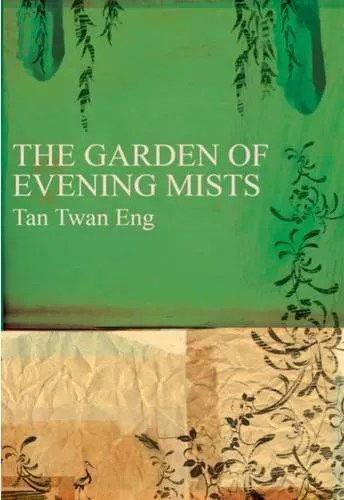
Continuing my plan to try and take my Around the World in 80 Books reading challenge by the scruff of the neck, today I’m off to Malaysia. The Garden of Evening Mists by Tan Twan Eng (2012) has been hugely lauded and it had completely passed me by. I rectified this situation by taking it with me on a long weekend in the New Forest recently, and it definitely suits those moments when you have a decent amount of time to commit to it.

Back at the end of May when Kim at Reading Matters very kindly invited me to take part in her Triple Choice Tuesday, I chose The Secret Garden as a book that changed my world due to its themes of gardens and healing. So The Garden of Evening Mists was always going to be a winner for me as it explores these themes.   

The story opens in the 1980s, Yun Ling is a high court judge, just about to retire. This means she is leaving the bustle of Kuala Lumpur to return to her home in the Cameron Highlands.

“Most people in Kuala Lumpur couldn’t bear the stench, especially when the river was running low between monsoon seasons, but I had never minded that, in the heart of the city, I could smell the mountains over a hundred miles away.”

She hasn’t been back for years, and her return encourages her to reflect on her past:

“The garden’s name in English: Evening Mists. I felt I was about to enter a place that existed only in the overlapping of air and water, light and time.”

The main focus of her reflections is the time she spent as apprentice to a gardener who had been employed by the Emperor of Japan. Nakamura Aritomo is a mysterious figure, best known to his South African neighbour Magnus Pretorious, who still doesn’t know him hugely well, or why he seems to be in self-imposed exile in this remote part of Malaysia.

The past narrative begins in 1951 and Teoh Yun Ling is the sole survivor of a Japanese POW camp, where her sister died. She wants to build a Japanese garden in memory of her sister:

“Yun Hong kept our spirits up by talking about the gardens we had visited in Kyoto, describing even the smallest details to me. ‘This is how we’ll survive,’ she told me, ‘this is how will walk out of this camp.’”

In order to build her garden, Yun Ling is going to need the help of Aritomo, and for that to happen she needs to learn to trust a Japanese man despite associating him with her torturers.

“The imminent rain in the air smelt crisp and metallic, as though it has been seared by the lightning buried in the clouds. The scent reminded me of my time in the camp, when my mind had latched onto the smallest, most inconsequential thing to distract myself: a butterfly wafting from a patch of scrub, a spider web tethered to twigs by strands of silk, sieving the wind for insects.”

The relationship between Yun Ling and Aritomo is undoubtedly the centre of the story, but this is an ambitious novel and covers a great many themes, including the aftermath of World War Two and pre-independence Malaysia. (There are a few info-dump moments but not many.) It shows how power is achieved through violence, during British colonialism and beyond.

Within a carefully evoked historical context, Tan Twan Eng explores how we heal from trauma; how we reconcile to ourselves and to others; how we find redemption, and how we can forgive. It’s an immensely powerful story, and Yun Ling has to navigate her survivors guilt and overwhelming anger, to try and work out how on earth she is going to continue with her life.

“Walking in the garden I had heard about almost half a lifetime ago, I wished Yun Hong were here with me. She would have enjoyed it more than me. I wondered what I was doing here, living the life that should have been my sister’s.”

From goodreads I know some readers found Yun Ling too detached and remote a voice within her own story. Although some of the characterisation in the novel felt thin at times, I didn’t have a problem with Yun Ling’s voice. I thought it worked well in conveying her detachment through trauma, and it also balanced the style of storytelling. The descriptions are so richly detailed (sometimes a bit too much for my austere tastes) that to have a highly emotive voice amongst it all would have been too much.

Birdsong song sparkles the air; mists topple over the mountains and slide down their flanks, slow and soundless as an avalanche witnessed from miles away. Instinctively I turn to look behind me, expecting Aritomo to chide me with a look or a scathing word. I see only my own footprints on the dusty floorboards as the bamboo blinds creak softly in the wind.”

Amongst this beauty are some gruesome scenes too, both in the 1950s setting and in Yun Ling’s memories of the camp. I didn’t find this gratuitous at all and thought they were responsibly handled, but wanted to warn any readers late to The Garden of Evening Mists like me that it is certainly not an unrelentingly pretty read.

Underpinning all periods is the theme of memory, effectively evoked through the shifting back and forth between timelines. Tan Twan Eng demonstrates how we cling to memory, how important it can be despite its unreliability. He shows how this can limit our knowledge of ourselves, others and circumstances, yet it remains vitally important.

The Garden of Evening Mists presents complex people and situations and demonstrates how, even when we don’t know everything and can’t rely on what we do know, all are worthy of compassion.

“Are all of us the same, I wonder, navigating our lives by interpreting the silences between words spoken, analysing the returning echoes of our memory in order to chart the terrain, in order to make sense of the world around us?”

To end, has anyone seen the adaptation from 2019? From this trailer I can’t decide if I want to watch it…