“The palest ink will endure beyond the memories of man.” (Tan Twan Eng)

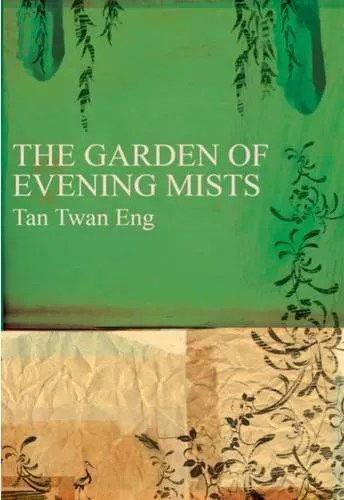
Continuing my plan to try and take my Around the World in 80 Books reading challenge by the scruff of the neck, today I’m off to Malaysia. The Garden of Evening Mists by Tan Twan Eng (2012) has been hugely lauded and it had completely passed me by. I rectified this situation by taking it with me on a long weekend in the New Forest recently, and it definitely suits those moments when you have a decent amount of time to commit to it.

Back at the end of May when Kim at Reading Matters very kindly invited me to take part in her Triple Choice Tuesday, I chose The Secret Garden as a book that changed my world due to its themes of gardens and healing. So The Garden of Evening Mists was always going to be a winner for me as it explores these themes.   

The story opens in the 1980s, Yun Ling is a high court judge, just about to retire. This means she is leaving the bustle of Kuala Lumpur to return to her home in the Cameron Highlands.

“Most people in Kuala Lumpur couldn’t bear the stench, especially when the river was running low between monsoon seasons, but I had never minded that, in the heart of the city, I could smell the mountains over a hundred miles away.”

She hasn’t been back for years, and her return encourages her to reflect on her past:

“The garden’s name in English: Evening Mists. I felt I was about to enter a place that existed only in the overlapping of air and water, light and time.”

The main focus of her reflections is the time she spent as apprentice to a gardener who had been employed by the Emperor of Japan. Nakamura Aritomo is a mysterious figure, best known to his South African neighbour Magnus Pretorious, who still doesn’t know him hugely well, or why he seems to be in self-imposed exile in this remote part of Malaysia.

The past narrative begins in 1951 and Teoh Yun Ling is the sole survivor of a Japanese POW camp, where her sister died. She wants to build a Japanese garden in memory of her sister:

“Yun Hong kept our spirits up by talking about the gardens we had visited in Kyoto, describing even the smallest details to me. ‘This is how we’ll survive,’ she told me, ‘this is how will walk out of this camp.’”

In order to build her garden, Yun Ling is going to need the help of Aritomo, and for that to happen she needs to learn to trust a Japanese man despite associating him with her torturers.

“The imminent rain in the air smelt crisp and metallic, as though it has been seared by the lightning buried in the clouds. The scent reminded me of my time in the camp, when my mind had latched onto the smallest, most inconsequential thing to distract myself: a butterfly wafting from a patch of scrub, a spider web tethered to twigs by strands of silk, sieving the wind for insects.”

The relationship between Yun Ling and Aritomo is undoubtedly the centre of the story, but this is an ambitious novel and covers a great many themes, including the aftermath of World War Two and pre-independence Malaysia. (There are a few info-dump moments but not many.) It shows how power is achieved through violence, during British colonialism and beyond.

Within a carefully evoked historical context, Tan Twan Eng explores how we heal from trauma; how we reconcile to ourselves and to others; how we find redemption, and how we can forgive. It’s an immensely powerful story, and Yun Ling has to navigate her survivors guilt and overwhelming anger, to try and work out how on earth she is going to continue with her life.

“Walking in the garden I had heard about almost half a lifetime ago, I wished Yun Hong were here with me. She would have enjoyed it more than me. I wondered what I was doing here, living the life that should have been my sister’s.”

From goodreads I know some readers found Yun Ling too detached and remote a voice within her own story. Although some of the characterisation in the novel felt thin at times, I didn’t have a problem with Yun Ling’s voice. I thought it worked well in conveying her detachment through trauma, and it also balanced the style of storytelling. The descriptions are so richly detailed (sometimes a bit too much for my austere tastes) that to have a highly emotive voice amongst it all would have been too much.

Birdsong song sparkles the air; mists topple over the mountains and slide down their flanks, slow and soundless as an avalanche witnessed from miles away. Instinctively I turn to look behind me, expecting Aritomo to chide me with a look or a scathing word. I see only my own footprints on the dusty floorboards as the bamboo blinds creak softly in the wind.”

Amongst this beauty are some gruesome scenes too, both in the 1950s setting and in Yun Ling’s memories of the camp. I didn’t find this gratuitous at all and thought they were responsibly handled, but wanted to warn any readers late to The Garden of Evening Mists like me that it is certainly not an unrelentingly pretty read.

Underpinning all periods is the theme of memory, effectively evoked through the shifting back and forth between timelines. Tan Twan Eng demonstrates how we cling to memory, how important it can be despite its unreliability. He shows how this can limit our knowledge of ourselves, others and circumstances, yet it remains vitally important.

The Garden of Evening Mists presents complex people and situations and demonstrates how, even when we don’t know everything and can’t rely on what we do know, all are worthy of compassion.

“Are all of us the same, I wonder, navigating our lives by interpreting the silences between words spoken, analysing the returning echoes of our memory in order to chart the terrain, in order to make sense of the world around us?”

To end, has anyone seen the adaptation from 2019? From this trailer I can’t decide if I want to watch it…

“The good ended happily, and the bad unhappily. That is what Fiction means.” (Oscar Wilde, The Importance of Being Earnest)

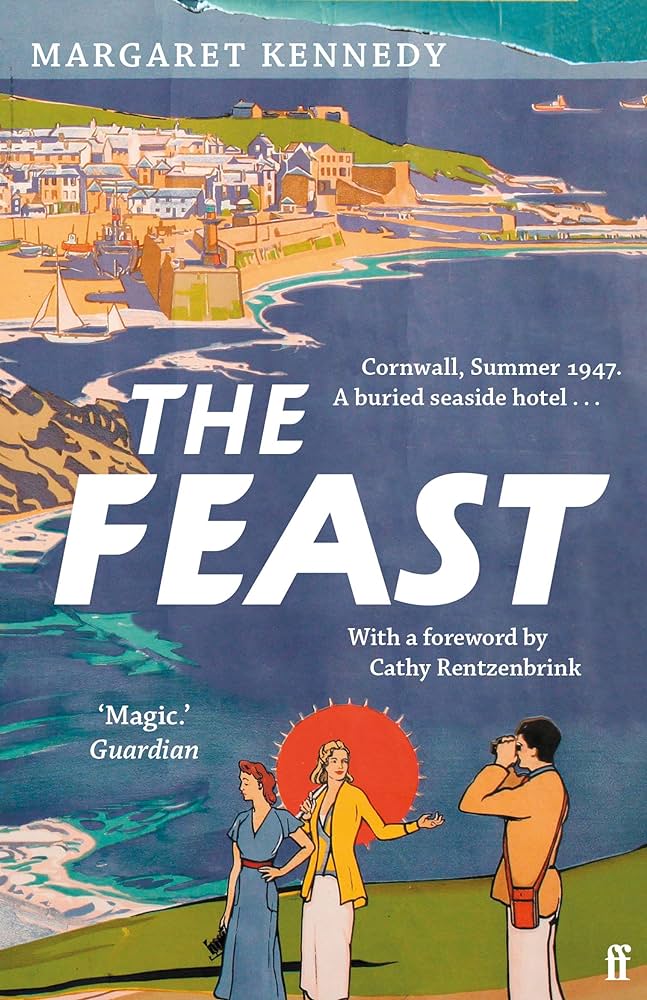
Summer seems to have finally arrived here in the UK, for a few days at least 🙂 So I thought I would post about a summer read which I really enjoyed recently. The Feast by Margaret Kennedy was published in 1950 and it’s set in 1947. Republished by Faber in 2021, they’re definitely marketing it as a summer read:

To describe the premise of The Feast is to do it a disservice in a way, because it sounds so trite and contrived. But I promise you that Kennedy is such a skilled writer that it works beautifully.

She sets it up the plot enticingly in the prologue. Two clergyman are holidaying together, but one of them has to work. Within Reverend Bott’s Cornish parish, there has been a catastrophe. A cliff has subsided into the sea, burying Pendizack Manor hotel and several of its inhabitants. Others escaped as they were at the titular picnic at the time, and they’ve told him quite a story… we then go back to seven days before the event to meet all the guests and staff who were there in run-up to the disaster.

It’s here that the overarching contrivance occurs – among the characters are representations of the seven deadly sins. We have the guests: Lady Gifford as greed; Mrs Cove as covetousness; Mrs Lechene as lechery; Canon Wraxton as wrath; and Mr Paley as pride. Amongst the staff we have owner Mr Siddal as sloth and housekeeper Miss Ellis as envy. Some of these characters are monstrous in their behaviour and yet Kennedy always keeps them recognisably human.

Lady Gifford is comparatively benign, albeit entirely self-serving, self-pitying and unconcerned with the impact she has on her family. Her husband no longer loves her, and the holiday brings their marriage to breaking point:

“For a few minutes he could not reply. At last he said, “I shall never live with you again. There’s nothing in life you value more than your saucer of cream.”

“Why shouldn’t I? I can afford cream. Why shouldn’t I go to live where the cream is?”

“I won’t live with you any more. You’re not human.”

Lady Gifford closed her eyes and lay back upon her pillows. Hard words break no bones, as both of them knew very well. He left her and went downstairs.”

While the Gifford’s children are disregarded, Mrs Cove actively wishes her children harm. She is one of the most disturbing characters in the book, neglecting her children to the point of abuse. As her daughter Blanche reflects:

“She did not love her mother. None of them did, nor had it ever occurred to them that they ought to do so. She had never asked for their affection. But neither did they criticize or rebel against her. She pervaded and ruled their lives like some unpropitious climate, and they accepted her rule as inevitable, evading its harshness by instinct rather than by reason. […] Nothing of importance had ever been said to them in their mother’s voice and many characters in their favourite books were more real to them than she was. They seldom thought about her.”

The younger members of the Gifford and Cove families join forces and provide some solace – and danger – for each other.

“The children vanished, rising up like a flock of starlings immediately after luncheon and betaking themselves to some hidden place. They retired into their own world, as children will when their elders misbehave. Bewildered, unable to judge, they turned their backs upon the ugly memory.”

Meanwhile, among the adults, alliances are forged and romances begun. The biggest change occurs in Canon Wraxton’s brow-beaten daughter Evangeline. At the start of the novel she has deeply worrying habit:

“Perhaps it was a waste of time, to grind up glass with a nail file, but surely nothing worse? Because she would never use it, she would never do anything wicked with it. And that little pill box full of powdered glass was such a relief to possess. They said it could never be detected in a person’s food…It was a very powerful little treasure, that box. She kissed it sometimes.”

But she develops a really touching friendship with Mrs Paley, whose marriage to the prideful Paul is utterly dead, and things start to change for them both:

They found a comfortable little hollow in some heather close to the shelter and lay upon their backs, side by side, watching the stars come out and discussing the best way to make the tea ration last. Neither felt the least impulse, just then, to confide in the other. But they knew what united them. They were a little astonished at themselves and inclined to giggle, as women will when they embark upon some daring adventure.”

But if I’ve made The Feast sound very dark, I’ve done it a disservice. Kennedy doesn’t shy away from the worst of human nature and her astute characterisation makes the behaviour all too real. But there are lighter moments too. Those of you who dislike historical fiction might enjoy Mr Siddal’s description of Anna Lechene’s craft:

“She writes well. Everybody does nowadays. She writes this biographical fiction, or fictional biography, whichever you like to call it. She takes some juicy scandal from the life of a famous person, and writes a novel round it. Any facts that don’t suit her go out. Any details she wants to invent come in. She’s saved the trouble of creating plot and characters and she doesn’t have to be accurate because it’s only a novel, you know.”

I also enjoyed this description of Sir Henry’s politics, breaking up a tense scene:

“Everybody seemed to be very angry. They were saying many things which Sir Henry himself had thought during the course of the day, but with which he now began to disagree. For he was a Liberal – the kind of Liberal which turns pink in blue surroundings and lilac at any murmur from Moscow.

In Pendizack Lounge he inclined to pink.”

The tension in the narrative occurs precisely because the reader knows what is going to happen and as the portraits of the various characters built over the week, I really hoped some of them ended up under the cliff while others survived!

The Feast is an enjoyable, compelling read with plenty to say and plenty to entertain.

To end, an English PEN event took place when Faber re-released The Feast. The discussion is really interesting particularly in giving some wider context around Kennedy’s writing:

“Love is at once always absurd and never absurd.” (Anthony Powell)

This is the sixth instalment in my 2024 resolution to read a book per month from Anthony Powell’s A Dance to the Music of Time sequence. Published between 1951 and 1975, and set from the early 1920s to the early 1970s, the sequence is narrated by Nicholas Jenkins, a man born into privilege and based on Powell himself.

The sixth volume, The Kindly Ones, was published in 1962 and is set around the start of World War Two. This felt a bit of a departure from previous volumes in some ways. We learn a lot more about Nick in this novel; he features much more directly in his own narrative. Powell also shockingly almost approaches a plot in The Kindly Ones, confounding my expectations 😀

The volume starts by looking back in time, with Nick remembering his childhood at Stonehurst, just before World War I broke out. My favourite character from At Lady Molly’s makes a reappearance: General Alymer Conyers, proving himself good in a crisis and kind to those who need it most.

He is visiting Nick’s parents, and I was interested to learn more about them. They are presented with the same clear-sighted economy with which Powell treats so many of his characters, which I found striking in consideration of close family. Nick doesn’t seem to like his father particularly, but there is no rancour or resentment there either:

“’I like to rest my mind after work,’ he would say. ‘I don’t like books that make me think.’

[…]

The one thing he hated, more than constituted authority itself, was to hear constituted authority questioned by anyone but himself. This is perhaps an endemic trait in all who love power, and my father had an absolute passion for power, although he was never in a position to wield it on a notable scale.”

Powell has a knack of presenting his characters with discernment, but without the heavy moral judgement which would make the volumes pretty unreadable. It’s an intelligent, sensitive approach and I think it contributes to writing that is so of its time still managing not to date badly.

It’s hard to see where Nick’s objectivity and distance from his entirely conventional upbringing has occurred, although his friend Moreland suggests maybe Nick’s life wasn’t as conservative as it seemed, in comparison to his own:

“’Ours was, after all, a very bourgeois Bohemianism,’ he used to say. ‘Attending the Chelsea Arts Ball in absolutely historically correct Renaissance costume was regarded as the height of dissipation by most of the artists we knew. Your own surroundings were far more bizarre.’”

Moreland isn’t doing so well, and in the second part of the novel Nick and Isobel have gone to stay with him and Matilda in the country.

“It became clear these fits of ennui were by no means a thing of the past. He would sit for hours without speaking, nursing a large tabby cat called Farinelli.”

They end up at a party with Sir Magnus Donners, where Nick’s old schoolfriend Templar is present with his wife Betty, who is thoroughly depressed. I was struck by the portrayals of female mental illness in this volume. Within this tale are two women who are suffering greatly and Powell treats them with understanding and compassion, never dismissing it with misogyny around ‘hysteria’ which I suspect was much more prevalent at the time.

At the start of the novel the Jenkins’ housemaid Billson has what we would probably now call a dissociative episode, which is where General Conyers intervenes in the manner I mentioned above. At Donner’s party years later, Nick’s compassion is with Betty rather than his friend:

“She had been shattered by the unequal battle. The exercise of powerful ‘charm’ is, in any case, more appreciated in public than in private life, exacting, as it does, almost as heavy demands on the receiver as the transmitter, demands often too onerous to be weighed satisfactorily against the many other, all too delicate, requirements of married life. No doubt affairs with other women played their part as well.”

The plot I was so surprised to find occurs in the next part of the story. During the childhood episode that begins the novel, we encounter mystic/charlatan Dr Trelawney. He reappears as Nick makes a visit to sort out his Uncle Giles’ effects at a seaside hotel and a somewhat dramatic scene ensues, which Nick helps to resolve by dredging up childhood memories. Dr Trelawney is a sinister character, as Nick observes in his room: “A scent vaguely disturbing, like Dr Trelawney’s own personality.” But he is not a comic creation, rather adding to the sense of foreboding around world events:

“There was something decidedly unpleasant about him, sinister, at the same time absurd, that combination of the ludicrous and alarming soon to be widely experienced by contact with those set in authority in wartime.”

If I’ve made The Kindly Ones sound very heavy though, I’ve done it an injustice. There are still plenty of comic moments to enjoy, such as the reappearance of the fortune-telling Mrs Erdleigh, who had met Nick’s late mother-in-law:

“’Lady Warminster was a woman amongst women,’ said Mrs Erdleigh.’ I shall never forget her gratitude when I revealed to her that Tuesday was the best day for the operation of revenge.’”

There is also Nick’s continued gentle ribbing of his brother-in-law: “Erridge, a rebel whose life had been exasperatingly lacking in persecution.”

And Widmerpool behaves with pomposity, even though he is always underscored by a sense of menace:

“I recognised that a world war was going to produce worse situations than Widmerpool’s getting above himself and using a coarsely military boisterousness of tone to which his civilian personality could make no claim.”

The novel ends with Nick getting his longed-for commission in the army as an officer. He could have joined as a squaddie but obviously that would never do 😀 (I can’t be too scathing about Nick’s reluctance/snobbery, given I’d be terrified to join the army and utterly useless if I did.)

I expect the next volume will cover the war years which have been building throughout the last few volumes. Given its title of The Valley of Bones, I wonder if Powell will allow Nick to sustain that ironic distance. I’ll be intrigued to find out.

“At the back of one’s mind sounded a haunting resonance, a faint disturbing buzz, that was not far from fear.”

“A sister can be seen as someone who is both ourselves and very much not ourselves – a special kind of double.” (Toni Morrison)

Many of you will know that Ali who blogs at heavenali is doing a year with Margaret Drabble throughout 2024. Ali’s posts of her Drabble reading so far have been really enticing and so I was determined to pick up this author whom I had never read.

A Summer Bird-Cage (1963) was Drabble’s first novel and was published when she was just 24. It’s a really impressive achievement and has definitely encouraged me to read more by her. (Which is lucky as someone cleared out their Drabble collection into my local charity bookshop recently, so there were several Penguin paperbacks with appalling 1980s covers available. Yes, I know it was preposterous to buy them all, but there was something about them all coming from the same reader and staying together that I liked. Also I’ll justify my book-buying any which way 😀 I think the same reader also cleared out their Penelope Livelys and I’m trying to resist…)

(I am genuinely perverse because I honestly wish, if I am going to have these monstrosities, that they were all the same style and the worst one, which to my eyes are the ones with the faces and the dark backgrounds. I just have to reassure myself that they’re all pretty terrible 😀 )

A Summer Bird-Cage is the examination of the relationship between two sisters, from the point of view of the younger one, Sarah, recently graduated from Oxford. She feels directionless and is returning from tutoring in Paris to see her older sister married. Louise also went to Oxford and she is academically less successful than Sarah; she is also breathtakingly beautiful.

A Summer Bird-Cage is an interesting period piece in many ways, as it captures that time when women had more freedom and more choices, but not quite enough. The expectations and pressures towards domestic fulfilment are still significant.

“I thought about jobs, and seriousness, and about what a girl can do with herself if over-educated and lacking a sense of vocation. Louise had one answer, of course. She was getting married.”

The sisters are not close at all and A Summer Bird-Cage is written with a refreshing lack of sentimentality but also a lack of any real jealousy. (Drabble’s sister was AS Byatt and they were both quite open about the fact that while they had a reasonable relationship most of the time, they also weren’t close.) At times Sarah may envy Louise her beauty, and the choices brought by her husband’s wealth, but most of the time she has a bemused indifference.

“There is just this basic antipathy, this long rooted suspicion, that kept us so rigorously apart.”

Sarah is definitely not jealous of Louise’s cold, snobbish husband Stephen, and I really liked this scene from a conversation she has with him at the wedding reception as Stephen pontificates on Art with a capital A:

“ ‘No no, the well-observed norm, that is what art is about. The delicacy of the perception will compensate for any lack of violence.’

 I think he was quoting from one of his reviews.”

We don’t really get to know Louise because Sarah doesn’t know her, and Drabble resists the temptation for fully-drawn, psychologically rounded portraits which would compromise the first-person point of view. Instead the novel portrays the unknowingness of other human beings, even those who are consistently in our lives to a greater or lesser degree.

“I wondered why she was such a mystery, why she didn’t fit together, why she was so unpredictable.”

There isn’t a plot as such, rather we follow Sarah through her first year out of university while her boyfriend is at Harvard; the unhappy lives of her friends; and the unhappy marriage of Louise. Sarah is young, and she can be snarky and judgemental. But what stops her being unbearable is that she fully acknowledges her own shortcomings, and will direct her snarkiness towards herself as much as anyone else:

“Sometimes it seems the only accomplishment my education ever bestowed on me, the ability to think in quotations.”

It’s astonishing to me that Drabble wrote A Summer Bird-Cage at just 24. There is the occasional sentence that is a bit too clever-clever and clunky, and the denouement felt a little bit clumsy given the way the sisters’ relationship had been portrayed up to that point, but these are really minor quibbles. If this is what she achieved in her first novel I can’t wait to see what heights she climbs to later in her writing.

“I don’t know why, but it was only then that I began to realise she was vulnerable. It seemed at the time like a clever and perceptive discovery, but I suppose that in fact it was extremely belated.”

You can read Ali’s wonderful review of this novel here.

To end, a trailer from the RSC’s 2014 production of The White Devil by John Webster, which is where the title of the novel comes from. Of course Sarah would name her book through a literary reference:

“The cat is, above all things, a dramatist.” (Margaret Benson)

This is my contribution to Reading the Meow hosted by Mallika at Literary Potpourri, a fantastic week-long celebration of literature inspired by our feline friends!

A Cat, A Man and Two Women by Junichiro Tanizaki (1936, transl. Paul McCarthy 2015) is published by the ever-wonderful Daunt Books and I really liked the simple cover:

There seems to have been a flurry in recent years of slightly whimsical stories about cats and I thought ACAMATW would be one of these, I’m not sure why. The prospect was fine with me, I don’t mind whimsy if I’m in the right mood and I adore cats. But in fact this wasn’t whimsical at all. It was a psychological study – albeit a gentle one – of three people and the catalyst (no pun intended but I’m happy its there 😀 ) of their shared pet.

I would just like to pause (paws?) here to let you know that my typing is being severely hampered by my calico cat sitting on my lap, demanding attention – and my tuxedo cat (her brother) has just arrived and there’s a bit of a turf war ensuing…

The titular cat of this novella is Lily, adored companion of Shozo. The story opens with his ex-wife Shinako appealing to his new wife Fukuko to let her have Lily. Her letter emphasises Shozo’s adoration of Lily and Shinako deliberately sets a cat among the pigeons (ha! I’m only a little bit sorry for this 😀 ) of the new marriage,

Even Shozo, feckless in the extreme, notices the change.  

“Could Fukuko be jealous of Lily? He considered this possibility for a moment but then dismissed it as making no sense. After all, Fukuko herself was basically fond of cats. When Shozo was living with his former wife, Shinako, he had sometimes mentioned her occasional jealousy of the cat to Fukuko who had always made rather scornful fun of this silliness.”

Shozo requests his wife cook meals she doesn’t enjoy, so he can share them with Lily. I’m not surprised Fukuko is annoyed:

“Fukuko had been prepared to sacrifice her own taste for her husband’s sake, while in fact it was for the cat that she cooked; she had become a companion to the cat.”

(Update: turf war won by the tuxedo. Calico has stalked off in disgust. Tuxedo determined to rest on my dominant hand and impede my typing.)

The tensions in the marriage centre around Lily, but really have nothing to do with her. She merely highlights Shozo’s lack of drive and inability to engage fully in relationships, except with his cat.

“When he heard people with no knowledge of a cat’s character saying that cats were not as loving as dogs, that they were cold and selfish, he always thought to himself how impossible it was to understand the charm and lovableness of a cat if one had not, like him spent many years living alone with one.”

Shozo isn’t unsympathetic. His mother is manipulative and choosing Lily seems to be one of the rare independent choices Shozo has made. He has had a longer relationship with Lily than either of his wives and his bond with the cat is meaningful to him.

“It was Lily, with whom he’d lived so long, who was more intimately bound up with many memories of his; who formed, in fact, an important part of Shozo’s past.”

Tanizaki does a great job of portraying Lily as a very believable feline, without attributing human motivations or emotions to her. He leaves this to his three human protagonists, who fail to see she is not a strategist in these adult negotiations.

Shinako gets her wish, and the cat she was indifferent to arrives at her sister’s home, where Shinako now has a room. Gradually, she finds herself discovering new emotional territory, thanks to Lily:

“When she thought of the link that bound them together, her anger faded; and she felt, rather, that both of them were to be pitied.”

“Other people had told her so often that she was hard hearted, she had come to believe it herself. But when she considered how much trouble she had put herself to recently for Lily’s sake, she was surprised, wondering where these warm and gentle feelings had been hiding all this time.”

But will Shozo want his cat back? Will Shozo and Fukuko’s marriage survive without Lily to blame for the irritations and lack of understanding?

Tanizaki has a great understanding of cats and of people which makes this novella really shine. The humour is gentle and the psychological observations astute. The ending is left very open which didn’t wholly work for me but this is a minor quibble in regard to this engaging and insightful novella.

ACAMATW was adapted into the film A Cat, Shozo and Two Women in 1956. The summary on Wikipedia makes me think the filmmakers opted for a less open-ended conclusion to the story. From this clip the cat actor looks a lot more tolerant than my two would be 😀

“I want to ride my bicycle, I want to ride my bike.” (Queen)

My final novella of May is And the Wind Sees All by Guðmundur Andri Thorsson (2011, transl. Björg Árnadóttir and Andrew Cauthery 2018), published by the ever-reliable Peirene Press.

The entire novel takes place within two minutes: the time it takes Kata, conductor of the village choir, to cycle down the main street of Valeryi in her polka dot dress.

“Everything is singing in the bright light. The sun sings, the sea, fish, telegraph poles, cows, flies, horses, dogs, the old red bicycle Kalli and Sidda gave her. She feels the day will come when her brown hair will once again have its red lustre. Once again her eyes will sparkle. Once again she’ll sing inside herself as she plays the clarinet. Once again there will be life in her existence. Once again she will be loved.”

We don’t find out why Kata has lost her sparkle until towards the end of the novella. In the meantime, as the residents of the northern Icelandic village see her go by, we get glimpses of their lives and a picture of the community.

The chapters are told from different people’s viewpoints but characters recur – as they would in such a small community – along with images and themes, weaving the fragmentary experiences into a whole.

One of the most harrowing stories belongs to Svenni, and yet his chapter begins quite lightly:

“Svenni lives in one of those houses that look like a man with his trousers hitched up far too high – a little house on big foundations.”

We learn that reticent “good bloke” Svenni, a surprise participant in the choir, has traumatic reasons for keeping himself to himself.

There are lighter moments too, such as Lalli the Puffin being so-called because he owns the Puffin restaurant, but also because “he struts and darts his eyes around like an inquisitive puffin. The villagers are all familiar with his distinctive waddle and smile to themselves when they see him.”

And there are moments in between, like the fragile reunion of two middle-aged people who had been teenage lovers back when they “presented their pain to each other” and are now taking a walk.

The coastal Icelandic setting of the fictional village is beautifully evoked throughout:

“The village is not just the movement of the surf and a life of work, the clattering of a motorboat, or dogs that lie in the sun with their heads on their paws. It’s not only the smell of the sea, oil, guano, life and death, the fish and the funny house names. It’s also a chronicle that moves softly through the streets, preserving in elemental image of the village created piece by piece over the course of centuries.”

The back of my copy refers to “relaxing Nordic hygge in a novel” – I disagree. And the Wind Sees All is not a harrowing novel but it’s not escapist either. There are villagers with traumatic pasts, there is self-medicating with alcohol, there is addiction and heartbreak.  There’s also love and friendship. Thorsson shows how these experiences sit amongst a beautiful village, where the community is coming together for a choir concert. It all exists simultaneously, within the two minutes of Kata’s bike ride.

“Santa Claus has the right idea – visit people only once a year.” (Victor Borge)

I received my copy of The Visitor by Maeve Brennan (written in the 1940s, published after her death in 2000) from lovely Karen at Kaggsy’s Bookish Ramblings, having read her wonderful review. I’d not read Brennan before and I was really keen to; having now read this 81 page novella I definitely want to explore her writing further.

Twenty-two year old Anastasia King returns to her grandmother’s house in Dublin, having spent six years in Paris with her mother who has now died.

“She was still the same, with her delicate and ruminative and ladylike face, and her hands clasped formerly in front of her. Anastasia thought, She is waiting for me to make some mistake.”

Little does Anastasia know she has already made the mistake by leaving with her mother. Her grandmother is entirely unforgiving and inflexible about the hurt caused to her son who has also died, and makes no allowances for Anastasia having been the child of the marriage.

Anastasia expects to be able to live with her grandmother as she has nowhere else to go, but her grandmother has other ideas. She does not view this house as Anastasia’s home any longer and is determined to keep her in the titular role. Her imperviousness and lack of welcome border on Gothic and I was reminded of Janet in O Caledonia by Elspeth Barker. The Visitor lacks the overt Gothic tones of that novel but they share the dislocation of a young adult in her own home and the almost eeriness that evokes.

“She turned and looked at the mirror, but it reflected only empty chairs, and the firelight played indifferently on polished furniture as it had once across her parents’ faces. There is the background, and it is exactly the same.”

Her grandmother’s elderly housekeeper Katharine does her best to welcome Anastasia, but her kindness is vastly outweighed by Mrs King’s seemingly endless bitterness. Brennan adds complexity to the tale with the introduction of old family friend Miss Kilbride. Anastasia’s actions towards Miss Kilbride stop the story becoming fairytale-like or straightforward. By portraying human beings in all their complexities Brennan doesn’t allow trite conclusions to be reached.

I don’t want to say too much about the novella as it’s so short, but its length doesn’t mean it lacks power. The loveless, withholding atmosphere that Mrs King creates is masterfully drawn and really gets under the reader’s skin. The ending is ambiguous and adds to the feeling of dislocation throughout the story. Brennan doesn’t waste a single word.

“Home is a place in the mind. When it is empty, it frets. It is fretful with memory, faces and places and times gone by. Beloved images rise up in disobedience and make a mirror for emptiness.”

“Being the owner of Dachshunds, to me a book on dog discipline becomes a volume of inspired humour.” (EB White)

I might not have picked up Heroic Measures by Jill Ciment (2009) ordinarily, but it is published by the marvellous Pushkin Press and they’ve never done me wrong so far 😊 It turned out to be a nice book about nice people, gently humorous and engaging. It wasn’t overly sweet or sentimental, and I enjoyed it immensely. The right book at the right time.

Ruth and Alex Cohen are an older couple looking to sell their East Village apartment for a million dollars (I suspect the intervening fifteen years since publication have seen the relative price rocket even further). They can currently manage the five flights to their front door but they’re aware this is likely to change. Alex is an artist and Ruth a retired teacher; they live with their beloved dachshund Dorothy.

“Alex brought Dorothy home the day Ruth retired after three decades as a public school English teacher. Those first few nights tending to Dorothy’s mystifying needs and constant demands had reminded Ruth of a Victorian novel in which the husband acquires an orphan for his greying childless wife to raise.”

We follow their potential sale over a weekend where Dorothy is in the animal hospital. She is also advanced in years and she suddenly can’t move her back legs. We are privy to her thoughts as well as those of her humans.

The scenes where Alex and Ruth are managing a sick Dorothy were really moving. They weren’t over-the-top deliberately heartrending, but they were very affecting in portraying the deep upset when an animal is ill.

“Alex touches her sleeve: he’s found the source of the alarm, the metal buckle on Dorothy’s faux leopard collar. Ruth had bought the collar because she thought it gave Dorothy a risque, haughty look, an old dominatrix, say, whose specialty was biting. Ruth watches as Alex unclasps the buckle at the nape of Dorothy’s neck with an intimacy and caution, a husband removing his ill wife’s necklace.”

Over the weekend Ruth and Alex will have to deal with their ambivalence about the move – neither afraid of change, but unsure if this is a change they really want to push for:

“He’s been covering these walls with his imagery for almost half a century, as methodically as a clam secretes its essence to make its shell. When Lily had first peered into his studio during the appraisal, she proclaimed it would make a perfect nursery.”

“She can almost see the spines of her library arranged alphabetically, floor to ceiling. Finding a home for her books is no less important to Ruth than finding a museum for his paintings is to Alex.”

There is humour alongside these more melancholy aspects, making the novel seem very real. Lily the realtor and the various people who attend their open house provide some respite from their worries about Dorothy. In the background there is also the unease of a possible terrorist at large in the city, which Alex and Ruth are concerned will affect their apartment price. They also struggle with pushing buyers for more money. Neither of these considerations endear them to themselves.

They are deeply principled people, monitored during the McCarthy era, and their struggles with these materialist considerations lightens their characterisation and stops them seeming priggish.

“His wife – whose ethics has been his bedrock and his muse and his shackles, who wouldn’t lie about her beliefs to the house Un-American Activities Committee even when it cost them friends, passports, his first retrospective, almost her beloved teaching job”

I thought Ciment beautifully evoked the love between these two people in old age too. They have been together forever and they still like one another. Ruth compensates for Alex’s poor hearing, he compensates for her poor eyesight.

“He has loved her for so long that he can no longer distinguish between passion and familiarity. He slips off her glasses, puts away her book, douses the light, and returns to the living room.”

Heroic Measures is also about the love of a city, and New York is portrayed as fondly as the human and animal characters. A lovely read throughout.

To end, Heroic Measures was adapted as Five Flights Up in 2015. It looks a faithful adaptation, although the location of the apartment and Dorothy’s breed has changed. I guess EB White is right about dachshunds’ temperament and the filmmakers needed a more amenable doggy actor:

“The life of every man is a diary in which he means to write one story, and writes another.” (JM Barrie)

Continuing my endeavour to try and get some momentum back in my Around the World in 80 Books reading challenge, today I’m off to Uruguay, with Mario Benedetti’s The Truce: The Diary of Martín Santomé (1960, transl. Harry Morales 2015) which I was alerted to by Fiction Fan’s glowing review at the start of the year.

As the title suggests, the novella is in diary form, as Martín records his days in the run-up to his retirement, reflecting on how to live out his days. He is a quiet man in an administrative job; things are predictable.

“Today was a happy day; just routine.”

He is a widow of twenty years, and although he still has an eye for women (particularly their legs) he hasn’t had another relationship:

“The entire machinery of my emotions came to a halt twenty years ago when Isabel died. First there was pain, then indifference, then, much later, freedom, and then, finally, tedium. Long, lonely, constant tedium.”

His children Esteban, Jaime and Blanca are essentially unknown to him:

“At least Blanca and I have something in common: she, too, is a sad person with a calling for happiness.”

But although Martín is recording a lot of sadness, it’s not overly depressing. He has an acceptance of his life, and he makes quietly humorous observations, such as an old acquaintance learning of Isabel’s death:

“There is a sort of automatic reflex which makes one talk about death and then immediately look at one’s watch.”

Or his grief when his mother died:

“Only a fervent hatred of God, relatives and fellow man sustained me during that period.”

But things are about to change for Martín in ways he didn’t expect, when he falls in love with Laura Avellaneda, a work colleague half his age. While this would naturally raise questions about power dynamics and appropriateness, I felt it worked in The Truce, as Martín has been established as a gentle man, uninterested in wielding any sort of power or manipulation, and he is very respectful of Laura:

“I’m not going to demand anything. If you, now or tomorrow or whenever, tell me to stop, we won’t discuss the matter anymore and we’ll remain friends.”

In this short novel Benedetti perfectly evokes the gentle, slowly evolving love of Martín and Laura, and of Martín’s grief and acceptance of all he has lost in life alongside all that he still has. It suggests hope is still a realistic thing to hold onto, at any time.

The Truce isn’t sentimental, and although it depicts a romance it’s not rose-tinted. There is one point in particular where Martín behaves badly. He is not a perfect human-being and he causes hurt as well as joy to people.

But it is an empathetic tale, warmly clear-sighted towards ordinary people and all the foibles, weaknesses and strengths that we all carry.

The Truce is realistic, in a way that suggests even the most painful experiences can still be worthwhile. It explores how to not let pain overwhelm, and the importance of compassion for others and for the self:

They suffer from the most horrible variant of solitude: the solitude of someone who doesn’t even have himself.

This was my first experience of Benedetti and I’d be interested to read more by him. Apparently he wrote over ninety books so there’s plenty for me to choose from!

Murder Under the Midnight Sun – Stella Blómkvist (transl. Quentin Bates) Blog Tour

Today I’m taking part in a blog tour for Corylus Books, a lovely indie publisher with a focus on translated crime fiction. Back in September last year I took part in a blog tour for Murder at the Residence by Stella Blómkvist so I was looking forward to reacquainting myself with the tenacious lawyer in Murder Under the Midnight Sun. This novel was published in Iceland in 2015 and translated by Quentin Bates in 2023. The identity of the author remains a mystery…

Here is the blurb from Corylus Books:

“What does a woman do when her husband’s charged with the frenzied killing of her father and her best friend? She calls in Stella Blómkvist to investigate – however unwelcome the truth could turn out to be.

Smart, ruthless and with a flexible moral code all of her own, Stella Blómkvist is also dealing with a desperate deathbed request to track down a young woman who vanished a decade ago.

It looks like a dead end, but she agrees to pick up the stone-cold trail – and she never gives up, even if the police did a long time ago.

Then there’s the mystery behind the arm that emerges from an ice cap, with a mysterious ruby ring on one frozen finger? How does this connect to another unexplained disappearance, and why were the police at the time so keen to write it off as a tragic accident?”

As the blurb demonstrates, and as with Murder at the Residence, Stella finds herself with several plates to spin. Murder Under the Midnight Sun packs a lot into just 214 pages without ever seeming relentless or overwhelming. It’s expertly paced.

The Icelandic setting plays a part in the police’s indifference to the historic disappearance of a young British holidaymaker.

“People have vanished in Iceland before and never been found, without any indication of foul play.”

[…]

She’s far from the only missing person that Iceland’s natural world hasn’t given back.”

If anything, this serves to heighten Stella’s determination as she’s more than happy to butt up against the police, often with the help of her friend, the news blogger Máki. It’s through Máki that Stella finds herself increasingly caught up in Cold War intrigues that want to stay buried, and early on there’s a stunning set piece whereby Stella nearly ends up buried herself, down an icy crevasse.

The past and present are woven together seamlessly and the smaller population of Iceland make the connections between characters seem less contrived than they could in a more populous setting. The modern day murder of Stella’s friend Rannveig’s father and best friend was just convoluted enough to keep me guessing while being resolved satisfactorily in a short novel.

My one reservation – which I didn’t have with the previous novel – was Stella’s conduct in her private life. I’ve absolutely no issue with her being a woman who goes after what she wants. But when what she wants is a woman in a highly vulnerable state, and when her method of getting that woman is to ply her with strong alcohol, I’m not alongside. I don’t have to like everything about a protagonist to enjoy a novel and I did really enjoy Murder Under the Midnight Sun. If Stella can just be more respectful of informed sexual consent in future, that would make my enjoyment unreserved.

That aside, I did like Stella’s relentless pursuit of answers and her humorous self-belief:

“My cousin Sissi gazes at me with frank admiration in his eyes.

‘You’re one of a kind,’ he says.

I smile demurely. I agree entirely with his sentiment.”

Fingers crossed for more Stella translations!

Here are the stops from the rest of the tour, so do check out how other bloggers got on with Murder Under the Midnight Sun: