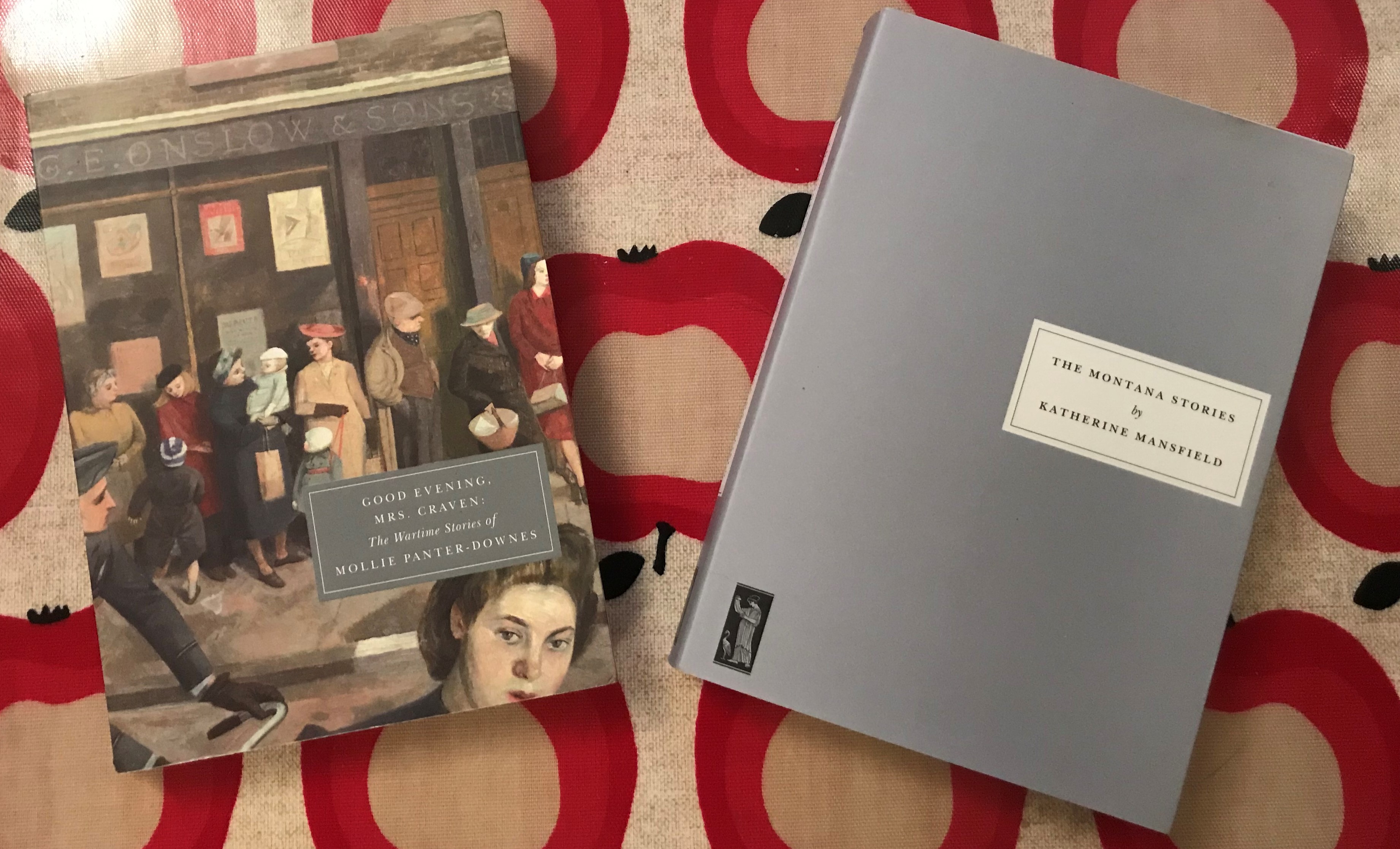
“I am my own muse, the subject I know best.” (Frida Kahlo)

Last week I wrote about Orlando, Virginia Woolf’s love letter to Vita Sackville-West. Although she was Virginia’s muse, Vita was not a voiceless entity to be moulded by the artist, but an accomplished author in her own right. This week, I thought I’d look at the work of some famous muses: Vita, and also Zelda Fitzgerald.

Vita Sackville-West

All Passion Spent by Vita Sackville-West (1931) begins with the death of Henry, Lord Slane, former Prime Minister and Viceroy to India. Deborah, Lady Slane, who has been married for 70 years since the age of 17, seems to be bearing up remarkably well.

“Mother was a changeling, they had often said politely, in the bitter-sweet accents reserved for a family joke; but now in this emergency they found a new phrase: Mother is wonderful. It was the thing they were expected to say, so they said it, several times over, like a refrain coming periodically into their conversation and sweeping it upwards on to a higher level. Then it dropped again; became practical. Mother was wonderful, but what was to be done with Mother? Evidently she could not go on being wonderful for the rest of her life.”

Although she loved her husband, Lady Slane is released by his death. She did not want to be a political wife or a society hostess, or any of the other roles she had to adopt to support her husband. She had wanted to be a painter, but instead followed the Victorian ideal and got married. Her husband was happy for her to paint watercolours as a becoming hobby, but the idea of a professional artist wife was ridiculous:

“He was not to blame. He had only taken for granted the things he was entitled to take for granted, thereby ranging himself with the women and entering into the general conspiracy to defraud her of her chosen life.”

Aged 88, Lady Slane decides that the time has come to go her own way at last:

“I have considered the eyes of the world for so long that I think it is time I had a little holiday from them. If one is not to please oneself in old age, when is one to please oneself? There is so little time left!”

This means she will not live alternately with each of her offspring who are all fairly dreadful in their own way. Instead she will move to a small house in Hampstead with her French maid who has been with her for the whole of her marriage, and they will live quite simply. (Much to my relief, having read the horrors of the moving-between-adult-children option brilliantly portrayed in Monica Dickens’ The Winds of Heaven)

She ends up creating a little enclave of elderly men around her. Mr Bucktrout is her eccentric, paternalistic landlord; Mr Gosheron her decorator; and Mr FitzGeorge a man who has loved her from afar for years. They are all rather strange individuals, and all in sympathy with one another.

“But at Hampstead, thanks to Mr Bucktrout and Mr Gosheron, the proper atmosphere had been at last achieved. It was modest; there were no aides-de-camp, no princes, but though modest it was warm, and affectionate, and respectful, and vigilant, and just as it should be.”

Sackville-West has plenty to say in this novel, most obviously about the limited choices available to women, especially in regard to their professional lives:

“She supposed she that was not in love with Henry, but, even if she had been in love with him, she could see therein no reason for foregoing the whole of her own separate existence. Henry was in love with her but no-one proposed he should forego his.”

In this way, it has been seen as a fictional companion to A Room of One’s Own. However, it is also an appeal for allowing for different kinds of life and for respecting inner life as much as outward achievement. Lady Slane is ostensibly doing nothing, and wonders if the contemplative life is in fact running away from things. She decides it isn’t:

“for in contemplation (and also in pursuit of the one chosen avocation which she had to renounce) she could pierce to a happier life more truly than her children who reckoned things by their results and activities”

All Passion Spent is a wonderful novel that I thoroughly enjoyed. It’s beautifully written and has something to say, but it is never didactic. It is warm, witty, has fully-realised idiosyncratic characters and of course, Sackville-West’s sharp wit. A great read.

“For the first time in her life – no, for the first time since her marriage – she had nothing else to do. She could lie back against death and examine life. Meanwhile, the air was full of the sound of bees.”

Secondly, Zelda Fitzgerald’s only novel, Save Me the Waltz, written in a clinic in 6 weeks following a breakdown. It’s practically impossible to read this without thinking of Zelda’s life. She and her husband F Scott Fitzgerald were seen as emblematic of generation perdu and her husband labelled her ‘the First American Flapper’. Save Me the Waltz is barely disguised autobiography as Alabama Begg marries an artist, David Knight, and the celebrated couple move around Europe after the First World War. Sound at all familiar?

The novel was dismissed by critics on its release but has been reclaimed by some scholars in recent years who argue the novel is well-written and Zelda has been overshadowed by the acclaim granted her husband. I think I fall somewhere between these two camps. I thought Save Me the Waltz was desperately overwritten:

“the swing creaks of Austin’s porch, a luminous beetle swings ferociously over the clematis, insects swarm to the golden holocaust of all hall light. Shadows brush the Southern night like heavy, impregnated mops soaking its oblivion back into the black heat whence it evolved. Melancholic moon-vines trail dark, absorbent pads over the string trellises.”

There are loads of passages like this. Fitzgerald loves a simile and she layers image upon image without them really adding anything to one another. A few pages on is this:

“The lids of her mother’s blue eyes rose in weary circumflex as her sweet hands moved in charity through the necessities of her circumstance.”

At this point I was at page 29 and wondering if I should give up. As I say, it’s difficult to read this separate from Zelda’s legend but I’m pretty sure that even if I didn’t know about her, this writing would still strike me as coming from someone with something to prove, desperate to be a Good Writer.

But I’m glad I persevered. Fitzgerald seemed to get into her stride later into the novel; similes became more coherent, the use of Big Clever Words lessened and she got on with the story and some interesting observations:

“Alabama and David were proud of themselves and the baby, consciously affecting a vague bouffant casualness about the fifty thousand dollars they spent on two years’ worth of polish for life’s baroque façade. In reality, there is no materialist like the artist, asking back from life the double and the wastage and the cost on what he puts out in emotional usury.”

Alabama decides to train as a dancer as the Knight’s marriage starts to disintegrate. It’s hard not to read it as Zelda’s take on her relationship with Scott and it’s sad:

“They had thought they were perfect and opened their hearts to inflation but not to alteration.”

Of course the main interest in reading Save Me the Waltz is that it was written by Zelda Fitzgerald, and that  it is her life with Scott thinly-disguised. Yet I think it shows unfulfilled promise. It’s not a great novel but it has excellent moments. I felt if she had only had an editor take an artistic, nuturing interest in her, someone who would advise, guide and mentor, Zelda Fitzgerald could have become the accomplished writer she so clearly wanted to be.

“Alabama swung off in imitation of some walk she had once admired. ‘But I warn you’ she said, ‘I am only really myself when I’m somebody else whom I have endowed with these wonderful qualities from my imagination.”

To end, I recently saw a repeat of a documentary where Marianne Faithfull described becoming Mick Jagger’s muse as “not a high self-esteem choice”. She survived, she’s laughing and she’s still working, even if her voice these days is a bit of an acquired taste. Take it away Marianne:

“Why is it that, as a culture, we are more comfortable seeing two men holding guns than holding hands?” (Ernest Gaines)

Although June was Pride month, in London it culminated with a Pride parade during the sunny weekend just gone, so this week’s post is two novels involving LGBT+ themes.

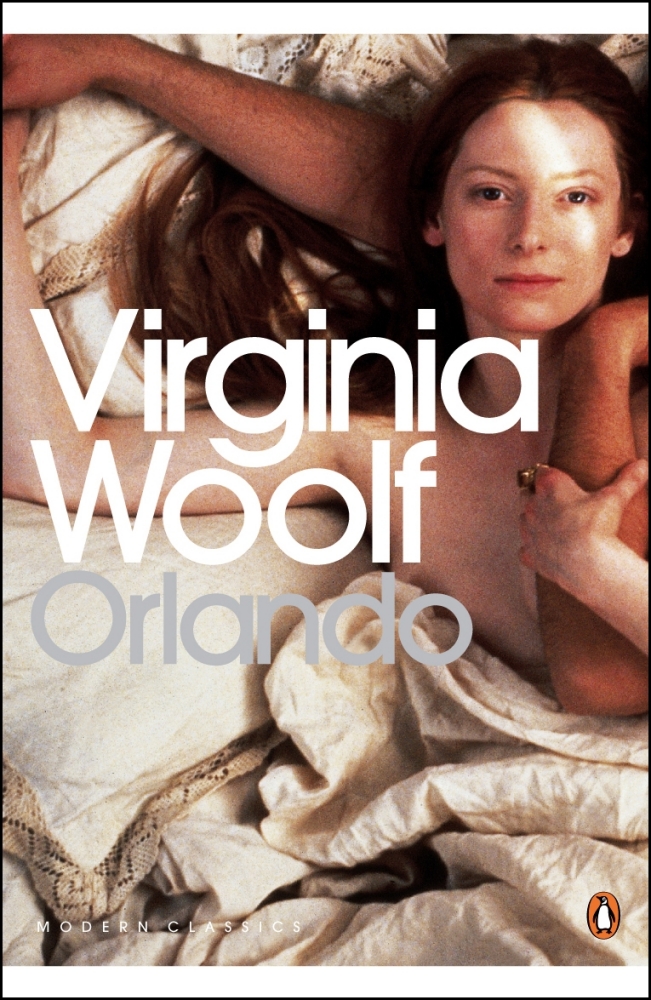
The first thing that struck me on picking up Orlando by Virginia Woolf (1928) is that Penguin Classics have managed to disprove what I had previously taken to be an absolute truth: that film tie-in covers are always repulsive. Apparently not when Tilda Swinton is involved (credit also to Billy Zane’s arms):

Orlando is a love letter to Vita Sackville-West, and the novel is full of references to her: her family, history, homes, lovers. As Orlando, Woolf makes Vita someone who is not bound by the laws of time, or by gender. At the start of the novel, Orlando is a young man living in Elizabethan England. I took Shakespearean Studies for my MA and I enjoyed Woolf poking fun at the nobleman poets of the time:

“He was describing, as all young poets are forever describing, nature…Green in nature is one thing, green in literature another. Nature and letters seem to have a natural apathy; bring them together and they tear each other to pieces. The shade of green Orlando now saw spoilt his rhyme and metre…one drops the pen, takes one’s cloak, strides out of the room, and catches one’s foot on a painted chest as one does so. For Orlando was a trifle clumsy.”

The oak tree on Orlando’s estate is a recurring motif, as Orlando writes throughout their life the epic poem The Oak Tree:

“To the oak tree he tied [his heart] and as he lay there, gradually the flutter in and about him stilled itself; the little leaves hung, the deer stopped; the pale summer clouds stayed; his limbs grew heavy on the ground; and he lay so still that by degrees the deer stepped nearer and the rooks wheeled round him and the swallows dipped and circled and the dragonflies shot past, as if all the fertility and amorous activity of a summer’s evening were woven web-like around his body.”

He is popular in the Elizabethan court and romances a Russian princess named Sasha (based on Vita’s lover for many years, Violet Trefusis). Sasha ultimately breaks his heart and Orlando retreats from court, but is later and ambassador to Turkey for Charles II. While in Constantinople he falls asleep for several days and wakes quite altered:

“Orlando had become a woman – there is no denying it. But in every other respect, Orlando remained precisely as he had been. The change of sex, though it altered their future, did nothing whatsoever to alter their identity.”

This change enables Woolf to make several pointed comments about gender roles:

“For women are not (judging by my own short experiences of the sex) obedient, chaste, scented and exquisitely apparelled by nature. They can only attain these graces, without which they may enjoy none of the delights of life, by the most tedious discipline.”

Ultimately though, Woolf is not interested in preaching. Orlando is an enjoyable romp through the centuries with plenty of sly digs at writers of the past and satirising of British society through the ages. It’s also about the difficulty of writing, both biography (Woolf-as-biographer addresses the reader directly to highlight these difficulties) and fiction as Orlando struggles with The Oak Tree and takes centuries to finish it (I enjoy Sackville-West’s writing but apparently Woolf didn’t rate it much).

For me, Orlando isn’t Woolf at her best, but I don’t think it was intended to be; she referred to it as ‘a writer’s holiday’. However, like all her writing, it is multi-layered and lends itself to re-reading. For all its complexities it’s a surprisingly easy read and can be whizzed through if you’re not stopping to read footnotes to catch all the allusions 🙂

Secondly, The Spell by Alan Hollinghurst (1998). This was a lesson to me to keep an open mind. If I didn’t rate Hollinghurst as a writer I would never have picked up this novel from the description on the back, taken from The Times review: “Alex drops a tab of ecstasy, provided by young Danny, and embarks on a bewildering voyage of self-discovery in a drug-fuelled London club scene”. To me, that sounds like an incredibly tedious premise for a novel. Thankfully, it seems The Times book reviewers were as inept then as they are now* and this is not what the novel’s about. What The Spell is about is dealing with the pain of heartbreak, and the awkward negotiations of intimacies when you’re male and British and don’t say what you feel.

Alex is nursing a broken heart when his ex-partner Justin invites him to spend the weekend with him and his new partner, Robin. Robin’s son Danny is there and Alex and Danny start a relationship. Alex is conservative; he works for the government and lives a quiet life. Danny is several years younger and completely different:

“He took in the jumble on the mantlepiece, but didn’t study the the curling snapshots too closely for fear of cutting himself on the grins and glints of Danny’s world. He had an impression of life as a party, as a parade of flash-lit hugs and kisses, in a magic zone where everyone was young and found to be beautiful.”

Robin is also negotiating his relationship with Danny and Hollinghurst captures the pain and guilt of the divorced parent:

“Even though the marriage had broken up eighteen years ago, Danny’s visits still left Robin with an aftertaste of disappointment, of adulterated sweetness; sometimes they had been anxious charades of the life they might have led together, but played out with an eye on the clock and a mawkishness which shifted from one to the other.”

Over the period of their relationship, as The Times review mentioned, Danny introduces Alex to London nightlife:

“He could easily argue the feeling away as the elation of drink and dancing and the company of a thousand half-naked men. Though the men were beautiful, it was true, in the cascades and strafings of coloured light.”

The Spell isn’t Hollinghurst’s most sophisticated novel but it’s simplicity makes it touching. It’s a look at a period of time in four ordinary, connected lives, written before he went onto the broader scope of The Line of Beauty and The Stranger’s Child. It’s about how we deal with pain, both big (bereavement, heartbreak) and small (the tiny hurts we cause one another each day). The final image is one of friendship, and as this endures, one of hope.

To end, the theme of this year’s London Pride was #PrideMatters. It’s about the importance of Pride as people who are LGBT+ still face discrimination and abuse. A pretty depressing state of affairs in 2018. And I am struck yet again at how audacious Jimmy Somerville was in making this video 34 years ago:

*Not that I read the Murdoch rag but instead base my opinions on the much more reliable source of Twitter. I saw Matt Haig’s tweet about their review of his latest book which showed all the nuanced understanding of mental health that you’d expect 😦

“It is not possible to have perfection in life but it is possible to have perfection in a novel.” (Elizabeth Taylor)

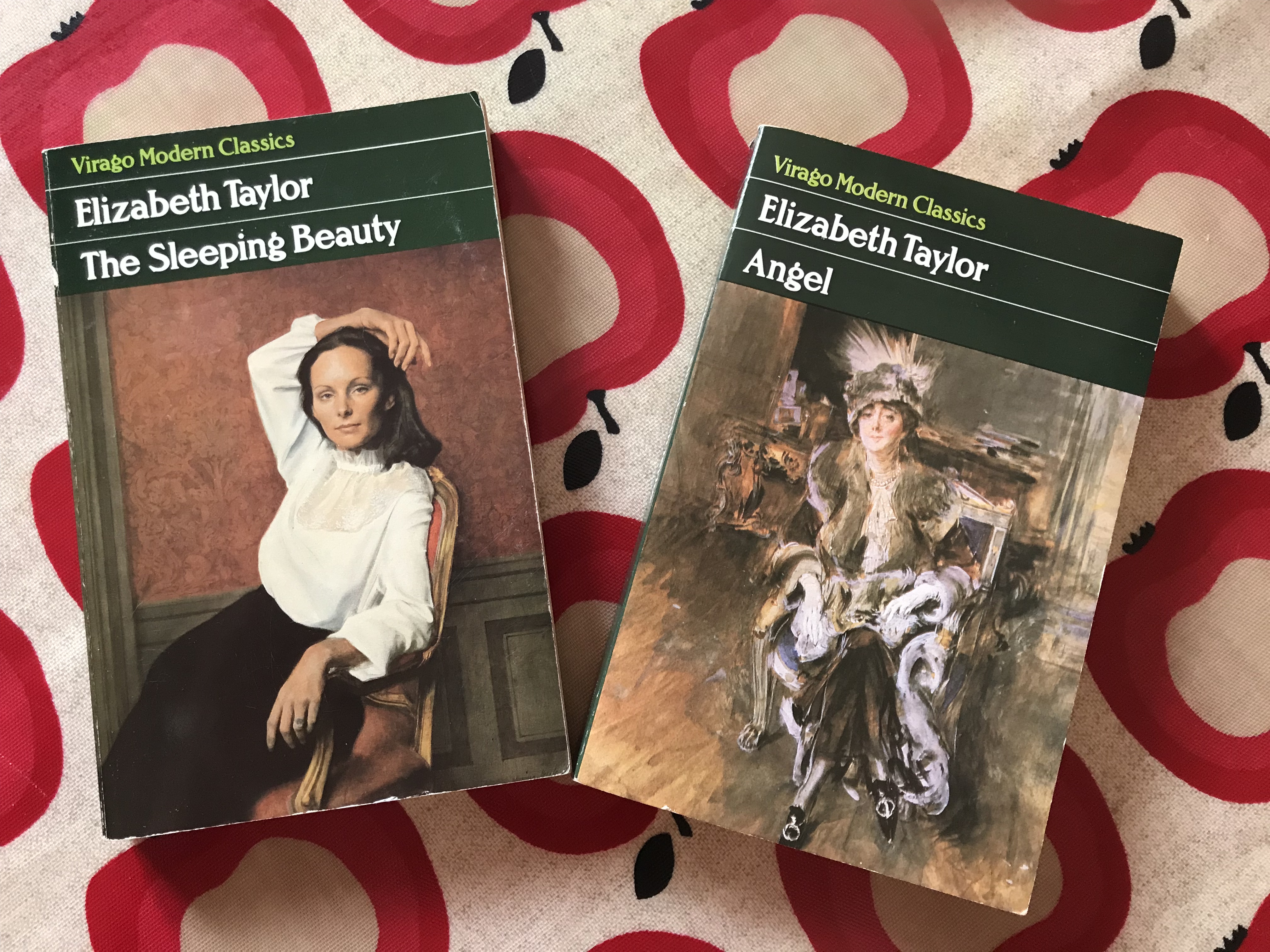
Today is Elizabeth Taylor Day in Jane at Beyond Eden Rock’s Birthday Book of Underappreciated Lady Authors, which gave me a chance to read the last two novels I had of hers remaining in the TBR (thankfully I’ve not yet read all her work – roll on the end of the book-buying ban…).

Firstly, The Sleeping Beauty (1953), which tells the story of Vinny, a man who is a reliable shoulder to cry on for all his female friends.

“It was his business to be loved – a mission created afresh with everyone he met – and he was always conscious of another’s coldness.”

When Isabella’s husband dies, he is down to visit her at her coastal home like a shot.

“ ‘You are welcome to follow me to the ends of the earth’ Vinny seemed to be assuring people when he was introduced.”

Vinny should be seen as a model of compassion, but instead Taylor’s sharp eye shows him as vain and very much driven by his own needs. Isabella’s son Laurence, courting a young nursemaid staying at a local B&B, doesn’t take to him as he thinks he has plans to marry Isabella. The thought crosses Isabella’s mind too, and she finds comfort in planning how she will turn him down. What neither of them know is that firstly, Vinny is already married (though separated) from his wife Rita “[who] had, in fact, a great distaste for the truth and was forever tidying it up or turning her back on it.” and secondly, that Vinny has fallen in love at first sight with Emily, who he saw on the beach.

“When they had gone from view, he turned back to the room, and found it dark now, and very small.”

Emily is a blank canvas in many ways, perfect for Vinny’s romantic sensibility.

 “Nearing fifty, Vinny felt more than ever the sweet disappointments only a romantic knows….the imperfectly remembered and the half-anticipated. Past and future to him were the realities; the present dull, meaningless.”

Emily has been in a car accident and her heart was broken when her lover subsequently dumped her, unable to cope with her changed appearance. She is still beautiful, but in a strange way, as Vinny’s mother observes:

“anything passive she abhorred, and Emily’s dead-white skin, her lack of expression, about which Vinny had found no words to forewarn her, no heart to explain or discuss, annoyed and repelled her. She could sense Emily’s life drifting by in an incurious desuetude.”

The Sleeping Beauty has a determinedly unromantic male lead, and a beauty whose awakening is for his benefit not hers. Taylor shows how we attempt to construct our lives around our desires and how that can cause pain rather than delight for ourselves and those we love. She is very funny (such as Isabella and her friend Evalie being avid racing gamblers, hiding this from her son, who is also betting and hiding it from his mother) but overall the tale is unsettling. If the romance will result in happily-ever-after for any of those concerned is left for the reader to decide.

“ ‘Oh, I am nothing without you,’ she said. ‘I should not know what to be. I feel as if you had invented me. I watch you inventing me, week after week.’”

Secondly, Angel (1957) a hilarious portrait of a writer supposedly based on the romantic novelist Marie Corelli. Angelica Deverell decides before she’s even left school that she’s going to be a romantic novelist. This is despite not liking love, or novels:

“Until now she had thought of love with bleak distaste. She wanted to dominate the world, not one person.”

“She had never cared much for books, because they did not seem to be about her”

Angel is one of the most rampant egotists ever committed to paper. She is a terrible writer without life experience, knowledge or taste to draw on, and yet she is hugely popular – her readers don’t care about her error-ridden purple prose. Her fame insulates her from the world and so she is able to continue her entirely ego-driven existence, never bothering to look beyond herself for anything. She is physically astigmatic but psychologically myopic to the point of blindness.

Maybe I’m lacking compassion but I didn’t find Angel remotely sympathetic. She is appalling. The pathos comes through her mother: baffled by her daughter, and yanked from her home by Angel’s material wealth. I found this passage heart-rending:

“At a time of her life when she needed the security of familiar things, these were put beyond her reach. It seemed to her she had wasted her years acquiring a skill which in the end was to be of no use to her: her weather-eye for a good drying day; her careful ear for judging the gentle singing sound of meat roasting in the oven; her touch for the freshness of bacon; and how, by smelling a cake, she could tell if it were baked: arts, which had taken so long to perfect, now fell into disuse. She would never again, she grieved, gather up a great fragrant line of washing in her arms to carry indoors.”

Amazingly, Angel does have people who care about her, repugnant as she is. Theo, her publisher, takes a paternalistic attitude and worries she will never get what she wants:

“Love, which calls for compliance, resilience, lavishness, would be a shock to her spirit, and upset to the rhythm of her days. She would never achieve it, he was sure. For all the love in her books, it would be beyond her in life.”

Nora is a devoted friend and lives with Angel for the majority of their lives, even during Angel’s marriage to Nora’s feckless brother Esme:

“ ‘I read one of your books.’ he said, sounding as if it were rather a surprising thing to do.

She blinked, jolted by what he had said. She always supposed that everyone had read all of her books and had them nearly by heart, that they thought about them endlessly and waited impatiently for the next one to appear.”

Her marriage is held together through Esme’s lies and Angel’s unrelenting capacity for self-delusion, despite the fact she doesn’t enjoy the honeymoon:

“Greece was especially disappointing. It was nothing like her novels.”

 Angel is an astonishing character study and the story of one writer’s life. What is most astounding is that the grotesque Angel is apparently not too far from real life; apart from the fact that she was probably gay and more interested in the esoteric, Marie Corelli seems to have been very much like Angel. Certainly like Corelli, Angel refuses to acknowledge her waning star following the First World War when people don’t want overwritten romances anymore.

Angel never has an epiphany, she remains resolutely vain, deluded and solipsistic until the end. The novel is a comi-tragedy, carefully balancing absurd excess with sharp-eyed psychological insight.

“She went to the Royal Garden Party in violet satin and ostrich feathers with purple-dyed chinchilla on her shoulders; amethysts encrusted her corsage and mauve orchids were sewn all over her skirt where they quickly wilted. Glances of astonishment she interpreted as admiration.”

 “Arrogant and absurd she had been and remained; she had warded off friendship and stayed lonely and made such fortifications within her own mind that truth could not pierce it”

Ultimately, Taylor treats Angel kindly:

“I am frightened, she suddenly thought. But there was nothing to be frightened of; not even poverty now. I have come such a long way, she told herself, and done all that I wanted and there is nothing to fear.”

In life and in fiction, I like people who walk to the beat of their own drum. Angel certainly does this. I think the reason I couldn’t stand her is because she is so utterly self-focussed. She has zero interest in other people or in the world. Taylor is such a skilled writer that her horrible main character does not detract from the joy of this novel. The comedy is gentle; although we laugh at Angel it is in disbelief rather than cruelty. There is also enough reality and pathos through the characters that surround her to ground the novel away from Angel’s delusions.

Elizabeth Taylor is such a wonderful writer. Any novel of hers is an absolute masterclass in astute, humane, witty style. The fact that she is an Underappreciated Lady Author is an absolute travesty.

To end, I saw a documentary recently about female singers and Annie Lennox was part of it, looking bloomin’ amazing in every shot. Here she is singing about an angel:

“The problem with current [marriage] vows is their optimism, which should be radically tempered, so as to avoid rage and resentment.” (Alain de Botton)

Last week I got an invite to a friend’s wedding. I know you won’t judge me, my bookish friends, when I say that I was pleased to get the invite and looking forward to it, but only became truly excited when I saw it was taking place in the birthplace of a favourite poet – roll on October!

Anyway….. me being a selfish friend aside, this prompted me to think that June is traditionally a month for weddings and so a suitable theme for this week.

Firstly, The Member of the Wedding by Carson McCullers (1946), which tells the story of twelve-year old Frankie over a few sultry days in late August, around the wedding of her older brother:

“She knew that her only brother, Jarvis, was to be married. He had become engaged to a girl in Winter Hill just before he went to Alaska. Frankie had not seen her brother for a long, long time and his face had become masked and changing, like a face seen underwater. But Alaska! Frankie had dreamed of it constantly.”

Frankie is a misfit – very tall for a girl (I thought she sounded entirely normal but then I was 5’10” by age 14), with hair she’s just shorn into a crew cut, kept company by her housekeeper Berenice and her cousin John Henry, who is half her age.  Her mother died in childbirth and her father is a distant presence. She is deeply unhappy and pins all her hopes on her brother and his new wife taking her with them when they leave.

McCullers creates the stultifying atmosphere perfectly:

“The clock ticked very slowly on the shelf above the stove, and it was only quarter to six. The glare outside was still hard and yellow and bright. In the backyard the shade beneath the arbor was black and solid. Nothing moved. From somewhere far away came the sound of whistling, and it was grieving an August song that did not end. The minutes were very long.”

I don’t think it’s putting too much of a modern interpretation on the novel to say a dominant theme is about gender and identity. Frankie has a gender-neutral name and does not conform to a feminine ideal. John Henry wears a dress. Markers of identity shift: Frankie’s name changes to F Jasmine in the second part of the novel. Both children feel their ideal world would not contain gender binaries:

“She planned it so that people could instantly change back and forth from boys to girls, whichever way they felt like and wanted. But Berenice would argue with her about this, insisting the law of human sex was exactly right as it was and could in no way be improved. And then John Henry West would very likely add his two cents’ worth about this time, and think that people ought to be half boy and half girl”

At core though, it is a tale of a sad, lonely, misunderstood child who desperately wants to be seen and heard, and believes the wedding day will give her this chance:

“And since it was the day when past and future mingled, F Jasmine did not wonder that it was strange and long. So these were the main reasons why F Jasmine felt, in an unworded way, that this was a morning different from all mornings she had ever known. And of all these facts and feelings the strongest of all was the need to be known for her true self and recognised.”

What Frankie needs to recognise is what she already has: a deep intimacy with Berenice and John Henry who both love her.

“The three of them sat silent, close together and they could feel and hear each other’s breaths.”

The Member of the Wedding is an atmospheric, touching story that has many layers to it. It’s a tightly contained novel (188 pages in my edition) which still manages a remarkable richness of characterisation and setting.

The Member of the Wedding was a Broadway production and then a film with the same actors in 1952. I’ve not seen it but I believe it was acclaimed, although the claustrophobic quality probably worked better on stage:

Secondly, Cassandra at the Wedding, by Dorothy Baker (1962). Like The Member of the Wedding, the story centres not on the couple but on someone with a strong emotional investment in the proceedings. Cassandra is writing her PhD at Berkley and has to return home because her twin sister Judith is marrying a doctor she met in New York. The sisters are exceptionally, unhealthily close and Judith’s move to New York had sent Cassandra into a tailspin. At the start of the novel she is considering the Golden Gate bridge in term of a suicide vehicle:

“I think I knew all the time I was sizing up the bridge that the strong possibility was I’d go home, attend my sister’s wedding as invited, help hook-and-zip her into whatever she wore, take over the bouquet while she received the ring, through the nose or on the finger, wherever she chose to receive it, and hold my peace.”

Their mother is dead and their father self-medicates with alcohol. It becomes apparent that the twins’ claustrophobic relationship was an extension of the elitist, exclusive culture their parents encouraged. But Judith has realised that this was not a helpful way to live:

“as a family we’d always been something of a closed corporation…we had our own pinnacle to look down from. But when we went away to college we couldn’t quite keep it the way it was on the ranch.”

Judith has dared to want the ordinary: to be out in the world, to get married and to set up a home. The few days when they are both back at home will bring the twins’ differing needs into direct conflict.

“[I] stood up and looked down at Cass and knew I loved her, but that it was not the same thing as being married and feeling married, and that now it never could or would be. I felt very solemn about it, and solemn words came into my mind. ‘Whom God hath split asunder, let nothing join them together. Ever.’ “

Cassandra is an intriguing character: bright, funny, acerbic, incredibly vulnerable, and monumentally selfish and self-centred. Her obsession with Judith is in many ways an extension of self-obsession:

 “To be like us isn’t easy, it requires constant attention to detail. I’ve thought it out; we’ve thought it out together. I’ve tried to explain to my doctor that it’s a question of working ceaselessly at being as different as possible because there must be a gap before it can be bridged. And the bridge is the real project.”

All the same I was rooting for Cassandra – not to get what she wanted, because that was a continuation of the destructively claustrophobic relationship with her sister – but to find a way through, for all involved.

Cassandra at the Wedding is a psychologically astute, funny and sad novel. Dorothy Baker balances the differing tones expertly; I’d definitely be interested to read more by her.

To end, The Dixie Cups in remarkable 1980s dresses (were wired hems a thing?), and looking like they’ve not bothered aging since their 60s heyday:

“A Persephone cover is a guarantee of good reading.” (Nicola Beauman, founder of Persephone Books)

After a month of daily posting about novellas I was planning at least a week’s break from blogging, but I couldn’t resist joining in with Jessie at Dwell in Possibility’s Persephone Readathon. Here are two short Persephones that just missed out on being part of Novella in Day in May as they were over 200 pages (but not by much).

Firstly, Lady Rose and Mrs Memmary by Ruby Ferguson (1937) which is Persephone No.53.

This is the story of a young Scottish heiress from childhood to young adulthood, framed by the visit of three tourists to the estate of Keepsfield.

“This transition to the atmosphere of another world is bewildering to modern personalities. The three strangers were conscious of a nakedness of spirit that made them uneasy spectators of a grandeur which was more than material. The old caretaker had slipped into the background, as caretakers do.”

The caretaker, Mrs Memmary, has been on the estate since she was a girl, and she tells one of the Tourists, Mrs Dacre, the story of Lady Rose. Rose is a child filled with joy, and a passionate attachment to her homeland, so far so that she names her kitten after a mighty clansman:

“Rose went out onto the sun-drenched west terrace, cuddling Rob Roy, who by now wore a small pink silk handkerchief round his head to protect him from the sun.”

She is a debutante and presented to the Queen, who takes a shine to her. It is at this moment, stepping into society for the first time, that she realises what her wealth and position truly mean:

“She was important? She, Rose Targenet aged eighteen, who had done so little but rejoice in the beauty and happiness of life. Of course her importance was not her own quality; it was because of her Papa.”

However, while she is important, she has no power. This is Victorian Scotland, and she must make a good match, securing the future of her lands and providing a male heir. We know that she managed this, as Mrs Memmary tells the tourists early on that all the splendour they see in the home is entailed to the heir, and Lady Rose is seeking a rich tenant to help pay for the upkeep of the estate.

The Victorian marriage market is poked gentle fun at during this overheard conversation between Rose’s mother and a family friend, regarding the Poet Laureate:

“If poor Alfred must write about what he calls love, he might at least explain that it is an emotion to be openly enjoyed by the middle classes.”

Although Lady Rose and Mrs Memmary could be seen as a light novel, it actually has serious points to make about the role and rights of women in the period. (It was written in in the 1930s and was apparently a great favourite of the Queen Mother, which I find fascinating. Makes me see her in a whole new light.)

Rose ends up in a loveless marriage to someone who is not horrible, but just completely cold and repressed:

“She had cried on her bed all the afternoon, realizing bitterly that in 1874 married women had no rights, even if they were countesses. She didn’t cry now, for she had the children, and in any case crying did no good after 10 years.”

Meanwhile, her friend Susan is in no better position having avoided marriage altogether:

“But what have I got? Just a piece of needlework and two disappointed elderly minded parents, and all the time in the world on my hands. If I had my way women would be free to do the same things as men; come and go as they wished, and read and talk, and be doctors and lawyers and financiers, and Members of Parliament, and newspaper writers, Wouldn’t that be wonderful?”

So what happens? We know Lady Rose is a strong character who at times is willing to defy authority, and we know she has been abroad for a long time. Mrs Dacre isn’t at all happy with what Mrs Memmary tells her:

 “ ‘You mean – that was the end of Lady Rose’s story? It seems a vague, disappointing ending.’

‘Vague?’ The old woman thought for a moment and said, ‘But in real life things go like that. Our stories have no ending. We come into the light for a little while, and then we move away into the shadows and nobody sees us anymore. It is better that way.’”

A good point, but Mrs Memmary has held something back. I don’t think I’m a great genius in guessing what it was in Chapter 2, but this didn’t spoil my enjoyment of the novel at all. I promise you it’s not a vague, disappointing ending.

Lady Rose and Mrs Memmary is in some ways a romantic novel: the country house and Scotland are both described with ravishing beauty, and it is a novel about being true to yourself and following your heart. But Ferguson also doesn’t shy away from portraying the price that is paid for these things, suggesting the price may be worth it but it can also be a high one.

Secondly, Daddy’s Gone A-Hunting by Penelope Mortimer (1958) which is Persephone No.77. Ruth Whiting lives in a commuter town with her husband Rex. Their two sons are away at boarding school and their daughter – whose conception necessitated their marriage – is studying at Oxford. Ruth is not happy:

“In all the years of her marriage, a long war in which attack, if not happening, was always imminent, she had learned an expert cunning. The way to avoid being hurt, to dodge unhappiness, was to run away. Feelings of guilt and cowardice presented no problems that couldn’t be overcome by dreams, by games, by the gentle sound of her own voice advising and rebuking her as she went about the house.”

Rex and Ruth aren’t together very much – he has a flat in London during the week and comes home at weekends.

“For Rex and herself there was no longer any hope or possibility of change; there was no longer any choice to be made. They lay, fully grown, capable of every crime and every greatness, paralysed by triviality.”

Mortimer’s unflinching eye and scathing attitude is cast wider than the intricacies of marriage; it also takes in the other couples in the area:

“The relationships between the men are based on an understanding of success. Admiration is general, affection not uncommon. Even pity is known. The women have no such understanding. Like little icebergs, each keeps a bright and shining face above water; below the surface, submerged in fathoms of leisure, each keeps her own isolated personality. Some are happy, some poisoned with boredom; some drink too much and below the demarcation line are slightly crazy; some love their husbands and some are dying from a lack of love; a few have talent, useless to them as a paralysed limb.”

Ruth seems on the verge, if not in the midst of, a breakdown. She is struggling to get out of bed and Rex engages a housekeeper/nurse.  However, what begins as a dissection of suburban 1950s marriage develops into something more political when Ruth’s daughter Angela tells her she is pregnant. The father, fellow student Tony, is selfish and callow:

“It was obviously not going to be necessary to impress on him the seriousness of the situation. He looked like a curate settling down to discuss dry rot in the organ loft.”

So Angela, unlike her mother, does not want to tie herself into marriage to an unsuitable man for the sake of an unwanted baby. The rest of the novel follows the hoops both Ruth and Angela have to jump through in order to secure an abortion. (This  particularly resonated at the time I read it given the recent vote in Ireland). What Mortimer demonstrates is the ways in which women’s lives are circumscribed and the huge fallout this can have: on mental health, physical health, participation in society, participation in our own lives.  Although she is acerbic, and undoubtedly it is a resounding cry for women’s rights to be acknowledged and given their due importance, I think above all, Daddy’s Gone A-Hunting is a plea for kindness.

“He would probably go through his entire life imagining that he was real; but not one person would owe him gratitude, remember his comfort.”

To end, I said when Novella a Day in May was over I’d go back to shoehorning late 20th century pop tunes into posts at every opportunity. So here we go, a 1980s celebration of those beautiful Persephone covers:

Novella a Day in May #31

The final post of Novella a Day in May! It’s time for dancing Brad:

No-one is more surprised than me to be here. I never thought I’d manage to post every day for a month. Massive thanks to everyone who has read, liked, commented and shared these posts, you are all fab! I never expected people to read this blog on such a regular basis.

I’ve really enjoyed my month of novellas and I hope I’ve managed to spread some novella love along the way.

I’ve never done a summary post before but then I’ve never posted every day for 31 days before, so here’s an attempt to squeeze all those novellas into a few stats before I go on to my final choice for the month.

The gender split in authors was fairly even: 15 female authors and 16 male. Pointless pie chart time:

The novellas ranged across 3 centuries, from 1860 to 2017.

The shortest novella was Journey into the Past at 84 pages and the longest was After Claude at 206, because I cheated my own criteria by 6 pages. The average number of pages of the novellas was 142. None of them were actually this long, which goes to show there’s no such thing as average 🙂

It was a good opportunity to read some of my favourite publishers: I read 9 by Virago, 5 by Pushkin Press, and 2 by Peirene, as well as novellas published by AndOtherStories, and New York Review of Books.

I visited 13 countries including France 3 times (4 times if I count Jean Rhys) and Denmark twice. Two countries were new stops on my Around the World in 80 Books Reading challenge, hosted by Hard Book Habit: Libya and Kyrgystan. Thirteen novellas were in translation and the rest were by English, Irish and American authors. The southern hemisphere was sadly neglected, but this does give me a reason to justify even more novella reading 😉

And now the bit I found hardest: trying to pick out favourites. I planned to try and pick out a top 5 but it’s proved impossible. However, special mention has to go to William Maxwell, who I wrote about yesterday. I thought They Came Like Swallows was a work of restrained beauty. He had a perfect understanding of the novella and used sparse words to convey a story at its absolute essence. Not a word was wasted and no further words were needed. It’s made me keen to hunt down the rest of his work.

And now, onto my final choice! A novella that the blogosphere told me was great last year and then I forgot about until Susan’s post reminded me of the paperback release, so off to the library I went…

Mirror, Shoulder, Signal by Dorthe Nors (2016, trans. Misha Hoekstra 2017,188 pages)

Sonja is single, in her 40s, a translator of thrillers she finds gruesome and misogynistic. She is trying to build bridges with her distant sister, manage her massage therapist’s more esoteric suggestions, and learn to drive.

Sonja’s driving instructor Jytte screams instructions at her and won’t let her change gear, so she goes to see Folke, the head of the school,

“Sonja’s on the verge of tears. It happens unexpectedly; the sob sits in her throat and wants to come out. Folke’s hands move efficiently from side to side across the desk, and she longs to grasp one of them. Squeeze it, say ‘Thank you,’ from the heart. It doesn’t escape Sonja’s notice that she gets red in the face, because this sort of thing rarely happens. It almost never happens anymore – that someone wishes Sonja the best. She’s used to dealing with everything herself, and she’s reasonably good at it too.”

This captures much about Mirror, Shoulder, Signal: Sonja is muddling through life and doing it more or less competently, but she feels awkward and displaced. She’s from Jutland (Folke observes “All the Jutlander’s I’ve met are a bit quirky” and a Danish friend tells me this is a common stereotype ) but has lived in Copenhagen for years, long enough to not feel at home in either the countryside or the city. She’s doing OK but she could be doing better, struggling with “the things she cannot find the language to say and the people she most wants to say them to.”

Sonja’s a strong character and immensely likeable with all her idiosyncrasies. She goes her own way and always has, but reflects that this may cause more harm than good:

“Mom did me a disservice believing I could just be myself. If I hadn’t been allowed to, then I’d be sitting right now with the whole package, but that train’s left the station. And if anyone does, Mom should know that you have to adapt if you’re going to entangle yourself in an intimate relationship. Kate knows that too. And Dad.”

There’s plenty of humour in Mirror, Shoulder, Signal. Not only at Sonja’s slightly blundering way through life, but also at the madness of Jytte screaming out her driving lessons; the awkwardness between Sonja and Folke; the flaky assertions of Ellen, the masseuse. But it’s not a whimsical novel and much of the humour is pretty sharp:

 “while Sonja does miss her sister, at the same time it ignites in her a yearning for fire”

I really enjoyed the short time I spent with Sonja. Nothing much happens, as in much of life, but there is a believable character arc for Sonja whereby things remain unresolved but improving – a happyish, unsentimental ending which made me smile.

To end, normal service will now be resumed on this blog: intermittent, unnecessarily verbose posts on two books linked by a theme, most likely with a cheesy late 20th century pop song shoehorned in. Here’s one such video to ease us in, chosen in honour of the fact that while Novella a Day in May is now over, I’ve enjoyed it so much I’m wondering if I’ve got it in me to do it again next year… what better way to express this than through song, while dressed in a flared satin and spangles jumpsuit twinset? Take it away, Gloria…

Novella a Day in May #30

Yesterday I wrote about Eudora Welty, today I’m looking at a novella by her editor, William Maxwell. Maxwell was fiction editor at The New Yorker from 1936-1975 and a contributor until his death in 2000. He was editor to extraordinarily successful writers as well as a writer himself.

Image from here

I’ve abandoned the two novella posts I was ending this series with, because I loved this one so much I wanted it to have a post all to itself.

They Came Like Swallows (1937, 140 pages)

The title of this semi-autobiographical novella is taken from WB Yeats’ Coole Park:

They came like swallows and like swallows went,
And yet a woman’s powerful character
Could keep a Swallow to its first intent;
And half a dozen in formation there,
That seemed to whirl upon a compass-point,
Found certainty upon the dreaming air,

A woman’s powerful character is the central compass-point of this story. Elizabeth Morison is mother to Bunny and Robert, wife to James. The 3 parts of this novella are told from the point of view of each of the male members of the Morison family in turn.

It begins with Bunny, aged 8 and a sensitive child who takes things to heart, would prefer to be indoors than out, and suffers under his older, more rumbustious older brother. He is still of an age where his mother has the power to change everything and make it alright.

“Somewhere in the front part of the house a door opened so that his mother’s voice came up the stairs. A spring inside him, a coiled spring, was set free. He sat up and threw his covers to the foot of the bed. When he was washed and dressed he went downstairs. His mother was sitting at the breakfast table before the fire in the library.”

“While he stood waiting before her and while she considered him with eyes that were perplexed and brown, the weight grew. The weight grew and became like a stone. He had to lift it each time that he took a breath.

‘Whose angel child are you?’

By these words and by the wholly unexpected kiss that accompanied them he was made sound and strong. His eyes met hers safely.”

I thought Maxwell effectively captured a sense of childhood and just how hard it can be day-to-day, without ever lurching into sentimentality. He writes in a constrained way yet captures moments in their entirety; he shows the profound in the everyday.

That’s not to say he can’t be poetic, but it is a restrained poetry. When he chooses an image it is startling and evocative. Every word in this novella works hard, yet overall it flows with deceptive ease. I particularly liked this description of Robert reading:

“It began the way Robert liked books to begin, and by the second page he was submerged. The lamp cord was his only means of contact with the upper air. He clung to that, and shaped his words in silence as he read.”

Robert also adores his mother. Under Bunny’s point of view he seemed somewhat brutal, but in his section we learn how much he also relies on maternal love as he enters adolescence:

“With his mother Robert was almost never constrained or ill at ease. It seemed easy and natural for her to be talking about whatever was on her mind. She didn’t stop what she was doing. Hardly ever. And that way he felt free to tell her all sorts of things. Because he always knew she would go right on sorting the sheets and pillowcases.”

I’m about to go on to a massive SPOILER so skip the remainder if you don’t want to know, although I knew this at the start of They Came Like Swallows and it didn’t affect my enjoyment of it at all: Elizabeth Morison dies. She succumbs to the flu epidemic that swept through after the First World War, and so these 3 people are left reeling without their centre. Maxwell’s restrained style effectively captures the numbness of grief, and how the inexpressible is articulated in a society that does not encourage outbursts of emotion, particularly from men. James blames himself for taking his wife on a crowded train:

“He read the letters while he walked back and forth between the fireplace and the windows – read them over and over without retaining what he read. Then he threw envelopes and letters upon the library table and stood perfectly still, pressing his shoulder against the mantel.

For two days now (ever since they came into his room at daybreak to tell him) he had been getting on that train. And there was no way, apparently, that he could stop.”

I thought They Came Like Swallows was perfectly written. Part of what focussed me on novellas in the first place was exasperation at the baggy, overlong, overly-indulgent novels I kept coming across, that had me muttering to myself how they ‘needed a heavier edit.’ If Maxwell is an example of what happens when editors decide to write, more should do so.

Novella a Day in May #29

It’s thanks to this mini-project that I finally read Eudora Welty, as I had two of her novellas in the TBR. I’m glad I did, as the latter of these two has definitely whetted my appetite for more of her work.

Eudora-Welty-1962

The Robber Bridegroom (1942, 185 pages)

I enjoyed this reworking of The Brothers Grimm tale which Welty sets in eighteenth century Mississippi. Clement Musgrove arrives back home:

“As his foot touched the shore, the sun sank into the river the colour of blood, and at once a wind sprang up and covered the sky with black, yellow, and green clouds the size of whales, which moved across the face of the moon.”

With this foreboding change in the weather, he finds himself sharing a room with real-life keelboater Mike Fink, and Jamie Lockhart, a gentleman robber. Lockhart saves Musgrove’s life, and so is invited back to his home, which he shares with his horrible wife, who predictably is wicked stepmother to the beautiful Rosamond. Rosamond isn’t perfect though:

“As for Rosamond, she did not mean to tell anything but the truth, but when she opened her mouth in answer to a question, the lies would simply fall out like diamonds and pearls.”

The tale unfolds along familiar lines, with theft, mistaken identity, illicit love and people thought to be dead when they’re not, all in the surrounds of a forest. While I thought The Robber Bridegroom was vividly told and entertaining, I wasn’t sure what Welty was really doing with the tale. Rosamond is given sexual agency which would be a departure for many fairytales; and it’s grounded in a historical reality which adds to the mythology around the Southern states pre-Civil War. It’s an interesting tale but I felt Welty could have done more with it, pushed it a bit further into something truly original but still grounded in fable.

“The only thing that could possibly keep her from being totally happy was that she had never seen her lover’s face. But then the heart cannot live without something to sorrow and be curious over.”

The Ponder Heart (1954, 132 pages)

This, however, I adored. It featured a truly idiosyncratic, distinctive narrator and was funny, unsettling and compulsively readable.

Edna Earle Ponder lives in Clay County, Mississippi, and is proud of being a Ponder and running the town hotel. She is telling the tale of her Uncle Daniel to a silent interlocutor.

“I don’t run the Beulah Hotel for nothing: I size people up: I’m sizing you up right now. People come here, pass through this book, in and out, over the years – and in the whole shooting-match, I don’t care from where or how far they’ve come, not one can hold a candle to Uncle Daniel for looks or manners. If he ever did thing to be sorry for, it’s more than he ever intended.”

Her Uncle Daniel dresses all in white and has a tendency to give away money. His father tries to get him committed; Daniel has a lovely time in the institution and his father ends up committed instead. Then there is an ill-fated marriage to the wonderfully monikered Teacake Magee.

“As for Uncle Daniel, he went right ahead, attracting love and friendship with the best will and the lightest heart in the world. He loved being happy! He loved happiness like I love tea.”

Teacake Magee proves impervious to Uncle Daniel’s charms after 2 months and they split up (we’re never quite sure why) and then Daniel marries Bonnie Dee without his family knowing.

“I wish you could have seen Bonnie Dee! I wish you could. I guess I’d known she was living, but I’d never given her a real good look. She was just now getting her breath. Baby yellow hair, downy – like one of those dandelion puffballs you can blow and tell the time by. And not a grain beneath. Now, Uncle Daniel may not have a whole lot of brains, but what’s there is Ponder, and no mistake about it. But poor little Bonnie Dee!”

And from this marriage the trouble starts. Welty builds her story expertly: you know something bad has happened, you don’t quite know what, by whom or to whom. As it is revealed, it is totally believable and an awful comic tragedy, told in the inimitable style of Edna Earle.

“I’m the go-between, that’s what I am, between my family and the world. I hardly ever get a word in for myself.”

She’s vain and arrogant about her position as a Ponder; she looks down on people and is racist; she’s appalling in lots of ways but Edna Earle spins a good yarn.

“What Uncle Daniel did was just bestow his [love] all around quick – men, women and children. Love! There’s always somebody wants it. Uncle Daniel knew that. He’s smart in way you aren’t, child.”

I was truly sorry to leave The Ponder Heart behind.

Novella a Day in May #28

If I was being facetious (which I never am 😉 )I might compile a Jean Rhys checklist:

  • Heroine is displaced, either in France from the Caribbean or in England from Caribbean and/or France
  • She is emaciated and constantly on the brink of starvation
  • For some reason, getting a regularly-paid job never occurs to her
  • And so she has casual employment as a model/actress/any job vaguely associated with sex work in the early 20th century
  • She uses men for financial gain and is in turn used by them
  • She has a judgemental landlady
  • She owns at least one piece of really expensive clothing left over from a better time
  • She self-medicates with alcohol
  • She is highly sensitive but weirdly passive, so things don’t generally go well

Not including Wide Sargasso Sea, this seems to be the form things generally take in a book by Rhys. Yet I’m happy to keep reading her because she writes with such precision and insight, and at moments is capable of absolute brilliance. Here are two novellas by her.

Images from here and here

Quartet (1928, 144 pages, originally published as Postures) is a fictionalised account of Rhys’ affair with Ford Madox Ford.

“ ‘I bet that man is a bit of a brute sometimes,’ thought Marya. And as she thought it, she felt his hand lying heavily on her knee.”

Marya’s husband Stephan has been put in prison for fraud and she is left alone in Paris. She seems to have been both aware and unaware of the nature of his business.

“Stephan disliked being questioned and, when closely pressed, he lied. He just lied. Not plausibly or craftily, but impatiently and absent-mindedly. So Marya had long ago stopped questioning. For she was reckless, lazy, a vagabond by nature, and for the first time in her life she was very near to being happy.”

She will bring this dissonance into the affair that she has with a man named Heidler. On the one hand she seems to know that she is being manipulated not only by him but by his wife Lois. On the other hand she still seems to plunge into this situation, living with them both and sleeping with Heidler, making  herself both materially and emotionally vulnerable. A lot remains unexplained. We’re not entirely sure why Marya does what she does, although Rhys suggests, as she does in her other writing, that morals are a luxury not everyone can afford.

“Poverty is the cause of many compromises.”

Marya may also have done it just for the sheer hell of it. Heidler and Lois seem to have no redeeming qualities whatsoever, and so it could be that Marya wanted any experience rather than a mundane existence:

“Her life swayed regularly, even monotonously, between two extremes, avoiding the soul-destroying middle.”

Certainly this may explain why she falls in love with Heidler when he seems so thoroughly horrible.

Quartet is morally ambivalent; Marya seems deeply unhappy for the entire book and she is powerless, so it is hard to judge her even though I felt frustrated at her seeming lack of agency. Rhys simply presents people and situations, and asks the reader to assign their own values.

“The value of an illusion, for instance, and that the shadow can be more important than the substance.”

Quartet was adapted into a film in 1981 by Merchant Ivory. I’ve not seen it but the cast is stellar:

Secondly, Voyage in the Dark (1934, 159 pages). Anna is freezing in England, unable to acclimatise after a life spent in the Caribbean. She is orphaned and earning a living as a chorus girl in a touring theatre company. Life is a procession of dingy B&Bs and while she gets used to England, she misses home:

“the smell of streets and the smells of frangipani and lime juice and cinnamon and cloves, and sweets made of ginger and syrup, and incense after funerals or Corpus Christi processions, and the patients standing outside the surgery next door and the smell of the sea-breeze and the different smell of the land-breeze.”

She meets an older man, Walter, and they begin a relationship. Although she is not being manipulated to the extent of Marya in Quartet, Anna is also powerless in the relationship. She is young, naïve and penniless; Walter is none of these things.

“Perhaps I’m going to be one of the ones with beastly lives. They swarm like woodlice when you push a stick into a woodlice home. And their faces are the colour of woodlice.”

When the relationship breaks down, Anna spirals into despair. She drinks too much, is depressed and has to seek a backstreet abortion.

“I stopped going out; I stopped wanting to go out. That happens very easily. It’s as if you had always done that – lived in a few rooms and gone one to another. The light is a different colour every hour and the shadows fall differently and make different patterns. You feel peaceful, but when you try to think it’s as if you’re face to face with a high, dark wall.”

It’s difficult to say why I don’t find Rhys utterly bleak. Her protagonists are always despairing, but I think for most there is hope. They cling onto something, and while that may be an entirely unsuitable lover or a destructive circumstance, they have a determined streak, even if they allow themselves to be buffeted by forces they could have easily avoided. Rhys is also a writer that constantly brings me up short with startling images, like this one of trying to communicate with a lover who won’t listen:

 “It was like letting go and falling back into water and seeing yourself grinning up through the water, your face like a mask, and seeing bubbles come up as if you were trying to speak from under the water.”

Reading these two novellas means I’ve now read all of Rhys’ novels and short stories and I’m truly sorry to have reached the end. She may only have one main theme, but it is a richly explored one that rewards careful reading.

Novella a Day in May #27

Today I’m looking at two novellas by Willa Cather, which were my first encounters with this legendary author of frontier life.

Willa_Cather_ca._1912_wearing_necklace_from_Sarah_Orne_Jewett

Alexander’s Bridge (1912, 176 pages) was Willa Cather’s first novel, although she was already an established journalist, poet and short story writer.  Apparently she didn’t think much of this first attempt at long-form prose, but I thought it had much to recommend it.

Bartley Alexander is an engineer who, it will surprise you to learn, builds bridges.  He has a huge project happening in Canada, but it is when he is London on business that he runs into an old flame, Hilda. Although he is married, an affair begins. The focus is not the romance or betrayal, but rather Alexander’s futile attempt to recapture his youth that is the focus of Cather’s writing:

“Solitude, but not solitariness; for he walked shoulder to shoulder with a shadowy companion – not little Hilda Burgoyne, by any means, but someone vastly dearer to him than she had ever been – his own young self, the youth who had waited for him upon the steps of the British Museum that night, and who, though he had tried to pass so quietly, had known him and came down and linked an arm in his.

It was not until long afterwards that Alexander learned that for him this youth was the most dangerous of companions.”

I think had I known what this was about, I would have been put-off reading it. A deceitful man having a mid-life crisis is not a subject matter that I have a great deal of patience with. What engaged me was Cather’s beautiful writing and her psychological insight.  She also managed to bring an impressive depth to the story considering its short length.  Overall I was left with a sense of the sadness of lives wasted in a search for meaning when not knowing where to look.

“Something had broken loose in him of which he knew nothing except that it was sullen and powerful, and that it wrung and tortured him. Sometimes it came upon him softly, in enervating reveries. Sometimes it battered him like the canon rolling in the hold of the vessel. Always, now, it brought with it a sense of quickened life, of stimulating danger.”

I suspect if you’ve read some of Cather’s  classic work such as My Antonia or O, Pioneers! you might find this a disappointment. However, it left me eager to read more of her work to see how she developed into a writer so greatly loved.


A Lost Lady (1923, 178 pages) was where I went next. It tells the story of the beautiful Marian Forrester, a rich (at first) young woman married to the older Captain Forrester, living in the West in a town called Sweet Water:

“She never stopped to pin up a lock; she was attractive in dishabille and she knew it. She had been known to rush to the door in her dressing-gown, brush in her hand and her long black hair rippling over her shoulders, to welcome Cyrus Dalzell, president of the Colorado & Utah, and the great man had never felt more flattered. In his eyes, and in the eyes of the admiring middle-aged men who visited there, whatever Mrs Forrester chose to do was lady-like, because she did it.”

However, following crop failures, the town starts to go downhill. It is close to the Transcontinental railroad, but the trains start passing through. Captain Forrester has a lot of money sunk into the railroad and an idealised view of this capitalism:

“All our great West has been developed from such dreams; the homesteaders and the prospectors and the contractors. We dreamed the railroads across the mountains”

Niel Herbert, from whose viewpoint the story is mainly told (although it remains in third person) has a different view of these dreamers:

“The Old West had been settled by dreamers, great-hearted adventurers who were unpractical to the point of magnificence, a courteous brotherhood, strong in attack but weak in defence, who could conquer but could not hold. Now all the territory they had won was to be at the mercy of men like Ivy Peters, who had never dared anything, never risked anything… The space, the colour, the princely carelessness of the pioneer they would destroy and cut up into profitable bits, as the match factor splinters the primeval forest.”

Ivy Peters represents the move to a capitalist industrial economy and he is truly despicable. At the start of the story he is a young boy too, slightly older than Niel, and he commits an act of vindictive cruelty on a bird; it truly made me feel sick. As an adult he sexually blackmails Mrs Forrester. Niel witnesses this as he witnessed Marian’s affair with a man named Ellinger. The feeling this raises in Niel are complicated; he does not quite have a crush on the woman, it’s more that he idealises her as a representation of the pioneer spirit, and so when he feels she is debased, he is angry that she has let down this broader ideal.

“It was not a moral scruple she had outraged but an aesthetic ideal”

The presentation of Marian Forrester is intriguing. Her beauty mesmerises people and places her in the more elite society, but Cather shows that she is a woman of flesh and blood, with both sexual desires and a desire to live. She will do what it takes.

This meant that while I could not embrace the romanticised notion of the pioneer (I think we now know enough of what happened to First Nations Peoples during the period for any romanticism to have well and truly died –briefly touched upon in this story) I thought there was a great deal of interest around the role of women. Marian is a lost ‘lady’ but she is a woman who knows herself and knows that as a woman in this period she does not have the freedom or choices of men. They will use her, but she is not a victim, although she self-medicates with alcohol at times. She endures, and so as a representation of the west, and pioneer spirit, I think Cather chooses to personify how times change and are lost forever, but the only choice is to keep on.

 “It was what he most held against Mrs Forrester, that she was not willing to immolate herself, like the widow of all these great men, and die with the pioneer period to which she belonged; that she preferred life on any terms.”

It’s a bittersweet novella, and Cather packs huge themes into a small space. Truly impressive.