“I want my limits to be drawn by my own sensibilities, not by my melanin count” (Zadie Smith)

This post is my second contribution to #DiverseDecember, which was brought about due to there being no books by BAME authors on the World Book Night list. Please head over to Naomi’s blog for an excellent, thorough discussion about this.

This week I thought I’d look at a classic novel by a Black American writer and a highly acclaimed first novel by a Malaysian writer now living in Britain, linked by portrayals of marriage. Sadly neither feature an Impressive Clergyman:

Firstly, Their Eyes Were Watching God by Zora Neale Hurston (1937), a much loved classic – my copy comes complete with effusive cover quotes from Zadie Smith, Toni Morrison, Alice Walker and Oprah Winfrey. I recommend this Virago edition: it has an interesting introduction by Zadie Smith, from which I took the title quote for this post, and an afterword by Sherley Anne Williams.

Beautiful Janie lives with her grandmother in the early part of the twentieth century:

“You know, honey, us colored folks is branches without roots and that makes things come round in queer ways. You in particular. Ah was born back due in slavery so it wasn’t for me to fulfil my dreams of whut a woman oughta be and to do. Dat’s one of de hold-backs of slavery. But nothin’ can’t stop you from wishin’. You can’t beat nobody down so low till you can rob ‘em of they will.”

When Janie is caught kissing a local bad boy, her grandmother arranges a marriage with a much older man who has land. It is an empty, lonely relationship and Janie runs off with her second husband, Jody. He is glamorous and exciting, but wants a trophy wife and is given to violence towards her:

“Janie stood where he left her for unmeasured time and thought. She stood there until something fell off the shelf inside her. Then she went inside there to see where it was. It was her image of Jody tumbled down and shattered. But looking at it she saw that it never was the flesh and blood figure of her dreams. Just something she had grabbed up to drape her dreams over.”

This is really what TEWWG is about: a woman’s search for self-fulfilment. Although the narrative drive comes from her three marriages, Janie is searching for a situation that will allow her to express who she is. She finds it with her third husband, Tea Cake:

“He drifted off into sleep and Janie looked down on him and felt a self-crushing love. So her soul crawled out from its hiding place.”

Janie is a compelling character, a spirited woman who strives for her voice to be heard and respected at a time when being a black woman meant there were few opportunities available. Hurston is undoubtedly a politically engaged writer, and her style is direct but not didactic. Rather, she has an unflinching gaze and a dry humour:

“Mrs Turner, like all other believers, had built an altar to the unobtainable – Caucasian characteristics for all….Behind her crude words was a belief that somehow she and others through worship could attain her paradise – a heaven of straight-haired, thin-lipped, high-nose boned white seraphs.”

Portrait_of_Zora_Neale_Hurston-_Eatonville,_Florida_(6835603368)

Their Eyes Were Watching God is sad and hopeful; it is wise and affecting.

“Love is lak de sea. It’s uh movin’ thing, but still and all, it takes its shape from de shore it meets, and it’s different with every shore.”

Secondly, The Harmony Silk Factory by Tash Aw (2005), which was longlisted for the Man Booker, the Guardian First Book Prize and the Impac, winning the Whitbread First Novel award and the Commonwealth Writers Prize. It tells the story of the marriage of Snow to Johnny, a merchant/mechanic/mercenary, during the Second World War.

The tale begins with their son Jasper, attending his father’s funeral.  Jasper’s feelings towards his father are complex to say the least:

“As we drove away I knew that I had been mistaken. That tender moment had been a mere aberration; it changed nothing. My father was born with an illness, something that had eaten to the core of him; it had infected him forever, erasing all that was good inside him.”

Snow’s diary from the early days of her marriage to Johnny makes up the second part of the novel and gives a different picture of Johnny as a quiet, conflicted man, perpetually displaced from his surroundings “I saw Johnny gathering himself to reply. He had an expression I had come to recognise, his broad face set in nearly cross-eyed determination.” Jasper sees his father as a thug, and while Snow doesn’t necessarily understand Johnny any better, she complicates the portrait drawn by her son.

Johnny and Snow honeymoon with an enigmatic Japanese professor for whom Snow feels a deep attraction; a displaced Englishman, Peter Wormwood; and the misnamed Honey, a mine-owner. This part of the novel sees relationships shift and change, reflected within an unpredictable tropical climate, during a strange suspension of reality prior to the Japanese invasion of Malaya:

“They ran through the towns and villages, barely pausing to plant flags of the Rising Sun before moving on. The red dust kicked up by the soldiers’ boots hung in the air, turning it crimson before settling on the leaves of the trees; all along the roads the trees turned red, and in some parts of the valley it was said that the streams ran deep scarlet.”

The third and final part of novel is narrated by an elderly Peter, looking back on that time while planning the new garden for the care home he lives in. As the answers to mysteries within the story emerge, we are left with contradictory accounts and loose ends. It is not so much unreliable narration, as a demonstration of how we are all unreliable narrators; we all have our own truth.

The personal story is bound up in issues of imperialism and displacement, expressed in Peter’s determination that his garden will be resolutely English, despite being planted in Malaysia:

“Not just lily-of –the valley, but ox-eye daisy, foxglove, cranesbill, snake’s head fritillary: I will plant them all in this hot earth… no longer will I have to wait for summer to enjoy its scent, for here it is summer all year long”

Tash Aw, who grows Malaysian plants in his London garden

Tash Aw, who grows Malaysian plants in his London garden

(Image from https://www.goodreads.com/author/show/140377.Tash_Aw )

The overall impression I have on finishing The Harmony Silk Factory  is  captured by a comment the professor makes to Snow:

“Life is a palimpsest.”

Layers upon layers, each leaving their trace on people, places and memories. The Harmony Silk Factory manages the impressive feat of demonstrating how people remain unknown, stories unfinished, and yet still providing a satisfying resolution in itself.

Unfortunately I can’t think of a satisfying resolution to this post, so when in doubt, end on a song. Take it away, Freda:


“Yeah, I love being famous. It’s almost like being white, y’know?” (Chris Rock)

This post is part of #DiverseDecember, which was brought about due to there being no books by BAME authors on the World Book Night list. Please head over to Naomi’s blog for an excellent, thorough discussion about this.

I thought I would start by looking at BAME writing that has emerged from that bastion of white, male middle-class privilege: just about everything the theatre. Firstly, Chewing Gum Dreams by Michaela Coel. This one-woman play (performed by the writer) was a huge success, winning awards and transferring from the fringe to the National.

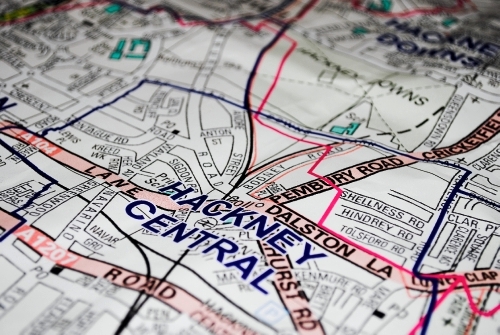
Tracey Gordon, schoolgirl, tells us about her friends, family, and where she lives in Hackney, East London. She’s a bully and a victim of bullying, she’s sweet and vindictive, she’s loyal and she’s betrayed by people. She’s young and she’s trying to understand everything that’s happening to her:

“Candice Ellis is the buffest girl I’ve ever seen in the whole’a Hackney and also my best friend, from primary school – so the love is strong. She’s mixed race with perfect curly ringlets and light brown eyes. Her hair is PERFECT. She should be on an advert. She said she puts some Garner Fructis shit in it every morning, I tried, it didn’t work for me. And it smells like Kiwi; my hair smells like beef soup.”

Tracey gets a boyfriend, someone far removed from the casual sexual assaults she has experienced with other men:

“He’s a writer, he writes books, he wanted me to read some but – . He’s got really big ambitions, wants to go to Uni and that, he says there’s cracks in the floor ‘n I should aim higher before I find myself stuck in dem.

Cracks in the floor.

I tell him those cracks were made for me, they were made for my mum, and her mum and relaxin’ into them is what we do best. I ain’t smart enough to be someone I’m just smart enough to know I’m no-one. I’ve got nothing, so I can’t get nothing. I don’t even think I want anything apart from what, new trainers and longer hair.”

Of course Tracey wants more but as she says, she’s not sure what it is.  Chewing Gum Dreams captures a lot in a short space, about expectations and limitations, those we place on ourselves and those society places on us according to race, social class, gender…serious issues but also delivered with a good deal of humour and lightness of touch which makes it all the more devastating:

“ ‘Erm…No matter what happens, everything’s gonna be alright, yeah?’

She don’t believe me either. She gimme a face full of ashes and questions.”

Secondly, Elmina’s Kitchen by Kwame Kwei-Armah, also set in Hackney, and which also played at the National to great acclaim.

Deli is trying to run a West Indian restaurant in Hackney’s ‘murder mile’ while avoiding the crime that surrounds him:

Deli. You can’t run a business on lies.

Digger. You think a Indian man would do that? That’s why the black man will always be down, He don’t know how to analyse his environment.

Deli’s son Ashley idolises Digger, a man with a gun and an income of uncertain provenance:

Digger. And you wanna be a bad man? Go back to school, youth, and learn. You can’t just walk into dis bad man t’ing, you gotta learn the whole science of it. You step into that arena and you better be able to dance wid death til it mek you dizzy. You need to have thought about, have played wid and have learnt all of the possible terrible and torturous ways that death could arrive. And then ask yourself are you ready to do that and more to someone that you know. Have you done that, youth?

Kwei-Armah does a great job in showing the pressures that surround a group of men (and one woman) trying to make their way in the world. The restaurant is a microcosm, demonstrating how self-respect becomes bound up in wider issues of societal identity. Not all of us will worry about paying protection money to the Yardies, but the struggle to find a life that nourishes rather than degrades is a broad one.

“Deli. You know what I read in one of those ‘white’ books the other day? The true sign of intelligence is how man deals with the problems of his environment….(Shouts) …I don’t want to live like this Ashley, it ain’t fun….

Ashley. Get offfffff, you’re hurting me….

Deli. (from the heart)…. I’m trying, I’m trying to change shit around here, but you ain’t on line, bra! Where you are trying to head, it’s a dead ting, a dark place, it don’t go nowhere.”

Elmina’s Kitchen is a modern day tragedy, powerfully affecting, questioning and angry.

If you’d like to see Elmina’s Kitchen performed by the original cast, some kind person has uploaded the TV production onto YouTube so do take a look.

hackney-map

(Image from here)

“When you’re a Jet/You’re a Jet all the way /From your first cigarette /To your last dyin’ day.” (West Side Story)

This is a loooong post – strap in people, and bring Kendal mint cake.

download

These days I don’t generally socialise as part of a group (unless it’s a work do, an experience that Dante forgot to include in his descriptions of the circles of hell) but in the last week I’ve been out with two sets of friends, which was a lovely change. For this reason, in this post I thought I’d look  at writers who have famously been part of a group.

Firstly, A Moveable Feast by Ernest Hemingway, which was published after his death and recalls his time as a young man in Paris during the interwar period, part of une generation perdue, or lost generation:

“’’That’s what you are. That’s what you all are,’ Miss Stein said. ‘All of you young people who served in the war. You are a lost generation.’

‘Really?’ I said.

‘You are,’ she insisted. ‘You have no respect for anything. You drink yourselves to death…’”

Miss Stein is of course Gertrude Stein, and her literary salon attracts some of the greatest writers of the generation: F Scott Fitzgerald, Ezra Pound, Ford Maddox Ford (a less than flattering portrait), Hilaire Belloc, James Joyce… it really is astonishing that these minds were all in the same place at the same time.

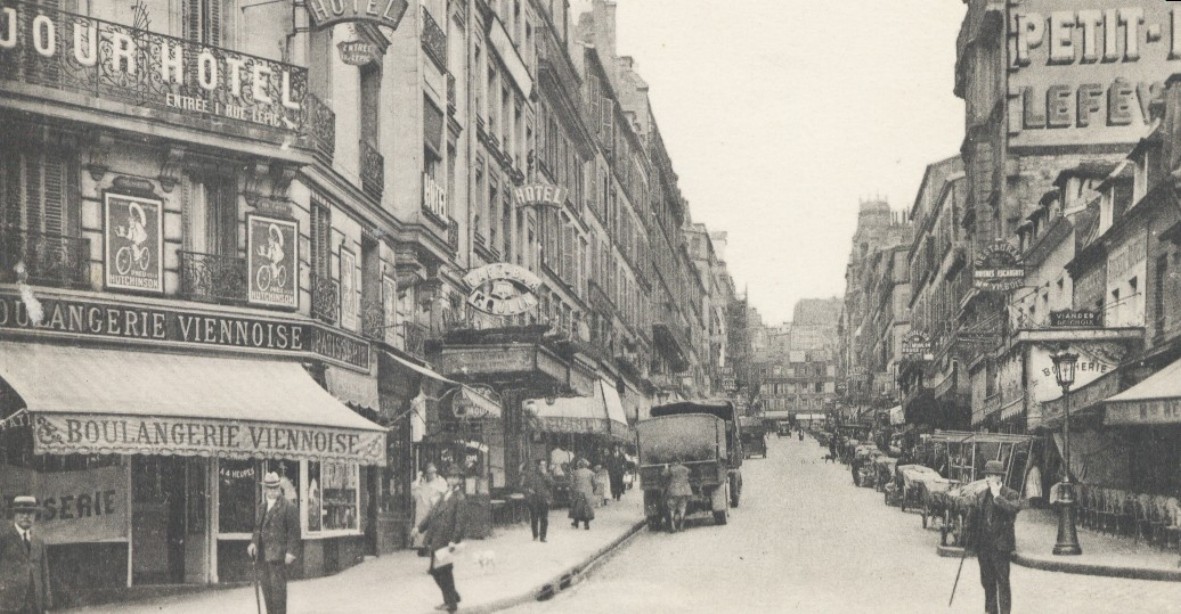
Montmartre in 1925

Montmartre in 1925

Image from here.

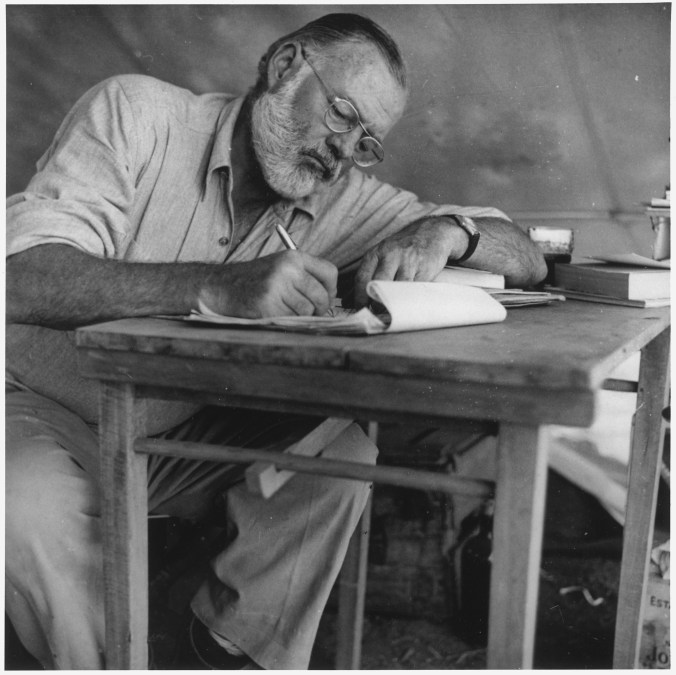
I can’t tell you how much I want to dislike Hemingway. He was macho, into bloodsports, treated women appallingly… but his writing just takes my breath away.  A Moveable Feast gives some insight into his craft; his drive to write what is true and to distil his writing into the sparse style he became so famous for:

“Since I had started to break down all my writing and get rid of all facility and try to make instead of describe, writing had been wonderful to do. But it was very difficult, and I did not know how I would ever write anything as long as a novel. It often took me a full morning of work to write a paragraph.”

He is filled with the arrogance and uncertainty of youth, completely committed to his craft:

“I’ve seen you beauty, and you belong to me now, whoever you are waiting for and if I never see you again I thought. You belong to me and all Paris belongs to me and I belong to this notebook and pencil.”

 “I would stand and look out over the roofs of Paris and think, ‘Do not worry. You have always written before and you will write now. All you have to do is write one true sentence. Write the truest sentence you know.’”

Ernest_Hemingway_Writing_at_Campsite_in_Kenya_-_NARA_-_192655

While he is sitting in cafes trying to write one true sentence, the young Hemingway comes into contact with various writers also trying to perfect their craft, including one of my favourite poets, Ezra Pound:

“Ezra was kinder and more Christian about people than I was. His own writing, when he would hit it right, was so perfect, and he was so sincere in his mistakes and so enamoured of his errors, and so kind to people, that I always thought of him as a sort of saint. He was also irascible, but so perhaps have been many saints.”

I just don’t understand how a person unfailingly described by all who knew him as being so generous, supportive and kind could also be such a massive fascist. It does make me feel a bit better about liking his poetry though. He also provides many of the episodes of comic relief in A Moveable Feast:

“I had heard complaining all my life. I found I could go on writing and that it was no worse than other noises, certainly better than Ezra learning to play the bassoon.”

Hemingway and his first wife were poverty-stricken in this period, and one of the places that offers succour is the now-famous English language bookshop Shakespeare and Company under the auspices of Sylvia Beach:

“On a cold windswept street, this was a warm, cheerful place with a big stove in winter , tables and shelves of books, new books in the window, and photographs on the wall of famous writers both dead and living.”

From within this perfect bookshop, Sylvia lends Hemingway and Hadley money and books, and helps create the man who would write this about F Scott Fitzgerald:

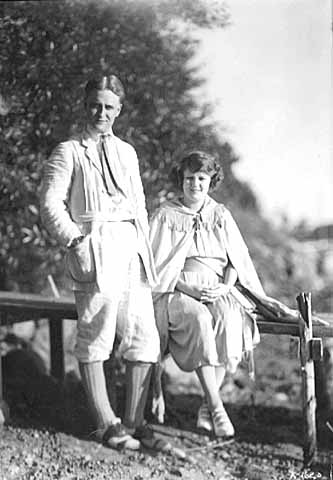
F_Scott_Fitzgerald_and_wife_Zelda_September_1921

“His talent was as natural as the pattern that was made by the dust on a butterfly’s wings. At one time he understood it no more than the butterfly did and he did not know when it was brushed or marred. Later he became conscious of his damaged wings and of their construction and he learned to think and he could not fly any more because the love of flight was gone and he could only remember when it had been effortless.”

If that passage doesn’t want to make you weep at the tragic beauty of it all, then I don’t know if we can be friends.  Damn you Hemingway, you’ve made me love you just like all those other women who should have kept well away.  Thank goodness we didn’t meet when you looked like this:

ernest-hemingway1

Or things could have got messy. (Seriously, who looks like that in a passport photo? I look like I’m out on day-release in mine).

Woody Allen explored the attraction of this group of writers in Midnight in Paris. I liked the film, but even a friend who loathed it admitted Corey Stoll did a great job as Hemingway:

“But Paris was a very old city and we were young and nothing was simple there, not even poverty, nor sudden money, not the moonlight, nor right and wrong, nor the breathing of someone who lay beside you in the moonlight.”

Secondly, The Wise Virgins by Leonard Woolf, who was part of the Bloomsbury group, and in his second (final) novel portrays his wife, Virginia.  He is also in the privileged position of being one of the few male authors published by Persephone Books, and their lovely edition of this novel includes an endpaper print by Vanessa Bell, Virginia’s sister.

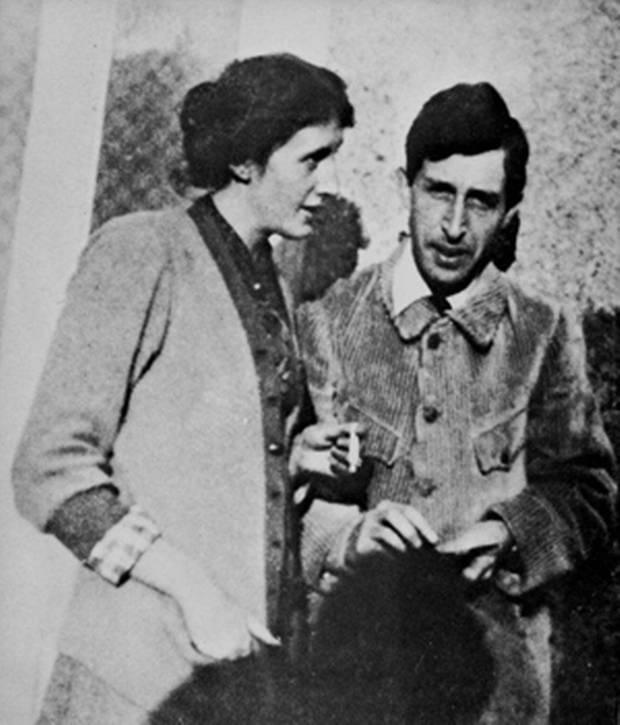
Virginia and Leonard Woolf

Virginia and Leonard Woolf

Image from here

Harry Davis moves with his family into the stultifying suburban society of Richstead (Richmond/Hampstead) where he is introduced to the Garlands and their four daughters, who do nothing all day because that is all they are expected to do:

 “Harry felt the dull sense of depression creeping over him again. ‘It’s so bad,’ he said, ‘to be comfortable. That’s why you want to go on forever in the same place.’

‘But I like being comfortable,’ said Ethel decisively. ‘I don’t think it’s bad at all.’

Harry remained silent; he couldn’t think of anything more to say. Gwen watched his rather heavy face. She could not make him out; she was not sure whether she liked him or hated him at first sight. He seemed to be exceedingly ill-mannered, she thought.”

Harry is an artist, and wants so much more.  He meets the intellectual, free-thinking Camilla (seen as representing Virginia) and falls in love.  While I think reading the novel for biographical ‘clues’ misses the point and would prevent enjoying the novel fully, it’s not difficult to imagine Virginia agreeing with some of Camilla’s sentiments:

“’There’s so much from marriage from which I recoil. It seems to shut women up and out. I won’t be tied by the pettiness and the conventionalities of life. There must be some way out. One must live one’s own life’”

The difficulty is, most of the characters are too vacuous, lazy and pretentious to tread their own path. They’re not terrible people, but the Bloomsbury set seem to sit around all day trying to be clever, while the suburban set obsess over flowers. Apparently some found Camilla-as-Virginia offensive, but if that was what Woolf was doing, Leonard-as-Harry fares little better, too weak to ever seize the life he imagines, lacking the courage of his own convictions:

“He turned over, and lay flat, burying his face in the grass. Harry felt as if he himself were turning into stone. He just managed to say:

‘You think her absolutely cold?’

‘She’s a woman and a virgin: isn’t that enough?…What they want is to be desired – that’s all. And when they get that from some poor devil with a straight back and a clean face, they think they are in love with him, and he marries, to be disappointed.”

If all this sounds terribly tedious, it isn’t.  Woolf satirises early twentieth-century society and shows how it denies sexuality and oppresses men and women, but especially women.  It could be a bleak novel – none of the characters really know what they want or how to break free – but I think we’re not meant to take them as seriously as they take themselves. While it’s not a broad comedic novel, The Wise Virgins has plenty of humour in it:

“This gentleman was undoubtedly a clergyman; his red nose and the causes of it had made it difficult for him to be a minister of Christ for any long time in one place…his life had its advantages, he used to affirm in his more secular moments, because he never had to write a new sermon; one congregation after another listened to the same four which had escaped the wear and tear of wandering with their author up and down England.”

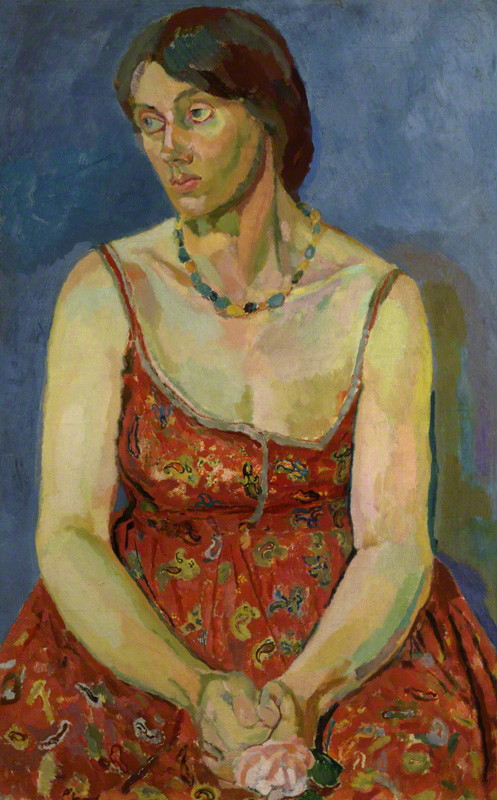
The Wise Virgins is about a denial of desires both individual and collective, and how damaging it can be. The Bloomsbury group in real-life were much more sexually liberated, and while I’m not sure the result was damage-limitation, it did result in some beautiful art:

Vanessa Bell painted by Duncan Grant

Vanessa Bell painted by Duncan Grant

Image from here

You made it to the end of this post! Thanks for reading, and here is your reward:

The Big Sleep – Raymond Chandler (Le Monde’s 100 Books of the Century #96)

This is part of a series of occasional posts where I look at works from Le Monde’s 100 Books of the Century. Please see the separate page (link at the top) for the full list of books and an explanation of why I would do such a thing.

Now that I have some of my life back after a period where I was deranged enough to both work and study full-time (what was I thinking???? etc etc ad infinitum) I’ve decided I need to get back on track with my reading challenge, and I’m easing myself in with the slim novel The Big Sleep by Raymond Chandler.

The Big Sleep is the first of Chandler’s novels, and the first I’ve read. It’s a mark of how far his style and the hardboiled detectives he created have become assimilated into modern culture that I could hear Humphrey Bogart’s voice in my head reading every word:

Having finished the novel it’s a source of constant disappointment to me that I don’t have Bogie’s voice in my head narrating my daily life, although admittedly if he did turn up he’d probably leave out of utter boredom:

“I walked to the kitchen. A cat appeared from nowhere, making his disgust at the lack of crunchies in his bowl known.  I poured a cup of tea. The kettle needed descaling but I couldn’t be bothered. I was out of milk. I debated whether to drink it black or go to the shop. The tea in the cup was as dark as the night outside. As dark as my soul. I put on my coat, knowing the wind outside would be colder than the welcome awaiting my return if the cat bowl remained empty.”

Hmm, it’s not really working, is it? Let’s see it done properly, with tales of blackmail, murder, riches and glamour in Los Angeles, rather than domestic banalities in south London. Private eye Philip Marlowe is summoned by the affluent and moribund General Sternwood:

“His long narrow body was wrapped – in that heat – in a travelling rug and a faded red bathrobe. His thin clawlike hands were folded loosely on the rug, purple-nailed. A few locks of dry white hair clung to his scalp like wild flowers fighting for life on a bare rock […] The General spoke again, slowly, using his strength as carefully as an out-of-work showgirl uses her last pair of good stockings.”

This is the real joy of Chandler, his much-parodied use of simile, inventive and atmospheric. The images he uses accentuate the world-weary knowingness of Marlowe: “Dead men are heavier than broken hearts.” but I must confess that my sheltered existence meant I didn’t always understand all of them: “Her face fell apart like a bride’s pie crust”. Whaaat? Anyone?

As Marlowe investigates the blackmail case the General has employed him to uncover, he is drawn into the seedy underbelly (I think the phrase ‘seedy underbelly’ was probably coined to describe Chandler’s oeuvre) of Los Angeles – “It seemed like a nice neighbourhood to have bad habits in”– pornography, drugs, murder, and of course, sexy ladies at every turn:

“She got up slowly and swayed towards me in a tight black dress that didn’t reflect any light. She had long thighs and she walked with a certain something I hadn’t often seen in bookstores.”

The plot is convoluted, with everyone double-crossing everyone else and Marlowe at the centre of it all, trying to hang on to some sort moral compass:

 “I got up feeling sluggish and tired and stood looking out of the windows, with a dark harsh taste of Sternwoods still in my mouth. I was as empty of life as a scarecrow’s pockets.”

He is compelling narrator, wise, brave and so much cooler than probably any of his readers (definitely me, as much as I wish I looked like this):

lauren-bacall-396150_960_720

This is a novel to accept on its own terms – one where atmosphere and style top anything else.  Famously, director Howard Hawks queried a plot-hole with Chandler when he was filming The Big Sleep. Chandler confirmed he had no idea as to the answer.  But for escapist entertainment, a quick read with a confident narrative voice (Humphrey Bogart’s to be precise), The Big Sleep is a great example of the hard-boiled genre.

“The coffee shop smell from next door came in at the windows with the soot but failed to make me hungry. So I got out my office bottle and took the drink and let my self-respect ride its own race.”

download (4)

“If you live to be one hundred, you’ve got it made. Very few people die past that age.” (George Burns)

This is my 100th post.  For more prolific, better bloggers than me this would not be a big deal but it’s taken me nearly 3 years so I’m making it A Thing:

BRAD-PITT-DORK-DANCE

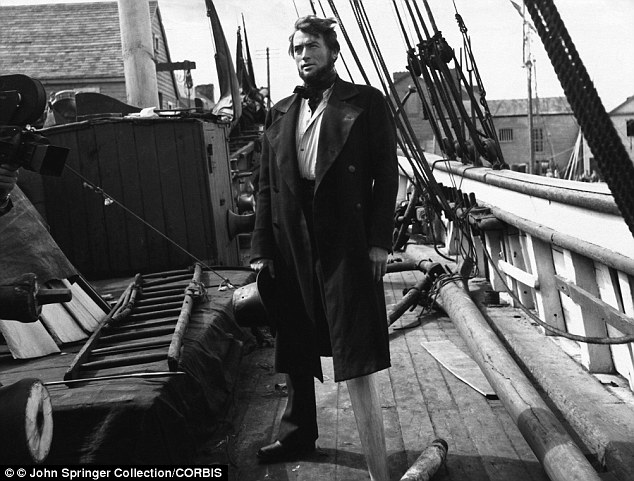
For the 100 theme I thought I would pick two books from my TBR that are also on the Norwegian Book Clubs 100 Best Books of All Time list (compiled by 100 authors from 54 countries). And it was at this point that the post became derailed, because the first one I chose was Moby-Dick by Herman Melville. I have no idea how to discuss this novel.  I have no idea if it’s even a novel. It’s the weirdest thing I’ve ever read, and I’ve read The Monk. I can only think it’s called a novel because there isn’t a genre of whale-compendium-philosophical-disquisition-on-the-state-of-humankind-tragi-farce-quest-adventure-stream-of-conciousness-homoerotic-existentialist-romance. I had no idea what I was getting into.  I thought it was a story about a monopedal seafaring lunatic’s obsession with a white whale. That’s some of it. But saying that is what Moby-Dick is about is like saying Animal Farm is about pig husbandry.

“With the problem of the universe revolving in me, how could I — being left completely to myself at such a thought-engendering altitude, — how could I but lightly hold my obligations to observe all whale-ships’ standing orders, ‘Keep your weather eye open, and sing out every time.’”

So you see my problem. Once upon a time one of my tutors was talking me through how to write a research proposal and the only thing I remember him saying was “don’t do what I did, and write down a tirade of barely-literate pseudo-threats”. This comment makes complete sense now, because his research was on Moby-Dick, and if I was trying to capture it in any sort of meaningful analysis I think I’d end up resorting to a tirade of barely-literate pseudo-threats.

I realise this may sound like I didn’t like it, which is not true.  Moby-Dick is beautifully written, compelling, hypnotic, thought-provoking, and completely unique. It’s full of sage counsel for life:

“Better sleep with a sober cannibal than a drunken Christian.”

The ending is devastating, and it is without a doubt the weirdest thing I’ve ever read.

“It is not down on any map; true places never are.”

article-2155383-137ACAF4000005DC-780_634x481

If you’d like to read a thoughtful, useful discussion of Moby-Dick rather than the confused nonsense you’ve just waded through here, then I highly recommend that you head over to Shoshi’s Book Blog for her excellent review.

Secondly, Madame Bovary by Gustav Flaubert (my edition trans. Alan Russell), whose linear narrative helped me recover from my Moby-Dick book hangover. Apparently Flaubert said “Madame Bovary, c’est moi.” I find this extremely unlikely. Madame Bovary is a silly, vain, self-pitying materialist who places value in all the wrong things. She never changes – this is how she begins and ends the novel.  Madame Bovary could never have written Madame Bovary, which is scathing in its treatment of bourgeois aspiration and acquisition. However, while she runs up debts to fill her house with things and constantly hankers after some ideal self-indulgent life that is based entirely on what she has read books, there is not a total lack of sympathy for Emma:

“Before the wedding, she had believed herself in love. But not having obtained the happiness that should have resulted from that love, she now fancied she must have been mistaken. And Emma wondered exactly what was meant in life by the words ‘bliss’, ‘passion’, ‘ecstasy’, which had looked so beautiful in books.”

So, she’s naïve, and in her naiveté has married a man whose “conversation was as flat as a street pavement, on which everybody’s ideas trudged past, in their workaday dress, provoking no emotion, no laughter, no dreams.” But she is also self-pitying, believing herself so hard done by in her comfortable middle-class existence with a man who loves her: “Had she not suffered enough? Now was her hour of triumph.” that at times I really wanted to slap her.

Emma really doesn’t know what she wants “She longed to travel – or go back to the convent. She wanted to die, and she wanted to live in Paris.”, and this makes her ripe for seduction by an absolute rake.  Although I didn’t like her, I did feel a bit ashamed for laughing at seduction which involved lines such as this:

“Goodbye! I’ll go away, far away, and you’ll hear no more of me. But today, some mysterious force has impelled me to you. One cannot fight with fate! Or resist when the angels smile! One is simply carried away by what is charming and lovely and adorable!”

Emma in her vanity falls for this nonsense, spoken by a man whose “pleasures had so trampled over his heart, like schoolboys in a playground, that no green thing grew there.” Of course her appeal wanes, and she is deserted by the cynical seducer:

“Emma was like any other mistress; and the charm of novelty, gradually slipping away like a garment, laid bare the eternal monotony of passion, whose forms and phrases are forever the same.”

Madame Bovary is a wonderful novel, accomplished and engaging, and while the sexuality of the heroine may no longer be scandalous, it remains an entirely relevant challenge to the socio-cultural values placed on materialistic gain.  I suspect Madame Bovary is a character who divides readers, and in this instance she divided the one reader. One the one hand, I thought her utterly contemptible. But at the same time she was a woman who wanted more, at a time when women didn’t have very many choices.

“Her will is like the veil on her bonnet, fastened by a single string and quivering at every breeze that blows. Always there is a desire that impels and a convention that restrains.”

Very possibly if I’d been born into nineteenth-century bourgeois French society I’d end up a silly, vain, self-pitying materialist, placing value in all the wrong things (of course, I’m nothing like that now *cough*). I’ll end on a more sympathetic view of Emma than I’ve given here; this recent film adaptation seems to view her more kindly, if the trailer is anything to go by:


“Human sacrifice, dogs and cats living together… mass hysteria!” (Dr Peter Venkman, Ghostbusters)

This week I bought my first Christmas present of the year.  I was really pleased with it.  Then as I gazed at it I realised the first present I’d bought this year was for my brother & sister-in-law’s cats.  From my cats.  I’m gifting between cats.  That’s who I’ve become.

anigif_enhanced-buzz-27619-1375801508-0

So I’m sharing my pain as mad cat lady with the interwebs. But I also love dogs, its just I can’t convince one to live with me in my tiny London flat. So in a spirit of inclusivity, and a rejection of the idea that you are either a dog-person or a cat-person, I’m looking at one novel about a feline, and another featuring a sarcastic dog.

Firstly, The Guest Cat by Takashi Hiraide (trans. Eric Selland).  This short novel is a delicate, sensitive study of the unspoken ties that bind. A small stray cat, adopted by the neighbours, arrives in the house of the narrator and his wife.  They live a quiet life, he a poet and she a proof-reader, and the cat brings a spirit of unpredictability into their lives:

“Chibi’s dependence would manifest itself in unexpected ways, even while performing acts of incredible athletic skill.  Casting aside the Ping-Pong ball, she turned about at an acute angle, yet in the next moment she had placed her tiny paw on the head of a toad concealed in the shade of one of landscape rocks. Then just as suddenly she flew to the other side of the garden, extending one of her front legs to slip into a clump of bushes.”

The novel is a mix of the closely observed and the philosophical/metaphysical:

“When she began to sleep on the sofa – like a talisman curled gently in the shape of a comma and dug from a prehistoric archaeological site – a deep sense of happiness arrived, as if the house itself had dreamed this scene.”

Hiraide captures how animals bring their own energy, changing dynamics in relationships, affecting homes and the people therein. They are catalysts (no pun intended) and their full effects can be both quiet and far-reaching:

“I opened the window and welcomed in the guest, accompanied by the winter sunrise, and the mood inside the house was restored. Chibi was our first New Year’s visitor. They call the visitors who go around to all the houses on New Year’s Day to wish everyone happy new year ‘pilgrims’.”

You don’t have to like cats to enjoy The Guest Cat.  Chibi could be any animal or transforming external force; it is her impact rather than her cat-ness that Hiraide is interested in.  The Guest Cat’s story is one of love, change, resilience and loss.

 “’See, I told you. She’s our girl.’

…or so my wife said, although she knew she wasn’t really ours. Which is why it seemed all the more as if she were a gift from afar – an honoured guest bestowing her presence upon us.”

Here are my two, utterly engaged with the whole idea of buying their cousins a gift, and with being part of a blog post:

004 (4)

It’s quite hard to find a dog in literature which doesn’t end in a way which has me in floods of tears. Thankfully, the full title of the well-known comic novel by Jerome K Jerome is Three Men in a Boat, To Say Nothing of the Dog!  It is a blessed relief to tell you that fox terrier Montmorency makes it through in one piece. Thank goodness, because look at this face:

fox terrier

Image from: http://www.vetstreet.com/dogs/smooth-and-wire-fox-terrier

“To look at Montmorency you would imagine that he was angel sent upon the earth, for some reason withheld from mankind, in the shape of a small fox terrier. There is a sort of Oh-what-a-wicked-world-this-is-and-how-I-wish-I-could-do-something-to-make-it-better-and-nobler expression about Montmorency that has been known to bring tears into the eyes of pious old ladies and gentlemen.”

J and his friends George and Harris are hypochondriacs who are convinced they all have terrible diseases. In order to recouperate they decide to sail a boat along the Thames to Oxford. J’s dog is not impressed:

“The only one who was not struck with the suggestion was Montmorency. He never did care for the river, did Montmorency.

‘It’s all very well for you fellows,’ he says; ‘you like it, but I don’t.  There’s nothing for me to do. Scenery is not my line, and I don’t smoke.  If I see a rat, you won’t stop; and if I go to sleep, you get fooling about with the boat, and slop me overboard. If you ask me I call the whole thing bally foolishness.’

We were three to one, however, and the motion was carried.”

Usually I’m not keen on anthropomorphism, but with Montmorency it really works.  He acts as a slightly detached commentator on his three bally foolish companions and never loses his dogginess – he remains very much the fox terrier. The four of them head off to the water and as anyone who has read the novel will know, very little happens yet much hilarity ensues.  The three men are absolutely useless with any practical considerations, such as putting all their food into one disgusting stew:

 “Towards the end, Montmorency, who had evinced great interest in the proceedings throughout, strolled away with an earnest and thoughtful air, reappearing, a few minutes afterwards, with a dead water-rat in his mouth, which he evidently wished to present as his contribution to the dinner; whether in a sarcastic spirit, or with a genuine desire to assist, I cannot say”

I love the idea of a sarcastic dog.  Three Men in a Boat was apparently first intended as a travel guide, which seems astonishing for such an unrelentingly funny book.  Attempts to act as a guide remain, but the humour always forces its way in:

“From Abingdon to Nuneham Courtenay is a lovely stretch. Nuneham Park is well worth a visit,  It can be viewed on Tuesdays and Thursdays. The house contains a fine collection of pictures and curiosities and the grounds are very beautiful.  The Pool under Sandford lasher, just behind the lock, is a good place to drown yourself in.”

By some miracle they make it to Oxford, and Montmorency shares my love of the city of dreaming spires:

“We spent two very pleasant days in Oxford. There are plenty of dogs in the town of Oxford. Montmorency had eleven fights on the first day, and fourteen on the second, and evidently thought he had gone to heaven.”

I must admit though, I’ve never fought a dog any time I’ve been to Oxford. It’s also safe to say he would not approve of the theme of this post:

“When Montmorency meets a cat, the whole street knows about it; and there is enough bad language wasted in ten seconds to last an ordinary respectable man all his life, with care.”

To end, a reminder that the dividing line between cat & dog may not be as clear-cut as we think:

“People say I have a period face” (Tom Hiddleston)

Judge for yourselves, ladies and gents:

Tom_Hiddleston_Comic_Con_2016

I would say 1920s myself, although I bet he gives good late-18th century too (dedicated to my friend M, who has never quite recovered from the fact that both Benedict Cumberbatch and Jamie Parker insist on being married to women who aren’t her).

This week I received my dissertation results. It was much sooner than I expected, as frankly, I’m still in recovery from the whole thing. I’d love to claim I’ve learnt loads about ritualistic bloodshed on the late Jacobean stage, but in reality what I’ve learnt is that you should never, ever, never under any circumstances attempt to undertake a full-time MA while also working full-time (even if your results are good 😉 ).

11609672

Now that I have  some spare time the main thing I’ve been doing is… nothing at all. Bliss. I am vegging out to my bursting-at-the-seams digibox and of course, reading for pleasure.  Hence this week I thought I’d look at books that have been adapted for the small screen (sadly neither feature Tom Hiddleston).  I should say from the off that I won’t be looking at the behemoth of literary adaptations which currently dominates popular culture in almost all its forms:

Most-Shocking-Moments-Game-Thrones (1)

Sorry ‘bout that.

The BBC normally saves its big literary adaptations for the autumn season, but there were two broadcast over the summer to whet the appetite of us bookish types, which I had to delay watching. Now I have handed in my millstone I’ve finally been able to watch them both (but as this is a book blog I’ll be concentrating on the paper versions).

giphy (4)

Firstly, Jonathan Strange and Mr Norrell, by Susanna Clarke. This was adapted into an impressive  (and pretty expensive-looking) seven-part series, featuring two fine actors who I’ll watch in anything, Eddie Marsan and Bertie Carvel:

It’s fair to say I am not the target audience for this novel.  Magicians, meh. However, the fact that I made it through this close to 800 page tome is a ringing endorsement. Clarke has written a very readable alternative history of England during the Napoleonic wars, whereby Wellington employs magician Jonathan Strange to help him beat Napoleon:

“In the early summer of 1813 Strange again performed a sort of magic the like of which had not had not been done since the days of the Raven King: he moved a river. It happened like this. The war that summer was going well and everything Lord Wellington did was crowned with success. However it so happened that one particular morning in June the French found themselves in a more advantageous position than had been the case for some time. …His lordship was in really excellent spirits that summer and he greeted Strange almost affectionately. ‘Ah Merlin! There you are! Here is our problem! We are on one side of the river and the French are on the other side and it would suit me much better if the positions were reversed.”

Strange of course obliges. Back home, his scholarly mentor Mr Norrell disapproves, thinking English magic belongs in books, to be rarely practiced by himself first and foremost, and secondly by Strange “yet within Mr Norrell’s dry little heart there was [a] lively ambition to bring magic back to England”.

The two men are entirely different – dashing, ironic, friend-of-Byron Strange, and small, anti-social Norrell “the dullest man in Yorkshire”. Of course, they are entirely similar too, and of course they quarrel horribly. While there is war abroad, there are tensions at home, and not all of them between England’s foremost magicians. An evil faery, with the entirely excellent appellation of The Gentleman With Thistle-Down Hair is going round enchanting people to his evil ends:

“’Yet we ought to kill someone,’ said the gentleman, immediately reverting to his former subject. “I have been quite put out of temper this morning and someone ought to die for it. What do you say to the old magician? –Oh, but wait! That would oblige the younger one, which I do not want to do! What about Lady Pole’s husband? He is tall and arrogant and treats you like a servant!’

‘But I am a servant, sir.’

‘Or the King of England! Yes, that is an excellent plan! Let you and I go immediately to the King of England.’”

Will the Gentleman with Thistle-Down Hair be stopped? Will Strange and Norrell reconcile? Will the Raven King return to claim his place as Lord of English Magic? The only spoiler you’ll get from me is… England wins the Napoleonic Wars.

I’ve mentioned before that I love Marc Warren as a baddie, and so special mention must be made to his performance in the BBC adaptation as the Gentleman with Thistle-Down Hair – another great performance, another great outfit:

tumblr_nnqhbkAV6r1so5us3o1_1280

Image from here

Secondly, The Outcast by Sadie Jones, which was adapted into a two-part drama:

Damn, this was hard-going. Not because of Jones’ writing, I hasten to add, but because the injustice of the treatment towards a nine year-old boy who loses his mother is infuriating, and the hypocrisy that surrounds him is absolutely sickening. Lewis Aldridge grows up in 1950s Surrey, in a village built on things unsaid.  When his sparkling, vivacious, alcoholic mother drowns with Lewis the only witness, he and his father spiral into separate pits of despair, unable to reach out to one another:

“he saw the moment between the not knowing and the knowing, as he woke, and he  recognised it, because it was how he felt on waking too.  He wanted to obliterate it. He wanted to take his son’s head in his hands and crush the feeling from it. He wanted to hold him hard and kiss him and make Lizzie come back to them through loving him badly enough. He wanted to hide his face and never think of it again.”

Jones is very good at this, capturing the messy, conflicting, contradictory emotions housed within one person, behind a still façade. Lewis becomes an expert at this outer calm, learning to bury all that he lacks the words to express:

“He didn’t feel sad anymore, it just went away and he felt hard as anything, hard as a diamond…

‘Lewis? Do come back in. Please.’

What could he do? He went.”

Lewis’ unnatural calm disturbs people; they find him uncomfortable and so they isolate him.  He is unable to join in with the social niceties layered upon the secrets and lies of post-war British society and so this innocent, damaged boy is excluded, while a wife-and-child-beating sadist is welcomed as the powerhouse of village society.  The Outcast is a novel that had me outraged at the injustice of it all, and at the cruelty of the refusal to acknowledge another’s pain “the world had exploded, but Sunday lunch would go ahead as usual.”

Lewis’ behaviour becomes violent as his desperation emerges in uncontrolled outbursts. The locals refuse to see their own complicity in what happens to him, and only Kit Carmichael, a fellow outsider, sees the village and Lewis for what they are. She loves him, but are they both too damaged to find their way to each other?

The Outsider is psychologically acute, well-paced, and unflinching in its portrayal of the damage human beings can do each other:

“It was an odd feeling, a looking-glass feeling, that he had, that all his life he had been on one side of the glass with everybody else on the other and now the glass had broken and the thick, broken pieces were at all of their feet.”

When I was cemented to my chair for 14 hours a day giving myself RSI through poor typing technique in a desperate attempt to meet the dissertation deadline, I would time my short breaks to the length of a Tim Minchin video. They broke the monotony, made me laugh, and stopped a short break spiralling into half a day.  Here he is singing about not being cool which, now my MA is in, is the obvious topic choice for my doctorate as I have a lifetime of research behind me (contains strong language):

“Autumn, the year’s last, loveliest smile.” (William Cullen Bryant)

I’m clearly not alone in a love of autumn: the interwebs are awash with the beauty of it all, stunning scenes of colour change and mists of mellow fruitfulness (or something).  I was overwhelmed with images and so of course I abandoned pictures and opted for this montage of autumn scenes (because a family of beavers having a bath is quite the most brilliant thing to ever grace my viewing):

Back to books.  Firstly, the obvious choice of Quartet in Autumn by Barbara Pym.  Nominated by Philip Larkin in 1977 as the most underrated novelist of the twentieth century, it turned out to be a good year for Pym as this novel was also nominated for the Booker. Her popularity has grown steadily since this time, eradicating the problem faced by Letty, one of the titular quartet:

“She had always been an unashamed reader of novels, but if she hoped to find one which reflected her own sort of life she had come to realise that the position of an unmarried, unattached, ageing woman is of no interest whatever to the writer of modern fiction.”

Despite the title, this novel isn’t about a seasonal change but about a time in life. The quartet of Letty, Marcia, Norman and Edwin work together in an office and are heading towards retirement, all of them facing the prospect of an abundance of spare time spent alone. They are all single and slightly baffled by the world around them.

“How had it come about that she, an English woman born in Malvern in 1914  of middle-class English parents, should find herself in this room in London surrounded by enthusiastic shouting, hymn-singing Nigerians? It must surely be because she had not married. No man had taken her away and immured her in some comfortable suburb where hymn-singing was confined to Sundays and nobody was fired with enthusiasm.”

The world has changed a lot since 1914, and in the late seventies these four are looking for meaning at a time when the world is ready to place them in a home and suggest they while away their days stultifying inactivity.  Pym is interested in those thought to be terminally uninteresting; she observes lives lived on a small scale and pinpoints the quirks, the pain, the tragedy and the humour.  Quartet in Autumn could be a bleak read, and it does deal with a great deal of sadness.  The four are lonely and misunderstood and not sure what to do about any of it.

“Norman went back to work. He had a few days leave still in hand. ‘You never know when they might come in useful,’ he said, but he felt that those extra days would never be needed, but would accumulate like a pile of dead leaves drifting on to the pavement in autumn.”

But Pym is one of the best writers at evoking a gentle but incisive humour into things, and she holds her story right on the precipice between tragedy and comedy. She encourages us to laugh at life, but with kindness.  This is perfectly realised through the character of Marcia:

“Ageing, slightly mad and on the threshold of retirement, it was an uneasy combination and it was no wonder that people shied away from her or made only the most perfunctory remarks”

Yet Marcia is not a victim.  She is not well, but she is determined and she goes her own away, like her unique use of libraries:

 “The library was also a good place to dispose of unwanted objects which could not in her opinion be classified as rubbish suitable for the dustbin…one of the library assistants (a woman) had her eye on Marcia, but she was unconscious of this as she deposited a small, battered tartan-patterned cardboard box, which contained ‘Killikrankie oatcakes’ at the back of a convenient space on one of the fiction shelves.”

Quartet in Autumn is a little gem, beautifully observed and in its own quiet way, utterly scathing of the disregard shown to members of society who are inconvenient to the majority.

When she wasn’t writing novels, Pym enjoyed strangling cats (Image: Mayotte Magnus © The Barbara Pym Society)

When she wasn’t writing novels, Pym enjoyed strangling cats (Image: Mayotte Magnus © The Barbara Pym Society)

Secondly, autumn often evokes the return to school after the summer holidays, so I thought I’d look at A Good School by Richard Yates, which was published the year after Quartet in Autumn. I braced myself for this one, as Yates can be soooo depressing, but this wasn’t too bad… despite being brutal in places. Dorset Academy is a prep school funded by the eccentric, elderly and rich Abigail Church Hooper; a small, isolated “funny school” where the sons of well-meaning parents who can’t afford somewhere more prestigious are bullied/ignored educated.

“And I can see my father starting to turn away then, concluding the pleasantries, looking tired. He wasn’t old that summer – he was fifty-five – but within eighteen months he would be dead. ‘Well,’ he would say, ‘as a matter of fact I’d never heard of it either but it’s – you know – it’s supposed to be a good school.’”

We follow William Grove, a shy nervous boy desperately trying to fit in and survive at Dorset.

“He still hadn’t cried, except in the privacy of his room late at night (and even there you couldn’t be sure of remaining alone; the doors were locked only by sliding wooden bolts, easily picked open with a knife or a screwdriver; nobody was safe)but he’d come to adopt a chronic posture of humiliation. If a wretch was what they wanted, he would be a wretch.”

But rather than a relentless tale of bullying, what emerges is a claustrophobic atmosphere where everyone is damaged to a greater or lesser extent.  Grove does survive, and even finds some pleasure editing the school paper. The bullies are insecure victims themselves.  The teachers are lonely and without vocation:

“Mr Gold despised all Dorset boys on principal – rich, spoiled little snot-noses – but he had to admit this Haskell, was kind of an interesting kid…But when Mr Gold tried to tell his wife about it that night, in the kitchen of their home in Unionville, she didn’t want to listen. “’Interesting’?” she repeated. “You’re telling me ‘interesting’ and ‘sophisticated’ about some fifteen-year-old prep school kid? Come on. I think you’re going soft in the head Sidney.” And he guessed she was right”

What Yates shows is that sometimes there are circumstances that just have to be borne, survived and then left as soon as possible. It’s not always a great tragedy, just something you made it through. The novel is set around the time of Pearl Harbour, a bleak reminder that there can be many worse things to try and survive beyond your school days.

To end, something more cheerful: a clip from a documentary filmed at my school.  This is how we began every school year:

“I’m leaving because the weather is too good. I hate London when it’s not raining.” (Groucho Marx)

As a companion piece to my last blog post where I looked at the London Underground in novels, this time I’m looking at alternative portrayals of the London Underground.  Those of you who know the London Underground may feel its alternative enough in itself – I certainly think the experience of using it is most accurately represented by David Shrigley’s map:

tube-map-cover

Fantasy is sometimes the best way to capture reality, and certainly the two novels I’m going to look at capture the same  experience as Shrigley’s map. Firstly, Neverwhere by Neil Gaiman. I am soooo late to the party on this one.  Neil Gaiman is a hugely popular writer who is adored by his readers.  I knew he was wise and engaging because I’d watched this:

but I’d never read his novels because I thought I didn’t like fantasy. Neverwhere appealed due to the London setting and now I’m a total convert. I now know what Gaiman’s legions of fans know: that he is a wonderful writer, funny and perceptive, with something to say. Richard Mayhew moves from Scotland to London – a perfectly recogniseable, ordinary London:

“It was a city in which the very old and the awkwardly new jostled each other, not uncomfortably but without respect; a city of shops and offices and restaurants and homes, of parks and churches, of ignored monuments and remarkably unpalatial palaces…a noisy, dirty, cheerful, troubled city, which fed on tourists, needed them and despised them…a city inhabited by and teeming with people of every colour and manner and kind”

However , when Richard helps a slumped figure on the pavement in front of him, he finds himself in the alternate universe of London Below:

“Understand this: there are two Londons. There’s London Above – that’s where you lived – and then there’s London Below – the Underside – inhabited by the people who fell through the cracks in the world. Now you’re one of them.”

The idea of ‘people who fell through the cracks’ is the most pervasive idea in Neverwhere. These people are ignored and marginalised in London Above, barely recognised and overlooked by the inhabitants they come into contact with. London Below is a warped reflection of London Above, a violent place where the warning to ‘Mind the Gap’ on the Underground is ignored at your peril, for the gap will drag you under:

“It erupted over the side of the platform. It was diaphanous, dream-like, a ghost-thing, the colour of black smoke, and it welled up like silk under water, and, moving astonishingly fast while still seeming to drift almost in slow motion, it wrapped itself tightly around Richard’s ankle.”

Gaiman has great fun with this, taking the everyday in London Above and twisting it slightly, like the random empty carriages you sometimes see: “from time to time Richard had noticed carriages like this, locked and shadowy on Tube trains, and had wondered what purpose they served”; in this instance the carriages hold Earl’s Court (other characters include the Angel Islington and the Black Friars), a medieval court complete with log fires, bugle players and  jester.

Richard offers to help the Lady Door, a young woman who can open any door to any place, and whose family have all been murdered, while she tries to evade capture. His learning curve is steep, as London Below is filled with the familiar, and the deeply disconcerting:

“there are little bubbles of old time in London, where things and places stay the same, like bubbles in amber…there’s a lot of time in London, and it has to go somewhere – it doesn’t all get used up at once”

Smog, fogs, alley ways, cobbled streets…all fall between the cracks and end up Below.  Probably the most terrifying characters are the hitmen for hire who track Richard and the Lady Door through London Below:

“there are four simple ways for the observant to tell Mr Croup and Mr Vandemar apart: first, Mr Vandemar is two and a half heads taller than Mr Croup; second, Mr Croup has eyes of a faded, china blue, while Mr Vandemar’s eyes are brown; third, while Mr Vandemar fashions the rings he wears on his right hand out of the skulls of four ravens, Mr Croup had no obvious jewellery; fourth, Mr Croup likes words, while Mr Vandemar is always hungry. Also, they look nothing alike.”

There are some utterly beguiling characters too, and the Marquis de Carabas may have succeeded in usurping Will Ladislaw as my literary-crush- of-choice.  He’s brave, loyal, charming, self-serving, untrustworthy and a master of ironic detachment.


(Rufus Sewell as Ladislaw and Patterson Joseph as the Marquis in the BBC adaptations of Middlemarch and Neverwhere. Yep, it’s safe to say I have a bit of a type, which I like to call Byronic kitsch. Images from here and here.)

Neverwhere is perfectly paced, emotionally affecting and politically engaged without being didactic. Highly recommended.

Secondly, Whispers Underground by Peter Aaronvitch (tagline: “Using the Underground is a killer…”). This is the third in Aaronvitch’s Peter Grant series, about a detective constable seconded to the Folly, the division of the Met which deals with supernatural occurrences.  Grant isn’t the most accomplished apprentice wizard:

“I barely knew four and a half spells and you couldn’t have got me to give it up and that’s despite close brushes with death by vampire, hanging, malignant spirit, riot, tiger-man and the ever-present risk of overdoing the magic and getting a brain aneurysm”

His mentor Nightingale despairs, but Grant is a good police officer and by following vestigium “a pocket of residual magical effect” he is able to recognise crime scenes that may have a slightly broader cause-and-effect than usual.  The novels are essentially police procedural, but with an extra dimension:

“Nightingale can put a fireball through ten centimetres of steel armour and I can singe my way through a paper target nine times out of ten but really, in the interests of community policing, it’s better to have something a bit less lethal in your armoury”

So it’s not magic galore – Grant identifies suspects, follows up leads, takes part in stakeouts, it’s just that these activities might lead him into weirder circumstances than his Met peers. In this instance, the murder of a young American with a piece of magical pottery leads him deep below London, into the abandoned tube network and sewers:

“In a film you would be able to open the door by pushing a false brick. I picked a brick at convenient waist height and pushed it, just to get that stupid notion out of the way. The brick slid smoothly in, there was a click, and the door cracked open.”

Whispers Underground is a light, easy read, well-paced and with much humour derived from the intersection between magical phenomena and the demands of modern policing:

“Six whole days on the Murder Team and I’d only managed to fulfil about two and a half actions. Not only was it not going to look good on any performance review, but I also doubted that being engaged in a supernatural sewer battle with an underground Earthbender was going to serve as much of an explanation.”

To end, the song which gave the title to my previous post.  Well, it is a classic, and I’m terminally unimaginative:

“Going underground, going underground” (The Jam)

There were a few blissful weeks over the summer when everyone took their kids on holiday and my commute to work was almost bearable, because it was done with approximately two-thirds less people than usual.  Now those halcyon days are well and truly behind us and everyone’s back at work, I thought I’d try reading about public transport to see if it fills me with new-found affection for my early morning travel.  Given that I’m reading during said commute, with my book touching my nose and my head wedged into someone’s armpit, there’s still some way to go, despite the efforts of some wonderful staff.

tumblr_mrdrouoRed1r09qfio5_r2_250

Firstly,  Murder Underground by Mavis Doriel Hay. This was the first of Hay’s three crime novels, and is part of the British Library Crime Classics re-issues, which I completely adore. I love these so much I even bought one full-price the other day, rather than waiting for them to turn up in charity bookshops, which is something I never do.  This could be the start of a slippery slope….

book-tunnel-11287160032j7BO

The wonderfully-monikered Miss Euphemia Pongleton is found strangled by her own dog leash on the stairs of Belsize Park station (for those of you who know the Misery Northern line – see, it can get worse – you could be dead).   Suspicion falls on her wastrel nephew Basil Pongleton, whom she was constantly inheriting and disinheriting:

“It’s awfully difficult to explain and I had a ghastly time with the police yesterday. Wonder they didn’t arrest me right away, but they’re keeping an eye on me. I noticed a fishy-looking fellow with police-feet lounging opposite my window in Tavistock Square this morning”

The dialogue is definitely part of the appeal of golden age detective fiction for me, it’s just wonderful. While Basil is dithering around making matters worse, his eminently more sensible cousin Beryl tries to unravel the mystery.  Miss Pongleton lodged at the Frampton Hotel, and each of the eccentric fellow boarders has their part to play.  My favourite was Mrs Daymer:

“a middle-aged lady who liked to accentuate the gaunt strangeness of her appearance by unfashionable clothes. She would explain proudly that they were of hand-woven material…perhaps their intimate connection with the sheep justified their particular unwieldiness”

Mrs Daymer, who gives off a smell of wet sheep in the rain, is unperturbed by the murder as she writes crime fiction and likes to “suck [people] dry” for her novels. Between her and Beryl, they manage to piece together what happened.  This being the golden age, there is a missing will, confusion over some pearls and an obese terrier (ok, so that last one isn’t really a trope but I had to give him a mention). Murder Underground is not the most taxing mystery (I’m useless at guessing who done it, and even I got this one quite early) but it’s a great example of this period in detective fiction, and very readable.

Swift2_2108266i

If only this poster was right… unfortunately I find it the swiftest way to passive-aggressive tutting, both given and received.

Secondly, Metroland by Julian Barnes. I don’t always get on with Julian Barnes.  I can see he’s a highly accomplished writer, but I find him coldly intellectual and distancing.  However, in Metroland I think he does capture something about a certain time in late adolescence and the wish for a brave new world. Christopher and his friend Toni live in the suburbs at the tail end of the Metropolitan line, and wish they didn’t:

“Toni and I prided ourselves on being rootless. We also aspired to future condition of rootlessness, and saw no contradiction in the two states of mind; or in the fact that we each lived with our parents, who were, for that matter, the freeholders of our respective homes.”

Yes, Christopher and Toni are hugely pretentious snobs.  They desperately wish to be French, which leads them into unintentionally hilarious scenarios like trying to be flaneurs along Oxford Street.  They also talk about art with a capital A:

“Art was the most important thing in life, the constant to which one could be unfailingly devoted and which would never cease to reward; more crucially it was the stuff whose effect on those exposed to it was ameliorative.”

Oh dear.  But in case you’re wondering why on earth you would want to spend any time in this idiot’s company,  I do think it’s worth it.  As I said, I find Barnes can be cold, but actually his portrait of Christopher is quite affectionate, and although you laugh at his pretentions, he’s not contemptible, just young and striving for something different to that with which he has grown up.  Christopher gets his wish and moves to France, but of course he doesn’t quite end up living the life he imagined. Metroland is about how its not always a disaster to not achieve your dreams, and how ordinary can also equal happy.

To end, a wonderfully British reaction to an unusual happening on the tube (for those of you not of these isles, rest assured that the response from passengers at the end is actually a huge outpouring of unconditional enthusiasm, I promise you):