“If I became a philosopher, if I have so keenly sought this fame for which I’m still waiting, it’s all been to seduce women basically.” (Jean-Paul Sartre)

Last week I watched When Corden Met Barlow, which had James Corden interviewing Gary Barlow. For those of you who don’t know these people, the former is a comedy writer and performer, the latter is a member of pop group Take That.  When Take That split, Barlow was vilified in the press, for reasons that aren’t entirely clear, as he seems an all-round good bloke. Take That have since reformed, and Gary Barlow is now proclaimed a national treasure by the very same press that tore him apart (update: see comments below for why this might have changed somewhat!)  This got me thinking about how fame is constructed, and how it seems almost entirely arbitrary, not based on the person themselves but the image that is created, sometimes not even that.  To this end, I thought I’d look this week at novels that feature a famous person as one of the characters.

Firstly, The Great Lover by Jill Dawson (Sceptre, 2009), which concerns the poet Rupert Brooke.  I went into this novel with some degree of trepidation because I think Brooke was a fairly mediocre poet, whose fame was elevated because he was posh, pretty and patriotic; exactly the type of person the establishment wanted to represent its lost youth in World War One.
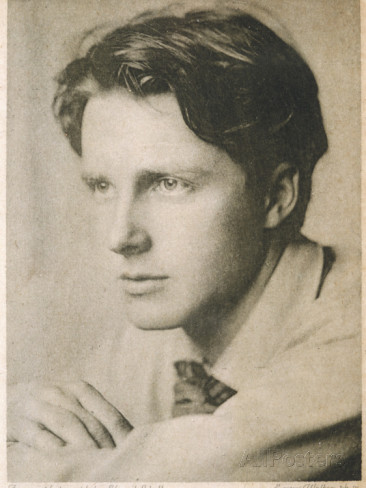
Image

(Image from: http://www.allposters.com/-sp/Rupert-Brooke-English-Writer-in-1913-Posters_i6856357_.htm )

Rather him than Wilfred Owen, who was middle-class, ordinary looking, gay, and whose verse took an uncompromising look at trench warfare.  Of course, since then the quality of Owen’s poetry has seen his reputation far outstrip that of Brooke.  But I will now climb down off my soapbox, and say that my concerns were unfounded, as this whole issue of  image construction is precisely what Dawson is analysing in her novel. For example, with the rumour that Brooke fathered a child in Tahiti:

 “perhaps people find it difficult to square the idea of the golden Apollo, the intellectual gentleman-soldier, finding peace not in an English meadow but on a tropical island far away.”

The novel is alternately narrated by Brooke and a maid where he boards in Granchester, the spunky and (mostly) wise Nell Golightly.  In the present day, she is trying to convey the man she knew in a letter to the possible daughter of Brooke, who is now an elderly lady in Tahiti.  In this way, Dawson draws attention to how biographies are as much about the biographers as their ostensible subject:

“I believe your mother wrote: “I get fat all the time.” Well, any woman would understand the meaning in that sentence.  Unfortunately, your father’s biographers have all been men.”

The novel also shows the burden of fame, of being proclaimed “the handsomest young man in England” by WB Yeats. “I have the strongest feeling of foreboding.  Something beyond my worst fears is about to happen […] And I think I know what it might be, but what I cannot tell is whether it is coming from inside my head or outside.  Whatever it is, it is here at last. The construction, the Rupert Brooke, cannot hold me any longer.”

Through the first-person narrative, Dawson doesn’t give us a perfect golden-child Brooke, but the wholly subjective experience of a flawed, troubled man who is just so young, and given to unintentionally funny insights:

“The Great Lover, that’s me, not the beloved.  The beloved is despicable. That’s the role of a girl.”

“I have resolved that Sodomy can only ever be for me a hobby, not a full-time occupation.”

This callow, aggrandising way could irritate some readers, but for me it just brought home how beyond all the image, Brooke was just a young man, as human as the rest of us, and how tragic it was that he and so many like him had their lives cut short: “the war was only the last eight months of his life, and yet that’s what he’s remembered for”.

What Dawson gives us through Nell’s voice is a fond but clear-eyed portrait of Brooke. “All that he was to me was gathered into that look I cast, but I don’t know if he saw it, or knew.” It made me feel that a well-researched (as this novel clearly is) fictional interpretation is probably just as valid as a “factual” biography.

 “he was a difficult man to pin down, and he was in the habit of saying things playfully that he did not mean at all, or were quite the opposite of his meaning, so maybe it’s true that he was a little more of a slippery fish than some.”

So what are we left with?  The answer is, the same as with any artist we admire: “Rupert’s true heart beats only on paper”.  Their works are what speak most eloquently for them.

Secondly, someone who allegedly went skinny-dipping with Rupert Brooke, Virginia Woolf.
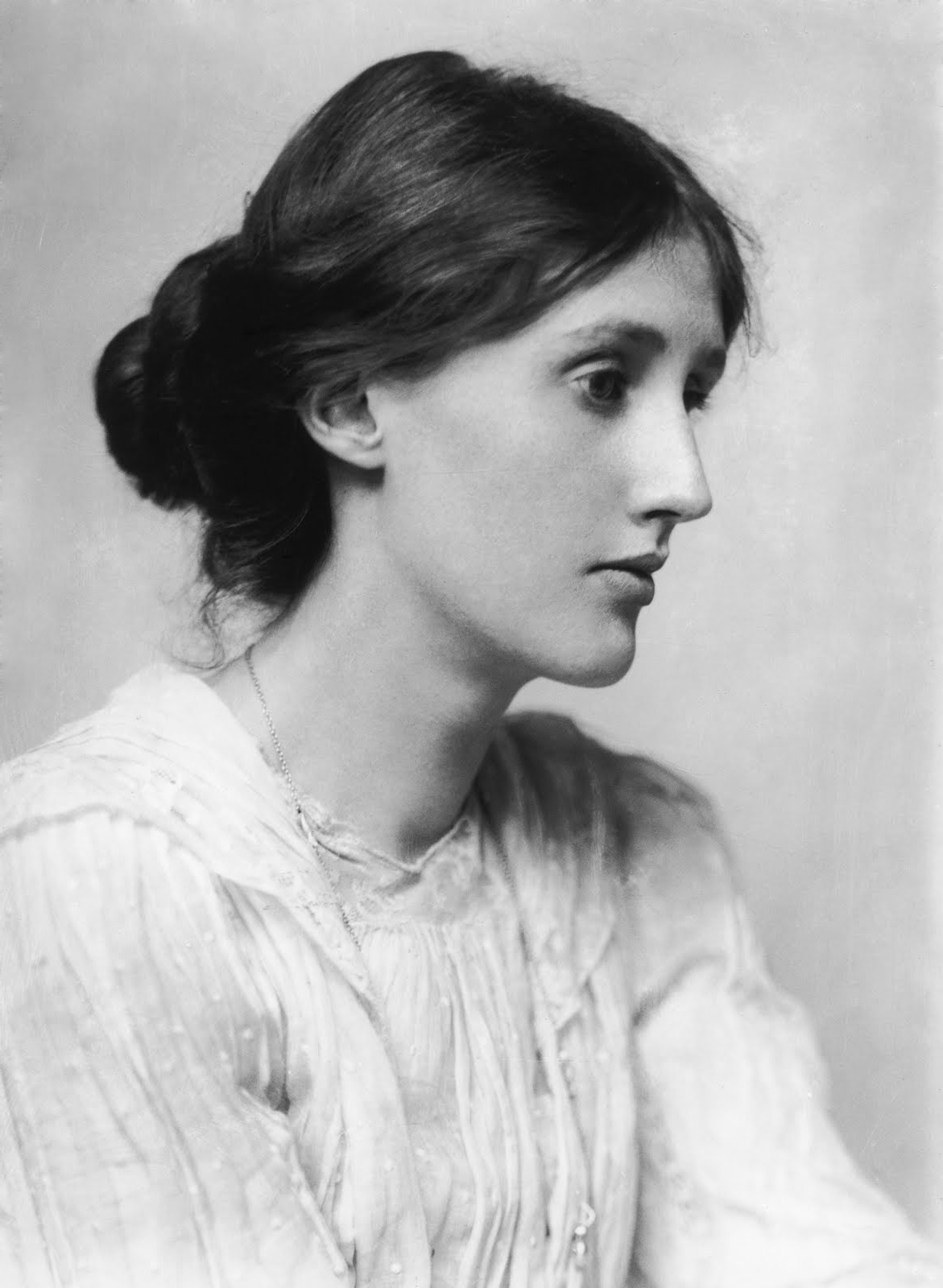
Image

(Image from: http://www.4thestate.co.uk/?attachment_id=10089 )

The Hours by Michael Cunningham (4th Estate, 1999) is Pulitzer-winning novel which tells the story of three women linked by Woolf’s novel Mrs Dalloway.

One is Woolf herself, writing the novel in 1923; the others are Laura Brown, a housewife reading the novel in Los Angeles 1949; and Clarissa Vaughan, planning a party for a friend who calls her Mrs Dalloway, in New York at the end of twentieth century.  The Hours is proof that a book doesn’t have to be long to be brilliant. At just 226 pages in my edition, it is so beautifully written that I had trouble pulling out individual quotes for this post.  Each of the women lives a single day, both ordinary and extraordinary:

“Here is the brilliant spirit, the woman of sorrows, the woman of transcendent joys, who would rather be elsewhere, who has consented to perform simple and essentially foolish tasks, to examine tomatoes, to sit under a hairdryer because it is her art and her duty.”

Virginia Woolf’s fragile mental state is handled with great sensitivity, showing how she struggles to remain sane, and how the desires of those around her to keep her so may not be the best thing for her life:

“She is better, she is safer, if she rests in Richmond; if she does not speak too much, write too much, feel too much; if she does not travel impetuously to London and walk through its streets; and yet she is dying this way, she is gently dying on a bed of roses.”

The novel brilliantly captures the small, transient moments that make up life, and how they can all add up to great meaning, whilst seeming to signify nothing:

““You can’t possibly have too many roses” Clarissa says.

Sally hands the flowers to her and for a moment they are both simply and entirely happy.  They are present, right now, and they have managed, somehow, over the course of eighteen years, to continue loving each other.  It is enough.  At this moment, it is enough.”

Astonishingly, the echoes across the three women’s lives from Mrs Dalloway and between each other never feels contrived.  It is a brilliant evocation of lives led more or less quietly, and each character is strongly drawn enough to stand alone as well as alongside the other two.

I loved The Hours.  The individual plots were well-paced, sensitive and insightful, in a style that used language delicately but was never pretentious. Highly recommended.

A film was made of The Hours in 2002.  It’s quite good if you can get past the distraction of Nicole Kidman’s prosthetic nose (it took me a while):
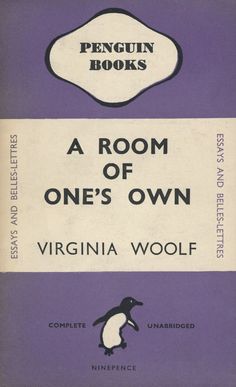
A Room of One’s Own – Virginia Woolf (Le Monde’s 100 Books of the Century #69)

Today’s post is  the latest in a series of occasional posts where I look at works from Le Monde’s 100 Books of the Century.  Please see the separate page (link at the top) for the full list of books and an explanation of why I would do such a thing.

A Room of One’s Own grew out of lectures Virginia Woolf was asked to give at Newnham and Girton Colleges, Cambridge, in 1928. You can read the full essay in various places online. Women were only officially admitted to the university in 1948, and the fact that these talks were given 20 years previously shows just how ground-breaking Woolf was.  A Room of One’s Own is a vital proto-feminist text that remains relevant today.  The fact that you can buy bags, pillows, tea towels, deckchairs, mugs, notebooks ad infinitum with the book cover on is an indicator of how much the central image continues to speak to people, as well as the arguments themselves.

Image

(Image from: https://www.pinterest.com/particularbooks/postcards-from/)

The central image is: “a woman must have money and a room of her own if she is to write fiction.”  In other words, she needs a means to support herself, and space to reflect and think; she needs liberty, and these things have been traditionally denied to women.  They have been dependent on the men in their family for financial support, and not supposed to concern their pretty little heads with intellectual endeavour.  Woolf argues her points forcefully but wittily, you never feel you are being bludgeoned by polemic.  Take for example the opening paragraph:

“But, you may say, we asked you to speak about women and fiction – what, has that got to do with a room of one’s own? I will try to explain. When you asked me to speak about women and fiction I sat down on the banks of a river and began to wonder what the words meant. They might mean simply a few remarks about Fanny Burney; a few more about Jane Austen; a tribute to the Brontës and a sketch of Haworth Parsonage under snow; some witticisms if possible about Miss Mitford; a respectful allusion to George Eliot; a reference to Mrs Gaskell and one would have done.”

The paucity of women writers Woolf has at her disposal to refer to speaks volumes about the male dominance of writing up to this point, and the reliance on male point of view for literary portrayals of women:

“women have burnt like beacons in all the works of all the poets from the beginning of time — Clytemnestra, Antigone, Cleopatra, Lady Macbeth, Phedre, Cressida, Rosalind, Desdemona, the Duchess of Malfi, among the dramatists; then among the prose writers: Millamant, Clarissa, Becky Sharp, Anna Karenina, Emma Bovary, Madame de Guermantes … Indeed, if woman had no existence save in the fiction written by men, one would imagine her a person of the utmost importance; very various; heroic and mean; splendid and sordid; infinitely beautiful and hideous in the extreme; as great as a man, some think even greater.”

Of course, Woolf was a highly accomplished and inventive writer herself, and this is reflected in the lecture which is not traditionally academic but instead illustrated with fictional characters such as Judith Shakespeare, sister of the more famous William:

 “his extraordinarily gifted sister, let us suppose, remained at home. She was as adventurous, as imaginative, as agog to see the world as he was. But she was not sent to school. She had no chance of learning grammar and logic, let alone of reading Horace and Virgil. She picked up a book now and then, one of her brother’s perhaps, and read a few pages. But then her parents came in and told her to mend the stockings or mind the stew and not moon about with books and papers. […]She had the quickest fancy, a gift like her brother’s, for the tune of words. Like him, she had a taste for the theatre. She stood at the stage door; she wanted to act, she said. Men laughed in her face […]who shall measure the heat and violence of the poet’s heart when caught and tangled in a woman’s body? [She] killed herself one winter’s night and lies buried at some cross-roads where the omnibuses now stop outside the Elephant and Castle.”

As my extensive quoting shows, I think this is a fantastic essay, well worth reading. It isn’t flawless, it’s culturally biased towards the speaker and her audience: middle-class, white, Western women.  But Woolf never claims to have all the answers: “women and fiction remain, so far as I am concerned, unsolved problems.” (I think the idea of women as an unresolved problem is ironic and assertive, not derogatory?) A Room of One’s Own highlights enduring problems, relevant to both genders, of how to claim societal freedom that will permit individual voices to be heard. It also makes me very glad that I am a woman in this day and age; I may be embarrassed at how ridiculously over-educated I am (a perennial student) but at least I had the choice to become so.

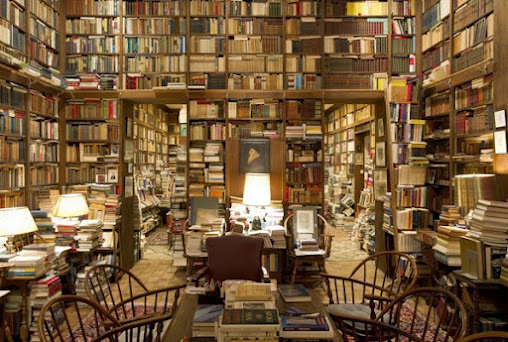
To end, a picture of a room I wish was my own – it could do with a few more books, though…

Image

(Image from http://pawilson.ca/are-there-some-books-you-keep-reading-over-and-over/ )

“Everything being a constant carnival, there is no carnival left.” (Victor Hugo)

Today is May Day, and I was thinking about the traditions of this time: celebration, revelry, pastoral fertility.  Please note I said thinking about, not participating in.  Confession time, reader: even though I’m in Oxford I didn’t want to do an all-night pub crawl/ball or get up at ridiculous o’clock to go to Magdalen Bridge for May Morning.  I lay in bed, and because Oxford is so quiet I could hear the choir and bells anyway, and it was beautiful.  Better warm in bed than in an inebriated crowd, I told myself.  Before I seem too virtuous, I should tell you that I’m really just lazy, because an hour or so later I got up for a champagne breakfast.  If this post seems even more waffly and incoherent than usual, you know why.

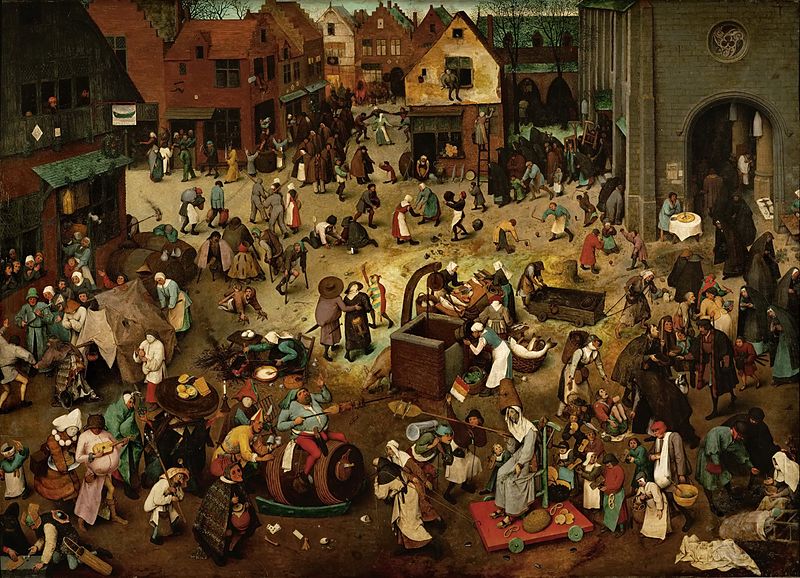
So, the traditions of May Day, and choosing books for this post made me think about the carnivalesque in novels.  Mikhail Bakhtin said that the carnivalesque (this is a shockingly rough paraphrase) is a time when social hierarchies are overthrown in energetic riot: as norms are disregarded, reversed and subverted, anything can happen.  Sounds like the spirit of May Day to me. Hence, for this post I’ve picked two novels that are carnivalesque/subversive in some way.

Image

The Battle Between Carnival and Lent – Pieter Bruegel the Elder 1599 (Image from http://en.wikipedia.org/wiki/File:Pieter_Bruegel_d._%C3%84._066.jpg )

My first choice is Nights at the Circus by Angela Carter (1984, Chatto & Windus).  The minute I started to think about carnivalesque, this is what sprang to mind. I thought the summary on the dust jacket was spot-on, so here it is:

Fevvers: the toast of Europe’s capitals, courted by princes, painted by Toulouse Lautrec, the greatest aerialiste of her time. Fevvers: somersaulting lazily through the air, hovering in the moment between the nineteenth century and the twentieth, between old dreams and new beginnings, born up by the spread of wings that can’t be real! Or- can they? Fevvers: the Cockney Venus, six foot two in her stockings, the coarsely lively and lovely heroine…Obsessed with Fevvers, constantly bamboozled by the anarchist sorcery of her dresser and confidante, Lizzie, the dashing young journalist Jack Walser stumbles into a journey which takes him from London to Siberia via legendary St Petersburg and out of his male certainties, into a transforming world of danger and joy, the world of Colonel Kearney’s circus…Featuring a cast of thousands, including : the clown’s requiem, the tigers’ waltz, the educated apes, the bashful brigands, the structuralist wizard. Not forgetting Sybil, the Mystic Pig.”

Just brilliant. I’ve said before that there’s no-one like Angela Carter, and Nights at the Circus is her writing at her very best.  Fevvers voice leaps of the page at you in the first paragraph:

“Lor’ love you sir!” Fevvers sang out in a voice that clanged like dustbin lids. “As to my place of birth, why, I first saw the light of day right here in smoky old London, didn’t I! Not billed the ‘Cockney Venus’ for nothing…Hatched out of a bloody great egg while Bow Bells rang, as ever is!”

If that all sounds a bit “cor-blimey-luvvaduck-rent-a-cockney”, don’t worry.  With Angela Carter you are never in the land of the stereotype, but in an exuberant world of characters the like of which you will never have met before, or since.  She is master of the original and evocative image (“like dustbin lids”) and while her work is carnivalesque and destabilising, it’s also great fun.  The circus is Carter’s world, which means anything can happen.  But beneath all the sparkle and pizzazz, she creates a world of substance.  Buffo the clown reflects:

“We are the whores of mirth, for, like a whore, we know what we are; we know we are mere hirelings hard at work yet those who hire us see us as beings perpetually at play. Our work is their pleasure and so they think our work must be our pleasure, too, so there is always and abyss between their notion of our work as play, and ours, of their leisure as our labour.”

Carter uses magic realism to explore how we construct reality, and how easily it can be deconstructed.  Where better to do that than the circus? She plays with notions of gender and sexuality, challenging the idea that they are fixed entities, and explores how identity can be constantly created and recreated.  Jack falls in love with Fevvers, unsure of who, or what, it is he loves: if he gets behind the image of the Cockney Venus, who will be there?  Is she part bird?  And who will he be in response?:

“When Walser first put on his make-up, he looked in the mirror and did not recognise himself. As he contemplated the stranger peering interrogatively back at him out of the glass, he felt the beginnings of a vertiginous sense of freedom , that, during all the time he spent with the Colonel, never quite evaporated; until that last moment where they parted company and Walser’s very self, as he had known it, departed from him, he experienced the freedom that lies behind the mask, with dissimulation, the freedom to juggle with being, and, indeed, with the language which is vital to our being, that lies at the heart of burlesque.”

Angela Carter clearly had a fierce intellect and something interesting to say about how we make our worlds.  But she also didn’t let that get in the way of a good story.  Nights at the Circus is a fantastic read, in all the senses of the word.

Secondly, Gulliver’s Travels by Jonathan Swift (1726, full text available online).  Obviously, this novel is hugely famous (even if you haven’t read it I bet you know what physical feature distinguishes a Lilliputian).  Lemuel Gulliver relates fantastical tales of his travels, and in the process Swift offers a satire on travel narratives (which were hugely popular in the eighteenth century as people travelled further and wider) and on the human condition.  I chose it for this theme as it is full of inversions and reversals; Gulliver travels to Lilliput, where he is a giant, then to Brobdingnag where he is minute; to Laputa which he considers crude and unenlightened, then to the Houyhnhnms who consider him a “yahoo”.  Gulliver’s Travels is episodic, so I’m just going to pick out a couple of events.  Firstly, one of the most famous ones: many writers at the time were obsessed by bodily functions, and Swift is no different, though thankfully not nearly as scatological as some of his contemporaries.  Here is Gulliver putting his urine to good use in Lilliput:

I was alarmed at midnight with the cries of many hundred people at my door; by which, being suddenly awaked, I was in some kind of terror….her imperial majesty’s apartment was on fire, by the carelessness of a maid of honour, who fell asleep while she was reading a romance.  I got up in an instant; and orders being given to clear the way before me, and it being likewise a moonshine night, I made a shift to get to the palace without trampling on any of the people.  I found they had already applied ladders to the walls of the apartment, and were well provided with buckets, but the water was at some distance.  These buckets were about the size of large thimbles, and the poor people supplied me with them as fast as they could: but the flame was so violent that they did little good… this magnificent palace would have infallibly been burnt down to the ground, if, by a presence of mind unusual to me, I had not suddenly thought of an expedient.  I had, the evening before, drunk plentifully of a most delicious wine called glimigrim, (the Blefuscudians call it flunec, but ours is esteemed the better sort,) which is very diuretic.  By the luckiest chance in the world, I had not discharged myself of any part of it.  The heat I had contracted by coming very near the flames, and by labouring to quench them, made the wine begin to operate by urine; which I voided in such a quantity, and applied so well to the proper places, that in three minutes the fire was wholly extinguished, and the rest of that noble pile, which had cost so many ages in erecting, preserved from destruction.

And just to finish, here is a bit of the more heavy-handed satire for you, when the king of Brobdingnag responds to a summary of British politics:

“He was perfectly astonished with the historical account gave him of our affairs during the last century; protesting “it was only a heap of conspiracies, rebellions, murders, massacres, revolutions, banishments, the very worst effects that avarice, faction, hypocrisy, perfidiousness, cruelty, rage, madness, hatred, envy, lust, malice, and ambition, could produce.”

I’ll leave it to you to decide if such motivations have left politics these days…

Gulliver’s Travels is a complex book, and one that is very hard to pin down: it is funny, it is sad, it can be read to children, it is baffling to adults.  It shifts meaning and genre according to who is reading it: truly carnivalesque.

I was hoping to end with a clip of Bellowhead performing One May Morning Early: apt, no?  But YouTube failed me.  So here they are singing about a carnival romance instead:

“With mirth and laughter let old wrinkles come” (Gratiano, The Merchant of Venice, William Shakespeare)

Today is Shakespeare’s birthday (probably).  It’s almost definitely his death day, but that has a less festive feel to it, so let’s go with birthday.  Happy Birthday, Bard!

Image

(Image from http://tudorhistory.org/people/shakespeare/ )

I love Shakespeare.  I was lucky enough to fall in love with him at school and I love him still.  I know he’s not for everyone, so I’m only going to discuss one play. But firstly, I thought I’d try and convince you of what I firmly believe, that he is for everyone.  This has probably been done before, so if it has and it was you, please accept my sincere apologies and let me know and I’ll credit you.  I promise I haven’t stolen this from anyone as far as I know.  I thought I’d try one of those “if you liked…” lists that are so annoying  when used by retailers to try & get you to buy more stuff, only in this case I’m using (mainly) Hollywood films (the modern equivalent of a Shakespeare play) to try and get you to buy into the drama.  In no order at all, just how they occurred to me:

If you liked…. Then you may like to try… Because…
The Godfather Julius Caesar/Coriolanus There are power struggles, machinations & murder
Rom coms Much Ado about Nothing/As You Like It Bit obvious, this one
 
Indecent Proposal Measure for Measure Sexual bribery abounds
   
Lord of the Rings The Tempest It’s magic
   
Hansel & Gretel/Snow White Macbeth Witches & violence
   
   
The Simpsons’ Movie Henry IV parts 1&2 I’ve totally stolen this idea from Dr Emma Smith, who convincingly draws parallels between Homer & Falstaff
   
Scarface Titus Andronicus It’s a bloodbath
   
Grease Love’s Labour’s Lost There are boys, there are girls, they all get together
   
War films Henry V Battles & bloodshed
 
   
Trading Places Comedy Of Errors Mistaken identities, a focus on money, it all works out in the end
   
John Grisham adaptations Merchant of Venice Features the greatest courtroom speech ever, even better than “You can’t handle the truth!” (seriously)
   
In the Loop/Political thrillers Richard III Power corrupts…
   
Game of Thrones King Lear A kingdom is divided, power struggles and torture ensue (no incest or wedding massacres though)
   
Fear and Loathing in Las Vegas Midsummer Night’s Dream It’s trippy…
The Wolf of Wall Street Timon of Athens Money is the root of all evil
   
Romeo + Juliet   Um, ….Romeo and Juliet Take a guess…

Any further or different suggestions are very welcome!

For the second part of this post I thought I’d discuss one of the plays that isn’t that well-known (for a Shakespeare play) or frequently performed, but I really like it, and I’m a bit baffled as to why it’s ignored: King John. King John is one of Shakespeare’s earliest plays, a history play that looks at arguments around royal succession. If that sounds yawnsome, the arguments involve battles, betrayals and murder, as so often in the medieval history plays.

What makes this play so interesting is the central character, who arguably isn’t King John, but his half-brother Phillip Falconbridge (who has more lines than anyone else).  However, no-one calls him by this rather dashing name, or the new one he is given at the start of the play, Richard Plantagenet; he is consistently referred to in the text as The Bastard.  As the illegitimate son of Richard the Lionheart, he is of royal lineage, but legitimacy being of huge significance at the time, he is not an heir.  Other illegitimate children in Shakespeare are somewhat troublesome: Edmund in King Lear and Don John in Much Ado both cause no end of grief.  The Bastard however, is one of the more appealing characters in a play filled with dark, devious, self-serving manipulators.  He has a way with words, and his own morality is uninfluenced by society.  His response to his mother about Richard the Lionheart being his father does not berate her for stigmatizing him:

He that perforce robs lions of their hearts
May easily win a woman’s. Ay, my mother,
With all my heart I thank thee for my father!
…Come, lady, I will show thee to my kin;
And they shall say, when Richard me begot,
If thou hadst said him nay, it had been sin:
Who says it was, he lies; I say ’twas not.

Pretty liberal for the time.  He goes on to fight for King John, and prove himself brave, clever, and more humane than others in what is quite a bleak play:

But as I travell’d hither through the land,
I find the people strangely fantasied;
Possess’d with rumours, full of idle dreams,
Not knowing what they fear, but full of fear: 

Cheeky and irreverent when he’s in court, The Bastard is a man of action who is actually a more accomplished leader than any of the courtly power-wielders. His illegitimacy places him outside of things, and as such he is able to cast a wry and sardonic glance at the action. “Mad world! mad kings! mad composition!” King John is weak, and the play demonstrates that rather than a god-given right to rule, kings are as flawed and human as the rest.   The Bastard gets the last lines of the play, and in his mouth the words:

Now these her princes are come home again,
Come the three corners of the world in arms,
And we shall shock them. Nought shall make us rue,
If England to itself do rest but true.

become not an assertion of England’s strength, but an ironic observation on the weakness and hypocrisy of rulers. The Bastard isn’t a historical figure or in any of Shakespeare’s sources.  He is entirely invented, and one of the many reasons that Shakespeare is still as Ben Jonson described him: “The applause, delight, the wonder of our stage”.  Happy Birthday William Shakespeare – “Shine forth, thou star of poets!”

To end, one of the most famous portrayals of King John, back in the days when he was still a prince:

“I’ve met a lot of hardboiled eggs in my time, but you’re twenty minutes.” (Billy Wilder)

Happy Easter!  For those of you who don’t celebrate this festival, I hope you’re enjoying the long weekend (and possibly an abundance of chocolate).

Image

(Image from: http://www.sproutcontent.com/ )

For a theme for this post I was thinking about Easter, about sacrifice and redemption, and also about Spring, the season of renewal and regeneration that it coincides with.  I’ve opted for a novel with a self-sacrificing main character, and a poem that starts in April. They’re both quite odd texts: here’s to a weird Bank Holiday!

Firstly, A Prayer for Owen Meany by John Irving (1989, Black Swan).  Irving is an enormously popular author and Owen Meany is one of his most-loved protagonists: a boy “with a wrecked voice” who is so tiny people can’t resist picking him up, his skin “the colour of a gravestone; the light was both absorbed and reflected by his skin, as with a pearl, so that he appeared translucent at times”.  The story is narrated by his best friend Johnny Wheelwright, who is trying to come to terms with the role Owen has played in his life.  When they are 11, Owen hits a foul ball that kills Johnny’s mother immediately.  The boys reconcile by swopping their most treasured possessions: “He gave me his baseball cards, but he really wanted them back, and I gave him my stuffed armadillo, which I certainly hoped he’d give back to me – all because it was impossible for us to say to each other how we really felt.” 

When he returns the armadillo, Owen has taken its claws, which Johnny comes to realise is Owen’s way of telling him:  “GOD HAS TAKEN YOUR MOTHER. MY HANDS WERE THE INSTRUMENT. GOD HAS TAKEN MY HANDS. I AM GOD’S INSTRUMENT.” Owen’s speech is always in capitals to represent his bizarre voice, and as a device it really works, marking him out not only against the other characters but also in the book itself – you can flick through and find Owen immediately.  So, Owen is already unusual, but is even more extraordinary than people realise.  He thinks he is God’s instrument, and certainly Johnny agrees: “I now believe that Owen Meany always knew; he knew everything.” The events of their lives mean not only that “Owen Meany rescued me” and gave Johnny Christian faith, but that Owen’s absolute conviction in a greater scheme of things and his capacity for self-sacrifice are tested to the extreme. It’s so hard to say any more without giving away spoilers, but I urge you to read it.  A Prayer for Owen Meany is a novel as truly original as its protagonist, funny and sad, elegiac and uplifting.

Secondly, The Waste Land by TS Eliot, a hugely famous and notoriously difficult poem.  For what it’s worth, I would say don’t let the reputation it put you off.  If you fancy giving it a go, read it and let the “heap of broken images” wash over you, see what it brings.  You can always re-read using the footnotes (which will be copious – and Eliot’s own notes add more confusion rather than explication) to translate the Latin, Greek etc  and find out about the plethora of allusions.  The poem begins:

April is the cruellest month, breeding  

Lilacs out of the dead land, mixing         

Memory and desire, stirring      

Dull roots with spring rain.

These lines are an allusion to the start of The Canterbury Tales:

Whan that Aprill, with his shoures soote

The droghte of March hath perced to the roote

And bathed every veyne in swich licour,

Of which vertu engendred is the flour;

Whan Zephirus eek with his sweete breeth

Inspired hath in every holt and heeth

The tendre croppes…

As you can see, Eliot takes the same premise but where Chaucer sees pastoral idyll (admittedly evoked a little ironically) Eliot sees something bleaker, death amongst the renewal, cruelty amongst the desire.  The Waste Land is an odd, unsettling poem; its original title was going to be He Do the Police in Different Voices (a line from Our Mutual Friend) and The Waste Land is certainly a cacophony of voices, evoking different times, places and stories.  As an embittered commuter who used to cross London Bridge every day, the following passage always sticks in my mind:

Unreal City,         

Under the brown fog of a winter dawn,               

A crowd flowed over London Bridge, so many, 

I had not thought death had undone so many.  

Sighs, short and infrequent, were exhaled,       

And each man fixed his eyes before his feet.    

Flowed up the hill and down King William Street,          

To where Saint Mary Woolnoth kept the hours

With a dead sound on the final stroke of nine.

The Waste Land does this frequently, takes images that almost seem commonplace, like commuters walking over a bridge, and then undermines it, in this instance when you realise they are all ghosts, their movement seemingly without purpose. The Waste Land is a poem that defies easy explanation and raises far more questions than it answers.  It can be a frustrating read, but also a hugely rewarding one that benefits from multiple readings.

Who is the third who walks always beside you?              

When I count, there are only you and I together             

But when I look ahead up the white road            

There is always another one walking beside you             

Gliding wrapt in a brown mantle, hooded          

I do not know whether a man or a woman          

—But who is that on the other side of you?

For a very interesting discussion on The Waste Land and how we read, head over to Necromancy Never Pays.

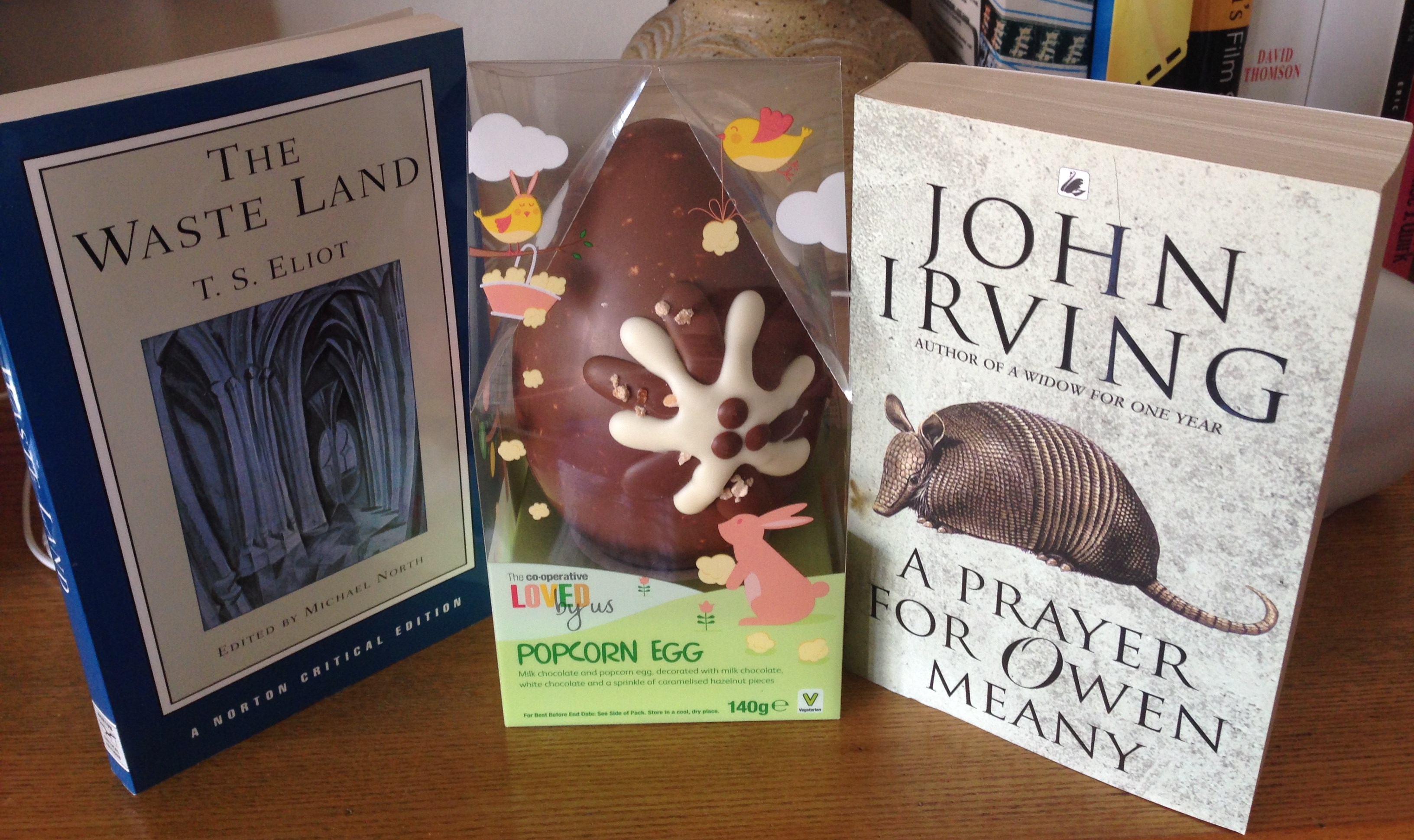
I feel like I should picture the books with an egg as odd and unsettling as the books themselves, a dinosaur egg or something.  (Or an armadillo egg?  But I’m feeling too lazy to make them, it is a Bank Holiday after all…) So here they are instead with a reassuringly chocolatey easter egg, a present from my brother:

Image

Bonjour Tristesse – Francoise Sagan (Le Monde’s 100 Books of the Century #41)

This is part of a series of occasional posts where I look at works from Le Monde’s 100 Books of the Century.  Please see the separate page (link at the top) for the full list of books and an explanation of why I would do such a thing.

Bonjour Tristesse by Francoise Sagan is a short novel (108 pages in my edition, the Penguin translation by Irene Ash), published in 1954 when the author was 18.  Yes, 18.  Apparently she failed to pass her exams for the Sorbonne and so decided to write a novel instead. As you do. And it’s a modern classic. I’m pretty sure I hate this woman.  Rest assured it’s jealousy plain and simple, not xenophobia – there’s a lot of nonsense talked about British attitudes to our neighbours across Le Manche, but despite the fact that I would be at least 5kg lighter if France wasn’t there (je t’aime fromage bleu)I for one am a true Francophile.  They are a great nation that has provided the world with at least two things guaranteed to cause uncontrollable dribbling in this blogger:

Image

Almond croissants (or croissants aux amandes if you will) (Image from www.belleepooque.co.uk)

Image

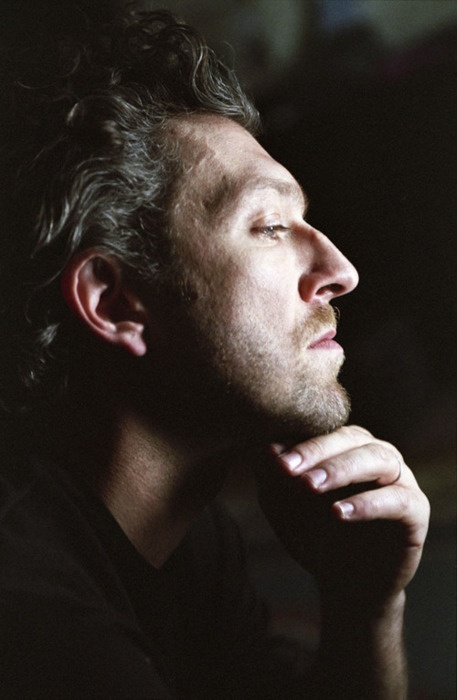
Vincent Cassel (Image from: https://www.pinterest.com/pin/277745501994347016/)

To those of you concerned that I am objectifying Mr Cassel, I would just like to reassure you that I’m objectifying the croissant so much more, believe me.

Now, where was I?  Oh yes, the extraordinary talent of Francoise Sagan.  While the protagonist is a precocious 17 year old, Cecile, (so far, so thinly disguised autobiography) the psychological insights into the characters are sophisticated and you don’t feel like you’re reading someone’s juvenilia.  Cecile is holidaying in the south of France with her father, an entirely vacuous widower whose temperament she shares:

“I soon noticed that he lived with a woman.  It took me rather longer to realise that it was a different one every six months.  But gradually his charm, my new easy life, and my own disposition led me to accept it.  He was a frivolous man, clever at business, always curious, quickly bored, and attractive to women.  It was easy to love him, for he was kind, generous, gay, and full of affection for me.  I cannot imagine a better or more amusing friend.”

And that is just the problem – he is a friend, not a parent.  He treats Cecile as a co-conspirator in life, buying her inappropriate dresses and taking her to casinos, talking to her as an equal:

 “He refused categorically all notions of fidelity and serious commitments.  He explained that they were arbitrary and sterile…I knew in his case they did not exclude either tenderness or devotion; feelings which came all the more easily to him since he was determined they should be transient…I was not at the age where fidelity was attractive.  I knew very little about love.”

Into this self-serving world comes Anne, a friend of Cecile’s dead mother.  She is cool and controlled:

“I think she rather despised us for our love of diversion and frivolity, as she despised all extremes.”

Yet, despite their differences, Cecile admires Anne and her father decides to marry this woman so different from himself.   The decision does not sit well with Cecile:

 “I thought of the lunch I had endured with clenched teeth, tortured by a feeling of resentment for which I despised and ridiculed myself.  Yes, it was for this I reproached Anne: she prevented me from liking myself.  I, who was so naturally meant for happiness and gaiety, had been forced into a world of self-criticism and guilty conscience, where, unaccustomed to introspection, I was completely lost.”

I don’t want to seem ageist, but clearly I am, as this self-ironising tone was not what I expected from such a young author.  Cecile is spoilt and self-focused, and decides to split up her father and Anne so that her life can continue how she wants it to.  She constantly vacillates, changing her mind and feelings with each moment, but her machinations regarding Anne move inexorably forward. The consequences are dramatic and will force Cecile to leave her childhood behind forever:

“Then gradually I begin to think of something else. But I do not like to take refuge in forgetfulness and frivolity instead of facing my memories and fighting them.”

Bonjour Tristesse is a melancholic novel (the title means Hello Sadness) about the prices we pay for the things we think we want.  Francoise Sagan creates a memorable protagonist in Cecile and an affecting story within remarkably few words.

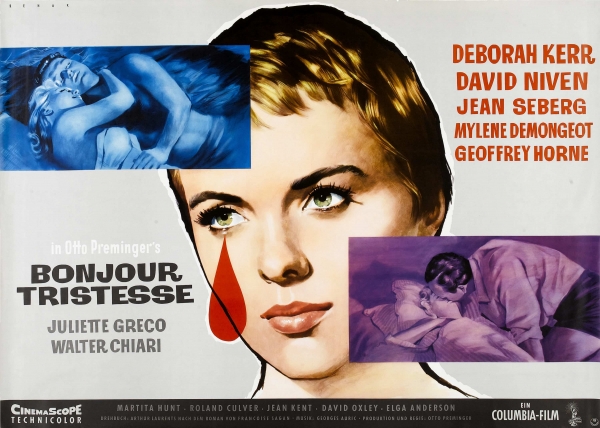
To end, the poster of the film adaptation made just four years after publication:

Image

(Image from: http://docublogger.typepad.com/seberg/page/2/ )

Six Characters in Search of an Author – Luigi Pirandello (Le Monde’s 100 Books of the Century #53)

This is the first in a series of occasional posts where I’ll be looking at works from Le Monde’s 100 Books of the Century.  Please see the separate page (link at the top) for the full list of books and an explanation of why I would do such a thing. I set myself the challenge in January and I’m only beginning to blog about it now; this does not bode well for my completing this challenge before I see in a century of my own…

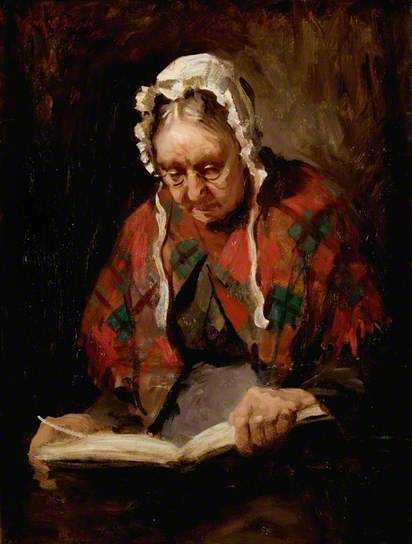
(c) Glasgow Museums; Supplied by The Public Catalogue Foundation

(Image from: http://www.bbc.co.uk/arts/yourpaintings/paintings/old-lady-reading-83754)

Six Characters in Search of an Author is a play by Luigi Pirandello, originally written in Italian and performed in 1921 (my copy translated by Frederick May, 1954).  It’s a play about itself, about the theatre, and although philosophical and reflective, it’s also very silly.

“Life is full of things that are infinitely absurd, things that, for all their impudent absurdity, have no need to masquerade as truth, because they are true”

“What the devil are you talking about?”

A producer is putting on a play with a group of actors, who are only identified by their roles: Leading Lady/Leading Man/Ingénue and so on.  As we are presented with what appears to be a rehearsal, there is a sense of the play being simultaneously constructed and deconstructed in front of us.  The ideas are complex and it’s definitely not a play to approach when you’re tired and/or in need of escapism, but Pirandello undercuts the potentially pretentious self-reflexive philosophising with a good dose of humour, having the Producer complain early on:

“We’re reduced to putting on plays by Pirandello? And if you understand his plays…you’re a better man than I am! He deliberately goes out of his way to annoy people, so that by the time the play’s through everybody’s fed up…actors, critics, audience, everybody!”

Well, you can’t say he didn’t warn us.  The rehearsal of the play by Pirandello is interrupted by the arrival of six characters – Father, Mother, Step-daughter, Son, Boy and Little Girl.  They want the Producer to help them, as “the author who created us as living beings, either couldn’t or wouldn’t put us materially into the world of art.” They start to tell their story while the actors look on, and the stage directions tell us: “The CHARACTERS should not, in fact, appear as phantasms, but as created realities, unchangeable creations of the imagination and, therefore, more real and more consistent than the ever-changing naturalness of the ACTORS.” As the actors and characters interact (and bitch at each other and argue about representation) the play presents complex philosophical questions about truth, reality and identity, and whether any of us really has any idea what on earth is going on:

“Each one of us has a whole world of things inside him… and each one of us has his own particular world. How can we understand each other if into the words I speak I put the sense and value of things as I understand them within myself… while at the same time whoever is listening to them inevitably assumes them to have  the sense and value that they have for him…. We think we understand each other… but we never really do understand!”

In this way, Pirandello admirably manages to interrogate the relationship of theatre to representation, reality to illusion, art to life.  There are lots of meta-moments (the whole play is really one big metatheatrical experience); my favourites were where he drew attention to the play’s own limitations, studiously ignoring the Producer’s directive that “When you’re here you have to respect the conventions of the theatre!” and a great moment where the Son walks off, refusing to act because “I’m a dramatically unrealised character”.

Six Characters in Search of an Author is a hugely complex work and at the same time a short, humorous play.  I really enjoyed it, but I also think I could re-read it and each time think that I understood nothing from my previous readings.  I also wouldn’t be surprised if someone entirely hated it, and they would not be alone: apparently the playwright had to leave the premiere performance through a side-exit to avoid the throng of haters.  If you’re a writer, actor, theatre-lover or philosophy enthusiast, you’ll find a lot to interest you in Six Characters in Search of an Author.  If you like Waiting for Godot or Rosencrantz and Guildenstern are Dead, then this play could be for you.

Phew!  After all that deep reflection on the nature of theatre and our existence, I think it must be time for shark cat on a Roomba:

“One should sympathise with the colour, the beauty, the joy of life.” (Oscar Wilde)

Happy Mother’s Day (for those of you in the UK)!  My finals are seriously impacting on my blogging capacity, and although I had a plan for two novels to look at for Mother’s Day, I didn’t have time.  So instead I’m going to share a poem in its entirety with you.  It’s a poem my mother introduced me to, and it’s one of our favourites.  No matter how many times I read it the last line always makes me cry.  It’s by Peter Dixon and in my edition it’s called Rotten Reader, but I notice in lots of editions it’s now called The Colour of My Dreams.  Happy Mother’s Day Maman!

I’m a really rotten reader
the worst in all the class,
the sort of rotten reader
that makes you want to laugh.

I’m last in all the readin’ tests,
my score’s not on the page
and when I read to teacher
she gets in such a rage.

She says I cannot form my words
she says I can’t build up
and that I don’t know phonics
and don’t know a c-a-t from k-u-p.

They say that I’m dyxlectic
(that’s a word they’ve just found out)
but when I get some plasticine
I know what that’s about.

I make these scary monsters
I draw these secret lands
and get my hair all sticky
and paint on all me hands.

I make these super models,
I build these smashing towers
that reach up to the ceiling
and take me hours and hours.

I paint these lovely pictures
in thick green drippy paint
that gets all on the carpet
and makes the cleaners faint.

I build great magic forests
weave bushes out of string
and paint pink panderellos
and birds that really sing.

I play my world of real believe
I play it every day
and teachers stand and watch me
but don’t know what to say.

They give me diagnostic tests,
they try out reading schemes,
but none of them will ever know
the colour of my dreams.

Just wonderful. I hope you liked it.

To end, here is a picture from Holi celebrations (this year it was 17 March), an annual explosion of colour which I thought suited the poem:

Image

(Image from: http://www.boloji.com/index.cfm?md=Content&sd=Articles&ArticleID=14222 )

“They laugh at me because I’m different; I laugh at them because they’re all the same.” (Kurt Cobain)

Dear reader, it’s been so long.  I’ve missed you, but the preparation for finals and my last piece of coursework took over.  Now I have finished writing the definitive essay on Cary Grant’s performance of gender ambiguity (OK, I’ve written an essay on Cary Grant’s performance of gender ambiguity) I have a brief respite which I choose to spend blogging. Away we go:

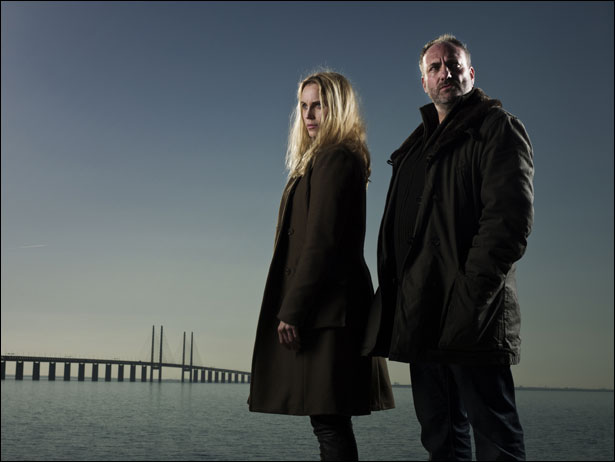
The Bridge concluded almost two months ago and I’m still bereft.  In my day off between coursework and revision I’ve been watching BBC4’s replacement foreign-language thriller Salamander, and although excellent, it’s not The Bridge:

Image

(Image from http://www.noblepr.co.uk/Press_Releases/arrowfilms/thebridge.htm )

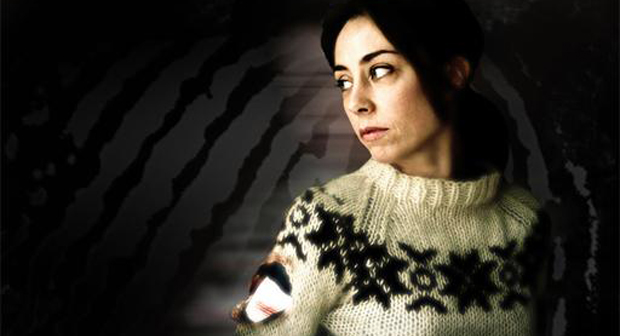
I love Saga, I love Martin, I love the way their relationship developed in the second season, I love Saga.  I know I’ve said I love Saga twice, but this is because I have a girl-crush, the like of which I haven’t experienced since The Killing’s Sarah Lund:

Image

(Image from http://www.krishk.com/2014/01/top-socially-challenged-detectives/ )

How I wish I was effortlessly cool and Nordic, with scrappy long hair, Faroe Isle jumpers, leather trousers and emotional reticence.  Unfortunately I’m perennially uncool, I’m British, my hair is an inch long, I look terrible in chunky jumpers and leather trousers and I’m emotionally incontinent.  Otherwise the similarities between me and these two women are really quite remarkable.

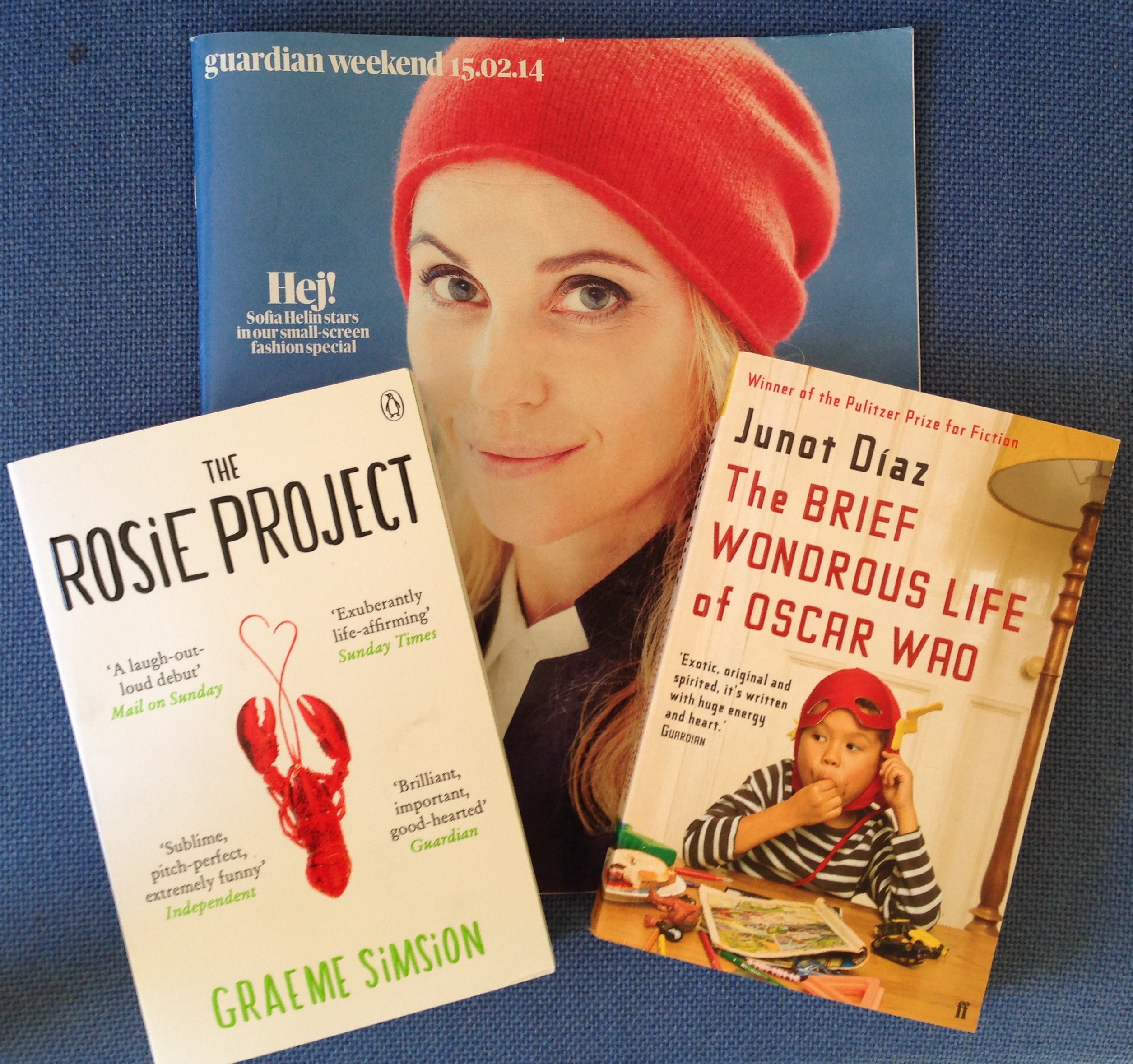
Now, I know the socially inept detective is becoming something of a cliché, but I’m a huge fan of many of them (see here for how I excited I became over Sherlock) and I miss Saga.  It was this which prompted me to start reading The Rosie Project by Graeme Simsion (Penguin, 2013) the day after The Bridge finished.  It’s not a detective novel, but it does have a main protagonist who is highly intelligent, socially awkward, inflexible, unable to read social cues and has a tendency to respond to things that are said literally.  Perfect, just what I needed to fill the Saga-shaped hole in my life. Don Tillman is a geneticist who wants to get married.  Having tried dating and found that “the probability of success did not justify the effort and negative experiences” (how many single people out there can relate to that statement?)Don devises a questionnaire “a purpose-built, scientifically valid instrument incorporating current best practice to filter out the time wasters, the disorganised, the ice-cream discriminators, the visual-harassment complainers, the crystal gazers, the horoscope readers, the fashion obsessives, the religious fanatics, the vegans, the sports watchers, the creationists, the smokers, the scientifically illiterate, the homeopaths, leaving, ideally, the perfect partner, or, realistically, a manageable shortlist of candidates”.  Into Don’s life breezes Rosie, who it’s safe to say, does not fit his criteria for the ideal mate. She is chaotic, confrontational, encourages him to drink, watches sport and is a smoker. They are perfect for one another.

““Where do you hide the corkscrew?” she asked.

“Wine is not scheduled for Tuesdays.”

“Fuck that,” said Rosie.

There was a certain logic underlying Rosie’s response.

[…]I announced the change. “Time has been redefined. Previous rules no longer apply.  Alcohol is hereby declared mandatory in the Rosie Time Zone.””

Although Don is unusual, in many ways his situation is ordinary: so many people spend time constructing their ideal mate they forget to think about the relationship they want, missing what’s actually in their lives, and who it’s worth compromising a bit of ourselves for. Simsion looks at this aspect of oh-so-human folly with a comic eye, and there are some hugely funny scenes as Don tries to get to grips with situations where he is hopelessly out of his depth: attending a “formal” function in top hat and tails, practising sex positions with his teaching skeleton and being walked in on by his boss.  Because Don is aware of the humour but doesn’t quite get it, the scenes are told in an utterly deadpan style that is hilarious, but you’re never laughing at Don, just the situations he finds himself in. This is because you are completely rooting for the character. Simsion manages quite a feat with Don: a resolutely pragmatic, measured voice that still manages to create a person that you really feel for, and a novel of real warmth and humanity. Simultaneously, Don exposes the fakery that goes along with social skills and fitting in – the office politics, the lies and infidelities – that he is incapable of, making you question what is of real value, rather than what just makes life easier.   If you’d told me I’d like a book I would describe as “sweet and romantic” I’d tell you (with a raised eyebrow of scepticism, reader) that it really wasn’t my taste.  But, just like Don, I stepped outside my comfort zone, tried something new, and was completely won over.

For my second social outcast I’ve chosen the Pulitzer Prize winning novel The Brief Wondrous Life of Oscar Wao by Junot Diaz (Faber, 2008). Poor Oscar: he’s massively nerdy and all he wants is to love and be loved.  “Oscar showed the genius his grandmother insisted was part of the family patrimony.  Could write in Elvish, …knew more about the Marvel Universe than Stan Lee, was a role-playing game fanatic….Perhaps if like me he’d been able to hide his otakuness maybe shit would have been easier for him, but he couldn’t.  Dude wore his nerdiness like a Jedi wore his light sabre or a Lensman her lens.  Couldn’t have passed for Normal if he’d wanted to.” An incurable romantic who dreams of becoming the “Dominican Tolkien”, Oscar’s life will never play out how he wants it to.

He lives with his mother Beli and rebellious sister Lola, and as we learn about all three of them, we learn about the recent history of the Dominican Republic and its impact on a family.  The novel makes frequent use of footnotes, which generally I dislike but which worked well here, detailing political history in the distinctly non-academic (though learned) voice of Yuniour, Lola’s boyfriend, serial womaniser and narrator.  The family are thought to be under the sway of a fuku “the Curse and Doom of the New World”, and certainly all are subject to violence and hardship, Beli in Dominica and her son and daughter in the United States.

There is a touch of magic realism as the family are also protected by a guardian animal that appears to them in times of extreme distress: “there appeared at her side a creature that would have been an amiable mongoose if not for its golden lion eyes and the absolute black of its pelt.  This one was quite large for its species and placed its intelligent little paws on her chest and stared down at her.  You have to rise.”  The Brief Wondrous Life of Oscar Wao has plenty to say about the immigrant experience, the price of assimilation and the inability to assimilate to the societies we find ourselves in, and the self-definition we express through the language we use. The novel has references I didn’t get: Spanish phrases and nerd-allusions, but it didn’t matter.  The refusal to be sentimental and the triumph of human spirit in the face of violence and tragedy meant this novel really spoke to me even if I didn’t grasp all the intricacies. It was funny and tragic, and truly moving.

Here are the books with the lovely Sofia Helin who plays Saga (you can tell it’s the actor & not the character because she’s smiling):

Image

“Everyone wants to be Cary Grant. Even I want to be Cary Grant.” (Cary Grant)

Happy (belated) Valentine’s Day!  In my post for Valentine’s Day last year (which was also late…) I pointed out that St Valentine is the patron saint for bee keepers, plague, epilepsy and against fainting, as well as for lovers.  Last year I wrote on bee-keeping and plague  but this year I’m going to be more romantic and tell you about the man in my life.  He’s always been there, but these last few weeks it’s like I’m seeing him with new eyes; now I’m obsessed and we spend hours together every day.  The title quote may have given it away: he’s Cary Grant.

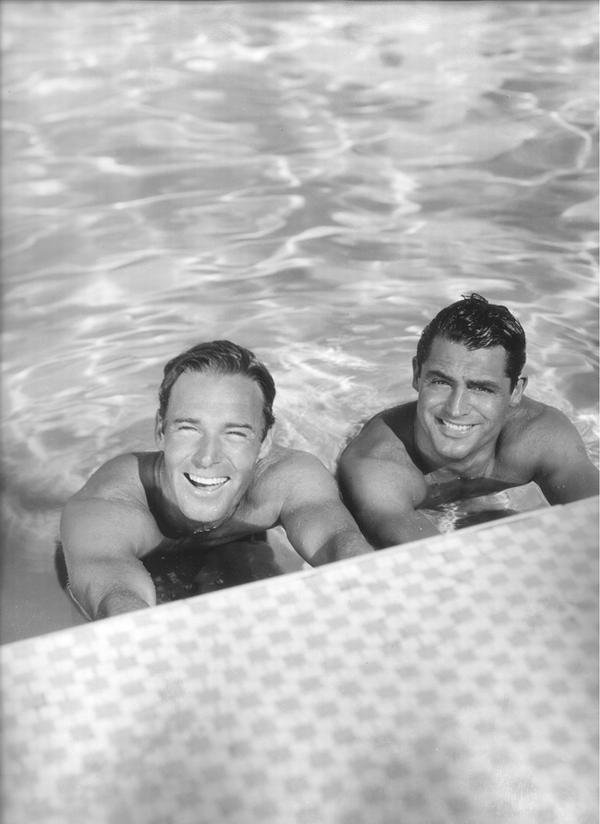
Let me explain.  For my last paper before finals (FINALS!  I’ve just broken out in a cold sweat….) we were given some optional papers to choose from, and I chose Film Criticism.  We’ve been looking at Hollywood Golden Age, a genre Cary Grant sits astride like a tanned, debonair, mid-Atlantic-accented colossus.  Having watched soooooo many of films again (and again, and again) I have a new-found appreciation for this actor with his exquisite comic timing.  It’s not that I didn’t like him before, I just took him for (ahem) granted.  This is how good he is: I had to analyse a scene from a film, and I chose something from Bringing Up Baby.  It was 3 minutes 39 seconds long.  I spent an entire day watching and re-watching the scene.  Think about how many 3 minutes and 39 seconds there are in a day.  That’s how many times I watched it. At the end of  the day I was still laughing at his performance.  The man is a genius.  In the spirit of Valentine’s Day here he is with long-term boyfriend totally-platonic-friend-who-he-just-happened-to-live-with-for-twelve-years, Randolph Scott.

Image

(Image from http://blogs.villagevoice.com/dailymusto/2010/09/cary_grant_and.php)

What a ridiculously good looking pair.  Anyway, I thought for this post I would look at two of his favourite novels.  According to IMDB he was a voracious reader.  Do you think I can find out what he liked to read?  Google, thou hast failed me.  (Probably now I’ll be told that it’s really well-known that he loved Moby Dick or something, but I couldn’t find it). So instead I’ve chosen a James Bond novel as apparently the character was partly modelled on him and he was considered for the role in Dr No, and a short story by a writer who like Archie Leach was famous under a pseudonym.

Firstly, Casino Royale by Ian Fleming (1953).  I’ll be honest, I went into this novel with very low expectations.  Even the most avid Fleming fan will tell you that some of the novels are absolute bilge; apparently the quality of the Bond novels varies widely.  This was the first Bond novel written and the first one I’d read, and I was pleasantly surprised.  OK, Fleming isn’t a grand literary genius, but I doubt he ever proclaimed himself as such.  Casino Royale is a decently written spy story.  It’s quite different to the film, although similarities remain.   I was expecting a flashy, superficial story but it’s a bit more reflective than that.  It opens:

“The scent and smoke and sweat of a casino are nauseating at three in the morning.  Then the soul-erosion produced by high gambling – a compost of greed and fear and nervous tension – becomes unbearable and the senses awake and revolt from it.”

Bond has been sent to Royale-le-Eaux to take down a Russian spy, Le Chiffre, by bankrupting him at gambling.  This being the Cold War, of course the baddies are Russian, and there’s also the rather sinister SMERSH, a Russian covert group whose name means “death to spies” lurking in the background.  That’s the very simple premise of the story.  Along the way there are lingering descriptions of clothes, cars and food (Fleming was clearly something of a gourmand), but the presentation of Bond is more complex than I was expecting.  I don’t think the reader is supposed to wholly like him or trust him:

“His last action was to slip his right hand under the pillow until it rested under the butt of the .38 Colt […] Then he slept, with the warmth and humour of his eyes extinguished, his features relapsed into a taciturn mask, ironical, brutal and cold.”

Bond is more human than in the films (he vomits in the gory aftermath of an explosion). He’s also damaged and flawed, more in keeping with the later filmic representations.  Very much of its time, however, is the misogyny:

“These blithering women who thought they could do a man’s work.  Why the hell couldn’t they stay at home and mind their pots and pans and stick to their frocks and gossip and leave men’s work to the men.”

As well as this general sexism, there’s also a worryingly easy conflation of sex with violence:

“Bond saw luck as a woman, to be softly wooed or brutally ravaged, never pandered to or pursued.”

Truly obnoxious and offensive. But in Fleming’s defence I would say that he seems more emotionally intelligent than his protagonist and we’re not supposed to see Bond as a role model in this sense.  There’s also a good dose of humour in the novel which encourages us not to take Bond entirely as seriously as he takes himself:

 “Englishmen are so odd.  They are like a nest of Chinese boxes.  It takes a very long time to get to the centre of them.  When one gets there the result is unrewarding, but the process is instructive and entertaining.”

So, Casino Royale was better than I expected.  It’s attitudes to women and Eastern Europeans are dated and offensive but as I said, I don’t get the sense the novel fully endorsed the attitude of its protagonist.  It’s a quick, light read (although the descriptions of gambling dragged a bit in places) and for me it was good introduction to the Bond novels.

Secondly, The Celebrated Jumping Frog of Calaveras County (1867) by Mark Twain. What an irresistible title.  Twain was a fairly prolific short story writer, but this was only the second one he wrote.  You can read the full text of it here. It really is a very short tale, and shows how much can be done in so limited a space by an accomplished writer.  It opens:

In compliance with the request of a friend of mine, who wrote me from the East, I called on good-natured, garrulous old Simon Wheeler, and inquired after my friend’s friend, Leonidas W. Smiley, as requested to do, and I hereunto append the result. I have a lurking suspicion that Leonidas W. Smiley is a myth; that my friend never knew such a personage; and that he only conjectured that, if I asked old Wheeler about him, it would remind him of his infamous Jim Smiley, and he would go to work and bore me nearly to death with some infernal reminiscence of him as long and tedious as it should be useless to me. If that was the design, it certainly succeeded.

As you can see, Twain’s humour is at the forefront (if you hadn’t already guessed by the title) and the mix of the ridiculous (“Leonidas W Smiley is a myth”) and the dry (“as long and tedious as it should be useless”) makes the story hugely entertaining.  It’s certainly a confident writer who tells a tale he says will be tedious, and Twain does this not once but twice: “Simon Wheeler backed me into a corner and blockaded me there with his chair, and then sat me down and reeled off the monotonous narrative which follows this paragraph.”  Simon Wheeler’s story of a gambling addict (Jim Smiley) who will bet on anything is directly reported, and he has one of the distinctive Southern voices Twain is so famed for, such as when he’s recounting how Jim trains the titular frog:

“He ketched a frog one day, and took him home, and said he cal’klated to edercate him; and so he never done nothing for three months but set in his back yard and learn that frog to jump. And you bet you he did learn him, too. He’d give him a little punch behind, and the next minute you’d see that frog whirling in the air like a doughnut see him turn one summerset, or may be a couple, if he got a good start, and come down flat-footed and all right, like a cat.”

There are some lovely touches in this story.  I particularly liked the line: “Smiley said all a frog wanted was education” and the fact that the frog is endowed with the decidedly un-froggy full name of “Dan’l Webster”. A quick read that children and adults will enjoy.

To end, here is a clip from The Philadelphia Story, and just possibly the most charming 3 minutes and 46 seconds ever committed to celluloid.  Apparently the bit where Cary Grant says “excuse me” was ad-libbed & that’s why he & James Stewart are trying not to laugh. Enjoy!