“I have looked for life, but I can’t find it.” (Vicki Baum, Grand Hotel)

November is the month of sooooo many reading events, and I’m hoping to take part in Margaret Atwood Reading Month and Novellas in November, but I thought I’d start with German Literature Month XIV, hosted by Caroline at Beauty is a Sleeping Cat and Lizzy Siddal at Lizzy’s Literary Life.

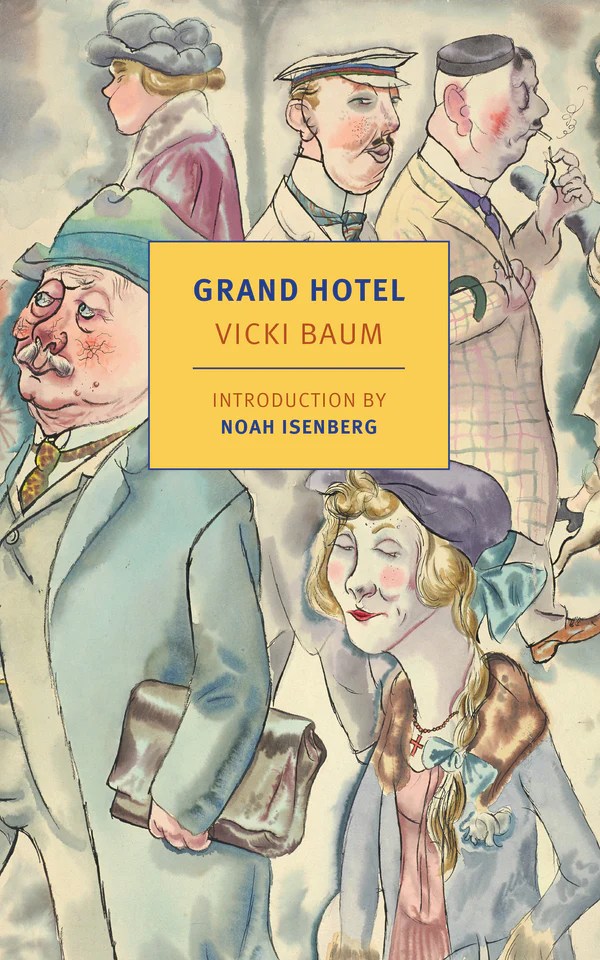
Grand Hotel by Vicki Baum (1929, transl. Basil Creighton 1930-1 revised by Margot Bettauer Dembo 2016) is a novel I’ve been meaning to get to for some time, republished by the wonderful New York Review of Books Classics.

I find a Weimar Republic setting always so enticing, and this novel was a bestseller in it’s day, originally serialised in a magazine. Sometimes with serials you can really see the joins when they are placed in novel form, but the episodic nature of hotel stays by various guests works well and Grand Hotel felt entirely coherent.

The titular building is opulent and glamorous:

“The music of the jazz band from the Tearoom encountered that of the violins from the Winter Garden, and mingled with the thin murmur of the illuminated fountain as it fell into its imitation Venetian basin, the ring of glasses on tables, the creaking of wicker chairs and, lastly, the soft rustle of the furs and silks in which women were moving to and fro.”

As readers we know that momentum for World War Two is building, but for the guests at this time it is the shadow of World War I which still looms large. Doctor Otternschlag’s face has been severely damaged by a shell. Every day he asks if a letter has arrived for him which it never has. We don’t know what this quiet, traumatised man is waiting for.

“Doctor Otternschlag lived in the utmost loneliness – although the earth is full of people like him…”

Glamour is brought by Grusinskaya, a prima ballerina desperately trying to hang on to physical vigour against the forces of aging. She is somewhat ambivalent, feeling driven to be as she has always been, and exhausted by it all:

“Perhaps the world would have loved her as she really was, as she looked now, for example, sitting in her dressing room – a poor, delicate, tired old woman with worn out eyes, and a small careworn human face.”

The most pathos occurs in the guest who doesn’t fit in: Kringelein, a clerk from Fredersdorf, given a terminal prognosis and determined to squeeze the pips from life before it’s too late. He chooses the Grand Hotel as his boss, Herr Preysing, stays there when in Berlin.

“He felt again, here in the bar of Berlin’s most expensive hotel, the same intoxication, a sense of exuberant plenty as well as of anxiety and alarm, the faint threat haunting the wicked joy of wrongdoing, the excitement of an escapade.”

Kringlein’s difficulty is, he is unsure of how to achieve his somewhat nebulous aim. Doctor Otternschlag tries to help but fails, unsurprising given his jaded, damaged view of the world. More successful is gentleman thief Gaigern, a dashing young nobleman who charms everyone:

“I am quite without character an unspeakably inquisitive. I can’t live an orderly life and I’m good for nothing. At home I learned to ride and play the gentleman. At school, to say my prayers and lie. In the war, to shoot and take cover. And beyond that I can do nothing. I am a gypsy, an outsider, an adventurer.”

He kits out Kringelein in fine clothes and takes him for fast drives in cars and up in a plane, but what are his motives? As Kringelein throws his hard-earned but limited money around, what will Gaigern do?

“Human kindness and warmth was so much a part of his nature that his victims always received their due share of them.”

Baum weaves together these disparate lives expertly, as they bump against each other within the Grand Hotel to a greater or lesser extent. There are overarching plots that draw characters together but Baum demonstrates that while hotels are places where change may occur, they do not lend themselves to resolution so easily. Hotels are by nature transitory and lives must be continued, consequences dealt with, once the guests pass through the revolving doors and back into the world.

Perhaps there is no such thing as a whole, completed destiny in the world, but only approximations, beginnings that come to no conclusion or conclusions that have no beginnings.

The tone is so well-balanced, with moments of light humour, almost slapstick, alongside darker elements. I did feel a constant undercurrent of sadness, but this highlighted the resilience of the characters who keep on keeping on during this interwar period, rather than being depressing.

Grand Hotel provides a compelling evocation of the Weimar era too, with glamour, seediness, riches and poverty all bound together in a vibrant, intoxicating, overwhelming Berlin. I’m so pleased to have finally read this novel.

“The room had taken on that utterly strange and enchanted appearance often encountered in hotel bedrooms.”

Grand Hotel was adapted by Hollywood in 1932, which despite my love of Garbo I’ve never seen. Time to remedy the situation!

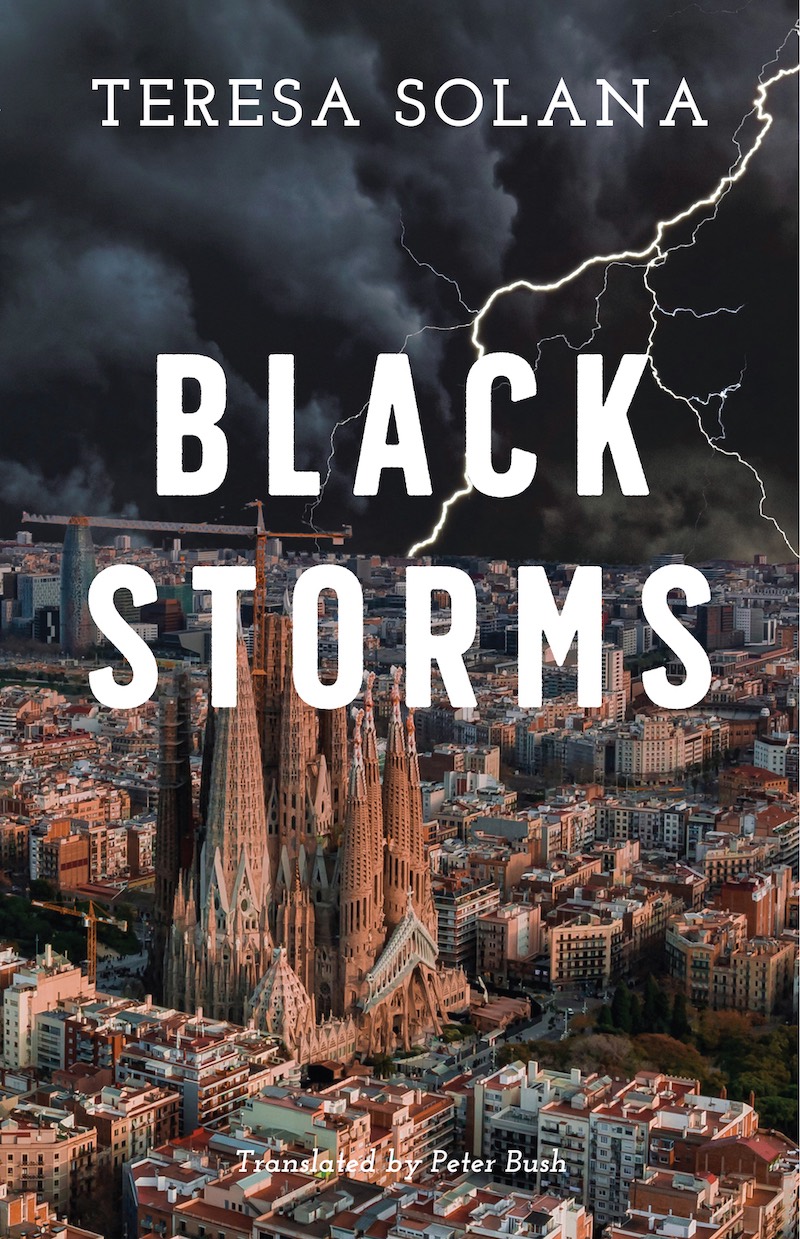
Blog Tour: Black Storms – Teresa Solana (2010, transl. Peter Bush 2024)

Today I’m taking part in a blog tour for Corylus Books, a lovely indie publisher with a focus on translated crime fiction. For those of us in the northern hemisphere the nights are drawing in, and settling down with a crime novel that opens on All Saints Eve (Hallowe’en) felt like a perfect read for this time of year.

Here is the blurb from Corylus Books:

“Who murders an elderly professor in his university office – and why? Norma Forester of the Barcelona police force is handed the case and word from the top is to resolve it as quickly and as quietly as she can. Set against the backdrop of one of the most vibrant and exciting cities in Europe, Black Storms also highlights the darker side of Barcelona and its past, overshadowed by the bitter Civil War of the 1930s.

The past also touches Norma Forester, the granddaughter of an English International Brigades volunteer who didn’t survive to see his Spanish daughter.

This first novel in Teresa Solana’s is a fast-paced crime story that balances the hunt for a killer with Norma Forester’s colourful and complex personal life. She’s surrounded by her forensic pathologist husband, her hippy mother, and her anarchist squatter daughter whose father is Norma’s husband’s gay brother. Then there are Norma’s police colleagues and superiors – plus an occasional lover she can’t resist meeting.”

Black Storms begins with the murder from the point of view of the murderer. This wasn’t gory or gratuitous. There had also been a brief but effective portrayal of the victim, Professor Francesc Paradella who was an expert on the Spanish Civil War, which definitely evoked my sympathy without being sentimental.

We’re then taken to a birthday dinner at Deputy Inspector Norma Forester’s family home. I really enjoyed the portrait of Norma’s family, full of somewhat eccentric characters without seeming unrealistically colourful.

Her mother Mimí looks like “an old Hollywood actress who’d gone to seed or an eccentric fortune teller.”, in contrast to Isabel, her conservative mother-in-law. Her daughter Violeta briefly returns from living in a squat and also visiting is Aunt Margarida, Mimí’s step-cousin and a nun aka my favourite character:

she’d been living comfortably isolated from the world and its problems for eight years, reciting ancient prayers behind those impenetrable stone walls. However, occasionally, she did miss the freedom of her secular life and, now and then, invented an excuse to go out and took advantage of her escape to go to bingo sessions, drink cocktails in Boades and hit the town with Mimí.”

I also liked Norma’s husband, principled forensic examiner Octavi, angry that because the Professor was from a powerful family, his death is treated more seriously than others.

“There were class differences even among the dead: upper-class corpses that led to frantic investigations and second-class corpses that were processed routinely.”

The legacy of the Civil War is part of Norma and Octavi’s home, not only through the family history but in their present. Senta, Norma’s grandmother mistakes outside noises for those of conflict and becomes highly distressed. It’s a brief scene but so moving in how it demonstrates the enduring trauma of war.

The reader soon knows who the murder is, someone pathetic and seedy, and very believable. The mystery of Black Storms is not therefore whodunit, but why. The why enables Solana to look at the long shadows cast by the Spanish Civil War and the enduring corruption in society.

My knowledge of the Spanish Civil War is shockingly rudimentary and Solana did a great job of weaving the history throughout the story without ever info-dumping. Past events are evoked through characters; there is an excellent scene between Norma, whose grandfather was killed by state execution, and Gabriel, her second-in-command, whose grandfather was killed by FAI anarchists.

The most severe condemnation is saved for how the legacy has been mishandled: “the circus orchestrated in the corridors of power had succeeded in drowning the transition in a mist of amnesia”.

But the novel is also resolutely contemporary and Barcelona is wonderfully evoked, even the less salubrious sides: “A city for tourists with cirrhotic livers looking for cheap alcohol.” Ouch!

From the start Black Storms had an assured style and Solana is so accomplished in how she weaves together a crime plot, the legacy of the Spanish Civil War, and contemporary social commentary. It never felt remotely laboured and the story pace was never weighed down by the importance of the issues highlighted. I thought Black Storms was a hugely impressive novel. And now I want another in the series to be translated, because I am already missing Aunt Margarida!

Here are the stops from the rest of the tour, so do check out how other bloggers got on with Black Storms:

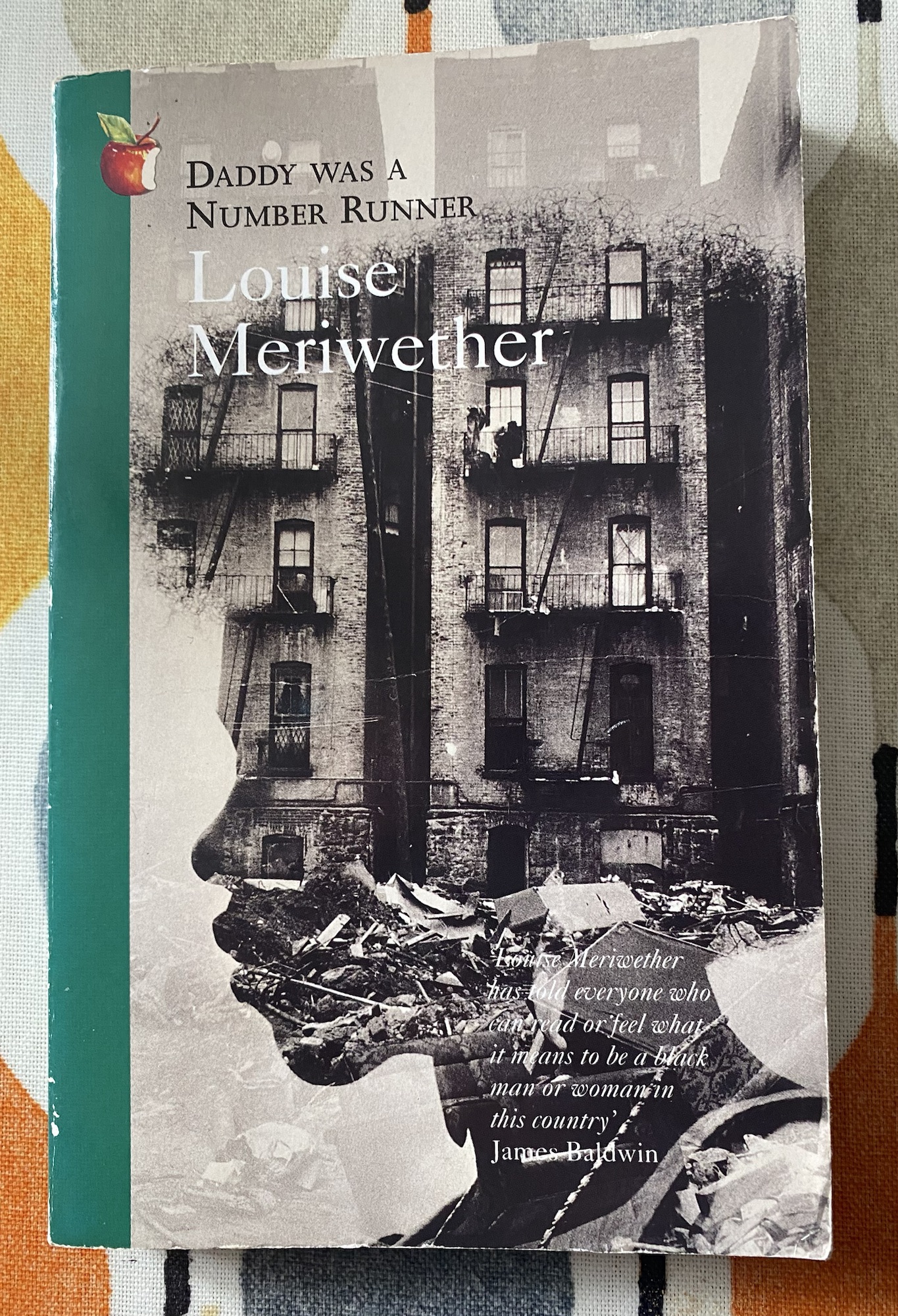
“I loved all of Harlem gently.” (Louise Meriwether, Daddy Was a Number Runner)

The 1970 Club is running all week hosted by Karen at Kaggsy’s Bookish Ramblings and Simon at Stuck in a Book. The Club weeks are always great fun, so do check out the posts!

Whenever the club weeks are announced I always go straight to the TBR to see what I’ve got available. 1970 didn’t yield as many fruits as 1937 Club back in April, but it did offer four choices. Unfortunately I don’t think 1970 is my year as far as my TBR pile goes…two DNFs and a third I wish I had DNF’d rather than ploughed through. Thankfully the fourth I found to be excellent!

Daddy Was a Number Runner was the first novel by Louise Meriwether and widely acknowledged to be bona fide classic in its evocation of 1930s Harlem, through the eyes of a twelve-year-old girl, Francie Coffin. In the Foreword, James Baldwin writes:

“she has so truthfully conveyed what the world looks like from a black girl’s point of view, she has told everyone who can read or feel what it means to be a black man or woman in this country. She has achieved an assessment, in a deliberately minor key, of a major tragedy.”

From the opening lines as Francie helps her father with his titular illegal lottery, her voice is so direct and distinctive. As she runs home to try and get to school on time, we are thrust into a hot summer’s day in Harlem.

“The air outside wasn’t much better. It was a hot, stifling day, June 2, 1934. The curbs were lined with garbage cans overflowing into the gutters, and a droopy horse pulling a vegetable wagon down the avenue had just deposited a steaming pile of manure in the middle of the street.

 The sudden heat had emptied the tenements. Kids too young for school played on the sidewalks while their mamas leaned out of their windows searching for a cool breeze or sat for a moment on the fire escapes.”

Francie’s family are incredibly poor, and running the numbers brings some money in. If lotteries are a tax on hope, Harlem is full of hope. It’s also full of bed bugs, rats and roaches. Poor Francie is eaten alive every night and has to go armed into her favourite pastime:

“I was sitting at the dining room table reading a library book, armed with my usual supply of weapons. Tonight I had a hammer, a screwdriver, and two hairbrushes. When I heard a noise I threw the hammer toward the kitchen and the rats scurried back into their holes. When I got down to my last piece of ammunition I would give the dining room up to the rats and go on to bed.”

Reading and schooling are seen as a way out of the ghetto. Francie’s older brother Sterling is bright and just about staying in school. Her other brother, James Junior, found school hard and, much to the worry of his loving parents, he is running with the local gang:

“He wasn’t mean enough to be an Ebony Earl nohow. How could he ever mug anybody, good-natured and nice as he was. Why, when he smiled his whole face laughed. He wasn’t like old Sterling who didn’t like anybody and whose narrow, old man’s face was full of dark, secret shadows.”

Francie’s parents are loving and kind, and how they hold onto those traits against the relentless grind of poverty is a miracle.

“[Mother] was always either soaking clothes or scrubbing them or hanging them out on the line. With all of that activity we should have been super clean but somehow we weren’t.”

“Daddy played by ear and could swing any piece after he heard it only once.”

Francie’s father is proud and doesn’t want to accept state relief or for his wife to work. But eventually he has to give in on both counts:

“They don’t give you enough money to live on so you have to bootleg some kind of work, then they deduct that from your relief check, too. I wonder how they expect you to live. Didn’t I tell you I didn’t want to mess with those people?” But for once he didn’t shout, seeming to be more tired than angry.”

The structural racism faced by Francie, her family, and everyone she knows is brilliantly evoked. Meriwether displays it through various characters, and there is an enormous tragedy looming for several families. The fallout on children is vivid, through Francie but also her peers. Her best friend Sukie is always filled with fury, which young Francie fails to see is due – at least in part – to Sukie’s father seeking release in alcohol and her sweet sister China Doll working for a violent pimp who beats her in front of onlookers.

Meriwether also articulates issues directly to the reader in her portrayals of, or references to, real life characters who Francie encounters, such as Reverend Adam Clayton Powell, Father Divine, Marcus Garvey, and the Scottsboro case.

There is so much hardship in Daddy Was a Number Runner, and outside of the home Francie has to navigate violence and sexual attention from many that grows into assaults. There’s also a horrible scene with a cat. What stops the novel being unremittingly bleak is her loving parents; her love of books; and Francie’s resilient, honest, humorous, indignant voice.

“I walked to 110th St and looked across Central Park at the lights twinkling in the skyscrapers. That was another world, too, all those lights way over there and this spooky park standing between us. But what good would those lights do me anyway?”

“It is not what happens to people that is significant, but what they think happens to them.“ (Anthony Powell)

This is the tenth instalment in my 2024 resolution to read a book per month from Anthony Powell’s A Dance to the Music of Time sequence. Published between 1951 and 1975, and set from the early 1920s to the early 1970s, the sequence is narrated by Nicholas Jenkins, a man born into privilege and based on Powell himself.

The tenth volume, the wonderfully titled Books Do Furnish a Room, was published in 1971 and is set just after World War Two. (If you google, there are some marvellous images of Anthony Powell in his book-furnished study, reclining on a red chaise longue 😊)

It opens with Nick back at Oxford, researching a book on Burton’s Anatomy of Melancholy and meeting old tutor Sillery. At the end of the novel he again returns to an educational establishment from his past, organising a place for his son at Eton and meeting old tutor Le Bas. Between times, he is in London, part of a literary scene, where people are trying to re-establish themselves after the upheaval of the preceding years.

“The war had washed ashore all sorts of wrack of sea, on all sorts of coasts. In due course, as the waves receded, much of this flotsam was to be refloated, a process to continue for several years, while the winds abated. Among the many individual bodies sprawled at intervals on the shingle, quite a lot resisted the receding tide. Some just carried on life where they were on the shore; others – the more determined – crawled inland.”

After the focus on companies of men in the war trilogy, much of this novel reads like an extended character study of one person: author X Trapnel. And what a character he is – uncommonly bearded (for the time), wearing a safari suit, tie embossed with nude ladies, and dyed black RAF greatcoat, he carries a skull-topped sword stick.

“When he began to talk, beard, clothes, stick, all took shape as necessary parts of him, barely esoteric, as soon as you were brought into relatively close touch with the personality. That personality, it was at once to be grasped, was quite tough.”

And yet:

“The practical expression of the doctrine of ‘panache’… played a major part in Trapnel’s method of facing the world.”

As with all Powell’s characterisations, his presentation of Trapnel is clear-sighted but never nasty. He has a way of being unsentimental but never unpleasant; discerning but non-judgemental. He seems to enjoy people as they are.

“No brief definition is adequate. Trapnel wanted, among other things, to be a writer, a dandy, a lover, comrade, and eccentric, a sage, virtuoso, a good chap, a man of honour, hard case, spendthrift, an opportunist, a raisonneur; to be very rich, to be very poor, to possess a thousand mistresses, to win the heart of one love to whom he was ever faithful, to be on the best of terms with all men, to avenge savagely the slightest affront, to live to a hundred full years and honour, to die young and unknown but recognised the following day as the most neglected genius of the age.”

Around Trapnel swirl the other characters and events of this time. He is employed by publishers Quiggin and Craggs to write for a new magazine, Fission. The ever-present Widmerpool is an investor, and his beautiful wife Pamela continues to bring disdain and chaos with her wherever she goes.

Widmerpool is an MP, as is Nick’s brother-in-law Roddy Cutts, and I enjoyed this brief portrait of Nick’s visit to Westminster:

“We rose from the table, exchanging the claustrophobic pressures of the hall where the meal had been eaten, for a no less viscous density of parliamentary smoking rooms and lobbies, suffocating, like all such precincts, with the omnipresent and congealed essence of public contentions and private egotisms; breath of life to their frequenters.”

Where of course he and Roddy run into Widmerpool:

“The two MP’s were in sharp competition as to whose passion for directness and simplicity was the more heartfelt, at least could be the more forcibly expressed.”

There are also some great descriptions of the seedier parts of London (now very swish areas, but back then poorer and war torn).

Books Do Furnish a Room is quite a contrast to the immediately preceding war novels and a really effective evocation of a chaotic and impoverished postwar London literary scene. I can’t believe there’s only two more left in the sequence for me to read.

“It turned out in due course that Trapnel impersonations of Boris Karloff were to be taken as a signal that a late evening must be brought remorselessly to a close.”

“One often felt ungrateful in literary matters, as in so many others.” (Anthony Powell)

This is the ninth instalment in my 2024 resolution to read a book per month from Anthony Powell’s A Dance to the Music of Time sequence. Published between 1951 and 1975, and set from the early 1920s to the early 1970s, the sequence is narrated by Nicholas Jenkins, a man born into privilege and based on Powell himself.

The ninth volume, The Military Philosophers, was published in 1968 and is set in the latter part of World War Two. It forms the final part of the war trilogy within the sequence, after The Valley of Bones and The Soldier’s Art.

Nick is working in Whitehall as a military liaison during the later stages of the war, and Powell captures the quirks and foibles of his colleagues in these powerful – for some – administrative roles. He demonstrates how soldiers are still people with all their flaws; and how everyday concerns run alongside such enormous ones as the fate of nations and the likelihood of imminent death.

During an air raid, Nick reflects:

“Rather from lethargy than an indifference to danger, I used in general to remain in my flat during raids, feeling that one’s nerve, certainly less steady than at an earlier stage of the war, was unlikely to be improved by exchanging conversational banalities with neighbours equally on edge.”

While I don’t suppose Powell was anti-war or anti-establishment, he brings his clear sight to all he portrays, including the venerated men of war. An imposing portrait of the man who came to personify the previous war is described:  

“Kitchener’s cold and angry eyes, haunting and haunted, surveying with the deepest disapproval all who came that way.”

And in a rare instance of Powell describing a real-life character (though never named), Field-Marshall Montgomery is all too believably portrayed:

“An immense, wiry, calculated, insistent hardness […] one felt that a great deal of time and trouble, even intellectual effort of its own sort, had gone into producing this final result. The eyes were deep set and icy cold.”

There’s absolutely no jingoism in The Military Philosophers. Nick is a loyal soldier, but he doesn’t automatically equate the behaviour of his country with honourable deeds:

“The episode strongly suggested that the British, when it suited them, could carry disregard of all convention to inordinate length; indulge in what might be described as forms of military bohemianism of the most raffish sort.”

Truly terrifying is the development of Widmerpool in this volume. Already a deeply unnerving character, Powell has him arrive in the volume with some levity:

“‘You must excuse me,’ he said. ‘I was kept by the Minister. He absolutely refused to let me go.’

 Grinning at them all through his thick lenses, his tone suggested the Minister’s insistence had bordered on sexual importunity.”

Later we are reminded of Widmerpool’s absolute lack of any morality, when he describes the Kattyn Forest Massacre as merely “regrettable”.

By the end, he is truly sinister, observing “I have come to the conclusion that I enjoy power.” He informs Nick that he will revel in the command of empire overseas. The racism is explicitly stated; the violence of imperialism implied.

Various associates from Nick’s past reappear in his life. We learn that Nick’s childhood friends Stringham and Templar are both most likely dead, and sadly so is my favourite character General Conyers, succumbing to a heart attack after chasing looters and trying to stop the theft of a refrigerator.  

Stringham’s niece, Pamela Flitton, plays a significant role in this volume, essentially by sleeping with a lot of different men and being furious the whole time. Let’s just say her taste in partners leaves a lot to be desired…

There are lighter moments too, and I particularly enjoyed Nick’s colleague Finn risking both a court martial and being stripped of his VC, in his desperation to collect a fresh salmon and using a military car to do so.

The volume ends with the Victory Service at St Paul’s, and then Nick going to collect some civilian clothes at Olympia. It is a subdued ending, deliberately so.

“Everyone was by now so tired. The country, there could be no doubt, was absolutely worn out.”

I found the tone very moving, reflective of all the loss that had been experienced through the war years and all that must now be endured in the immediate post-war period.

“The London streets by this time were, in any case, far from cheerful: windows broken: paint peeling: jagged, ruined brickwork enclosing the shells of roofless houses. Acres of desolated buildings, the burnt and battered City lay about St Paul’s on all sides.”

#WITMonth: My Pen is the Wing of A Bird (Maclehose Press)

Continuing my plan to focus on countries I’ve yet to visit on my Around the World in 80 Books reading challenge for this year’s Women in Translation Month, I was pleased to find an anthology of short stories from Afghanistan in my oft-visited local charity bookshop. I later found out it was the first anthology of short fiction by Afghan women translated into English.

My Pen is the Wing of a Bird: New Fiction by Afghan Women (2022) brings together twenty-three stories by eighteen women (ten of whom have since left Afghanistan) as part of the UNTOLD Narratives project. The stories are translated by a variety of translators from the Pashto and Dari languages.

This will be a really short review (for me!) because if I find writing about short story collections by one author difficult, writing about an anthology by different writers is nearly impossible. So I’ll just say from the start that I found this collection powerful, evocative, moving. It was a compelling read and I’d urge anyone to get hold of a copy.

Often short story collections – even by the same author – can seem patchy but I thought this collection was remarkably consistent. The stories focus on the daily life for women and children in Afghanistan, some set in the past and evoking the country’s long history of conflict, but most with a contemporary setting. I’ll just pick out a few moments to hopefully give a sense of the collection.

There are several stories which are a tough read; domestic violence in particular features in a few. But a sense of hope and resilience pervades. In A Common Language by Fatema Haidari (transl. from Dari by Dr Zubair Popalzi), young female workers leave their hard-won jobs in support of a colleague who is sexually harassed, realistic but still hopeful about their chances of finding further employment. This is immediately followed by The Late Shift by Sharifa Pasun (transl. from Pashto by Zarghuna Kargar) where Sanga, a young working mother, continues to go to her work as a newsreader in 1985, despite the falling bombs all around her.

“Before she entered the studio, she took off her shoes and put on the special sandals that were kept in a metal cupboard. The people in charge of the studios didn’t want anyone bringing in dust that could harm the equipment […] The studios were soundproof; no sound from explosions could enter from outside.”

There are a couple of stories dedicated to those who have died. Blossom by Zainab Akhlaqi (transl. from Dari by Dr Negeen Kargar) is one, dedicated to Afghan schoolgirls and the students who died at Sayed ul-Shuhada high school on 8 May 2021. Through the story, the narrator comes to realise the importance of her friend’s question: “If a person never reads a book how can he change?”  This is carefully explored and never clunky.

I don’t think it’s a spoiler as such but do skip the next bit where I talk about the ending if you wish! The final lines of the story are simple yet intensely moving:

“I put on my black school uniform and white scarf and filled my bag with notebooks. I cut a fresh branch of blossom from our garden and went to school.”

My Pillow’s Journey of Eleven Thousand, Eight Hundred and Seventy-Six kilometres by Farangis Elyassi (transl. from Dari by Dr Zubair Popalzai) is one of the few stories set somewhere other than Afghanistan and shows that leaving your home country can be an ambivalent experience. The narrator moves to a life in the United States, but struggles for the first time in her life with insomnia. She is convinced it is linked to the loss of her comfortable pillow, made for her by her mother. Slowly she realises it is more complex (again, skip the next quote to avoid spoilers):

“my sleep was bound to the warm embrace of my country, it was bound to visiting my beloved mother, it was bound to the chatter I shared with my sisters, to the friendship and silliness so I shared with my brother, to the laughter I enjoyed with my friends. My peaceful sleep was because of the small service I used to do for my country, because of my streets, because of a sense of freedom one can feel only in one’s country.”

Looking at the UNTOLD Narratives website, I can see that this month they published My Dear Kabul, a collective diary from the women who wrote My Pen is the Wing of a Bird. It sounds unmissable.

“Real conflict for me at least always turns out to be wordless, which is why I find drama and the theatre so unreal.” (Margaret Drabble, The Garrick Year)

Back in June I was inspired by heavenali’s a year with Margaret Drabble to read the author’s first novel, A Summer Bird-Cage (1963). I was really impressed by what she’d achieved when she was just 24, and so I was keen to pick up her second novel The Garrick Year (1964), which was written only a year later. Once again I found the sure style really striking.

“All that strange season, that Garrick year, as I should always think of it, which proved to me to be such a turning point, though from what to what I would hardly like to say.”

Emma is an ex-model and mother to toddler Flora and baby Joe. She’s a bit adrift as to what she wants to do with her life, but is keen when offered a newsreader’s job. Unfortunately her selfish, self-serving husband David also gets offered a job, which involves moving from London to Hereford for a year so he can act in the local theatre productions by acclaimed director Wyndham Farrar.

At first David seems an outright pig, telling Emma she has no choice and he’s already signed the contract. It turns out this isn’t true and Emma never thought it was. Still, they both know it might as well be. This is the early 1960s and while staying behind for a year might be theoretically possible for a married woman with small children, it’s not hugely likely even with a nanny.

“I could hardly believe that marriage was going to deprive me of this [job] too. It had already deprived me of so many things which I had childishly overvalued: my independence, my income, my twenty-two inch waist, my sleep, most of my friends who had deserted on account of David insults, a whole string of finite things, and many more indefinite attributes like hope and expectation.”

Drabble captures that compelling mid-twentieth century time where women are starting to have a sense of more possibilities and life choices opening up, but these options still don’t seem wholly obtainable.

So David isn’t quite as dreadful as he first appears, but neither is he particularly likable. And he’s about to get worse, as he brings his roles home with him:

“this time I was condemned to a whole season of Flamineo who happened to be a self-centred existentialist pimp.”

As in her first novel, The White Devil by John Webster is heavily referenced. I’d be interested to know why this slightly bonkers, bloody Jacobean play seems so significant for Margaret Drabble at the start of her career. (And I say that as someone whose MA was on ritualistic bloodshed on the early modern stage – bonkers and bloody theatre is right up my street 😀 )

But The Garrick Year isn’t a pity-fest for Emma in contrast to David. She’s young and self-centred too, an intellectual thinker but not personally reflective. She can be quite bitchy, describing ingenue Sophy “as stupid and as shiny as an apple”, but I don’t think we’re supposed to take pronouncements like: “The provinces have never appealed to me, except as curiosities.” entirely seriously. Emma knows she can be a snob, and contrary.

“I feel that I’m insulting something when I am bored… My tastes are shallow; My life is shallow; and I like anonymity, change and fame. In Hereford I could have none of these things: I was condemned to familiarity, which beyond anything I find hard to maintain with ease.”

Her insight is limited, so when she starts an affair with Wyndham, she doesn’t really understand why she would do such a thing. It’s not particularly passionate, and remains unconsummated for the majority of its frankly tedious duration (tedious in terms of events, not portrayal!)

Drabble balances really well the spiky, sharp observations of Emma with a degree of sympathy for her. I don’t think as readers we’re supposed to necessarily like her, but not despise her either. Rather we’re encouraged to recognise how incredibly thwarted and frustrated she is, at a time when she has agency and choices but not enough of either.

“I personally, I myself, the part of me that was not a function and a smile and a mother, had been curled up and rotten with grief and patience and pain.”

I’ve read somewhere that Drabble goes off the boil in later novels, but these early ones are really hitting the spot for me now. I find women’s lives in this period endlessly interesting, and she captures that time so well. She’s not afraid to make her characters recognisably real even when they are not particularly appealing, and she incorporates her intellectual considerations seamlessly so they never obscure characters or plot. I’m looking forward to exploring her further.

To end, I may be a fellow Londoner but I’m baffled as to Emma’s problem with lovely Hereford:

“In the besieged city everything is unusual but everything is at the same time ordinary.” (Alma Lazarevska)

For this year’s Women in Translation Month I’m trying to focus on countries I’ve yet to visit on my Around the World in 80 Books reading challenge. Today I’m off to Bosnia and Herzegovina via Death in the Museum of Modern Art by Alma Lazarevska (1996 transl. Celia Hawkesworth 2014) published by Istros Books.

Death in the Museum of Modern Art is a collection of six stories set during the siege of Sarajevo, although Lazarevska never names the “besieged city” that features in all the tales. Lazarevska is a Bosnian writer and survivor of the siege.

I always find it really hard to write about short story collections, so I’ll just focus on the opening and closing tales.  In Dafna Pehfogl Crosses the Bridge between There and Here, the titular character reflects on her long. “unlucky”, “clumsy” life, starting when the maid burned the last coffee listening to her mother’s labour screams. Dafna is something of a scapegoat for her family and remained unmarried as her suitors weren’t smart enough for her family. Now in old age she finds herself alone in the war-torn city. Her family on “the other side” have arranged her passage to safety.

“She stepped boldly and decisively. Freed from other people’s gaze and lengthy sighs. Her feet were light on the deserted bridge between there and here.”

This is the only story in the collection written in the third person, but it didn’t distance Dafna in any way. I really hoped she’d make it to safety…

The final story, Death in the Museum of Modern Art has a dry humour to it. The narrator is answering questions that will form part of an exhibition at MoMA, including “How would you like to die?”

“I would have liked to tell him about that terrible feeling I have of being late… the feeling that I have being overtaken and I’m losing my sense of being present. Neither here, nor there.”

Without heavy judgement, Lazarevska demonstrates how the lived experience of war is being simplified and packaged up for art consumers. The impossibility of the questionnaires even beginning to capture anything meaningful from such a situation.

“But for an American, one ‘easy’ is the same as another. Hence a visitor to the Museum of Modern Art may read that my friend the writer wanted to die easily. He understands that, but the writer does not. That word introduces confusion into the writer’s answer. Can wishes of this kind be expressed in a foreign language, particularly one that does not distinguish one ‘easily’ from another?”

Lazarevska writes in a constrained style, both tonally and structurally. She doesn’t waste a word and has a real command of the short story form – I thought the six stories in this collection were all equally strong.

Lazarevska writes about the siege of Sarajevo in a way that is evocative but not overly emotive, trusting that the circumstances are extraordinary and shocking enough that they don’t need embellishment. Her focus is broadly domestic, looking at how ordinary lives find ways to carry on. The result is a compelling and memorable collection that places the reader alongside the characters as they hold onto their humanity through the most brutal experience.

“The hand I write with his healed. If any new questions should ever arrive, I shall write my answers myself. I’m writing all of this with my own hand.”

“Why don’t words come automatically with threads that we can yank to pull them back inside ourselves?” (Jokha Alharthi, Bitter Orange Tree)

For this year’s Women in Translation Month I’m trying to focus on countries I’ve yet to visit on my Around the World in 80 Books reading challenge. This meant I was delighted to find a copy of Bitter Orange Tree by Jokha Alharthi (2016, transl. Marilyn Booth 2022) in my much-frequented local charity bookshop, as I’ve not read a book by an Omani author before.

I had completely missed Celestial Bodies for which Alharthi and Booth won the Man International Booker Prize in 2019. At that time Alharthi was the first Omani woman to be translated into English.

Bitter Orange Tree is a short novel, just 214 pages in my edition with quite large type, which I read entirely during a train journey back from Newcastle. (In fact, everyone around my table was reading a print book – it was like the olden days! For balance, I should say on the journey up I was sat next to someone who spent the whole time scrolling through TikTok and Insta, never watching any of the short content through to the end. I found it exhausting and had to mind my own business in the end 😀 )

The story is told from the point of view of Zuhour, a young woman who has left Oman to study in a nameless, cold, foreign city (most likely Edinburgh). She balances descriptions of her current life where a friend’s sister has fallen in love with a man her family wouldn’t approve of, with memories of Oman and particularly her grandmother-figure, Bint Aamir.

Zuhour harbours guilt regarding not staying with her grandmother, who has now died. A comment to a friend is the starting point for memories and reflections on Bint Aamir’s life:

“She always longed to own some land… just a tiny patch, with date palms growing on it, even if there was only space for five or so. And a few little fruit trees – lemon, papaya, banana, bitter orange. She would even plant those herself. She would water them and take care of them. And eat from them. And rest in their shade.”

Bint Aamir’s life is not easy, expelled along with her brother from her father’s house, she struggles for money. Gradually she finds a role in a relative’s home and while owning nothing, she provides almost everything.

“Bint Aamir’s feet were submerged in the soil that was the ground of our lives. She built the walls that made this household exist and thrive, mud brick by mud brick.”

Zuhour’s past and present conflate frequently, and I thought Alharthi conveyed so effectively the way memories underpin and inform the present. The conflation and the movement back and forwards between different times was seamless and never confusing.

“Tears run from my eyes, from both my eyes, from my two sound eyes. My tears spill over her one eye, which is damaged; over the herbal concoctions that were prescribed by ignorance; over the violence and harshness of childhood; over children orphaned by their mothers deaths and thrown out by their fathers, and over their brothers tragic ends; over a field she did not possess; over a companion she was never fortunate enough to have; over son who is not hers; over the grandchildren of a friend who died before she did.”

There’s also some humour, and I particularly liked this description of Zuhour’s friend Christine:

“Her cup of decaf coffee with soy milk was tall and skinny: it looked just like her. Here at this party, she was an exact scan of the figure I always saw at the university: T-shirt jeans running shoes ponytail nose ring tattoo long skinny cup.”

There were aspects of the story that were less successful for me though. Alongside the friends’ illicit relationship that Zahour has complex, unresolved feelings about, there is also a story of domestic violence involving her sister Sumayya. Both these sub-plots were too shallowly explored, before they petered-out. I felt that either Bitter Orange Tree needed to be longer, or one of these sub-plots needed to be cut and the other further developed.

While I liked the imaginative style, sometimes it became overly sentimental, particularly with regard to Bint Aamir. Although Zahour acknowledges “All her contentment was drawn from the happiness of the people for whom she cared.” she sometimes goes on flights of fancy regarding what her grandmother didn’t have in life, without knowing how her grandmother felt. These seemed clunky to me, although in fairness this may have been deliberate, to emphasise Zahour’s callow inexperience and inability to think beyond cliches at times.

But I only blog about books I like and I did like Bitter Orange Tree. The handling of past and present was so deft, and the style so readable. From looking online I think a lot of people preferred Celestial Bodies so I’d be keen to give that a try. If you’ve read Celestial Bodies I’d love to hear how you found it.

“Everything alters, yet does remain the same.” (Anthony Powell)

This is the eighth instalment in my 2024 resolution to read a book per month from Anthony Powell’s A Dance to the Music of Time sequence. Published between 1951 and 1975, and set from the early 1920s to the early 1970s, the sequence is narrated by Nicholas Jenkins, a man born into privilege and based on Powell himself.

The eighth volume, The Soldier’s Art, was published in 1966 and is set in 1941.Unlike the previous few novels, this only had three chapters, the middle one depicting Nick’s leave in London, bookended by his experiences in the army while still billeted in Northern Ireland.

As I mentioned in the previous volume’s post, Nick doesn’t really fit in with army life. But he doesn’t particularly labour on this, or feel sorry for himself. I enjoyed this exchange when he runs into Bithel again:

“’Told me you were a reader – like me – didn’t you?’

‘Yes I am. I read quite  a lot.’

I no longer attempted to conceal the habit, with all its undesirable implications. At least admitting to it put one in a recognisably odd character of persons from whom less need be expected than the normal run.”

In this volume I felt I saw a much fuller picture of Nick’s touchstone Widmerpool. Is machinatious a word? If it isn’t, the character of Widmerpool suggests it should be, because his machinations inform his behaviour through and through.

Nick is acting as his secretary, desperate to get away.

“Indeed, it was often necessary to remind oneself that low spirits, disturbed moods, sense of persecution, were not necessarily the consequences of serving in the army, or being part of a nation at war, with which all inclusive framework depressive mental states now seemed automatically linked.”

Nick manages to stay out of Widmerpool’s connivances due to the latter’s egomaniacal need for control. However, he can observe his senior officer’s behaviour at much close quarters than before, including:

“An amateur soldier in relation to tactical possibilities, and … a professional trafficker in intrigue”

“[My] incredulity was due, I suppose, to an underestimation, even after the years I had known him, of Widmerpool’s inordinate, almost morbid self-esteem.”

By the end of the novel Widmerpool is moving on, and I had a horrible feeling that by the end of this novel sequence he might be Prime Minister…

Another of Nick’s schoolfriends is present in the company. Stringer, maintaining his sobriety, turns up as a mess waiter.

“Friendship, popularly represented as something simple and straightforward – in contrast with love – is perhaps no less complicated, requiring equally mysterious nourishment”

Stringer is an intriguing character, with a deep sense of sadness about him. We’ve never learnt what led him to self-medicate with alcohol, and now he is sober he seems to have an extreme resignation to life. He seems too equanimous, knowing no joy. I find him quite haunting.

In the middle chapter Nick uses his leave to visit friends in London. His wife Isobel and young child get a passing reference. If I was Isobel I’d be mightily annoyed that my husband spent his army leave in Blitz-torn London rather than in the country with his newly-expanded family, but maybe she’s more tolerant than I am.

This middle section was hugely moving. Powell conveys the tragedy of war, of lives cut short without warning. Of the senseless waste and cruel arbitrariness of it all. He does it all with understatement which perfectly drives home the horror, and how this became a regular occurrence for so many. It was an astonishing chapter.

It is in army life that Powell finds his comedy and satire. This was probably the most sad, most moving, and most silly and funny of all the volumes I’ve read so far.

I particularly enjoyed a completely daft dinner scene between two Colonels, one called Eric, one called Derrick. Powell uses the rhyming names to full effect, having both of them end their sentences with the other’s name, as they engage in a furious, but politely mannered argument.

“Both habitually showed anxiety to avoid a junior officer’s eye at meals in case speech might seem required. To make sure nothing so inadvertent should happen, each would uninterruptedly gaze into the other’s face across the table, with all the fixedness of a newly engaged couple, eternally enchanted by the charming in appearance of the other.”

There’s also Nick’s experience of inciting the wrath of a General, when he admits he doesn’t like Trollope and prefers another author:

“‘There’s always Balzac, sir.’

‘Balzac!’

General Liddament roared the name. It was impossible to know if Balzac had been a very good answer or a very bad one.”

The more I read of this sequence the more impressive I find it. Powell’s wit, humanity, clear-sightedness, and ability to balance the various aspects of life are really extraordinary. And he does it all with such a light touch.

“All the same, although the soldier might abnegate thought and action, it has never been suggested that he should abnegate grumbling.”

To end, I’m feeling quite smug for working out that I can shoehorn in an 80s pop video by choosing one by some of the Blitz Kids (and fair to say 80s pop videos did not generally follow an Anthony Powell-esque light touch 😀 ):