The Life and Death of Harriett Frean – May Sinclair (1922) 184 pages
I am very fond of Victorian novels. Those huge, sprawling tales of domestic realism suit me very well in the right mood. However, the heroines do have a tendency towards pious self-sacrificing virgins, whose superhuman goodness is rewarded in the end by a rich husband and/or massive legacy. So even while they profess a dedication to heavenly rewards, they can do so from the comfort of being hugely loaded in the earthly realm, alongside a hottie in a big white shirt (which admittedly does sound pretty appealing).
It is this premise that May Sinclair takes issue with in The Life and Death of Harriett Frean.
Early in the novel there is an example of how the child Harriett behaves in the way expected of little Victorian girls, and as a result does not get her needs met. The only reward is a sense of self-satisfaction:
“Being naughty was just that. Doing ugly things. Being good was being beautiful like Mamma. She wanted to be like her mother. Sitting up there and being good felt delicious.”
Sinclair shows how this conditioning is reinforced through insidious guilt-trips:
“Understand, Hatty, nothing is forbidden. We don’t forbid, because we trust you to do what we wish. To behave beautifully…”
And so Harriett grows up idolising her parents and never questioning whether this mode of behaviour is more about convenience for others than actually what is right.
Harriett’s biggest sacrifice is refusing to enter a relationship with the man engaged to her friend. It is this she consistently returns to, through a life that never truly sees or allows for others. Sinclair shows the vanity and self-centredness wrapped up in supposed self-effacement:
“When she thought of Robin and how she had given him up, she felt a thrill of pleasure in her beautiful behaviour, and a thrill of pride in remembering that he had loved her more than Priscilla.”
The Life and Death of Harriet Frean explores how this type of behaviour – inauthentic, fundamentally dishonest – can lead to unhappiness in big and small ways, from never having cutlets served how you prefer to destitution for some. But Harriett never really learns, sticking stubbornly to her frame of reference even as life repeatedly demonstrates the inadequacy of doing so and the damage that can be done.
For me the novella remained just the right side of didactic, but I think had it been longer it may have drifted into preachiness. As it was, it remained an interesting counterpoint to all those fictional Victorian heroines who may not have found things quite so clear-cut in real life.
The Man Who Saw Everything – Deborah Levy (2019) 200 pages
I really love Deborah Levy’s work. Her writing is so clear and direct – both in fiction and non-fiction – but never feels simplistic or superficial. She’s incisive and thoughtful, managing to convey the complexities of human beings with such precision.
In The Man Who Wasn’t There, she explores the interplay between personal and political histories and how these are constantly being rewritten entirely subjectively.
The titular man is Saul Adler, a self-obsessed historian. At the start of the novel Saul is 23 years old and his lover Jennifer Moreau wants to take his picture on the Abbey Road crossing à la The Beatles and millions of subsequent Beatles fans. He is knocked down but only superficially injured. However, there are certain anachronistic details that don’t add up for an event taking place in 1988…
Saul returns home with Jennifer, they sleep together and then break up. He then visits the GDR as part of his PhD research into male tyranny, and becomes romantically entangled with a brother and sister.
“I told him that my mother’s fatal accident and my minor accident had become blurred in my mind and how I was still insatiably angry with the driver who had run her over. I regarded him as her assassin. Time passing had not made my mother’s death less vivid. All the same I had not really been paying attention when I crossed the road.”
The destabilising sense of time collapsing in on itself continues, as Saul knows things about his own future and East Germany’s future that he couldn’t possibly know:
“He did not believe me and neither did I totally believe myself. I had planted three types of tomato in another time. Someone had planted the tomatoes with me in the future soil of East Anglia. His hair is silver and he wears it in a bun on top of his head. His fingernails are bitten down. We are kneeling on the earth, his fingers on my back, massaging my spine while he tells me we should plant the apple trees before it rains and the fields flood.”
In the second half of the novel, Saul is knocked over again on Abbey Road, this time in 2016, and is hospitalised. As he drifts in and out of consciousness he tries to piece together his life from half-remembered events and the people that surround his bedside. There are recurring images and references linking the two timelines but these destabilise as much as they anchor.
“A wind from another time. It broke with it the salt sentence seaweed and oysters. And wolf. A child’s knitted blanket. Folded over the back of a cheerful stop time and place all mixed up. Now. Then. There. Here.”
The Man Who Wasn’t There is a political novel, raising questions about tyranny, patriarchy, state surveillance, internalised surveillance… but never at the expense of its characters. It shows how we cannot live outside of history and how the big issues end up intrinsically bound up in all our lives.
Levy captures with wit and compassion the drive to construct a coherent narrative in order to understand our lives and the world we live in, while showing how impossible such an undertaking is.
“It was true my wings were wounded. It was true I had no idea how to endure being alive and everything that comes with it. Responsibility. Love. Death. Sex. Loneliness. History. I knew he did not hold my tears against me. That was a big thing to know.”
To end, the glorious Nina Simone singing a track from Abbey Road:
I thought the cover of Lemon was absolutely perfect. The simple image of an absent woman suspended in sky strikingly captures the unsettling quality of this story about a murdered young woman.
Lemon is not a whodunit, although I think that central question is answered obliquely. There is no satisfying resolution with all the ends tide up neatly – that is not what this novella is about. Rather, it is about people struggling to find a way through life when it has been touched by a violent crime. It is about how to try and find peace when there are no easy answers.
The murder of 19-year-old Kim Hae-on in 2002 shocks the local community. The killer is not found, despite two local boys being suspected. Predictable tabloid sensationalism means it becomes known as the High School Beauty Murder, as Kim Hae-on was strikingly beautiful and somewhat unknowable. Yet beyond the cliches lies a life taken and a grieving family.
The various chapters in Lemon have different narrators between 2002 and 2019. It begins with Hae-on’s younger sister Da-on, struggling to understand who she is in the wake of her sister’s killing.
“Does this mean I’m still not free? That I’m not free, not one iota, from those smooth, fair, irrelevant details from 16 years ago, those endless memories of my sister’s loveliness, which had made me undergo plastic surgery, turning my own face into a crude patchwork of her features?”
We gain perspective on Da-on from the memories of a classmate, Sanghui:
“Da-on, the younger sister, was the one who looked after Hae-on, as one would after a little sister. She’d stop her big sister on the street before they reached the school gate and then circle her examining the front and back of her uniform to make sure nothing was out of place.”
[..]
“Then you could witness the older sister fleeing gracefully down the hall or across the school field with her long lithe limbs, while the younger one raced shrieking after her, like some wild animal. They seem never failed to give both teachers and students a good laugh. That was Da-on’s gift. She had a lively, bubbly kind of warmth that could pull Hae-ons devastating, otherworldly, even glacial, beauty into our reality, dissolving it in laughter.”
We learn later on that there was a clear reason for this protectiveness. Hae-on seemed unaware of the modesty expected in society and could forget to wear underwear, sitting in a way that exposed this. Da-on would try to ensure this didn’t happen but the external misreading of this behaviour probably played a part in her sister’s disappearance. There is never any sense of victim-blaming from any of the narrators in Lemon, with one exception and the reader is clearly not expected to align with those views.
More details of the day of the murder emerge through the shifting views, bound up in the lives that continued beyond. There is real sadness here, particularly in the grief of Hae-on’s immediate family and also for Han Manu, one of the suspects.
There is a haunting quality in Lemon. It is never so crass as to make the murder of a young woman anything other than it is; it is not gory entertainment nor is it made easier through a suggestion of any sort of metaphysicality. But by capturing the fallout of the violence onto the everyday lives of those who knew Hae-on, Kwon Yeo-sun expertly demonstrates the ongoing destructiveness of a life taken.
“It will go on endlessly, until the end of Da-on’s life, or maybe beyond that. Not being able to put an end to an incident so horrific – I couldn’t begin to imagine that kind of weight on her life.”
Winter in Sokcho – Elisa Shua Dusapin (2016 trans. Aneesa Abbas Higgins 2020) 154 pages
Day 2 and I’m delighted that yesterday Simon at Stuck in a Book posted that he’ll be joining me with his #ABookaDayinMay, surely adding many more titles to my TBR mountain 🙂
The narrative voice in Winter in Sokcho is an intriguing one: detached yet painfully intimate, ambiguous yet pragmatically clear. A nameless young woman records what happens to her, but it is up to the reader to decipher the meaning.
She works in a hotel in out of season Sokcho, a coastal tourist town sixty kilometres south of the border with North Korea. It is not a glamorous hotel even in peak season:
“Orange and green corridors, lit by blueish light bulbs. Old Park hadn’t moved on from the days after the war, when guests were lured like squids to their nets, dazzled by strings of blinking lights.”
“I loved this coastline, scarred as it was by the line of electrified barbed wire fencing along the shore.”
A guest arrives at the hotel, a French graphic novelist named Kerrand. Slowly he and the woman form a bond that is never quite articulated. It could be sexual. It could be father/daughter (her absent father is French too). He wants her to show him the area as she knows it, but it is a flawed premise from the start:
“He’d never understand what Sokcho was like. You had to be born here, live through the winters. The smells, the octopus. The isolation.”
The isolation both geographical and individual lends the story a bleakness that verges on Gothic, despite all the neon lights. A trip to the border is downright eerie; the other guest in the hotel is permanently swathed in bandages as she recovers from cosmetic surgery.
The pressures on women and their appearance bear heavily on the narrator. Her mother chastises her for eating too little, and she seems to have body dysmorphia/an eating disorder. Her boyfriend leaves for Seoul for a modelling career, casually accepting he’ll undertake facial surgery if that is what is needed for work, and urging her to do the same.
Like so much else in her life, she seems to feel somewhat detached from her boyfriend. There is a sense of everything in her life being a step removed. She has no friends, her mother is suffocating yet pitable and distances with her need to be carefully managed. The narrator speaks with Kerrand in English despite her French being more fluent.
As her involvement with Kerrand grows, she feels an ambivalence around his drawings of women, which never make it into his published work:
“In bed later, I heard the pen scratching. I pinned myself against the thin wall. An gnawing sound, irritating. Working its way under my skin. Stopping and starting. I pictured Kerrand, his fingers scurrying like spiders legs, his eyes travelling up, scrutinising the model, looking down at the paper again, looking back up to make sure his pen conveyed the truth of his vision, to keep her from vanishing while he traced the lines.”
This ambivalence moves towards an ending that is wholly ambiguous. It could be read several ways and I remain unsure as to what I think happened. This isn’t remotely unsatisfying but entirely apt. Winter in Sokcho is a compelling exploration of the unknown: in ourselves, in others, and in the forces of history we all live with. How we reconcile ourselves to this is for the individual to discover. I think the narrator did find a way, I’m just not sure what it was…
“You may have had your wars, I’m sure there are scars on your beaches, but that’s all in the past. Our beaches are still waiting for the end of a war that’s been going on for so long people have stopped believing it’s real. They build hotels, put up neon signs, but it’s all fake, we’re on a knife-edge, it could all give way at any moment.”
The Story of Stanley Brent – Elizabeth Berridge (1945) 75 pages
Oh dear, I am so behind on everyone’s blogs and of course my own blogging. I hope everyone is well and reading lots of lovely books, and that those in the northern hemisphere are enjoying the longer, lighter days. I’m really hoping May sees me catching up with the blogosphere, and against my better judgement I’m going to give my annual Novella a Day in May a bash too…
Elizabeth Berridge is a writer that I really wanted to get to, and thankfully she has a couple of novellas to her name, so this month seemed the perfect time. The Story of Stanley Brent was her debut and at 75 pages it just makes my criteria for a novella* rather than a short story (in modern editions, my old edition is a bit shorter so I’m starting the month by cheating 😀 )
Opening five years into the last century with a proposal of marriage hastily undertaken on an aunt’s landing, Berridge expertly sets up the themes of her novella: domesticity, social awkwardness, romantic hopes butting up against worldly realities (in this instance, not being able to embrace fully as Ada is in a dressing gown and risks her decency).
The proposal brings out the very different characters of the titular protagonist and his betrothed:
“Ada saved quietly and fiercely for a good home, Stanley lived in the moment and hoped for some stroke of luck, content with the right to kiss his fiancé and hold her hand without reproach, to sit out dances with her. She was promised to him, that was enough.”
Things being enough while Ada hopes for more, will continue through their marriage. Stanley, so determinedly placed by Berridge at the centre of the story, is rarely the leading man of his own life. He drifts into middle management but doesn’t drive the estate agency in any direction and fails to keep up with the changing world. The First World War happens away from him, unable to join up due to a back problem. The Great Strike has a limited impact on his life beyond the train disruption challenging his commuting routine.
His lack of reflection or insight has traumatic consequences for Ada on their wedding night. The impact of total sexual ignorance is dealt with frankly by Berridge, reminding me of Ian McEwan’s On Chesil Beach:
“That her body, washed meticulously and yet ignored by her, should attain such an importance, should cause a good and decent man like Stanley to be so – so bestial and undignified, was shattering. If Stanley could not be trusted, who could? And yet her friends who were married seemed happy enough, they had children… at this a fierce fearful doubt struck her. Suppose they, as Stanley had said, taut and angry, his patience gone, suppose they enjoyed this hateful and frightening thing?”
Somehow the couple recover, conceive two children, and things tick along. Ada has an extra-marital affair, Stanley drinks more heavily over the years. They are lives of quiet desperation, and I felt Stanley’s story was a sad one, all the more so because he didn’t seem to realise he had the power to make it a different one.
“He shook his head. It was all too big for him, he must keep to the small things, the concrete reasons, solid as stepping stones in turbulent waters.”
His father-in-law is another powerless, sad man in the story, one who plays an unfinished tune on the violins he makes and mends. A melancholy refrain in the book but somehow I didn’t find TSOSB depressing. It ends on a hopeful note, but one which may or may not be realised.
I was so impressed by this first encounter with Elizabeth Berridge and it definitely made me keen to read more. I have Across the Common by her and it’s fewer than 200 pages so maybe I’ll even manage it later this month 😊
Someone less impressed than me was a previous owner of my very old secondhand copy, who inscribed it with the following:
“Berthe, from Mother. Sorry, a very bad choice. No Spiritual Outlook. October 1945.”
I would love to have known how Berthe found it. I hope she enjoyed it more than her mother did.
This week sees the arrival of the 1940 Club reading event, hosted by Kaggsy and Simon.
I always enjoy the Club weeks and this was no exception, as I’ve used the opportunity to read one of my favourite authors, Margery Sharp, and her comic novel The Stone of Chastity.
This short novel is immensely silly which, it is safe to say, is precisely the point. Professor Pounce has come across mention of the titular object while trying to duck out of a bridge game, and is entirely fixated on locating it and testing it (unchaste women fall off the stone – of course there’s no such test of virtue applied to men.)
He arrives in the village of Gillenham to stay for the summer, with his endlessly patient sister-in-law Mrs Pounce and feckless nephew Nicholas, plus the mysterious and glamorous Carmen, whose role is undefined and therefore treated with suspicion by some of the villagers.
The opinion of the villagers and the potential discord caused by a chastity test is something Nicholas is all too aware, but of which the Professor remains blissfully aware.
“Wobbling down the road next morning, on a borrowed bicycle with the bundle of questionnaires stacked in its carrier, Nicholas Pounce felt himself to be, both literally and figuratively, in a very precarious position.”
Of course Nicholas is right, and while the villagers don’t react in quite the way he expects, react they do.
Mrs Crowner, the vicar’s wife, has concerns: “It is a deliberate attempt to arouse Pagan memories.”, while her husband maintains a benign indifference. The moral indignation is left to fall to Mrs Pye, who unfortunately for the Professor does wield some power:
“He simply could not get his uncle to grasp the unpalatable fact that a scientific investigation into a renascent Norse legend might have a direct effect on the supply of milk and cream and butter and eggs.”
The delightfully named Mrs Thirkettle seizes the opportunity to proclaim possession of the stone and sell it to the Professor. Meanwhile Mr Thirkettle, through convoluted means, manages to get a day out the likes of which he’s never seen, and ongoing free beer at the local pub.
Arthur Cockbrow’s seduction of his maid hits a major bump in the road as she starts to refuse his advances, given that the Professor’s work is something to do with the powers that be (it isn’t):
“He could not understand it at all. His pursuit of Sally had lasted a full two weeks – quite long enough to satisfy her pride – and had never looked in the least hopeless. And now in some mysterious way the Government had stepped in! The Government! It was lunatic!”
Sally is not alone, as other single women in the village start to see the tactical benefit of keeping suitors at arms’ length: “The professor’s questionnaire had done several unexpected things, and one of them was to promote a hitherto impossible female trade unionism.”
There’s no doubt that the portraits of the villagers are a bit yokely and dated. But not nearly as much as I pessimistically anticipated, and Sharp never really suggests that the Pounces are in any way superior. Professor Pounce is ridiculous, Nicholas hopelessly naïve and self-focussed. The villagers are certainly savvy, and there’s also some truly touching scenes between Mr and Mrs Jim who own the pub and are shown to have an affectionate and loving relationship.
Everyone is treated with a light comic touch, and the characters gently ribbed for their human foibles, without any suggestion that the author or reader should consider themselves above such behaviour.
It’s a short novel and there’s some plot around Nicholas’ love life, the entanglements of the villagers, and the move towards the inevitable chastity testing – will anyone volunteer?
“The fateful morning dawned misty, with a promise of heat. By 10 o’clock the mist had melted into thin streamers. By noon the sky was a clear and cloudless dome of blue. It was a perfect day for testing chastity.”
I was really surprised by the attitude to chastity in a book written in 1940. There’s absolute acceptance of sex outside marriage to the extent it seems the norm rather than the exception. Unmarried women who aren’t virgins aren’t remotely judged, except by Mrs Pye and it’s clear she has her own reasons for doing so. Sharp seems to take the view that virginity is a social construct and pokes gentle fun at using it to attach any judgement towards human beings.
So mainly very silly indeed, but still with a point to make, particularly about the roles of women at the time. I found it delightful.
To end, a certain Madonna song would be the obvious choice. But I was in a shop a few days ago which was playing a truly dreadful version of this song, which only reminded me of the brilliance of The Pogues. So in honour of Mr Thirkettle’s legendary night on the tiles…
This my contribution to Reading Ireland Month 2023, aka The Begorrathon, running all month and hosted by Cathy over at 746 Books. Do head over to Cathy’s blog to check out all the wonderful posts so far!
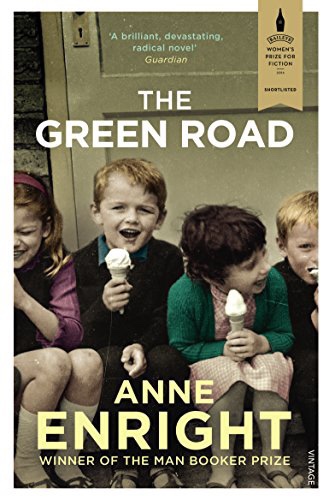
Anne Enright’s The Green Road (2015) has been languishing in the TBR for many years. I’m trying to get to grips with the toppling monster (hahahaha) as I had to acknowledge that any gains made in my book-buying ban of 2018 had been completely undone. So I’m really pleased this year’s Begorrathon finally prompted me to pull it from the shelf.
The Green Road is divided into two parts, Leaving, and Coming Home. The first part considers one of four siblings in turn, from 1980 onwards. Hanna as a small tearful child; Dan gradually emerging from the closet in 1991’s New York; Constance having a cancer scare back home in County Limerick in 1997; Emmet pursuing aid work in Mali in 2002.
Through each of these sections we learn about the individual, but also gain an emerging picture of the family, including their tempestuous self-focussed mother Rosaleen and silent father Pat. This means that when they all return home at the behest of widowed Rosaleen in 2005, we have a good idea of each of them and it’s intriguing to see how Christmas dinner will play out when they are all in the same room. The focus will be on the five rather than extended family:
“The only route to the Madigans Christmas table was through some previously accredited womb. Married. Blessed.”
The adult children approach the event with no small degree of trepidation. Rosaleen is not an easy woman. Demanding without explicitly stating what her demands are, while judging her children quite harshly. She doesn’t approve of Constance’s weight gain:
“Rosaleen believed a woman should be interesting. She should keep her figure, and always listen to the news.”
Or Dan’s values, influenced by his work in the art world:
“For an utterly pretentious boy, he was very set against pretension. Much fuss to make things simple. That was his style.”
Yet she loves them deeply and they must attend, for Rosaleen is threatening to sell the family home:
“Rosaleen was living in the wrong house, with the wrong colours on the walls, and no telling anymore what the right colour might be, even though she had chosen them herself and liked them and lived with them for years. And where could you put yourself if you could not feel at home in your own home? If the world turned into a series of lines and shapes, with nothing in the pattern to remind you what it was for.”
In this interview Enright says: “I don’t do plottedness. I do stories, I do slow recognition.” This is exactly it. There isn’t a lot of plot in The Green Road but it is such a compelling read. The characterisation is complex and wholly believable, with all of the family not behaving entirely well nor entirely badly. The relationships are so delicately drawn, with their mix of love and frustration, familiarity and the unknown, wonderfully evoked.
“Emmet closed his eyes and tilted his face up, and there she was: his mother, closing her eyes and lifting her head, in just the same way, down in the kitchen in Ardeevin. Her shadow moving through him. He had to shake her out of himself like a wet dog.”
I read The Green Road over a few hours and was sorry to come to the end, but it was perfectly paced and a wholly satisfying read. Enright is such a wonderful writer, able to articulate the small moments in life that can have such an impact even when they are barely recognised. She perfectly captures the immensity of the every day.
“She looked to her son, she looked him straight in the eye, and for a moment, Emmet felt himself to be known. Just a glimmer and then it was gone.”
You can read an interview with Enright talking about The Green Roadhere.
To end, an Irish film about family which I’ve enjoyed in the last week is the Oscar-winning An Irish Goodbye. For those of you who can get iPlayer, it’s available and only 23 minutes long (warning: there is a dead hare in the road – not gory – in the first few seconds of this trailer);
This is my contribution to Dewithon 2023, hosted by the lovely Paula over at Book Jotter. Dewithon is an annual celebration of literature by and about writers from Wales – I’ve interpreted the brief pretty broadly this year as I’ve picked a novel by a Dutch writer, but it evokes its North Wales setting beautifully.
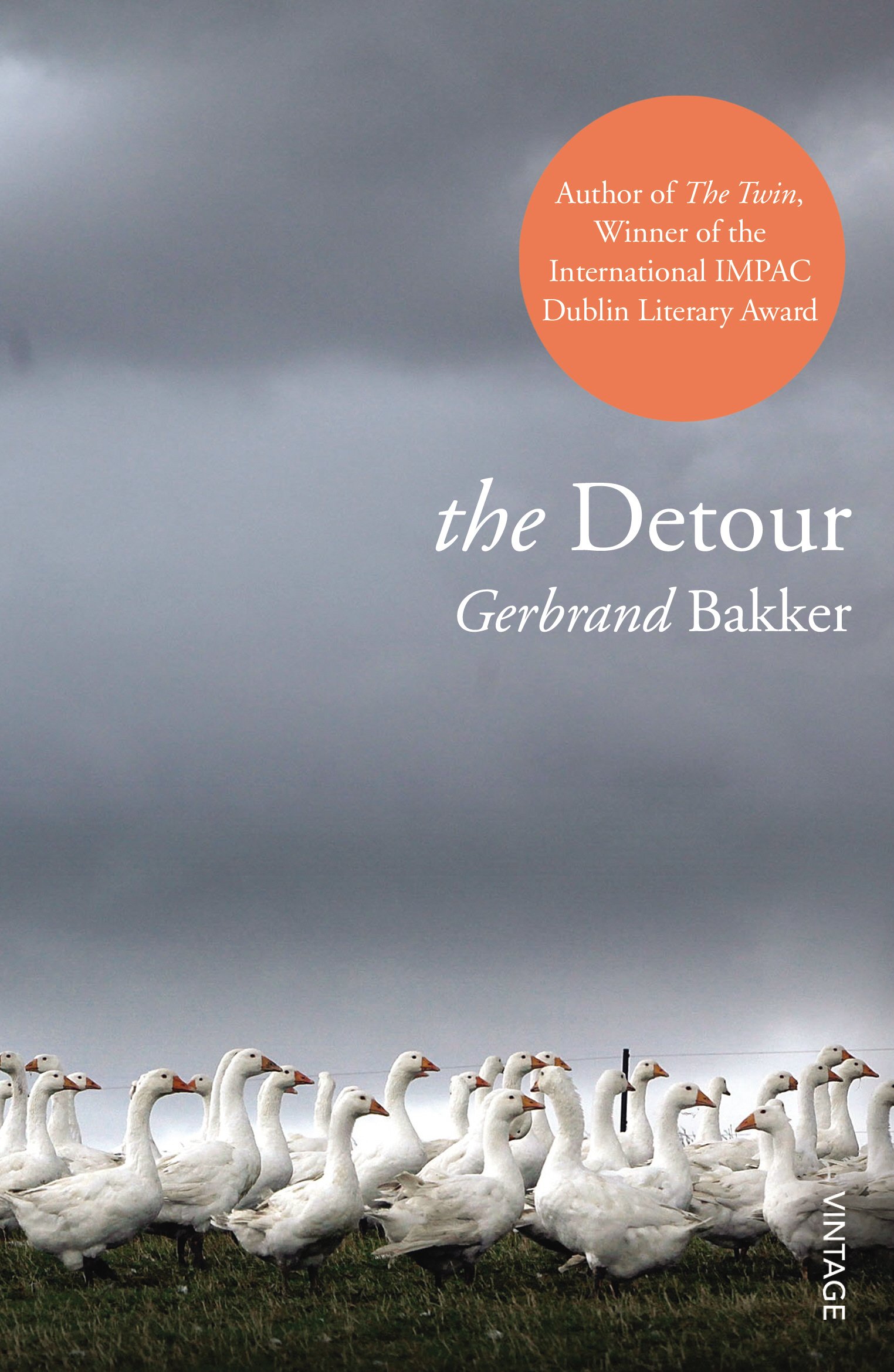
The Detour by Gerbrand Bakker (2010 trans. David Colmer 2012) is a quiet, melancholic novel, that shows without telling. I’d previously read The Twin by this author and found this similar in its themes of isolation and troubled relationships, and a refusal to judge its protagonists.
Emilie rents a cottage in rural Wales, fleeing from her husband in Amsterdam after her affair with a student at the university where she taught is exposed. Her backstory is revealed gradually, without explanations of how or why things happened. We just know how it is she has found herself somewhere unexpected and unplanned.
Bakker maintains a delicate balance between a recognisable portrait of this part of Wales, capturing its beauty without sentimentality; and then also having a slightly surreal, unpredictable element threatening to break through at various times too:
“It was just those geese; they were peculiar. Had she rented the geese too? And one morning a large flock of black sheep suddenly appeared in the field beside the road, every one with a white blaze and a long white-tipped tail. On her land. Who did they belong to?”
“Then she saw the mountain for the first time and realised what a vast landscape existed behind her house and how small an area she had moved in until that moment. […] The next day she bought an Ordnance Survey map at an outdoor shop in Caernarfon. Scale: 1-25,000.”
There is quite an emphasis on Emilie’s body and at first I approached this with some weariness, but it became apparent that this focus was there for a reason. Emilie seems to be very reliant on paracetamol…
Other characters cross her path: a slightly menacing neighbour, a doctor addicted to his cigarettes, a chatty hairdresser, as well as a young man, Bradwen, who turns up with his dog Sam and then never leaves. Emilie and Bradwen both seem to need something which the other provides, without anything being agreed or explicitly stated.
“I don’t think I want to know anything about him at all, she thought. He just has to be here.”
There is also a thread of tension as Emilie’s husband leaves home with a police detective in order to find her. His relationship with his in-laws provides some humour in what is otherwise quite a sombre novel (aside from some pithy observations on the vagaries of Escape to the Country):
“‘If you ask me, you’ve got plenty to hide,’ the mother said. ‘You turned out to be an arsonist, after all.’
The husband sighed.”
There is very little plot in The Detour but I found it a compelling read and whizzed through it in a couple of hours. Bakker trusts his readers not to need everything spelled out for them, and he creates complex, flawed characters that are presented as they are, without asking the reader to like or dislike them. He obviously has a great affection for Wales too, so I’m pleased to have read this for Dewithon 2023.
“That mountain, she thought, I have to keep an eye on Mount Snowdon, then I’ll know where I am.”
You can read an interview with Gerbrand Bakker about The Detour with Wales Arts Review here.
To end, this has absolutely nothing to do with the post, but I’m finally getting properly back to theatre-going after being somewhat intermittent since lockdown lifted. Recently I saw Standing at the Sky’s Edge, which I completely loved. Among a hugely talented cast, I thought Faith Omole particularly shone:
This my second contribution- just in time!- to the wonderful ReadIndies event which has been running all month, hosted by Karen and Lizzy.
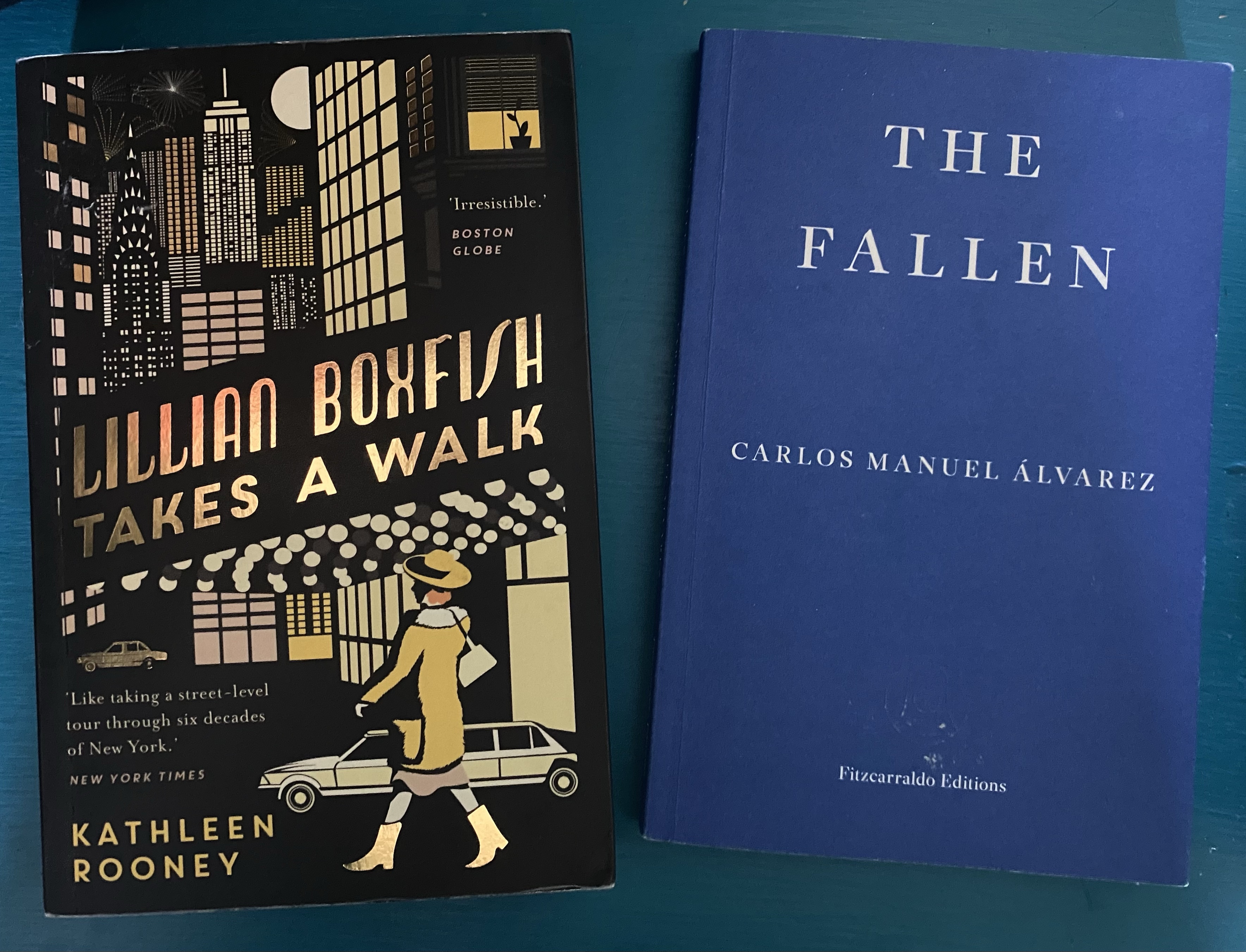
Initially I planned for this post to be two novellas published by Fitzcarraldo Editions, in honour of the event’s origins as Fitzcarraldo Fortnight. However, the second novella I read was so unrelentingly brutal and grubby – though expertly written and translated – that ultimately I couldn’t recommend it that much. So instead this post covers the initial Fitzcarraldo novella which I loved, and the independently published novel I read after the second novella in order to recover!
Firstly, The Fallen by Carlos Manuel Álvarez (2018 trans. Frank Wynne 2019) which forms a stop on my Around the Word in 80 Books challenge as it’s set in Cuba. The story follows one family over a short period, each member narrating a chapter at a time.
The mother, Mariana, is experiencing black-outs and fits, attributed to the treatment she had for womb cancer. Her husband Armando is a manager in a state-owned tourist hotel, committed to the communist ideals of the past even as the world moves on around him. His daughter María works with him and helps care for Mariana:
“I didn’t want to contradict her, I simply stood and watched. Just then, she hunched over and the strangest thing happened. Her face drained away, seemed to contract, like when you clench a fist, as though everything was drawing back around her nose. Her eyes fell, her forehead and mouth shrivelled and her cheeks began to wither. Then she burst into tears and collapsed.”
Meanwhile her brother Diego is completing his military service, devoid of any commitment to the cause:
“Armando, indefatigable, continued inoculating me with his positive energy, his moral code, his inexhaustible optimism, injecting me with a radioactive material that, on contact with the real world, simply exploded like acid in a burst battery and was transformed into frustration. I’m eighteen years old but I feel like an old man.”
All the characters are flawed in their different ways but all are recognisably human and sympathetic. I felt most for poor Armando, surrounded by corruption that nobody cared about but him:
“The truth is, they were firing him because he refused to accept others stealing, but since they couldn’t tell him that, they told him they were dismissing him for stealing,”
The contrast between Armando and his children effectively demonstrates the tension between the ideals of the past and the reality of the present. However, this is never done at the expense of characterisation the individual relationships. The tension within a family, vulnerable to disintegration as the health of its matriarch deteriorates, felt very real.
The polyphonic style builds up a picture of a loving family with all it’s frustrations, secrets and things left unsaid. It also demonstrates the differing responses of people to the same situation as we hear the same events given a different meaning by the various characters. This wasn’t at all frustrating as Álvarez managed to sustain an engaging and coherent narrative.
I really loved this novella. I thought the language was beautiful without obscuring the difficulties it was exploring for the family, and the device of using one family to explore wider Cuban society and history didn’t feel at all clunky or contrived.
“The acrid smell that tickled my grandfather’s nostrils still lingers. This is a pueblo fecund with the dry bittersweet dust of horseshit and with the sea a few kilometres away, even if we turn our back on it. The last street in the pueblo, the street that leads to the train station, the street where my grandfather settled, where my father started out in life, where later I started out, is broad but deserted, with much light on the asphalt, with light that trickles down the gutters and lighting the potholes, as though light were contained in a glass and the glass had tipped over. No one comes here.”
Secondly, the delightfully titled Lillian Boxfish Takes a Walk by Kathleen Rooney (2017) published by Daunt Books. This was a lovely escapist read – just the ticket after the second traumatic novella.
It’s New Year’s Eve in 1984, and the titular heroine is one year older than the century (although no-one knows this as she routinely lies about her age). Having moved to New York City when she started out on her career, she dons her fur coat (yuck) and her flame orange lipstick, to take a circuitous route around the city she loves – just about:
“The city I inhabit now is not the city that I moved to in 1926; It has become a mean-spirited action movie complete with repulsive plot twists and preposterous dialogue.
[…]
I love it here, this big rotten apple. I’m near my old haunts, my Sycamore trees, my trusty RH Macy’s.”
Lillian became an advertising copywriter for the famous store, the highest-paid woman in the industry in the 1930s, pioneering her own particular style:
“Nobody was funnier than I was, not for a long time, not for years. Mine was a voice that no one had heard speaking in advertisement before, and I got them to listen. To listen and then, more importantly, to act on what they’d heard.”
Lillian is based on the real person of Margaret Fishback, and the novel was written with the cooperation of Margaret’s family, with Lillian’s quoted copy actually belonging to Margaret.
Certainly Lillian’s memories of her life in New York seem authentic as she navigates a sexist working world unused to professional women. This may sound reminiscent of Mad Men, but I would say it’s not nearly as dark. It’s not totally light either – we learn Lillian had some very difficult times – but Lillian is resilient and peppy, and her voice rings out.
Like Mad Men though, Lillian Boxfish… brilliantly evokes a time and a place. You gain a wonderful sense of New York in the early decades of the twentieth century, with it’s rapid, optimistic growth, ever skywards.
“It was freshly built when Helen and I moved in, completed in 1926. The street noise then was different than now – everything was being constructed, going up, up, up. Progress is loud: riveters riveting, radios blaring.”
We hear about Lillian’s friends, her marriage to the dashing Max (contrary to all her plans) and raising her son Gian. But most of all we hear about Lillian’s relationship with herself, and it is one that has not always been easy:
“But there was no way to know, and no way to go back. I could not revise. I had been who I had been, and so I largely remained.”
Still, Lillian remains undaunted and in her ninth decade she remains interested in people. She encounters a few on her night-time perambulation, seemingly enjoying chatting about the mundane as much as she does the more dramatic encounters. Her career long behind her, she retains her pithy turn of phrase:
“Salt and pepper hair shellacked into an oceanic sweep above his leonine face. Like so many public television people, he was a former radio guide, with a voice made for broadcasting: even his name sounded like an avuncular chuckle.”
I really enjoyed my time with Lillian. Her voice was distinct, unique and entertaining. She described the love of her life – New York City – with clearsighted affection. A formidable woman, and a likable one.
“I am not going to stay off the street. Not when the street is the only thing that still consistently interests me, aside from maybe my son and my cat. The only place that feels vibrant and lively. Where things collide. Where the future comes from.”
To end, Lillian is haunted by a song she keeps hearing on the streets, a rap that she enjoys. Finally, it is identified for her:
This is a contribution to the wonderful ReadIndies event running all month, hosted by Karen and Lizzy.
I’ve also taken the opportunity to visit two more places on my much-neglected Around the Word in 80 Books challenge, which is not so separate as it might first seem. Deciding to read a book written by a person from each place I visit (rather than set there but written by an author from elsewhere), means I’m dependent on English language translations being available. Based on absolutely no evidence except my impression, it seems to me that independent presses are more willing to look far and wide for their lists.
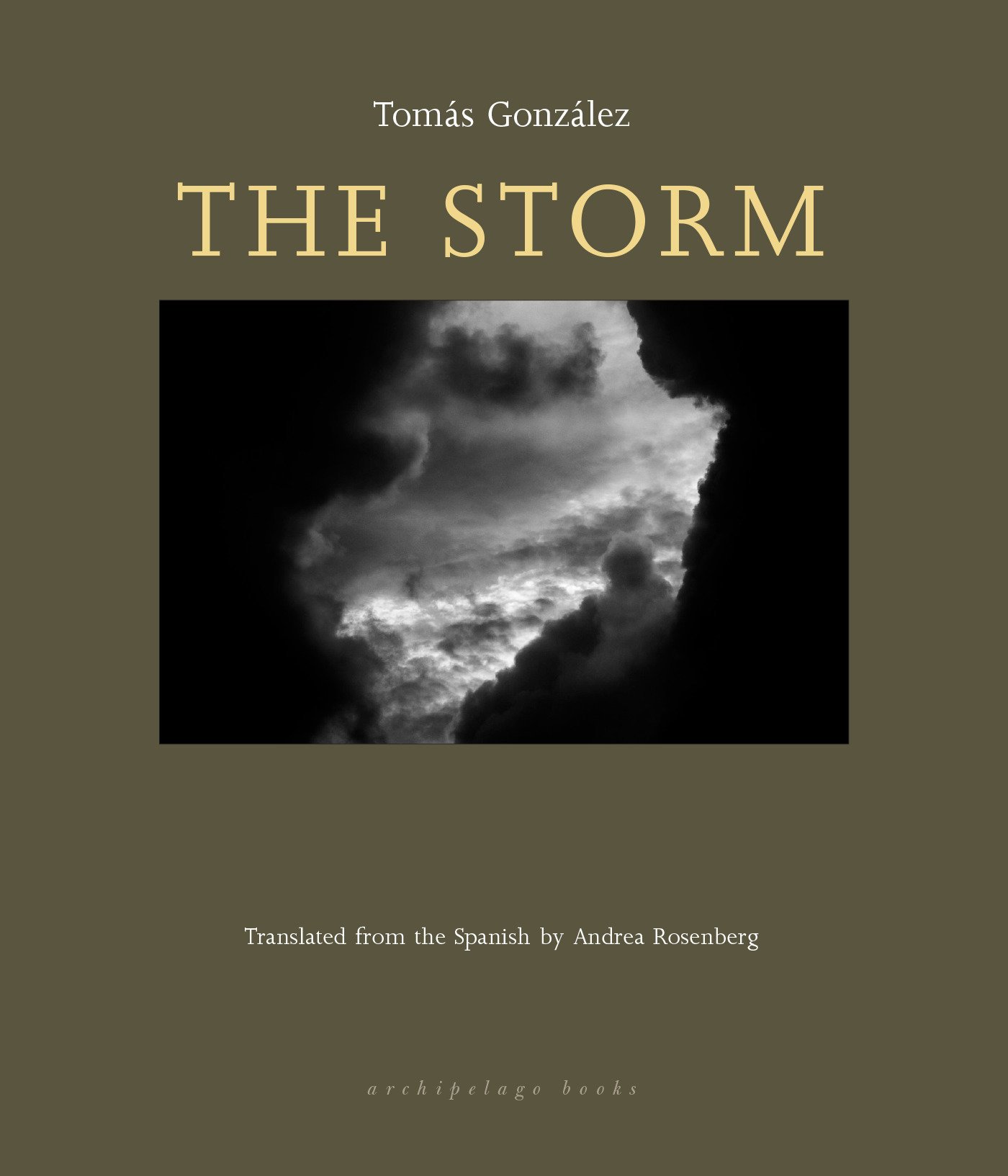
This is certainly the case for Archipelago Books, who publish my first choice of The Storm by Tomás González (2014, trans. Andrea Rosenberg 2018). They are a “not-for-profit press devoted to publishing excellent translations of classic and contemporary world literature.”
The Storm follows a family of hoteliers/fishermen as they set out for their usual catch, despite the impending titular weather. Set in a Columbian costal village, we also hear from the residents and tourists who are there the same night.
Mario and Javier are twins who despise their abusive father but are tied to him through where they live and how they earn their money. The novel opens with them loading their boat at the father’s insistence that they go out, despite the storm.
“To someone looking in from the outside, who couldn’t see the orange glow of hatred in the son’s belly nor the greenish flame of contempt in the father’s, time would seem to keep flowing the way it always had.”
The novella follows the three men out at sea and cuts back at various times to people in the village. The many voices didn’t feel clearly distinguished to me, but that may have been a deliberate choice as they form an effective Greek chorus. This includes the twins’ mother Doña Nora’s hallucinations. She is extremely unwell and the twins are loyal to her, blaming their hated father.
“Look, look at that sunset! he thought then, as if the orange on the horizon were presenting the conclusive argument against his brother’s darkness, his own darkness, and even the cruel and involuntary darkness of the madwoman back onshore.”
The Storm is determinedly unidealistic about family and coastal Caribbean tourist destinations – no pristine powdery white sand here – but it’s not depressing either. There is a humour and resilience, and even some compassionate moments between Doña Nora and the other permanent residents.
González expertly builds the tension in the novella, the family relationships reflecting the increased pressure and movement towards breaking point which occurs with a storm.
“Out at sea, the storm’s display intensified. Nobody really felt like talking, especially not about landscapes, so they didn’t say much, but now and then one of them would turn his head to look at it.”
Secondly, Love Novel by Ivana Sajko (2015 trans. Mima Simić 2022) which like The Storm is about the destructive force of family. They also have in common that both books are lovely paperbacks with French flaps and both have the translators names on the covers – hooray!
Love Novel is published by V&Q Books and it was very kindly sent to me by ReadIndies host Kaggsy, so this seemed the perfect time to read it! V&Q Books is the English-language imprint of Voland & Quist, a German independent publisher.
The title is ironic, as the relationship between the young couple, parents to a small child, (all unnamed) is filled with barely supressed violence and hatred. They are both struggling to stay afloat in the circumstances they find themselves. She was an actor but has stopped working to care for their child; he is an unemployed scholar of Dante, living in his own circle of hell as the (unnamed) country they are in deteriorates further.
The novel begins in media res as we are thrown into a screaming fight between the two:
“reacting like a typical female, typical by his standards, meaning excessive, hysterical and self-destructive, since she’d deliberately pulled her hair out, deliberately curled up in the pose of a crushed alarm clock and forced tears to her eyes as if to take revenge on him with his classic scene of domestic violence.”
Sajko expertly balances the domestic detail alongside more surreal images that never detract from the desperate, oppressive circumstances she is depicting:
“Words comparable to quicksand. Crumbling between their teeth, getting crushed into slimy sand, slipping from their lips like muddy bubbles with no meaningful content. Dripping down their chins. They should both look in the mirror and commit the image to memory. To make them sick of it. But they won’t. They’d rather keep the mud gurgling until they run out of oxygen…”
The writing is also very even-handed between the two protagonists. There is no sense of taking sides as they are both shown as trapped and powerless, flailing against forces beyond them. She is constantly indoors:
“Women walk a mile between walls, lose a whole night over some bullshit, put superhuman effort into it, and then, instead of breaking down, surrendering and finally resting, they stay bolt upright, as if they’d swallowed a broom or simply turned to stone. They even manage to wear clean clothes.”
While he concerns himself with wider economic and political circumstances, without agency:
“All the days he slobbered away on the couch watching live parliamentary sessions and listening to them tell him from the podium that it’s time to tighten his belt, or take out a loan, at the top up kind, for bread, milk and phone bills, because everything that could be looted has been looted and everything that could be sold has been sold, and all the money is now gone until someone lends him some; and so they warned him to be careful with that, too, because other people’s money is easily spent and hard to pay back”
The style Sajko uses, with those long running sentences, works extremely well in depicting an unravelling situation, full of uncontrolled reactions and little reflection. (Paradoxically, I suspect to use this style well requires a lot of control and reflection!)
What I especially liked about Love Novel is that it demonstrates how love doesn’t occur in a vacuum. Sajko takes an ordinary couple in ordinary circumstances, and shows how unlikely enduring love is, if human beings are not allowed to thrive. If the economic and political situation of your country is entirely stacked against you, trying to cling onto your humanity and express love for another can seem an act of resistance, one that not everyone will have the strength for.
“While they still believed that love saves, that love feeds, that love fixes what’s broken, that love offers tacit answers to the most difficult questions and that it is, thank God, free.”
“And it didn’t matter that they tightened their belts down to the size of a noose”
Love Novel is undoubtedly a tough read, but it is not resolutely depressing. There is resilience there, and some hope, however qualified.










 madame bibi lophile recommends