The President’s Hat (2012 trans. Gallic Books 2013) 200 pages & The Readers’ Room (2020, trans. Gallic Books 2020) 172 pages – Antoine Laurain
Two novellas today, by Antoine Laurain, who I suspect writes of a France that doesn’t exist. Like Richard Curtis and the England he portrays, the stories evoke an undemanding version of a country, rather than the realities of life there. Still, Laurain provides some light, whimsical escapism which is very welcome at the right time.
In The President’s Hat, Francois Mitterand’s headwear changes the lives of everyone who comes into possession of it. The first is Daniel, who sits next to the President in a bistro:
“The important events in our lives are always the result of a sequence of tiny details. The thought made him feel slightly dizzy – or was it the fact that he’d drunk a whole bottle of Pouilly-Fuissé?”
When the statesman leaves his hat behind, Daniel takes it and finds wearing it gives him a new-found surety, particularly in work meetings:
“With unprecedented confidence, he watched himself negotiate the complex layers of diplomacy with the ease of a dolphin leaping through the waves.”
He is bereft when he leaves the hat behind and Fanny picks it up, subsequently finding herself able to break with her married lover Édouard for good:
“In the space of a few moments, the felt hat had emerged as the source of strength she had waited so long for.”
Perfumier Pierre recovers both himself and his olfactory flair:
“It was like bumping into an old friend he hadn’t seen for a long time. The mirror reflected back a well-known face, a man who looked like Pierre Aslan.”
And my favourite, Bernard, swops his morning read of Le Figaro to Libé and discovers an appreciation for street art:
“As he walked back under the archways of the Louvre, he could feel a profound change taking place within him. More than a change, a metamorphosis.”
Nice things happen to nice people, the less nice people suffer only marginally, and everything works out in the end. I really enjoyed the twist at the end too. A fun, witty read.
The Reader’s Room opens with book editor Violaine Lepage surrounded by the great and good of literature: Proust, Houellebecq, Perec, Woolf and Modiano. She’s been in a plane crash and lies unconscious in a coma. When she awakes the famous authors aren’t present but things remain unreal – she doesn’t recognise her own clothes, forgets that she smokes, and is entirely unaware that she used to steal compulsively.
On top of this disorientation, her publishers have had a novel nominated for the Prix Goncourt: Sugar Flowers by Camille Désencres. The problem with this is two-fold: no-one knows who Camille is, and the murders in the book are being enacted in real life, in a way that suggests a link to Violaine’s past:
“Camille, please be brave and reveal yourself. I don’t know who you are, but you know many things. Who on earth told you about sugar flowers.? What else do you know? How are you linked to Normandy?”
The Readers’ Room had a different tone to the other Laurain’s I have read. The murders are linked to a gang-rape in the past and there is a police procedural element running through the investigations of Rouen police officer Sophie Tanche, but overall the mystery element is pretty slight.
For me, the main enjoyment was the gently teasing portrayals of those in the book industry – the publishers, authors, editors and prize-givers.
“At twenty-four, Marie was the youngest member of the readers’ room. She was still at university and was doggedly writing her thesis on ‘The Written Word or the Inert Vectors of Narration’. Marie had decided to identify all the inanimate objects which have played an important part in works of fiction across the last millennium – such as the specimens in Yoko Ogawa’s Ring Finger, the madeleine in Proust or the little golden key in Bluebeard. She had classified them all by material: fabric, leather, glass, metal, wood…”
So, a bit of departure but still plenty there for those wanting a brief escape into Laurain’s slightly fantastical, comic world.
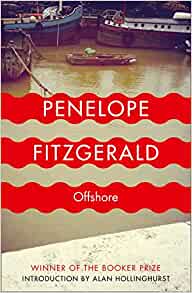
Penelope Fitzgerald won the Booker prize for this novella, in which she draws on her experience of living on a houseboat on the Thames at Battersea (which sank twice). She set it eighteen years earlier in 1961, at which point Battersea was not nearly as salubrious as it is now (cf: Up the Junction by Nell Dunn).
The houseboat inhabitants are all struggling in a way that gives rise to water-based imagery:
“The barge dwellers, creatures neither of firm land nor water, would have liked to be more respectable than they were. They aspired towards the Chelsea shore, where, in the early 1960s, many thousands lived with sensible occupations and adequate amounts of money. But a certain failure, distressing to themselves, to be like other people, caused them to sink back, with so much else that drifted or was washed up, into the mud moorings of the great tideway.”
Fitzgerald evokes the setting and the characters so well without wasting a word. Opening at a meeting of the barge dwellers we meet them all, including upright Richard, and savvy, kind Maurice:
“Richard was quite correct, as technically speaking they were all in harbour, in addressing them by the names of their craft. Maurice, an amiable young man, had realised as soon as he came to the Reach that Richard was always going to do this and that he himself would accordingly be known as Dondeschiepolschuygen IV, which was inscribed in gilt lettering on his bows.
He therefore renamed his boat Maurice.”
The portrait of Maurice surprised me in being more progressive than I would expect for the time. He is a sex worker and brings customers back to his barge, where he also allows a decidedly shifty friend called Harry to store stolen goods. Maurice is never judged harshly and in fact is probably the most sympathetic of all the characters, providing real friendship to the others.
Nenna is living on Grace, seemingly having half-left her husband, who is in north London. Her daughters have adapted to their new life well, mud-larking and flogging their finds.
“You know very well that we’re two of the same kind, Nenna. It’s right for us to live where we do, between land and water. You, my dear, you’re half in love with your husband, then there’s Martha who’s half a child and half a girl, Richard who can’t give up being half in the Navy, Willis who’s half an artist and half a longshoreman, a cat who’s half alive and half dead …’”
Offshore isn’t plot-heavy, although events do build towards a surprising denouement. Rather it is a snapshot in time of people trying to find a place for themselves beyond conventional safety. For each of them, there is a sense of desperation but it lives alongside resilience, hope, and friendship.
“There isn’t one kind of happiness, there’s all kinds.”
Maigret Mystified – Georges Simenon (1932, trans. Jean Stewart 1964) 139 pages
This is the first Maigret I’ve read, despite Simenon being such a prolific writer and despite my love of golden age detective fiction. I picked it up in a pleasingly battered old green Penguin edition and I enjoyed it greatly. I’m sure it won’t be the last time I accompany the insightful French detective in his ruminations 😊
This may well be the shortest post I ever write, given that it’s about a novella and a mystery, so I want to avoid spoilers!
Maigret is called to the scene of a murder in an office of a pharmaceutical company, Doctor Rivière’s Serums. Monsieur Couchet, the owner, has been shot dead. The mystifying element is that he was also robbed of 360,000 francs, but his chair was jammed against the safe. So did he face his murderous thief? Or did he not know of the theft? Did the same person carry out both crimes?
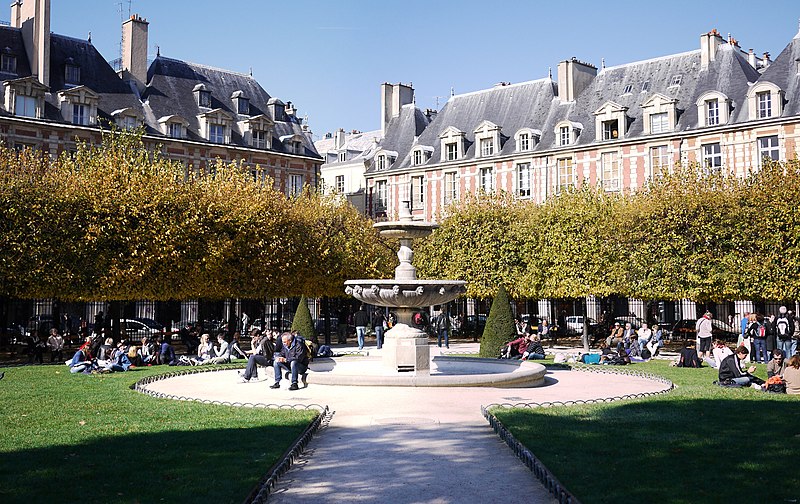
As the office is adjacent to a block of flats, Maigret must interview possible witnesses from the various homes in Place des Vosges.
There is the concierge who called the police; Madame Martin who seems to torture her husbands with their failure to live up to her expectations (the first of whom was the murdered man, their son now self-medicates with ether and lives close by); Mathilde who eavesdrops on everyone; new parents the de Sant-Marcs…
There are also the lovers of the victim to contend with: his second wife and his girlfriend Nine, a cabaret dancer, the portrayal of whom is pleasingly non-judgemental.
I suspect this isn’t the greatest Maigret offering, but it is a quick, entertaining and atmospheric read. I also found it a welcome antidote to the overly convoluted plot lines of many contemporary detective dramas – much as I enjoy those, it was a nice change to just see Maigret get on with it, in no time at all.
“ ‘You old rascal, Couchet!’
The words had sprung to his lips as if Couchet had been an old friend. And he felt this impression so strongly that he could not realise he had only seen him dead.”
A previous English title used for this mystery was The Shadow in the Courtyard, which to me is a much better. After all, at 139 pages, Maigret isn’t mystified for long…
“It was ten o’clock at night. The iron gates of the garden were shut, the Place des Vosges deserted, with gleaming car tracks on the asphalt and the unbroken murmur of the fountains, the leafless trees and the monotonous outline of identical roofs silhouetted against the sky.”
To end, this year sees a cinematic outing for Maigret:
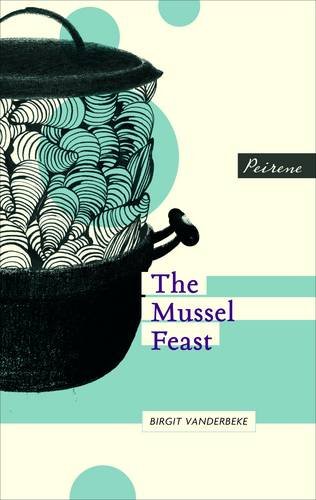
Peirene Press are one of my favourite publishers, with a focus on European contemporary novellas which so far have given me some wonderful reading experiences. The Mussel Feast is no exception, as it carefully and precisely builds a picture of a family tyrannised by the father, over the course of one evening.
Narrated by the teenage daughter of the family as she prepares the titular celebratory meal alongside her mother and brother, they await the return of their father who has bagged a promotion. The daughter doesn’t much like mussels, but it is how the family traditionally celebrates.
“Anyway, the noise came from the pot and as I glanced over I couldn’t help looking at the clock, too: it said three minutes past six. And at that moment my mood changed abruptly. I stared at the noisy pot […] it was a distinctly strange noise, which made me feel creepy; we were already twitchy and nervous, and now there was this noise.”
The father is late back, and the narrator reflects on what is happening that evening and on what has gone before:
“He couldn’t stand my mother’s knackered face, and so she switched to her after-work face, which she would paint on quickly in the bathroom at half-past five, before my father came home. But this after-work face only lasted for an hour and needed reapplying.”
Everyone in the family remains unnamed, fitting with thesense that they are all trying to fulfil a role for the father and that who they actually are is of secondary importance:
“We all had to switch for my father, to become a proper family as he called it, because he hadn’t had a family, but he had developed the most detailed notion of what a proper family should be like, and he could be extremely sensitive if you undermined these notions.”
The father is a deeply inadequate man, ashamed of his past in the GDR, and trying to convince his family of his superiority. His children don’t conform to gender stereotypes which annoys him. His wife isn’t pretty enough by his standards. The fact that he squanders their money and is fairly useless all round, is by-the-by:
“My mother earned money and did menial work, boiling the nappies in a huge pot, and cooking and shopping and children, all of which drove him nuts; my father was not cut out for such trivial jobs , and back then we would have frozen if my mother hadn’t lugged sacks of coal.”
By the time the following passage came I already had a clear idea of what was going on in this family, but I still found the matter-of-fact tone in describing such abuse truly shocking:
“He was extremely assured in his taste; he didn’t like his taste being questioned. I couldn’t bear the wall unit, as I told them that evening, due to my head having been smashed against it on a number of occasions.”
The tension in the novella builds expertly as, like the family, we wait for the father to return. The ending is ambiguous, but we know there are huge ramifications, because at the start of the novella the narrator tells us:
“what came in the wake of our abortive feast was so monumental that none of us have got over it yet”
Birgit Vanderbeke wrote this just before the fall of the Berlin Wall because “I wanted to understand how revolutions start.” In The Mussel Feast, it is a long time coming and also a matter of a few moments:
“Suddenly I no longer wanted him to come home, […] Mum looked at me, not as horrified as I’d expected, but with her head to one side, and then she smiled and said, well, we’ll see, and she didn’t sound as if she’d find it surprising or even terrible if he didn’t come home.”
The Mussel Feast has become a set text in Germany and deservedly so – the domestic setting is completely compelling but also has wider resonance which it carries lightly, the metaphorical never undermining the portrayal of abuse.
It’s always with some trepidation that I start a Novella a Day in May project. Last year I couldn’t face it at all (pandemic testing my resilience, work pressure, cat deaths taking a toll – even so I know I’ve been very lucky). But I seem to be able to read more now, so fingers crossed…
Also, I never run NADIM as an event because I never thought anyone else would want to undertake such a task, but I’m delighted that this year I will be joined by Simon at Stuck in a Book! So do join us for lots of novella love 😊
Away we go!
Without Blood – Alessandro Baricco (2002, trans. Ann Goldstein 2004) 87 pages
Without Blood is a short, sharp shock. It opens with a brutal, bloody and deadly attack on Nina’s family when she is a small child.
Men arrive at the remote farmhouse where she lives with her father and brother. Her father helps her to hide in the cellar, but she hears them accuse him of the torture of prisoners during the (unnamed) war.
“Nina closed her eyes. She flattened herself against the blanket, and curled up even tighter, pulling her knees to her chest. She liked to be in that position. She felt the earth, cool, under her side, protecting her – it would not betray her. And she felt her own curled up body, folded around itself like a shell.”
Her brother fires a gun at the men and is killed. One of the soldiers, a young man called Tito, sees Nina under the trapdoor and keeps quiet. Nina is taken in by a local man who then bets her away at cards when she is a teenager. Adult Nina devotes herself to revenging the death of her family.
Barrico raises a lot of big questions in this novella but wisely doesn’t attempt to find answers. The nature and purpose of war; who is guilty and to what extent; the brutalisation of humans; the justification and consequences of violence; revenge versus redemption…
“There were a lot of things we had to destroy in order to build what we wanted, there was no other way, we had to be able to suffer and to inflict suffering – whoever could endure more pain would win, you cannot dream of a better world and think it will be delivered just because you ask for it.”
When Nina finds Tito fifty-two years later, it is not easy to predict what will happen. They have both been irrevocably changed by the events of that night, events which have overshadowed the rest of their lives and bound them together throughout their separation.
“The man thought the way she spoke was strange. As if it was a gesture she wasn’t used to.”
It is a quick read in length but Without Blood invites longer consideration.
This is my second contribution to this week’s 1954 Club, hosted by Simonand Kaggsy, and a chance to revisit Barbara Comyns, having really enjoyed Our Spoons Came From Woolworths.
The opening line of Who Was Changed and Who Was Dead may have usurped The Crow Road* to become my favourite beginning to a novel ever:
“The ducks swam through the drawing-room windows.”
Thus the scene is set for an unsettling domestic tale where nothing can be taken for granted.
The Willoweed family live in an English village where the river has just flooded in June. Then follows pages of dead animals, which I was prepared for, having read Jacqui’s wonderful review but I was exceedingly relieved when it ended (unfortunately there was also a horrible cat death later). Much as I could have done without the litany of death, it sets the tone for the darkness that follows.
In 1911 Emma, Dennis and Hattie live with their father Ebin and their grandmother who rules with a rod of iron. She is permanently furious, which Ebin attributes as follows:
“It’s all this cleaning, I suppose; but she can’t expect me to help; my hands are my best feature, and they would be ruined.”
Ebin does very little apart from make vague overtures towards his children’s schooling and sleep with the baker’s wife.
“‘Father makes me hate men,’ thought Emma as she pumped water into a bucket.”
This is not an idyllic pre-war rose-tinted existence. Money is tight, relationships are tense, there is sexual deceit, violent undercurrents that threaten to overwhelm, and macabre power games. Grandmother Willoweed treats the servants horribly, but Old Ives the handyman is a match for her:
“They always exchanged birthday gifts, and each was determined to outlive the other.”
Their lives are disrupted by a mysterious illness that sweeps through the village. People kill themselves following horrific delusions. By the time the cause of the illness has been identified, tragedy has touched the family and violence has ensued. As the title tells us, lives will have changed irrevocably one way or another.
I don’t want to say much more as the joy of reading Barbara Comyns is being so unsettled as to have no idea which way she is going to take you. There’s no-one like her; her view is so singular, so disturbing and yet so compelling. I found Who Was Changed and Who Was Dead brutal and horrifying, and also funny and enchanting. I couldn’t look away.
The novel picks up precisely where The Sugar House left off, with Clara and Archie having decided to separate. Clara moves back to her parents’ house to live with them and her grandmother in West Kensington. As she packs up her old life, she feels disassociated:
“She had the odd impression that it was not she who was stripping hangers and throwing armfuls of clothes into suitcases but some callous, efficient stranger. She herself was lying on the unmade bed, staring blankly at the cracks in the sugar-pink ceiling.”
This sense of disassociation deepens and broadens throughout the novel. When Clara announces to her mother “It’s a great relief not to have any feelings. I’m certainly not going to risk getting involved with anyone again.”
The reader of course knows what will happen. She attends a party with her friend Clive Heron (an intriguing character, my personal theory is he works for MI5) and falls instantly in love with the dashing soldier Richard Crayshaw.
What follows is such a clever exploration of someone slowly – then suddenly – unravelling. Clara stops eating and sleeping, she has a “strange sense of heightened perception” ever since she danced with Richard. She believes they communicate telepathically, a belief supported by others, but then she thinks the photographs of dead soldiers in her father’s study are speaking to her. She has gone from no feeling:
“Null and void. Null and void. She sat staring at the roses on her bedroom wall-paper, saying the words over and over again until she was half hypnotised.”
To too much feeling. At first her mania is disguised by being in love – plenty of people feel heightened and have reduced appetite and problems sleeping in the excitement of new romance. Certainly that is what Clara’s mother Isabel believes.
But gradually the reader begins to realise that Clara is really quite unwell. As Beyond the Glass is told from Clara’s perspective this takes some time, but it dawns us through others’ responses to her. In this way it is reminiscent of Wish Her Safe at Home, another excellent novel about severe mental illness.
Eventually she is ‘certified’ – made an in-patient at a public mental health hospital. The descriptions of the environment and the practices make me wonder how on earth anyone would have a hope of ever becoming well again. Thankfully mental health services, though chronically underfunded, are very different now.
I was so impressed with how White conveyed Clara’s disorientation and confusion, without making the narrative confusing and disorienting at all:
“Time behaved in the most extraordinary way. Sometimes it went at tremendous pace, as when she saw the leaves of the creeper unfurl before her eyes like a slow motion film, or the nurses, instead of walking along the passage, sped by as fast as cars. Yet often, it seemed to take her several hours to lift a spoon from her plate to her mouth.”
During her deep distress there are also echoes of events that occurred earlier in the narrative, particularly in The Sugar House, showing with the lightest of touches that her severe ill health has been building for a while:
“Since her marriage she had had an increasing sense of unreality, as if her existence had been broken off like the reel of a film.”
The recurring images of mirrors and glass as barriers reminded me of Plath’s The Bell Jar. Like The Bell Jar, this novel is based on the personal experiences of the author.
“She had an instantaneous vision of herself as someone forever outside, forever looking through glass at the bright human world which had no place for her and where the mere sight of her produced terror.”
Beyond the Glass ends on a note of hope, and faith, drawing on the Catholic thread that runs through all four novels. At times Clara’s Catholicism is more strongly felt in the story than at others, reflecting the character’s experience of her faith. I’m not religious but I felt the focus on this theme ended the novel and the series perfectly.
It’s so impressive that all the novels in the quartet are distinct and stand individually, while also developing across the sequence a fully realised portrait of Clara, and her family.
I’ve really enjoyed immersing myself in Clara’s life and I’m going to miss her (and her much-maligned mother, a great piece of characterisation). I wish Antonia White had continued writing her story.
“Something told her that, when they saw her again, they would know as well as she did that she no longer belonged to the world beyond the glass.”
To end, I finished my previous 1954 Club post with a filmed musical, so here’s another. The film of The Pajama Game is from 1957 but the Broadway show first appeared in 1954:
The 1954 Club is running all this week, hosted by Simon and Kaggsy. Do take a look at the posts and join in if you can, the Club weeks are always great events 😊
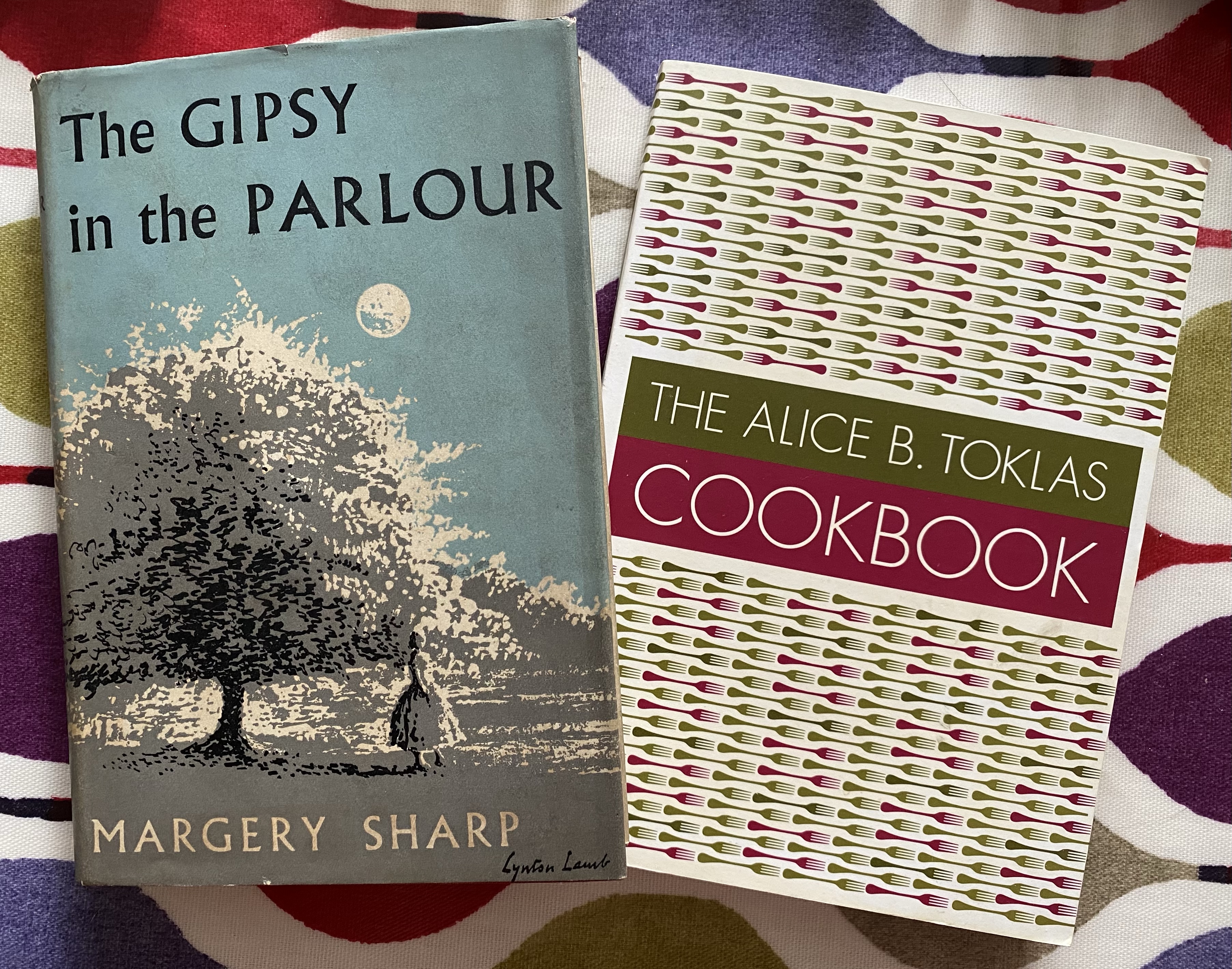
For this contribution, I thought I’d look at two books on a domestic theme. Firstly, The Gipsy in the Parlour by Margery Sharp. Despite the concerning title I can confirm while there is definitely dated language, it’s not prevalent throughout the novel.
The story is set in the 1870s and told from the point of view of an unnamed cousin of the family, looking back on her childhood as an adult now in the 1920s. This means Sharp manages a 11 year-old’s point of view without getting too caught by it, and it works well.
The child loves visiting her family in Devon, leaving behind the fog and grime of London for a West Country summer. She also leaves behind her cold, distant parents for her beloved aunts, Charlotte, Grace and Rachel. They have all married into the Sylvester family and form a capable team who run the domestic affairs of the farm with good-natured hard work.
“Nature had so cheerfully designed them that even wash-day left them fair-tempered: before the high festivity of a marriage their spirits rose, expanded and bloomed to a solar pitch of jollification.”
At the start of the novel they await the arrival of a fourth sister-in-law, who is going to marry Stephen Sylvester, the kindest of the male members of the family (who feature very little in the child’s world, due to their “effortlessly preserved complete inscrutability”). However, when Fanny Davis arrives, she is very different to the rest of the family – thin and pale rather than hale and hearty.
“She seemed to have nothing to say. She had neither opinions nor tastes. She hadn’t even an appetite. The amount she left on her plate would have fed a plough-boy – I believe often did feed a plough-boy”
The family know very little about Fanny “the most that could be discovered was a sort of shadow-novelette” but they welcome her in. However, it isn’t long before trouble strikes. Although Fanny attends a dance with family, whirling around quite happily, it isn’t long before she enters a Decline, and has to spend her days laying in the parlour.
The 11 year-old enlightens us:
“I knew a good deal about declines. A friend of my mother’s had a daughter who had been in one for years. Declines also occurred frequently in cook’s novelettes”
And
“No common person ever went into one. Common persons couldn’t afford to. Also, there needed to be a sofa. No sofa, no decline.”
As the narrator boldly plans to cure Fanny, in the manner of an Angel-Child in a novelette, the reader knows more is going on than the characters realise. Quite what Fanny is up to only gradually emerges, and in the meantime Sharp shows how destructive one person can be for previously happy family. Fanny may be persistently reclined but she is never passive, and she causes a great deal of stress and heartache for the Sylvesters.
Meanwhile, the narrator back in London is making a great friend of Clara Blow, the sort-of landlady to her handsome cousin Charlie. Despite Fanny’s frequent assurances to the young girl that they are “special friends”, it is loyalty to Clara that causes conflict for the narrator and makes her question what is actually happening back in Devon.
Will Fanny’s machinations come to light? Will the Sylvester family find a way back to happiness? Will everything work out in the end? Despite this being not as broadly comic as other Sharp novels I’ve read, I was never in any doubt that all would come right. Which it did 😊
Secondly, a slight departure, as I’m going to review a cookery book. Except it’s not really a review of the recipes in The Alice B Toklas Cookbook. There are plenty of recipes, but the book is a memoir too, which is what makes it all the more interesting. Alice B Toklas was the life-partner of Gertrude Stein, and as she reminisces about growing and eating food, she records their life together and meals taken with the many well-known artists who crossed their path, such as decorating a bass fish to entertain Picasso (we’ve all been there, desperately trying to create piscine entertainment for a Cubist in a Rose Period).
Image from wikimedia commons
She also recalls living through France during the war: “In the beginning, like camels, we lived on our past.” They live through rationing: trading cigarettes with soldiers, and Gertrude Stein acquiring food on the black market through force of personality.
“When in 1916 Gertrude Stein commenced driving Aunt Pauline for the American Fund for the French Wounded, she was a responsible if not an experienced driver. She knew how to do everything but go in reverse.”
Aunt Pauline is their Model T Ford, succeeded by Godiva:
“Even though Godiva was what a friend ironically called a gentleman’s car, she took us into the woods and fields as Auntie had. We gathered the early wildflowers, violets at Versailles, daffodils at Fontainebleau, hyacinths (the bluebells of Scotland) in the forest of Saint Germain. For these excursions there were two picnic lunches I used to prepare.”
But just in case this excursion sounds too idyllic…
“Back in Godiva on the road again it was obvious that somewhere we had made a wrong turning. Was Godiva or Gertrude Stein at fault? In the discussion that followed we came to no conclusion.”
One of my favourite stories was of Alice making raspberry flummery for a friend in the resistance who has a sweet tooth. It leads to a conversation about gelatine, the friend borrowing several sheets. Alice later finds out this is because it is essential for making false papers.
This is not the book to read if you want some easy, quick recipes to cook after work (and of course Alice and Gertrude had domestic staff to help them, several described in the book). There is more than one recipe that calls for 100 frogs legs, but as Maureen Duffy points out in her introduction, is that the legs of 100 frogs, or 100 legs in total? There’s also the detailing of how to prepare a leg of mutton by injecting it with orange juice and brandy for a week.
In case it’s not already apparent, this is also not the book to support a plant-based diet. Toklas acknowledges this, naming Chapter 4 “Murder in the Kitchen”. A vast quantity of eggs seem necessary to many recipes. When I came across a recipe for frangipane tart I thought I’d finally found something I’d enjoy, but it was like no frangipane I’d ever encountered. However, Chapter 5Beautiful Soup, was quite tempting with its descriptions of various ways to make gazpacho.
I didn’t know this before I read the book, but the interwebs tell me that the recipe for haschich fudge is the most famous. Apparently the first publisher didn’t realise what it was and so allowed it to be printed, perhaps misled by Alice’s mischievous suggestion that “it might provide an entertaining refreshment for Ladies Bridge Club or a chapter of the DAR”.
My favourite chapter was 13, “The Vegetable Gardens at Bilignin”. Alice’s passion for the garden shone through:
“For fourteen successive years the gardens at Bilignin were my joy, working in them during the summers and planning and dreaming of them during the winters”
Her descriptions of the gardens and produce were absolutely lovely:
“The day the huge baskets were packed was my proudest in all the year. The cold sun would shine on the orange-coloured carrots, the green, the yellow and white pumpkins and squash, the purple eggplants and a few last red tomatoes. They made for me a more poignant colour than any post-Impressionist picture.”
Again, the love of Alice’s life undercuts the romanticism:
“Gertrude Stein took a more practical attitude. She came out into the denuded wet cold garden and, looking at the number of baskets and crates, asked if they were all being sent to Paris, that if they were the expressage would ruin us.”
There are a million quotable and notable passages in this cookbook. If you’ve any interest in Stein and Toklas, in interwar France, or in generation perdu, I’d urge you to get this. You can just dip into it and there’s always something to entertain, but probably not much to cook…
“From Madame Bourgeois I learned much of what great French cooking was and had been but because she was a genius in her way, I did not learn from her any one single dish. The inspiration of genius is neither learned nor taught.”
To end, Dorothy Dandridge in an Oscar-nominated performance in 1954’s Carmen Jones:
This week I’m looking at two novels by Antonia White, prompted by the pending arrival of next week’s 1954 Club, hosted by Simon and Kaggsy. When I looked at the TBR for 1954 novels, one that I had was Beyond the Glass. However, it’s the final novel in a quartet, and I hadn’t read the middle two…
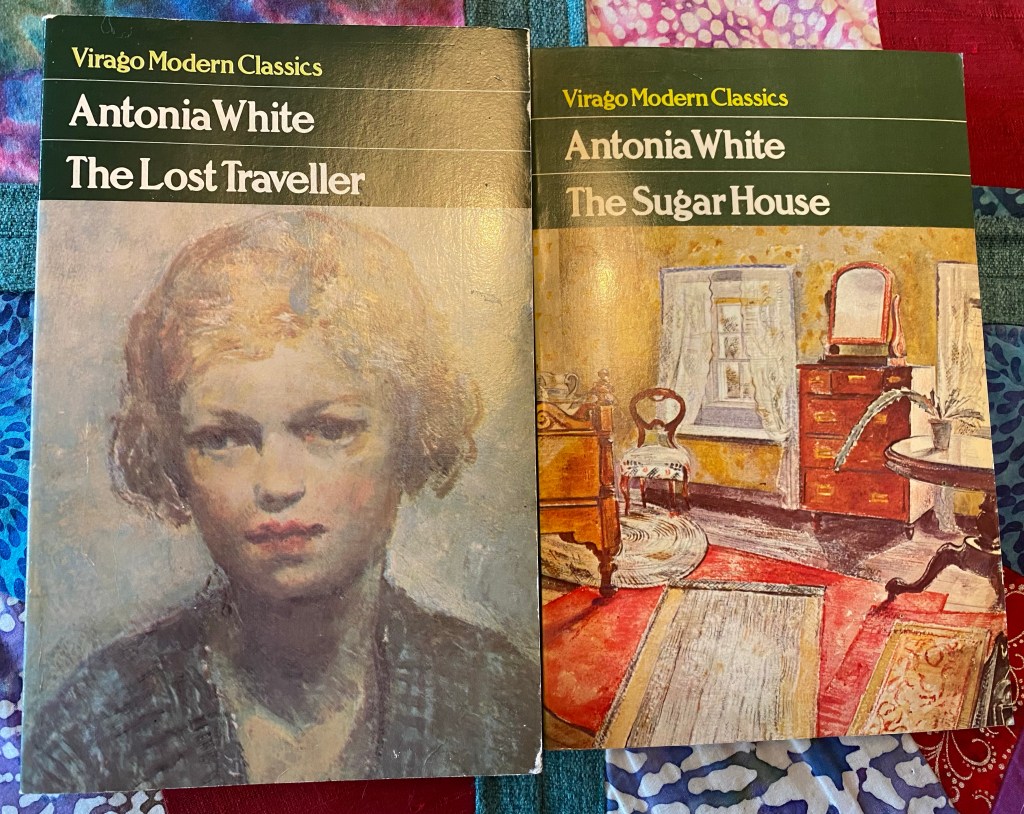
It’s been six years since I read Frost in May and I’m not sure why it’s taken me so long to pick up Antonia White again, because I really enjoyed that first instalment. Frost in May was written in 1933, and White didn’t continue the story again until 1950, going on to write the last two in the quartet in 1952 and 1954.
The Lost Traveller (1950) sees Nanda from Frost in May renamed Clara and returning to her childhood home in West Kensington to attend the funeral of her paternal grandfather. Her father is bereft, but in 1914 emotions were to be controlled absolutely:
“Suddenly he was touched by an old fear of which he had never spoken to anyone, the fear that one day he might lose all control of his mind. Against that there was only one weapon; his obstinate will.”
Mr Batchelor is a teacher who harbours academic ambitions for Clara. His feckless wife Isabel wants Clara to be beautiful. She is both of these things, but not to the extent that either of her parents would like. The complex family relationships are brilliantly portrayed by White: the mismatched parents, the passive aggressive power struggles between Isabel and her mother-in-law (“Mrs Batchelor’s face … assumed a look of patient malice.”) and in the middle of it all, adolescent Clara.
“At home, to be silent was taken for a sign one was sulking.”
After her mother is ill with the mysterious women’s problems that were always so common and yet so unspoken, Clara’s father can no longer pay her school fees (the NHS was over 30 years away) and so she has to leave Catholic boarding school to attend a local Protestant school. She’s actually quite happy there, and makes two friends, although neither of them are Catholic, to the concern of her convert parents.
“Isabel, who would never have come to such a decision on her own, was willing to follow him. Catholicism seemed to her a poetical and aristocratic religion.”
Clara’s religion plays a large part in The Lost Traveller, as she tries to establish what it means for her as a young adult, away from the structures of her convent school.
Of course, with the year being 1914, readers know what the family is about to live through. However, when war breaks out, the only person it really affects is Mr Batchelor, as he sees the population of his old boys steadily wiped out.
“If only he could have gone to the front with them, he would have been completely happy.”
Although Clara prides herself on not being as vacuous as her mother, in some ways she is just as self-focussed and oblivious:
“Since she had nobody at the front in love with her and was too young to be a nurse or W.A.A.C, Clara refused to take any interest in the progress of the war.”
So while the war takes place somewhere else, Clara struggles with her sense of self, trying to work out who she is and how to manage the tumultuous feelings of teenage life in a family where so much goes unspoken. Her father is devout, strict, and given to tempers. Clara adores him and yet there is distance between them:
“Why couldn’t he understand without being told that there was nothing she would not do, cut her hair off, hold her hand to the fire, if it would bring any comfort? Why couldn’t he realise that the one impossible thing was to speak?”
Meanwhile her mother is struggling with her life choices – or lack thereof – and is drawn to one of her husband’s colleagues, Reynaud Callaghan, who encourages her romantic fancies.
“‘But I love Versailles,’ she went on dreamily. ‘I had an ancestress at the court of Louis XVI. I should have adored that life. Those exquisite clothes and the balls by candlelight and the masquerades by moonlight.’”
Isabel is great creation: vain, shallow, a snob, and yet in many ways she sees more clearly than anyone else. She tries to talk to Clara about childbirth and sex, but Clara stops her. Clara’s naivete about both is astonishing yet believable.
An opportunity comes up for Clara to be a governess for six months to an aristocratic Catholic family, which her family are keen she take up. I found her charge thoroughly unpleasant – an over-privileged, spoilt, entitled little brat. The type that grows up to run the country 😉
It’s there that Clara meets Archie Hughes-Follett, injured in the line of duty. He will come to play a much larger role in her life in The Sugar House.
“When she considered her vanity and duplicity and how little her beliefs influenced her behaviour, she began to wonder whether she might not be insensibly growing into a hypocrite.”
The Sugar House (1952) picks up Clara’s story six years later in 1920. She is an actress, having paid for her drama tuition herself with money made from working in a government office. She doesn’t seem wholly committed to her profession, but she is to her older lover Stephen Tye.
Needless to say, the reader may not be quite so enamoured of a man given to pronouncements such as: “‘No female novelist is worth reading,’ said Stephen. ‘Women can’t write novels any more than they can write poems.’” He then wheels out the tired old misogynist cliché that Branwell wrote Wuthering Heights. Sigh…
Thankfully we don’t have to endure this awful man for too long, as he ends up on a different tour to Clara. I thought the touring life was wonderfully evoked by White:
“Though towns changed, landlady’s sitting-rooms remained the same. There were always round tables with red or green serge cloths, aspidistras, photographs of seaside towns in plush frames and, in lucky weeks, a tinny, yellow-keyed piano.”
Clara often finds herself sharing rooms with fellow actor Maidie, who is at once much more devout and much more worldly than Clara. Religion is not such a strong theme throughout The Sugar House as it was in The Lost Traveller, but it is there as a constant.
When things fall apart with Stephen – as the reader knows they inevitably will – Clara returns to the security of what she knows: home, and Archie. He loves her, and unlike Stephen he respects her writing:
“I didn’t think even you could write anything which got me so much.”
However, he is conflicted and confused. He has the same childlike quality he had in The Lost Traveller, but his self-medicating with alcohol has worsened:
“Often he had sulked like a schoolboy but never had she seen him in this mood of aggressive bitterness.”
Clara doesn’t love him, but she marries him. Although Maidie has helped Clara to become less naïve, she is still hopelessly ignorant and to a modern reader the whole thing is doomed to failure. Probably to 1950s readers too, as this is Clara on her wedding day:
“She wondered if he had really expected her to run away. Her will was too paralysed even to formulate the wish.”
The titular house is their first married home, as Clara is desperate to leave the stifling atmosphere of her parents’ house. She finds a place in Chelsea, the portrayal of which is amusing for twenty-first century readers. Now it is one of the most expensive parts of London, but apparently in the 1920s it was bohemian and considerably less salubrious. This does not go down well with her upright father:
“ ‘No doubt you fill the place with short-haired women and long-haired men. Archie has all my sympathy if he prefers the public house.”
The horror!
Interestingly, what draws Clara to this atmosphere is the evidence of people working. Artists wander the streets with the tools of their trade tucked under the arms, and Clara realises she is desperate to write:
“Oh, God, don’t let me be just a messy amateur.”
However, her increasingly stressful married life where Archie fritters away money and drinks heavily means that she finds it hard to focus on work. The house, with its distempered walls that look like sugar icing, cramped rooms and two untidy people living it, begins to oppress her almost as much as her parents’ house.
“Once this sense of non-existence was so acute that she ran from the basement to the sitting room full of mirrors almost expecting to find nothing reflected in them.”
Eventually things reach a breaking point, at once dramatic and understated, entirely believable and very sad. I wouldn’t normally read books by the same author so close together, but I’m glad I did here. I’ve felt very much submerged into Clara’s world and completely involved in her story.
“Yet here, as there, she found herself both accepted and a little apart. She was beginning to wonder if there were any place where she did perfectly fit in”
All being well, Beyond the Glass next week!
(I should mention there is antisemitism expressed in both novels, particularly The Lost Traveller. However, the characters stating such views are never portrayed as admirable. I think writing in the 1950s, White was reminding a contemporary readership who would have had the holocaust in recent living memory, of the pervasiveness of racism in society).
To end, a song that sums up Clara and Archie’s situation pretty well:
After bookish travels (sadly not actual travels) to Ireland and Wales in March, I thought I would start April with a visit to Scotland and a stop on my Around the World in 80 Books reading challenge. As with actual travels, things did not go entirely plan…
I have piles of Scottish authors in the TBR but my initial choices did not work out. The first novel I chose was excellent but brutal, so I just wanted to leave it behind at the end and not blog about it. My second choice I thought was safe; an established and accomplished author. Unfortunately I chose a novel she wrote at age 21, before she realised that sentences need a coherent structure. I got so sick of re-reading to try and work out which pronoun referred to which character that it was a rare DNF for me.
Given my reading pace is so slow at the moment, I then panicked and chose a novella and a short story to try and get something read. Thankfully these turned out to be enjoyable reads 😊
Firstly, Edinburgh-born Muriel Spark’s final novel, The Finishing School (2005). The titular institution is College Sunrise, on the shores of Lake Geneva, run by Rowland and Nina Mahler, although by Rowland in name only:
“To conserve his literary strength, as he put it, he left nearly all the office work to Nina who spoke good French and was dealing with the bureaucratic side of the school and with the parents, employing a kind of impressive carelessness.”
Feckless Rowland is thrown of kilter by the arrival of Chris Wiley at the school:
“His own sense of security was so strong as to be unnoticeable. He knew himself. He felt his talent. It was all a question of time and exercise. Because he was himself unusual, Chris perceived everyone else to be so.”
Chris is writing a novel about Mary Queen of Scots, unhindered by the actual facts of what happened. Although Rowland is tutor to the young artistic students, Chris keeps his writing progress secret, fully aware that this stokes Rowland’s obsession with him.
In this short novel, the other pupils and staff at the school are sketched in lightly but enjoyably, such as Mary: “her ambition was to open a village shop and sell ceramics and transparent scarves”.
Not a great deal happens, but the tension builds as Rowland becomes more fixated on Chris, and the two end up in a co-dependent relationship, as Chris observes:
“I need his jealousy. His intense jealousy. I can’t work without it.”
This being Spark, I couldn’t guess which way the novel would end as she mixes the very dark with a lightness of touch:
“ ‘Too much individualism,’ thought Rowland. ‘He is impeding me. I wish he could peacefully die in his sleep.’”
I wouldn’t say The Finishing School was Spark at the height of her powers – I found it a diverting read and an enjoyable one, but for me, Spark at her best is breath-taking, almost shocking. If you’re already a fan, there’s still much to enjoy here though. The askance view of human relationships, the morbid alongside the comic, the skewering of pretentious writers, and the arresting non-sequiturs.
Secondly, Until Such Times by Inverness-born writer Jessie Kesson (1985), which I had as part of the anthology Infinite Riches: Virago Modern Classics Short Stories (ed. Lynn Knight, 1993). It was a pretty good match for Spark although I didn’t plan it as such, with some darkly comic characterisation and a very unnerving ending.
The bairn is taken to live with her Grandmother and Aunt Edith:
“But you weren’t here to stay forever! Your Aunt Ailsa had promised you that. You was only here to stay… ‘Until Such Times’, Aunt Ailsa had said on the day she took you to Grandmother’s house…”
We join her with the house in a vague state of uproar trying to prepare for a visit from Aunt Millie and Cousin Alice. There is a suggestion that the visitors are respectable and admirable, whereas the bairn and Aunt Ailsa are somehow disreputable.
The narrative moves back and forth, showing the reader more than the bairn understands about her family situation and expertly drawing the dynamics between Grandmother, Aunt and child. The tension for a child living in a strict household and the manipulations and judgements of the Aunt (who is somehow unwell but never quite clear how; she is referred to by an old-fashioned term no longer used) was so well evoked.
At only 11 pages long, Kesson shows all that can be achieved in a short story: well-drawn characters, social commentary, narrative tension and a recognisable world. The final sentence was a perfect ending. I thought Until Such Times was really impressive and I’ll definitely look out for more of Kesson’s work.
To end, a Scottish treat for my mother, who is a big fan:
This is a contribution to Reading Wales 2022 aka the Dewithon, hosted by the lovely Paula over at Book Jotter. My VMC pile is reaching ridiculous proportions so I googled “Wales Virago” and was delighted to find that there were two authors I could take off the TBR for this year’s Dewithon.
Firstly, I chose Penelope Mortimer, as I’d enjoyed Daddy’s Gone A-Hunting and The Pumpkin Eater a great deal, finding her writing spiky and incisive. Mortimer was born in Rhyl, Flintshire and My Friend Says It’s Bullet-Proof (1967) was her sixth novel.
Muriel Rowbridge is a journalist on a trip to Canada, the only woman in a group of men, warned by her editor:
“Don’t go wandering off in one of your Virginia Woolf fits.”
She is very much the outsider, wanting to focus on her writing while the rest of her group view it as a bit of a jolly:
“they were pleased with themselves, thawing toward each other, throwing out remarks about wives, children, secretaries, which were immediately understood, as though they were giving a particular handshake or flicking back their lapels for identification.”
This is the working world of the 1960s, which we’re all familiar with from Mad Men at least. Her colleagues think it’s totally acceptable to comment on what she’s wearing and the attractiveness of her legs. Thankfully Muriel doesn’t spend much time with them, or indeed much time working. The trip is a time of reflection and recuperation for her, as she recovers from a mastectomy for breast cancer.
“How to deal with it, except with vague attempts at courage and acceptance, she had no idea.”
Although Penelope Mortimer did have lung cancer later in life, I’m not sure she had personal experience of breast cancer at this point. But I thought this was a sensitive exploration of a woman working out who she is after a life-changing experience. Muriel isn’t remotely self-pitying, but she does need to find self-compassion.
”the anger against herself raged brightly, a clear fire. She had never felt this anger before; she could never remember feeling it before. It was enlivening, making her very defined and sharp, as though she had become a weapon.”
She had left her married lover Ramsey when she was diagnosed, and he is back with his wife Flora, a situation neither Ramsey and Flora are sure they want. This led to some of the pithy observations on relationships between the sexes that I expect from Mortimer:
“Between us, he said, he was being eaten alive. If this was so, I don’t know why we were both starving.”
While in Canada, she meets Robert: “what had been an indeterminate distance between their hands, knees, faces, was now measured exactly: they were accessible to each other.”
While she feels ambivalent about their relationship, the sex does lead her towards a new acceptance of her changed body.
“She leant against the lift wall and slowly remembered the night; then realised that this was the first time she had woken, and dressed, without any sense of mourning.”
Amongst the sexist or paternalistic colleagues; the self-centred married lover; and the surgeon who possibly took an entire breast when a lumpectomy would suffice without considering what it would mean for Muriel, Robert is a reminder of what can be positive in male/female relationships. This doesn’t necessarily mean that its happily ever after either… Mortimer is determinedly realistic.
I didn’t think My Friend Says Its Bullet-Proof was quite as strong as the other two Mortimers I’ve read, but it was an interesting examination of the choices available to women in the late 1960s. It questions how to navigate independence in a world that marginalises and objectifies you both professionally and personally.
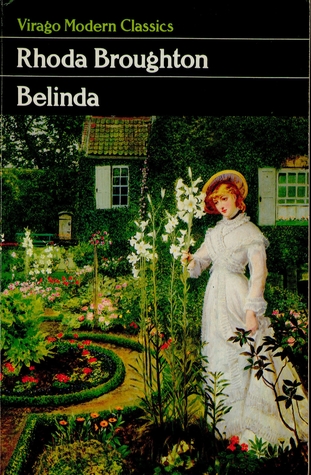
Secondly, a new-to-me author despite the vast number of novels she wrote; Rhoda Broughton, who was born in Denbighshire. Belinda (1883) was written roughly in the middle of her career, and my edition tells me she was alongside Mary Braddon as ‘Queen of the Circulating Library’.
Belinda is a satire, but that double-edged royal appellation did make me wonder if it was always read as such. Maybe I’m doing the fare of circulating libraries down, but I would have thought a tale of simpering Victorian virgin lovers was more typical of their stock than a satire of such stories. Regardless, if you read it straightforwardly as a romance because that’s what you were looking for, or as a satire because you were sick of such stories, Belinda would deliver.
The titular heroine is in Germany with her feckless, charming sister Sarah at the start of the novel:
“Away they go to Moritzburg, when the noon sun is warm and high; away they go, handsome, gay, and chaperoneless. There is no reason why their grandmother, who is a perfectly able-bodied old lady, should not escort them; but as she is sixty-five years of age, has no expectation of meeting a lover, and is quite indifferent to spring tints and German Schlosses, she wisely chooses to stay at home.”
Sarah is hugely popular with young men and is on her seventh fiancée. Belinda is unpopular, except with student David Rivers (aptly named, as he’s totally wet). The sisters wonder if Belinda’s nose is behind her lack of societal success:
“It is not case of measurement,’ says Sarah gravely; ‘I have seen noses several hands higher that were not nearly so alarming. It is a case of feeling; somehow yours makes them feel small. Take my word for it,’ with a shrewd look, ‘the one thing that they never can either forgive or forget is to feel small’”
It isn’t Belinda’s nose, unsurprisingly; it’s her fairly dull personality and her social awkwardness, matched only by that of her love interest:
“Is it her fault that all strong emotion with her translates itself into a cold, hard voice, and a chill set face? With other women it translates itself into dimples and pink blushes and lowered eyes. Ah! but do they feel as she does? Sarah, for instance. When do men ever leave Sarah’s company with the down- faced, baffled, white look with which Rivers has more than once quitted hers? Preening themselves rather; with sleeked feathers and cosseted vanity.”
As you can see from the quote above, Broughton uses Belinda to poke fun at romantic mores, the silliness of them and the uselessness of them. She demonstrates how those who cannot master the light-hearted conventions end up tied in knots.
“‘And you were — and you were — one of the heavenly host up there!’ ends the young man, baldly and stammering. But love is no brightener of the wits.
One of the heavenly host?’ repeats she, justly infuriated at this stale comparison. ‘An angel, in short! Must I always be an angel, or a goddess? If anyone knew how sick I am of being a goddess! I declare I should be thankful to be called a Fury or even a Ghoul, for a change!’
So saying, she turns her shoulder peevishly to him; and leaving the garden, begins to walk quickly along the road by the water, as if to make up for her late loitering. He keeps pace with her, dumb in snubbed contrition, stupefied by love and, unhappily for himself, fully conscious of it; burningly aware of the hopeless flatness of his last simile, and rendered by his situation quite incapable of redeeming it by any brighter sally.”
The course of true love inevitably does not run smooth for the young lovers – ‘twas ever thus. However, Belinda’s understandable frustration with Victorian female conventions leads her to make some very questionable choices. For those of you who have read Middlemarch, these questionable choices will be most familiar. I don’t know what Oxford Rector Mark Pattison did to the women writers of late Victorian society but whatever it was, he really, really annoyed them. He provided the model for Casaubon in Middlemarch and here he is rendered as Professor Forth:
“She had known that she did not love him, but she had not known that he wore carpet slippers in the drawing-room.”
Belinda is well-paced and witty, but I think I would have like the satire to be slightly more explicitly evoked. At one point there seemed a never-ending round of cheeks blushing, lips whitening, words stumbling… and a pretty major suspension of my disbelief that Belinda and Rivers could really be in love, given they had barely spoken to each other but only mumbled vaguely while experiencing various body temperature changes.
I would have liked a slightly sharper authorial voice, or more scenes with witty, pragmatic Sarah and the frankly reprehensible grandmother, with whom I could only agree when she observed:
“Belinda is too everything, except amusing.”
I did enjoy Belinda though, and there was broad comedy too, including some nice scenes with pug dogs, and with social bull-in-a-china-shop Miss Watson:
“I shall certainly mention it to his mother. Lady Marion, when next I meet her,’ says Miss Watson resolutely; I do not think it would be acting a friend’s part not to do so. I do not actually know her, but there is a sort of connection between us; I was at school for six months once at Brussels with a cousin of hers, and there is no doubt that there is something uncommonly louche about it.’”
To end, the BAFTAs earlier this month featured a performance from an 85 year-old Welsh singer/legend:









 madame bibi lophile recommends

