Starting #WITMonth with short stories & a novella

August is Women in Translation Month, hosted by Meytal at Biblio. I’m hoping to post a few times this month but given my current blogging pace that may be a hope in vain! Anyway, I’m really pleased with the start I’ve made as it’s two authors I’ve not read before as well as two more stops on my Around the World in 80 Books challenge.

Trigger warnings for pretty much everything: mentions of violence, genocide, rape, incest, and animal cruelty although I don’t go into detail for any of these.

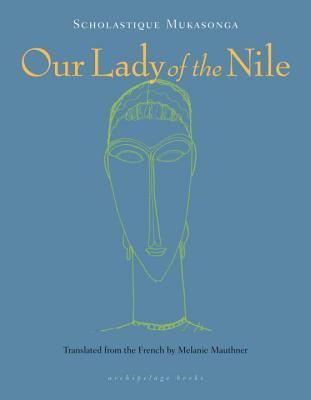
Firstly, Our Lady of the Nile by Rwandan author Scholastique Mukasonga (2012, trans. Melanie Mauthner 2014). Scholastique Mukasonga fled Rwanda for Burundi and has lived in France since 1992. 27 members of her family were killed in the Tutsi genocide in 1994. She set Our Lady of the Nile in 1979 and the future massacre haunts the story.

The titular school is in a remote region on a ridge of the Nile:

“There is no better lycée than Our Lady of the Nile. Nor is there any higher. Twenty-five hundred metres, the white teachers proudly proclaim […] ‘We’re so close to heaven,’ whispers Mother Superior, clasping her hands together.

The school year coincides with the rainy season, so the lycée is often wrapped in clouds. Sometimes, not often, the sun peaks through and you can see as far as the big lake, the shiny blue puddle down the valley.”

This opening immediately put me in mind of Rumer Godden’s Black Narcissus, and like Godden’s story there is a creeping oppression and tension amongst a group of women living together within an institution. Unlike Godden’s nuns though, the tension arises primarily from the wider political situation. Early in the story we meet class leader Gloriosa, who is wholly influenced by her father’s views on how to treat Tutsis.

“’The chiefs’ photos have suffered the social revolution,’ said Gloriosa, laughing. ‘A dash of ink, a slash of machete, that’s all it takes…and no more Tutsi.’”

That flippant mention of a machete is completely chilling. The girls are at that stage of adolescence where they are simultaneously naïve and aware of wider ramifications as they navigate one another, the attentions of men and the political situation.

As we follow the girls over the school year, the story is episodic and not told from one point of view, successfully building a picture of the remote community and the threats that exist within and without.

Two Tutsi girls, Veronica and Virginia have to manage Monsieur de Fontenaille, a coffee grower who idealises and objectifies their beauty; there is Father Herménégilde who is a paedophile in a position of power in the school; Gloriosa’s polemic about school quotas and Tutsis taking the place of Hutus is deeply disturbing and divisive.

The education of the girls also demonstrates the legacy of colonialism and how its brutality continues, how the genocide has its roots firmly in the past:

“History meant Europe, and Geography Africa […] it was the Europeans who had discovered Africa and dragged it into history.”

“Because there were two races in Rwanda. Or three. The whites had said so; they were the ones who had discovered it.”

The story builds towards a denouement that is horribly predictable, terrifying and shocking. As part of these events, Gloriosa encourages a truly despicable violent act on a classmate that I’ve decided not to detail here. It’s not remotely sensationalist but it demonstrates the total horror that human beings can enact on each other.

Our Lady of the Nile is a stunning piece of writing, managing to convey the immeasurable costs of political violence with great humanity.   

“It’s time we remembered who we are and where we are. We are at the lycée of Our Lady of the Nile, which trains Rwanda’s female elite. We’re the ones who’ve been chosen to spearhead women’s advancement. Let us be worthy of the trust placed in us by the majority people.”
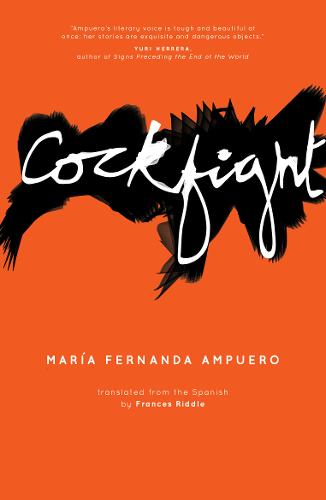
My second choice doesn’t offer any reprieve from these brutal themes, as Cockfight by Ecuadorian writer María Fernanda Ampuero (2018 trans. Frances Riddle 2021) is unflinching in its depiction of violence against women, animals, family members and of rape and incest.

I’m not going to go into too much detail from the stories as they are all such tough reads, but I’ll give an idea of a few of them. Ampuero is a compelling, precise writer and her stories pack a steely punch. If you feel able to read the stories I would urge you to do so, but they are definitely not for everyone and I certainly couldn’t have managed them last year when I was feeling a lot more fragile.

In the first story, Auction, a woman is kidnapped and offered up with others to the highest bidder. The situation reminds her of the cockfights she witnessed as a girl, having to clean up the remnants of the brutal sport.

“All these people, men and women alike, have been punched in the gut. I’ve heard them fall to the floor breathless. I focus on the cockerels. Maybe there aren’t any. But I hear them. Inside me. Men and cockerels. Come on, don’t be such a girl. They’re just cockfighters, dammit.”

The mutually reinforcing processes of patriarchy, misogyny, violence and commodification are drawn with ease, and played out in this situation in a visceral and degrading display.

Passion differs from the other stories in the collection, telling the story of (possibly) Mary Magdalen through a second-person narrative.

“You know, the only thing you know, is that you’re not going to be able to live without him. What you don’t know, and what you will never know, is that he loved you. That is something that can only be known by someone who has been loved before. You are not one of those people.”

In this story, Mary is the miracle-worker, abandoned by a man when she is no longer useful. Within the context of the collection, the story shows the long history of women being used and disregarded by those more powerful than they are.

Mourning was one of the most difficult reads, detailing the repulsive violence – physical and sexual – meted out by a brother on his sister. The brother dies and the two sisters rejoice:

“Marta said that at times like this – only at times like this – you need a man in the house, and Maria, who was standing on a chair with her skirts pulled up around her waist, started to laugh like a person possessed, and said no, that she preferred cockroaches, all the cockroaches in the world, over a man in the house.”

Ali and Coro are two linked stories that are incisive in detailing the hypocrisy and corruption that lies behind the moneyed façade of the rich.

“They grow up right there in the kitchen: eating with you until they get big, and then it seems weird to them that they love you so much, even though deep down they know you were their mother, and they see you one day in the future, once you’ve left, and they don’t know whether to cry or run into your arms like when they were little and fell down, or just nod their heads at you because now they’re little ladies and little gentleman of society who know you don’t greet the help with hugs and kisses.”

The collection ends with Other, which was probably the only story I read without flinching. The contents of a woman’s shopping basket distil the choices she has made, meaning she and her children constantly deny their own needs to meet those of an entirely selfish husband and father.

“He likes expensive fillets even though he won’t let go of one red cent for the rest of the month after buying them. So you grabbed three boxes of off-brand cereal instead, one for each child, and the worst brand of pads, the scratchy ones, the ones that come apart right away and cover your panties in little balls of fluff.”

Cockfight is fiercely feminist, urgent and unrelenting. Ampuero doesn’t waste a single word as she evokes everyday violence and degradation in non-sensationalist writing.

These are two brilliant works, stunning and important, but after I’d finished them I had to recover with a Golden Age mystery. I needed something where there was a guarantee that I wasn’t going to have to read graphic depictions of any sort of brutality. Having spent some time with Inspector Alleyn, I now feel ready to re-enter the fray!

As respite from my descriptions of two such harrowing works, here is a cheery number from an Ecuador-based band for you:

“Life is a very bad novelist. It is chaotic and ludicrous.” (Javier Marías)

Trigger warnings for suicide and rape

In a move that will shock no-one who’s read this blog in the past year, I totally failed to post as planned for Stu’s Spanish & Portuguese Lit Month in July. I did however read some Spanish and Portuguese language lit, and Stu has extended the month to include August so away we go!

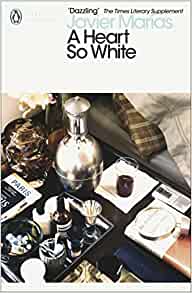
I decided to use S&PLM as an incentive to dust off Javier Marías, who has been languishing in my TBR forever. I read A Heart So White (1992, trans. Margaret Jull Costa 1995) and The Infatuations (2011, trans. Margaret Jull Costa 2013).

What struck me reading both is that I’ve not really read anyone else with a style like Marías. He interweaves philosophical musing within a basic plot and manages this without any loss of pace. The plots are essentially a study of how people relate to one another, rather than event-driven and it works seamlessly.

For the sake of brevity (ha!) I’ll just look at A Heart So White here, in which newly-married Juan muses on the nature of romantic love and his relationship with his father Ranz.

“Ever since I contracted matrimony (the verb has fallen into disuse, but is both highly graphic and useful) I’ve been filled by all kinds of presentiments of disaster […] when they contract matrimony, the contracting parties are, in fact, demanding of each other an act of mutual suppression or obliteration”

This occurs near the start of the novel and I was really taken aback by the matter-of-fact tone regarding a subject that society generally sentimentalises. Marias builds the story using vignettes as Juan observes two arguing lovers on his honeymoon, returns to work as a translator, and stays with a friend in New York who has humiliating experiences through the personal ads. I wondered if AHSW was going to be a cynical and bitter tale of people behaving appallingly towards each other. However, despite observations such as:

“Any relationship between two people always brings with it a multitude of problems and coercions.”

Overall I found the tone resolutely clear-sighted and pragmatic, rather than bitter.

Ranz is a complex, slippery character. His first wife died and his second wife killed herself. Juan is the son of his third marriage. They are not close – Juan finds his father distant and self-focussed:

“He spoke slowly, as he usually did, choosing his words with great care (Lothario, alliances, shadows), more for effect and to ensure that he had your attention than for the sake of precision.”

[…]

“This was the whispered advice that Ranz gave me: ‘I’ll just say one thing,’ he said. ‘If you ever do have any secrets or if you already have, don’t tell her.’ And smiling again, he added: ‘Good luck.’”

Juan does find out the mysteries of his father’s past, largely with the help of his new wife Luisa. However, this does not create a sense of resolution, because I don’t think that’s what the novel is about. It’s not about neat endings, but rather the messy business of human relationships and how these are never neatly tied up, whether through legal institutions like marriage or even the finality of death.

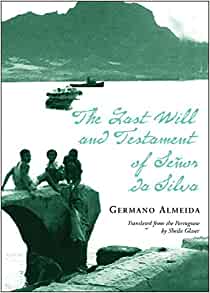
Secondly, a Portuguese-language novel, The Last Will and Testament of Senhor da Silva Araújo by Germano Almeida (1991 trans. Sheila Faria Glaser2004), which despite its mammoth title was only novella length. It was also an opportunity for me to visit another stop on my Around the World in 80 Books reading challenge, as Almeida is a Cape Verdean writer.

This was my first experience of Almeida’s writing and I really enjoyed his chatty, slightly irreverent tone. The titular 387-page document belongs to a successful importer-exporter, and the novella opens with its reading. Much to everyone’s surprise, the business is bequeathed not to Carlos, Senhor da Silva Araújo’s nephew, but rather his illegitimate daughter, unacknowledged in his lifetime.

“Still, it might have struck one as strange, or might have set the neighbours talking when, rather extraordinarily, on hearing over the radio the news of the passing of the esteemed merchant from this our very own marketplace, one of the most vibrant pillars of our city – Sr. Napumoceno da Silva Araújo- Dona Chica began to run around the house screaming and crying out, My protector, my god, What will become of me etc., a display different in every way from the measured grief she had shown on the death of her Silvério who, may he rest in peace, though no model of virtue was no scoundrel either.”

(The only thing that jarred for me in this novella was that Senhor da Silva Araújo rapes Dona Chica, his cleaner, before the two go on to have a mutually satisfying sexual arrangement. Patriarchal  fantasy I would say.)

The story moves back and forth across time with ease, building a portrait of a man who rose from shoeless poverty to leading businessman. He remains contradictory and somewhat unknown despite telling his life story in his own words. Although this could make for an unsatisfying read, for me this was the novella’s strength. It captured how complex people are, and how we can remain a mystery even to ourselves.

Senhor da Silva Araújo is not particularly likable. There are possibly some shady deals in his background. Despite being in love at certain points (much to the surprise of those who knew him), he is ignorant regarding women. He treats his nephew Carlos unfairly:

“Carlos has turned out to be an ungrateful relation and as the good man I am and always have been, I have the moral obligation never to forgive him.”

Yet Carlos is not perfect either, and Senhor da Silva Araújo is not wholly despicable:

“But the truth is, it began to be noted that Sr. Napumoceno sent for quicklime from Boa Vista at his own expense and donated to the City Council for construction projects for the poor. When he was questioned directly, he neither confirmed nor denied this”

There is one scene of awful misunderstanding with his daughter that is truly upsetting in its pathos. Overall, this is a portrait of a life lived, successfully in some ways, pitiably in others; a man weak and oblivious to others; who knew some happiness and some heartbreak. Hard to achieve in a novella length but Almeida manages it with skill.

To end, Seu Jorge singing one of my favourite Bowie songs in Portuguese:

Traplines (1996) by Eden Robinson

Trigger warning for domestic violence, child abuse, drug use, swearing

This is my contribution to Lisa’s wonderful annual event, ANZ LitLovers Indigenous Literature Week. I’m writing this hurriedly last minute to get it done in time, but do head over to Lisa’s blog to see all the great posts this week and from previous years too!

My reading and blogging has been so poor since the pandemic that I originally planned to post on this short story collection for ILW last year – oh dear. I’ve decided to take it as win that I’ve eventually managed to do so rather than focus on how long it took 😃

Eden Robinson is an Indigenous Canadian, a member of the Haisla and Heiltsuk First Nations. Waaaaaaay back in 2000 I read her first novel Monkey Beach and I thought it was one of the best things I read that year. Then inexplicably I have totally failed to read anything she published since. I’m really pleased that ILW prompted me to pick up her short story collection, Traplines (1996).

I’m a bit of a delicate flower at the moment but I think even if I was feeling super-robust, I still would have found Traplines a tough read. The stories are unflinching in their portrayal of human struggles; determinedly unsentimental, beautifully written and non-sensational. There are four in total so I’m going to focus on two and just give a brief flavour of the others.

The collection begins with the titular story, which I persevered with past the opening hunting scene (I can’t say the title didn’t warn me), only to have my heart torn into a million pieces. Will Bolton is a young man, sensitive, bright and observant:

“Tucca is still as we drive into it. The snow drugs it, makes it lazy. Houses puff cedar smoke and sweet, sharp smell gets in everyone’s clothes. At school in town, I can close my eyes and tell who’s from the village and who isn’t just by smelling them.”

He also has a chaotic home life, bullied and attacked by his older brother, who in turn is bullied and attacked by their father. Will constantly lives on a knife-edge, ready to duck at the next surprise blow.

“I back into the kitchen. He follows. I wait until he is near before I bend over and ram him. He’s slow because of the pot and slips to the floor […] Eric stands on the porch and laughs. I can’t wait until I’m bigger. I’d like to smear him against a wall. Let him see what it feels like. I’d like to smear him so bad.”

Mrs Smythe is Will’s English teacher and she sees his potential. She and her husband offer Will a place to stay away from the violence, the escalating drug use he is surrounded by, the self-destructiveness of everyone he knows. Robinson builds the portrait of Will’s life expertly, showing how he is at a crossroads he only vaguely recognises, and how the choice he’ll make is so fragile and yet so irreversible.

“If I could, I’d follow her.”

Absolutely devastating.

The next story Dogs in Winter had a slightly lighter tone but this is comparative. It was still very, very dark. “He smelled of Old Spice and I felt like I was in a commercial. Everything would be perfect, I thought, if only Canada had the death penalty.”

Contact Sports was the longest in the collection and at 109 pages is really a novella. Robinson wrote about the characters further in her novel Blood Sports (2006). This story was an absolute masterclass in how to create a pervading sense of unease and menace. It really got under my skin.

Tom lives with his mother and her successive boyfriends. Money is stretched to breaking point. Then his cousin Jeremy shows up and stays with them. Jeremy has been thrown out of the army, although Tom doesn’t know why. He has loads of money, Tom doesn’t know where from. He is amenable at first, but entirely untrustworthy.

Gradually Jeremy calls in the favours he has done Tom, to exert a deeply bullying and abusive hold over him, dictating his behaviour and humiliating him at every opportunity.

“‘Look, it’s really very simple. I’ll pay off your bills, one bill a week, and I’ll help with rent and food, and all you have to do is one itty bitty little thing.’

Tom said cautiously, ‘What?’

‘Oh it’s simple. All I want you to do is be good.’”

So insidious, so terrifying. It’s a bleak story, with humour that is raw to the bone:

“Tom stood on the corner watching Jeremy’s car squeal down the street. Just my luck. The only person who really gives a shit if I live or die is a whacked-out drug addict who likes playing God.”

The final story Queen of North sees a woman reclaim power over the person who abused her as a child in a breathtakingly visceral way. I won’t give more details on that but I’ll give a sample of the opening paragraphs which demonstrate the brilliance of Eden Robinson’s observations of the natural world:  

“In my memory, the sun is setting and the frogs begin to sing. As the light shifts from yellow to orange to red, I walk down the path to the beach. The wind blows in from the channel, making the grass hiss and shiver around my legs. The tide is low and there’s a strong rotting smell from the beach. Tree stumps that have been washed down the channel from the logged areas loom ahead – black, twisted silhouettes against the darkening sky.”

Although I won’t be rushing to a re-read of Traplines right now, I’m so glad I read it and remembered what a stunning writer Eden Robinson is. She is precisely descriptive, compassionate but unwaveringly realistic in her characterisation. I’ll definitely be hunting down her Trickster trilogy, the first of which has been adapted for television:

“Light tomorrow with today!” (Elizabeth Barrett Browning)

Today is the longest day of the year for those of us in the Northern hemisphere, so I thought I’d celebrate with a couple of light reads (haha – sorry.) It’s also my beloved and much-missed great aunt’s birthday, so I’ve chosen two novels I think she would have approved of – she wasn’t a great reader but I hope she’d enjoy these.

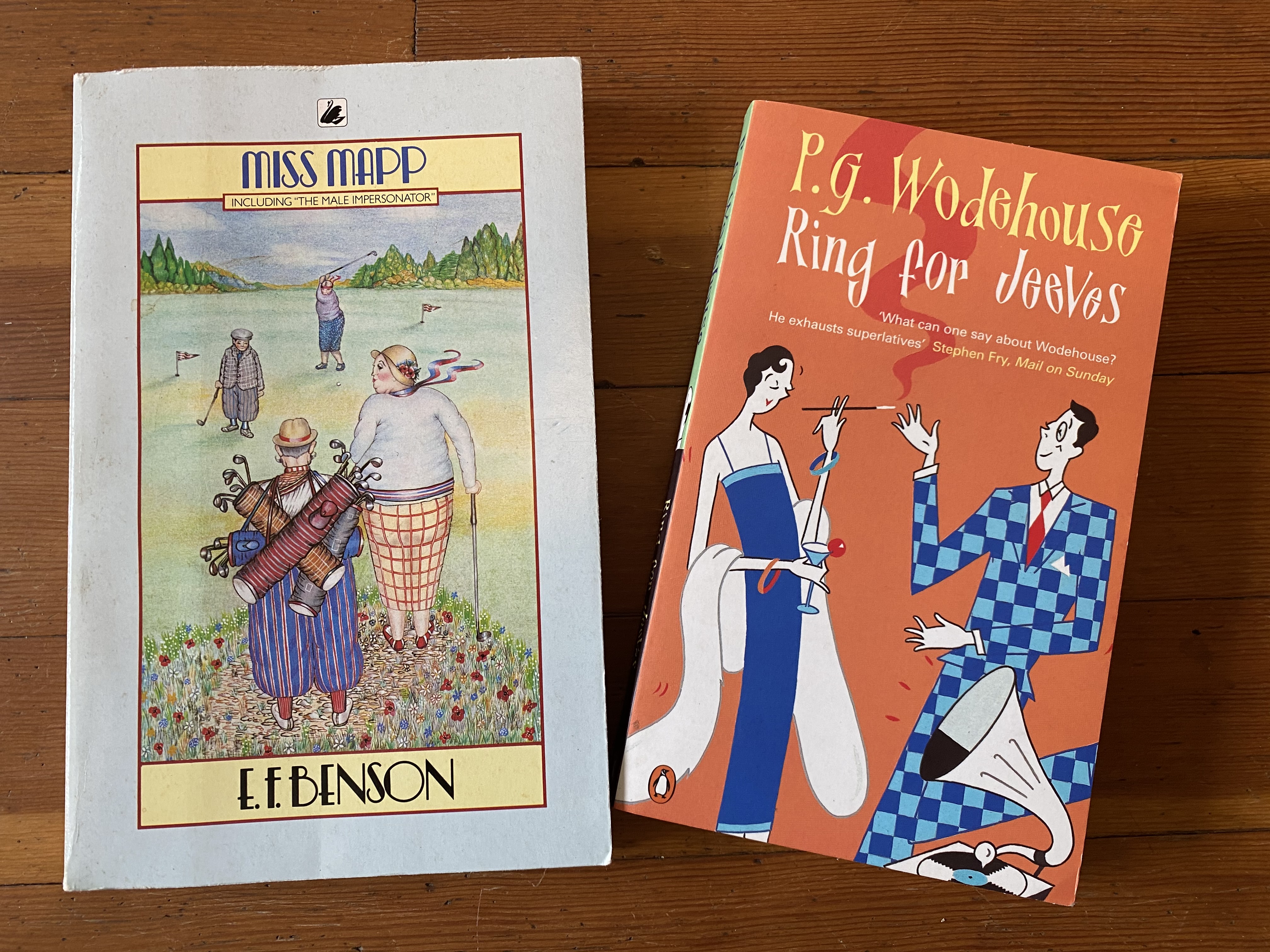
Firstly, Miss Mapp by EF Benson (1922). This is the second in the Mapp and Lucia series and so far I’ve really enjoyed Queen Lucia and Lucia in London, (unintentionally I read them out of order but I don’t think it matters) although fans of the series tell me things really take off once the two meet one another. Those of you who follow me on twitter will know I managed to bag the next two titles from the charity shop just at the weekend, but for now the much anticipated meeting will have to wait, as Lucia’s dominion of Riseholme is only given a passing mention in Miss Mapp. The titular character is far more concerned with the comings and goings of her home town:

“There was little that concerned the social movements of Tilling that could not be proved, or at least reasonably conjectured, from Miss Mapp’s eyrie.”

Her house is perfectly positioned in order to view all her neighbours as they go about their business. She is only interested in the genteel society in which she circulates, so we hear very little about the working classes of Tilling. Rather the focus is on the delightfully-named retired military men Captain Puffin and Major Flint; Isabel Poppit who lives “with a flashy and condescending mother” named Godiva; and Mrs. Plaistow with her troublesome teeth.

Eventually Miss Mapp leaves her eyrie and goes shopping:

“All these quarrelsome errands were meat and drink to Miss Mapp: Tuesday morning, the day on which she paid and disputed her weekly bills, was as enjoyable as Sunday mornings when, sitting close under the pulpit, she noted the glaring inconsistencies and grammatical errors in the discourse.” 

This is a brilliant piece of scene-setting by Benson. Miss Mapp, poised at her window before launching herself onto the High Street, tells us all we need to know about Tilling and those who populate it – including their weak in-jokes, feeble and yet guarded fiercely by those who aim to be the first to reference it in conversation:

“Au reservoir, Diva dear,” she said with extreme acerbity, and Diva’s feet began swiftly revolving again.

Sadly, we don’t linger long with the Tillingite who appealed to me most, as Miss Mapp does not share my interest:

“For on emerging, flushed with triumph, leaving the baffled butcher to try his tricks on somebody else if he chose but not on Miss Mapp, she ran straight into the Disgrace of Tilling and her sex, the suffragette, post-impressionist artist (who painted from the nude, both male and female), the socialist and the Germanophil, all incarnate in one frame. In spite of these execrable antecedents, it was quite in vain that Miss Mapp had tried to poison the collective mind of Tilling against this Creature. If she hated anybody, and she undoubtedly did, she hated Irene Coles. The bitterest part of it all was that if Miss Coles was amused at anybody, and she undoubtedly was, she was amused at Miss Mapp.”

Absolutely nothing of any importance happens in Tilling. There are machinations over dresses; worry over food-hoarding which affects no-one; an argument between Puffin and Flint that neither really understand; a refusal to acknowledge daylight saving time. It’s all very silly and none the worse for it.

“Naturally any permanent quarrel was not contemplated by either of them, for if quarrels were permanent in Tilling, nobody would be on speaking terms any more with anyone else in a day or two, and (hardly less disastrous) there could be no fresh quarrels with anybody, since you could not quarrel without words.” 

Miss Mapp is greatly enjoyable when you want an escapist read. You can lose yourself in the petty concerns and schemes of Tilling for a few hours, wondering about nothing more serious than the ripeness of redcurrants for making a fool.

My only reservation on finishing it was whether Miss Mapp was too scheming – was she in fact a lonely character? Although she knew everyone’s business, did she really have any intimacy in her life? But my edition also had the short story The Male Impersonator, which features this exchange about Miss Mapp at the end, between Miss Mapp’s frenemy Godiva Poppit and a new arrival to Tilling:

“ ‘Oh but she mustn’t be hurt,’ said Miss Mackintosh. ‘She’s too precious, I adore her.’

‘So do we,’ said Diva. ‘But we like her to be found out occasionally. You will too, when you know her.’”

So then my soft heart felt a lot better 😊

Secondly, Ring for Jeeves by PG Wodehouse (1953). The nonsensical shenanigans of Wodehouse are a go-to comfort read for me, but in recent years I’ve struggled. Living through a succession of overprivileged self-serving, corrupt toffs determined to govern this country into absolute ruin with a total disregard for anyone who doesn’t share their enormous inherited advantages means laughing at the upper classes has somewhat lost its appeal. *climbs down off soapbox and getting back to talking about books*

However, I thought I’d give Ring for Jeeves a go, and I did enjoy it so maybe I’m mellowing. Wodehouse’s characters are so completely bonkers that no-one would suggest they should be in charge of a single thing. In fact, as the title suggests, if anything the novel suggests handing over all power to the lower orders.

Ring for Jeeves sees the titular valet without Wooster (*faints from shock*) as Bertie is away on some sort of retreat, learning – much to Jeeves’ consternation – to darn his own socks. Thus we find Jeeves looking after Bill, a man “in the normal state of destitution of the upper class Englishman” who is desperate for money:

“Rowcester Abbey – pronounced Roaster – was about a mile from the Goose and Gherkin. It stood- such portions of it as had not fallen down – just beyond Southmolton in the midst of smiling country. Though if you had asked William Egerton Bamfylde Ossingham Belfry, ninth earl of Rowcester, its proprietor, what the English countryside had to smile about these days, he would have been unable to tell you. Its architecture was thirteenth-century, fifteenth-century and Tudor, and its dilapidation twentieth-century post-World War Two.”

Bill has begun making some money posing as bookmaker Honest Patch Perkins at the races. The start of the novel sees him and Jeeves tearing back to Rowcester Abbey because they owe Captain Biggar £3000 for a winning bet. The furious Captain is in hot pursuit.

At the country pile, Bill’s infinitely more capable sister has arrived with her husband Rory. This being Wodehouse the fond couple have conversations along the following lines:

“ ‘Now would I be likely to drop a brick of that sort, old egg?’

‘Extremely likely, old crumpet. The trouble with you is that, though a king among men, you have no tact.’”

Monica thinks she can flog Rowcester to Rosalinda Spottsworth, who is obscenely rich and interested in various esoteric matters including ghosts, which surely the abbey must have. Soon everyone – including Captain Biggar who is in love with Mrs Spottsworth – are all under the same leaking roof:

“Jeeves had entered, bearing coffee. His deportment was, as ever, serene. Like Bill, he found Captain Biggar’s presence in the home disturbing, but where Bill quaked and quivered, Jeeves continued to resemble a well-bred statue.”

Will Bill solve his financial difficulties and marry the lovely vet who lives nearby? Will Captain Biggar confess his feelings for Mrs Spottsworth and manage not to kill Bill and Jeeves? Will Rory manage not to put his foot in it several times over? Will it all work out OK in the end?

Of course it will.

To end, I’ve mentioned before how Bruce Springsteen is proving himself a support to me, especially when my cat died last June. Sadly, his buddy decided to join him this February, and I’m finding it very hard. Here he is in a self-fashioned hammock, the crazy kid:

Anyway, along with stalwart David Bowie, Bruce continues to provide solace, so here he is singing about light (there are credits running over it which is a bit annoying but I really like this version):

“One should always act from one’s inner sense of rhythm.” (Rosamond Lehmann)

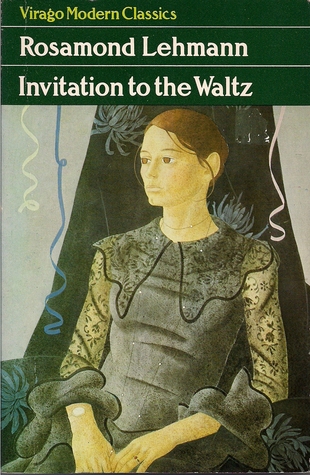
Although my reading and subsequently my blogging has improved a bit, it’s still not great. When I planned to review Rosamond Lehmann’s The Weather in the Streets for the 1936 Club, I thought I would write on the novel that precedes it, Invitation to the Waltz (1932) first. Unsurprisingly, that did not happen! Then I thought I’d pair it with Zadie Smith’s Swing Time for books on dancing, but the front cover is as far as I’ve got with that despite two weeks of trying. So I’ve given up and here is a post on Invitation to the Waltz only, but it’s wonderful and entirely deserving of a post all to itself 😊

It is Olivia Curtis’ seventeenth birthday. She lives with her pleasant middle-class family, in a pleasant middle class house:

“These walls enclose a world. Here is continuity spinning a web from room to room, from year to year. It is safe in this house. Here grows something energetic, concentrated, tough, serene; with its own laws and habits; something alarming, oppressive, not altogether to be trusted: nefarious perhaps. Here grows a curious plant with strong roots knotted all together: an unique specimen. In brief, a family lives here.”

She wants to sleep in, although she’s still young enough to be excited regarding her birthday, but her perfect sister Kate wakes her from such indulgence. In this simple scene Lehmann sets up so much regarding the themes of the novel: love and irritation regarding family, being of an age where you teeter from childhood to adulthood and back again in a moment, the demands of society that need to be met. It’s a superbly subtle and clever piece of writing.

Somehow Lehmann manages to capture all of Olivia’s naivete, exuberance and indolence without her becoming annoying. She is on the cusp of something, she knows it but doesn’t know what. Her adulthood at once seems entirely plotted by social convention, and entirely open:

“I want to do something absolutely different, or perhaps nothing at all: just stay where I am, in my home, and absorb each hour, each day, and be alone; and read and think; and walk about the garden in the night; and wait, wait. …”

The novel is set in 1920, so part of Olivia’s conflict regarding adulthood is also about what it means to be a woman at this time. Kate seems cut out for domestic bliss, but the effects of the war are still working themselves out, and roles for women are changing:

“She looked at her nails: they were clean, but that was all. Kate had spent an hour manicuring hers. All these dainty devices, so natural to Kate, seemed when she performed them to become unreal, like a lesson learnt by heart, but not properly understood. Something in her fumbled, felt inharmonious, wanted almost to resist.”

The second part of the novel builds to Kate and Olivia attending the titular dance which the local landowners are throwing for their daughter Marigold. The day of the dance arrives and we meet the Spencers, who are richer and more privileged than the Curtises, but also welcoming up to a point. Olivia wears a dress made from flame-coloured silk which she got for her birthday, and like everything else about the highly anticipated dance, it’s not quite right, but it’s also not completely terrible.

The girls have had to invite a chaperone, Reggie, who is not horrible but is a total bore:

“Lady Spencer looked him over rapidly. Commonplace; but not flashy. Clean fingernails. Only son—country parsonage? Bad manner. But steady. Heavy look. Stoop—(scholar’s?). You never knew. He’d do. She dismissed him for ever.”

We also meet Kate and Olivia’s flaky cousin Etty, who would drive me to distraction in real life but who I greatly enjoyed on the page:

‘Oh, but how divine! You must introduce me. Do you think he’d say a prayer with me if I asked him? My very first love was a vicar who prepared me for confirmation at school. I adored him. How difficult for you, though. Never mind.’

The rest of the evening passes in a vaguely unsatisfactory way, in dances with people Olivia only knows slightly and has to make small talk with. Lehmann perfectly captures how hugely anticipated events are rarely the momentous occasions hoped for, and instead are often a mixture of tedium, excitement and being ill at ease, certainly for someone like Olivia who is young, awkward, and prefers books (at 44 I’m only two out of those three things 😊). The only time Olivia makes a genuine connection with anyone other than Kate, is with son and heir Rollo Spencer, who she meets alone on a terrace:

“It was quite an effort to speak to him; like coming back from being dead. She felt herself rooted to the ground and very calm, not embarrassed at all. Rather as if I might say anything. …

[…]

Their voices dropped into the air one after the other with an impersonal lost sound, as if they reached one another from a distance; yet the sense of isolation seemed to enclose them together in a kind of intimacy. His voice was deep and rounded, both vigorous and lazy.” 

There was an extra poignancy re-reading that scene knowing how it plays out in The Weather in the Streets, but actually the sadness is already there without the sequel. The reader gets a sense of Rollo’s dissatisfaction with his life, even as he leaves Olivia to return to the beautiful woman he will marry. At this point Olivia is unaware of the foreshadowing:

“[Rollo and] Nicola meet at the foot of the stairs and start to talk earnestly, their heads close together. They do suit. … She went away.”

Invitation to the Waltz is deceptively well-written. In one way it is a story of not very much happening, for an ordinary middle-class family during the interwar years. Yet it is also about so much: anticipation, disappointment, the damage that expectations of self and others can do, the deep-rooted sadness that people live with every day and never voice, and the love and pleasure that exists alongside it. It’s a novel of riches that I’m sure will reward re-reading.

To end, an obvious choice but I couldn’t resist such perfection:

“I like simple things, books, being alone, or with somebody who understands.” (Daphne du Maurier)

This is my contribution to Ali’s Daphne du Maurier reading week, and much to my own amazement I’ve managed to post on time – hooray! I really enjoyed taking part in 2019 and reading du Maurier’s creepy, unsettling short stories. This time I’ve plumped for two of her most famous novels which I’ve never got round to reading, despite enjoying Rebecca as a teenager.

Firstly, Jamaica Inn (1936), a gothic period drama set in the 1820s. Mary Yellan is 23 when her mother dies, leaving her orphaned and having to live with her Aunt Patience, who is married to Joss Merlyn, landlord of the eponymous coaching inn. Mary would like to live alone and run her own farm, which is clearly a ridiculous notion:

“‘A girl can’t live alone, Mary, without she goes queer in the head, or comes to evil. It’s either one or the other. Have you forgotten poor Sue, who walked the churchyard at midnight with the full moon, and called upon the lover she had never had? And there was one maid, before you were born, left an orphan at sixteen. She ran away to Falmouth and went with the sailors.’”

So off she treks to a “wild and lonely spot” 12 miles outside Bodmin in Cornwall.  Du Maurier does a great job of creating gothic unease, both in the scenery and the relationships within Mary’s family.

“To the west of Jamaica high tors raised their heads ; some were smooth like downland, and the grass shone yellow under the fitful winter sun; but others were sinister and austere, their peaks crowned with granite and great slabs of stone.  Now and again the sun was obscured by cloud, and long shadows fled over the moors, like fingers. Colour came in patches; sometimes the hills were purple, ink-stained and mottled, and then a feeble ray of sun would come from a wisp of cloud, and one hill would be golden-brown while his neighbour still languished in the dark. The scene was never once the same, for it would be the glory of high noon to the east, with the moor as motionless as desert sand; and away to the westward arctic winter fell upon the hills, brought by a jagged cloud shaped like a highwayman’s cloak, that scattered hail and snow and a sharp spittle rain on to the granite tors.”

Joss is violent and binges on alcohol, and Mary’s Aunt Patience is completely destroyed by her marriage. She serves a useful dramatic purpose, providing the reason that morally upright Mary doesn’t report her uncle when it emerges that he makes his money through wrecking: luring ships onto rocks, murdering the sailors and stealing the loot.

“And, although there should be a world of difference between the smile of a man and the bared fangs of a wolf, with Joss Merlyn they were one and the same.”

The portrayals of the criminals in Jamaica Inn are dated, with more than a hint of ableism and classism. But Joss Merlyn is slightly more complex, and there is a sense of the pain he has experienced in his life that has led to him becoming the man he is. By enduring her life at Jamaica Inn, Mary meets her uncle’s brother Jem, and romance ensues:

“He was no more than a common horse-thief, a dishonest scoundrel, when all was said and done[…] Because he had a disarming smile and his voice was not unpleasing, she had been ready to believe in him”

What follows is a well-paced tale of Mary being drawn into her uncle’s life of crime far more than she would like, yet also feeling increasingly alienated from the good people of the town. It was this latter aspect that interested me most. What du Maurier seemed to be exploring was how a woman finds her own way in the world, and how the easiest path may not be the truest one.

“There would never be a gentle season here, thought Mary;”

Through the course of the novel Mary learns that a gentle season may not be what she wants; that her authentic life is one not led within the heart of society. Ultimately she’s quite a tough heroine, and she forges her own path.

At first I wasn’t sure Jamaica Inn was really for me: it seemed a bit formulaic and I’m not really one for gothic romance – usually the men are abhorrent, violence is indulged and somehow supposed to be attractive. Yet Jem could be gentle with Mary and they actually had a laugh together which is not very gothic at all. Sexual attraction is also dealt with frankly, and although it is a romantic tale (a young pretty girl wandering on the wild moors, a ruggedly handsome lover…) in some ways romance is given short shrift:

“There was precious little romance in nature, and she would not look for it in her own life. She had seen the girls at home walk with the village lads; and there would be a holding of hands, and blushing and confusion, and long-drawn sighs, and a gazing at the moonlight on the water […] They would look at the stars and the moon, or the darning sunset if it was summer weather, and Mary, coming out of the cow-shed, wiped the sweat from her face with dripping hands, and thought of the new-born calf she had left beside its mother. She looked after the departing couple, and smiled, and shrugged her shoulders, and, going into the kitchen, she told her mother there would be a wedding in Helford before the month was past.”

I wish I’d read Jamaica Inn after Rebecca in my teens, I probably would have loved it then. Reading it at 44 means it will probably not be amongst my favourite du Maurier – I didn’t find as much to admire as I did with her short stories –  but I thought she put an interesting heroine amongst the romantic tropes and her descriptions of the natural world are stunning. She also succeeded in writing a page-turning ripping yarn, and sometimes that is exactly what is needed when you pick up a novel.

The BBC adapted Jamaica Inn in 2014. I watched it, but the main thing I remember is everyone complaining about the mumbling:

Secondly, My Cousin Rachel (1951) which I thought was excellent. Du Maurier’s voice felt more individual in this and I wondered if in the intervening 15 years she had become more confident in her craft. The story and characterisation seemed more complex too.

It opens with a fairly graphic description of a hanged man that I could have done without, but it serves well in introducing the narrator Philip, orphaned and subsequently raised by his cousin Ambrose, a misogynist landowner, adored by Philip despite his uncompromising ways.

Du Maurier foreshadows the events of the story, and also it’s ambiguity:

“No one will ever guess the burden of blame I carry on my shoulders; nor will they know that every day, haunted still by doubt, I ask myself a question which I cannot answer. Was Rachel innocent or guilty?”

Ambrose in middle-age takes his winters abroad, for the sake of his chest. There he meets the titular distant relative, and they marry. Philip is perturbed by this, but not nearly as much as he is when Ambrose’s letters become infrequent, scribbled and paranoid:

“For God’s sake come to me quickly. She has done for me at last, Rachel my torment. If you delay, it may be too late. Ambrose.”

Philip hastens to Italy, only to find Ambrose died three weeks previously and his wife has disappeared. When he returns to England and finds Rachel is due to visit he is determined to expose her for the villain she is. This resolve lasts, ooh, about five minutes:

“I was glad I had the bowl of my pipe to hold, and the stem to bite upon; it made me feel more like myself and less like a sleep-walker, muddled by a dream. There were things I should be doing, things I should be saying, and here was I sitting like a fool before the fire, unable to collect my thoughts or my impressions. The day, so long-drawn-out and anxious, was now over, and I could not for the life of me decide whether it had turned to my advantage or gone against me.”

The local people are equally charmed by Rachel’s beauty and wit. Philip’s friend Louise, the daughter of his guardian, points out Rachel is beautiful – something Philip has not mentioned. The skirting around his attraction for Rachel exposes him as an unreliable narrator, insofar as we would all be unreliable narrators of our own lives:

““How simple it must be for a woman of the world, like Mrs Ashley, to twist a young man like yourself around her finger,” said Louise.

I turned on my heel and left the room. I could have struck her.”

What follows is what du Maurier seems so expert at: building an atmosphere of tense unease, where the truth of a situation remains determinedly obscure. Philip is naïve, but are the more sceptical viewpoints of his friends and advisors any more valid?

“Here I was, twenty-four, and apart from the conventional years at Harrow and Oxford I knew nothing of the world but my own five hundred acres. When a person like my cousin Rachel moved from one place to another, left one home for a second, and then a third; married once, then twice, how did it feel? Did she shut the past behind her like a door and never think of it again, or was she beset with memories from day to day?”

Whether Rachel is conniving and manipulative is difficult to ascertain and this works so well in sustaining tension throughout. It also enables du Maurier to demonstrate how a beautiful woman with very few rights in law is subject to the fantasies and whims of men who hold the power. Rachel remains unknown to the reader because she remains unknown to Philip, and yet he professes he loves her.

Philip is not likeable – he is callow, arrogant, and violent. But he is somewhat sympathetic as he knows so little of life, floundering around in situations he doesn’t understand and is painfully ill-equipped to manage. Ultimately it is this quality that provides the persistent mystery of My Cousin Rachel, a mystery we must all find our own answer to:

“The point is, life has to be endured, and lived. But how to live it is the problem.”

My Cousin Rachel was adapted most recently on film in 2017. I’ve not seen it but it’s certainly beautifully shot if this trailer is anything to go by:

PS Happy birthday Daphne, born on this day in 1907, and to #DDMreadingweek host Ali – have a wonderful day!

“I’m afraid of nothing except being bored.” (Greta Garbo as Camille, 1936)

Way back in the mists of time, 12-18 April to be exact, Kaggsy and Simon ran the 1936 Club. Although my reading has recovered somewhat, my blogging is still non-existent. So although I’d read two novels from the year, I failed miserably to write on them at all. This is my much belated attempt to recover lost ground…

I picked the two novels simply because they were the right year and in the TBR pile, but as it turned out they were thematically linked, both dealing with extramarital affairs. Spoiler alert: don’t do it kids, it causes misery. Yet although both novels show the pain caused by the affairs, they are not moralising or didactic. Rather, they are well-observed character studies of people looking for happiness in the wrong places.

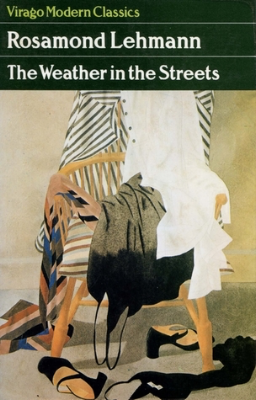
The Weather in the Streets is Rosamond Lehmann’s sequel to Invitation to the Waltz (1932), which in an entirely unhelpful way I hope to blog on in a few weeks. I read the novels in order, but you don’t need to have read the first to enjoy the second.

The Weather in the Streets continues the story of Olivia Curtis, now in her late twenties and divorced, living an impoverished bohemian existence with her cousin Etty in London. When her father is taken ill, she catches the train back to the family home and finds herself sitting opposite Rollo Spencer, who was kind to her at the titular dance in the first novel.

“He burst out laughing; and she was struck afresh by what she remembered about him years ago: the physical ease and richness flowing out through voice and gestures, a bountifulness of nature that drew one, irrespective of what he had to offer.”

I thought that was so clever, the capturing of a realisation of physical attraction alongside a foreshadowing of what will follow: “irrespective of what he had to offer”. What Rollo can offer is very little at all, given that he’s married and has entire life away from Olivia, separated by class and circumstance, that she can never be part of.

“She looked away. A bubble of tension seemed to develop and explode between them.”

This tension is acted on and the two begin to see each other. I was particularly struck by the passage describing Olivia’s feelings after they first sleep together. Throughout the novel Lehmann switches between first and third person and here we are entirely with Olivia:

‘Then it was afterwards. He said, whispering:

‘I’m your lover…’

I thought about it. I had a lover. But nothing seemed changed. It wasn’t disappointing exactly…The word is: unmomentous…Not wonderful – yet…I couldn’t quite look at him, but it was friendly and smiling. His cheek looked coarse-grained in the light of the lamp. I saw the hairs in his nostrils…I was afraid I’d been disappointing for him….Thinking: Aren’t I in love with him after all then? …We hadn’t said love once, either of us…Thinking: It’s happened too quickly, this’ll be the end…”

Depicting the ordinariness of it all is a brave move but I thought it was the strength of this novel. It’s not romantic, it’s not two people being swept away, it’s also not sordid or bitter. Its individuals who feel a connection trying to build happiness within their unsatisfactory lives, in a deeply misguided way.

The Weather in the Streets is also excellent in its depiction of the loneliness of an affair. The title is from a scene where Olivia is sat inside Rollo’s car, looking out from behind the window. This separation exists in all her relationships to an extent: she lives in a society where emotions occur out of sight and you certainly don’t impose your feelings on others by daring to discuss them or letting social mores slip for a minute. For example, when your husband might be dying:

“The lurking threats of change, of disaster, retreated before Mother’s impregnable normality. Rather pale, rather drawn and dark about the eyes, but neat, but fresh, erect, composed as ever, preoccupied with the supervision – in retrospect – of the arrival, checking up on detail with nearly all her customary minuteness and relish…Mother was being wonderful.”

The affair exacerbates the loneliness it is attempting to relieve. This is in especially sharp relief when Olivia has to experience an (illegal) abortion entirely on her own – finding the money, visiting the doctor, dealing with the aftermath.

Apparently some contemporary critics thought Rollo was a total bounder. I didn’t read it that way; I thought he was a weak man who has always done entirely what is expected of him and then wonders one day why on earth he isn’t happy. Rather than reflect on his life and try and work out who he is, he carries on doing entirely what would be expected by having an affair.

“He said more than once, ‘Darling, don’t care too much about me, will you?’

‘Don’t you want me to love you then?’ I said.

‘Yes, yes I do terribly. Only you mustn’t sort of think too much of me, will you? I’m not much good, and mind you remember it. Don’t expect a lot of me will you? I’ve never been any use to anyone…’”

It is desperately sad but Lehmann never suggests the story is a tragic one. People endure, but unfortunately so do their unmet needs for intimacy, acceptance and love.

“’Don’t be frightened.’ I did love him, then. It was what one had always longed for, never expected to have – someone appearing quietly at need, saying that – someone for oneself…”

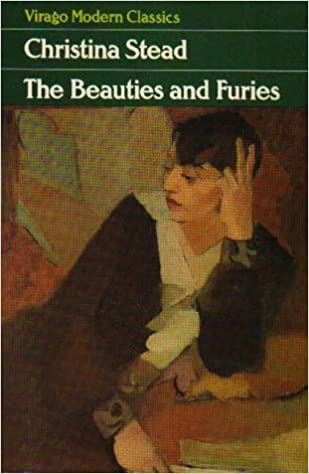
I had less tolerance for the protagonists of Christina Stead’s The Beauties and Furies. They were vacuous and self-obsessed and I was pleased to leave them behind. It was Stead’s excellent writing that both made them so believably unbearable and kept me going to the end of the novel.

The novel opens with Elvira Western on a train to Paris, having left her husband Paul for her young student lover Oliver (the lover’s names are similar and I did wonder if for two such vain people the attraction was how they saw themselves reflected in one another…)

She sits with a lace buyer called Marpurgo, little knowing that he will manipulate how her affair plays out.  He will exploit the very obvious faultlines in the relationship, but it never feels like much of a loss, as from the start Stead casts an ironic eye over the romance:

“ ‘You won’t have any more trouble – in your life! Think of that: here’s someone who loves you dearer than all the world. Put your head on my shoulder…’

It gave her a crick in the neck.”

Oliver sees himself as a Marxist intellectual, although nothing he does really demonstrates either of these aspirations. Elvira’s indolence is repeatedly emphasised and she cannot join Oliver in his pursuit of ideas if she is not warm, rested and fed, such as when he takes her to see Faust:

“she had not liked it although they had a box to themselves, because she was hungry.”

Neither seem particularly invested in the affair, more the idea of the affair. Oliver sleeps with lace-maker Coromandel and actress Blanche, both a contrast to Elvira as they display a degree of self-determinism, not that he’s interested. Elvira meanwhile, seems to just potter about. It’s mentioned that she gave up a promising education, but she seems disinclined to do anything, as Elvira’s husband observes:

“he works in the archives and reads her the political news, and she does nothing at all. She sits in cafes.”

When Elvira becomes pregnant, they both know they are not able to care for a baby, but they also vacillate between keeping it or taking the same decision as Olivia in The Weather in the Streets:

“This second marriage would be even worse than the first, because she had to cope with a brilliant young man’s impatience and disappointment. She said to herself babyishly:

‘I want a baby and a comfortable home: I don’t want to be part of the intelligentsia.’”

Meanwhile Oliver ponders:

“I am sending my seed from generation unto generation, a man full of humility.”

Spare me.

In many ways The Beauties and Furies is a novel of ideas. The sitting around in cafes arguing about politics, psychology and society gives plenty of scope for Stead to explore issues through her characters and it really captures some of the early twentieth century concerns.

“ ‘The real thought of the middle-class woman,’ complained Elvira, ‘is the problem of economic freedom and sexual freedom: they can’t be attained at the same time. We are not free. The slave of the kitchen and bedroom.’”

What stops it being overly weighty is the high degree of scepticism shown towards Elvira and Oliver, and ultimately I read The Beauties and Furies as a satire on bohemian pretentiousness and self-delusion. I’m not sure that’s correct but certainly Stead turns a sharp eye on conceit and hubris. She can be absolutely scathing towards her characters, such as this instance of Elvira becoming distressed:

“her prolific ego, masked in pathos, had them in its tendrils.”

Ouch! Although I couldn’t love The Beauties and Furies I still found much to enjoy. The incisive, well-observed writing did whet my appetite for more Stead – I have Cotter’s England in the TBR and I’m hoping for slightly less intellectual exposition and a bit more character-driven story.

Next I’m hoping to take part in Ali’s Daphne du Maurier reading week, which is running 10-16 May. Will I manage a post for it before the end of July? Watch this space… 😀

To end, I adore Greta Garbo, which is why I picked a quote from Camille to head the post, and why I’ll end the same way:

“I wish I had a river I could skate away on” (Joni Mitchell)

Hello lovely bookish blogosphere,

I haven’t been around much in 2020 and the end of the year even less so, despite my best intentions. My reading has taken such a hit and sadly I’ve fallen behind with your blogs too, when they have been a beacon of sanity and light in this horrible year.

So I just wanted to pop in and wish you all a very

even if that Christmas is looking very different to how you hoped. I know things won’t change overnight but here’s hoping 2021 is better all round.

(I originally titled this post ‘It’s beginning to look a lot like Christmas’ and then I thought, what on earth am I doing? It looks nothing like Christmas for most people. I think my brain has had enough…)

A weird and unforeseen side-effect of this year has been that I have picked up a genre I rarely, if ever, look at: celebrity autobiography. For some reason I can’t manage fiction but I can manage a life story. So although I won’t be blogging on them, just a note to say I can recommend No Shame by Tom Allen; Maggie and Me by Damian Barr; Fathomless Riches by Rev. Richard Coles; Not My Father’s Son by Alan Cumming and Vanished Years by Rupert Everett. If this symptom carries on into next year I’ll try and add some women to the list – Patti Smith, Colette and Joan Didion are all languishing in the TBR…

Having said that, I just started yesterday The Thursday Murder Club by Richard Osman, which I bought my Dad for his birthday in October and which he has now read and gifted back to me, as he knew how much willpower it took not to read it before I wrapped it 😃 I’m enjoying it a lot, so hopefully more fiction is on the horizon for me.

Anyway, that’s me for now, but I hope to be in your company a lot more next year. I wish you all a bookish and peaceful festive period.

Mme B xxx

P.S Just so this post isn’t completely out of my usual style, here’s a horrific 80s tune to finish on, which helped me win the work Christmas quiz this year (I often win and its always my knowledge of appalling 20th century Christmas pop songs that helps me secure victory – listen and learn, kids 😉)

“It’s not often one needs an elephant in a hurry.” (Phileas Fogg, Around the World in 80 Days, 1956 film)

I’m starting to write this post at 7pm on the final day of the1956 Club, hosted by Karen at Kaggsy’s Bookish Ramblings and Simon at Stuck in a Book. There used to be a time when I wrote my Club posts in advance of the week, so it’s fair to say my blogging still hasn’t quite got back on track yet😊

Unusually for this blog, my first read is a non-fiction work, My Dog Tulip by JR Ackerley, a book which took me by surprise. The blurb on the back of my NYRB Classics edition describes it thus:

“The distinguished British man of letters J. R. Ackerley hardly thought of himself as a dog lover when, well into middle age, he came into possession of a German shepherd […] she turned out to be the love of his life […] a bittersweet retrospective account of their sixteen-year companionship, as well as a profound and subtle meditation on the strangeness that lies at the heart of all relationships. In vivid and sometimes startling detail, Ackerley tells of Tulip’s often erratic behavior and very canine tastes, and of his own fumbling but determined efforts to ensure for her an existence of perfect happiness.”

So basically I was expecting a period piece Marley and Me. The trailer for the 2010 film did nothing to dissuade me of this:

Yet my experience of reading this was of a deeply eccentric and sometimes quite unnerving narrative. I didn’t dislike it, but it just wasn’t what I expected at all. I should have paid more attention to the use of ‘strangeness’ and ‘startling’ in the blurb. I think Ackerley was probably quite an independent thinker and so he writes about Tulip in really quite astonishing ways. He clearly adores his dog and captures her in almost poetic blazon style:

“these dark markings symmetrically divide up her face into zones of pale pastel colours, like a mosaic, or a stained glass window; her skull, bisected by the thread, is two primrose pools, the centre of her face light grey, the bridge of her nose above the long, black lips fawn, her cheeks white, and upon each a patte de mouche has been tastefully set.”

That’s lovely, but for much of the book Ackerley is quite determined to Tulip mated and pregnant, and I could have done without similar dwelling on the state of her vulva. I’m not a prude, and my job means I spend most of each day talking about human anatomy in very frank terms, but I was truly taken aback.

I guess if you have a pedigree dog you do have to concern yourself with such things? Every animal I’ve had has been resolutely mongrel and neutered/spayed and therefore unable to pass on their moggy/mutt genes 😊

Being an animal lover I am used to vet visits, but this book made me very glad I’m not taking my furry family members to the vets in the 1950s. The beginning of the book describes some truly distressing experiences and I am so grateful times have changed. Ackerley shares this view and can’t believe what is happening, until he and Tulip meet the lovely Miss Canvey. Tulip is untrained and appallingly behaved (according to the introduction Ackerley became something of a social pariah for the 16 years he spent with Tulip) and Miss Canvey tells it like it is: “ ‘Tulip’s a good girl. I saw that at once. You’re the trouble.’”

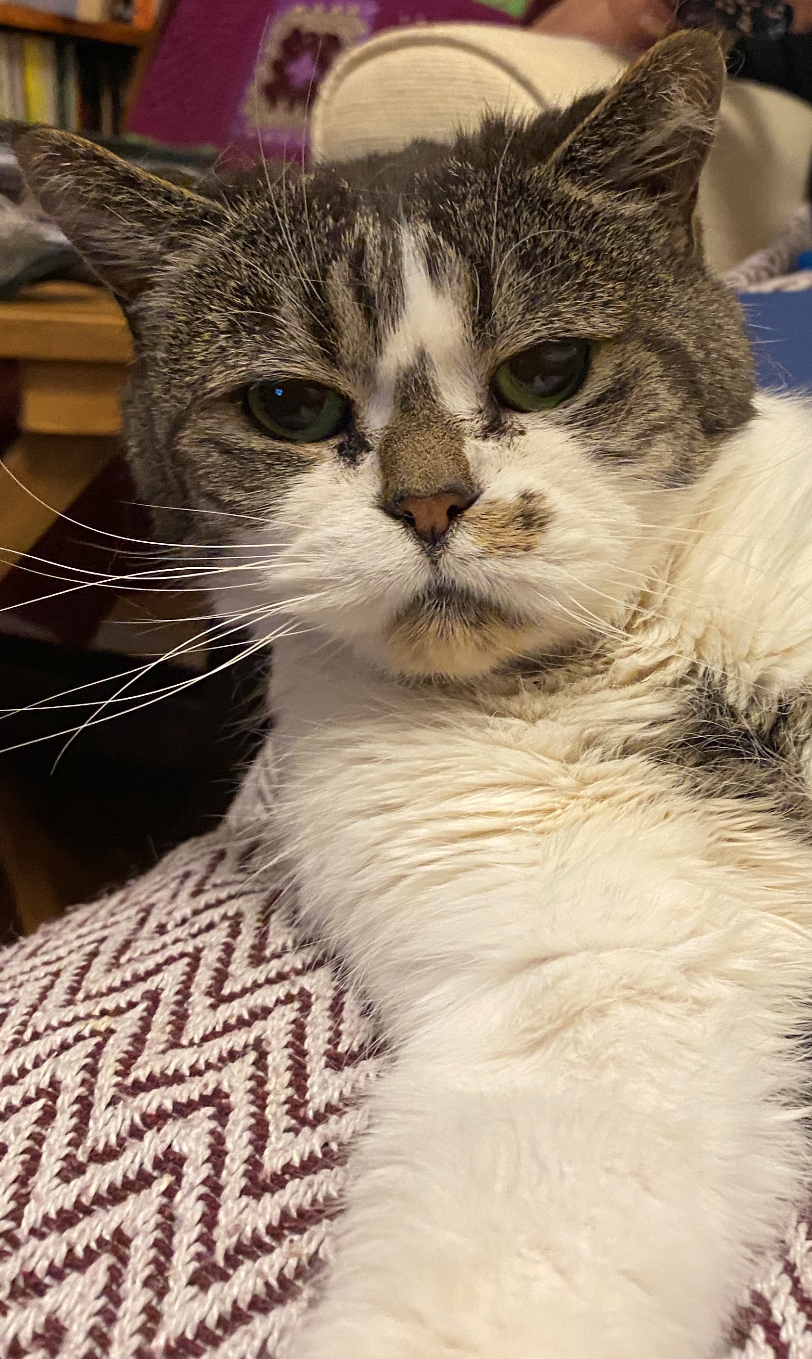
As an aside, I had to say goodbye to my sweet wee boy this June, and the vets could not have been kinder, or more respectful and caring. They even relaxed their own lockdown rules so I could be with him when he died (still all very careful and socially distanced). This was the last picture I took of him, just before he became unwell:

So I’m very glad Ackerley and Tulip find Miss Canvey, but unfortunately her insight doesn’t result in any changes and Ackerley observes: “people seem to resent being challenged whenever they approach their own sitting or dining rooms.”

He does feel some sympathy for the local shop owners though (somewhat surprisingly, as he does come across as a terrible snob), when Tulip fouls their frontage:

“True they were horrid people, but no doubt they had their burdens like the rest of us, and Tulip’s gift would not help to uplift their hearts to a sweeter view of life.”

Ultimately what Ackerley captures in My Dog Tulip is the close bond that is unique to every human and animal relationship; and what us animal lovers know for sure, that they behave infinitely better than humans:

“But if you look like a wild beast you are expected to behave like one; and human beings, who tend to disregard the savagery of their own conduct, shake their heads over the Alsatian dog. ‘What can you expect of the wolf?’ they say.”

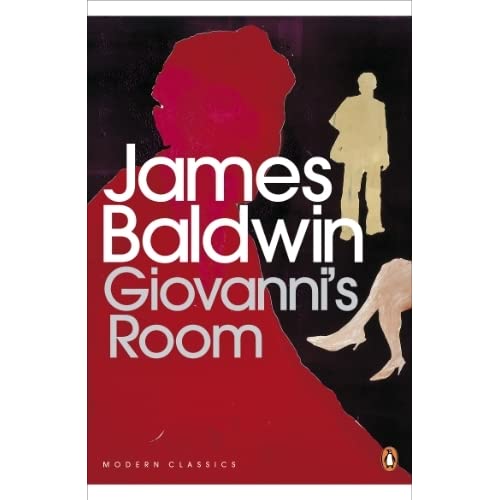
Secondly, Emma at Book Around the Corner suggested reading Giovanni’s Room by James Baldwin  and I am so glad she did. You can read Emma’s review here. This was my first James Baldwin and on the strength of this novella I’ll definitely be seeking out more of his work. He is a stunning writer: precise, poetic, insightful and so deeply moving. I knew from the opening lines, told from the point of view of young blond American David, that I’d found a writer to love:

“I stand at the window of this great house in the south of France as night falls, the night which is leading me towards the most terrible morning of my life. I have a drink in my hand, there is a bottle at my elbow. I watch my reflection in the darkening gleam of window pane.”

It’s a terrible morning because Giovanni, the man David loves, is going to be executed. They met in Paris in a gay bar where Giovanni was a barman, and quickly became lovers. Giovanni’s dilapidated lodgings provide the suffocating background to the most profound experience of David’s life:

“I scarcely know how to describe that room. It became, in a way, every room I had ever been in and every room I find myself in hereafter will remind me of Giovanni’s room. I did not really stay there very long – we met before spring began and I left there during the summer – but it still seems to me I spent a lifetime there.”

It is David’s self-hatred and wish to not be as he is that casts a shadow over their relationship. He longs for a fantasy life of heterosexual conformity:

“I wanted a woman to be for me a steady ground, like the earth itself, where I could always be renewed. It had been so once; it had almost been so once. I could make it so again, I could make it real.”

(David has a girlfriend, Hella, who is exploring Spain and deciding whether to accept his marriage proposal when he meets Giovanni.)This self-hatred means David is not always likeable but he is always believable. It makes him very judgemental towards how other gay men lead their lives, and he has horrible attitudes towards anyone he views as effeminate. His older friend Jacques picks him up on his behaviour, in an eloquent plea for humanity:

“There are so many ways of being despicable, it quite makes one’s head spin. But the way to be really despicable is to be contemptuous of other people’s pain. You ought to have some apprehension that the man you see before you was once even younger than you are now and arrived at his present wretchedness by imperceptible degrees.”

The story unfolds towards its inevitable tragedy that we know from the start is looming over the characters. It’s a heartwrenchingly sad tale that captures the deep and profound damage that can occur when the pain and frustration of a life unlived is inflicted on others.

I could have quoted so much from this novella. It is full of passages breathtaking in their beauty and wisdom. Effusively recommended.

“But people can’t, unhappily, invent their own mooring posts, their lovers and their friends, anymore than they can invent their parents. Life gives these and also takes them away and the great difficulty is to say Yes to life.”

To end, I’d normally pick a song from 1956 but none of them really took my fancy. So instead, a song for the year we’re in now. I’ve mentioned before that at times of trouble in my life there is one man I always turn to. That man is David Bowie. During the weirdness of 2020, he has not let me down. Yet also this year I’ve found myself seeking solace with another…

Bruce Springsteen has jokingly said that he writes the same song over and over. The song he’s referring to is about feeling powerless, trapped by circumstance, wanting to escape and still trying to reach out. That pretty much sums up the current situation doesn’t it?

I think so many of us are waiting on metaphorical sunny days. Here’s hoping they’re not too far away. At least I’ve managed to stop bursting into tears when he sings ‘everything’ll be ok’ which is a marginal improvement:

(Also at 4:25 Bruce does a knee slide, which contains the important message that you can be a 70 year old rock god but you’re never too old or too cool to launch yourself across a temptingly shiny floor like a giddy child…)

“No live organism can continue for long to exist sanely under conditions of absolute reality.” (Shirley Jackson)

It is a truth universally acknowledged that 2020 has been a big old pile of pants. Initially I felt guilty about seeking some escapism – it seemed to be another facet of privilege that escapism was available to me – but now I think if it keeps you sane, do whatever works to come out the other side (and I need to keep reminding myself that there will be the other side…) So here are two enjoyable, light comic novels that have helped me keep possession of my remaining marbles.

Firstly, Kate reminded me that the Lucia novels by EF Benson are perfect for this sort of read. Having read Queen Lucia back in April for the 1920 Club, I was keen to read the sequel Lucia in London (1927), especially as fans of Mapp and Lucia tell me the novels get better as they progress.

It opens with the death of Lucia’s aunt by marriage, who had been very unwell for many years and lived to a ripe old age. All things considered:

“it had been generally and perhaps reasonably hoped among his friends and those of his wife that the bereavement would not be regarded by either of them as an intolerable tragedy.”

But to do so would deny Lucia a chance at self-dramatisation, so of course she goes all out for grief. Her donning of black and a pained expression is wonderfully satirised by Benson, as are the social niceties of bereavement when no-one genuinely cares for the departed:

“Georgie held her hand a moment longer than was usual, and gave it a little extra pressure for the conveyance of sympathy. Lucia, to acknowledge that, pressed a little more, and Georgie tightened his grip again to show that he understood, until their respective finger-nails grew white with the conveyance and reception of sympathy. It was rather agonising, because a bit of skin on his little finger had got caught between two of the rings on his third finger, and he was glad when they quite understood each other.”

It soon becomes clear that Lucia plans to decamp to London, to the aunt’s very swish home, leaving Riseholme reeling. Georgie understands the impulse but is surprised that Lucia is quite so keen to leave:

“He wanted, ever so much, to have a little flat in London (or a couple of rooms would serve) just for a dip every now and then in the life which Lucia found so vapid. But he knew he wasn’t a strong, serious character like Lucia, whose only frivolities were artistic or Elizabethan.”

As readers we know that Lucia is entirely frivolous of course, and she throws herself into the contemporary London scene with gusto.

“What she wanted was the foam of the wave, the topmost, the most sunlit of the billows that rode the sea. Anything that had proved itself billowish was her game, and anything which showed signs of being a billow, even if it entailed a vegetarian lunch with cocktails and the possible necessity of being painted like the artist’s wife with an eyebrow in one corner of the picture and a substance like desiccated cauliflower in the centre.”

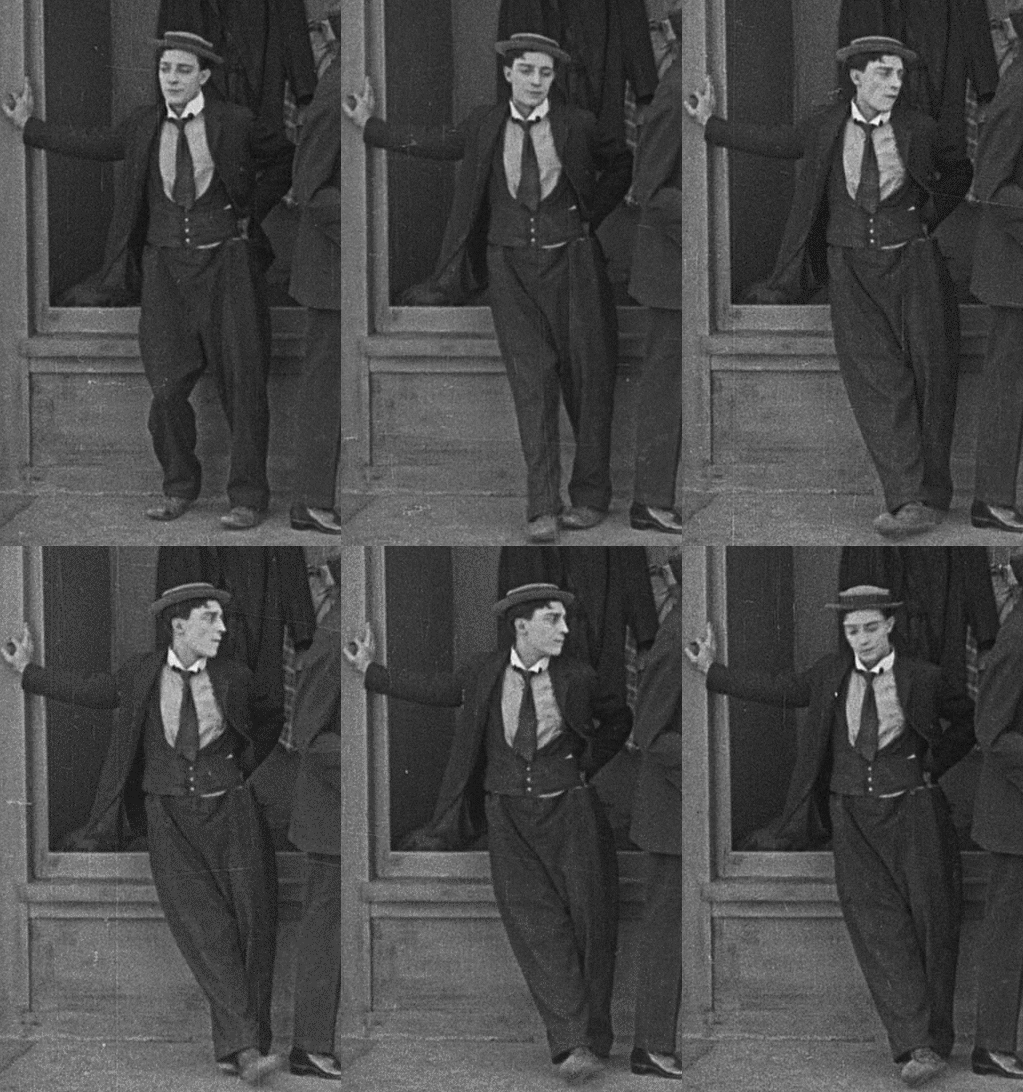
As a Londoner myself it struck me that nothing changes: 93 years on and the silliness of the fashionable London scene is still ripe for satirising. Benson pokes gentle fun, nobody is truly despicable or utterly destroyed. Personally I enjoyed the ongoing saga of Georgie’s Oxford bags, bought during “a moment of reckless sartorial courage”. Not everyone can carry off Oxford bags with the aplomb of Buster Keaton, after all:

Life at Riseholme continues at its usual pace – that is, a snail’s. It is a life they all enjoyed, one filled with enough little dramas and crises to keep them all amused. Now however, something is missing:

“Yet none of these things which, together with plenty of conversation and a little housekeeping and manicuring, had long made life such a busy and strenuous performance, seemed to offer an adequate stimulus. And he knew well enough what rendered them devoid of tonic: it was that Lucia was not here, and however much he told himself he did not want her, he like all the rest of Riseholme was beginning to miss her dreadfully. She aggravated and exasperated them: she was a hypocrite (all that pretence of not having read the Mozart duet, and desolation at Auntie’s death), a poseuse, a sham and a snob, but there was something about her that stirred you into violent though protesting activity, and though she might infuriate you, she prevented your being dull.”

Will Lucia make a splash in London? Will Riseholme find their way without her? Will she ever return? What do you think?

“Aren’t you feeling more Luciaphil? I’m sure you are. You must enjoy her: it shows such a want of humour to be annoyed with her.”

You can read Lucia in London online here.

Now a musical interlude, but one of which I’m certain Lucia would not remotely approve. You can’t get more London than Chas and Dave:

Secondly, Ali’s lovely post 10 vintage books of joy reminded me I had Something Light by Margery Sharp (1960) in the TBR, and so I dug it out forthwith. I adore Margery Sharp and her well-observed but gentle humour was just what I needed.

It opens “Louisa Mary Datchett was very fond of men.” Unfortunately for Louisa, this means she keeps running round after various wet blankets, helping them keep on track, buying them yogurt and mopping their brows. She’s getting older and her profession as a dog photographer only just keeps her afloat, so she decides she needs to get married.

“ ‘It’s not the suffragettes who’d be proud of me,’ thought Louisa bitterly, ‘it’s the Salvation Army. I may be the modern woman, the femme sole with all her rights, and I’m very fond of men, but it’s time I looked out for myself.  In fact it’s time I looked out for a rich husband, just as though I’d been born in a Victorian novel…’”

It’s a brilliant piece of characterisation that Louisa doesn’t come across as either a doormat or as mercenary. She’s a kind person, a wee bit lost, and trying to take the best decisions she can for a happy life.

We then follow Louisa’s various adventures trying to gain what she thinks she wants. She spends a week trying to secure a rich husband, another seven days rekindling an adolescent devotion and a further week acting as a housekeeper for a man whose ready-made family are appealing.

That’s pretty much it, plot-wise and there are no real surprises. In no way is this a criticism. A comfort read for me has a nice predictability to it and I enjoy watching things play out as I expect in an entertaining way.

What further makes this such an enjoyable read are the fond portraits of the various characters, and the little details. One suitor is frequently likened to a Sealyham terrier; bamboo framed spectacles are given far too much importance; Louisa wears a “rowdy housecoat, zebras on a pink ground”; the milkman is a constant source of sympathetic wisdom as well as dairy products; Louisa has to try and sell ugly beechnut jewellery on behalf of her Bohemian artist neighbour. Everyone is flawed, believably human, gently ribbed by the author. It’s an absolute delight.

“She was constantly being either sent for, like a fire engine, or dispatched, like a lifeboat, to the scene of some masculine disaster”

To end, an 80s pop classic as always, but presented in a lip sync scene of sibling bonding that makes me smile, and we all need things that make us smile right now: