“I’m the greatest thing that ever lived! I’m the king of the world! I’m a bad man. I’m the prettiest thing that ever lived.” (Muhammad Ali)

As usual, I’m a bit behind the times: here is my post to commemorate the death of Olympian/activist/philanthropist/iconic legend Muhammad Ali on 3 June, whose memorial was last Friday.

c8c7ccdd-25ee-454b-bd57-8cd8566212a8-1630x2040

Image from here

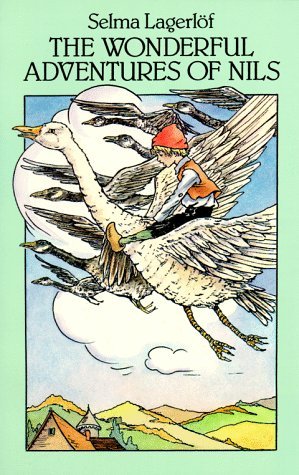
I thought I would therefore theme this post around ‘greatest’.  Just over a week ago Lisa McInerney won this year’s Bailey’s Prize for her debut novel The Glorious Heresies, so I’ve decided to look at Half of a Yellow Sun by Chimamanda Ngozi Adichie which won the Baileys (then the Orange) in 1997 and was chosen as the prize’s Best of the Best in 2015. I’ve paired it with Midnight’s Children by Salman Rushdie which won the 1981 Booker, and then in 1993 (25 years of the Booker) and 2008 (40 years of the Booker),  it won the Best of the Bookers (the latter by public vote). They are also two more stops on my Around the World in 80 Books Reading Challenge, hosted by Hard Book Habit– away we go!

Half of a Yellow Sun is set in Nigeria during the civil war of the 1960s, when there was an attempt to establish Biafra as an independent nation. Focusing on two sisters, Olanna and Kainene, their partners Odenigbo and Richard, and Olanna and Odenigbo’s houseboy Ugwu, the war is explored through its varied but monumental impact on all their lives.

Before the war, Olanna and Odenigbo live a privileged middle class life in the university town of Nsukka, entertaining in the evenings with friends who debate issues of post-colonial identity:

“‘I am Nigerian because a white man created Nigeria and gave me that identity. I am black because the white man constructed black to be as different from as possible from his white. But I was Igbo before the white man came.’”

Ugwu joins them and is mesmerised by their sophistication, and the worlds they open for him through the books they provide. However, Adichie shows that the legacy of colonialism is deep-rooted:

“Master’s English was music, but what Ugwu was hearing now, from this woman, was magic. Hers was a superior language, a luminous language, the kind her heard on Master’s radio, rolling out with clipped precision. It reminded him of slicing a yam with a newly sharpened knife, the easy perfection in every slice.”

As the Igbo people try to establish Biafra and civil war escalates, Olanna, Odenigbo and Ugwu’s lives are ripped apart and Adichie does not pull her punches. There is forced conscription, rape as a weapon, starvation and mutilation. However, there is also reconciliation between the estranged sisters, and Adichie’s focus is not on horrors but on how the human spirit survives against overwhelming odds:

“The war would continue without them. Olanna exhaled, filled with frothy rage. It was the very sense of being inconsequential that pushed her from extreme fear to extreme fury. She had to matter. She would no longer exist limply, waiting to die.”

Adichie is a hugely popular and successful author, and I feel the hype is fully deserved: she’s a brilliant writer. I whizzed through this book – she manages to write a compelling, political, angry, compassionate and highly moving page-turner. What a feat.

Half of a Yellow Sun was adapted into a film in 2013, apparently not that successfully despite a seemingly perfect cast including smoking hot eye candy hugely talented actor Chiwetel Ejiofor:

On to Midnight’s Children by Salman Rushdie (1981) which like Half of a Yellow Sun was the author’s second novel: so much for the ‘difficult second novel’ theory. It’s taken me about twenty years to read Midnight’s Children, which works out as 6% of a page per day. It’s been quite a ride.

rhpsf

I jest of course, but it did take me 3 goes spread over 20 years to get into this novel.  Normally I would have resigned it to the DNF pile (which is tiny, my TBR aspires to be that size one day – never going to happen) but I kept persevering because people who loved it really loved it and it always cropped up on various book lists (including Le Monde’s , which forms one of my reading challenges).

Now that I’ve read it, I can’t say I loved it – something about Rushdie’s style meant this was always a tough read for me – but I did find it impressive. Midnight’s Children is hugely ambitious, tackling themes around nation-making, history writing, colonialism and culture. Seemingly impossible within one novel, but Rushdie and his massive brain are clearly equal to the task. The story is narrated by Saleem Sinai who is born on the stroke of midnight on 15 August 1947, the exact moment that India gained independence from Britain.

“Thanks to the occult tyrannies if those blandly saluting clocks I had been mysteriously handcuffed to history, my destinies indissolubly chained to those of my country. For the next three decades, there was to be no escape.”

Saleem’s story, and that of his family, becomes the story of the nation of India. The novel makes heavy use of magical realism, and I think this is Rushdie’s masterstroke. It would be impossible to explore such enormous themes and multiple events if the novel were entirely grounded in a recognisable reality. By allowing for magic realism, Rushdie can take the story in any direction he needs to.

Saleem discovers that all the children born into India between midnight and 1am on the day of Independence have special powers – his own being telepathy, powered by his enormous nose and blocked sinuses (told you there was magic realism).

“the children of midnight were also the children of the time: fathered, you understand, by history. It can happen. Especially in a country which is itself a sort of dream.”

“Midnight has many children; the offspring of Independence were not all human, Violence, corruption, poverty, generals, chaos, greed and pepperpots…I had to go into exile to learn that the children of midnight were more varied than I – even I – had dreamed.”

Saleem is a self-acknowledged unreliable narrator. His memory fails him at times, regarding both events in his own life and those in the wider political history of India. What Rushdie is questioning is the narratives we are all within – family, nation, history, culture – and how there is no one reality for any of us.

“Family history, of course, has its proper dietary laws. One is supposed to swallow and digest only the permitted parts of it, the halal portions of the past, drained of their redness, their blood. Unfortunately this makes the story less juicy, so I am about to become the first and only member of my family to flout the laws of halal. Letting no blood escape from the body of the tale, I arrive at the unspeakable part; and, undaunted, press on.”

I realise I may have made Midnight’s Children sound like a heavy read, and in some ways it is, but it also has a gentle humour running through it to lighten the tone.  I’ve certainly never read anything else like it.

“One day, perhaps, the world may taste the pickles of history. They may be too strong for some palates, their smell is overpowering, tears may rise to eyes; I hope nevertheless that it will be possible to say of them that they possess the authentic taste of truth”

To end, I can’t help wishing the dress code for book award ceremonies was monochrome cat suits and that winners collected their awards by emerging from a fog of dry ice:

“Honeymoon, keep a-shining in June” (By the Light of the Silvery Moon)

As a companion piece to my last post about marriage, I thought I would look this week at portrayals of honeymoons. Originally I planned to include On Chesil Beach by Ian McEwan but I ran out of time & wanted to re-read it in order to do it justice, as I remember it being very moving. So please don’t let my inadequacy prevent you from checking it out if you haven’t read it 😉 Onwards to honeymoon stories I’ve read more recently!

weimaraner-1381186_960_720

All the ‘honeymoon’ pictures I googled made me want to vomit, so here’s a Weimaraner puppy instead

Firstly, Orkney by Amy Sackville (2013), which is an eerie, claustrophobic tale of a honeymoon taken on a remote Scottish island. Richard is a professor of English literature who is entranced by literary sirens and by his silver-haired wife, forty years younger than he, strange and unknowable:

“She is a tiny, perfect, whittled trinket found bedded in the sand, carved patiently, for comfort; she is a spined and spiky urchin with an inside smooth as polished stone, as marble; she is frond of pallid wrack, a coral swaying in the current, anchored to the sea-bed; she is an oyster, choking on grit, clutching her pearl to her.”

The unnamed wife is obsessed with the sea, taking long, lone walks by day and having water-filled nightmares by night:

And as she dreams her submarine dreams I lie beside her, a whale’s carcass, a wrecked ship, a vast ribcage in the dark blue deep; and she is a tiny luminescent silver fish, picking me clean, in and out of all that’s left of me, bare bones long since freed of flesh and rigging.”

Each chapter covers a day of their honeymoon, told from Richard’s perspective. This is not a plot-driven story as very little happens, in some ways it is quite a slight tale, but I found Sackville’s beautiful writing made it compelling and carried me along. The atmosphere gradually becomes more uncanny, with a sense that is not just Richard’s wife who is unknown, but that there are no certainties at all:

“An overcast, lowering sky this morning; the clouds have clotted through the night. Something gathering, brooding, out on the sea. A darkness spreading. The edges of my wife blur against the sky.”

Orkney is short novel about the stories we tell ourselves and each other, how we understand the world, and how what is real and unreal is not always clearly delineated:

“He tells her tales of the finfolk and selkies. Nothing can replace those first tales, which have coloured the cast of her thought, which have filled her nights with the sea, which are at least as real to her as anything she’s learned of the world since.”

5726963_8e14c7f0

Secondly, the short story Here We Are by Dorothy Parker (1931). A young couple are on a train, having been married “exactly two hours and twenty-six minutes”.  Most of the story is dialogue, and they come across as so terribly young and naïve.

“He sat down, leaning back against the bristled green plush, in the seat opposite the girl in beige. She looked as new as a peeled egg. Her hat, her fur, her frock, her gloves were glossy and stiff with novelty.”

They sit and talk about the day, the wedding, those they know, and bicker about silly things: hats, mainly.

“‘Hell, honey lamb, this is our honeymoon. What’s the matter?’

‘I don’t know,’ she said. ‘We used to squabble a lot when we were going out together and then engaged and everything, but I thought everything would be so different as soon as you were married. And now I feel sort of strange and everything. I feel so sort of alone.’”

Of course, what they are not saying is that the train is speeding them towards a hotel room, and they are terrified about what is going to happen once they are alone together.  The story is a masterclass in ‘show, don’t tell’ writing. Parker’s trademark acerbic wit is not to the fore – the story is gently funny, and I felt sorry for this unknowing couple marrying in such a different age, and desperately hoped it would work out for them.

Speaking of virgins:

“My most brilliant achievement was my ability to be able to persuade my wife to marry me.” (Winston Churchill)

A friend of mine got married last weekend, and most lovely it was too. But enough about them; it gives me an excuse for indulgence of an enduring crush (who I planned to marry when I was six –  with hindsight I suspect the age gap was insurmountable):

To celebrate I’ve picked two novels which explore the theme of marriage. Firstly, The Marriage Plot by Jeffrey Eugenides (2011). Set at Brown University in the early 1980s, it tells the story of three undergraduates, Leonard, Madeleine and Mitchell, as they try and find their way through life, while realising that their academic and intellectual achievements have not prepared them in any way. As an English graduate, I particularly enjoyed Eugenides’ evocation and gentle ribbing of this area of study:

“That left a large contingent of people majoring in English by default. Because they weren’t left-brained enough for science, because history was too dry, philosophy too difficult, geology too petroleum-oriented, and math too mathematical- because they weren’t musical, financially motivated, or really all that smart, these people were pursuing university degrees doing something no different from what they’d done in first grade: reading stories. English was what people who didn’t know what to major in majored in.”

Of course I disagree 🙂 Eugenides is very good a skewering the intellectual trends in academia, which at this time was semiotics, while not undermining idealistic Madeleine’s belief in ideas and search for meaning. Unfortunately “Madeleine’s love troubles had begun at a time when the French theory she was reading deconstructed the very notion of love.” and she finds the theories don’t really account for the messiness of real world relationships. In one pivotal scene, the writing of Roland Barthes is used to break her heart:

I Love You je-t’aime/I-love-you. As she read these words, Madeleine was flooded with happiness. She glanced up at Leonard, smiling. With his finger he motioned for her to keep going. The figure refers not to the declaration of love, to the avowal, but to the repeated utterance of the love cry. Suddenly Madeleine’s happiness diminished, usurped by the feeling of peril. She wished she weren’t naked.”

The Marriage Plot is comic but remains grounded in the three vulnerable characters trying to become the best versions of themselves. Once they leave university, the novel shifts from satirising academia to focus on the characters’ relationships with one another. Eugenides uses a typical romantic plot (no-one is in love with anyone who can love them back) to create a metafictional commentary on how romance and marriage have been presented throughout the ages, particularly in novels. If this sounds truly dreadful, rest assured the novel stops short of being too smug about its own cleverness, and what emerges in the second half is a truly sensitive portrait of mental illness.

 “That was when Leonard realised something crucial about depression. The smarter you were, the worse it was. The sharper your brain, the more it cut you up.”

Whether or not this is true, Leonard is both brilliant and extremely unwell, and the exploration of his bipolar disorder is non-sensationalist and balanced, showing the effect on Leonard and those around him; the price paid for something devastating which is no-one’s fault.

“it was as if her own heart had been surgically removed from her body and was being kept at a remote location, still connected to her and pumping blood through her veins, but exposed to dangers she couldn’t see: her heart was in a box somewhere, in the open air, unprotected.”

I didn’t find The Marriage Plot quite as effective as Eugenides’ debut The Virgin Suicides, and although I haven’t read Middlesex, his lauded second novel (it’s buried in a TBR stack somewhere…), I doubt this novel concerned the Pulitzer judges to the same extent. However, it is a novel with much to offer, and I recognised and cared about all the characters in it. The Marriage Plot plays with ideas and even destabilises itself with metafictional nods towards novels and novel writing, but never at the expense of a recognisable humanity.

“the novel had reached its apogee with the marriage plot and had never recovered from its disappearance, In the days when success in life had depended marriage, and marriage had depended on money, novelists had a subject to write about. The great epics sung of war, the novel of marriage. Sexual equality, good for women, had been bad for the novel. And divorce had undone it completely. What would it matter whom Emma married if she could file for separation later?”

12909527393_b0c336c399_z

Pasta eating dogs melt even this non-romantic’s heart

Secondly, The Amateur Marriage by Anne Tyler (2004), which portrays the marriage between Michael and Pauline, from their courtship under the shadow of World War II through to old age. Their fledgling relationship is shown through the eyes of the small town where Michael has grown up:

“She had her read coat on, which is how they could all spot her from such a distance. They said ‘Michael! Look!’ and Michael turned at once in the right direction, although Pauline herself had not called out. When she came nearer they could see why. She had no breath left, poor thing. She was gasping and tousle-haired and flushed – really not her prettiest, but who in the world cared? She was holding out her arms, and Michael dropped his belongings and started running too, and when they collided he swooped her up so her feet completely left the ground, Everybody said ‘Ah’ in one long satisfied sigh – everyone except his mother, but even she watched with something close to sympathy.”

Once the war – and its accompanying heightened experience, drama and uncertainty is over, the marriage is shown through the eyes of the couple, who realise they are entirely mismatched:

“by nature, Pauline tumbled through life helter-skelter, while Michael proceeded deliberately. By nature, Pauline felt entitled to spill anything that came into her head while Michael measured out every word. She was brimming with energy – a floor pacer, a foot jiggler, a finger drummer – while he was slow and plodding and secretly somewhat lazy. Everything to her was all or nothing…while to him the world was calibrated more incrementally and more fuzzily.”

This being Anne Tyler, it is not a huge tragedy, but rather a psychologically astute portrait of two people and their family with the attendant hurt, frustration, disappointment, love and affection:

“Another time, Michael might have felt annoyed by this rouged and lipsticked version of the truth. Such concern for the looks of things even within the family! But today he was touched. It occurred to him that his wife had amazing reserves of strength, that women like Pauline were the ones who kept the planet spinning. Or at least, they made it appear to keep spinning, however it might in fact be wobbling on its axis.”

If you’ve read any of Anne Tyler’s 20 novels before, you’ll know what to expect in The Amateur Marriage: set in Baltimore, concerned with ordinary people leading ordinary lives, with no huge dramas. This is not a criticism, however. She is brilliant at well-observed detail, of the meaning found in small moments, of what we learn to live with and the solace imperfect human beings can give one another.

“He believed that all of them, all those young marrieds of the war years, had started out in equal ignorance…Then two by two they fell away, having grown wise and seasoned and comfortable in their roles, until only he and Pauline remained, as inexperienced as ever – the last couple left in the amateurs’ parade.”

To end, a little something for another friend who was also at the wedding, and who I think will be the next bride I see. She has an agreement with her partner for a certain man to be her celebrity allowance:

“Trains, like time and tide, stop for no one” (Jules Verne)

Despite not thinking of myself as a remotely patriotic person, there was a 3 part programme on TV recently that was probably the most British thing ever, and I am so sorry it’s ended. Paul Merton travelling around the island by train (is it me or is he turning into Ian Hislop?), only getting off at request stops and chatting to those he meets. That’s it. Result: pure brilliance.

I share Mr Merton’s love of trains, and so this week I thought I would look at novels where they feature heavily.  This also enables me to fulfil the requirement of the Around the World in 80 Books reading challenge hosted by Hard Book Habit, to include a book about travel.

Firstly, Compartment No.6 by Rosa Liksom (2011, tr. Lola Rogers) which I was alerted to by Sarah’s review at Hard Book Habit and also by bookarino, where I was sure I had read a review but now I can’t find it on her blog – bookarino, if you reviewed please leave a link below!

The novel details the journey on the Trans-Siberian railway from Moscow to Mongolia undertaken by the two inhabitants of the titular compartment. Liksom describes the landscapes they pass through simply but evocatively, and succeeds in capturing a sense of place and of travel:

“An unknown Russia frozen in ice opens up ahead, the train speeds onward, shining stars etched against a tired sky, the train plunging into nature, into oppressive darkness lit by a cloudy, starless sky. Everything is in motion: snow, water, air, trees, clouds, wind, cities, villages, people, thoughts. The train throbs across the snowy land.”

The atmosphere in the compartment is intimate and oppressive:

“All of Siberia slowly brightened. The man in his blue tracksuit bottoms and white shirt did push-ups between the bunks, sleep in his eyes, his mouth dry and smelly, the mucousy smell of sleep in the compartment, no breath from the window, tea glasses quietly on the table, crumbs silent on the floor.”

The man Vadim is repugnant: misogynistic, violent, anti-semitic, anti anyone who isn’t him. His attitudes and behaviour are repellent. Yet as they are forced together, a comradeship builds between him and the female traveller. She is presented a step removed: we never know her name, her direct speech is given only once and then she is quoting. Yet this works brilliantly at evoking the girl’s slightly numb, detached state as she runs away from her troubles and works her way back to facing them, with the help of the dreadful Vadim.

 “The girl looked out of the window at an entirely new landscape…she thought of that July day when she came back from her summer vacation in Finland and Mitka was at the station to meet her. She thought about how they had gone to the boarding house, run up the nine flights of stairs hand in hand, how the hallway had been filled knee-high with the fluffy heads of dandelions, how they’d run up and down the hallway like children, the dandelion fluff drifting in and out of the windows.”

Compartment No.6 is a short but haunting novel which will undoubtedly linger long in my memory.

Secondly, Strangers on a Train by Patricia Highsmith (1950), which was adapted only a year later into the famous Alfred Hitchcock film of the same name, albeit with several changes.

Strangers_on_a_Train_-_In_the_dining_car

Sadly my commuter train doesn’t look like this, despite being full of people hatching murderous plots

Successful architect Guy Haines meets bored, spoilt alcoholic Charley Bruno on a long haul train journey. He is reluctant to engage in chat, but Bruno is insistent, and Guy ends up telling him that he is travelling to meet his wife to ask for a divorce. Bruno meanwhile, hates his father and wants his inheritance.

“Bruno could be violent. He could be insane, too. Despair, Guy thought, not insanity. The desperate boredom of the wealthy…it tended to destroy rather than create. And it could lead to crime as easily as privation.”

It is Bruno who comes up with the idea that they swop murders, Bruno killing Guy’s estranged wife for Guy killing his father. Guy doesn’t agree, but Bruno goes ahead anyway. Needless to say, he is a sociopath:

“whether Guy came through with his part of the deal or not, if he was successful with Miriam he would have proved a point. A perfect murder.”

“So long had he been frustrated in his hunger for a meaning of his life, and in his amorphous desire to perform an act that would give it meaning, that he had come to prefer frustration, like some habitually unrequited lovers.”

Bruno ends up stalking Guy, entirely obsessed with him, and it is this, rather than the murders or closing net of the investigation that provides the thriller element of the novel. Bruno is completely unstable and there is no telling what he might do as he exerts increasing pressure on Guy. Yet Bruno is vulnerable too, childlike and confused, and never admitting that it is sexual desire which draws him to Guy.

“Guy! Guy and himself! Who else was like them? Who else was their equal? He longed for Guy to be with him now. He would clasp Guy’s hand and to hell with the rest of the world! Their feats were unparalleled! Like a sweep across the sky! Like two streaks of red fire that came and disappeared so fast, everybody stood wondering if they had really seen them.”

There are definite overlaps with Tom Ripley, the sociopathic protagonist of several Highsmith novels. Bruno is a much less attractive character than Ripley, but there is the desperation and loneliness of the sociopath, the thwarted gay desire, and the doubling between characters, which Guy realises, much as he is reluctant to admit it:

“And Bruno, he and Bruno. Each was what the other had not chosen to be, the cast-off self, what he thought he hated but perhaps in reality loved.”

Strangers on a Train worked well for me as a thriller, but without any glorification of murder or murderers.  Like The Talented Mr Ripley, what I was mainly left with was a sense of sadness at the destruction that desperate human beings can wreak on one another.

To end, a quick clip to shamelessly indulge my love of Buster Keaton:

“Outside of a dog, a book is man’s best friend. Inside of a dog it’s too dark to read.” (Groucho Marx)

Last week I mentioned the indulgence of good friends, so this week I thought I would look at novels capturing female friendships. I’ll try and redress the balance at some point by looking at male friendships, but this week, in the words of Lesley Knope, its ovaries before brovaries 😀

Fox-News

My future – I sincerely hope

Image from here

Firstly, Animals, the second novel from Emma Jane Unsworth, described on the cover by Caitlin Moran as “Withnail with girls”, which pretty much sums it up. Laura lives with her friend Tyler, a one-woman tornado:

“She didn’t just change the temperature of rooms, she changed their entire chemical make-up so that anyone in the room would only be aware that the room was an extension of her and she was the thrumming nucleus.”

Tyler is indulgent, defensive, funny, clever – a total nightmare with whom Laura feels an immediate bond:

“Someone who sees right to your backbone and simultaneously feels their backbone acknowledged.”

But Laura is in love with Jim and is planning to get married, introducing a tension into the women’s friendship.  Tyler wants life to continue as it is, Laura is not so sure. It’s not plot-heavy, as Tyler and Laura ricochet from one substance-fuelled experience to another, it’s funny and sad and so very believable:

“And there it was, as always, swinging my way: The Night. With its deals, promises and gauntlets, by turns many things: nemesis, ally, co-conspirator, master of persuasion. It tosses its promises before you like scraps on the road, crumbs leading into the forest: pubs, parties, booze, drugs, dancing, karaoke…”

Amongst all this eventful partying, there is an elegiac quality to Animals: both the women are in their thirties and there’s a sense that their life together cannot continue for much longer, and that it might not be so entertaining if it did:

“Next to the sink, two folded banknotes balanced on a rung of the towel rail, drying. I stood and looked into the bowl before I flushed, recalling the adage of a girl I’d once worked with: White piss good; amber piss bad. Orwellian in its visceral simplicity. Meanwhile the liquid I had dispatched into the toilet bowl was almost ochre.”

1987WithnailandIArrow-920x699

A great film, but not a wise lifestyle choice, kids

Image from here

The bawdy chaos of Animals is presented through considered, inventive storytelling; Unsworth’s voice is compelling and like Laura on a night out with Tyler, I found myself carried along for the ride.

Secondly, the publishing phenomenon that is Elena’s Ferrante’s My Brilliant Friend (tr. Ann Goldstein, Europa editions 2012) and one more stop on my Around the World in 80 Books reading challenge, hosted by Hard Book Habit. This is the first in a quartet known as the Neapolitan novels which have sold millions worldwide, no doubt to the chagrin of authors everywhere stuck on a PR treadmill, as Ferrante remains determinedly anonymous. The novels detail the friendship between Elena and Lila from the 1950s onwards.

“She stopped to wait for me, and when I reached her she gave me her hand. This gesture changed everything between us forever.”

I’m grateful to Kate’s recent review which tempered my expectations somewhat. While I did like the novel, I think had I gone in with the astronomical expectations created by all the hype I would have been disappointed. As it was, I went in with moderate expectations and enjoyed being pulled into the poor Neapolitan neighbourhood Ferrante so vividly evokes. Elena summarises: “I feel no nostalgia for our childhood: it was full of violence.” She’s not wrong. Violence between strangers, friends and families seems to be constant. The poverty and accompanying lack of horizons takes its toll:

“At the Bar Solara, in the heat, between gambling losses and troublesome drunkenness, people often reached the point of disperazione – a word that in dialect meant having lost all hope but also being broke – and hence of fights.”

Within this environment, Lila and Elena form a friendship that is full of the unspoken. Elena is mesmerised by Lila, who is tough, independent, and highly intelligent. Despite the time they spend together, the core of Lila – what she really wants, her hopes and dreams – remain mysterious to Elena.

“Would she always do the things I was supposed to do, before and better than me? She eluded me when I followed her and meanwhile stayed close on my heels in order to pass me by?”

It is this competitiveness, this desire to be like Lila, which spurs Elena on, to the point where this motivation becomes indistinguishable from her own preferences. She continues at school long after Lila leaves, her academic commitment a mixture of wanting to outstrip Lila, wanting to do well because it is what Lila wants, and wanting to do well for herself. Ferrante has an excellent understanding of how these early friendships are so vitally important, how they form us in ways we barely understand and how quickly it is impossible to say what feels intrinsic to us and what is the influence of others. She captures the ambivalence of friendships that are formed out of deep love and conflict:

“When school started again, on the one hand I suffered because I knew I wouldn’t have time for Lila anymore, on the other I hoped to detach myself from the sum of the misdeeds and compliances and cowardly acts of the people we knew, whom we loved, whom we carried – she, Pasquale, Rino, I, all of us – in or blood.”

While I’m not quite ready to proclaim myself a fully paid-up Ferrante acolyte, the quartet supposedly gets better as it goes along, so by book four I could well be (Marina Sofia has written a really interesting review of the quartet here).

To end, two celebrities (one of whom plays the aforementioned Lesley Knope) who claim to be BFFs and I actually believe them:

“It’s just a job. Grass grows, birds fly, waves pound the sand. I beat people up.” (Muhammad Ali)

Every six months or so the friends I made when I was training for my profession meet up, which we did yesterday.  They were remarkably good natured as the question “how are you?”, when directed towards me, was met with a wail of despair and a twenty minute garbled monologue about how difficult I was finding things. Safe to say I’ve never really mastered the British stoic reticence thing.

Dr.-Who

My ongoing crisis aside, time spent with my lovely, indulgent friends prompted me to look this week at novels that focus on a profession. Firstly, The Electric Michelangelo by Sarah Hall (2004, Faber & Faber), which is about a tattoo artist. Undoubtedly this is a growth industry, certainly in the UK which is the most tattooed nation in Europe: one-fifth of adults have a tattoo, rising to almost one-third of those under 45. That’s a lot of ink.

Maud_Stevens_Wagner

 I recently wrote about Hall’s first novel Haweswater, which I loved.  I didn’t feel The Electric Michelangelo, her second novel, was as accomplished as her first, but it was still strong.  It follows tattooist Cy Parks from an adolescent apprenticeship with the alcoholic Eliot Riley in his hometown of Morecambe Bay to a career in carnivalesque Coney Island and back again. Growing up in early twentieth-century Morecombe, Cy’s formidable mother Reeda runs a hotel for consumptives:

“They sucked it down in between their fits and held it inside their lungs like opium smokers in a den…Morecombe’s air was renowned, if not nationwide then reliably in the north, for its restorative properties, its tonic qualities. That was how everyone described it…”

Cy is fairly directionless until his artistic skills catch the eye of Eliot Riley, a man who “lived as if trying to siphon out that darker portion [of life], with alcohol, with banter, with bad habits, bad politics, bad language, obloquy, anguish and despair.” Riley offers Cy an apprenticeship, and for reasons he doesn’t entirely understand, Cy accepts. “Tattooing was like being called by a siren song, or the music of the spheres, impossible to resist, impossible to explain.”

We are drawn into the world of tattooing alongside Cy “a dreamscape type of world, where strange occurrences and dark-wrought ideas, if not normal, were almost commonplace.” Hall is clearly respectful of this ancient trade and its rituals and rites: what the tattooists enact and what the customers endure.

“Riley paused for whisky. After ten more minutes the customer stood wearing art. The snake and dagger flexed on his back, weeping a little as he bent for his shirt. The man had added to his body in a way that was brave and timeless and beyond adornment.”

After his apprenticeship ends, Cy moves across the Atlantic to Coney island, where he falls in love with circus performer Grace, who employs him to tattoo her entire body with eyes.

“the eye was in a league of its own. It had meaning upon meaning, there were currents writhing under currents where that symbol was concerned, like the sea. He had the distinct impression that Grace possessed a fast-flowing undertow also, a restlessness behind her own dark eyes.”

Eye tattoo by Niki Norberg

Eye tattoo by Niki Norberg

Image from here

Like the other relationships in Cy’s life, his romance with Grace is characterised by the unknown and the unsaid. The man who works in images finds spoken language inadequate and lacking, unable to express pain, desire and love in the way his needle can. Sarah Hall certainly doesn’t suffer from a lack of eloquence, but despite this, I came away feeling The Electric Michelangelo didn’t quite add up to an entirely satisfying whole. However, she is such a hugely talented writer that this barely matters. The Electric Michelangelo is a beautifully written character study of Cy and of a profession.

Secondly, The Tango Singer by Tomas Eloy Martinez(tr. Anne McLean, Bloomsbury  2006), and one more stop on my Around the World in 80 Books Reading Challenge, hosted by Hard Book Habit. It was Sarah from Hard Book Habit who made me aware of this novel so a big thank you to Sarah 🙂

The Tango Singer is narrated by Bruno Cadogan, a student who is writing his thesis on Borges and the origins of tango.  He travels to Buenos Aires to track down Julio Martel, the titular legend whose voice has never been recorded but is unforgettable to those lucky enough to catch one of his impromptu performances around the city:

“I was floating in mid-air, and when the voice fell silent, I didn’t know how to detach myself from it, how to get back to earth…the Martel experience is like another dimension, almost supernatural.”

Cadogan’s search for Martel becomes entwined with the city and its history, ultimately indivisible: “the grass that grows over this field of music and lyrics is the wild, rugged, invincible grass of Buenos Aires, the scent of weeds and alfalfa.” Buenos Aires is a city in a constant state of flux: politically, linguistically, architecturally, geographically:

“Every time I looked up I discovered baroque palaces and cupolas in the shape of parasols and melons, with purely ornamental turrets. I was surprised that Buenos Aires was so majestic from the second or third storey upwards and so dilapidated at street level, as if the splendour of the past had remained suspended in the heights and refused to descend or disappear.”

“the language of Buenos Aires shifted so quickly that the words appeared first and then reality arrived, and the words carried on when reality had already left.”

This layering is a theme throughout the novel. Martinez is interested in how reality is formed of the past as well as the present, the unknown as well as the known. It is a beautifully evocative portrait of a city and explores big themes around politics, memory, loss, time and truth in an extraordinarily short novel (243 pages in my edition) which cannot be read quickly. It is also a highly literary novel, peppered with allusions and quotes. Bruno becomes convinced the city houses Borge’s aleph, all of the universe held at a single point. If the aleph is anywhere, probably it is Buenos Aires, which in this novel is a place where reality constantly reforms itself.

The Tango Singer is a sad novel, but not depressing; it is elegiac, and yet suggests that nothing is ever truly lost:

“I would have liked to explain that it wasn’t her who attracted me but the lights that Martel had left on her face that I could half make out, the reverberations of the dying voice that were inscribed on her body.”

To end – what else? – an Argentine tango being performed on the street in Buenos Aires:

“Rough winds do shake the darling buds of May” (William Shakespeare)

Last week I looked at The Enchanted April, so this week for May Day I thought I’d look at another Virago that helpfully has the current month in the title, Frost in May by Antonia White (1933). Virago was founded in 1973, with the Modern Classics imprint starting in 1978 “dedicated to the rediscovery and celebration of women writers, challenging the narrow definition of Classic”. Frost in May was the first Modern Classic title, so for this post I’ve paired it with the first Persephone title, as Persephone, founded in 1998, have a similar remit to publish lost or out of print books which are mainly written by women.

200 (2)

Frost in May is Antonia White’s autobiographical first novel, telling the story of Nanda Gray and her schooling at the Convent of the Five Wounds from the ages of 9 to 14. Nanda begins school as a devout child, finding her way in Catholicism:

“St Aloysius Gonzaga had fainted when he heard an impure word. What could the word have been? Perhaps it was ‘belly’, a word so dreadful that she only whispered it in her very worst, most defiant moments. She blushed and passionately begged Our Lady’s pardon for even having thought of such a word in her presence.”

White charts Nanda’s development throughout her school career.  She is from an ordinary middle-class family, her father a recent convert, and the other girls from aristocratic European Catholic families are glamorous and much more worldly:

“Leonie and Rosario were seasoned retreatants. They went into this solitary confinement with as little fuss as old soldiers going into camp. Rosario supplied herself with a great deal of delicate needlework if a vaguely devotional nature, while Leonie announced frankly that she was going to use her notebook to compose a blank verse tragedy on the death of Socrates.”

As Nanda becomes older, she begins to struggle with her faith, although there is never a sense that she will abandon it all together. Rather it is the story of a young person trying to find a true sense of meaning within her faith, rather than without it.

“She had often been rewarded by a real sense of pleasure in the spiritual company of Our Lord and Our Lady and the saints. But over and over again she encountered those arid patches where the whole of religious life seemed a monstrous and meaningless complication.”

If this sounds like it has no place in today’s secular world, I’ve not done Frost in May justice. The novel is about a young person’s growing realisation of self, explored with sensitivity. As a heathen book lover, I related to Nanda’s discovery of poetry:

“She read on and on, enraptured. She could not understand half, but it excited her oddly, like words in a foreign language sung to a beautiful air. She followed the poem vaguely as she followed the Latin in her missal, guessing, inventing meanings for herself, intoxicated by the mere rush of words. And yet she felt she did understand, not with her eyes or her brain, but with some faculty she did not even know she possessed.”

Frost in May is a short novel and a quick read, and I can see both why it was marginalised and why Virago chose it to launch its Modern Classics imprint. It is easy to overlook: a school story in which little happens, five years in a young girl’s life and no intrusive authorial voice to proclaim any wider profundity beyond the immediate story. Yet it has plenty to say about what is profound for the individual, the influences and experiences that shape us and leave an indelible mark. White’s light touch should not be mistaken for a lack of something to say.

“Do you know that no character is any good in this world unless that will has been broken completely? Broken and reset in God’s own way. I don’t think your will has quite been broken, my dear child, do you?”

IMG_0699

Secondly, William – An Englishman by Cicely Hamilton (1919) who was a suffragette and wrote this novel during the last year of World War I. The eponymous Mr Tully is a young man who prior to the war is a socialist, fired less by idealism and more by the need for something with which to occupy himself.

“The gentlest of creatures by nature and in private life, he grew to delight in denunciation, and under its ceaseless influence the world divided itself into two well-marked camps; the good and enlightened who agreed with him, and the fool and miscreants who did not…in short, he became a politician.”

William meets and marries a similarly dim suffragette, Griselda, and Hamilton’s satire of their unthinking politicking is relentless.  They are shown as well-meaning but avoiding any challenge to their ideals and any opportunity for genuine original thought. When a certain archduke is assassinated in Sarajevo, they pay it little mind as it does directly affect their parochial politics, and they head off on honeymoon to Ardennes. When they emerge from the Forest of Arden three weeks later, they are captured by soldiers and face a traumatic awakening as to the state of the world:

“So they trotted down the valley, humiliated, dishevelled, indignant, but still incredulous – while their world crumbled about them and Europe thundered and bled.”

Hamilton does not baulk from the realities of war – of which she had first-hand experience – and it is shown as bloody and brutal. The satire falls away as William becomes the everyman caught up in circumstances far beyond his control.

“It had not seemed to him possible that a man could disagree with him honestly and out of the core of his heart; it had not seemed to him possible that the righteous could be righteous and yet err. He knew now, as by lightening flash, that he, Faraday, a thousand others, throwing scorn from a thousand platforms on the idea of a European War, had been madly, wildly, ridiculously wrong – and the knowledge stunned and blinded him.”

Hamilton’s master stroke is that the things she satirised – William and Griselda’s lack of understanding, ignorance and youthful certainties – become the very things that drive home the human tragedy of the war. They are ordinary people who just wanted to live the life they imagined for themselves, and their powerlessness and profound losses are what makes this so very sad. The devastation of World War I is left in no doubt.

After all this talk of devastation, let’s pick ourselves up with some love poetry: the wonderful Harriet Walter reading the sonnet from which this post takes its title:

“In springtime, the only pretty ring time,/When birds do sing, hey ding a ding, ding” (William Shakespeare)

Things are not going well, reader. I won’t bore you with details, but as I survey the Beckettian wasteland that is my life (never piss off a bibliophile, we can exaggerate and self-pity in such literary terms) two things bring me solace: one, that the forty minute commute to my circumlocution-office job gives me fixed time to read (apart from one particularly bad day where I spent the journey staring out of the window into the abyss of my existential crisis gardens of south London); and two, that my favourite season is finally here. Hooray for Spring!

giphy (7)

So this week I thought I’d look at novels that are linked with Spring in some way.  Firstly Haweswater by Sarah Hall (2002). The connection to Spring is tenuous at best – I chose it because it’s set in the Lake District, which thanks to Wordsworth is irrevocably linked with this time of year. Hall’s highly accomplished first novel centres around the true story of the valley of Mardale being flooded in 1935 to create a reservoir to supply water to Manchester.

“This valley, with its own natural shape, created as the earth’s muscles cramped and pulled with ferocious sloth millennia earlier, was perfect.  Six miles down, at the bottom of the dale, where the fells curved towards the ground and flattened inwards, hard volcanic rock came to the surface, and it would be possible to lay down a flat arm of cement and brick.”

Images from here and here

The Lightburn family work the land, raising sheep and living lives deeply connected to their environment. Janet, their daughter, works as hard as anyone, refusing to let her gender limit her. She is formed by her strong independent nature and the land that surrounds her:

“There are deaths that have made more sense than lives here. But nothing hangs in the balance. She has been pressed between two vast mountain ranges without claustrophobia or repression; each year she is re-forged. She accepts the weather and the ability of the rain to overwhelm all else. It’s inconsequential. This is a sacred place.”

The charismatic and glamourous Jack Liggett arrives from Manchester to tell the villagers that their entire lives are about to be literally swept away, and Janet’s pious mother has a horrible sense of what is to come:

“There was a vast black bird in her heart, she said to him, foreboding. It warned her of sickness and ill change, lifting its morbid wings. And with the dark man in their midst there was danger, she knew it. But Samuel could not understand. And how could he see fear taking shape or feel its feathery wingtips along her ribcage?”

Haweswater is a beautifully written account of ordinary lives caught up in extraordinary circumstances. Hall has a deep understanding of landscape and a sensitive approach to her characters. It is a sad, poignant novel, but not depressing: people, like the land, mostly endure.

“He was here, within reach. The landscape had him enfolded, safe, like bark holding back the spreading rings of a tree. She put her face in the grass and her tears swept down concave blades and soaked into the dry earth, into the fossils and claws and muscles of rock from thousands of years ago.”

If that all sounds a bit depressing, my second choice may be more to your liking: The Enchanted April by Elizabeth von Arnim (1922), which I was inspired to rescue from the depths of my TBR by reading Shoshi’s wonderful review.

IMG_0698

This novel is an absolute joy: a heartwarming, silly, acerbic, funny, insightful joy.  Mrs Wilkins and Mrs Arbuthnot are drawn to an advertisement in The Times which promises “wisteria and sunshine” at an Italian medieval castle for the duration of the titular month.  Mrs Wilkins is in need of a change:

“She was the kind of person who is not noticed at parties.  Her clothes, infested by thrift, made her practically invisible; her face was non-arresting; her conversation reluctant; she was shy. And if one’s clothes and face and conversation are all negligible, thought Mrs Wilkins, who recognised her disabilities, what, at parties, is there left of one?”

While Mrs Arbuthnot needs space to work out what on earth to do with her marriage:

“And Frederick, from her passionately loved bridegroom, from her worshipped young husband, had become second only to God in her list of duties and forebearances. There he hung, second in importance, a bloodless thing bled white by her prayers.”

They decide to take the plunge, and advertise for two more women to join them, ending up with young and feckless Lady Caroline and older and self-absorbed Mrs Fisher. The women take a while to adjust to one another, but the magic of Italian Riviera is impossible to resist (as is von Arnim’s writing, permit me a lovely long quote):

 “All the radiance of April in Italy lay gathered together at her feet. The sun poured in on her. The sea lay asleep in it, hardly stirring. Across the bay the lovely mountains, exquisitely different in colour, were asleep too in the light; and underneath her window, at the bottom of the flower-starred grass slope from which the wall of the castle rose up, was a great cypress, cutting through the delicate blues and violets and rose-colours of the mountains and the sea like a great black sword. She stared. Such beauty; and she was there to see it. Such beauty; and she was alive to feel it. Her face was bathed in light.”

Surrounded by this picturesque scene, all the women, wanting to escape their lives for a variety of reasons, undergo a healing process, a regeneration. If this makes the novel sound worthy and heavy-handed, it really isn’t.  It’s a wonderful study of group dynamics and how what we need can be brought to us by the most unlikely people. Even Mrs Fisher is powerless to resist:

“She knew the feeling, because she had sometimes had it in childhood in specially swift springs when the lilacs and syringas seemed to rush out into blossom in a single night, but it was strange to have it again after over fifty years. She would have liked to remark on the sensation to some one, but she was ashamed. It was such an absurd sensation at her age. Yet oftener and oftener, and every day more and more, did Mrs Fisher have a ridiculous feeling  as if she were presently going to burgeon.”

Von Armin doesn’t shy away from the difficulties of life: “She felt small and dreadfully alone. She felt uncovered and defenceless. Instinctively she pulled her wrap closer. With this thing of chiffon she tried to protect herself from the eternities” but what she suggests is that if we open ourselves to possibilities, the insurmountable becomes surmountable, our fears conquerable. If you need a lift; a fun, escapist read that still has something to say but does so with the lightest of touches, then The Enchanted April is for you. Enchanting indeed!

To end, there has been Shakespeare galore this weekend as it is 400 years since his death, and I opened this post with some of the weakest lines he ever wrote 😀 To redress the balance, here are some of the greatest lines he ever wrote:

“Middle age is when your age starts to show around your middle.” (Bob Hope)

This post is my contribution to the 1938 Club, hosted by Kaggsy’s Bookish Ramblings and Stuck in a Book – do join in! As I rooted through my enormous TBR for books published in this year, I was astonished by the number I owned published in 1937 and 1939 – despairing, I turned to my Persephone pile and found two, hooray! So although it was scary biscuits there for a while, it all came up ticketty-boo in the end…and I promise that’s the last dubious 1930s slang you’ll hear from me 🙂

As it turned out, the two novels were linked thematically too: both are comic portraits of middle-aged women rediscovering themselves and proving that life can still hold surprises. Both were an absolute joy, so thank you Karen and Simon, for moving these to the top of the TBR and bringing them into my life that bit sooner!

the-1938-club

Firstly, Princes in the Land by Joanna Cannan. Patricia is a wild, horse-loving redhead, part of the landed gentry but determinedly not a debutante, not wanting to marry someone like her sister’s choice:

“Victor, a pink young man with china-blue eyes and hair as golden as Angela’s, who could and did express all life was to him and all his reactions to it in two simple sentences, ‘Hellish, eh?’ and ‘Ripping, what?’”

Patricia falls for Hugh, a middle-class scholar who offends her mother’s upper-class sensibilities:

“‘it’s the small things that jar – cruets and asparagus servers and ferns..’

‘Patricia,’ said Lord Waveney winking at his grand-daughter, ‘isn’t such a fine piece of porcelain that she can’t stand a jar. If I were a woman, I’d sooner my husband kept a cruet than a mistress. Damn it, I’d sooner he helped himself to asparagus with servers than whisky without discretion.’”

Patricia marries Hugh and as they both change over the years she ends up feeling vaguely disappointed; he is preoccupied professor, she has compromised who she was out of all existence. They have three children and as they grow older Patricia wonders what is left of her life:

“I’ve just got to grow old and feeble and ugly. And what then? She asked, passing the marmalade factory, diving under the bridge, fleeing on between lighted dolls’-houses, and answered herself: some foul disease- a paralytic stroke and your face all sideways, or cancer and your last words on earth a howl for morphia”

I realise this may sound resolutely depressing but it really isn’t. Princes in the Land is written with a light touch and is filled with witty observations. Cannan laughs at human foibles but does so with affection. Patricia soon cheers herself with the thought of her children, the fact that she is:

“Mrs Lindsay with a charming house and three nice children, one going into the Army, one not sure yet but perhaps publishing, one still too young to know but almost certain to do something with horses”

One by one, her children break the news to her that actually, they do not have the remotest inclination to follow the paths she has imagined for them. Patricia is a nice person, she is sensible and she loves her children, and so she steps back to let them make their own choices and mistakes. It means however, that she is not fulfilled through them, and so she is thrown back to thinking about what on earth she is going to do with the rest of her life:

“The kingdoms she had won for them they had rejected. August with his shiny black bag and his bowler hat, his two pounds a week and his gimcrack villa; Giles dispensing God as a remedy for discontent, boredom or sex repression; Nicola without an idea in her head beyond combustion engines – these weren’t the children for whom she’d given up fun and friendship, worked, suffered, worried, taken thought, taken care, done without, supressed, surrendered and seen her young self die.”

I hope it’s not too much of a SPOILER to say she works something out – the tone of the novel means I remained hopeful that she would, and it would have been a real shock if a depressing, bleak outcome had won. Princes in the Land is just lovely, and truly moving: I don’t think anyone on the bus noticed me having a little cry as I reached the end…

IMG_0696

Secondly, Miss Pettigrew Lives for a Day by Winifred Watson. Unlike Princes in the Land, Miss Pettigrew is all light and very little shade, but that is not a criticism. It’s a joyous novel: a day in the life of the titular poverty-stricken spinster, a woman society has written-off as having nothing to offer, whose willingness to embrace new experiences sees her reborn.

In desperate need of a job, Miss Pettigrew arrives at the apartment of the glamourous Delysia La Fosse:

“In a dull, miserable existence her one wild extravagance was her weekly orgy at the cinema, where for over two hours she lived in an enchanted world peopled by beautiful women, handsome heroes, fascinating villains, charming employers, and there were no bullying parents, no appalling offspring, to tease, torment, terrify and harry her every waking hour. In real life she had never seen any woman arrive to breakfast in a silk, satin and lace negligee. Every one did on the films. To see one of these lovely visions in the flesh was almost more than she could believe.”

Miss La Fosse has lots of experience but little common sense, Miss Pettigrew has no experience but much common sense. As she gets swept up in Miss La Fosse’s complicated love life, this virtue means she soon becomes indispensable. Rather than sitting in judgement of this Bright Young Thing, Miss Pettigrew finds herself enjoying this foray into a life hitherto unknown.

“ ‘Do you know what that is?’

‘It looks,’ said Miss Pettigrew cautiously, ‘very much like a Beecham’s Powder. Very good, I understand, for nerves, stomach and rheumatism.’

‘That’s cocaine,’ said Miss LaFosse.

‘Oh no! No!’

Terrified, aghast, thrilled, Miss Pettigrew stared at the innocent-looking powder. Drugs, the White Slave Traffic, wicked dives of iniquity, typified in Miss Pettigrew’s mind by the red plush and gilt and men with sinister black moustaches roamed in wild array through her mind. What dangerous den of vice had she discovered? She must fly before she lost her virtue. Then her common sense unhappily reminded her that no one, now, would care to deprive her of that possession.”

As the day progresses Miss Pettigrew dives headlong into events and finds herself forever changed.  This is a novel to read when you need a lift, to be carried along as Miss Pettigrew is on a wave of fun and silliness. It is also a reminder that to open yourself to the unknown is to allow space for hope, and for change, at any time in life.

“She didn’t care what happened. She was ready for it. She was intoxicated with joy again. Past questioning anything that happened on this amazing day.”

I haven’t seen the film of Miss Pettigrew but I definitely plan to – Frances McDormand, wonder of wonders:

“Students, eh? Love ’em or hate ’em, you can’t hit them with a shovel!” (Terry Pratchett, Making Money)

Despite being woefully slow in my blogging, I’ve managed a second post for Reading Ireland Month hosted by Cathy at 746 books and Niall at Raging Fluff. Sláinte!

ireland-month

I’ve picked two novels linked by undergraduate protagonists – one a classic of Irish literature which is on Cathy’s 100 Irish Novels list, the other a little-known first novel by an author who has gone on to huge success.

youngones372_52

Ah, those heady student days…

Image from here

Firstly, the classic At Swim-Two-Birds by Flann O’Brien (1939). The unnamed narrator is in many ways a typical student:

“Whether in or out, I always kept the door of my bedroom locked. This made my movements a matter of some secrecy and enabled me to spend an inclement day in bed without disturbing my uncle’s assumption that I had gone to the College to attend to my studies.  A contemplative life has always been suitable to my disposition.”

His dissolution is perhaps a bit more extreme than most students however:

“It was in the New Year, in February, I think, that I discovered my person was verminous.”

Yuck. Gradually clues emerge that this student may be more literate than he first appears, such as how he describes his friend offering to buy him a drink:

“I rejoined that if his finances warranted such generosity, I would raise no objection, but that I (for my part) was no Rockefeller, thus utilising a figure of speech to convey the poverty of my circumstances.

Name of figure of speech: Synedoche (or Autonomasia)

The three of us walked slowly down to Grogan’s…”

The splintering of the narrative with the definition also hints at what is to come, as soon the story begins to be invaded by other stories the student is writing: about a devil Pooka and a fairy in his pocket; about Furriskey, born a fully grown man; a Western; versions of Irish folklore.  All the narratives start to reflect and echo each other, eventually they overlap and boundaries break down.  In other words, this is classic modernist brilliance, layering up myth and meta-narratives to create something astonishing. If you want to read Ulysses but you’re not sure you’re up to the task, At Swim-Two-Birds could be a good gateway novel 🙂 As Dylan Thomas said:

“This is just the book to give your sister if she’s a loud, dirty, boozy girl.”

In other words, if she’s a student.

Secondly, Stir Fry by Emma Donoghue (1994), who would go on to have enormous success with Room sixteen years later. This is the sort of first novel that doesn’t seem to be published as much now – perfectly decent efforts of thinly disguised biography whereby an author gets to grip with their craft. I’ve no actual facts to back up my theory, but it seems that while more and more books are published, first novels now have to have a huge wow factor – not necessarily a bad thing, but there’s an awful lot of truly dreadful writing being published because it will make money, while these better written but modest efforts flounder. I hope potentially good novelists are not being put off: hang in there budding writers!

Anyway, back to Stir Fry. Maria is seventeen and leaves her rural home to start university in Dublin.

“Dirty blue clouds were scudding over slate roofs. A good cold smell in the air and the whiff of turf smoke as she turned the corner made her think of home. The dusk lasted much longer in the country; nothing to get in the way she supposed. In Dublin there was only half an hour of grey, then the street lamps blinked on and all the shoppers hustled home in the dark.”

She is remarkably naïve, even given her young age, and takes forever to realise that her two flatmates are in a same-sex relationship:

“Now suddenly here were two friends of hers kissing on the table she ate at every night. Rapt faces and library books and garlic, how bizarre.”

She considers moving out, which may seem ridiculous, but Maria’s world sees discussions like this occur in all earnestness:

“‘Look, they’re both very nice. And they wear skirts sometimes too.’

‘Oh, I know,’ said Yvonne wisely, ‘but they’d have to, wouldn’t they, as cover?’”

What follows is a sweet story of Maria coming to realise who she is and what she wants. The characters are all very believable and they and Dublin are drawn with real affection. Stir Fry is a quick read, a bildungsroman in which nothing and everything happens. It doesn’t contain the brilliance Donoghue displayed with Room, but it still made me think it’s a pity we don’t see these types of first novels much anymore.

To end, an Irish band that first came to prominence when I was student – this song was played at many a sticky-floored student club back in my day: