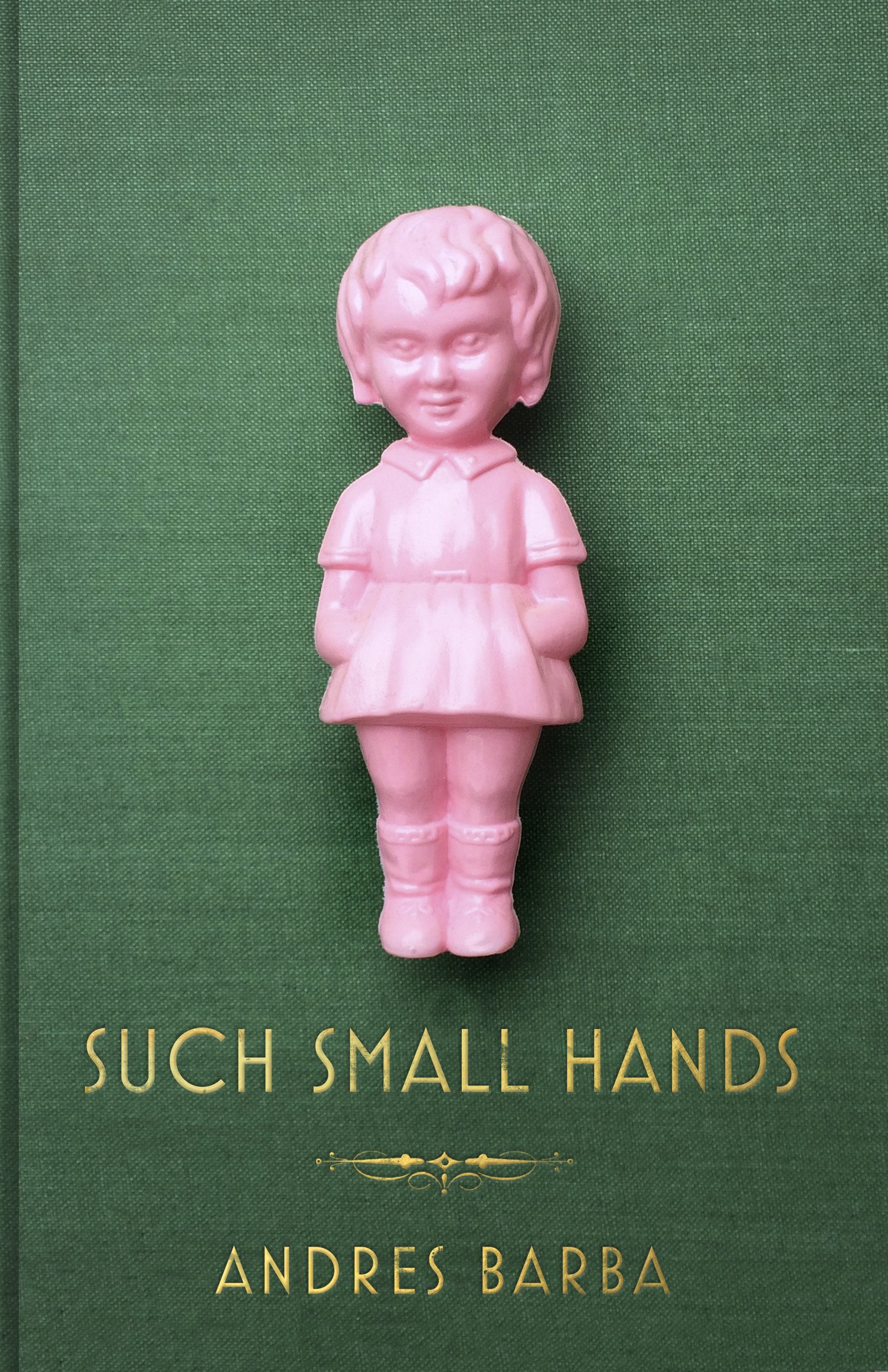
Such Small Hands – Andres Barba (trans. Lisa Dillman 2017) 101 pages
Well, this was super creepy. Institutionalised children *shudder*
Seven year old Marina is in a car accident.
“’Your father died instantly, your mother is in a coma.’ Lips pronounce them without stopping. Quick, dry words. They come in thousands of different, unpredictable ways, sometimes unbidden. Suddenly they just fall, as if onto a field. Marina’s learned to say them without sadness, like a name recited for strangers, like my name is Marina and I’m seven years old. ‘My father died instantly, my mother is in the hospital.’”
After her mother dies, Marina is sent to an orphanage, taking a doll given to her by the psychologist, which she has also called Marina. The other girls are both mesmerised and wary of Marina.
“Marina shrank and we grew. She stood alone, with her doll, by the statue of Saint Anne, watching us. Or was it the doll who was watching? We didn’t know who the doll really was. Because sometimes she looked like Marina, and she, too, seemed to have a hungry heart, and clenched fists close to her body, and she, too, was silent even when invited to join in; and she nodded her head back and forth, something we’d never seen a doll do before. And she seemed persecuted and excluded, too.”
Neither Marina or the girls understand the relationships they forge. There is fear and eroticism mixed in with tentative gestures towards friendship. Marina’s scar from the accident is a source of wonder.
“‘You can’t feel it?’
‘No. Well, only a little.’
Desire passed through the girl, too. Like stagnant water that suddenly begins to drain, imperceptibly.
And devotion mixed in with the desire.
‘Do you want to touch it?’
‘Yes.’
But the girl didn’t react right away.”
Barba gradually builds the tension and develops the girls’ games into something deeply disturbing and sinister, but wholly believable (there is an afterword which explains the real-life inspiration for the story). This tale will haunt me for a long time.
 madame bibi lophile recommends