“Great things are done by a series of small things brought together.” (Vincent van Gogh)

This is my contribution to Small Press September, hosted by Bibliosa. Do head over to her blog to read all about it and join in! The novels are also two more stops on my Around the World in 80 Books Reading Challenge, hosted by Hard Book Habit.

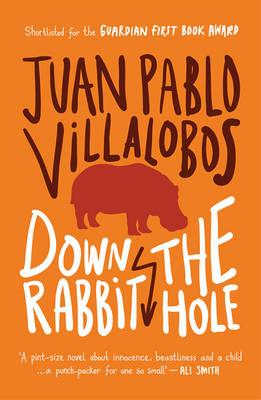
Firstly, Down the Rabbit Hole by Juan Pablo Villalobos (tr.Rosalind Harvey, 2011), which I picked up after reading Shoshi’s excellent review.  It is published by And Other Stories, a not-for-private-profit company which concentrates mainly on translated fiction. That sentence makes me feel better about the world 🙂
9781908276285

Back to the novel: Tochtli (rabbit in Nahuatl, an indigenous language of Mexico), tells us about his love of samurai films, hats, learning new words, and his life as the young son of a drug baron, Yolcaut (rattlesnake).

“I think we have a very good gang. I have proof. Gangs are all about solidarity. So solidarity means that because I like hats, Yolcaut buys me hats, lots of hats, so many that I have a collection from all over the world and all periods of the world. Although now more than new hats what I want is Liberian pygmy hippopotamus. I’ve already written it down on the list of things I want and given it to Miztli. That’s how we always do it, because I don’t go out much, so Miztli buys me all the things I want on orders from Yolcaut.”

The isolation is a necessary part of his father’s business, whose paranoia is an occupational hazard that is no doubt keeping them all alive. The tragic effect that this is having on young Tochtli becomes increasingly apparent as the story progresses. Tochtli accepts his life, knowing no different, but to the adult reader he displays worrying signs of severe anxiety: wanting his head shaved because he doesn’t want ‘dead’ hair on him, compulsively wearing hats, constant severe stomach pains, and later, after he sees something his father tried to keep hidden, selective mutism. He also takes violence pretty much in his stride:

“One of the things I’ve learnt from Yolcaut is that sometimes people don’t turn into corpses with just one bullet. Sometimes they need three or even fourteen bullets. It all depends where you aim them. If you put two bullets in their brains they’ll die for sure. But you can put up to 1,000 bullets in their hair and nothing will happen, though it might be fun to watch.”

Although dealing with extremely serious subject matter, there is humour is the novel, such as Tochtli’s description of the preparation for a drug run to Liberia which he also goes on in order to get one of his beloved pygmy hippos:

“By the way, Franklin Gomez started being Franklin Gomez yesterday in the airport. That’s what his passport from the country of Honduras says: Franklin Gomez. There were problems because Franklin Gomez didn’t want to be Franklin Gomez. Until Winston Lopez convinced him.”

In such a short tale (70 pages in my edition)Villalobos effectively widens the narrative of drug trade away from the usual barons/dealers/ users paradigm to show how the fallout from the industry can reach far and wide, including devastating those too young to have a choice about their own involvement. It is a truly moving story, not about drugs (you can read an article by the author where he refutes the term narcoliteratura here), but about children trying to cope with the messy, corrupt world adults create around them: sadly, pretty much a universal theme.
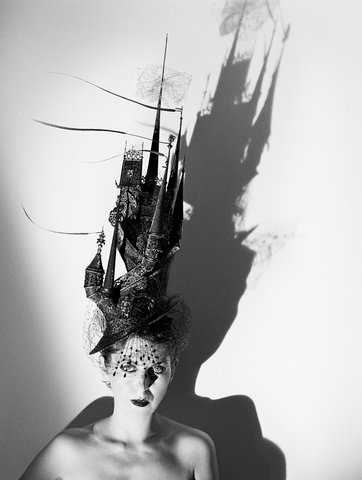
Fellow hat enthusiast, the late Isabella Blow, wearing Philip Treacy's Castle hat

Fellow hat enthusiast, the late Isabella Blow, wearing Philip Treacy’s Castle hat

Image from here

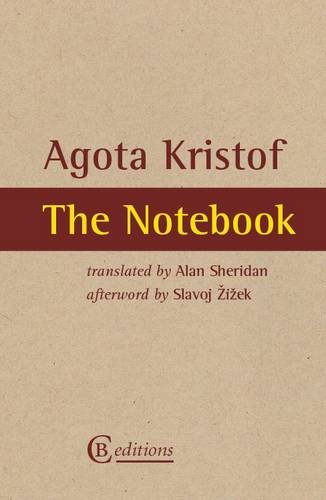
Secondly, The Notebook by Agota Kristof (1986, tr. Alan Sheridan, 1989) published by CB editions,  a publishing house which focuses on short fiction, poetry and translations. Kristof was Hungarian but was exiled to French-speaking Switzerland in 1956, and wrote this, her first novel, in French.
notebook

Like Down the Rabbit Hole, The Notebook is told from a child’s point of view, in this instance twin boys – we never know their individual names and they always use the first-person plural – who are evacuated to live with their maternal grandmother in the countryside of an unnamed nation, but which is generally thought to be Hungary.

“We call her Grandmother. People call her the Witch. She calls us ‘sons of a bitch’…Grandmother never washes. She wipes her mouth with the corner of her shawl when she has finished eating and drinking. She doesn’t wear knickers. When she wants to urinate, she just stops wherever she happens to be, spreads her legs and pisses on the ground under her skirt.”

This woman shows them no love or affection (although as the novel progresses we learn to recognise the small signs that she does care for them) and life is tough. They work on her smallholding and undertake various psychological ‘exercises’ to try and adjust to their straightened circumstances.

“ ‘My darlings! My loves! My joy! My adorable little babies!’ When we remember these words, our eyes fill with tears. We must forget these words because, now, nobody says such words to us and because our memory of them is too heavy a burden to bear. So we begin our exercise again in a different way…By repeating them we make these words gradually lose their meaning and the pain that they carry in them is reduced.”

The tone of the narration is astonishing. As the boys become more and more detached in an effort to preserve themselves from the horrors they witness, the reader is faced with filling in the gaps regarding what is happening. The delivery is so matter-of-fact that more the once I found myself stopping, thinking ‘Wait a minute, what the…’, going back and finding that something devastating had been described and I’d nearly missed it.

“Words that define feelings are very vague; it is better to avoid using them and to stick to description of objects, human beings and oneself; that is to say, to the faithful description of facts.”

The Notebook is a shattering work, and a challenging read. Human relationships are warped under the pressures of war. More than once, these pretty, golden twins get drawn into adult sex games. A young girl who is named after her birth anomaly – Harelip is apparently her given name – engages in some truly upsetting sexual acts. A neighbour behaves with horrific cruelty toward a group of starving people (presumably Jewish prisoners) and the boys wreak a terrible revenge (which they never admit in the text but you know what has happened and why). It is a difficult read but a powerful one, which does not shy away from the damage done when the acts of nations cause individuals to lose sight of their humanity. It is a political book, but not a polemical one: the twins’ equanimity leaves the reader to draw their own conclusions.

“Later, we have our own army and government again, but our army and government are controlled by our Liberators. Their flag flies over all the public buildings. The photograph of their leader is displayed everywhere. They teach us their songs and their dances; they show us their films in our cinemas. In the schools, the language of our liberators is compulsory; other foreign languages are forbidden.”

Highly recommended, but go in prepared – brilliantly written and completely brutal.

The Notebook was adapted into a film in 2013, which completely passed me by. From this trailer it looks excellent, and thankfully laws protecting children and animals means certain scenes are guaranteed to have not been filmed, surely?

“Oh Rio, Rio hear them shout across the land/From mountains in the north down to the Rio Grande” (Duran Duran)

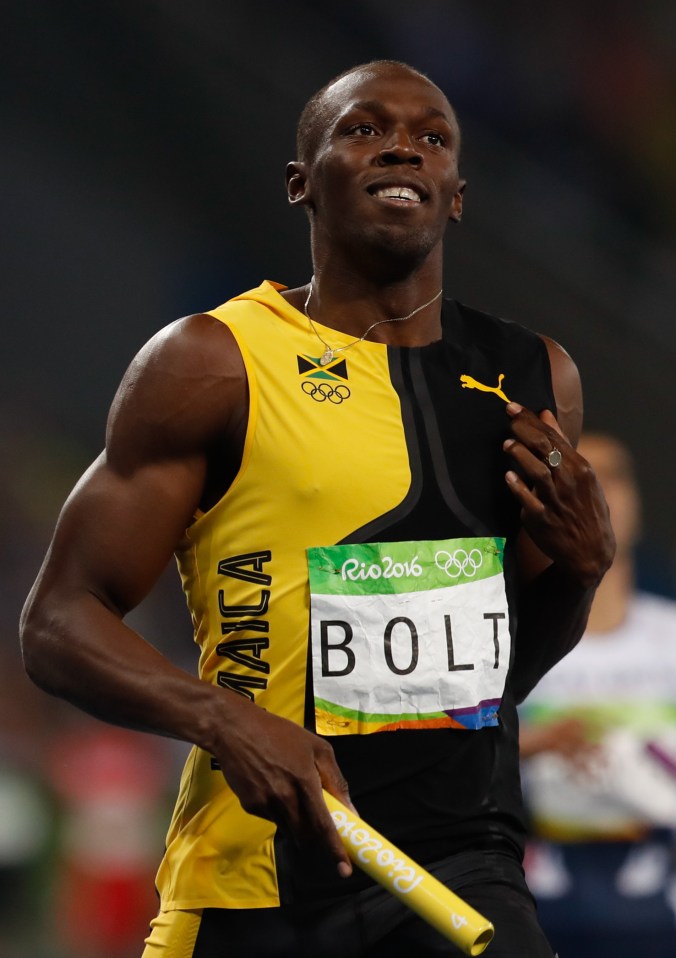
The 2016 Olympics have come to an end (boo!) but we still have the Paralympics to come (hooray!) There have been astonishing achievements by those who seem to have been made from very different stuff to us mere mortals. When they seem doused in more than their fair share of charisma as well, you can’t even make yourself feel better by thinking that they’re probably horrible people, because they’re just so funny and charming about it all. Who could I be thinking of….?

Usain_Bolt_after_4_×_100_m_Rio_2016

Human being 2.0

To celebrate the Olympics, I thought I’d take up triathlon sit on my backside reading, of course. It’s Women In Translation Month (head over to Meytal’s blog to read all about WITmonth) so I’m looking at two novellas by Brazilian women writers. This will also be one more stop on my Around the World in 80 Books Reading Challenge, hosted by Hard Book Habit.

Brazil_topo

Firstly, Agua Viva by Clarice Lispector (1973, tr. Stefan Tobler 2012). Although I’ve called this a novella, I’m not sure that’s really what it is. It’s a series of impressions and observations, plotless but definitely not artless.

“This is life seen by life. I may not have meaning but it is the same lack of meaning that the pulsing vein has.”

I say it’s not artless, because although Agua Viva can give the impression of randomness, it’s carefully constructed to carry you through, the different passages building on and echoing one another.

“So writing is the method of using the word as bait: the word fishing for whatever is not word. When this non-word – between the lines – takes the bait, something has been written…so what saves you is writing absentmindedly.

I don’t want to have the terrible limitation of those who live merely from what can make sense. Not I: I want an invented truth.”

“I notice that I’m writing as if I were between sleep and wakefulness.”

Agua Viva quite a difficult work to talk about, because it resists being pinned down.  I could attach various labels to it: impressionistic, modernist, stream-of-consciousness, but none of these are quite right. On this reading – for I suspect it changes every time you read it – I felt it was about trying to capture the immediate present, to pin down moments knowing that they are gone forever just as you recognise them.  The style lends itself to this theme, as it jumps and disorientates, on occasions tipping over into surrealism:

“I am feeling the martyrdom of an untimely sensuality. In the early hours I awake full of fruit. Who will come to gather the fruit of my life? If not you and I myself? Why is it that things an instant before they happen already seem to have happened? It’s because of the simultaneity of time. And so I ask you questions and these will be many. Because I am a question.”

I read Agua Viva cover to cover, and I do wonder if this was the wrong approach. While the kaleidoscopic style and images build towards an overall impression, Agua Viva would equally lend itself to being dipped into, reading a single passage and ruminating on it. Apparently the Brazilian singer Cazuza read Agua Viva 111 times. I suspect it’s that sort of book: either you hurl it against the wall within minutes of opening it, or it becomes a mercurial companion for life.

I can’t sum myself up because you can’t add a chair and two apples. I am a chair and two apples. And I cannot be added up.”

82873390_Two_Apples_On_A_Chair_By_The_Window

Secondly, With My Dog-Eyes by Hilda Hilst (1986 tr. Adam Morris 2014). This is also a disorienting , unsettling work, non-linear and impressionistic. Hilst uses this style to create a highly effective portrait of Professor Amos Keres, who is having some sort of breakdown or psychotic episode. The fractured story-telling serves to take the reader inside the mind of someone who is extremely unwell.

“Poetry and mathematics. The black stone structure breaks and you see yourself in a saturation of lights, a clear-cut unhoped-for. A clear-cut unhoped-for was what he felt and understood at the top of that small hill. But he didn’t see shapes or lines, didn’t see contours or lights, he was invaded by colours, life, flashless, dazzling, dense, comely, a sunburst that was not fire. He was invaded by incommensurable meaning. He could only say that. Invaded by incommensurable meaning.”

The narrative shifts from third to first person as Keres copes with his boss suggesting he take a break, and then spends the day thinking over his life since boyhood, his career and his marriage. This makes it sound more linear and contained than it is, and does With My Dog-Eyes a great disservice. Its power comes from its layering of ideas and images with such rapidity as to almost assault the reader – never incoherent but an effective immersion in an unravelling mind.

“And everything begins anew, the patience of these animals infinitely digging a hole, until one day (I hoped, why not?) transparence inundates body and heart, body and heart of mine, Amos, animal infinitely digging a hole. In mathematics, the old world of catastrophes and syllables, of imprecision and pain was cracking up. I no longer saw hard faces twisting into questions, in tears so many times, I didn’t see the gaze of the other on mine, what a thing it can be to have eyes on your eyes, eyes on your mouth. Waiting for what kind of word? Such formidable cruelties occurring every day, humans meeting and in the good-mornings and good-afternoons such secrets, such crimes, such chalice of lies…”

It’s a good job this was a novella (59 pages in my edition) as I don’t think I could have taken much more of it (that’s a recommendation, not a criticism). With My Dog-Eyes is a short, sharp, shock: a plunge into madness.

To end, I was very excited that Caetano Veloso was performing at the Olympic opening ceremony, but I don’t think the acoustics did him any favours in capturing his wonderfully sensitive voice.  Here he is as part of the Pedro Almodovar film Hable Con Ella (Talk to Her):

“Without translation, we would be living in provinces bordering on silence.” (George Steiner)

Last week I looked at a Nordic mystery as part of Women in Translation month, and this week I thought I’d make it the central theme – head over to Meytal’s blog to read all about WITmonth. The need for Women in Translation month was brought home to me when I went to my TBR shelves thinking “No problem! I have loads of translated literature waiting to be read.” Well, yes, I do, but looking at the titles I suddenly realised it was very much dominated by male writers.

tumblr_inline_mozjjfa9bR1qz4rgp

I’m glad you asked, Mads. Firstly, The Vegetarian by Korean writer Han Kang (2007, tr. Deborah Smith 2015) and one more stop on my Around the World in 80 Books Reading Challenge, hosted by Hard Book Habit. You probably don’t need me to tell you how good The Vegetarian is; it was the glowing reviews and enthusiasm from bloggers that led me to pick up this novel in the first place. The hype was well deserved – The Vegetarian is an unsettling, brutal and beautifully written tale which has stayed with me long after I finished it.

It is the story of Yeong-hye, the titular herbivore, told from three points of view: her husband, her brother-in-law and her sister, over the course of a few years, from the point she starts refusing to eat meat. Her husband can’t believe that his wife – whose main appeal was that she impinges on his life in no way whatsoever – would do something so antisocial.

“As far as I was concerned, the only reasonable grounds for altering one’s eating habits were the desire to lose weight, an attempt to alleviate certain physical ailments, being possessed by an evil spirit or having your sleep disturbed by indigestion. In any other case, it was nothing but sheer obstinacy for a wife to go against her husband’s wishes as mine had done.”

Yeong-hye’s behaviour is not rooted in any of these ‘reasonable grounds’ but in a deep disturbance at thought of eating meat, something which is not easy to cope with or explain:

“Something is lodged in my solar plexus. I don’t know what it might be. It’s lodged there permanently these days. Even though I stopped wearing a bra, I can feel this lump all the time. No matter how deeply I inhale, it doesn’t go away. Yells and howls, threaded together layer upon layer, are enmeshed to form that lump. Because of meat. I ate too much meat. The lives of all the animals I ate are lodged there. Blood and flesh, all those butchered bodies are scattered in every nook and cranny, and though the physical remnants were excreted, their lives stick stubbornly to my insides.”

Yeong-hye’s behaviour exposes the fractures in her family: the tensions, hidden desires, and loyalties which on one occasion spills over into physical violence. She can’t be what her husband wants her to be. Subject to her brother-in-law’s sexual fetishes, she cannot answer all of his needs either. Nor can she start eating to please her sister who sees her wasting away. Her deterioration – mental and physical – is painful but her determination is relentless.

“Her voice had no weight to it, like feathers. It was neither gloomy nor absent minded, as might be expected of someone who was ill. But it wasn’t bright or light-hearted either. It was the quiet tone of a person who didn’t belong anywhere, someone who had passed into a border area between states of being.”

The Vegetarian is a short novel, 183 pages in my edition, but it punches far above its weight. Kang’s voice is strong and unique, her writing all the more dramatic for its concise understatement, and she refuses to offer any easy answers. Disturbing and brilliant.

Images from here and here

Secondly, a classic of Spanish literature, Nada by Carmen Laforet (1945 tr. Edith Grossman 2007). Andrea, a young student, leaves her rural home to attend university and moves in her with grandmother, aunt, two uncles, her uncle’s wife, a green-toothed maid and a dog. Although filled with youthful hope for opportunities and change, the atmosphere is unsettling from the start:

“We rode down Calle Aribau, where my relatives lived, its plane trees full of dense green that October, and its silence vivid with the respiration of a thousand souls behind darkened balconies.”

Once inside the house, things worsen. The house is cluttered, dirty, filled with layers of past glories.

“That bathroom seemed like a witches house, the stained walls had traces of hook-shaped hands, of screams of despair. Everywhere the scaling walls opened their toothless mouths oozing dampness. Over the mirror, because it didn’t fit anywhere else, they’d hung a macabre still-life of pale bream and onions against a black background. Madness smiled from the bent taps.”

The Spanish Civil War – over six years previously – is mentioned in passing but never dwelt upon, though there is the sense that this is a family and a city, possibly a nation, dealing with the aftershocks of trauma. The family are entirely dysfunctional, locked in abusive, sado-masochistic, manipulative relationships to a greater or lesser extent. Andrea’s uncle Juan savagely beats his wife Gloria; her aunt Angustias tries to control Andrea through a  mix of overbearing affection and oppressive boundary-setting; her uncle Roman plays  cat-and-mouse with just about everyone he encounters. Andrea’s friend Ena offers a possibility of escape:

“Ena never resembled on weekdays the rash girl, almost childish in her high spirits, that she turned into on Sundays. As for me – and I came from the countryside – she made me see a new meaning in nature that I’d never thought of before. She made me understand the pulsing of damp mud heavy with vital juices, the mysterious emotion of buds that were still closed, the melancholy charm of algae listless on the sand, the potency, the ardour, the splendid appeal of the sea.”

Nada is a gothic tale without a doubt, but never quite spills over into the camp that gothic often skirts along. The novel had to pass through Franco’s censors, and while its not overtly a political tale, I think the Gothicism helps disguise the fact that it is a tale of a society in shock; of resistance to oppression; of survival and escape.

“The memory of nights on Calle de Aribau comes to me now. Those nights that ran like a black river beneath the bridges of the days, nights when stagnant odours gave off the breath of ghosts.”

To end, an example of gothic that doesn’t skirt around camp but rather dives straight in – quite the maddest film I’ve ever seen:

“But what first, Debbie, attracted you to the millionaire Paul Daniels?” (Mrs Merton/Caroline Aherne)

Caroline Aherne, actor and writer, creator of the comedic brilliance that was The Royle Family, died on Saturday.  And so 2016 continues as forerunner for the most rubbish year in recent memory. If the political situation and the death of a yet another great person this year is getting you down, I would prescribe YouTubing  Caroline’s career for some solace.

If you enjoy someone’s work, there is a consolation that they leave this behind when they are no longer around, so I thought I would look at two novelists last works which were published in their lifetimes.

Firstly, The Old Man and the Sea by Ernest Hemingway (1952), fulfilling the sea-based tale requirement of the Around the World in 80 Books reading challenge hosted by Hard Book Habit. And so my inexplicable love affair with Hemingway continues. I’ve written before about how much I want to dislike Hemingway, but I just adore his writing. Like all great love affairs, we are wholly incompatible, and yet I find myself drawn back time and time again, whilst knowing I cannot change him. The Old Man and the Sea did not succeed in breaking the spell.

Hemingway, rocking a chunky knit to give his best salty old sea dog impression

Hemingway, rocking a chunky knit to give his best salty old sea dog impression

The titular old man is Santiago, a Cuban fisherman who sails in the Gulf Stream and has gone 84 days without catching a fish.

“Everything about him was old except his eyes and they were the same colour as the sea and were cheerful and undefeated.”

Manolin, a young boy, has known the fisherman his whole life and loves him, and it is through his eyes that we first see Santiago:

“His shirt had been patched so many times that it was like the sail and the patches were faded to many different shades by the sun. The old man’s head was very old though and with his eyes closed there was no life in his face. The newspaper lay across his knees and the weight of his arm held it there in the evening breeze. He was barefooted.

The boy left him there and when he came back the old man was still asleep.

“Wake up old man,” the boy said and put his hand on one of the old man’s knees.

The old man opened his eyes and for a moment he was coming back from a long way away. Then he smiled.”

They head out to fish separately – Manolin is banned from accompanying Santiago due to his salao bad luck – and what follows is the story of Santiago’s lone sea journey. The descriptions have Hemingway’s trademark pinpoint accuracy but this exists alongside metaphorical beauty, which absolutely captures the water and the isolation of the sailor.

“The old man knew he was going far out and he left the smell of the land behind and rowed out into the clean early morning smell of the ocean. He saw the phosphorescence of the Gulf weed in the water as he rowed over the part of the ocean that the fishermen called the great well because there was a sudden deep of seven hundred fathoms where all sorts of fish congregated because of the swirl the current made against the steep walls of the floor of the ocean.”

“The sea was very dark and the light made prisms in the water. The myriad flecks of the plankton were annulled now by the high sun and it was only the great deep prisms in the blue water that the old man saw now with his lines going straight down into the water that was a mile deep.”

The fisherman succeeds in hooking a “great fish” but is unable to bring it aboard, and so is towed by the marlin farther and farther out to sea, as he waits for the fish to die. I can’t say much more as it is only novella length (you can read the full text here) so I’ll just say that The Old Man and the Sea is extraordinary: fable, allegory, elegy, a meditative page-turner which I found truly moving.

“He looked across the sea and knew how alone he was now. But he could see the prisms in the deep dark water and the line stretching ahead and the strange undulation of the calm. The clouds were building up now for the trade wind and he looked ahead and saw a flight of wild ducks etching themselves against the sky over the water, then blurring, then etching again and he knew no man was ever alone on the sea.”

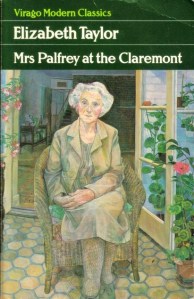
Secondly, Mrs Palfrey at the Claremont by Elizabeth Taylor.

Image from here

Following the death of her beloved husband, Mrs Palfrey moves to the Claremont Hotel on the Cromwell Road “The porch pillars had been recently painted; there were spotted laurels in the window boxes; clean curtains – a front of emphatic respectability.” to see out her days.

“She was a tall woman with big bones and a noble face, dark eyebrows and a neatly folded jowl. She would have made a distinguished-looking man and, sometimes, wearing evening dress, looked like some famous general in drag.”

Mrs Palfrey and her fellow permanent residents at the hotel are desperately trying to avoid a nursing home and rub along together in a mix of boredom, gossip and barely suppressed disdain. Although Taylor is interested in aging and how to find meaning in a world that considers you finished, this isn’t a depressing novel , but rather a gentle comedy with a melancholic tinge.

“Soon, there was a soft, slapping sound as Mr Osmond shuffled a pack of cards for a game of patience: against this, the knitting sounds, and sighs, and stomach gurglings (quickly coughed over).

‘Well, another Sunday nearly gone,’ Mrs Post said quickly, to cover a little fart. She had presence of mind.”

Mrs Palfrey is a resolute soul, who refuses to feel sorry for herself. Part of the generation who lived through both World Wars, she gets on with things.

 “She felt a determination about the lilac trees. They were to be a part of her rules, her code of behaviour. Be independent; never give way to melancholy; never touch capital. And she had abided by the rules.”

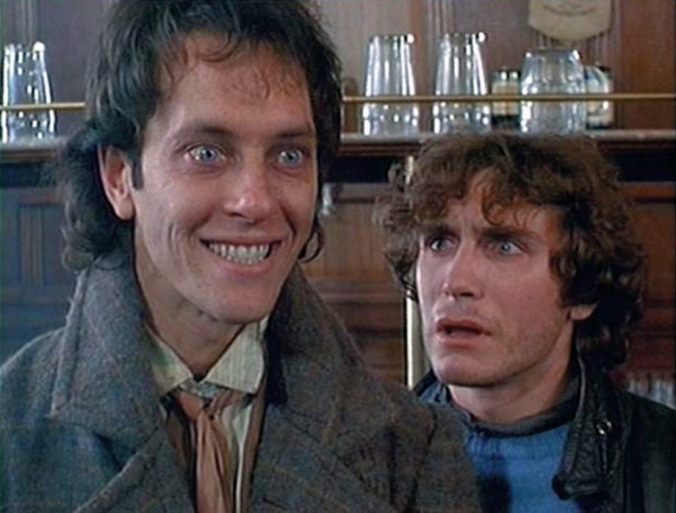
On a walk around London, she has a fall and is rescued by a young man, Ludo. He is shaggy-haired, scruffily dressed, good-looking and a wannabe writer. They end up forming an unlikely friendship and the nuances, contradictions, tensions and tenderness between the two are beautifully observed. Taylor is a wonderful writer: sharp, observant, funny and real. She put me in mind of Barbara Pym, and the blurb on the back of my copy of this novel compares her to Jane Austen.  Certainly if you like those, you’ll find a lot to love here.

 “She could glimpse bed-sitting rooms – like Ludo’s some of them – where once cooks had attended ranges, rattling dampers, hooking off hot-plates, skimming stock pots, while listening to housemaids’ gossip bought from above stairs. Mrs Palfrey went slowly by, imagining those days, which were almost clearer to her than this present structure of honeycomb housing and the isolation of each cell, because they were the days that belonged to her being young, and so were the clearest of all to her.”

To end, if you think Ernest Hemingway and Elizabeth Taylor are an unlikely pairing, here’s a heavy metal band and an orchestra performing a song named after a Hemingway novel:

“It’s the final countdown.” (Europe (the band))

This isn’t a political blog, but it is one where I try and relate books to what’s going on in my life/the wider world, and this is the week when Britain votes on whether to stay in or leave the EU. So in this post I’m looking at two books by European writers, and in order to maintain the blog’s thin veneer of impartiality, I’ve picked one by a writer from a country inside the EU, and one from outside.  Between them they are two more stops on my Around the World in 80 Books reading challenge hosted by Hard Book Habit– with none of the attendant worries of which passport queue to join, should major changes ensue…

Firstly, The Blue Fox by Icelandic by poet/novelist/songwriter for Bjork/all round Renaissance man Sjon (trans.Victoria Cribb).  This short novel (112 pages in my edition) is stunning: lyrical, sparse and truly magical. I can’t remember whose blog first introduced me to this, so if it was you please leave a comment 🙂

The story begins in 1883, with the priest Baldur Skuggason hunting a rare blue vixen:

“Snow covered the land up to the roots of the glacier, not a bare patch of earth to be seen; the vixen would write the tale of her travels on the blank sheet as soon as she embarked on them.

Grasping the weapon in both hands, he set off.”

Not a word is wasted, as Sjon creates characters and atmosphere with the minimum needed. This style is highly effective as it evokes the quiet focus of the hunt and the frozen expanse of the winter landscape.

“The sun warms the man’s white body, and the snow, melting with a diffident creaking, passes for birdsong.”

The second part of the novel goes back 16 years to explore the relationship between naturalist Fridrik B Fridriksson and his ward Abba, who has Down’s Syndrome. This section is more densely written but still beautifully constrained.

“Ghost-sun is a name given by poets to their friend the moon, and it is fitting tonight when its ashen light bathes the grove of trees that stand in the dip above the farmhouse at Brekka. This little copse was the loving creation of Abba and Fridrik, and few things made them more of a laughing stock in the Dale than its cultivation, though most of their endevours met with ridicule.”

Back in 1883, the stories intertwine and move towards an eerie, unsettling conclusion. The Blue Fox occupies a space between poetry, prose, myth, mystery and fable. Highly recommended.

Secondly, Berlin Stories by Robert Walser (tr. Susan Bernofsky), which also occupies a space between genres, this time autobiography and fiction. Walser moved to Berlin in 1905 as a young man, and Berlin Stories collects together his impressions of the city, the people he meets, the experiences he has.

I had no idea what to expect, not having read any Walser before. Picture the scene, reader: It is early morning. You hate your job. You are on a crowded platform waiting for a delayed train. You are surrounded by other commuters, who by their disregard for even the most basic social niceties are telling you that they too hate their job, and they hate you only marginally less.  Then you read this:

“Onward, onward.  That blue-eyed marvel, the early morning, has no time to waste on drunkards. It has a thousand shimmering threads with which it draws you on; it pushes you from behind and smiles coaxingly from the front. You glance up to where a whitish, veiled sky is letting a few scraps of blue peek out; behind you, to gaze after a person who interests you; beside you, at an opulent portal behind which a regal palace morosely, elegantly towers up. Statues beckon you from gardens and parks; still you keep on walking, giving everything a passing glance: things in motion and things fixed in place”

Needless to say, by page 4 of Berlin Stories, where that passage appears, I knew I was in for a beautiful journey around Berlin in Walser’s company. His style is brilliantly evocative of a city: short sketches of whatever interests him creates a series of impressions of Berlin, rather than a fixed, focused depiction. He is funny and sad, he has an eye for the minutiae and the broader picture. It is a love letter to the city, and you are left in no doubt as to why Berlin has such a culturally rich history.

“Berlin by comparison – how splendid! A city like Berlin is an ill-mannered, impertinent, intelligent scoundrel, constantly affirming the things that suit him and tossing aside everything he tires of. Here in the big city you can definitely feel the waves of intellect washing over the life of Berlin society like a sort of bath. An artist here has no choice but to pay attention.”

Like The Blue Fox, this is a short volume (139 pages) and therein lies its power. Walser creates concise, delicate yet richly vivid portraits of Berlin. Just gorgeous.

To end, I want a badge. A badge to commend my enormous self-restraint in not going on a 1980s cheese-fest (which is something I rarely restrain from) by capturing either the titular song or the band Berlin in embedded video form. Instead I’m going for a guaranteed earworm clip from a musical inspired by the Berlin stories of another writer, Christopher Isherwood.  Take it away, Liza:

“I’m the greatest thing that ever lived! I’m the king of the world! I’m a bad man. I’m the prettiest thing that ever lived.” (Muhammad Ali)

As usual, I’m a bit behind the times: here is my post to commemorate the death of Olympian/activist/philanthropist/iconic legend Muhammad Ali on 3 June, whose memorial was last Friday.

c8c7ccdd-25ee-454b-bd57-8cd8566212a8-1630x2040

Image from here

I thought I would therefore theme this post around ‘greatest’.  Just over a week ago Lisa McInerney won this year’s Bailey’s Prize for her debut novel The Glorious Heresies, so I’ve decided to look at Half of a Yellow Sun by Chimamanda Ngozi Adichie which won the Baileys (then the Orange) in 1997 and was chosen as the prize’s Best of the Best in 2015. I’ve paired it with Midnight’s Children by Salman Rushdie which won the 1981 Booker, and then in 1993 (25 years of the Booker) and 2008 (40 years of the Booker),  it won the Best of the Bookers (the latter by public vote). They are also two more stops on my Around the World in 80 Books Reading Challenge, hosted by Hard Book Habit– away we go!

Half of a Yellow Sun is set in Nigeria during the civil war of the 1960s, when there was an attempt to establish Biafra as an independent nation. Focusing on two sisters, Olanna and Kainene, their partners Odenigbo and Richard, and Olanna and Odenigbo’s houseboy Ugwu, the war is explored through its varied but monumental impact on all their lives.

Before the war, Olanna and Odenigbo live a privileged middle class life in the university town of Nsukka, entertaining in the evenings with friends who debate issues of post-colonial identity:

“‘I am Nigerian because a white man created Nigeria and gave me that identity. I am black because the white man constructed black to be as different from as possible from his white. But I was Igbo before the white man came.’”

Ugwu joins them and is mesmerised by their sophistication, and the worlds they open for him through the books they provide. However, Adichie shows that the legacy of colonialism is deep-rooted:

“Master’s English was music, but what Ugwu was hearing now, from this woman, was magic. Hers was a superior language, a luminous language, the kind her heard on Master’s radio, rolling out with clipped precision. It reminded him of slicing a yam with a newly sharpened knife, the easy perfection in every slice.”

As the Igbo people try to establish Biafra and civil war escalates, Olanna, Odenigbo and Ugwu’s lives are ripped apart and Adichie does not pull her punches. There is forced conscription, rape as a weapon, starvation and mutilation. However, there is also reconciliation between the estranged sisters, and Adichie’s focus is not on horrors but on how the human spirit survives against overwhelming odds:

“The war would continue without them. Olanna exhaled, filled with frothy rage. It was the very sense of being inconsequential that pushed her from extreme fear to extreme fury. She had to matter. She would no longer exist limply, waiting to die.”

Adichie is a hugely popular and successful author, and I feel the hype is fully deserved: she’s a brilliant writer. I whizzed through this book – she manages to write a compelling, political, angry, compassionate and highly moving page-turner. What a feat.

Half of a Yellow Sun was adapted into a film in 2013, apparently not that successfully despite a seemingly perfect cast including smoking hot eye candy hugely talented actor Chiwetel Ejiofor:

On to Midnight’s Children by Salman Rushdie (1981) which like Half of a Yellow Sun was the author’s second novel: so much for the ‘difficult second novel’ theory. It’s taken me about twenty years to read Midnight’s Children, which works out as 6% of a page per day. It’s been quite a ride.

rhpsf

I jest of course, but it did take me 3 goes spread over 20 years to get into this novel.  Normally I would have resigned it to the DNF pile (which is tiny, my TBR aspires to be that size one day – never going to happen) but I kept persevering because people who loved it really loved it and it always cropped up on various book lists (including Le Monde’s , which forms one of my reading challenges).

Now that I’ve read it, I can’t say I loved it – something about Rushdie’s style meant this was always a tough read for me – but I did find it impressive. Midnight’s Children is hugely ambitious, tackling themes around nation-making, history writing, colonialism and culture. Seemingly impossible within one novel, but Rushdie and his massive brain are clearly equal to the task. The story is narrated by Saleem Sinai who is born on the stroke of midnight on 15 August 1947, the exact moment that India gained independence from Britain.

“Thanks to the occult tyrannies if those blandly saluting clocks I had been mysteriously handcuffed to history, my destinies indissolubly chained to those of my country. For the next three decades, there was to be no escape.”

Saleem’s story, and that of his family, becomes the story of the nation of India. The novel makes heavy use of magical realism, and I think this is Rushdie’s masterstroke. It would be impossible to explore such enormous themes and multiple events if the novel were entirely grounded in a recognisable reality. By allowing for magic realism, Rushdie can take the story in any direction he needs to.

Saleem discovers that all the children born into India between midnight and 1am on the day of Independence have special powers – his own being telepathy, powered by his enormous nose and blocked sinuses (told you there was magic realism).

“the children of midnight were also the children of the time: fathered, you understand, by history. It can happen. Especially in a country which is itself a sort of dream.”

“Midnight has many children; the offspring of Independence were not all human, Violence, corruption, poverty, generals, chaos, greed and pepperpots…I had to go into exile to learn that the children of midnight were more varied than I – even I – had dreamed.”

Saleem is a self-acknowledged unreliable narrator. His memory fails him at times, regarding both events in his own life and those in the wider political history of India. What Rushdie is questioning is the narratives we are all within – family, nation, history, culture – and how there is no one reality for any of us.

“Family history, of course, has its proper dietary laws. One is supposed to swallow and digest only the permitted parts of it, the halal portions of the past, drained of their redness, their blood. Unfortunately this makes the story less juicy, so I am about to become the first and only member of my family to flout the laws of halal. Letting no blood escape from the body of the tale, I arrive at the unspeakable part; and, undaunted, press on.”

I realise I may have made Midnight’s Children sound like a heavy read, and in some ways it is, but it also has a gentle humour running through it to lighten the tone.  I’ve certainly never read anything else like it.

“One day, perhaps, the world may taste the pickles of history. They may be too strong for some palates, their smell is overpowering, tears may rise to eyes; I hope nevertheless that it will be possible to say of them that they possess the authentic taste of truth”

To end, I can’t help wishing the dress code for book award ceremonies was monochrome cat suits and that winners collected their awards by emerging from a fog of dry ice:

“Trains, like time and tide, stop for no one” (Jules Verne)

Despite not thinking of myself as a remotely patriotic person, there was a 3 part programme on TV recently that was probably the most British thing ever, and I am so sorry it’s ended. Paul Merton travelling around the island by train (is it me or is he turning into Ian Hislop?), only getting off at request stops and chatting to those he meets. That’s it. Result: pure brilliance.

I share Mr Merton’s love of trains, and so this week I thought I would look at novels where they feature heavily.  This also enables me to fulfil the requirement of the Around the World in 80 Books reading challenge hosted by Hard Book Habit, to include a book about travel.

Firstly, Compartment No.6 by Rosa Liksom (2011, tr. Lola Rogers) which I was alerted to by Sarah’s review at Hard Book Habit and also by bookarino, where I was sure I had read a review but now I can’t find it on her blog – bookarino, if you reviewed please leave a link below!

The novel details the journey on the Trans-Siberian railway from Moscow to Mongolia undertaken by the two inhabitants of the titular compartment. Liksom describes the landscapes they pass through simply but evocatively, and succeeds in capturing a sense of place and of travel:

“An unknown Russia frozen in ice opens up ahead, the train speeds onward, shining stars etched against a tired sky, the train plunging into nature, into oppressive darkness lit by a cloudy, starless sky. Everything is in motion: snow, water, air, trees, clouds, wind, cities, villages, people, thoughts. The train throbs across the snowy land.”

The atmosphere in the compartment is intimate and oppressive:

“All of Siberia slowly brightened. The man in his blue tracksuit bottoms and white shirt did push-ups between the bunks, sleep in his eyes, his mouth dry and smelly, the mucousy smell of sleep in the compartment, no breath from the window, tea glasses quietly on the table, crumbs silent on the floor.”

The man Vadim is repugnant: misogynistic, violent, anti-semitic, anti anyone who isn’t him. His attitudes and behaviour are repellent. Yet as they are forced together, a comradeship builds between him and the female traveller. She is presented a step removed: we never know her name, her direct speech is given only once and then she is quoting. Yet this works brilliantly at evoking the girl’s slightly numb, detached state as she runs away from her troubles and works her way back to facing them, with the help of the dreadful Vadim.

 “The girl looked out of the window at an entirely new landscape…she thought of that July day when she came back from her summer vacation in Finland and Mitka was at the station to meet her. She thought about how they had gone to the boarding house, run up the nine flights of stairs hand in hand, how the hallway had been filled knee-high with the fluffy heads of dandelions, how they’d run up and down the hallway like children, the dandelion fluff drifting in and out of the windows.”

Compartment No.6 is a short but haunting novel which will undoubtedly linger long in my memory.

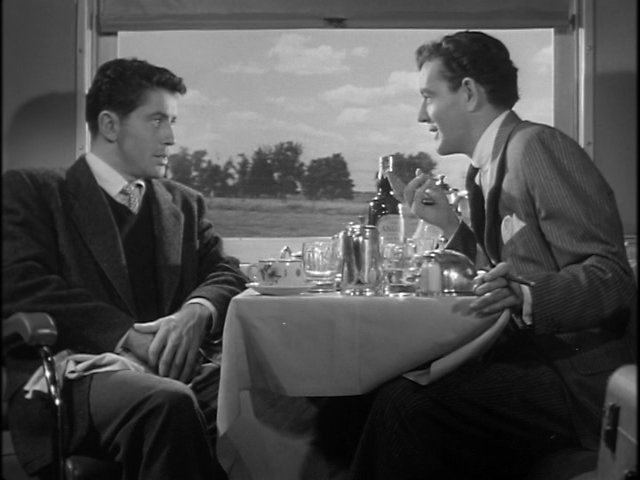
Secondly, Strangers on a Train by Patricia Highsmith (1950), which was adapted only a year later into the famous Alfred Hitchcock film of the same name, albeit with several changes.

Strangers_on_a_Train_-_In_the_dining_car

Sadly my commuter train doesn’t look like this, despite being full of people hatching murderous plots

Successful architect Guy Haines meets bored, spoilt alcoholic Charley Bruno on a long haul train journey. He is reluctant to engage in chat, but Bruno is insistent, and Guy ends up telling him that he is travelling to meet his wife to ask for a divorce. Bruno meanwhile, hates his father and wants his inheritance.

“Bruno could be violent. He could be insane, too. Despair, Guy thought, not insanity. The desperate boredom of the wealthy…it tended to destroy rather than create. And it could lead to crime as easily as privation.”

It is Bruno who comes up with the idea that they swop murders, Bruno killing Guy’s estranged wife for Guy killing his father. Guy doesn’t agree, but Bruno goes ahead anyway. Needless to say, he is a sociopath:

“whether Guy came through with his part of the deal or not, if he was successful with Miriam he would have proved a point. A perfect murder.”

“So long had he been frustrated in his hunger for a meaning of his life, and in his amorphous desire to perform an act that would give it meaning, that he had come to prefer frustration, like some habitually unrequited lovers.”

Bruno ends up stalking Guy, entirely obsessed with him, and it is this, rather than the murders or closing net of the investigation that provides the thriller element of the novel. Bruno is completely unstable and there is no telling what he might do as he exerts increasing pressure on Guy. Yet Bruno is vulnerable too, childlike and confused, and never admitting that it is sexual desire which draws him to Guy.

“Guy! Guy and himself! Who else was like them? Who else was their equal? He longed for Guy to be with him now. He would clasp Guy’s hand and to hell with the rest of the world! Their feats were unparalleled! Like a sweep across the sky! Like two streaks of red fire that came and disappeared so fast, everybody stood wondering if they had really seen them.”

There are definite overlaps with Tom Ripley, the sociopathic protagonist of several Highsmith novels. Bruno is a much less attractive character than Ripley, but there is the desperation and loneliness of the sociopath, the thwarted gay desire, and the doubling between characters, which Guy realises, much as he is reluctant to admit it:

“And Bruno, he and Bruno. Each was what the other had not chosen to be, the cast-off self, what he thought he hated but perhaps in reality loved.”

Strangers on a Train worked well for me as a thriller, but without any glorification of murder or murderers.  Like The Talented Mr Ripley, what I was mainly left with was a sense of sadness at the destruction that desperate human beings can wreak on one another.

To end, a quick clip to shamelessly indulge my love of Buster Keaton:

“Outside of a dog, a book is man’s best friend. Inside of a dog it’s too dark to read.” (Groucho Marx)

Last week I mentioned the indulgence of good friends, so this week I thought I would look at novels capturing female friendships. I’ll try and redress the balance at some point by looking at male friendships, but this week, in the words of Lesley Knope, its ovaries before brovaries 😀

Fox-News

My future – I sincerely hope

Image from here

Firstly, Animals, the second novel from Emma Jane Unsworth, described on the cover by Caitlin Moran as “Withnail with girls”, which pretty much sums it up. Laura lives with her friend Tyler, a one-woman tornado:

“She didn’t just change the temperature of rooms, she changed their entire chemical make-up so that anyone in the room would only be aware that the room was an extension of her and she was the thrumming nucleus.”

Tyler is indulgent, defensive, funny, clever – a total nightmare with whom Laura feels an immediate bond:

“Someone who sees right to your backbone and simultaneously feels their backbone acknowledged.”

But Laura is in love with Jim and is planning to get married, introducing a tension into the women’s friendship.  Tyler wants life to continue as it is, Laura is not so sure. It’s not plot-heavy, as Tyler and Laura ricochet from one substance-fuelled experience to another, it’s funny and sad and so very believable:

“And there it was, as always, swinging my way: The Night. With its deals, promises and gauntlets, by turns many things: nemesis, ally, co-conspirator, master of persuasion. It tosses its promises before you like scraps on the road, crumbs leading into the forest: pubs, parties, booze, drugs, dancing, karaoke…”

Amongst all this eventful partying, there is an elegiac quality to Animals: both the women are in their thirties and there’s a sense that their life together cannot continue for much longer, and that it might not be so entertaining if it did:

“Next to the sink, two folded banknotes balanced on a rung of the towel rail, drying. I stood and looked into the bowl before I flushed, recalling the adage of a girl I’d once worked with: White piss good; amber piss bad. Orwellian in its visceral simplicity. Meanwhile the liquid I had dispatched into the toilet bowl was almost ochre.”

1987WithnailandIArrow-920x699

A great film, but not a wise lifestyle choice, kids

Image from here

The bawdy chaos of Animals is presented through considered, inventive storytelling; Unsworth’s voice is compelling and like Laura on a night out with Tyler, I found myself carried along for the ride.

Secondly, the publishing phenomenon that is Elena’s Ferrante’s My Brilliant Friend (tr. Ann Goldstein, Europa editions 2012) and one more stop on my Around the World in 80 Books reading challenge, hosted by Hard Book Habit. This is the first in a quartet known as the Neapolitan novels which have sold millions worldwide, no doubt to the chagrin of authors everywhere stuck on a PR treadmill, as Ferrante remains determinedly anonymous. The novels detail the friendship between Elena and Lila from the 1950s onwards.

“She stopped to wait for me, and when I reached her she gave me her hand. This gesture changed everything between us forever.”

I’m grateful to Kate’s recent review which tempered my expectations somewhat. While I did like the novel, I think had I gone in with the astronomical expectations created by all the hype I would have been disappointed. As it was, I went in with moderate expectations and enjoyed being pulled into the poor Neapolitan neighbourhood Ferrante so vividly evokes. Elena summarises: “I feel no nostalgia for our childhood: it was full of violence.” She’s not wrong. Violence between strangers, friends and families seems to be constant. The poverty and accompanying lack of horizons takes its toll:

“At the Bar Solara, in the heat, between gambling losses and troublesome drunkenness, people often reached the point of disperazione – a word that in dialect meant having lost all hope but also being broke – and hence of fights.”

Within this environment, Lila and Elena form a friendship that is full of the unspoken. Elena is mesmerised by Lila, who is tough, independent, and highly intelligent. Despite the time they spend together, the core of Lila – what she really wants, her hopes and dreams – remain mysterious to Elena.

“Would she always do the things I was supposed to do, before and better than me? She eluded me when I followed her and meanwhile stayed close on my heels in order to pass me by?”

It is this competitiveness, this desire to be like Lila, which spurs Elena on, to the point where this motivation becomes indistinguishable from her own preferences. She continues at school long after Lila leaves, her academic commitment a mixture of wanting to outstrip Lila, wanting to do well because it is what Lila wants, and wanting to do well for herself. Ferrante has an excellent understanding of how these early friendships are so vitally important, how they form us in ways we barely understand and how quickly it is impossible to say what feels intrinsic to us and what is the influence of others. She captures the ambivalence of friendships that are formed out of deep love and conflict:

“When school started again, on the one hand I suffered because I knew I wouldn’t have time for Lila anymore, on the other I hoped to detach myself from the sum of the misdeeds and compliances and cowardly acts of the people we knew, whom we loved, whom we carried – she, Pasquale, Rino, I, all of us – in or blood.”

While I’m not quite ready to proclaim myself a fully paid-up Ferrante acolyte, the quartet supposedly gets better as it goes along, so by book four I could well be (Marina Sofia has written a really interesting review of the quartet here).

To end, two celebrities (one of whom plays the aforementioned Lesley Knope) who claim to be BFFs and I actually believe them:

“It’s just a job. Grass grows, birds fly, waves pound the sand. I beat people up.” (Muhammad Ali)

Every six months or so the friends I made when I was training for my profession meet up, which we did yesterday.  They were remarkably good natured as the question “how are you?”, when directed towards me, was met with a wail of despair and a twenty minute garbled monologue about how difficult I was finding things. Safe to say I’ve never really mastered the British stoic reticence thing.

Dr.-Who

My ongoing crisis aside, time spent with my lovely, indulgent friends prompted me to look this week at novels that focus on a profession. Firstly, The Electric Michelangelo by Sarah Hall (2004, Faber & Faber), which is about a tattoo artist. Undoubtedly this is a growth industry, certainly in the UK which is the most tattooed nation in Europe: one-fifth of adults have a tattoo, rising to almost one-third of those under 45. That’s a lot of ink.

Maud_Stevens_Wagner

 I recently wrote about Hall’s first novel Haweswater, which I loved.  I didn’t feel The Electric Michelangelo, her second novel, was as accomplished as her first, but it was still strong.  It follows tattooist Cy Parks from an adolescent apprenticeship with the alcoholic Eliot Riley in his hometown of Morecambe Bay to a career in carnivalesque Coney Island and back again. Growing up in early twentieth-century Morecombe, Cy’s formidable mother Reeda runs a hotel for consumptives:

“They sucked it down in between their fits and held it inside their lungs like opium smokers in a den…Morecombe’s air was renowned, if not nationwide then reliably in the north, for its restorative properties, its tonic qualities. That was how everyone described it…”

Cy is fairly directionless until his artistic skills catch the eye of Eliot Riley, a man who “lived as if trying to siphon out that darker portion [of life], with alcohol, with banter, with bad habits, bad politics, bad language, obloquy, anguish and despair.” Riley offers Cy an apprenticeship, and for reasons he doesn’t entirely understand, Cy accepts. “Tattooing was like being called by a siren song, or the music of the spheres, impossible to resist, impossible to explain.”

We are drawn into the world of tattooing alongside Cy “a dreamscape type of world, where strange occurrences and dark-wrought ideas, if not normal, were almost commonplace.” Hall is clearly respectful of this ancient trade and its rituals and rites: what the tattooists enact and what the customers endure.

“Riley paused for whisky. After ten more minutes the customer stood wearing art. The snake and dagger flexed on his back, weeping a little as he bent for his shirt. The man had added to his body in a way that was brave and timeless and beyond adornment.”

After his apprenticeship ends, Cy moves across the Atlantic to Coney island, where he falls in love with circus performer Grace, who employs him to tattoo her entire body with eyes.

“the eye was in a league of its own. It had meaning upon meaning, there were currents writhing under currents where that symbol was concerned, like the sea. He had the distinct impression that Grace possessed a fast-flowing undertow also, a restlessness behind her own dark eyes.”

Eye tattoo by Niki Norberg

Eye tattoo by Niki Norberg

Image from here

Like the other relationships in Cy’s life, his romance with Grace is characterised by the unknown and the unsaid. The man who works in images finds spoken language inadequate and lacking, unable to express pain, desire and love in the way his needle can. Sarah Hall certainly doesn’t suffer from a lack of eloquence, but despite this, I came away feeling The Electric Michelangelo didn’t quite add up to an entirely satisfying whole. However, she is such a hugely talented writer that this barely matters. The Electric Michelangelo is a beautifully written character study of Cy and of a profession.

Secondly, The Tango Singer by Tomas Eloy Martinez(tr. Anne McLean, Bloomsbury  2006), and one more stop on my Around the World in 80 Books Reading Challenge, hosted by Hard Book Habit. It was Sarah from Hard Book Habit who made me aware of this novel so a big thank you to Sarah 🙂

The Tango Singer is narrated by Bruno Cadogan, a student who is writing his thesis on Borges and the origins of tango.  He travels to Buenos Aires to track down Julio Martel, the titular legend whose voice has never been recorded but is unforgettable to those lucky enough to catch one of his impromptu performances around the city:

“I was floating in mid-air, and when the voice fell silent, I didn’t know how to detach myself from it, how to get back to earth…the Martel experience is like another dimension, almost supernatural.”

Cadogan’s search for Martel becomes entwined with the city and its history, ultimately indivisible: “the grass that grows over this field of music and lyrics is the wild, rugged, invincible grass of Buenos Aires, the scent of weeds and alfalfa.” Buenos Aires is a city in a constant state of flux: politically, linguistically, architecturally, geographically:

“Every time I looked up I discovered baroque palaces and cupolas in the shape of parasols and melons, with purely ornamental turrets. I was surprised that Buenos Aires was so majestic from the second or third storey upwards and so dilapidated at street level, as if the splendour of the past had remained suspended in the heights and refused to descend or disappear.”

“the language of Buenos Aires shifted so quickly that the words appeared first and then reality arrived, and the words carried on when reality had already left.”

This layering is a theme throughout the novel. Martinez is interested in how reality is formed of the past as well as the present, the unknown as well as the known. It is a beautifully evocative portrait of a city and explores big themes around politics, memory, loss, time and truth in an extraordinarily short novel (243 pages in my edition) which cannot be read quickly. It is also a highly literary novel, peppered with allusions and quotes. Bruno becomes convinced the city houses Borge’s aleph, all of the universe held at a single point. If the aleph is anywhere, probably it is Buenos Aires, which in this novel is a place where reality constantly reforms itself.

The Tango Singer is a sad novel, but not depressing; it is elegiac, and yet suggests that nothing is ever truly lost:

“I would have liked to explain that it wasn’t her who attracted me but the lights that Martel had left on her face that I could half make out, the reverberations of the dying voice that were inscribed on her body.”

To end – what else? – an Argentine tango being performed on the street in Buenos Aires:

“Being Irish, I always had this love of words.” (Kenneth Branagh)

Happy St Patrick’s Day! To celebrate this day, and to participate in Reading Ireland Month hosted by Cathy at 746 books and Niall at Raging Fluff , I’ve picked one novel from my TBR mountain which was also on Cathy’s 100 Irish Novels list and a poem by one of my favourite contemporary Irish poets . This will also be one more stop on my Around the World in 80 Books Reading Challenge, hosted by Hard Book Habit.

ireland-month

Firstly, The Sea, The Sea by Iris Murdoch which won the Booker in 1978. This was recommended to me by my sixth form English tutor, which means it’s been on my TBR for *cough* 20 years *cough*.  Oh dear. I got there eventually.  Charles Arrowby, theatre director, decides to retire to the coast:

“The sea is golden, speckled with white points of light, lapping with a sort of mechanical self-satisfaction under a pale green sky. How huge it is, how empty, this great space for which I have been longing all my life.”

Arrowby is vain, arrogant, solipsistic, self-aggrandizing… He views himself as some sort of Prospero figure:

Caspar_David_Friedrich_-_Wanderer_above_the_sea_of_fog

Image from here

But of course he isn’t a magician, he has no more power than anyone else.  The titular force of nature that surrounds him acts as a reminder of this, indifferent and formidable.

 “the sea was a glassy slightly heaving plain, moving slowly past me, and as if it were shrugging reflectively as it absent-mindedly supported its devotee”

It isn’t long before his self-induced exile starts to unravel. He starts to have hallucinations about sea monsters and within this unstable psychology is the constant background obsession with his teenage love, Hartley. By odd coincidence, she now lives in the same village with her husband, and all of Arrowby’s delusions become focused on her, as he is unable to conceive of anything that won’t fit in with his own needs:

 “I reviewed the evidence and I had very little doubt about what it pointed to. Hartley loved me and had long regretted losing me. How could she not?”

The Sea, The Sea is an extremely clever novel, carefully balancing Arrowby’s delusions on a precipice between comedy and terror:

“ ‘There’s an eternal bond between us, you know there is, it’s the clearest thing in the world, clearer than Jesus. I want you to be my wife at last, I want you to rest in me. I want to look out for you forever, until I drop dead.’

‘I wish I could drop dead.’

‘Oh shut up –‘ “

I was never sure which way it would go, how violently it would all unravel, or whether it would resolve in a subdued, sad way. Arrowby’s quiet, introspective (possible spy) cousin is the voice of reason, resolutely ignored:

“You’ve built a cage of needs and installed her in an empty space in the middle. The strong feelings are all around her – vanity, jealousy, revenge, your love for your youth – they aren’t focused on her, they don’t touch her. She seems to be their prisoner, but really you don’t harm her at all. You are using her image, a doll, a simulacrum, it’s an exorcism.”

The Sea, The Sea is a novel that tackles major themes: the nature of love, the meanings we attach to our lives, how we decide what is real when we can only view from our own perspective, how we recognise what really matters. Arrowby’s narcissism is contemptible, but the skill of Murdoch’s writing shows him as an everyman (despite his belief in his own extraordinariness) and places us in a position where to judge him harshly is to judge ourselves:

“Time, like the sea, unties all knots.  Judgements on people are never final, they emerge from summings up which at once suggest the need for reconsideration. Human arrangements are nothing but loose ends and hazy reckoning, whatever art may pretend in order to console us.”

Images from here and here

Secondly, Why Brownlee Left by Paul Muldoon, the titular poem from his 1980 collection.  Muldoon’s poems can be difficult to comprehend and contain head-scratchingly obscure references, but he is also humorous and playful, and takes such clear joy in language that I think any new collection from him is cause for excitement. The poem I’ve chosen is one of his most accessible but still leaves plenty of space for the reader to decide on meaning; it contains Muldoon’s gentle humour, and it’s all tied together with expert use of rhythm and echoing half-rhyme – I hope you like it 🙂

Why Brownlee left, and where he went,

Is a mystery even now.

For if a man should have been content

It was him; two acres of barley,

One of potatoes, four bullocks,

A milker, a slated farmhouse.

He was last seen going out to plough

On a March morning, bright and early.


By noon Brownlee was famous;

They had found all abandoned, with

The last rig unbroken, his pair of black

Horses, like man and wife,

Shifting their weight from foot to

Foot, and gazing into the future.

Do join in with Reading Ireland month aka the Begorrathon, and if you’re not a Luddite like me you can also check out their Facebook page 🙂

To end, as I read a review of a new Phil Lynott biography over the weekend, here are Thin Lizzy singing their version of a traditional Irish song: