“You think your pain and your heartbreak are unprecedented in the history of the world, but then you read.” (James Baldwin)

Trigger warning: mention of rape, domestic violence, racist violence

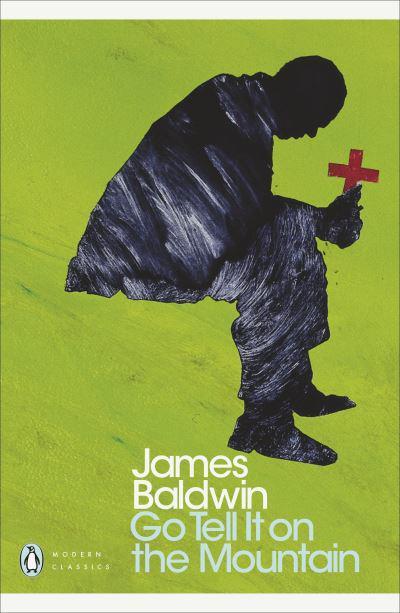
I was delighted when Go Tell It on the Mountain was selected for today’s review-a-long, as it has sat in my TBR for ages. I also really enjoyed October’s Vanity Fair review-a-long, and I fell in love with James Baldwin’s writing when I read Giovanni’s Room for the 1956 Club, back in October 2020.

Despite these various motivators, I was still worried I wouldn’t manage to join in, as my reading is slowly improving but still very poor, and my blogging is essentially non-existent. However, Go Tell It on the Mountain (1953) proved a good choice, as despite being a really tough read in terms of subject matter, it’s only 256 pages in my edition, can be read in an afternoon, and is full of Baldwin’s lyrical beauty.
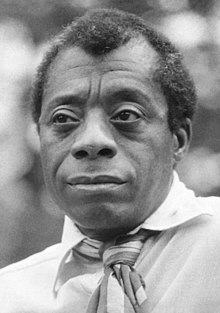
Photo by Allan Warren, courtesy Wikimedia Commons

The remaining obstacle is that it feels impossible to write about Go Tell It on the Mountain. It’s such a richly complex book and tackles such enormous themes, that I’m not even going to manage to approach doing it justice. So what follows is a few random thoughts 😊

The novel opens:

“Everyone had always said that John would be a preacher when he grew up, just like his father. It had been said so often that John, without ever thinking about it, had come to believe it himself. Not until the morning of his fourteenth birthday did he really begin to think about it, and by then it was already too late.”

John’s father Gabriel Grimes preaches at the Temple of the Fire Baptized, a Pentecostal storefront church in Harlem. John is ambivalent about religion, finding it restrictive and acutely aware of the temptations all around him;

“For John excelled in school, though not, like Elisha, in mathematics or basketball, and it was said that he had a Great Future. He might become a Great Leader of His People. John was not much interested in his people and still less in leading them anywhere, but the phrase so often repeated rose in his mind like a great brass gate, opening outward for him on a world where people did not live in the darkness of his father’s house, did not pray to Jesus in the darkness of his father’s church, where he would eat good food, and wear fine clothes, and go to the movies as often as he wished.”

However, he does have faith. We follow John throughout his birthday as goes to the cinema and enjoys Central Park, but also attends church:

“The Sunday morning service began when Brother Elisha sat down at the piano and raised a song. This moment and this music had been with John, so it seemed, since he had first drawn breath.”

Aged fourteen, John is still finding out who he is. This is bound up in religion and church, but also in his academic accomplishments which mark him out at school and within his family; and his rejection of his father as a masculine role model who demonstrates violence and hypocrisy, beating his family often.

“His father’s arm, rising and falling, might make him cry, and that voice might cause him to tremble; yet his father could never be entirely the victor, for John cherished something that his father could not reach. It was his hatred and his intelligence that he cherished, the one feeding the other.”

In the second part of the novel the prayers of John’s father, mother and aunt are powerfully explored. I don’t want to say too much about the plot here, as the characterisations first introduced through John’s point of view are so sensitively deepened through this second part, including that of his abusive father (who remains wholly unlikeable, but a fully realised character). As a reader I enjoyed watching these complex adults emerge without any foreknowledge.

John’s parents are the first generation since emancipation, and the trauma of slavery is just within lived experience, as GTIOTM is set in 1935. The depictions of racism, every day and institutional, are enraging.

“She looked out into the quiet, sunny streets, and for the first time in her life, she hated it all—the white city, the white world. She could not, that day, think of one decent white person in the whole world. She sat there, and she hoped that one day God, with tortures inconceivable, would grind them utterly into humility, and make them know that black boys and black girls, whom they treated with such condescension, such disdain, and such good humor, had hearts like human beings, too, more human hearts than theirs.”

Through John’s aunt Florence and his mother Elizabeth, Baldwin explores the additional patriarchal oppression women have to contend with. Florence’s academia is ignored to prioritise Gabriel’s, despite her desire for learning and his total disregard for it. Pregnancy outside of wedlock is left for the women to deal with. A woman who is gang-raped by white men is outcast:

“No man would approach her in honor because she was a living reproach”

There is a lot of compassion throughout the novel for female experience. With everyone there is a sense of things unspoken, in contrast to the vocal exuberance of preaching, and this is particularly true for the female characters.

“And he knew again that she was not saying everything she meant; in a kind of secret language she was telling him today something that he must remember and understand tomorrow. He watched her face, his heart swollen with love for her and with an anguish, not yet his own, that he did not understand and that frightened him.”

The final part of the novel follows John experiencing vivid religious visions, but I felt the ending was ambiguous, undermining the fervour. Baldwin demonstrates that human experience is subject to unpredictable forces, both internal and external, and I felt any certainty John believed in one day could be undone tomorrow. (For one thing, John doesn’t seem to acknowledge sexual attraction to Elisha, though as readers it seems to be there.)

As I mentioned at the beginning. I’ve found Go Tell It on the Mountain almost impossible to write about. I hope these few thoughts and extensive quotes have given some sense of it though! Baldwin is such gorgeous writer even with such harrowing subject matters: skilled but approachable, angry and compassionate, humane and unsentimental.

Now to dig If Beale Street Could Talk out of the TBR…
I’ll add in links to the other bloggers taking part today as I find them. Early signs are I’m out on a limb with this one, so please do check out the other reviews 🙂 :

Fiction Fan

Katrina

Rose

Kelly

Colette Week: Day 1 – Claudine at School (1900)

Last year I undertook to blog on a Novella a Day in May, which I really enjoyed. I’m hoping to do it again this year, but I fear I may end up delaying it until 2020. To tide me over I’m going to do a mini-version with a favourite writer who wrote short novels: Colette each day for a week, starting today as it’s her birthday.

Image from here

I’ll begin obviously, with Colette’s first novel, Claudine a l’ecole which I read in English translation, Claudine at School (trans. Antonia White 1956). Claudine is fifteen and in her final year at school. She lives in Burgundy with her father, who is distant but loving, interested mainly in slugs. As a result, Claudine is left to her own devices; her voice is strong and distinctive but she can also be something of a bitch, manipulating people and freely giving out slaps and other violence to her classmates.

“My name is Claudine, I live in Montigny; I was born there in 1884; I shall probably not die there.”

There are some lovely descriptions of the countryside which Colette clearly had great feeling for:

“The charm, the delight of this countryside composed of hills and valleys so narrow that some are ravines, lies in the woods – the deep, encroaching woods that ripple and wave away into the distance as far as you can see….Green meadows make rifts in them here and there, so do little plots of cultivation.”

A new teacher arrives at the school, Aimee Lanthenay, and Claudine is immediately entranced:

“My English mistress seemed adorable to me that night under the library lamp. Her cat’s eyes shone like pure gold, at once malicious and caressing, and I admired them, not without reminding myself that they were neither kind nor frank nor trustworthy. But they sparkled so brilliantly in her fresh face and she seemed so utterly at ease in this warm, softly-lit room that I already felt ready to love her so much, so very much, with all my irrational heart. Yes, I’ve known perfectly well, for a long time, that I have an irrational heart. But knowing it doesn’t stop me in the least.”

Claudine is aware of her own attractions and confident in them, including her appeal to the school’s District Superintendent Dutertre, who she sees clear-sightedly as something of a lech. Ultimately however, she loses Aimee to her Headmistress:

“The class was well-trained now. All the girls even down to those in the Third Division knew that, during recreation, they must never enter a classroom in which the mistresses had shut themselves up… we found them so tenderly entwined, or so absorbed in their whisperings, or else Madame Sergent holding her little Aimee on her lap with such a total lack of reserve that even the stupidest were nonplussed”

The treatment of sexual attraction between women is dealt with frankly in the novel. It is never apologised for, explained away as schoolgirl crushes, or treated as anything extraordinary. Claudine is at once inexperienced but wise and somewhat cynical beyond her years:

“In a week she will possess another fiancée who will leave her at the end of three months; she is not cunning enough to hold the boys and not practical enough to get herself married. And, as she obstinately insists on remaining virtuous, this may go on for a long time.”

The plot is minimal, the novel is Claudine’s diary of her final school year and all that entails. Yet Claudine’s distinctive voice propelled me along as I wanted to see what the precocious teenager would do next.

“Papa was sending me to Paris to a rich childless aunt… How should I do without the country; with this hunger for green, growing things that never left me?”

The answer to that question tomorrow 😊

“There shall be no more novels about incest. No, not even ones in very bad taste.” (Julian Barnes)

Trigger warning: this post contains discussion of upsetting sexual subject matter.  Please do not read if you are not an adult or if you will find such discussion traumatic.

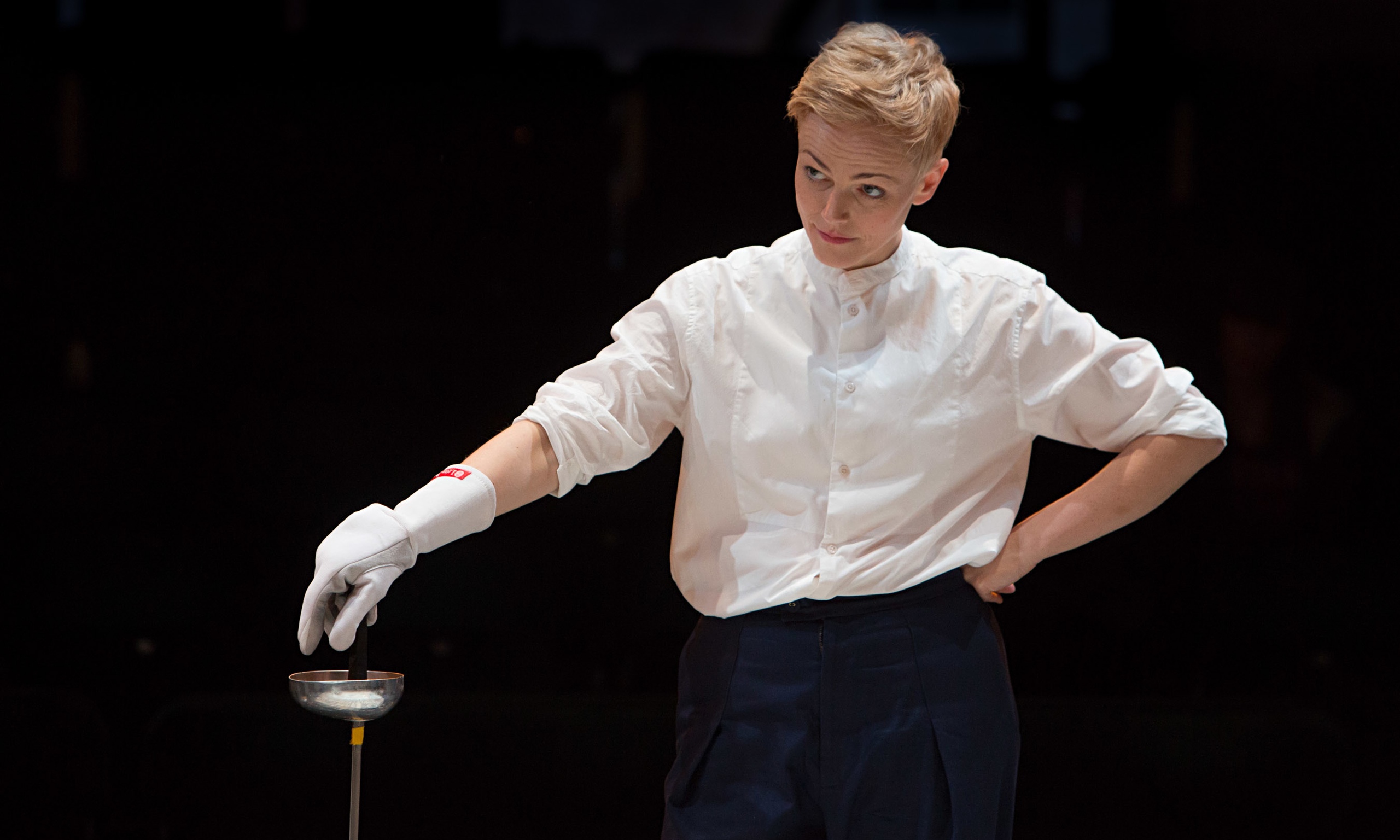
I’ve picked a rather disturbing theme for my post this week, as you may have guessed from the title quote. I try and pick a theme based on what’s been happening at the time, and for me this week it’s incest.  I feel I should qualify that statement rather rapidly: I went to see Maxine Peake’s Hamlet – that Oedipal family drama to end all Oedipal family dramas – and then I saw A View from the Bridge with Mark Strong.

maxine peake hamletnt_live_site_-_view_from_the_bridge_large

(Images from: http://www.theguardian.com/stage/2014/sep/21/hamlet-maxine-peake-royal-exchange-review-delicate-ferocityhttp://ntlive.nationaltheatre.org.uk/productions/ntlout9-a-view-from-the-bridge )

Then in my early modern literature class, someone pointed out that Tis Pity She’s a Whore (where a brother and sister are in a relationship) had warped her mind because when we read A King and No King (where a brother & sister struggle with their mutual attraction) she couldn’t see what the problem was & why they didn’t just get on with it.  Don’t get an education kids, it will put your moral compass on permanent fritz.

But if you can cope with the upsetting subject matter, there’s been some wonderful novels written about circumstances where incest occurs, so I hope you’ll stick with me.

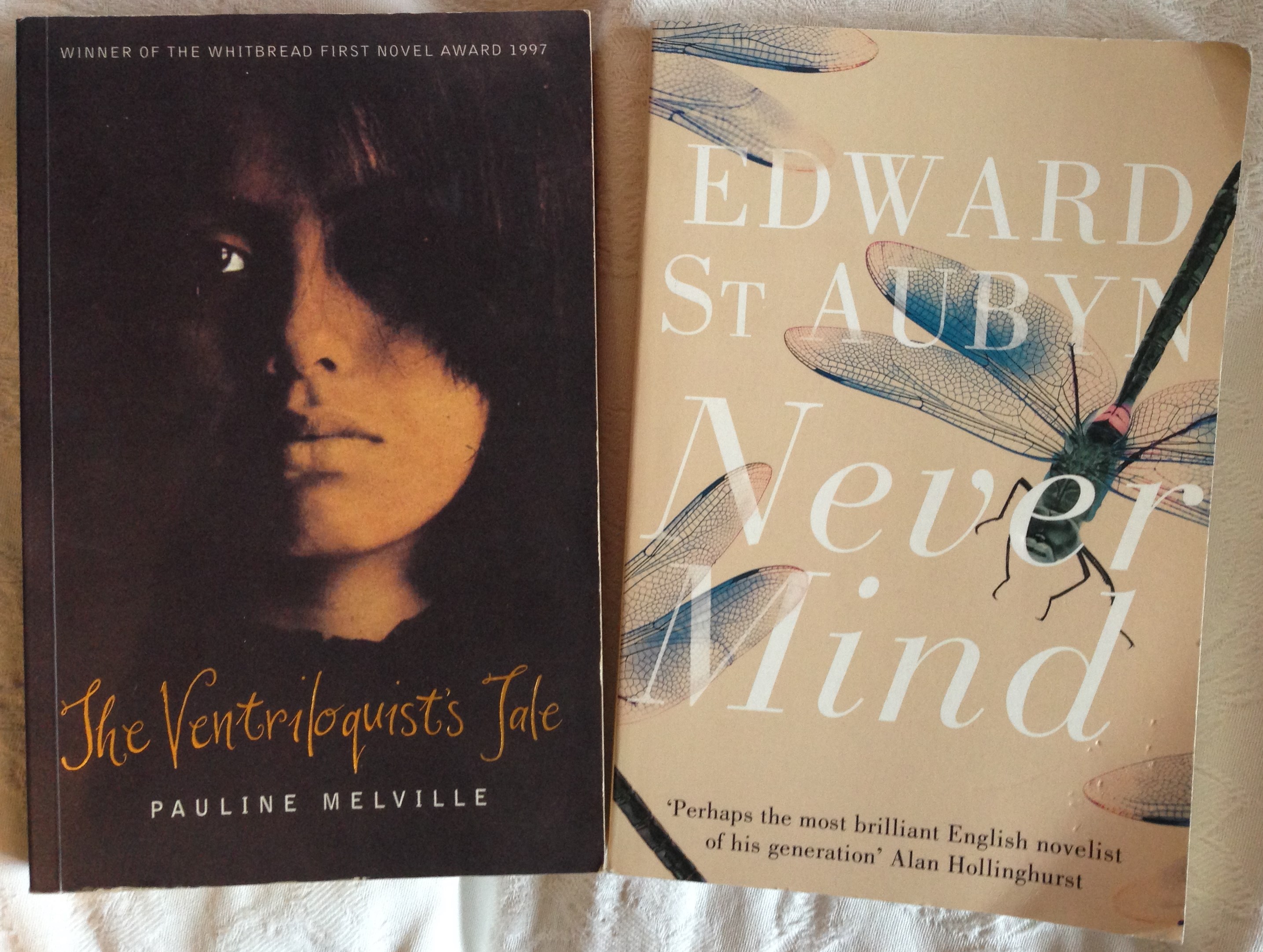
Firstly, Never Mind by Edward St Aubyn (1992).  This is the first of the Patrick Melrose quintet, St Aubyn’s series of autobiographical novels (the fourth, Mother’s Milk, was nominated for the Booker in 2006).  In this first novel , Patrick is five years old, living in France for the summer with his alcoholic mother and controlling, cruel father.  As Patrick explores the garden, creating adventures for himself, St Aubyn brilliantly evokes the microscopic view of a child:

“As Patrick approached the house, climbing as usual the right–hand flight of the double staircase because it was luckier, he turned into the garden to see if he could find the frog that lived in the fig tree.  Seeing the tree frog was very lucky indeed.  Its bright green skin was even smoother against the smooth grey skin of the fig tree, and it was hard to find it amongst the fig leaves which were almost the same colour as itself.  In fact, Patrick had only seen the tree frog twice, but he had stood still for ages staring at its sharp skeleton and bulging eyes…above all at the swelling sides which enlivened a body as delicate as jewellery, but greedier for breath.”

The third person narrative enables St Aubyn to shift between the various Melroses so that while the parents are reprehensible (the mother) and downright repugnant (the father) you understand why they are the way they are; how damaged they are and how they continue to inflict damage on all who surround them.

What makes it bearable is St Aubyn’s beautiful, intelligent prose; the delicate way he approaches the Melroses to capture this moment in family history.

“’What did you do today?’

‘Nothing,’ said Patrick, looking down at the floor.

‘Did you for a walk with Daddy?’ asked Eleanor bravely.  She felt the inadequacy of her questions, but could not overcome the dread of having them scantily answered.

Patrick shook his head. A branch swayed outside the window, and watched the shadow of its leaves flickering above the curtain pole.  The curtains billowed feebly and collapsed again, like deflated lungs.  Down the corridor a door slammed. Patrick looked at the clutter on his mother’s desk. It was covered in letters, envelopes, paperclips, rubber bands, pencils, and a profusion of different-coloured cheque books.  An empty champagne glass stood beside a full ashtray.”

SPOILER: And now, to quote the vampire Lestat, I’m going to give you the choice I never had. Never Mind is a great novel.  Edward St Aubyn is a hugely talented writer.  He was also repeatedly raped by his father as a small child and his novels are autobiographical.  In Never Mind, there is a scene where Patrick is raped by his father. I didn’t know this when I was reading the novel (I read the scene on a train, and had to get off at the next stop because I genuinely thought I was going to be sick), and I’m telling you so you can decide whether or not to read it. I would urge you to do as it is such a brilliant novel, but go in prepared.

Phew!  Let’s pause for a moment and go to a happy place:

giphy (1)

Secondly, The Ventriloquist’s Tale by Pauline Melville (1997) which won the Whitbread First Novel Award in 1997.  Set in Guyana and spanning most of the twentieth century, Melville uses the lives of generations of an Amerindian family to explore large themes: colonialism, the nature of love, religion and progress.  In contrast to Never Mind, this is a tale told with vivacity, serious but not depressing.

“Where was I? Oh yes. My grandmother.  She still refers with rage to a man called Charles Darwin who wandered through the region with the slow-motion frenzy of a sloth, measuring and collecting.  No one round here likes measurers, collectors and enumerators.  We cannot hoard in the tropics.  Use it or some other creature will eat it.  Sooner or later everything falls to the glorious spirit of rot with its fanfares of colours and nose-twisting stenches.”

The narrator/ventriloquist tells the story of the McKinnon family: Scottish Alexander McKinnon who builds a life in Guyana with 2 wives; his incestuous son and daughter; and the present day Chofy McKinnon, drawn back to Guyana through a love affair.

“It was confusing for McKinnon. He settled into the life well at one level, but every now and then he caught a glimpse of a world he did not understand at all.  He tried to discuss things with his father-in-law who was something of a philosopher and who explained to McKinnon that there was no point in trying to do anything about everyday life.  It was an illusion behind which lay the unchanging reality of dream and myth.”

These themes of The Ventriloquist’s Tale are heightened by the heady environment that challenges what is real:

“It was night and the deer was hiding somewhere in the tall grasses. Danny lay on the side of the sloping hill.  The rough grass under him felt like the pelt of an animal.  He almost imagined he could feel it breathing.”

Reading this novel engages all the senses: you can see, smell and taste all that is happening.  There’s a strong current of humour too; Melville has accomplished a novel that would be astonishing at any point in a writer’s career, but all the more so as a first novel.

001 (41)