“Happiness is a very fragile thing.” (Barbara Comyns)

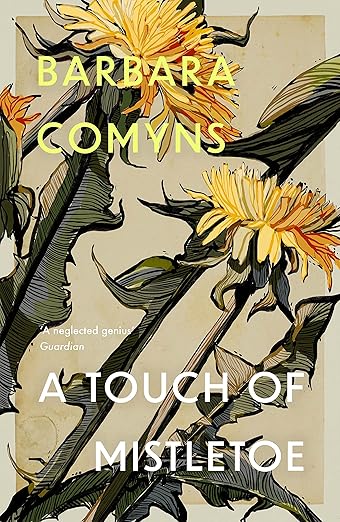
It was JacquiWine’s review of The Juniper Tree by Barbara Comyns (1985) last month that encouraged me pick this from the TBR in time for Novellas in November, hosted by hosted by Cathy and Bookish Beck.

I really enjoy Comyns’ individual voice. She can give a sharp edge to stories presented seemingly without guile which works well within the premise here, taking as a starting point the Grimm Brothers fairytale of the same name:

My mother she killed me,
My father he ate me,
My sister, little Marlinchen,


Gathered together all my bones
Tied them in a silken handkerchief,


Laid them beneath the juniper-tree,
Kywitt, kywitt, what a beautiful bird I am.

Thankfully Comyns writes a less cannibalistic/abusive version but there are fairytale motifs from the story scattered throughout. This gives the novella a somewhat unreal, atemporal quality, although references are made to the 1980s.

The striking opening scene directly draws on the Grimm tale, as Bella Winter (physically similar to Snow White, although she feels highly self-conscious of a facial scar) travels to Richmond in search of a job:

“I noticed a beautiful fair woman standing in the courtyard outside her house like a statute, standing there so still. As I drew nearer I saw that her hands were moving. She was paring an apple out there in the snow and as I passed, looking at her out of the sides of my eyes, the knife slipped, and suddenly there was blood on the snow.”

The affluent woman is Gertrude, married to Bernard.  Bella ultimately gets a job over the river in Twickenham with Mary:

“Her teeth were small and pointed rather as an animal’s, indeed she resembled an animal with her delicate boned face with its merry expression, perhaps a squirrel.”

But this doesn’t prevent Bella becoming more and more entwined in Gertrude and Bernard’s life. It’s not surprising that she is in search of a family. Her mother is cold and judgemental:

“There was one shadow that I kept in the back of my mind as much as possible, and that was my mother. To me she was almost like a wicked fairy, poor woman.”

Bella also left behind a selfish lover Stephen, who was driving when the accident occurred which left her with the scar on her face, for which he blames her.

But Bella has a young daughter Marline, also known as Tommy, who she loves dearly. Tommy is biracial and both she and her mother face racism throughout. However, they build a happy life, living above Mary’s antique/junk shop and transforming a “gritty” back yard into a pretty walled garden.

They regularly cross the river to Gertrude and Bernard’s abundant, if carefully curated, home. Bella enjoys sitting with Gertrude under the titular tree, where territorial magpies build their nest and watch the comings and goings.

It’s hard to say more without venturing into spoilers, but if this is sounding a bit contrived and fey, there are enough prosaic details to ground the story, and humour too:

“I was glad to return to the freedom of the shop and to be queen of my own home—eat cornflakes or baked beans for supper, wear a dressing gown for breakfast and read books that did not improve the mind in bed.”

I also thought there was scepticism regarding relationships between the sexes here, no guarantee of happy-ever-afters. As well as positive portrayals, both Stephen and Bella’s mother are abusive to partners, and Bernard is in an ambiguous Pygmalion role. Families are shown as places of anger and destruction as well as nurturing, and Bella has to chose her people to create a happy life.

The undercurrent of death also stops the story feeling whimsical, and there is a very upsetting death which takes place, precipitating Bella needing inpatient mental health care. Although not gratuitous or gruesome, it is something some readers would want to avoid so if you want to know, DM me!

The introduction to my NYRB edition mentions the ending being abrupt, but I have to disagree. The ending ties up everything as much as it can and I can’t see anywhere further the story could go, having fulfilled its fairytale basis and continued into a pragmatic 1980s conclusion.

To end, a very young Björk making her film debut in an adaptation of the Grimm Tale:

Novella a Day in May 2025: No.15

The Skin Chairs – Barbara Comyns (1962) 200 pages

I really enjoy Barbara Comyns. Her voice is so distinct, uniquely hers. She can present traumatic events – in The Skin Chairs, parental death, bullying and poverty – with an equanimity of tone which offers an idiosyncratic resilience.

The Skin Chairs is narrated by ten-year-old Frances. It opens with her going to stay with horrible relatives to give her mother a break from her six children; four girls and two boys. Frances’ Aunt Lawrence is a bully and her daughter Ruby is completely cowed by her, while her daughter Grace is her favourite and as such, completely unbearable.

“It was no wonder that the Lawrence family were so spiteful; it was dreadfully catching and gave one such a feeling of power.”

Frances’ stay with her relatives is extended as while she is away, her father dies. Ultimately her mother and her siblings move into a new house nearby called The Hollies. This gives the Lawrences a distressing amount of power over Frances’ mother, who struggles to adapt to her straitened circumstances.

“She never went shopping, although she ordered meat when the butcher called at the house (the fishmonger soon stopped calling because he said it wasn’t worth it when we always ordered herrings), and I think she would have considered it the final degradation to have been seen carrying a shopping basket.”

Her mother does learn to cook, but even that isn’t quite right:

“Mrs Hand prepared vegetables and we washed up, so she had none of the drudgery. Delicious iced cakes appeared on the table at teatime, vol-au-vent, lobster croquettes and chicken soufflés at midday and savoury supper in the evening. The little ones became bilious and, when Polly discovered that we had spent nearly a month’s supply of money in a week, we went back to stews and rice puddings, fish pie and baked apples.”

There isn’t much plot, except as Frances takes us through her days. Dramas are generally short-lived. The family struggle for money, and Frances struggles with her schoolwork.

We get to know others on the village. There is an appalling ongoing thread with a mother neglecting her child so she can have an affair with a Major. There is also the utterly eccentric Mrs Alexander who bombs around in a bright yellow car, wears gold shoes polished daily by her chauffeur, and keeps a menagerie of animals in cages:

“She had once kept a bear, but people had complained because it used to break into church during the services, and it had to be given to a zoo. ‘I sometimes wonder why I ever returned to England, so many unpleasant things happen here’.”

As with all the Comyns I’ve read there is cruelty present. Not least with the chairs, belonging to a General and said to be made from human skin. The cruelty is never dismissed although no-one is demonised, and Frances’ child’s view doesn’t obfuscate. It is presented without sensation.

Thankfully there is kindness too. Mr Blackwell arrives in the village, incredibly rich and kind to Frances during a time of acute distress. He doesn’t meet the Lawrences’ standards however:

“Then Aunt Lawrence told us the man was not a ‘gent’ at all, but a retired brass-founder. He was rolling in money, he owned an appalling Birmingham accent and would be quite impossible to know. I imagined him rolling in brassy coins all alone and felt sorry for him planning to live in a village where no one would know him.”

The horrible central image of The Skin Chairs suits Comyns well. She is so clever at presenting the domestic, but making it unnerving and almost Gothic. Yet The Skin Chairs is also gentle, and the characters – even the dreadful ones – treated with compassion. I’ve a few other Comyns’ languishing in the TBR and this made me keen to get them!

Novella a Day in May 2022 No.21

Mr Fox – Barbara Comyns (1987) 175 pages

Having read Barbara Comyns recently for the 1954 Club, I was delighted to pick her up again for this reading project. How I loved Mr Fox – there is no-one with a voice quite like Barbara Comyns.

The novella opens with Caroline and her small daughter living in a flat with Mr Fox. They are not romantically involved, but the pragmatic Mr Fox suggests it would work as a financial arrangement. His work is sporadic, varied, and not always entirely legal:

“It wasn’t always holidays Mr. Fox was enjoying when he went away. Sometimes he went to prison, not for crime but because he didn’t pay his rates to the borough council. He thought it a pity to waste money on rates and preferred going to prison – it was Brixton he went to. He once suggested I went to prison instead of paying my rates, but I didn’t like the thought of being shut up and when I made a few enquiries about Holloway I heard it was perfectly beastly there and not to be compared to Brixton.”

I really enjoy Comyns’ characters which she somehow manages to make guileless yet never fey. They are survivors but never in a remotely aggressive or self-pitying way.

Caroline’s husband has left and she’s not sorry. She is caring for her small daughter Jenny and worried about money. Mr Fox is a savvy and useful friend, but can also be moody and unreasonable.

“I hoped Mr. Fox didn’t think I’d runaway and left Jenny on his hands; he might even put her in an orphanage and it would take months to get her out again.”

This is the end of the 1930s, and so we know times are going to get much more difficult for these London-dwellers. Comyns captures the bombing in her own inimitable way:

“So I had to spend the day wandering about without any shoes. I passed some of the time filling sandbags in the street; heaps of people were doing it and it seemed a fashionable thing to do.”

Of course, the war brought opportunities for people like Mr Fox, and essentially he is a spiv. Caroline seems both aware and entirely unaware of what Mr Fox is up to, and helps him in the unlikely trade of second-hand pianos. After a time in the suburbs which makes them miserable, they return to the city:

“I began to enjoy an almost empty London. Shopping became almost a pleasure and sometimes we would go to the theatre and there would be hardly anyone there; and it was the same in restaurants. Often in the evening we would take the dogs for a walk in Hyde Park and it would be deserted and lovely. Once when we were walking home a flying bomb stopped right over our heads, and as we turned and ran in the opposite direction a great explosion came and then an enormous amount of dust. The dogs were more upset than we were.”

Comyns has such a unique and unlikely view on things I’ve no idea how typical the experiences in Mr Fox are, but I understand it was based on her real-life situation during that time. She doesn’t shy away from the difficulties of life but presents them in such a surprising way I’m often astonished rather than saddened. Mr Fox was still an emotionally affecting novel though, and such an entertaining one. I was sorry to reach the end.

“Perhaps it was just as well to get the sad part of my life over at one go and have all the good things to look forward to.

“A woman happily in love, she burns the soufflé.” (Baron St. Fontanel, Sabrina 1954)

Trigger warning: mentions suicide

This is my second contribution to this week’s 1954 Club, hosted by Simon and Kaggsy, and a chance to revisit Barbara Comyns, having really enjoyed Our Spoons Came From Woolworths.

The opening line of Who Was Changed and Who Was Dead may have usurped The Crow Road* to become my favourite beginning to a novel ever:

“The ducks swam through the drawing-room windows.”

Thus the scene is set for an unsettling domestic tale where nothing can be taken for granted.

The Willoweed family live in an English village where the river has just flooded in June. Then follows pages of dead animals, which I was prepared for, having read Jacqui’s wonderful review but I was exceedingly relieved when it ended (unfortunately there was also a horrible cat death later). Much as I could have done without the litany of death, it sets the tone for the darkness that follows.

In 1911 Emma, Dennis and Hattie live with their father Ebin and their grandmother who rules with a rod of iron. She is permanently furious, which Ebin attributes as follows:   

“It’s all this cleaning, I suppose; but she can’t expect me to help; my hands are my best feature, and they would be ruined.”

Ebin does very little apart from make vague overtures towards his children’s schooling and sleep with the baker’s wife.

“‘Father makes me hate men,’ thought Emma as she pumped water into a bucket.”

This is not an idyllic pre-war rose-tinted existence. Money is tight, relationships are tense, there is sexual deceit, violent undercurrents that threaten to overwhelm, and macabre power games. Grandmother Willoweed treats the servants horribly, but Old Ives the handyman is a match for her:

 “They always exchanged birthday gifts, and each was determined to outlive the other.”

Their lives are disrupted by a mysterious illness that sweeps through the village. People kill themselves following horrific delusions. By the time the cause of the illness has been identified, tragedy has touched the family and violence has ensued. As the title tells us, lives will have changed irrevocably one way or another.

I don’t want to say much more as the joy of reading Barbara Comyns is being so unsettled as to have no idea which way she is going to take you. There’s no-one like her; her view is so singular, so disturbing and yet so compelling. I found Who Was Changed and Who Was Dead brutal and horrifying, and also funny and enchanting. I couldn’t look away.

Secondly, I wrote last week about the middle two novels in Antonia White’s quartet, detailing the early life of Clara Batchelor, and now the final instalment, Beyond the Glass.

The novel picks up precisely where The Sugar House left off, with Clara and Archie having decided to separate. Clara moves back to her parents’ house to live with them and her grandmother in West Kensington. As she packs up her old life, she feels disassociated:

“She had the odd impression that it was not she who was stripping hangers and throwing armfuls of clothes into suitcases but some callous, efficient stranger. She herself was lying on the unmade bed, staring blankly at the cracks in the sugar-pink ceiling.”

This sense of disassociation deepens and broadens throughout the novel. When Clara announces to her mother “It’s a great relief not to have any feelings. I’m certainly not going to risk getting involved with anyone again.”

The reader of course knows what will happen. She attends a party with her friend Clive Heron (an intriguing character, my personal theory is he works for MI5) and falls instantly in love with the dashing soldier Richard Crayshaw.

What follows is such a clever exploration of someone slowly – then suddenly – unravelling. Clara stops eating and sleeping, she has a “strange sense of heightened perception” ever since she danced with Richard. She believes they communicate telepathically, a belief supported by others, but then she thinks the photographs of dead soldiers in her father’s study are speaking to her. She has gone from no feeling:

“Null and void. Null and void. She sat staring at the roses on her bedroom wall-paper, saying the words over and over again until she was half hypnotised.”

To too much feeling. At first her mania is disguised by being in love – plenty of people feel heightened and have reduced appetite and problems sleeping in the excitement of new romance. Certainly that is what Clara’s mother Isabel believes.

But gradually the reader begins to realise that Clara is really quite unwell. As Beyond the Glass is told from Clara’s perspective this takes some time, but it dawns us through others’ responses to her. In this way it is reminiscent of Wish Her Safe at Home, another excellent novel about severe mental illness.

Eventually she is ‘certified’ – made an in-patient at a public mental health hospital. The descriptions of the environment and the practices make me wonder how on earth anyone would have a hope of ever becoming well again. Thankfully mental health services, though chronically underfunded, are very different now.

I was so impressed with how White conveyed Clara’s disorientation and confusion, without making the narrative confusing and disorienting at all:

“Time behaved in the most extraordinary way. Sometimes it went at tremendous pace, as when she saw the leaves of the creeper unfurl before her eyes like a slow motion film, or the nurses, instead of walking along the passage, sped by as fast as cars. Yet often, it seemed to take her several hours to lift a spoon from her plate to her mouth.”

During her deep distress there are also echoes of events that occurred earlier in the narrative, particularly in The Sugar House, showing with the lightest of touches that her severe ill health has been building for a while:

“Since her marriage she had had an increasing sense of unreality, as if her existence had been broken off like the reel of a film.”

The recurring images of mirrors and glass as barriers reminded me of Plath’s The Bell Jar. Like The Bell Jar, this novel is based on the personal experiences of the author.

“She had an instantaneous vision of herself as someone forever outside, forever looking through glass at the bright human world which had no place for her and where the mere sight of her produced terror.”

Beyond the Glass ends on a note of hope, and faith, drawing on the Catholic thread that runs through all four novels. At times Clara’s Catholicism is more strongly felt in the story than at others, reflecting the character’s experience of her faith. I’m not religious but I felt the focus on this theme ended the novel and the series perfectly.

It’s so impressive that all the novels in the quartet are distinct and stand individually, while also developing across the sequence a fully realised portrait of Clara, and her family.

I’ve really enjoyed immersing myself in Clara’s life and I’m going to miss her (and her much-maligned mother, a great piece of characterisation). I wish Antonia White had continued writing her story.

“Something told her that, when they saw her again, they would know as well as she did that she no longer belonged to the world beyond the glass.”

To end, I finished my previous 1954 Club post with a filmed musical, so here’s another. The film of The Pajama Game is from 1957 but the Broadway show first appeared in 1954:

* “It was the day my grandmother exploded.”

Novella a Day in May #4

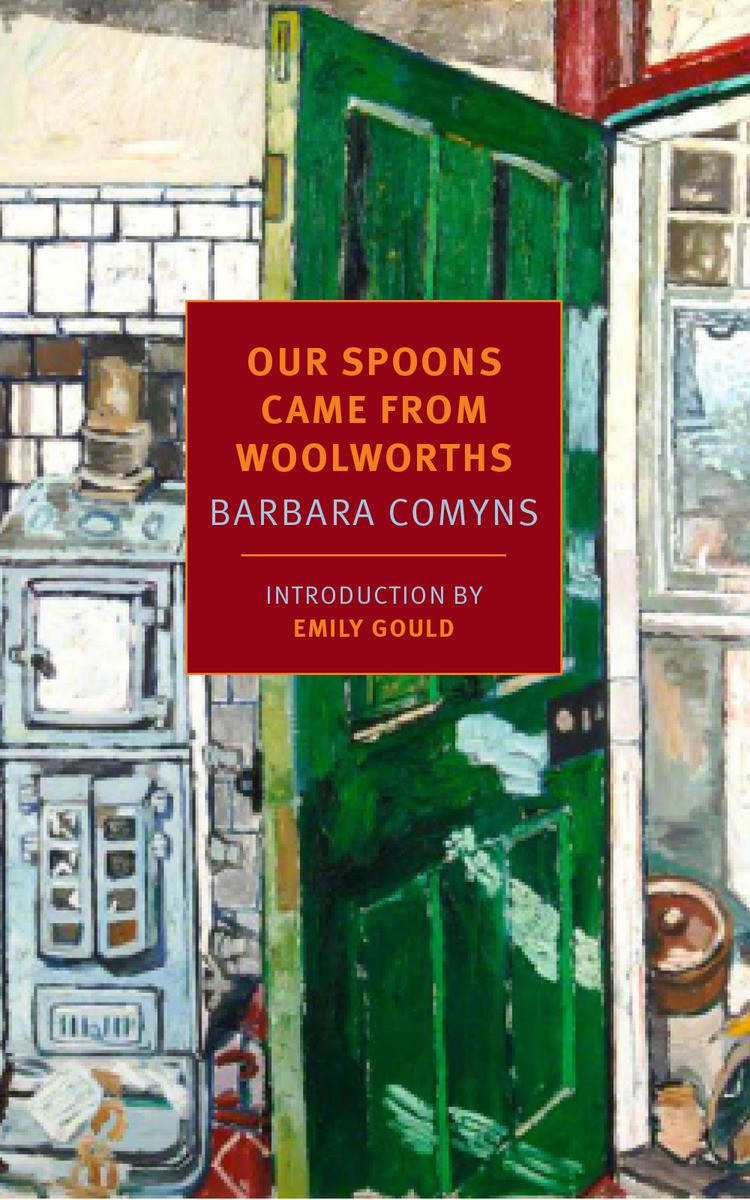
Our Spoons Came From Woolworths – Barbara Comyns (1950, 195 pages)

Our Spoons Came From Woolworths is the first Barbara Comyns I’ve read, attracted by the whimsical title and it being a Virago. I’m so glad I picked this up. Our Spoons Came From Woolworths was a compelling read, and not nearly as whimsical as I had assumed.

our_spoons_cover_image_2048x2048

The NYRB edition

It tells the story of Sophia’s marriage at a young age to Charles, an artist, in the 1930s. They are painfully naïve, and Charles especially has no idea about money:

“He said Eva had told all her relations about the coming baby, and they had asked him masses of questions about how he was going to support a wife and family. They had given him some money, though, four pounds in all. I was glad to hear this as we only had one golden guinea left in the dresser drawer, but my gladness did not last long, because it turned out he had already spent the money on some paints, brushes, books and an enormous walnut cake from Fullers.”

With the arrival of the baby, the poverty becomes even more pressing. Charles is monumentally selfish and self-absorbed, but not quite despicable. He’s just clueless and self-centred, and this means his actions are inadvertently cruel.  Although the situation is quite desperate, Comyns’ voice is matter-of-fact and never asks for sympathy.  There is a light, almost surreal humour present:

“Charles said he had borrowed some money to send telegrams to his relations saying we had a boy of six ounces. I told him it was six pounds not ounces, but he said a few pounds either way wouldn’t make any difference. But Charles’ telegrams caused a huge sensation, and his family was most disappointed when in due course they discovered we had quite a normal baby.”

But the humour always highlights the bigger picture, such as Charles’ disregard and disinterest in his children. While Comyns is unsentimental, this does not mean she is unaware of the power of her story. She has plenty to say about the role of women in interwar Britain and the hypocrisies that meant they were expected to marry and then make the best of it, with little means of support beyond their husbands. She also shows how this is bound up in sexual politics, with male infidelity so much more accepted than female, yet women deserving an equal right to happiness:

“Some time later, when I realised I had been unfaithful, I didn’t feel guilty or sad, I just felt awfully happy I had had this experience, which if I had remained ‘a good wife’ I would have missed, although, of course, I wouldn’t have known what I was missing. I felt quite bewildered. I had …been a kind of virgin all the time. I wondered if there were other women like this, but I knew so few women intimately it was difficult to tell.”

The story is also an indirect plea for a welfare state. What Sophia and her children endure would not be life-threatening after the end of the Second World War, with a social safety net established to protect them from absolute destitution and starvation.

But I worry now I’ve made Our Spoons Came From Woolworths sound very heavy, which it isn’t. Comyns knows how to say serious things with a lightness of touch that is quite remarkable.  You’re not left in any doubt as to Sophia’s desperation, but it remains a hopeful novel about human resilience. It’s generally thought to be thinly-disguised biography (Comyns was married to the painter John Pemberton between 1931-5 and had two children with him) and Comyns makes her point about these types of stories – concerning women and poverty – desperately needing to be heard at a time when no-one really wanted to listen, in deadpan comic style:

“This book does not seem to be growing very large although I have got to Chapter Nine. I think this is partly because there isn’t any conversation. I could just fill pages like this:

‘I am sure it is true,’ said Phyllida.

‘I cannot agree with you,’ answered Norman.

‘Oh, but I know I am right,’ she replied.

‘I beg to differ,’ said Norman sternly. That is the kind of stuff that appears in real people’s books. I know this will never be a real book that business men in trains will read, the kind of business men that wear stiff hats with curly brims and little breathing holes in the side. I wish I knew more about words.”

Although I understand from other bloggers that Comyns’ other novels are very different, I am now officially an ardent fan.

Image from here