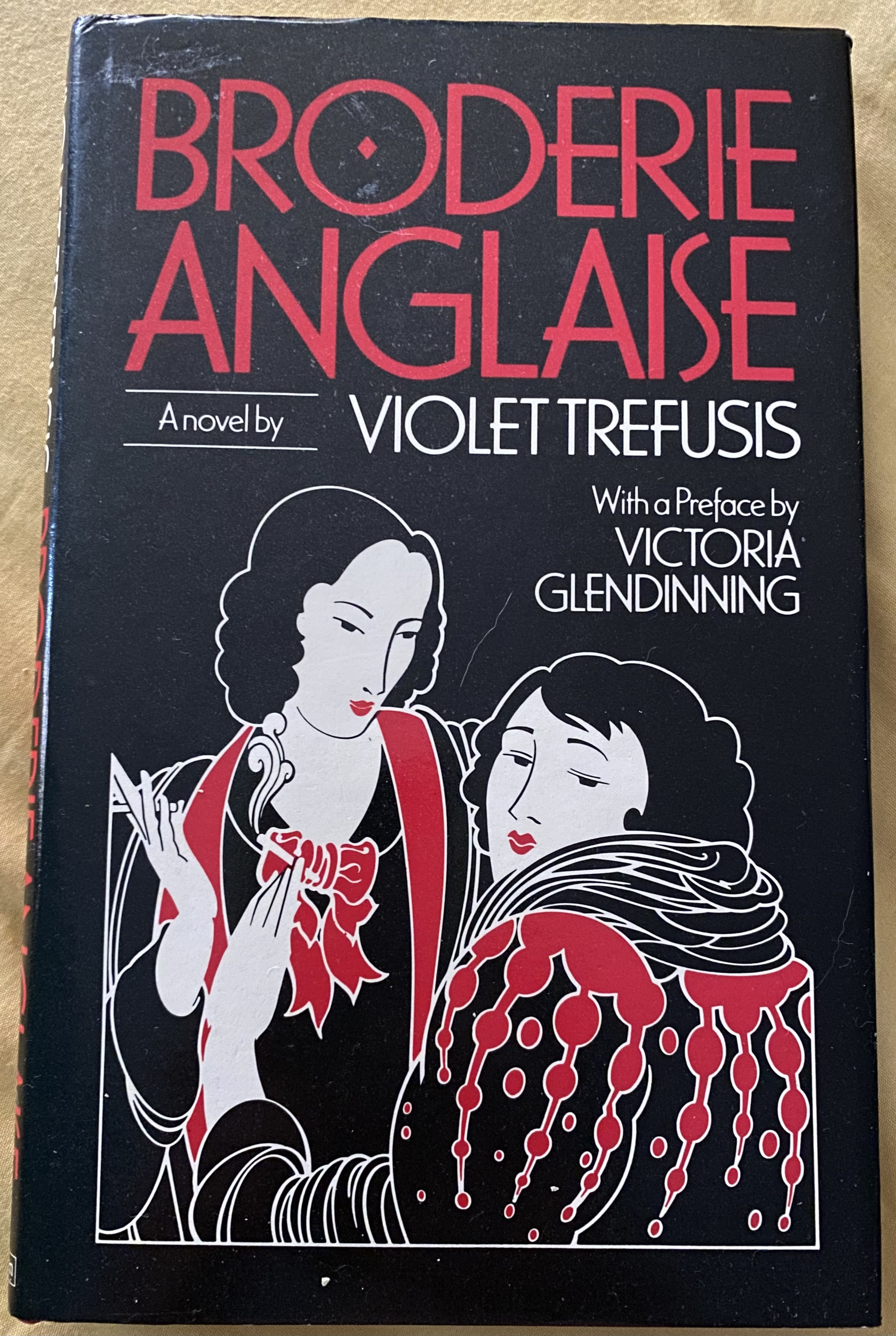
My main reason for picking up Broderie Anglaise was an interest in Violet Trefusis because of her links to Vita Sackville-West, and through her, Virginia Woolf, rather than the novella itself. Although I did enjoy Hunt the Slipper when I read it a few years ago, I was primarily interested to see the characters of Vita and Virginia as conjured in this novella, and the portrait of Knole, Vita’s ancestral home.
Alexa is a celebrated English writer (no prizes for guessing who she represents) who is having an affair with Lord Shorne (Vita). Casting a long shadow over their liaison is his broken heart from a relationship with Anne, a distant cousin (Violet).
“He said to himself that this was exactly the companion he needed – humane and sympathetic and at the same time rather sexless.”
It’s worth noting that Broderie Anglaise was published in French and only translated for the Anglophone market in 1985. Victoria Glendinning says in her preface to this edition that she doesn’t think Vita or Virginia were aware of the novella’s existence. So although the portraits can be quite acidic at times, it’s definitely an easier read knowing that no-one they represented ever read them.
It’s difficult to convey the mind of a genius when you are not a genius. Trefusis wisely glosses over Alexa’s writing and sticks to her anxieties around her affair, and more mundane concerns:
“Alexa went and sat by the window, at the mercy of the light, now no one else was there. A sluggish drizzle was falling. She looked up at the sky. Its full, baroque clouds were like a gathering of Marlborough’s contemporaries – all scrolls and whorls, from their wigs to their shoes. The sky’s not very imaginative, she thought, it always reminds me of something.”
The first part of the novella is Alexa’s anticipation of meeting Anne, when a mutual (oblivious) friend arranges a meeting. She reflects on her affair with John and what little she knows of Anne. The affair is not romanticised; it’s treated with some degree of irony and humour.
“Arm in arm they went up the slippery staircase that led to the state apartments. Alexa supported him. He was the Lord, the ravisher. She was about to become his mistress. They had to go through eight drawing rooms in all – a long way for a couple who had been drinking.”
Violet definitely doesn’t idolise either Vita or herself in the character of Anne. I felt she treated all three as flawed people, struggling to understand the circumstances they found themselves in.
Where she did portray a monstrous person was in the character of Lady Shorne (Lady Sackville). Controlling, intrusive, inappropriate, surrounding herself with trappings – she was truly malevolent.
“The tiny room, cluttered with carefully illuminated pieces of amber, each one lit up from within by its own mocking flame; her hostess, sitting motionless like a big spider in the middle of her web – all combined to make Alexa ill at ease.”
Broderie Anglaise is slight, but it’s definitely worth a read, particularly for those with an interest in Woolf/VSW. The portrait of Lord Shorne’s home Otterways has echoes of Orlando’s estate, being as they are both portraits of Knole. It’s also interesting to see how the Russian Princess of Orlando (Violet) chose to portray herself given a chance. She can be a witty and precise observer:
“‘I use up all my vital force in my books. There’s nothing left over for life,’ she suggested, with the famous touching smile which was so admired in the literary world but which John found exasperating because it was to be seen in all her photographs.”
Ultimately I felt Violet wasn’t overly settling scores here, but rather making a plea for not idolising lovers, even when they are from glamorous families, or are the foremost writer of their generation. She suggests that truly seeing people and situations may be painful, but it is really the only way towards enduring and authentic relationships.
Although she does use a play on words at the end to give herself the final say. And why not, it’s her novella after all 😀
“This was just the sort of thing that irritated him most. She was sentimental when she should have been satirical, obstinate when she should have been amenable.”
Last week I mentioned that 2016 has been a terrible year so far. I don’t follow sport in any shape or form, but even I know Andy Murray has done his best to cheer up a post-Brexit UK by winning the men’s singles final at Wimbledon. Congratulations to all the winners!
Obviously these wins are the result of years of dedicated training, but we all experience things that culminate in one day now and again. So to celebrate I’ve picked two novels that deal with the events of one day.
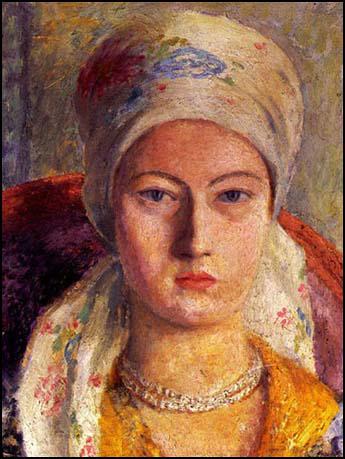
Firstly, Cheerful Weather for the Wedding by Julia Strachey (1932), who was one of the Bloomsbury group; this novel was originally published by Leonard and Virginia Woolf’s Hogarth Press, she was a niece of Lytton Strachey and was painted by Dora Carrington:
This novella details the morning of a wedding: the preparations, the arrival of guests, the bustling of servants. The bride doesn’t make an entrance for a while, instead we are treated to her mother, Mrs Thatcham, giving contradictory instructions to all and not seeing that this why things are not organised as she expects:
“with a look of sharp anxiety on her face as usual – as though she had inadvertently swallowed a packet of live bumble-bees and was now beginning to feel them stirring about inside her. She stopped and looked at the clock.
‘I simply fail to understand it!’ burst from her lips.
She trotted briskly out of the drawing-room in the direction of the kitchen.”
Apparently this woman, who veers between being frustratingly tedious and a downright bully, was based on Strachey’s mother-in-law…
Meanwhile, the guests start to arrive. There are some lovely character sketches of family members and assorted hangers-on, told with gentle – in the main – humour.
“a tall, grey-haired man, in black clerical clothes, with a gaunt white face reminiscent of a Pre-Raphaelite painting of Dante. It was Canon Dakin, or Cousin Bob of Hadley Hill as the family called him.”
There is a hilarious description of a lampshade wedding gift and Aunt Katie’s verdurous wedding hat. My favourite little scene was between deluded Aunt Bella, who is busy boring her nephew Lob with tales of how her servants “simply cherish me”, and is met with the following non-sequitur:
“‘My dear lady,’ replied the cheerful Lob, speaking unexpectedly loudly, and holding his glass of wine up to the light for a moment, “I don’t care two pins about all that! No! The question, as I see it, is quite a different one. The whole thing is simply this: Is it possible to be a Reckless Libertine without spending a great deal of money?’”
When we finally meet the bride, Dolly, it is clear all is not well. For starters, she has put away most of a bottle of rum to enable her to stagger down the aisle:
“At this moment Dolly was trailing slowly down the back staircase (which was nearer to her part of the house than the main one), her lace train wound round and round her arm. From out of the voluminous folds of this there peeped a cork and the top of the neck of the bottle. In her other hand was her large bunch of carnations and lillies.”
As Dolly is unsure of what she is doing and why, simultaneously there is an admirer of hers, Joseph, who may at any minute stop the wedding, though he is not sure of his motivations for doing so. Apparently Strachey was a fan of Chekov, and Cheerful Weather for the Wedding shows this influence in domestic subject matter and conflicted characters unable to take action. The humour is bittersweet: while the preparations and family members are portrayed with a light irreverence, the drunk bride and her inert friend? lover? – we are never told – bring a genuine sadness to proceedings. I couldn’t help feeling they were both on the brink of disaster.
“Dolly knew, as she looked around at the long wedding-veil stretching away forever, and at the women too, so busy all around her, that something remarkable and upsetting in her life was going steadily forward.”
Virginia Woolf’s opinion of Cheerful Weather for the Wedding was high: ‘I think it astonishingly good – complete and sharp and individual.’ Strachey doesn’t explain everything and leaves many questions in the reader’s mind as to what is going unsaid and undone on this nuptial morning (looking at the trailer for the 2012 film it looks as if everything is spelled out, so I will not be watching the film version – why? WHY??) While it is short, Cheerful Weather for the Wedding is not slight – witty, sardonic, sad and wise – it is a fully realised portrait of everyday tragedy.
Secondly, A Single Man by Christopher Isherwood (1964) tells a day in the life of George Falconer, an ex-pat English professor living alone in California just after the Cuban missile crisis, and grieving the loss of his partner Jim, killed suddenly in road traffic collision.
“And it is here, nearly every morning, that George, having reached the bottom of the stairs, has this sensation of suddenly finding himself on an abrupt, brutally broken off, jagged edge – as though the track had disappeared down a landslide. It is here that he stops short and knows, with a sick newness, almost as though it were for the first time: Jim is dead. Is dead.”
In the midst of this enormous pain, George carries on with his life: teaching a class, shopping, going to the gym, getting drunk with a friend.
“In ten minutes, George will have to be George; the George they have named and will recognise. So now he consciously applies himself to thinking their thoughts, getting into their mood. With the skill of a veteran, he rapidly puts on the psychological makeup for this role he must play.”
A Single Man is perfectly paced, capturing George’s numb putting-on-foot-in-front-of-the-other coping without losing narrative drive. The tone is gentle, treating George kindly, but without sentimentality – he is not always kind himself, and his views on those he encounters are unblinking. However, as we spend the day with George, we start to get glimmers of his desire to keep living, a sense that he will find meaning in carrying on. But then his grief completely side-swipes him:
“He pictures the evening he might have spent, snugly at home…only after a few instants does George notice the omission which makes it meaningless. What is left out of the picture is Jim, lying opposite him at the other end of the couch, also reading; the two of them absorbed in their books yet so completely aware of the other’s presence.”
There is sadness in A Single Man but it is not depressing. Rather it shows how life goes on in all its messy imperfection, and that can be OK, even when you are feeling far from fine.
A Single Man was made into a film in 2009, the directorial debut of fashion designer Tom Ford. It certainly looked amazing and had some wonderful performances by Colin Firth and Julianne Moore, but the screenplay made some significant changes and unsurprisingly, I prefer the book for its subtlety and nuance. Kudos to Ford though, for filming a book that takes place almost entirely within one man’s head.
This is a loooong post – strap in people, and bring Kendal mint cake.
These days I don’t generally socialise as part of a group (unless it’s a work do, an experience that Dante forgot to include in his descriptions of the circles of hell) but in the last week I’ve been out with two sets of friends, which was a lovely change. For this reason, in this post I thought I’d look at writers who have famously been part of a group.
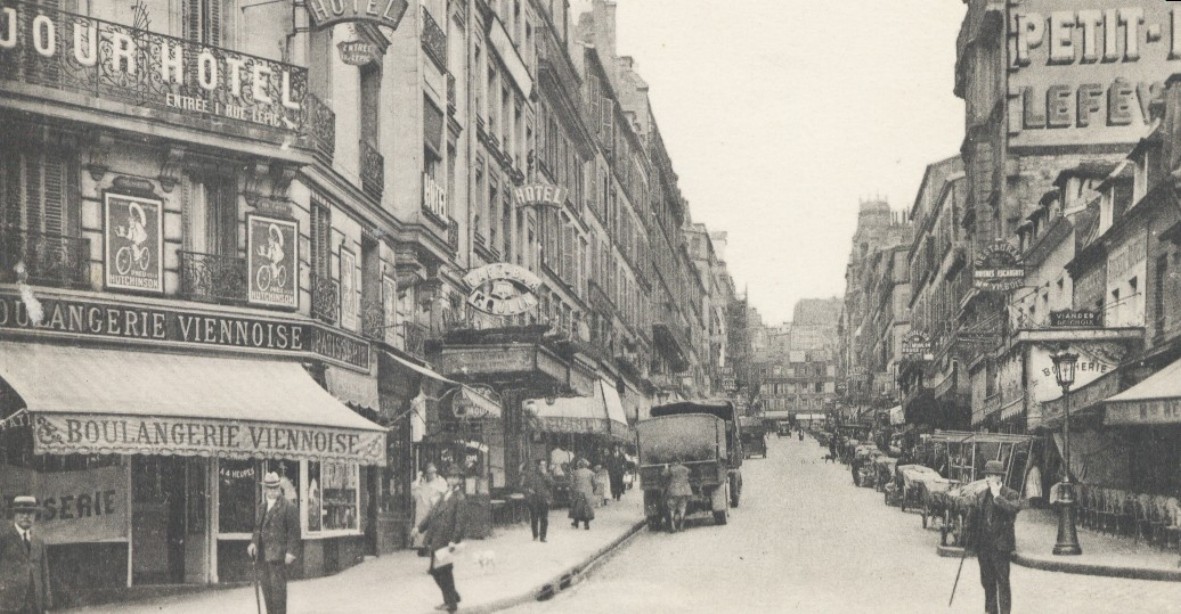
Firstly, A Moveable Feast by Ernest Hemingway, which was published after his death and recalls his time as a young man in Paris during the interwar period, part of une generation perdue, or lost generation:
“’’That’s what you are. That’s what you all are,’ Miss Stein said. ‘All of you young people who served in the war. You are a lost generation.’
‘Really?’ I said.
‘You are,’ she insisted. ‘You have no respect for anything. You drink yourselves to death…’”
Miss Stein is of course Gertrude Stein, and her literary salon attracts some of the greatest writers of the generation: F Scott Fitzgerald, Ezra Pound, Ford Maddox Ford (a less than flattering portrait), Hilaire Belloc, James Joyce… it really is astonishing that these minds were all in the same place at the same time.
I can’t tell you how much I want to dislike Hemingway. He was macho, into bloodsports, treated women appallingly… but his writing just takes my breath away. A Moveable Feast gives some insight into his craft; his drive to write what is true and to distil his writing into the sparse style he became so famous for:
“Since I had started to break down all my writing and get rid of all facility and try to make instead of describe, writing had been wonderful to do. But it was very difficult, and I did not know how I would ever write anything as long as a novel. It often took me a full morning of work to write a paragraph.”
He is filled with the arrogance and uncertainty of youth, completely committed to his craft:
“I’ve seen you beauty, and you belong to me now, whoever you are waiting for and if I never see you again I thought. You belong to me and all Paris belongs to me and I belong to this notebook and pencil.”
“I would stand and look out over the roofs of Paris and think, ‘Do not worry. You have always written before and you will write now. All you have to do is write one true sentence. Write the truest sentence you know.’”
While he is sitting in cafes trying to write one true sentence, the young Hemingway comes into contact with various writers also trying to perfect their craft, including one of my favourite poets, Ezra Pound:
“Ezra was kinder and more Christian about people than I was. His own writing, when he would hit it right, was so perfect, and he was so sincere in his mistakes and so enamoured of his errors, and so kind to people, that I always thought of him as a sort of saint. He was also irascible, but so perhaps have been many saints.”
I just don’t understand how a person unfailingly described by all who knew him as being so generous, supportive and kind could also be such a massive fascist. It does make me feel a bit better about liking his poetry though. He also provides many of the episodes of comic relief in A Moveable Feast:
“I had heard complaining all my life. I found I could go on writing and that it was no worse than other noises, certainly better than Ezra learning to play the bassoon.”
Hemingway and his first wife were poverty-stricken in this period, and one of the places that offers succour is the now-famous English language bookshop Shakespeare and Company under the auspices of Sylvia Beach:
“On a cold windswept street, this was a warm, cheerful place with a big stove in winter , tables and shelves of books, new books in the window, and photographs on the wall of famous writers both dead and living.”
From within this perfect bookshop, Sylvia lends Hemingway and Hadley money and books, and helps create the man who would write this about F Scott Fitzgerald:
“His talent was as natural as the pattern that was made by the dust on a butterfly’s wings. At one time he understood it no more than the butterfly did and he did not know when it was brushed or marred. Later he became conscious of his damaged wings and of their construction and he learned to think and he could not fly any more because the love of flight was gone and he could only remember when it had been effortless.”
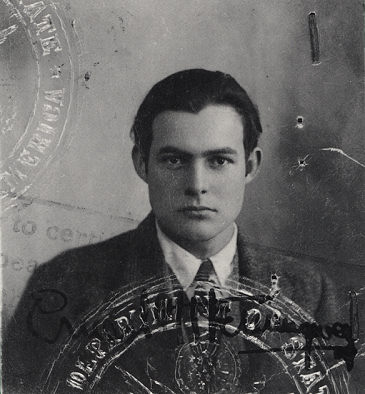
If that passage doesn’t want to make you weep at the tragic beauty of it all, then I don’t know if we can be friends. Damn you Hemingway, you’ve made me love you just like all those other women who should have kept well away. Thank goodness we didn’t meet when you looked like this:
Or things could have got messy. (Seriously, who looks like that in a passport photo? I look like I’m out on day-release in mine).
Woody Allen explored the attraction of this group of writers in Midnight in Paris. I liked the film, but even a friend who loathed it admitted Corey Stoll did a great job as Hemingway:
“But Paris was a very old city and we were young and nothing was simple there, not even poverty, nor sudden money, not the moonlight, nor right and wrong, nor the breathing of someone who lay beside you in the moonlight.”
Secondly, The Wise Virgins by Leonard Woolf, who was part of the Bloomsbury group, and in his second (final) novel portrays his wife, Virginia. He is also in the privileged position of being one of the few male authors published by Persephone Books, and their lovely edition of this novel includes an endpaper print by Vanessa Bell, Virginia’s sister.
Harry Davis moves with his family into the stultifying suburban society of Richstead (Richmond/Hampstead) where he is introduced to the Garlands and their four daughters, who do nothing all day because that is all they are expected to do:
“Harry felt the dull sense of depression creeping over him again. ‘It’s so bad,’ he said, ‘to be comfortable. That’s why you want to go on forever in the same place.’
‘But I like being comfortable,’ said Ethel decisively. ‘I don’t think it’s bad at all.’
Harry remained silent; he couldn’t think of anything more to say. Gwen watched his rather heavy face. She could not make him out; she was not sure whether she liked him or hated him at first sight. He seemed to be exceedingly ill-mannered, she thought.”
Harry is an artist, and wants so much more. He meets the intellectual, free-thinking Camilla (seen as representing Virginia) and falls in love. While I think reading the novel for biographical ‘clues’ misses the point and would prevent enjoying the novel fully, it’s not difficult to imagine Virginia agreeing with some of Camilla’s sentiments:
“’There’s so much from marriage from which I recoil. It seems to shut women up and out. I won’t be tied by the pettiness and the conventionalities of life. There must be some way out. One must live one’s own life’”
The difficulty is, most of the characters are too vacuous, lazy and pretentious to tread their own path. They’re not terrible people, but the Bloomsbury set seem to sit around all day trying to be clever, while the suburban set obsess over flowers. Apparently some found Camilla-as-Virginia offensive, but if that was what Woolf was doing, Leonard-as-Harry fares little better, too weak to ever seize the life he imagines, lacking the courage of his own convictions:
“He turned over, and lay flat, burying his face in the grass. Harry felt as if he himself were turning into stone. He just managed to say:
‘You think her absolutely cold?’
‘She’s a woman and a virgin: isn’t that enough?…What they want is to be desired – that’s all. And when they get that from some poor devil with a straight back and a clean face, they think they are in love with him, and he marries, to be disappointed.”
If all this sounds terribly tedious, it isn’t. Woolf satirises early twentieth-century society and shows how it denies sexuality and oppresses men and women, but especially women. It could be a bleak novel – none of the characters really know what they want or how to break free – but I think we’re not meant to take them as seriously as they take themselves. While it’s not a broad comedic novel, The Wise Virgins has plenty of humour in it:
“This gentleman was undoubtedly a clergyman; his red nose and the causes of it had made it difficult for him to be a minister of Christ for any long time in one place…his life had its advantages, he used to affirm in his more secular moments, because he never had to write a new sermon; one congregation after another listened to the same four which had escaped the wear and tear of wandering with their author up and down England.”
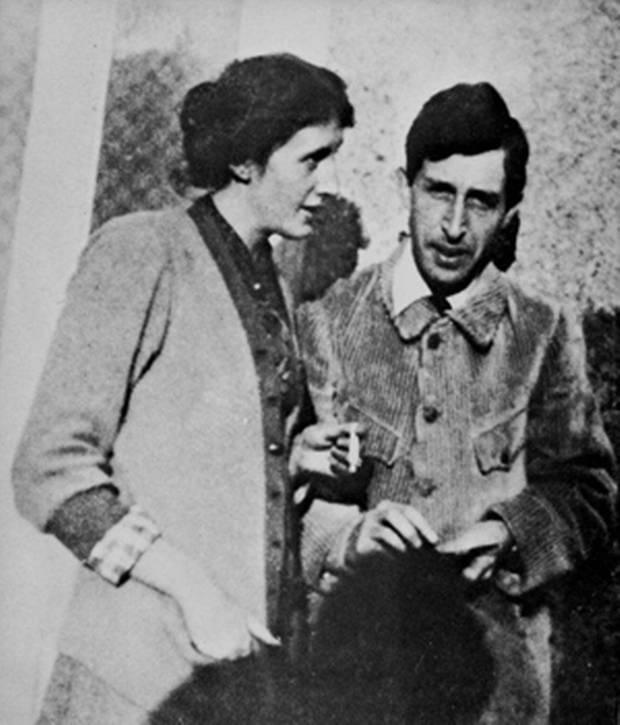
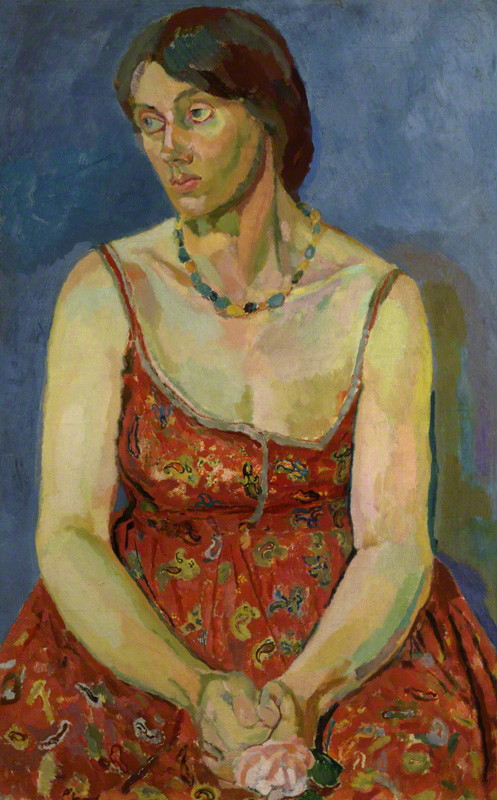
The Wise Virgins is about a denial of desires both individual and collective, and how damaging it can be. The Bloomsbury group in real-life were much more sexually liberated, and while I’m not sure the result was damage-limitation, it did result in some beautiful art:


 madame bibi lophile recommends