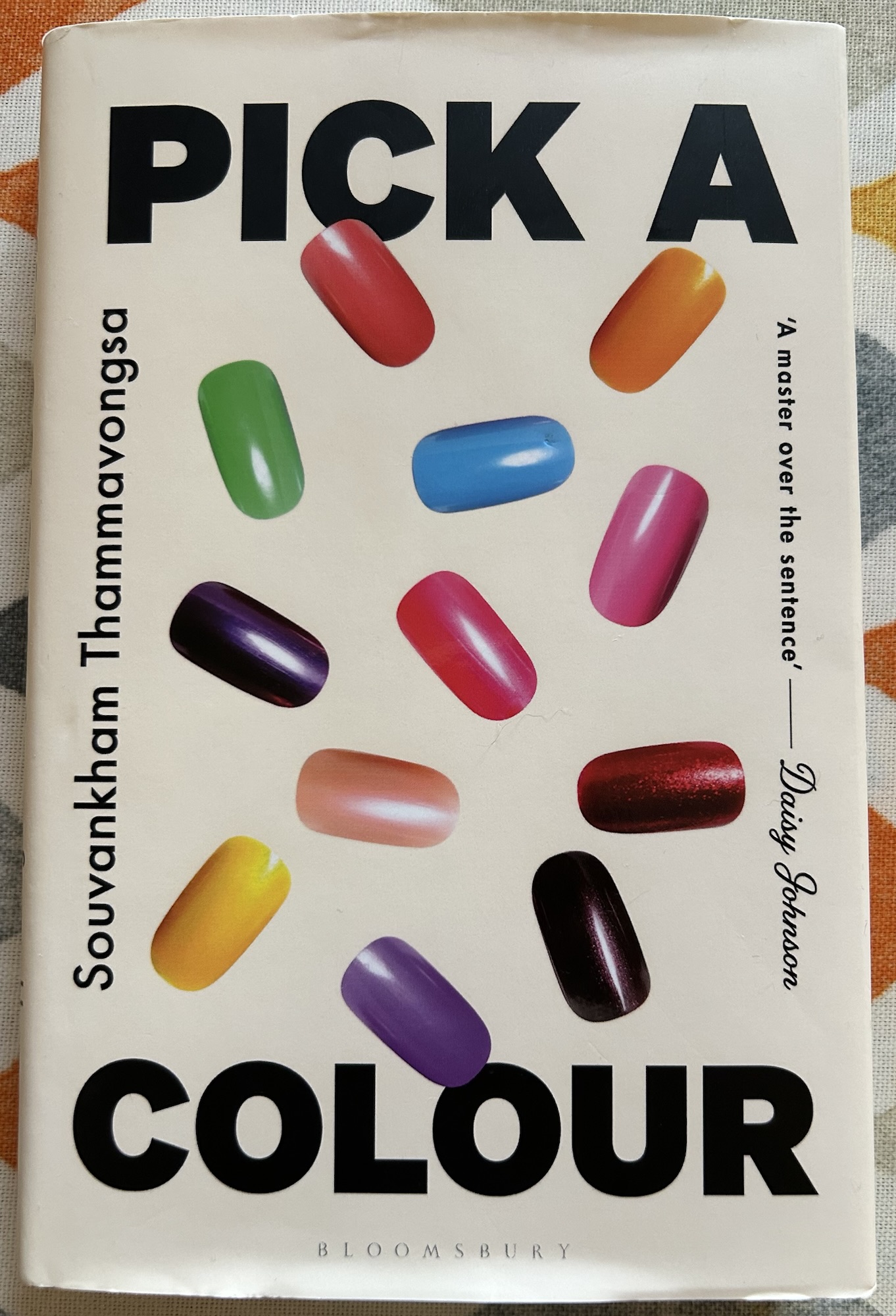
I mentioned buying two novellas in my post for A Room Above a Shop, and the other one was Pick A Colour by Souvankham Thammavongsa (2025). Once again, it was Susan’s enticing review which sent me in search of a copy!
Thank you so much to everyone who left good wishes when I mentioned finishing at work, and this post about a novella in a workplace seems apt for the update that I have a new job – I am extremely relieved! But I’ve a few weeks off between and so far I’m enjoying lots of reading and relaxation 😊
Earlier this year I read Marzahn, Mon Amour by Katja Oskamp which is set in a chiropodist/nail bar in a Berlin suburb. There’s something so appealing about a workplace setting, with disparate characters thrown together, and with a shop there’s the added unpredictability of who can walk in the door at any moment. Pick a Colour is set over the course of one day in Susan’s nail bar and manages all these elements so well.
Susan’s is owned by Ning, an ex-boxer who used to work for the bullying Rachel at the Bird and Spa salon a small distance away. Her nail bar has been open for five years and is called Susan’s because everyone who works there – including Ning – wears name badges with that name on it. The customers don’t notice.
“Looking at the two of us, them sitting on a chair above me, and me down low, you’d think I am not in charge. But I am. I know everything about them, whether or not they tell me. You look at something long enough and you begin to see everything in its details. And you’d be surprised what people tell you when they think you are a stranger and they’re never going to see you again.”
There is a strong theme of power, privilege and colonialism running through Pick a Colour. The city it is set in is unnamed, and the language spoken by the nail technicians is not specified, but they speak it in front of clients who don’t share it, and don’t understand that they are being appraised and gossiped about.
Quick-witted colleague Mai has a suggestion for Ning’s young, serial-dating and phone-obsessed client:
“She says quickly, ‘I know a guy for her.’ It is as if she’s been lining them up somewhere just for this moment.
‘What guy do you know.’
‘My dad,’ she says. ‘He’s single.’
We laugh because the man is old as a raisin that fell underneath the fridge from eighty years ago.
‘He doesn’t know how to text, though,’ I say. ‘So I don’t think it will work out for them.’
I turn back to the waitress.”
Ning deliberately remains enigmatic: to her clients, her colleagues and as a narrator. A new staff member, Noi, joins and Ning is stern with her. She doesn’t join the others for lunch and for clients who ask about her life she makes something up. As readers we are privy to her memories of working for Rachel and her boxing coach Murch so we are aware of some of her trauma, but much remains unexplained.
“I look at the finger I don’t have. I’m actually quite proud of it and want to hold it up anytime someone sits in my chair. If my body has a centrepiece, it’s this space where something used to be.”
We follow Ning, Mai and Noi throughout the day as they expertly manage the logistics of the salon and the psychologies of their clients with skill, humour, compassion and also disdain when appropriate. Pick a Colour has a deceptive lightness of touch in its exploration of some major themes, encouraging consideration of what lays beyond the surface.
“I’m sure she has friends to talk to over brunch, maybe a therapist, but you don’t want to tell your friends stuff like this. Want to keep up the appearance of what everyone thinks happiness should look like.”
To end, I nearly chose My Name is Not Susan by Whitney Houston, but instead here are Dolly and Patti LaBelle demonstrating the title quote:
Back when I was an undergrad in English literature, my tutor accused me of being squeamish on the subject of incest in Jacobean drama and skirting round it. My argument (and he did like it when I argued with him, he was a very sweet man) was that it was more interesting to consider incest as metaphor for Jacobean political corruption and the decay of society rather than just a play about a brother and sister with a warped relationship. The reason I mention this now is that in Bear by Marian Engel, a woman has sex with a bear.
Now maybe my tutor would think I’m being squeamish about bestiality here, but I really don’t think that it is what Engel is writing about or interested in. For me, Bear is a novel about a woman learning self-acceptance, and how to live her life on her own terms.
Lou is a librarian and archivist working for the Historical Institute, where she stays buried in her basement office:
“For although she loved old shabby things, things that had already been loved and suffered, objects with a past, when she saw that her arms were slug-pale and her fingerprints grained with old, old ink, that the detritus with which she bedizened her bulletin boards was curled and valueless, when she found that her eyes would no longer focus in the light, she was always ashamed, for the image of the Good Life long ago stamped on her soul was quite different from this, and she suffered in contrast.”
She is lonely and her life is unsatisfying, particularly romantically. When the Institute is bequeathed an estate in a remote part of Canada, Lou is asked to travel there in order to take an inventory. What she isn’t told until she gets there is that the inventory includes a bear.
The house of Colonel Jocelyn Cary is isolated and strange, octagonal and filled with ephemera. Lou works steadily and there are some lovely descriptions of the library. Gradually she and the bear grow used to one another. Throughout the story the bear remains unknowable, quite a sad creature. He isn’t anthropomorphised and in this way Lou has to take responsibility for all her actions. She can’t claim to be responding to the bear.
“In case the bear was disappointed (for she had discovered she could paint any face on him that she wanted, while his actual range of expression was a mystery), she went out, plastered with mosquito lotion, and took him down to the shallowest part of the channel, where the water was warm.”
The main healing that occurs for Lou is through having to leave her basement office and interact with the natural world to survive. She has to run a boat, cook from scratch, fish, and share her environment with various creatures for company.
“She settled into a routine. She worked all morning, then in the afternoon disappeared into the bush to walk on carpets of trilliums and little yellow lilies; hepatica and bunchberries. The basswoods had put out huge leaves. Often, scarved and gloved against the black flies, she lingered by the beaver pond. The goshawks stared at her from their barkless elm with impenetrable eyes.”
Bear is the story of Lou reconsidering her choices and learning to listen to her own voice when she experiences the world away from other people (particularly men), surrounded by wildness. Her vulnerability is moving and emotionally engaging. What psychological change occurs for her is believable and unsentimental, while remaining hopeful.
From looking online, it seems a shame in a way that Bear features bear sex, because although it’s actually a tiny part of the story, of course it’s that for which the novel is known. It is a fable – in real life Lou would have likely been killed by the bear fairly quickly. Engel’s writing is much more subtle and the themes so much more complex than some summaries would suggest. Probably I have obfuscated a bit, but I’m certain my tutor won’t read this post 😉
“Is a life that can now be considered an absence a life?”
Those of you who follow Dorian Stuber on social media will know he’s a great advocate for this novel. You can read an essay he wrote on it here.
I really wanted to get this posted in time, but those of you who read my previous post will know I’m currently getting over labyrinthitis. So the same disclaimer applies: please bear with me and apologies in advance for inadequacy/incoherence!
Old Babes in the Wood (2023) is a collection of short stories split into three sections. Tig & Nell contains three stories about the titular couple, My Evil Mother contains eight stories and the final section returns to Nell & Tig with four stories.
I find it hard enough to write about short stories even when my ears aren’t making life extremely trying, so I’m just going to focus on the final section for this post. The Nell & Tig stories explore what it means to be part of a long-established, now elderly couple and the challenges of aging, illness and bereavement.
These issues form a large part of my working life, and I thought Atwood nailed it with her characteristic insight, wit, compassion, and lack of sentimentality. I’m not one for biographical readings generally, but it is worth noting that Graeme Gibson, Atwood’s partner of 45 years, died in 2019 and Old Babes in the Wood is dedicated to him.
In A Dusty Lunch, Nell is sorting through Tig’s father’s belongings. The Jolly Old Brigadier – JOB – fought in the war and covered his PTSD with relentless joviality which didn’t quite fool anyone.
“The Brig had been shunted off to peacetime babysitting, a headquarters here, a headquarters there, a defence attaché in Washington decorating cocktail parties, but for what? Soldiers in peacetime are superfluous: celebrated once a year for something they once were, avoided in the here and now for what they have become.”
As Nell sorts through his belongings she realises the myriad stories that make up a life, and how many remain unspoken and therefore unrealised by even those closest to the person. She has no idea what to do with the deeply meaningful accoutrements of a life that hold no meaning for her, including the ghosts that haunted the Brig.
“What about the silent people, some alive, some dead, who sit in armchairs but aren’t really there, […] Because they’re part of it too.”
This will resonate with anyone who has had to sort through the material contents of another’s life. By placing it with the war generation, further emphasis is given to silent enduring traumas and the cost of choices made for domestic life in peacetime.
Widows is an epistolary episode, capturing the inadequacy of responses to the bereaved as Nell writes to her friend Stevie:
“You were always a well-meaning busy body. I don’t fault you for it – you have a kind heart, you are filled to the brim with good intentions, but I don’t want any casseroles or oblique, probing questions, or visits from professionals, or nieces talking me into buying an assisted-care condo. And no, I do not wish to go on a cruise.”
And really, responses can only ever be inadequate in the swirling disorientation of immense grief:
“Time has ceased to be linear, with life events and memories in a chronological row, like beads on a string. It’s the strangest feeling, or experience, or rearrangement. I’m not sure I can explain it to you.”
In Wooden Box, Nell is working out how to manage the demands of the everyday, when her whole life has been entirely disrupted by Tig’s death:
“It’s like being a student again: the same disorganisation and fecklessness and sudden bursts of intention, the same formless anxiety, the same bare bones meals. How easily she has slipped back sixty years, give or take: grazing, dubious leftovers, no ceremony.”
The titular box is one Tig made in school, with a few bits and pieces in it, which evade Nell as to their meaning. She is baffled and overwhelmed as to what to do with them, the box symbolic of her entire widowhood.
The final story which gives its name to the collection, Nell and her sister Lizzie are sorting through their childhood summer cabin, layers of memories alongside layers of dust and ancient belongings. In line with the fairytale title, Nell recognises her magical thinking, whereby Tig is both absent and ever-present.
“It’s an optical illusion, the retreating figure dwindling, growing smaller and smaller and then disappearing in the distance. Those retreating stay the same size. They aren’t really diminished, they aren’t really gone. It’s just that you can’t see them.”
Old Babes in the Wood is as accomplished as you’d expect. The collection overall is a varied one, including elements of sci-fi, fairytale and even whimsy (in The Dead Interview Atwood communes with George Orwell via Mrs Verity, a medium.) Atwood completely understands the form of whatever she turns her hand to. She always has something interesting to say and she does so with humane understanding.
To end, Margaret Atwood reading one of the earlier Tig & Nell stories, Morte de Smudgie:
This is the first of what I’m hoping will be two posts for Margaret Atwood Reading Month 2024 (#MARM2024) hosted by Marcie at Buried in Print, as I aim to read the two short story collections I have in the TBR.
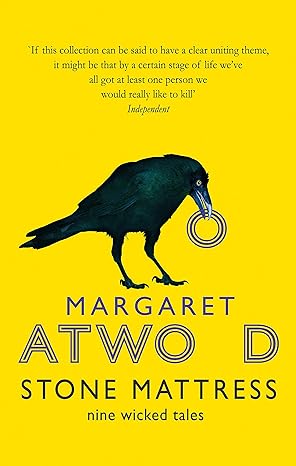
Stone Mattress: Nine Wicked Tales (2014) turned out to be perfect autumn reading with its edge of darkness, verging on Gothic at times.
The first three tales are connected. Alphinland sees fantasy writer Constance negotiate heavy snow after the death of her husband; in Revenant, the poet she loved in her youth, Gavin, tries to manage the frustrations and isolations of older age; in Dark Lady one of his lovers with whom he cheated on Constance is back living with her twin brother.
All of these are grounded in reality, but Atwood weaves through touches of unreality to destabilise any certainty the reader has about what is being portrayed. Constance’s fantasy world is entirely real to her, and there are hints that it is an effective means of controlling people. But is this psychological or metaphysical?
“How did he manage to work his way out of the metaphor she’s kept him bottled up in for all these years?”
Atwood’s portrayal of Constance and Gavin allows for some light satire as to the vagaries of literary trends, and the uses writers make of their art. Gavin enjoyed the male privilege of 1960s bohemianism and is disappointed that the world has moved on alongside his aging body:
“His regret is that he isn’t a lecherous old man, but he wishes he were. He wishes he still could be. How to describe the deliciousness of ice cream when you can no longer taste it?”
Dark Lady portrays the life of an aging muse, using the Shakespeare reference to make Jorrie a slightly ghoulish presence. As her brother Tin reflects on her appearance:
“at least he’s been able to stop her from dyeing [her hair] jet black: way too Undead with her present day skin tone, which is lacking in glow despite the tan-coloured foundation and the sparkly bronze mineral-elements powder she so assiduously applies, the poor deluded wretch.”
“He has to keep reminding her not to halt the sparkly bronze procedure halfway down her neck: otherwise her head will look sewed on.”
Gavin’s nostalgia for the sexual politics of the 1960s is given further short shrift in the titular tale. I was delighted to learn that the idea came about on an Artic cruise, where Atwood’s late husband started to work out how to murder someone on a ship and get away with it. Atwood decided to finish the tale and the logistical details are closely observed.
All the tales are memorable, and the collection finishes on one that feels truly terrifying as an external threat builds towards vulnerable people in a nursing home. Like the tales that have preceded it, Torching the Dusties is touched with the fantastical while staying rooted in the recognisable. Wilma has Charles Bonnet syndrome, hallucinating due to her failing eyesight:
“she locates the phone in her peripheral vision, ignores the ten or twelve little people who are skating on the kitchen counter in long fur-bordered velvet cloaks and silver muffs, and picks it up.”
Atwood relentlessly builds the tension in the tale, ending it on a jovial note that is brilliantly inappropriate.
There’s so much here for Atwood fans to enjoy: the sharp observations (particularly on ageing), the wry societal commentary; the mischievous humour, and of course the fierce intellect. She’s clearly having fun here and encouraging her readers to have fun too. I’m looking forward to the other collection I have to read, Old Babes in the Wood (2023).
For a few years now, despite my best intentions, I have entirely failed to take part in Margaret Atwood Reading Month (MARM) hosted by Buried in Print. This year I was determined to do better and I’m delighted it meant that I finally plucked Hag-Seed (2016) from the TBR.
Hag-Seed is Margaret Atwood’s retelling of The Tempest as part of the Hogarth Shakespeare Project. It’s my favourite of Shakespeare’s plays and I can be a bit precious about such endeavours, but I thought if anyone is up to the task it would be Margaret Atwood. The Tempest is such a complex play, and really quite horrible in many ways, but with fairies and magic occurring too. It’s quite a balancing act.
I realise this is probably the least controversial position I could take, but here it is: Margaret Atwood is absolutely and completely brilliant at what she does. From the start of Hag-Seed I was drawn in because she knows how to tell a compelling story, and write it with such skill. In Hag-Seed, she never loses sight of her source and there are enough references to keep Shakespeare nerds like me happy; but at the same time you could read it not knowing The Tempest at all and the novel would stand entirely on its own.
Felix Phillips is the artistic director of the Makeshiweg Theatre festival. He runs it with the help of Tony:
“Finding the money had been Tony’s thing. A lesser thing: the money was only a means to an end, the end being transcendence: that had been understood by both of them. Felix the cloud-riding enchanter, Tony the earth-based factotum and gold-grubber. It had seemed an appropriate division of functions, considering their respective talents. As Tony himself would put it, each of them should do what he was good at.
Idiot, Felix berates himself.”
Felix is alone in the world, his wife having died in childbirth and his beloved daughter Miranda following her aged three. When Tony conspires to oust Felix, no-one stands in his way, least of all the Minister of Heritage, Sal O’Nally:
“The Sound of Music, said Sal. Cats. Crazy for You. Tap dancing. Things the ordinary person could understand. But the ordinary person could understand Felix’s approach perfectly well! What was so difficult about Macbeth done with chainsaws? Topical. Direct.”
Atwood has a lot of fun with references to Felix’s outlandish productions, both those past and The Tempest he was planning to stage before Tony’s takeover. As someone who has sat through many … interesting … theatrical choices over the years I really enjoyed these brief asides.
Felix disappears to a rurally isolated shack to lick his wounds and prepare his revenge, with only the ghost of his daughter for company:
“She never asked him how they came to be there together, living in the shanty, apart from everyone else. He never told her. It would have been a shock to her, to learn that she did not exist. Or not in the usual way.”
His ‘most auspicious star’ arrives in the shape of Estelle – lover of sparkly earrings and someone who wields enough power to help Felix direct his fate. She gets him a job under the pseudonym of Mr Duke, putting on productions with a cast from Fletcher County Correctional Institute, using actors with stage names like 8Handz, WonderBoy, and Shiv. After a few years, Felix is ready to enact his revenge.
“We’re doing The Tempest, he said.
‘Oh,’ said Estelle, dismayed. He knew what she was thinking: way too gay.”
Like Prospero in The Tempest, Felix remains a problematic protagonist. He drives the action by using people, consumed by his own vision of revenge. The prisoners are not fully realised characters and I think this is deliberate. Although Hag-Seed is narrated in the third person, it’s all from Felix’s point of view and for him the prisoners are, in the main, a means to an end.
One aspect Atwood didn’t explore is the role of Caliban and post-colonial readings of The Tempest. Caliban can really dominate productions alongside Prospero, but in Hag-Seed his character – or equivalent character – is not a focus. Ideas often explored in productions now around colonisation and slavery were not present. There is some racism from Felix in his casting notes, but the fact that the prisoners are a much more diverse group than the theatre world and politicians is pretty much left alone. Perhaps she felt there wasn’t space, and for the sake of a tight narrative she had to pick a focus.
Atwood brilliantly builds towards Felix’s vengeful denouement and I found it tense and perfectly executed. The ending of the novel follows that of the play by containing almost as many questions as it resolves, yet it was ultimately satisfying.
“Fear can be very motivating. Sea-changing, you might say.”
Hag-Seed isn’t just a clever reworking of scenes and structure though, or word play and puns, as enjoyable as those are. I thought it captured the deep-rooted sadness in the play and the themes around the emptiness of revenge, the loneliness of humans, and the endurance of grief. It demonstrated how people can imprison themselves, and was truly moving to the final line.
There’s an interesting article by Margaret Atwood on writing Hag-Seedhere.
“It’s the words that should concern you, he thinks at them. That’s the real danger. Words don’t show up on scanners.”
To end, Prospero’s Act IV speech that I never make it through dry-eyed:
I had such a book hangover after Bleak House. I couldn’t settle to anything. A friend of mine who loves a certain 80s singer has a phrase when she hears other warblers: “He’s alright, but he’s not George Michael.” Well, I kept picking up books that were alright, but they weren’t Bleak House. So few books are, I find…
Then I remembered that when Simon did his books of the year round up last year, I’d recognised two were on my TBR pile. Surely books good enough to make the final cut would see me right? Of course they did 😊 Hooray for bloggers and their brilliant recommendations!
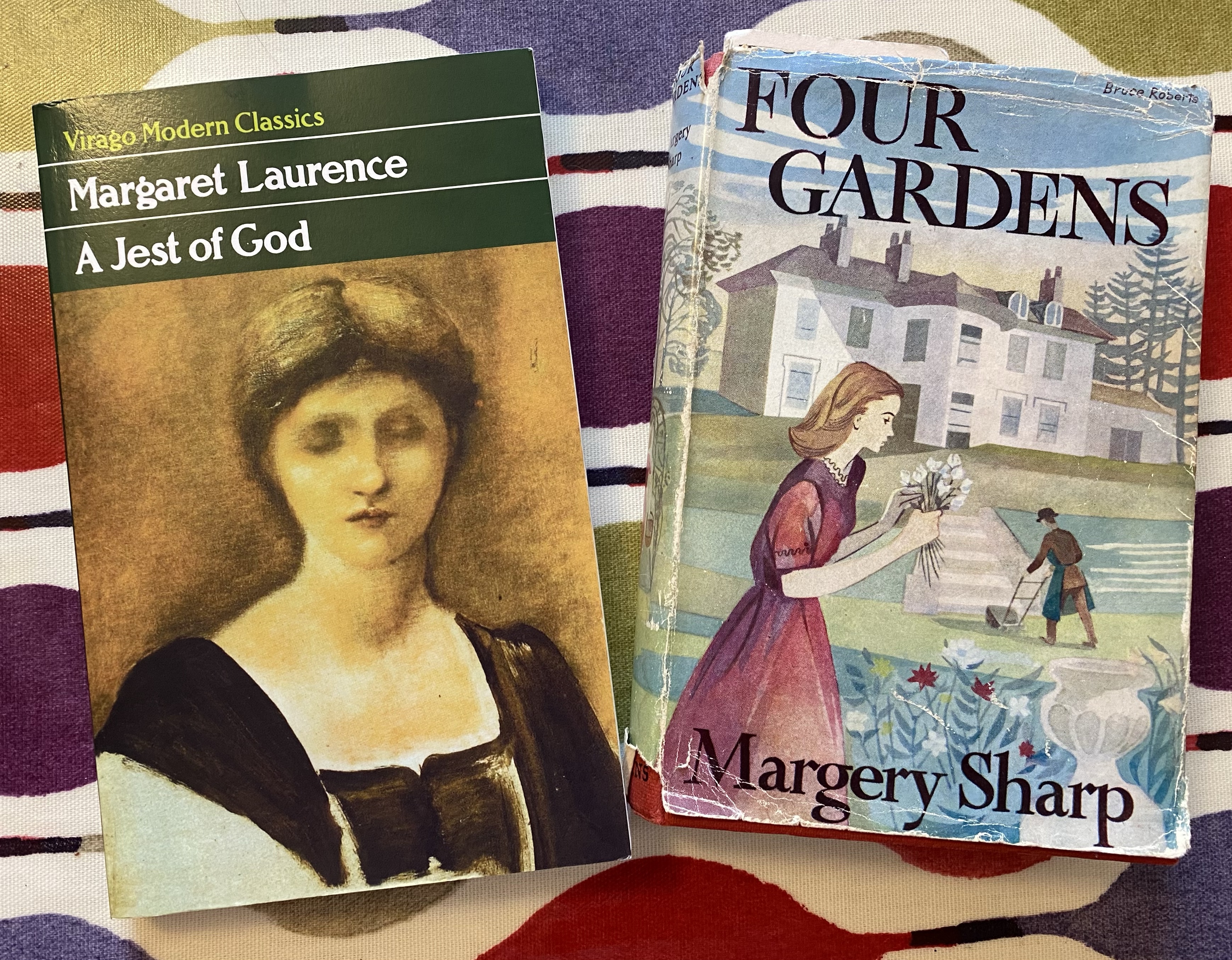
Firstly, the novella which made the top of Simon’s list, A Jest of God by Margaret Laurence (1966). This was the second in Laurence’s Manawaka sequence, but thankfully they can all be read as standalones as I’d not read anything by her before. On the strength of this, I’ll definitely be seeking out her writing again.
A Jest of God is an intimate character study of Rachel Cameron, a thirty-four-year-old teacher who lives with her emotionally manipulative mother above the Manitoba funeral business her father ran until he died.
The novel is narrated in the first-person, and Rachel’s mind is an oppressive and tense place to be. She is highly anxious and self-censoring:
“There. I’m doing it again. This must stop. It isn’t good for me. Whenever I find myself thinking in a brooding way, I must simply turn it off and think of something else. God forbid that I should turn into an eccentric. This isn’t just imagination. I’ve seen it happen. Not only teachers, of course, and not only women who haven’t married. Widows can become extremely odd as well, but at least they have the excuse of grief.”
This anxiety and second-guessing is not helped by her mother’s behaviour, which is self-pitying, judgemental and highly manipulative. Rachel recognises this, but is at a loss as to how to extricate herself:
“Her weapons are invisible, and she would never admit even to carrying them, much less putting them to use.”
“All such words cling to the mind like burrs to hair, and I can never seem to brush them away, as I know I should do.”
Rachel’s mother is not an out-and-out baddie though, and Laurence expertly demonstrates the vulnerability and fear that underlies her machinations. Similarly, Rachel does not always behave well. In one particular scene early in the book, she actually behaves despicably and doesn’t make amends despite her instant remorse. She is a complex, contradictory character, wholly believable. Laurence treats her tenderly but unflinchingly; without judgement but also without sentiment.
Rachel could so easily be a stereotype: a lonely single woman, living with her mother. But Laurence side-steps clumsy characterisation, or easy dismissal of Rachel, by delicately exploring the true meaning of the adjective so often attached to unmarried women approaching middle-age: she is desperate. She is absolutely desperate and despairing. She is lonely, and feels trapped in the life she has always known, with no way out. She wants things to be different, but she doesn’t know how. She is deeply, existentially sad.
1966 is a time of societal change, when women like Rachel could feel stifled by convention and also have some sexual freedom. So when Nick, and old schoolfriend appears, there are brief moments of physical connection. But in only seeing things from Rachel’s point view, the reader is able to realise how little intimacy there is. And that is what Rachel needs, more than the sex which Nick offers. Yet she doesn’t know how to achieve this:
“I talk to him, when he is not here, and tell him everything I can think of, everything that has ever happened, and how I feel and for a while it seems to me that I am completely known to him, and then I remember I’ve only talked to him like that when I’m alone. He hasn’t heard and doesn’t know.”
In some of Nick’s reported speech, the reader picks up on things Rachel ignores. She is so bound in her own intense feelings, she can’t really hear the cues Nick gives, over her relentless inner voice.
“He’s thirty-five, not fifteen. His past such gauche public performances. What he worried about Rachel? I’m not worried. I’m perfectly alright. Well, relax, then. I am relaxed. Oh? Shut up. Just shut up.”
A Jest of God is such an accomplished novel that is also so approachable. I found Rachel’s voice got under my skin very quickly and distinctly, and I had to read on. I think it works very well as short novel, longer would have been too oppressive and difficult to sustain I suspect. But at the length it is it remains powerful and impactful, and not as depressing as I’ve made it sound!
Ultimately there is resilience and change for Rachel, even some defiance. And there are brief moments of humour, such as Rachel trying to duck her colleague Calla’s constant invitation to attend Tabernacle with her:
“At least I have postponed it, and perhaps by that time some reasonable excuse will come along, or I’ll be dead.”
A stunning novel: a precise and compassionate character study, clever and humane. I’m so glad to have discovered Margaret Laurence at long last.
“Something must be the matter with my way of viewing things. I have no middle view. Either I fixed on a detail and see it as though it were magnified – a leaf with all its veins perceived, the fine hairs on the back of a man’s hands – or else the world recedes and becomes blurred, artificial, indefinite, an abstract painting of a world.”
Secondly, after being in Rachel’s head, I looked forward to some comic relief from an author I always enjoy: Margery Sharp. Four Gardens (1935) was number ten in Simon’s list. But this wasn’t as comic as some of her other novels; it had a slightly elegiac tone and the relationships included a certain sadness. But it wasn’t a sad novel overall, and I sunk into Four Gardens with pleasure.
Four Gardens follows the life of Caroline Chase from late teens to middle-age and the titular spaces she finds herself in. The device with gardens isn’t remotely heavy-handed and for a significant section of the novel they barely feature. But Caroline is a gardener, given half a chance, and it is instinctive and natural to her:
“Her step, as she now redescended to the rose garden, was therefore a proper gardeners tread – slow, considerate, with long abstracted pauses for survey and meditation. She also, without thinking, removed her hat and gloves.”
This is her first garden, one she trespasses into, and as she meets her first love there, it has a dreamlike quality. Perhaps this is why her love of gardening is so easily disregarded when she leaves behind youthful folly to marry the determinedly sensible Henry:
“For all these things in themselves – love at first sight, undying devotion, and general aloofness – were very exciting indeed; it was only in connection with Henry that they became so curiously prosaic.”
And so for many years Caroline doesn’t garden at all. She runs a house and she raises her son and daughter in the town where she has always lived. She is the creator of a safe space for her children and an unwavering routine for her staid but affectionate husband.
Despite the love she feels for her family and the tranquillity of her home life, I did find an element of melancholy to Caroline’s domestic arrangements. Her family are near and dear, but there seemed to be very little intimacy: she and Henry rarely communicate about anything beyond practical considerations, and she doesn’t really understand her children at all. She also despises her closest friend in the village, Ellen Watts – a monstrous and wholly believable creation. Caroline reflects very little though, and so any concerns are quickly subsumed in the relentless demands of domesticity:
“Thinking – the deliberate exercise of the brain – did not come naturally to her.”
But I wouldn’t want to give the impression that Four Gardens is ponderous or heavy-going in any way. It felt quite a realistic presentation of Edwardian contentment, though not without Sharp’s gentle jibes, such as this discussion of wallpaper where Caroline evokes her husband’s approval to counteract her mother’s reservations:
“Mrs Chase was at once silenced. […] It would have seemed perfectly reasonable to her that Caroline, who was in the house all day, should have suited her surroundings to the taste of a man who was out of it.”
I did want Caroline to exert herself in some way, to stake a claim beyond her roles meeting everyone else’s needs. Finally she does it, when she starts growing runner beans during World War I, and realises how much she is nurtured by time with her plants:
“there was usually a quiet space, between twelve and half-past, when the first work of the house was finished and before the children’s dinner became a pressing consideration; and these thirty minutes Caroline began to guard and cherish as a precious treasure.”
The war years are beautifully evoked by Sharp, with all their worry alongside self-serving censorious behaviour of some in the village. After the war, everything changes. Caroline finds herself mistress of a large house, with a garden she can’t touch unless she wants to incur the wrath of a succession of gardeners:
“The garden was looking well. But it always did look well, and gave her no special pleasure […] It was perfectly designed and perfectly kept, and to Caroline completely uninteresting.”
Meanwhile, her children are vaguely affectionate, patronising strangers. They change the names she loves, Lily becoming Lall and Leonard, Leon. They are academically accomplished and having had money their whole lives, utterly contemptuous of it. These Bright Young Things live by a morality that is absolutely baffling to Caroline, and there is a lovely echo of an earlier scene between Caroline and her mother in a later conversation between Caroline and Lall. The reader can see they are so much more alike than either realises, dramatic irony at its lightest.
I’m not one for biographical readings of novels but something of the tone of Four Gardens – affectionate, gentle, slightly sad – did make me consider the dates. In Caroline, Sharp is writing about her parents’ generation, so maybe that explains it… or maybe it has nothing to do with it at all, who knows?
Caroline’s fourth garden finally sees her able to do as she pleases. I couldn’t help feeling she might really surprise her children, and herself 😊 A warm, engaging story of a woman’s outwardly ordinary adult life during great societal change.
To end, Paul Newman adapted A Jest of God as Rachel, Rachel for his directorial debut. This very odd trailer doesn’t make it seem overly appealing:
Trigger warning for domestic violence, child abuse, drug use, swearing
This is my contribution to Lisa’s wonderful annual event, ANZ LitLovers Indigenous Literature Week. I’m writing this hurriedly last minute to get it done in time, but do head over to Lisa’s blog to see all the great posts this week and from previous years too!
My reading and blogging has been so poor since the pandemic that I originally planned to post on this short story collection for ILW last year – oh dear. I’ve decided to take it as win that I’ve eventually managed to do so rather than focus on how long it took 😃
Eden Robinson is an Indigenous Canadian, a member of the Haisla and Heiltsuk First Nations. Waaaaaaay back in 2000 I read her first novel Monkey Beach and I thought it was one of the best things I read that year. Then inexplicably I have totally failed to read anything she published since. I’m really pleased that ILW prompted me to pick up her short story collection, Traplines (1996).
I’m a bit of a delicate flower at the moment but I think even if I was feeling super-robust, I still would have found Traplines a tough read. The stories are unflinching in their portrayal of human struggles; determinedly unsentimental, beautifully written and non-sensational. There are four in total so I’m going to focus on two and just give a brief flavour of the others.
The collection begins with the titular story, which I persevered with past the opening hunting scene (I can’t say the title didn’t warn me), only to have my heart torn into a million pieces. Will Bolton is a young man, sensitive, bright and observant:
“Tucca is still as we drive into it. The snow drugs it, makes it lazy. Houses puff cedar smoke and sweet, sharp smell gets in everyone’s clothes. At school in town, I can close my eyes and tell who’s from the village and who isn’t just by smelling them.”
He also has a chaotic home life, bullied and attacked by his older brother, who in turn is bullied and attacked by their father. Will constantly lives on a knife-edge, ready to duck at the next surprise blow.
“I back into the kitchen. He follows. I wait until he is near before I bend over and ram him. He’s slow because of the pot and slips to the floor […] Eric stands on the porch and laughs. I can’t wait until I’m bigger. I’d like to smear him against a wall. Let him see what it feels like. I’d like to smear him so bad.”
Mrs Smythe is Will’s English teacher and she sees his potential. She and her husband offer Will a place to stay away from the violence, the escalating drug use he is surrounded by, the self-destructiveness of everyone he knows. Robinson builds the portrait of Will’s life expertly, showing how he is at a crossroads he only vaguely recognises, and how the choice he’ll make is so fragile and yet so irreversible.
“If I could, I’d follow her.”
Absolutely devastating.
The next story Dogs in Winter had a slightly lighter tone but this is comparative. It was still very, very dark. “He smelled of Old Spice and I felt like I was in a commercial. Everything would be perfect, I thought, if only Canada had the death penalty.”
Contact Sports was the longest in the collection and at 109 pages is really a novella. Robinson wrote about the characters further in her novel Blood Sports (2006). This story was an absolute masterclass in how to create a pervading sense of unease and menace. It really got under my skin.
Tom lives with his mother and her successive boyfriends. Money is stretched to breaking point. Then his cousin Jeremy shows up and stays with them. Jeremy has been thrown out of the army, although Tom doesn’t know why. He has loads of money, Tom doesn’t know where from. He is amenable at first, but entirely untrustworthy.
Gradually Jeremy calls in the favours he has done Tom, to exert a deeply bullying and abusive hold over him, dictating his behaviour and humiliating him at every opportunity.
“‘Look, it’s really very simple. I’ll pay off your bills, one bill a week, and I’ll help with rent and food, and all you have to do is one itty bitty little thing.’
Tom said cautiously, ‘What?’
‘Oh it’s simple. All I want you to do is be good.’”
So insidious, so terrifying. It’s a bleak story, with humour that is raw to the bone:
“Tom stood on the corner watching Jeremy’s car squeal down the street. Just my luck. The only person who really gives a shit if I live or die is a whacked-out drug addict who likes playing God.”
The final story Queen of North sees a woman reclaim power over the person who abused her as a child in a breathtakingly visceral way. I won’t give more details on that but I’ll give a sample of the opening paragraphs which demonstrate the brilliance of Eden Robinson’s observations of the natural world:
“In my memory, the sun is setting and the frogs begin to sing. As the light shifts from yellow to orange to red, I walk down the path to the beach. The wind blows in from the channel, making the grass hiss and shiver around my legs. The tide is low and there’s a strong rotting smell from the beach. Tree stumps that have been washed down the channel from the logged areas loom ahead – black, twisted silhouettes against the darkening sky.”
Although I won’t be rushing to a re-read of Traplines right now, I’m so glad I read it and remembered what a stunning writer Eden Robinson is. She is precisely descriptive, compassionate but unwaveringly realistic in her characterisation. I’ll definitely be hunting down her Trickster trilogy, the first of which has been adapted for television:
As Naomi pointed out, last year’s NADIM didn’t include a single Canadian author, so I’d planned on a few this year. But as my first post for NADIM 2019 explained, the best laid plans… Still, I have managed to include one, and here it is 😊
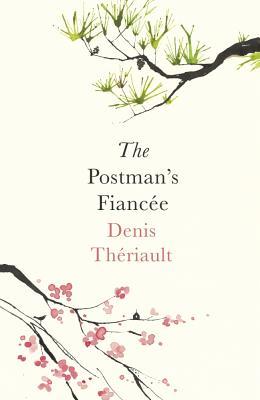
I really liked The Peculiar Life of a Lonely Postman when I read it a few years back. This sequel is told from the point of view of Tania, the waitress who loves Bilodo (the title character of the first book) and picks up the story shortly before Bilodo’s accident, carrying the tale on further.
As readers of the first book will know, Bilodo’s quiet, gentle existence appeals to Tania as she brings him his lunch each day:
“Tania could happily imagine him leading a monastic existence dedicated to calligraphy, saving himself physically and spiritually for the fortunate pilgrimess who would know how to find a pathway to his soul – a role for which Tania considered herself eminently qualified.”
Unfortunately Bilodo has no idea of her feelings until a cruel practical joke. Before they can talk it through, Bilodo is hit by a truck. This is where the first novella ends. In this sequel, he is given CPR by Tania and ultimately survives, but with no memory of recent years. Tania convinces him they were a couple, and engaged to be married.
“For that was the way she saw the matter: a case of confusion on the part of Destiny. In Tania’s eyes, she and Bilodo had been fated to meet and fall in love, and their botched romantic union stemmed from a karmic dysfunction which she felt it her legitimate right to remedy.”
And this is where my problems with this sequel begin. I wasn’t happy that the weird, metaphysical ending of The Peculiar Life of a Lonely Postman seemed to be undermined and explained away, but Theriault does rescue this by the end of The Postman’s Fiancee, so I can let that go…
My main reservation was with what Tania is doing. In The Peculiar Life of a Lonely Postman Bilodo isn’t behaving well: he’s steaming open people’s private letters and reading them before he delivers their post. Not great, but within that novella it’s sort of OK. But Tania is manipulating and deceiving someone she professes to love, while they have amnesia. There’s really nothing that makes that OK. While I don’t mind reading about people not behaving well, here it made me uncomfortable because I think we’re supposed to be rooting for Tania and for her and Bilodo to get together. And while Theriault is a highly accomplished and subtle writer, I couldn’t quite embrace the circumstances in this story.
Tania isn’t despicable so she does have reservations about what she’s doing:
“Wasn’t she wrong to interfere with his mind that way, and by doing so wasn’t she committing some kind of mental rape?”
But she finds herself unable to stop. What readers of the first novella know, and what Tania comes to realise, is that Bilodo’s life was a bit more complicated than the monastic existence she’d imagined for him. As the circumstances of Bilodo’s life start to catch up with them, how much longer will Tania be able to sustain the fiction of the life she desperately wants? And will Bilodo ever regain his memory?
The Postman’s Fiancee is about loneliness and the fantasies we project for ourselves and on to others. It’s about recognising people for who they are and all their complications, rather than who we wish they were. It’s well written, nicely paced and with excellent characterisation and so I do still recommend this both as a sequel and as a stand-alone novella, but the actions of poor despairing Tania did limit my enjoyment of it somewhat.





 madame bibi lophile recommends