“The cat is, above all things, a dramatist.” (Margaret Benson)

This is my contribution to Reading the Meow hosted by Mallika at Literary Potpourri, a fantastic week-long celebration of literature inspired by our feline friends!

A Cat, A Man and Two Women by Junichiro Tanizaki (1936, transl. Paul McCarthy 2015) is published by the ever-wonderful Daunt Books and I really liked the simple cover:

There seems to have been a flurry in recent years of slightly whimsical stories about cats and I thought ACAMATW would be one of these, I’m not sure why. The prospect was fine with me, I don’t mind whimsy if I’m in the right mood and I adore cats. But in fact this wasn’t whimsical at all. It was a psychological study – albeit a gentle one – of three people and the catalyst (no pun intended but I’m happy its there 😀 ) of their shared pet.

I would just like to pause (paws?) here to let you know that my typing is being severely hampered by my calico cat sitting on my lap, demanding attention – and my tuxedo cat (her brother) has just arrived and there’s a bit of a turf war ensuing…

The titular cat of this novella is Lily, adored companion of Shozo. The story opens with his ex-wife Shinako appealing to his new wife Fukuko to let her have Lily. Her letter emphasises Shozo’s adoration of Lily and Shinako deliberately sets a cat among the pigeons (ha! I’m only a little bit sorry for this 😀 ) of the new marriage,

Even Shozo, feckless in the extreme, notices the change.  

“Could Fukuko be jealous of Lily? He considered this possibility for a moment but then dismissed it as making no sense. After all, Fukuko herself was basically fond of cats. When Shozo was living with his former wife, Shinako, he had sometimes mentioned her occasional jealousy of the cat to Fukuko who had always made rather scornful fun of this silliness.”

Shozo requests his wife cook meals she doesn’t enjoy, so he can share them with Lily. I’m not surprised Fukuko is annoyed:

“Fukuko had been prepared to sacrifice her own taste for her husband’s sake, while in fact it was for the cat that she cooked; she had become a companion to the cat.”

(Update: turf war won by the tuxedo. Calico has stalked off in disgust. Tuxedo determined to rest on my dominant hand and impede my typing.)

The tensions in the marriage centre around Lily, but really have nothing to do with her. She merely highlights Shozo’s lack of drive and inability to engage fully in relationships, except with his cat.

“When he heard people with no knowledge of a cat’s character saying that cats were not as loving as dogs, that they were cold and selfish, he always thought to himself how impossible it was to understand the charm and lovableness of a cat if one had not, like him spent many years living alone with one.”

Shozo isn’t unsympathetic. His mother is manipulative and choosing Lily seems to be one of the rare independent choices Shozo has made. He has had a longer relationship with Lily than either of his wives and his bond with the cat is meaningful to him.

“It was Lily, with whom he’d lived so long, who was more intimately bound up with many memories of his; who formed, in fact, an important part of Shozo’s past.”

Tanizaki does a great job of portraying Lily as a very believable feline, without attributing human motivations or emotions to her. He leaves this to his three human protagonists, who fail to see she is not a strategist in these adult negotiations.

Shinako gets her wish, and the cat she was indifferent to arrives at her sister’s home, where Shinako now has a room. Gradually, she finds herself discovering new emotional territory, thanks to Lily:

“When she thought of the link that bound them together, her anger faded; and she felt, rather, that both of them were to be pitied.”

“Other people had told her so often that she was hard hearted, she had come to believe it herself. But when she considered how much trouble she had put herself to recently for Lily’s sake, she was surprised, wondering where these warm and gentle feelings had been hiding all this time.”

But will Shozo want his cat back? Will Shozo and Fukuko’s marriage survive without Lily to blame for the irritations and lack of understanding?

Tanizaki has a great understanding of cats and of people which makes this novella really shine. The humour is gentle and the psychological observations astute. The ending is left very open which didn’t wholly work for me but this is a minor quibble in regard to this engaging and insightful novella.

ACAMATW was adapted into the film A Cat, Shozo and Two Women in 1956. The summary on Wikipedia makes me think the filmmakers opted for a less open-ended conclusion to the story. From this clip the cat actor looks a lot more tolerant than my two would be 😀

“Human sacrifice, dogs and cats living together… mass hysteria!” (Dr Peter Venkman, Ghostbusters)

This week I bought my first Christmas present of the year.  I was really pleased with it.  Then as I gazed at it I realised the first present I’d bought this year was for my brother & sister-in-law’s cats.  From my cats.  I’m gifting between cats.  That’s who I’ve become.

anigif_enhanced-buzz-27619-1375801508-0

So I’m sharing my pain as mad cat lady with the interwebs. But I also love dogs, its just I can’t convince one to live with me in my tiny London flat. So in a spirit of inclusivity, and a rejection of the idea that you are either a dog-person or a cat-person, I’m looking at one novel about a feline, and another featuring a sarcastic dog.

Firstly, The Guest Cat by Takashi Hiraide (trans. Eric Selland).  This short novel is a delicate, sensitive study of the unspoken ties that bind. A small stray cat, adopted by the neighbours, arrives in the house of the narrator and his wife.  They live a quiet life, he a poet and she a proof-reader, and the cat brings a spirit of unpredictability into their lives:

“Chibi’s dependence would manifest itself in unexpected ways, even while performing acts of incredible athletic skill.  Casting aside the Ping-Pong ball, she turned about at an acute angle, yet in the next moment she had placed her tiny paw on the head of a toad concealed in the shade of one of landscape rocks. Then just as suddenly she flew to the other side of the garden, extending one of her front legs to slip into a clump of bushes.”

The novel is a mix of the closely observed and the philosophical/metaphysical:

“When she began to sleep on the sofa – like a talisman curled gently in the shape of a comma and dug from a prehistoric archaeological site – a deep sense of happiness arrived, as if the house itself had dreamed this scene.”

Hiraide captures how animals bring their own energy, changing dynamics in relationships, affecting homes and the people therein. They are catalysts (no pun intended) and their full effects can be both quiet and far-reaching:

“I opened the window and welcomed in the guest, accompanied by the winter sunrise, and the mood inside the house was restored. Chibi was our first New Year’s visitor. They call the visitors who go around to all the houses on New Year’s Day to wish everyone happy new year ‘pilgrims’.”

You don’t have to like cats to enjoy The Guest Cat.  Chibi could be any animal or transforming external force; it is her impact rather than her cat-ness that Hiraide is interested in.  The Guest Cat’s story is one of love, change, resilience and loss.

 “’See, I told you. She’s our girl.’

…or so my wife said, although she knew she wasn’t really ours. Which is why it seemed all the more as if she were a gift from afar – an honoured guest bestowing her presence upon us.”

Here are my two, utterly engaged with the whole idea of buying their cousins a gift, and with being part of a blog post:

004 (4)

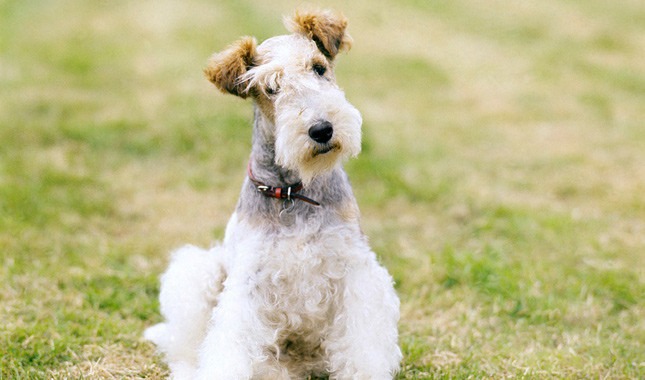
It’s quite hard to find a dog in literature which doesn’t end in a way which has me in floods of tears. Thankfully, the full title of the well-known comic novel by Jerome K Jerome is Three Men in a Boat, To Say Nothing of the Dog!  It is a blessed relief to tell you that fox terrier Montmorency makes it through in one piece. Thank goodness, because look at this face:

fox terrier

Image from: http://www.vetstreet.com/dogs/smooth-and-wire-fox-terrier

“To look at Montmorency you would imagine that he was angel sent upon the earth, for some reason withheld from mankind, in the shape of a small fox terrier. There is a sort of Oh-what-a-wicked-world-this-is-and-how-I-wish-I-could-do-something-to-make-it-better-and-nobler expression about Montmorency that has been known to bring tears into the eyes of pious old ladies and gentlemen.”

J and his friends George and Harris are hypochondriacs who are convinced they all have terrible diseases. In order to recouperate they decide to sail a boat along the Thames to Oxford. J’s dog is not impressed:

“The only one who was not struck with the suggestion was Montmorency. He never did care for the river, did Montmorency.

‘It’s all very well for you fellows,’ he says; ‘you like it, but I don’t.  There’s nothing for me to do. Scenery is not my line, and I don’t smoke.  If I see a rat, you won’t stop; and if I go to sleep, you get fooling about with the boat, and slop me overboard. If you ask me I call the whole thing bally foolishness.’

We were three to one, however, and the motion was carried.”

Usually I’m not keen on anthropomorphism, but with Montmorency it really works.  He acts as a slightly detached commentator on his three bally foolish companions and never loses his dogginess – he remains very much the fox terrier. The four of them head off to the water and as anyone who has read the novel will know, very little happens yet much hilarity ensues.  The three men are absolutely useless with any practical considerations, such as putting all their food into one disgusting stew:

 “Towards the end, Montmorency, who had evinced great interest in the proceedings throughout, strolled away with an earnest and thoughtful air, reappearing, a few minutes afterwards, with a dead water-rat in his mouth, which he evidently wished to present as his contribution to the dinner; whether in a sarcastic spirit, or with a genuine desire to assist, I cannot say”

I love the idea of a sarcastic dog.  Three Men in a Boat was apparently first intended as a travel guide, which seems astonishing for such an unrelentingly funny book.  Attempts to act as a guide remain, but the humour always forces its way in:

“From Abingdon to Nuneham Courtenay is a lovely stretch. Nuneham Park is well worth a visit,  It can be viewed on Tuesdays and Thursdays. The house contains a fine collection of pictures and curiosities and the grounds are very beautiful.  The Pool under Sandford lasher, just behind the lock, is a good place to drown yourself in.”

By some miracle they make it to Oxford, and Montmorency shares my love of the city of dreaming spires:

“We spent two very pleasant days in Oxford. There are plenty of dogs in the town of Oxford. Montmorency had eleven fights on the first day, and fourteen on the second, and evidently thought he had gone to heaven.”

I must admit though, I’ve never fought a dog any time I’ve been to Oxford. It’s also safe to say he would not approve of the theme of this post:

“When Montmorency meets a cat, the whole street knows about it; and there is enough bad language wasted in ten seconds to last an ordinary respectable man all his life, with care.”

To end, a reminder that the dividing line between cat & dog may not be as clear-cut as we think: