The Doctor’s Family – Margaret Oliphant (1863) 153 pages
Halfway through the final week of NADIM 2020 and for the first time this month it’s feeling do-able! I don’t want to tempt fate (especially as I’m changing broadband providers this week) but I’m hopeful I might actually complete a novella for every day…
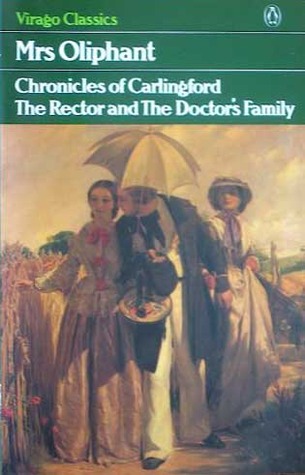
After the brutality of First Love yesterday, I thought I’d take refuge in Victorian gentility. Also, I thought it would make a change from my resolutely twentieth and twenty-first century choices this month. The Doctor’s Family takes place in the fictional town of Carlingford, a setting Margaret Oliphant revisited in four subsequent novels as well as the short story The Rector, which was included in my Virago edition.
Dr Edward Rider has come to Carlingford after his wastrel brother Fred caused him to lose his practice elsewhere. He lives:
“in the new quarter of Carlingford; had he aimed at a reputation in society he could not have done a more foolish thing; but such was not his leading motive. The young man, being but young, aimed at practice.”
Unfortunately Fred has followed him to Carlingford where he does very little except smoke pungent pipes and go out to waste money. However, Oliphant doesn’t paint Fred as evil (to my twenty-first century eyes he sounded depressed) and she doesn’t paint Dr Rider as wholly virtuous. He can be short-tempered and dismissive to his patients, more than once he takes out his anger on his horse (thankfully not dwelt on in detail but still repulsive), and he doesn’t have high ideals about his vocation, though he is a reasonable doctor. In other words, the brothers are flawed human beings each muddling through, and bound by a “strange interlacement of loathing and affection”.
His family suddenly enlarges in a way Dr Rider did not expect, when Fred’s wife, children and sister-in-law all – never alluded to by Fred – arrive from Australia. They rent a house on the outskirts of town and Dr Rider visits initially out of a sense of duty more than any affection, as Susan, Fred’s wife is petty and spiteful, and his children are feral. His sister-in-law Nettie, on the other hand, is capable and practical, and essentially runs their entire lives for them.
Again, the characterisation here is subtle. Nettie isn’t one of Dickens’ holier-than-thou self-sacrificing virgins. Rather she is a determined, independent young woman who sees what needs to be done and does it. Oliphant makes it clear that Nettie gains from the situation, that it suits her.
“Those brilliant, resolute, obstinate eyes, always with the smile of youth, incredulous of evil, lurking in them, upon her bewildered advisor. ‘I am living as I like to live.’”
Short-tempered Dr Rider develops feelings for Nettie and can’t understand how she puts up with her selfish, demanding, draining family. She is less judgemental than he is:
“She knew their faults without loving them less, or feeling it possible that faults could make any difference to those bonds of nature.”
But while the family seem settled in their slightly unconventional ways, events will conspire to change things irrevocably.
This is the first time I’ve read Margaret Oliphant and I enjoyed her immensely. I liked her flawed characters and her resistance to showing situations as morally black-and-white, which can sometimes be the case in Victorian fiction (and I’m a big fan of the period and the women writers). I read The Rector as well (but I’ve not discussed it here as it’s not a novella) and found that story lighter and wittier than The Doctor’s Family. Both together mean I’d be interested to see how Oliphant developed the inhabitants of Carlingford in later novels.
If you like Victorian social realism but can’t face the hefty tomes that genre often involves, if you like Elizabeth Gaskell’s Cranford, or if you sometimes wish George Eliot wasn’t so heavily intellectual, then a trip to Carlingford will be just perfect for you.
There are no great surprises for the reader in The Doctor’s Family; things work out exactly as you’d expect. But that is no criticism and especially in these uncertain times, it’s a perfect example of the solace to be found in reading.
 madame bibi lophile recommends