“The light of the day is followed by night, as a shadow follows a body.” (Aristotle)

We’ve arrived at the equinox where day and night are of equal length. In the northern hemisphere it’s the Spring Equinox and I’d love to say that winter finally seems far behind us but it’s still bloomin’ freezing.
Still, I’m hopeful that the weather will soon rectify my plummeting levels of vitamin D, and to celebrate I’ve chosen one novel set over a single day, and one set over a single night.

Firstly, daytime with The Pigeon by Patrick Suskind (1987, trans. John E Woods), which is a novella of just 77 pages in my edition, and yet feels entirely complete. It tells of a day in the life of Jonathan Noel, a bank security guard whose ordered, circumscribed life suits him perfectly. He lives in one room, goes to work, comes home and follows a routine whereby he tries to draw as little attention to himself as possible. Then one morning he opens his front door to find a pigeon sat there. The pigeon has also fouled the communal hallway.

“no human being can go on living in the same house with a pigeon, a pigeon is the epitome of chaos and anarchy, a pigeon that whizzes around unpredictably, that sets its claws in you, picks at your eyes, a pigeon that never stops soiling and spreading the filth and havoc of bacteria and meningitis virus, that doesn’t just stay alone, one pigeon lures other pigeons…”

As a Londoner that passage definitely spoke to me.

Jonathan manages to leave his room and get himself to work, but the presence of the pigeon has entirely destabilised him.

“But today everything was different. Today Jonathan was having no success whatever at achieving his sphinx-like calm. After only a few minutes he could feel the burden of his body as a painful pressure”

As we follow Jonathan through his day, a day beset by small catastrophes, Suskind shows “how quickly the solidly laid foundation of one’s existence could crumble.” Why Jonathan is so utterly discombobulated by the pigeon is never fully explained, but the tale is entirely believable. Jonathan is lonely and frustrated and the pigeon exposes the fissures in his careful façade.

“He had a mighty urge to pull out his pistol and let loose in every direction […] into the hot sky, into the horrible, oppressive, vaporous, pigeon blue-grey sky, bursting it, sending the leaden lid crashing with one shot, smashing down and pulverising everything and burying it all”

The Pigeon was Suskind’s follow-up to the massively successful Perfume. This is a very different tale  but an equally memorable piece of writing. Determinedly grounded in banal everyday detail, The Pigeon highlights the extraordinary inner lives that could be taking place beneath the most ordinary of outer lives.


Secondly, into night with After Dark by Haruki Murakami (2004, trans. Jay Rubin) which follows a group of characters from just before midnight to just before dawn in Tokyo. A young girl, Mari, is reading in a nearly empty diner, when she encounters Takahasi, a musician who knows her and her beautiful model sister Eri. He’s chatty and seemingly unperturbed by Eri’s self-contained reticence. The difficulty of communication between people is a recurring theme:

“ ‘Finally, no matter what I say, it doesn’t reach her. This layer, like some kind of transparent sponge kind of thing, stands there between Eri Asai and me, and the words that come out of my mouth have to pass through it, and when that happens, The sponge sucks almost all the nutrients right out of them.’ ”

This idea of permeable surfaces also recurs, bring a surreal element to the story. Eri is asleep, watched by a masked man through an unplugged television set. At one point, Eri is dragged into the scene within the television. Meanwhile, Mari walks away from a mirror she has been gazing into:

“A closer look reveals that Mari’s image is still reflected in the mirror over the sink. The Mari in the mirror is looking from her side into this side. Her sombre gaze seems to be expecting some kind of occurrence. But there is no one on this side. Only her image is left in the Skylark’s restroom mirror.”

This surreal quality mixes with the viscerally real – a Chinese prostitute is beaten up and Mari is asked by the ex-wrestler manager of a love hotel to come and translate for her; characters search for and consume food; Shirakawa, the attacker, works late in his office and does sit-ups. The matter-of-fact narration is highly effective in grounding the story in a recognisable reality but also emphasising the unsettling, eerie quality of the tale. It is precisely because Tokyo and its inhabitants are so recognisable that the unpredictable, nocturnal elements are so unnerving. From this background, there is the possibility that Mari and Takahasi may begin a tentative romance:

“ ‘Wanna walk a little?’ Mari says.

‘Sure, let’s walk. Walking is good for you. Walk slowly, drink lots of water.’

‘What’s that supposed to mean?’

‘It’s my motto for life. ‘Walk slowly; drink lots of water.’

Mari looks at him. Weird motto. She does not comment on it however, or ask him about it. She gets out of the swing and starts walking. He follows her.”

I read After Dark in a wonderfully apt setting: a weirdly empty night bus (at only 201 pages I was able to finish it on the journey). I felt Murakami perfectly captured a sense of night, of the unknown, and of possibility.  He uses the night to heighten his portrayal of transgressed boundaries and of what is hidden, both knowingly and unknowingly, from others and from ourselves.

 “ ‘It’s not as if our lives are divided simply into light and dark. There’s a shadowy middle ground. Recognising and understanding the shadows is what a healthy intelligence does.’”

To end, a classy song choice for once 😉

“One fine day.” (Carole King)

Last week I mentioned that 2016 has been a terrible year so far. I don’t follow sport in any shape or form, but even I know Andy Murray has done his best to cheer up a post-Brexit UK by winning the men’s singles final at Wimbledon. Congratulations to all the winners!

andy-murray-wimbledon-tennis_3741489

Image from here

Obviously these wins are the result of years of dedicated training, but we all experience things that culminate in one day now and again. So to celebrate I’ve picked two novels that deal with the events of one day.

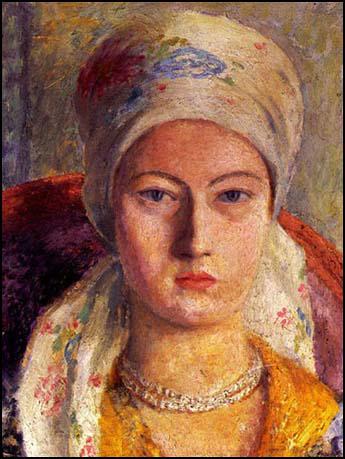
Firstly, Cheerful Weather for the Wedding by Julia Strachey (1932), who was one of the Bloomsbury group; this novel was originally published by Leonard and Virginia Woolf’s Hogarth Press, she was a niece of Lytton Strachey and was painted by Dora Carrington:

ARTstracheyJ2

This novella details the morning of a wedding: the preparations, the arrival of guests, the bustling of servants. The bride doesn’t make an entrance for a while, instead we are treated to her mother, Mrs Thatcham, giving contradictory instructions to all and not seeing that this why things are not organised as she expects:

“with a look of sharp anxiety on her face as usual – as though she had inadvertently swallowed a packet of live bumble-bees and was now beginning to feel them stirring about inside her. She stopped and looked at the clock.

‘I simply fail to understand it!’ burst from her lips.

She trotted briskly out of the drawing-room in the direction of the kitchen.”

Apparently this woman, who veers between being frustratingly tedious and a downright bully, was based on Strachey’s mother-in-law…

Meanwhile, the guests start to arrive. There are some lovely character sketches of family members and assorted hangers-on, told with gentle – in the main – humour.

“a tall, grey-haired man, in black clerical clothes, with a gaunt white face reminiscent of a Pre-Raphaelite painting of Dante. It was Canon Dakin, or Cousin Bob of Hadley Hill as the family called him.”

There is a hilarious description of a lampshade wedding gift and Aunt Katie’s verdurous wedding hat. My favourite little scene was between deluded Aunt Bella, who is busy boring her nephew Lob with tales of how her servants “simply cherish me”, and is met with the following non-sequitur:

“‘My dear lady,’ replied the cheerful Lob, speaking unexpectedly loudly, and holding his glass of wine up to the light for a moment, “I don’t care two pins about all that! No! The question, as I see it, is quite a different one. The whole thing is simply this: Is it possible to be a Reckless Libertine without spending a great deal of money?’”

When we finally meet the bride, Dolly, it is clear all is not well. For starters, she has put away most of a bottle of rum to enable her to stagger down the aisle:

“At this moment Dolly was trailing slowly down the back staircase (which was nearer to her part of the house than the main one), her lace train wound round and round her arm. From out of the voluminous folds of this there peeped a cork and the top of the neck of the bottle. In her other hand was her large bunch of carnations and lillies.” 

As Dolly is unsure of what she is doing and why, simultaneously there is an admirer of hers, Joseph, who may at any minute stop the wedding, though he is not sure of his motivations for doing so. Apparently Strachey was a fan of Chekov, and Cheerful Weather for the Wedding shows this influence in domestic subject matter and conflicted characters unable to take action. The humour is bittersweet: while the preparations and family members are portrayed with a light irreverence, the drunk bride and her inert friend? lover? – we are never told – bring a genuine sadness to proceedings. I couldn’t help feeling they were both on the brink of disaster.

“Dolly knew, as she looked around at the long wedding-veil stretching away forever, and at the women too, so busy all around her, that something remarkable and upsetting in her life was going steadily forward.”

Virginia Woolf’s opinion of Cheerful Weather for the Wedding was high: ‘I think it astonishingly good – complete and sharp and individual.’ Strachey doesn’t explain everything and leaves many questions in the reader’s mind as to what is going unsaid and undone on this nuptial morning (looking at the trailer for the 2012 film it looks as if everything is spelled out, so I will not be watching the film version – why? WHY??)  While it is short, Cheerful Weather for the Wedding is not slight – witty, sardonic, sad and wise – it is a fully realised portrait of everyday tragedy.

400x400_1335564193597-drunkbride

Image from here

Secondly, A Single Man by Christopher Isherwood (1964) tells a day in the life of George Falconer, an ex-pat English professor living alone in California just after the Cuban missile crisis, and grieving the loss of his partner Jim, killed suddenly in road traffic collision.

“And it is here, nearly every morning, that George, having reached the bottom of the stairs, has this sensation of suddenly finding himself on an abrupt, brutally broken off, jagged edge – as though the track had disappeared down a landslide. It is here that he stops short and knows, with a sick newness, almost as though it were for the first time: Jim is dead. Is dead.”

In the midst of this enormous pain, George carries on with his life: teaching a class, shopping, going to the gym, getting drunk with a friend.

“In ten minutes, George will have to be George; the George they have named and will recognise. So now he consciously applies himself to thinking their thoughts, getting into their mood. With the skill of a veteran, he rapidly puts on the psychological makeup for this role he must play.”

A Single Man is perfectly paced, capturing George’s numb putting-on-foot-in-front-of-the-other coping without losing narrative drive. The tone is gentle, treating George kindly, but without sentimentality – he is not always kind himself, and his views on those he encounters are unblinking. However, as we spend the day with George, we start to get glimmers of his desire to keep living, a sense that he will find meaning in carrying on. But then his grief completely side-swipes him:

“He pictures the evening he might have spent, snugly at home…only after a few instants does George notice the omission which makes it meaningless. What is left out of the picture is Jim, lying opposite him at the other end of the couch, also reading; the two of them absorbed in their books yet so completely aware of the other’s presence.”

There is sadness in A Single Man but it is not depressing. Rather it shows how life goes on in all its messy imperfection, and that can be OK, even when you are feeling far from fine.

 A Single Man was made into a film in 2009, the directorial debut of fashion designer Tom Ford. It certainly looked amazing and had some wonderful performances by Colin Firth and Julianne Moore, but the screenplay made some significant changes and unsurprisingly, I prefer the book for its subtlety and nuance. Kudos to Ford though, for filming a book that takes place almost entirely within one man’s head.

I hope you all have a great day ahead 🙂