“I have a great deal of difficulty in beginning to write my portion of these pages, for I know I am not clever.” (Esther Summerson in Bleak House)

I’m not a fan of Dickens. I don’t like his caricatured villains, I don’t like his insipid virgin heroines, I don’t like his sentimentality. This may explain why it’s taken me thirty years to open the copy of Bleak House given to me as a teenager by my mother, as it’s one of her favourite novels. It begins:

“London. Michaelmas term lately over, and the Lord Chancellor sitting in Lincoln’s Inn Hall. Implacable November weather. As much mud in the streets as if the waters had but newly retired from the face of the earth, and it would not be wonderful to meet a Megalosaurus, forty feet long or so, waddling like an elephantine lizard up Holborn Hill. Smoke lowering down from chimney-pots, making a soft black drizzle, with flakes of soot in it as big as full-grown snowflakes—gone into mourning, one might imagine, for the death of the sun. Dogs, undistinguishable in mire. Horses, scarcely better; splashed to their very blinkers. Foot passengers, jostling one another’s umbrellas in a general infection of ill temper, and losing their foot-hold at street-corners, where tens of thousands of other foot passengers have been slipping and sliding since the day broke (if this day ever broke), adding new deposits to the crust upon crust of mud, sticking at those points tenaciously to the pavement, and accumulating at compound interest.”

And that’s how long it took me to absolutely love Bleak House. Which just goes to show that as always, my mother knows best 😀 (as do the bloggers who recommended I choose this as my tome reading after a month of novellas – many thanks!)
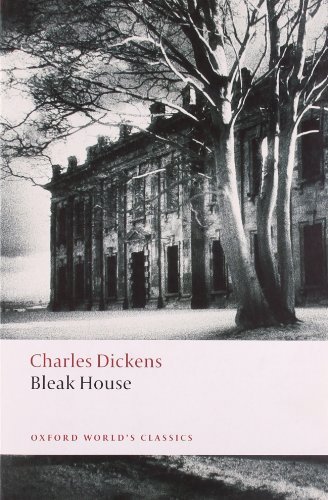
Bleak House follows the fortunes of three young people caught up in a long-running legal wrangle:

“Jarndyce and Jarndyce drones on. This scarecrow of a suit has, in course of time, become so complicated that no man alive knows what it means. The parties to it understand it least, but it has been observed that no two Chancery lawyers can talk about it for five minutes without coming to a total disagreement as to all the premises. Innumerable children have been born into the cause; innumerable young people have married into it; innumerable old people have died out of it.”

Esther Summerson, Ada Clare and Richard Carstone find themselves under the guardianship of John Jarndyce, a benevolent older distant relation of the latter two. Ada and Richard fall in love, but it is Esther rather than the young lovers who is the focus, her first-person narration alternating with that of an omniscient narrator.

She is from a mysterious background, not knowing who her parents are and raised by an abusive godmother. “Your mother, Esther, is your disgrace, and you were hers”. Esther is a Victorian heroine though, so rather than becoming defensive or angry, she decides she will:

“strive as I grew up to be industrious, contented, and kind-hearted and to do some good to some one, and win some love to myself if I could. I hope it is not self-indulgent to shed these tears as I think of it. I am very thankful, I am very cheerful, but I cannot quite help their coming to my eyes.”

Although tediously self-deprecating at times, generally I found Esther really likable. Her narrative is can be witty and some of her portraits of others almost sharp, so I did wonder if the reader wasn’t supposed to take her modest protestations entirely at face value, at least not consistently.

The omniscient narrator widens the tale to explain the various legal dealings of Chancery Lane and all its hangers-on, alongside the situation of the Dedlock family:

“there is no end to the Dedlocks, whose family greatness seems to consist in their never having done anything to distinguish themselves for seven hundred years.”

The current incumbent Sir Leicester Dedlock does little to change this history of his family as he “is generally in a complacent state, and rarely bored. When he has nothing else to do, he can always contemplate his own greatness. It is a considerable advantage to a man to have so inexhaustible a subject. After reading his letters, he leans back in his corner of the carriage and generally reviews his importance to society.”

He is devoted to his beautiful, fashionable, remote wife Honoria, who the reader quickly realises has A Big Secret in Her Past. Hmm, based on what we know of the other characters so far, what on earth could it be…?  

It’s not hard to guess what it is as the clues are laid on pretty thickly, and I thought the imagery when Esther first sees Lady Dedlock was so striking:

“It was easy to know that the ceremonious, gouty, grey-haired gentleman, the only other occupant of the great pew, was Sir Leicester Dedlock, and that the lady was Lady Dedlock. But why her face should be, in a confused way, like a broken glass to me, in which I saw scraps of old remembrances, and why I should be so fluttered and troubled (for I was still) by having casually met her eyes, I could not think.”

Dickens weaves together the various strands of the story, the main plots and all the subplots with brilliant dexterity. Sometimes with these big Victorian baggy monsters (to steal a phrase from Henry James) the stories can flag a bit, as the authors are trying to keep them going for a number of episodes in the serial. I really didn’t feel this with Bleak House. The story kept driving forward and all the various plots came together so cleverly, contriving to make a well-paced page-turner.

What really struck me about Bleak House though, is that it is a story of great compassion. Of course I knew Dickens had a strong social conscience and his work has a social message to it. But Bleak House demonstrated a degree of understanding and sympathy that I wasn’t expecting. Unmarried mothers, those struggling with addictions, human weakness and vulnerability – none are judged. Those who are judged are the ones who seek to profit from such.

Which brings me on to Mr Tulkinghorn… I said at the beginning I’m not usually keen on Dickens’ villains, finding them too caricatured. The lawyer Tulkinghorn was medacious, conniving, cold as ice, completely believable and completely terrifying. Truly villainous.

Although there are romantic elements to Bleak House, it is not an overly romantic tale. It is a novel much more concerned with the fall-out on the vulnerable members of society from immovable and self-serving institutions. Perhaps the main way in which the novel has dated is an engagement that seemed highly questionable to me, but as it remains chaste and ultimately everyone comes to their senses, it didn’t overly offend my modern sensibilities 😀

If I’ve made Bleak House sound a heavy read though, I’ve done it a disservice. I found it very often funny, whether satirically critiquing the legal system or broader nonsense like Mrs Guppy trying to throw John Jarndyce out of his own home and resisting all attempts to explain the illogicality of such a move. It has its sad moments too, and is genuinely moving in places.

And just in case a Victorian novel may seem to have no relevance to our modern world, I leave you with this exchange between Esther and Miss Flite:

“I said it was not the custom in England to confer titles on men distinguished by peaceful services, however good and great, unless occasionally when they consisted of the accumulation of some very large amount of money.

“Why, good gracious,” said Miss Flite, “how can you say that? Surely you know, my dear, that all the greatest ornaments of England in knowledge, imagination, active humanity, and improvement of every sort are added to its nobility! Look round you, my dear, and consider. YOU must be rambling a little now, I think, if you don’t know that this is the great reason why titles will always last in the land!”

I am afraid she believed what she said, for there were moments when she was very mad indeed.”

This is an excessively long post and I’ve barely scratched the surface of Bleak House. But in summary: funny, sad, socially engaged, well-paced, emotionally affecting, entertaining, original. An absolute masterpiece.

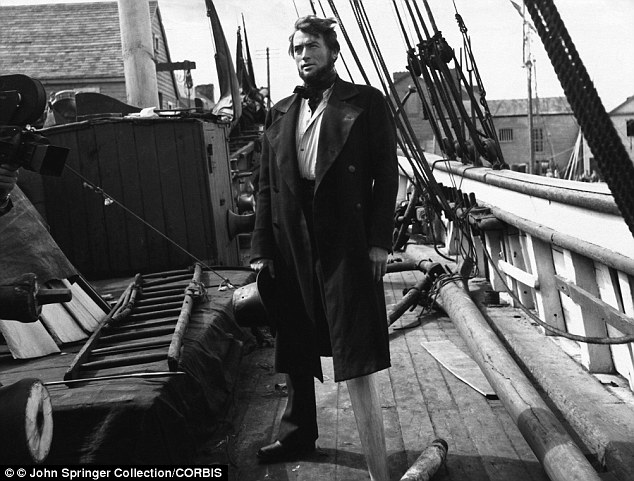
To end, I remember watching the BBC adaptation of Bleak House when it came out and thinking it very well done. Now I’ve read the book I might go for a rewatch, as I don’t remember it that well and it does look entertaining (especially Charles Dance as Tulkinghorn):
“I finished Ulysses, & think it is a mis-fire. Genius it has I think; but of the inferior water.” (Virginia Woolf) 

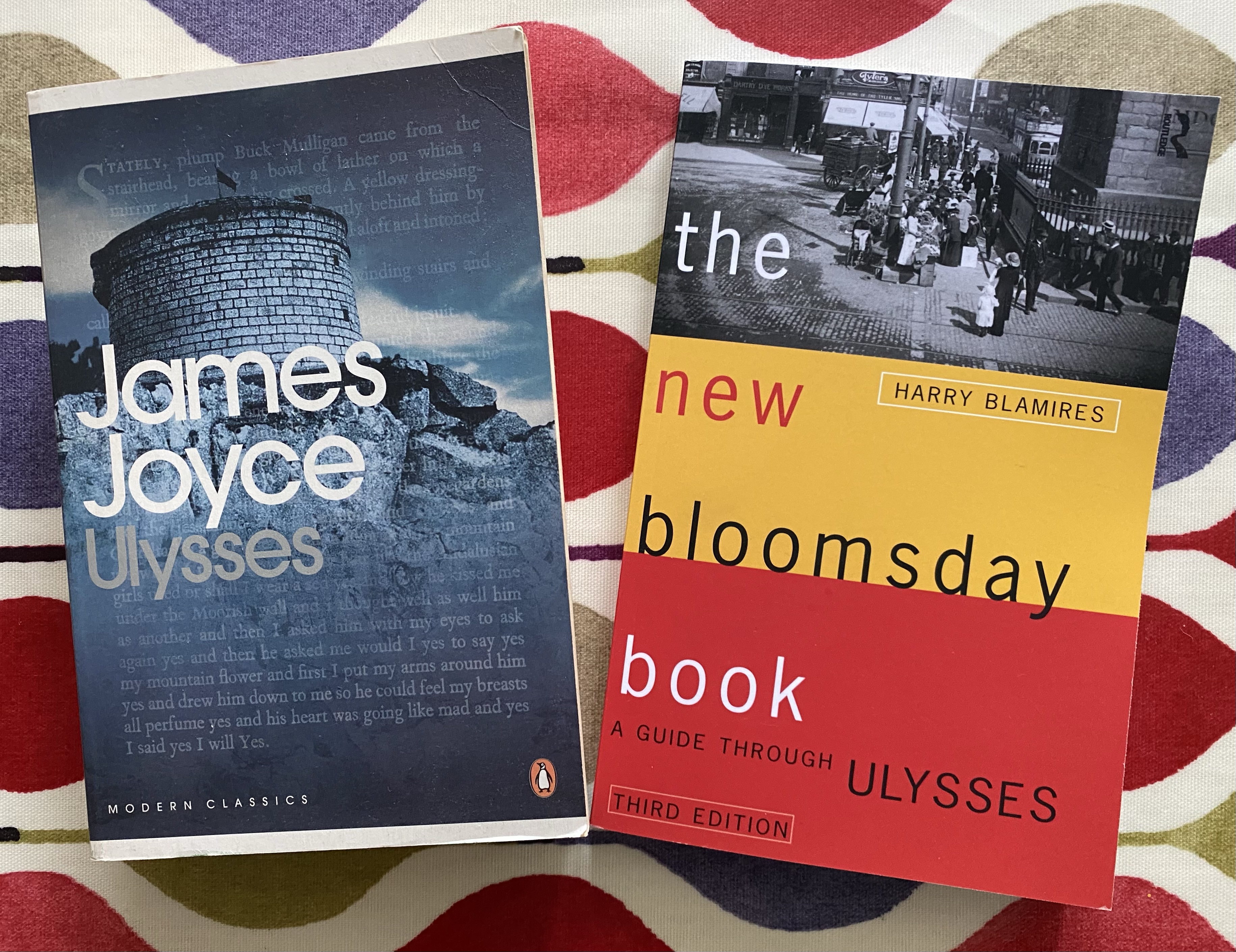
Today is Bloomsday, and the centenary of the publication of James Joyce’s Ulysses. I decided this meant I couldn’t put it off any longer and 2022 would be the year I finally cracked the spine on this tome (metaphorically of course – I don’t crack spines, I’m not an animal.)

When I read War and Peace back in 2017, I opted out of a review-type book post, intimidated at the thought of trying to say anything remotely coherent or interesting about such a revered novel. Instead I opted for a reading diary. Now here I am with a similarly revered, equally intimidating cornerstone of literature. There’s no way I can say anything useful about Ulysses, especially in its centenary year with all the celebratory events happening.

And so I present my Ulysses reading diary, neither coherent nor interesting! In fact, to manage any expectation of intellectual engagement with the genius of Joyce in this post, I should confess that the first hurdle I had to overcome in approaching the text was to get the Ulysses 31 theme tune out of my head (it’s probably unnecessary to explain here that I am a child of the 80s…)

Day 1

“Ulysses, Ulysseeeeees, soaring through all the galaxieeeeees….” Pesky earworm.

Normally if I’m told a book is difficult, I arrogantly assume I can do it. But Ulysses is genuinely intimidating. What I need to remind myself is:

  1. I really love James Joyce. Genuinely, Dubliners is one of my favourite-ever books. So I might even enjoy Ulysses.
  2. Other people have done it. I’ve even met some of them. Lovely bloggers left encouraging comments on my previous post where I explained what I planned to do.  It’s definitely do-able.
  3. I am not going in unarmed. I have The New Bloomsday Book: A Guide Through Ulysses by Harry Blamires (3rd ed. 1996) at my side. I’m almost certain I read on twitter that this was a good thing, and surely twitter is never wrong??

I’ve read the 80+ page introduction to my edition and now wonder if I should gain degrees in Classical Civilisation/Modernism/European History/Religious Studies before even attempting this novel.

I’ll start tomorrow.

Pages read: None. Pages remaining: 933

Day 2

OK, possibly I overreacted. I think maybe I knew too much in advance. In the end, I was amazed I could make it to the end of a single sentence. But so far Ulysses is beautiful yet also sordid, and very readable. I’m glad I’ve got the reading companion though, as there was complex word play around the word ‘melon’ that I definitely wouldn’t have picked up on my own.

Pages read: 140 Pages remaining: 793

Day 3

For such a learned, intellectual novel, Ulysses also manages to be emotionally affecting. Now I’m just under a quarter of the way through I’m finding Leopold Bloom very moving. There’s something pathetic about him, and isolated and sad, even among the crowds of Dublin.

“I was happier then. Or was that I? Or am I now I? Twentyeight I was. She twentythree. When we left Lombard street west something changed. Could never like it again after Rudy. Can’t bring back time. Like holding water in your hand. Would you go back to then? Just beginning then. Would you? Are you not happy in your home you poor little naughty boy? Wants to sew on buttons for me. I must answer. Write it in the library.

Grafton street gay with housed awnings lured his senses. Muslin prints, silkdames and dowagers, jingle of harnesses, hoofthuds lowringing in the baking causeway. Thick feet that woman has in the white stockings. Hope the rain mucks them up on her.”

Pages read: 218 Pages remaining: 715

Day 4

Fair to say my pace has slackened off today. I woke up with the book on my face, which upon removal revealed two hungry cats giving me the death stare.

Pages read: 250 Pages remaining: 683

Days 5, 6, 7

I’m sure a more attentive reader would get a lot more out of Ulysses, but as an inattentive reader I’m still really enjoying it. I especially like the section which the companion tells me corresponds with The Wandering Rocks in Homer. It’s 19 sections where, by following many characters for a short time, Joyce creates the hustle and bustle of the afternoon of 16 June 1904 in Dublin. He does this as much through the inner lives of his characters and their interactions with one another, as with description. Having said that, here are some descriptions which caught me:

“Two carfuls of tourists passed slowly, their women sitting fore, gripping the handrests. Palefaces. Men’s arms frankly round their stunted forms. They looked from Trinity to the blind columned porch of the bank of Ireland where pigeons roocoocooed.”

“Stephen Dedalus watched through the webbed window the lapidary’s fingers prove a timedulled chain. Dust webbed the window and the showtrays. Dust darkened the toiling fingers with their vulture nails. Dust slept on dull coils of bronze and silver, lozenges of cinnabar, on rubies, leprous and winedark stones.

Born all in the dark wormy earth, cold specks of fire, evil, lights shining in the darkness. Where fallen archangels flung the stars of their brows. Muddy swinesnouts, hands, root and root, gripe and wrest them.”

“Moored under the trees of Charleville Mall Father Conmee saw a turfbarge, a towhorse with pendent head, a bargeman with a hat of dirty straw seated amidships, smoking and staring at a branch of poplar above him. It was idyllic: and Father Conmee reflected on the providence of the Creator who had made turf to be in bogs whence men might dig it out and bring it to town and hamlet to make fires in the houses of poor people.”

I’m very grateful for the companion guide. I’m reading part of Ulysses then the corresponding section in the guide, and this isn’t nearly as tedious as I anticipated. It reassures me that I’m picking up a lot, and it’s highlighting the things I didn’t have hope of recognising.

Among all this learning, my most significant take away is: I’m going to start using the phrase “I beg your parsnips.”

Pages read: 403 Pages remaining: 530

Day 8, 9, 10

More than 100 pages of very unpleasant scenes, filled with boorish, racist, drunk men. An effective contrast to Bloom’s sober gentleness and moderation, (although also some questionable voyeurism from him) but I was very glad to leave it behind.

I wasn’t keen on the following section set out like a play either, and Bloom and Stephen’s hallucinations weren’t the most pleasant reading.

It’s hot, my hayfever is terrible, I’m sleep deprived and grumpy so not the best reader right now. Don’t listen to me.

Pages read: 704 Pages remaining: 229

Days 11, 12

Thank goodness – back on a much more straightforward narrative (or as near to one as you get with Joyce) and I’m enjoying Ulysses again. (I don’t normally mind experimental narratives so I’m blaming my hayfever brain.) Lovely scenes between Bloom and Dedalus.

“Literally astounded at this piece of intelligence Bloom reflected. Though they didn’t see eye to eye in everything a certain analogy there somehow was as if both their minds were travelling, so to speak, in the one train of thought.”

Which is then followed by 50-odd pages of (surprisingly explicit, even by today’s standards) almost punctuation-free stream of consciousness – a brave choice to end and a masterstroke.

“…I dont like books with a Molly in them like that one he brought me about the one from Flanders a whore always shoplifting anything she could cloth and stuff and yards of it O this blanket is too heavy on me thats better I havent even one decent nightdress this thing gets all rolled under me…” 

Pages read: 933 Pages remaining: zero!

So that’s me all done! And one of the Big Scary Tomes ticked off my Le Monde’s 100 Books of the Century Reading Challenge. While it doesn’t yet occupy a special place in my heart like Dubliners, I still got so much from Ulysses. It’s such an achievement to be simultaneously so epic and so determinedly everyday. I would definitely read it again, and I’d love to go to the Bloomsday events in Dublin, which I’m sure would mean I’d enjoy a re-read even more.

To end, an opportunity to indulge myself with one of the loves of my life, because here Kate Bush is singing Molly Bloom’s soliloquy:

P.S Virginia Woolf did modify her view of Ulysses at a later date: “very much more impressive than I judged. Still I think there is virtue & some lasting truth in first impressions; so I don’t cancell mine. I must read some of the chapters again. Probably the final beauty of writing is never felt by contemporaries”

Novella a Day in May 2019 #29

Pinocchio – Carlo Collodi (1883, trans. Geoffrey Beck 2009) 160 pages

Pinocchio, like a lot of classic children’s literature, is deeply weird and dark. I didn’t read it at all as a child, despite seeing the Disney cartoon which is very different. I picked it up as an adult because its published by the ever reliable NYRB Classics, and it turned out to be an intriguing read.

The basic premise I think everyone knows: a wooden puppet comes to life, wants to be a real boy, misbehaves and every lie he tells has a very obvious effect on his physiognomy.

“ ‘Lies, my boy, are immediately recognizable, for there are two kinds: lies that have short legs and lies that have long noses. Yours happen to be the long-nosed variety.’

Pinocchio, wanting to hide his face in shame, tried to run from the room – but he couldn’t. His nose was so long that it wouldn’t fit through the doorway.”

Pinocchio isn’t very likeable. He’s totally idle and only interested in himself.

“ ‘Of all the trades in the world, there’s only one that really suits me.’

‘And what trade would that be?’

‘That of eating, drinking, sleeping, playing, and wandering wherever I like from sunup to sundown.’

‘For your information,’ said the Talking Cricket, with his usual calm, ‘everyone who plies that trade ends up either in a poorhouse or a prison.’

‘Watch out, you doom-and-gloom Cricket! If I snap, you’ll be sorry!’”

Pinocchio does snap, and kills the Cricket stone dead. A short-lived relationship with an insect, who is nothing like the top hat and frock coat wearing, enduring friend of the cartoon.

The story is episodic, with Pinocchio going on several adventures, invariably taking the wrong decision, and failing to learn from his mistakes. It has the feel of folk tales rather than fairy tales, being grounded in an earthy reality of poverty and banditry, even when the bandits are a fox and cat double act. Pinocchio is always appealing even though he is selfish and unheeding, but there is never any sentimentality in the tale.

However, there is the strong didactic element associated with fairy tales, and Pinocchio is constantly lectured, by the cricket, by adults, and by the fairy with sky blue hair who crops up in various guises.

“ ‘Dear boy,’ said the Fairy, ‘people who talk that way almost always end up either in a prison or a poorhouse. For your information, everyone, whether they’re born rich or poor, is obliged to do something – to keep busy, to work. Woe to anyone who yields to idleness! Idleness is a dreadful disease and must be treated at once, starting in childhood. If not, it will be too late by the time we grow up.’”

Pinocchio does eventually learn and does become a real boy, but there’s something irrepressible about him. The feeling at the end is not of conservative integration where all is right with the world, but rather that the subversive elements that have been present all along are still there, waiting to spill out at any minute.

It’s a tale that can be enjoyed by children and adults. My edition included contributions from intellectual heavyweights to say the least: an Introduction by Umberto Eco, an Afterword by Rebecca West and a quote on the back by Italo Calvino. This shows how Pinocchio has been so widely recognised and why it endures; deceptively simple, hiding its complexities in an engaging children’s tale, it can be read differently each time.

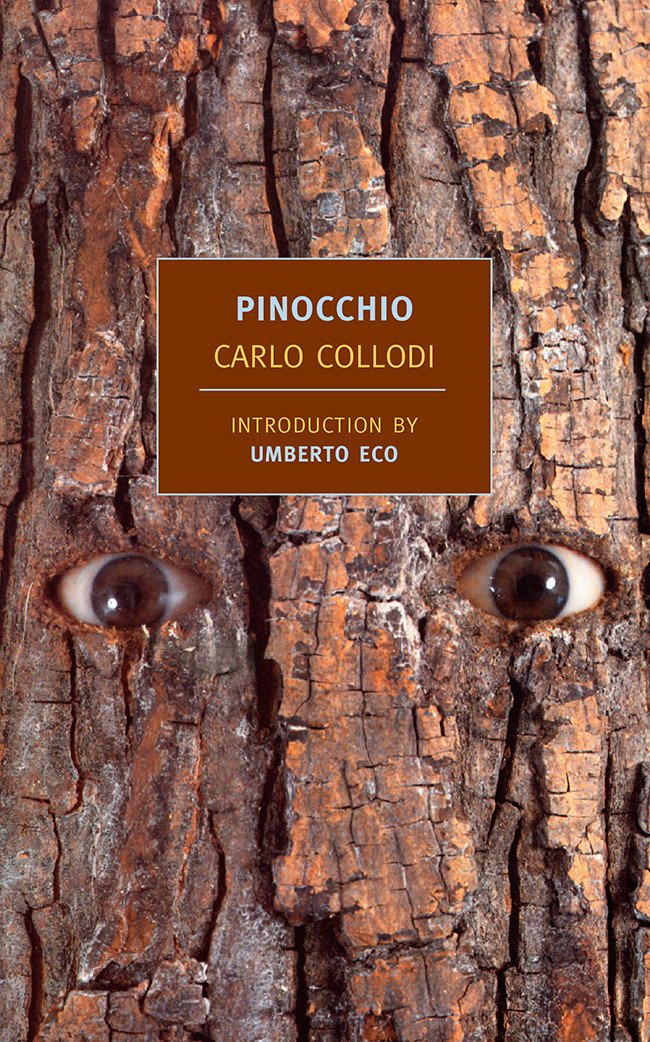
I really didn’t like the cover of the NYRB Classics edition, finding it creepy, but it captures the unsettling quality of the tale of an animated puppet perfectly:

“Mancestre….is the fairest, best buildied, quikkest and most populus Tounne of al Lancastreshire” (John Leland, 1538)

The final part of my cities trilogy of posts sees me in Manchester, a place that has made worldwide news in recent times for the most tragic of reasons. I saw the floral tributes when I was there and it was deeply moving. Manchester is a great city with a rich history & I still think that even though it bucketed with rain the whole time I was there and I spent every moment on a spectrum of sogginess, never entirely dry. If any of you go to this fine place before 28 August I highly recommend Shirley Baker’s photographs at the Manchester Art Gallery; her images of Mancunians in the late 1960s-early 70s are absolutely wonderful.

Image from here

From the TBR mountain I’ve chosen two autobiographies, one from a writer born in Manchester, and one who has now made Manchester their home. Firstly, the classic Confessions of an English Opium Eater by Thomas de Quincey (1821). De Quincey was born in Manchester to a family of cloth merchants when Manchester was a major industrial centre for the cotton industry.

“On passing through Manchester, I was informed by several cotton manufacturers that their workpeople were rapidly getting into the practice of opium-eating; so much so, that on a Saturday afternoon the counters of druggists were strewed with pills…in preparation for the known demand of the evening. The immediate occasion of this practice was the lowness of wages, which at that time would not allow them to indulge in ale or spirits, and wages rising, it may be thought this practice would cease; but …I do not readily believe that any man having once tasted the divine luxuries of opium will afterwards descend into the gross and mortal enjoyments of alcohol.”

Yes, opium (laudanum) was legal and widely used at this time. DeQuincey suffers with excruciating stomach pains due to childhood poverty and starvation, and a well-meaning friend suggests he try opium to ease his what ails him:

“I took it – and in an hour – oh, heavens! What a revulsion! What an upheaving, from its lowest depths, of inner spirit! What an apocalypse of the world within me! That my pains had vanished was now a trifle in my eyes: this negative effect was swallowed up in the immensity of those positive effects which had opened before me – in the abyss of divine enjoyment thus suddenly revealed.” *

The record of positive experiences with opium meant Confessions was controversial on its release. But DeQuicey does not glamourise the drug nor his experience with it. After all, people wouldn’t get addicted to something which made them feel horrible, and DeQuincey is seeking to make people understand. He doesn’t shy away from all the effects of the drug, and his hallucinations under its influence are grim:

“I was kissed, with cancerous kisses, by crocodiles; and laid, confounded with all unutterable slimy things, amongst reeds and Nilotic mud.”

Overall, the feeling I was left with from this short biography was one of sadness. DeQuincey is ruled by something far more powerful than he is, and the sense is of a life half-lived, a life DeQuincey wishes had been different. He has a fatal flaw:

“I hanker too much after a state of happiness, both for myself and others; I cannot face misery, whether my own or not, with an eye of sufficient firmness”

And opium convinces him that this state is achievable. In so desperately wanting to believe this lie, DeQuincey is never able to shake free of his addiction. At the beginning of the novel he proclaims:

 “I have at length accomplished what I never yet heard attributed to any other man – have untwisted, almost to its final links, the accursed chain which fettered me.”

But modern readers will know he never did accomplish this, and remained addicted his entire life. Confessions is very readable, much more so than other essays and similar of the period, and remains a thought-provoking insight into the nature of addiction.

Secondly, Red Dust Road by Jackie Kay (2010), a Scottish writer who has settled in Manchester and is the current Scots Makar.  If Confessions left me feeling sad, Red Dust Road left me feeling warmed and moved, although it is not a comfort read. It is the story of Jackie Kay’s search for her birth parents, and like her other writing – poetry, fiction, short stories, children’s books – it is funny and affectionate and real and sad.

“the search is often disappointing because it is a false search. You cannot find yourself in two strangers who happen to share your genes. You are made already although you don’t properly know it, you are made from a mixture of myth and gene, you are part fable, part porridge. Finding a strange, nervous, Mormon mother and finding a crazed, ranting Born-Again father does not explain me. At least I hope not!”

That passage occurs near the start of the book, and so it is not a spoiler.  We know Jackie finds her birth parents. What she does, expertly, is cut back and forth in time to show what has made her what she is. Raised in Glasgow by a white couple, Jackie and her (non-biological) brother are mixed race. Growing up in the 70s and 80s they encounter racism (there is a particularly chilling experience for teenage Jackie at Angel tube station).  They also encounter a wonderful, unconditional love from their parents who are communists with a strong sense of right and wrong and a strong sense of fun. (Seriously, Helen and John Kay sound awesome.) While her brother has no interest in finding his biological parents, Jackie finds that falling pregnant with her own son spurs her on to trace her relatives. She discovers that her father was a Nigerian student who met her mother in Aberdeen when she was a nurse. Along the way, she has to pick apart the fairytales she has told herself about them since childhood, and the reality of who they are:

“they are ghosts one minute haunting the city of stone, and ordinary people the next. It is impossible to sustain them, or maintain them. I take another swig of gin. It is time to let them fend for themselves. It is time to let them go. They need to grow up, those young parents. They need to grow up because they are already old, and so am I.”

Red Dust Road is a hugely engaging memoir, full of warmth for all her family and written with humour without shying away from sadness. Ultimately it is a book about what makes us who we are, and how some of it is easy to pinpoint, some of it impossible to fully fathom. It is also about finding home, and how that can be in several places. Jackie Kay has a strong Scottish identity, lives in Manchester, and then visits Nigeria for the first time:

“The earth is so copper warm and beautiful and the green of the long elephant grasses so lushly green they make me want to weep. I feel such a strong sense of affinity with the colours and the landscape, a strong sense of recognition. There’s a feeling of liberation, and exhilaration, that at last, at last, at last I’m here.”

I highly recommend Red Dust Road. Jackie Kay has brought her poetic sensibility to write a glorious memoir about how ourselves, our families and our homes are always an unpredictable work in progress.

To end, a classic song by a classic Manchester band:

*Just say no, kids

“If you live to be one hundred, you’ve got it made. Very few people die past that age.” (George Burns)

This is my 100th post.  For more prolific, better bloggers than me this would not be a big deal but it’s taken me nearly 3 years so I’m making it A Thing:

BRAD-PITT-DORK-DANCE

For the 100 theme I thought I would pick two books from my TBR that are also on the Norwegian Book Clubs 100 Best Books of All Time list (compiled by 100 authors from 54 countries). And it was at this point that the post became derailed, because the first one I chose was Moby-Dick by Herman Melville. I have no idea how to discuss this novel.  I have no idea if it’s even a novel. It’s the weirdest thing I’ve ever read, and I’ve read The Monk. I can only think it’s called a novel because there isn’t a genre of whale-compendium-philosophical-disquisition-on-the-state-of-humankind-tragi-farce-quest-adventure-stream-of-conciousness-homoerotic-existentialist-romance. I had no idea what I was getting into.  I thought it was a story about a monopedal seafaring lunatic’s obsession with a white whale. That’s some of it. But saying that is what Moby-Dick is about is like saying Animal Farm is about pig husbandry.

“With the problem of the universe revolving in me, how could I — being left completely to myself at such a thought-engendering altitude, — how could I but lightly hold my obligations to observe all whale-ships’ standing orders, ‘Keep your weather eye open, and sing out every time.’”

So you see my problem. Once upon a time one of my tutors was talking me through how to write a research proposal and the only thing I remember him saying was “don’t do what I did, and write down a tirade of barely-literate pseudo-threats”. This comment makes complete sense now, because his research was on Moby-Dick, and if I was trying to capture it in any sort of meaningful analysis I think I’d end up resorting to a tirade of barely-literate pseudo-threats.

I realise this may sound like I didn’t like it, which is not true.  Moby-Dick is beautifully written, compelling, hypnotic, thought-provoking, and completely unique. It’s full of sage counsel for life:

“Better sleep with a sober cannibal than a drunken Christian.”

The ending is devastating, and it is without a doubt the weirdest thing I’ve ever read.

“It is not down on any map; true places never are.”

article-2155383-137ACAF4000005DC-780_634x481

If you’d like to read a thoughtful, useful discussion of Moby-Dick rather than the confused nonsense you’ve just waded through here, then I highly recommend that you head over to Shoshi’s Book Blog for her excellent review.

Secondly, Madame Bovary by Gustav Flaubert (my edition trans. Alan Russell), whose linear narrative helped me recover from my Moby-Dick book hangover. Apparently Flaubert said “Madame Bovary, c’est moi.” I find this extremely unlikely. Madame Bovary is a silly, vain, self-pitying materialist who places value in all the wrong things. She never changes – this is how she begins and ends the novel.  Madame Bovary could never have written Madame Bovary, which is scathing in its treatment of bourgeois aspiration and acquisition. However, while she runs up debts to fill her house with things and constantly hankers after some ideal self-indulgent life that is based entirely on what she has read books, there is not a total lack of sympathy for Emma:

“Before the wedding, she had believed herself in love. But not having obtained the happiness that should have resulted from that love, she now fancied she must have been mistaken. And Emma wondered exactly what was meant in life by the words ‘bliss’, ‘passion’, ‘ecstasy’, which had looked so beautiful in books.”

So, she’s naïve, and in her naiveté has married a man whose “conversation was as flat as a street pavement, on which everybody’s ideas trudged past, in their workaday dress, provoking no emotion, no laughter, no dreams.” But she is also self-pitying, believing herself so hard done by in her comfortable middle-class existence with a man who loves her: “Had she not suffered enough? Now was her hour of triumph.” that at times I really wanted to slap her.

Emma really doesn’t know what she wants “She longed to travel – or go back to the convent. She wanted to die, and she wanted to live in Paris.”, and this makes her ripe for seduction by an absolute rake.  Although I didn’t like her, I did feel a bit ashamed for laughing at seduction which involved lines such as this:

“Goodbye! I’ll go away, far away, and you’ll hear no more of me. But today, some mysterious force has impelled me to you. One cannot fight with fate! Or resist when the angels smile! One is simply carried away by what is charming and lovely and adorable!”

Emma in her vanity falls for this nonsense, spoken by a man whose “pleasures had so trampled over his heart, like schoolboys in a playground, that no green thing grew there.” Of course her appeal wanes, and she is deserted by the cynical seducer:

“Emma was like any other mistress; and the charm of novelty, gradually slipping away like a garment, laid bare the eternal monotony of passion, whose forms and phrases are forever the same.”

Madame Bovary is a wonderful novel, accomplished and engaging, and while the sexuality of the heroine may no longer be scandalous, it remains an entirely relevant challenge to the socio-cultural values placed on materialistic gain.  I suspect Madame Bovary is a character who divides readers, and in this instance she divided the one reader. One the one hand, I thought her utterly contemptible. But at the same time she was a woman who wanted more, at a time when women didn’t have very many choices.

“Her will is like the veil on her bonnet, fastened by a single string and quivering at every breeze that blows. Always there is a desire that impels and a convention that restrains.”

Very possibly if I’d been born into nineteenth-century bourgeois French society I’d end up a silly, vain, self-pitying materialist, placing value in all the wrong things (of course, I’m nothing like that now *cough*). I’ll end on a more sympathetic view of Emma than I’ve given here; this recent film adaptation seems to view her more kindly, if the trailer is anything to go by: