“In the humble nutmeg, lies the power to change destinies” (Giles Milton, Nathaniel’s Nutmeg)

When Kaggsy at Kaggsy’s Bookish Ramblings and Simon at Stuck in a Book announced the 1937 Club reading event, I went scuttling off to the TBR and found seven lovely books to read:

So my plan is to post on one book a day as this wonderful event is running all week. However, various bloggers suggestions of what to read in the meantime made me realise I’d missed some, so my best laid plans may well change! The start of the week is sorted, but the end of week could well be subject to alteration 😀

Today I’m starting with Margery Sharp, whom I adore, so I’m delighted that the 1937 Club has prompted me to pick up The Nutmeg Tree.

Sharp’s insightful but gentle, humane comedic tone is perfectly realised in Julia, a woman we meet taking a bath for as long as it takes the bailiffs to leave. Once they do, she hurriedly heads off to France at the behest of her daughter Susan, whom she hasn’t seen since she was a toddler.

“Those nineteen months of being young Mrs Packett had exhausted her supply of maternal affection; and she was also aware that for a young child the life at Barton was far more suitable than the life she herself looked forward to, in Town. She hadn’t yet any definite plans about it, but she hoped and trusted that it would be very unsuitable indeed.”

Susan has been raised by her paternal grandparents after her father died in World War I. She is a Proper Young Lady, while Julia has led a ramshackle life, entirely of her choosing. Now Susan wants to get married, her grandmother doesn’t approve, and Susan has called in Julia for reinforcements.

She arrives in France having become semi-engaged to an attractive trapeze artist on the way there. Julia is completely delightful and while she doesn’t always behave honourably, she does behave warmly. She understands and enjoys people. Her daughter is almost the polar opposite:

“Julia, who could get intimate with a trapeze artist after five minutes conversation – who was intimate with the salesman after buying a pair of shoes – had talked for an hour to her own daughter, about the girl’s own father and lover, without the least intimacy at all.”

As with The Stone of Chastity, I was struck by Sharp’s liberal attitude towards sex. As far as I know she wasn’t a controversial author, so maybe attitudes like this were more prevalent in the 1930s than I’ve allowed for:

“If she took lovers more freely than most women it was largely because she could not bear to see men sad when it was so easy to make them happy. Her sensuousness was half compassion”

However, safe to say Susan would not share that view. She is, her mother realises, “a prig”. “Strong on logic, weak on human nature.” Susan is entirely inflexible. It becomes apparent that no-one particularly likes her, though she is loved and admired. Sharp is too subtle to demonise Susan though, or make her a villain. She is a not an unpleasant person, but just someone who is better suited to ideas and projects than to the realities of human society and all its complexities.

“‘It takes all sorts to make a world,’ thought Julia. But it was no use saying that to Susan.”

Meanwhile, Susan’s lover Bryan is, Julia realises, more like Julia herself. Convinced he will make Susan very unhappy, she wonders how on earth to maintain her fragile reconciliation with her daughter while not encouraging the match. As if this weren’t enough to contend with, another love interest arrives for Julia…

Sharp has all this play out with great comic pacing. I enjoyed the broader running jokes, whereby her mother-in-law Mrs Packett is convinced Julia owns a cake-shop despite absolutely no evidence of this, and proceeds with organising an entire business plan; and Julia’s continued attempts to impress people and pretend she is other than she is, by reading The Forsythe Saga – no-one is fooled and no-one cares.

The older Mrs Packett is only a secondary character, but I thought she was wonderful and wished Sharp had given her a novel to herself:

“It seemed to her more likely that her mother-in-law was of the type, not rare among Englishwomen, in whom full individuality blossoms only with age: one of those who, at sixty-one, suddenly startle their relatives by going up in aeroplanes or by marrying their chauffeurs.”

The Nutmeg Tree is not a fluffy read though. There’s a strong theme around choices – or lack thereof – for single women without money.  Julia has moments of real despair, Bryan reveals a really quite vicious side to himself, and I was very struck by this paragraph about dating soldiers home on leave from the war:

“You could be dining out with a man, having a perfectly lovely time, and suddenly across the room he would catch another man’s eye, or a man would pause by your table, and all at once they were somewhere else and you were left behind. It had seemed as if war were a sort of fourth dimension, into which they slipped back without even noticing, even out of your arms… so you never really knew them”

The Nutmeg Tree is a wonderful character study set within a well-paced comedy. In Julia, Sharp has created a well-rounded, wholly believable chancer, who the reader roots for because she is entirely without malice. Margery Sharp really is a joy.

To end, The Nutmeg Tree was adapted as Julia Misbehaves in 1948. Has anyone seen it? From the trailer it looks like it could be fun:

“Never despise the translator. He’s the mailman of human civilization.”(Alexander Pushkin)

This week I thought I’d use Kaggsy and Lizzy’s #ReadIndies event to focus on one indie publisher, and finally get to four books that have long been languishing in the TBR. Pushkin Press “publish some of the twentieth century’s most widely acclaimed and brilliant authors” and they are one of my favourite indies, ever-reliable. Which hasn’t stopped four from their Collection series remaining unread by me for far too long!

Today I’m starting with The Buddha’s Return by Gaito Gazdanov (1949-50, transl. Bryan Karetnyk 2014). Gazdanov was a Russian writer exiled in France and this short novel, described by the publishers as “part detective novel, part philosophical thriller, and part love story” is set in Paris, as much as it is set anywhere – reality is not a consistent concept in this story at all.

The narrator is a student who is experiencing prolonged periods of hallucinations. He tells us from the start that he is an unreliable storyteller:

“Nowhere was there any logical pattern in this, and the shifting chaos clearly failed to present even a remote semblance of any harmonious order. And so, accordingly, at that point in my life, which was marked by the constant attendance of chaos, my inner existence acquired an equally false unwavering character.”

We slide back and forth between a recognisable reality of his poverty-stricken life in Paris and his disturbing, disorienting visions, without always knowing which is which. Early on in the novel he falls to his death from a sheer mountainside, later he is arrested and interrogated by the Central State. The government’s accusations of treason are entirely surreal and illogical, yet this is also what makes them horribly believable.

There is political commentary running through the novel, but the kaleidoscopic nature of the narrative means it is not a sustained satire on any particular country, ruler or party, but rather a wider condemnation:

“The ignorant, villainous tyrants who so often ruled the world, and the inevitable and loathsome apocalyptic devastation apparently inherent in every era of human history.”

Around halfway through, more of a plot emerges as Pavel Alexandrovich, an older man whom the student befriended, is murdered and his golden statuette of Buddha stolen. As the last person to see Alexandrovich alive, the student falls under suspicion. The real-life interrogation by the investigators has shades of the surreal fantasy interrogation by the Central State:

“If we can find the statuette, you’ll be free to return home and continue your research on the Thirty Years War, the notes on which we found in your room. I must say, however, that I completely disagree with your conclusions, and in particular your appraisal of Richelieu.”

As that quote shows, there is humour in The Buddha’s Return and this lightens a tale which has a lot of dark elements: visceral war scenes, squalor, and of course murder.

Apparently, The Buddha’s Return was originally published in instalments and I can see it would work well in this format. I enjoyed it but for me the more plot-driven second half arrived at just the right time, when I’d started to feel it was losing momentum. As it was I enjoyed this consistently surprising tale which still had enough recognisable humanity in it to be involving, and I’d be keen to read more by Gazdanov.

“I have a suspicion that you just dreamt the whole thing up. It’s because you read too much, eat too little and spare hardly any thought for the most important thing at your age: love.”

“All fiction is about people, unless it’s about rabbits pretending to be people.” (Margaret Atwood)

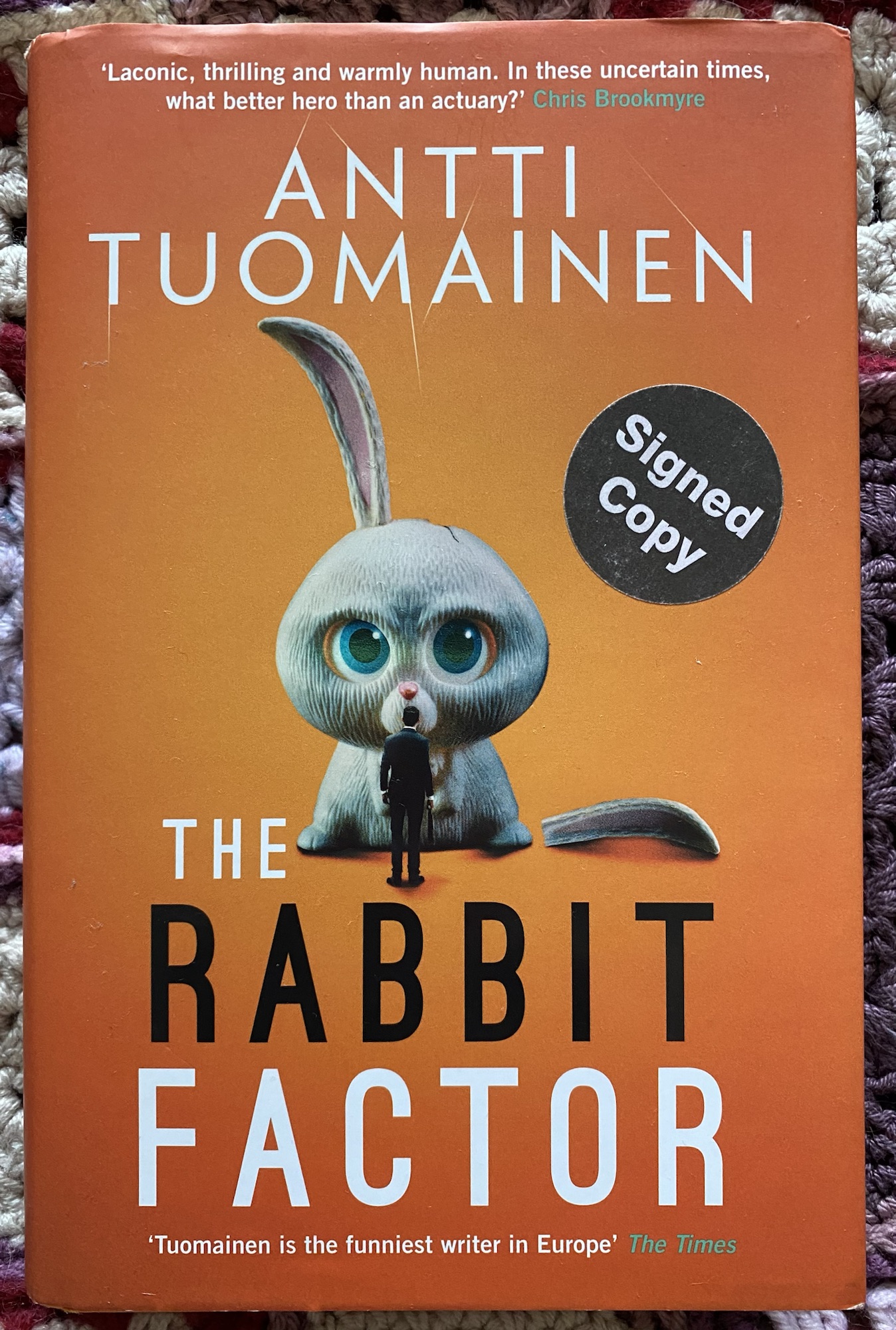
This is my first contribution to Kaggsy and Lizzy’s wonderful #ReadIndies event, running all month. The Rabbit Factor by Antti Tuomainen (2021, transl. David Hackston 2021) is published in the UK by Orenda Books, who describe themselves on their website as: “a small independent publisher based in South London. We publish literary fiction, with a heavy emphasis on crime/thrillers, and roughly half the list is in translation.”

The Rabbit Factor is the first in a trilogy about actuary Henri Koskinen, which had somehow completely passed me by until I read Annabel’s review of the final part, The Beaver Theory. A little while later I saw The Rabbit Theory in my local charity bookshop and took it as A Sign. (As I have mentioned before, I’ll take pretty much anything as A Sign in that shop, and it always results in me buying more books 😀 )

Henri is a man who likes a well ordered, predictable life: “At the age of forty-two I had only one deep-held wish. I wanted everything to be sensible.”

His job as an actuary suits him, using mathematics to predict risk. Unfortunately, what doesn’t suit him is the modern workplace – open plan, noisy and full of corporate-speak about self-actualisation. He is forced into resigning by his boss who hides his bullying behind pseudo-beneficent jargon.

Not long after, Henri is told his brother Juhani has died and he has inherited YouMeFun, an adventure park (not an amusement park) in Vantaa. Unfortunately, before he died his brother inherited their parents’ chaotic approach to life and so Henri finds himself faced with:

“An unbearable lack of organisation, staggering maintenance bills, unproductive use of man hours, economical recklessness, promises nobody could keep, carts that quite literally moved at tortoise speed? I raised my fingers to my throat and checked the position of my tie. It was impeccable.”

Juhani was also in hock to gangsters, two of which – Lizard Man and henchman AK – keep turning up to menace Henri with horrible regularity and conviction. No less threatening, but considerably less violent, is police officer Osmala who similarly seems very interested in YouMeFun and Henri. And so Henri finds himself under enormous pressure and with only his maths skills to fall back on.

“I resigned because I couldn’t stand watching my workplace turn into a playground. Then I inherited one.”

I think maybe this novel passed me by because it can be classified under Nordic-noir, and I don’t read a great deal of that. What I read I enjoy, but I choose carefully because I am a delicate flower and not really in the market for gruesome crimes. Now, there are gruesome deaths in The Rabbit Factor, but I managed these fine. The details aren’t dwelt upon and they are surrounded by such surreal silliness that the focus is more on the ridiculousness of Henri’s situation than violence.

The tone is also not noirish. One of the blurbs in my edition mentions the Coen brothers, and this is a good parallel: while there is darkness to the tale, there is also humour and humanity. Henri’s unlikely colleagues include Esa, the US-marine obsessed security officer; sweet Kristian who is unable to see that his total ineptitude is what prevents him from becoming general manger; Minttu K who seems to know about marketing if she could only stop self-medicating with alcohol; Venla who never arrives for a shift; and quietly efficient Johanna who runs the kitchen and actually seems able to do her job.

There is also Laura Helanto, manager and frustrated artist, who causes feelings to arise in Henri that he doesn’t fully understand. It’s a confusing time for him all round…

“But recent events have taught me that what once seemed likely, as per the laws of probability, is more often than not in the realm of the impossible. And vice versa: what once I would have been able to discount through a simple calculation of probability ratios and risk analysis is now in fact the entirety of my life.”

I really enjoyed The Rabbit Factor. The deadpan narration of Henri is so well-paced that it manages to also be completely engaging. His focus on detail grounds the ridiculousness of his situation so it remains believable, carrying the reader along on Henri’s absurd journey.

“Even as a child I saw mathematics as the key. People betrayed us, numbers did not. I was surrounded by chaos, but numbers represented order.”

The characterisation is equally finely balanced. Henri and his colleagues could so easily be caricatures but instead you end up rooting for these disparate individuals. Tuomainen isn’t remotely sentimental but he is kind to the people he creates. The humour is derived from the situation, never laughing at the people themselves. They change under Henri’s stewardship, and he in return finds himself behaving in ways that surprise him more than anyone:

“I say something I could never have imagined hearing myself say. ‘This doesn’t make any sense. But it has to be done.’”

Last year I decided I would buy one book a month from an independent publisher or bookshop. I think Henri would agree that the probability of my next two purchases in this regard being his adventures in The Moose Paradox and The Beaver Theory are pretty high…

To end, I was so tempted to choose Chas & Dave’s Rabbit, as I absolutely loved that song when I was little (it was released when I was four years old, and I thought they were singing about actual rabbits). But alas, my adult sensibilities prevent me from adding a song about silencing women to the blog 😀 So instead here is a literature-inspired song about drugs rabbits:

“Orange is red brought nearer to humanity by yellow.” (Wassily Kandinsky)

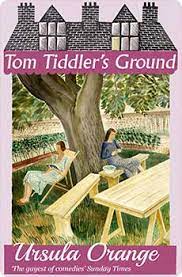
This is my contribution to Dean Street December hosted by Liz at Adventures in Reading, Running, and Working From Home. Tom Tiddler’s Ground by the delightfully named Ursula Orange (1941) is part of their Furrowed Middlebrow imprint and I thought it was an absolute joy.

It tells the story of Constance Smith and her childhood friend Caroline Cameron, who find themselves living together again in the early days of World War II. Caroline is urbane and worldly, leaving behind her life in London with her husband John. She is entirely self-focussed and amoral, but also quite caring regarding people. Despite her shortcomings, I really liked her.

Constance could not be more different. We are introduced to her early on through the thoughts of the billeting officer who is trying to persuade people in the quiet village of Chesterford to take evacuees:

“Mrs Latchford grimaced and lit a cigarette. A thoroughly unenviable job altogether, and she felt she deserved a few minutes respite with nice, schoolgirlish, foolish Constance Smith. Foolish? Well, of course, it always looked a little foolish to see a woman of over thirty behaving like an enthusiastic bride, even after two years of marriage. But apart from that and her volubility and her poppings out and her nippings in and all her silly mannerisms, was Constance at all foolish? Certainly she handled the relations-in-law-in-the-village situation well, or rather did not handle it at all, but accepted it so naturally and pleasantly that she might really be said to be on the best of terms with her sister-in-law, Mary Hodges, the local greengrocer’s wife.”

Her husband Alfred is an utterly self-centred snob, intent on social climbing and ashamed of his sister. He married well-to-do Constance for social advancement and he doesn’t love her. Caroline sees this clearly on arrival in the village with her daughter Margeurite.

The other evacuee is Mrs Gossage, who seems entirely disinterested in everyone, including her baby son Norman.  

We follow this unlikely group of housemates as they adjust to their much-changed living arrangements. The story moves between the characters but is told primarily from Caroline’s point of view, which I thought worked well. She has good insights into other people and is entirely clear-sighted about herself too:

“There was a certain note in her voice that led Caroline to suspect that Lavinia belonged to that large class of people who find children sweet, but rather prefer they should go and be sweet upstairs in the nursery. It was an attitude she entirely sympathised with and absolutely hated people for.”

Constance as narrator would be far too guileless to carry the reader along. And of course, Caroline’s arrival in the village offers an outsider’s view on the characters and various intrigues. But what is lovely too, is Caroline’s changing attitude towards the village. Initially she is greatly amused by everyone, but as time moves on she starts to see them as real people, her “strange lapses into sincerity” possibly becoming longer lasting. This isn’t a trite city-girl-learns-the-true-value-of-Things-when-forced-into-small-town-life tale however. Orange is not at all sentimental about people:

“Caroline, looking at the expression on Mary’s face, marvelled at the extraordinary cruelty of the thoroughly respectable woman.”

“There was no doubt Constance, in her misery, was very pathetic. There was no doubt she was also rather irritating.”

But there’s not a bitter tone either. I found the characters recognisable and portrayed with human understanding. Caroline would be rather a controversial figure for the time, but Orange doesn’t judge her.

“It’s my red finger-nails that put the idea of asking me into her head, I’m sure.”

I liked the fact that Caroline didn’t overly judge herself, which would seem somehow hypocritical, but she does recognise that her actions hurt people, which she regrets.

There are serious concerns in Tom Tiddler’s Ground; adultery, bigamy, child neglect and lack of choices for women. Somehow Orange balances that with a knowing humour without belittling the issues at all.

My favourite character was George, Constance’s gentle, drifting brother:

“What could you do with a man who loved women, who loved domestic life, but who (according to Constance) had never seemed to want to marry anyone in particular? A man who obviously adored other people’s children, but who had none of his own? A man who had plenty of personality and probably (under all that indolence) considerable abilities, but who had never settled any profession or career? The only answer was – nothing, you could do nothing with him. And […] that was, of course, what George preferred. Caroline liked him enormously.”

We learn more about George’s background, who to my twenty-first century eyes had PTSD from World War I. Orange builds to a satisfying denouement, tying up many characters pasts with the present in a way that promises a better future, despite the war.

I really loved Tom Tiddler’s Ground, and got very excited about the thought of exploring Ursula Orange further, thinking the humour and characterisation made her another Margery Sharp. However, Stacy Marking’s excellent introduction to this edition explains the publishers took exception to Caroline as a character, and so she adjusted her style for later books, which also contained more snobbery (somewhat in evidence here but not overly stressed – Mrs Gossage is definitely treated with condescension, but also compassion). If anyone has read any other novels by Ursula Orange I’d love to know how you found them, especially as DSP publish some other titles.

“‘I suppose we ought to be thinking about Christmas,’ said Constance, a few days later. Everybody became conscious of a very strong disinclination to think about anything of the sort.”

To end, it’s a time of year when Nat King Cole is on heavy rotation, and quite right too. Here he is singing about orange (sort of 😉 )

“I regret profoundly that I was not an American and not born in Greenwich Village.” (John Lennon)

The 1962 Club, hosted by Simon and Kaggsy, starts today and is running all week which I am very excited about 😊 The Club weeks are always great and I’m really looking forward to seeing the posts. This is the first of  what I hope will be three contributions, but as I never blog as much as I mean to, failure is almost inevitable!

The Golden Spur was Dawn Powell’s last novel, and it’s a humorous look at the bohemian arts scene of late 1950s New York, specifically Greenwich Village. This was a world Powell was very much a part of and my edition features an effusive introduction from Gore Vidal who was one of her close friends.

We are introduced to the artists and writers – both up and coming, and those very much faded and failing – their hangers-on and their varied associates through the outsider view of Jonathan Jaimison. He is in his late twenties and recently discovered that his father isn’t the domineering tyrant he grew up with, but someone from this scene, back when his mother was hanging out with Prohibition-era flappers.

So Jonathan leaves his Ohio home and soon makes his way to the titular bar, at the start of his quest to find his biological father:

“Through a gap in the plum velvet cafe curtains he could see the bar … He breathed deep of the heady New York air, that delirious narcotic of ancient sewer dust, gasoline fumes, roasting coffee beans, and the harsh smell of the sea that intoxicates inland nostrils. Then he pushed open the door.”

He’s quickly adopted by Lize and Darcy, two frenemies who sleep with the same male artists, although it’s not entirely clear why, as they seem to have no great fondness for men or for art:

“The girls never asked questions about a man’s private interests or listened when he tried to tell them. For them it was enough that he was a man and that he was there. Who needs a talking man?”

“That his newest canvas was gone should have told her something, but she wasn’t sure which was the new one because all his pictures looked alike to Lize. Great lozenges of red and white (‘I love blood,’ he always said), black and grey squares (‘I love chess,’ he’d say), long green spikes (‘I love asparagus’). All Lize had learned about art from her life with painters was that the big pictures were for museums and the little ones for art.”

As Jonathan makes his way in New York, he moves between two generations: the young artists and the fading interwar generation. There is a nostalgia for the Prohibition period and what New York was then which is beautifully evoked, alongside a recognition that New York is a city that continually makes itself and its inhabitants anew:

“Jonathan recognised New York as home. His whole appearance changed overnight, shoulders broadened, apologetic skulk became swagger; he looked strangers in the eye and found friendship wherever he turned. With the blight of Jaimison heritage removed, his future became marvellously incalculable, the city seemed born fresh for his delight. He took for granted that his mother’s little world, into which he had dropped, was the city’s very heart.”

Although The Golden Spur is described as a comic novel, I didn’t find it laugh-out-loud funny. Rather I’d describe it as affectionately satirical. It ribs the 1950s arts scene and the vacuous people drawn to it, but it never has a bitter or nasty tone:

“Anybody with a tube of paint and a board was an artist. But writers were not writers unless decently unpublished or forever muffled by a Foundation placebo.”

“‘I just want to be overestimated,’ Earl shouted, ‘like everybody else, goddammit.’”

Despite the overarching plot being Jonathan’s search, this really isn’t a plot-driven novel. Rather, the question of his paternity is a device to introduce the various characters and their world. It’s a novel to read for the evocation of the city, of a particular society found within it, and for the characterisation and the wit. In the way that Tales of the City was serialised in the San Franciso Chronicle, I felt The Golden Spur could have worked similarly in The Village Voice. It’s almost a series of sketches, albeit well realised ones.

I can’t say I loved this quite as much as Gore Vidal clearly did, but then he probably recognised a lot of the characters and situations within the novel. I still found a great deal to enjoy, and Powell certainly has a way with words:

“She was making more and more passes at the wrong men, then trying to recoup with stately cultural pronouncements in her refined Carolina accent, which she kept polished up like her grandfather’s shotgun, ready to bring recalcitrant suitors into line.”

To end, I was going to go with the song Little Lize because that’s the only other time I’ve come across the name. I thought it would be easy to get a good quality version as the massively successful Fisherman’s Friends have recorded it. But I couldn’t find a decent one so here they are instead singing about never leaving home. New York isn’t for everyone…

Novella a Day in May 2023 – No.21

“I feel I’m only going to write short stories and novellas from now on. Chekhov said, toward the end of his life, “Everything I read strikes me as not short enough.” And I agree.” Martin Amis

A Pelican at Blandings – PG Wodehouse (1969) 192 pages

After the destabilised plots, shifting characterisation and unanswered questions of Untold Night and Day yesterday, a very silly, plot-driven novella today, where everything is tied up neatly at the end.

PG Wodehouse needs no introduction and while I would say A Pelican at Blandings is not him on top form, spending a few hours with a middling Wodehouse is still an absolute joy and time well spent.

Poor Lord Emsworth just wants to be left alone with his pig, the Empress. She has refused a potato which is causing her doting owner a great deal of distress. Unfortunately people always seem to be insisting on joining him at Blandings Castle.

“She left the room, and Lord Emsworth sank back in his chair looking like the good old man in some melodrama of Victorian days whose mortgage the villain has just foreclosed. He felt none of the gentle glow he was accustomed to feel when one of his sisters removed herself from his presence.”

Lady Constance is back at Blandings Castle with a woman named Vanessa Polk in tow. What’s more, she has invited horrible Lord Alaric and his niece Linda Gilpin to stay there too. She has plans to marry Vanessa to Alaric. Lord Emsworth decides this is a bridge too far, and this is before he knows Alaric has invited Wilbur Trout to stay. He calls on his aptly named brother Galahad, the Pelican Club member of the title, to rescue him.

Galahad wastes no time in telling Constance what he thinks of avaricious Alaric:

“’Are you telling me that that human walrus has fallen in love at first sight with Vanessa Polk?’

‘Alaric is not a human walrus.’

‘You criticise my use of the word human?’

Lady Constance swallowed twice, and was thus able to overcome a momentary urge to hit her brother over the head with the glass vase containing gladioli. It is one of the tragedies of advancing age that the simple reactions of childhood have to be curbed.”

Meanwhile one of Galahad’s numerous godsons, bestowed on him by Pelican Club members, Johnny Halliday, is in love with Linda Gilpin but they are currently estranged.

There are also some shenanigans with a plan to steal a picture:

“It’s a thing that must be done at dead of night, the deader the better. We must arrange a rendezvous. Where can we meet? Not in the ruined chapel, because there isn’t a ruined chapel.”

Lacking a Jeeves (although I’m very fond of the butler Beach), thank goodness Lord Emsworth has Galahad! Will he stop Constance’s terrible matchmaking, sort out the picture theft, reunite his godson with his betrothed, and bring some peace to his benighted brother’s life?

Of course he will.

“’Clarence has an amazing story to relate. Relate your amazing story, Clarence.’

‘Er,’ said Lord Emsworth.

‘That’s not all there is of it.’ Gally assured the Duke. ‘There’s a lot more, and the dramatic interest mounts steadily as it goes on.’

“Leave no stone unturned.” (Euripides)

This week sees the arrival of the 1940 Club reading event, hosted by Kaggsy and Simon.

I always enjoy the Club weeks and this was no exception, as I’ve used the opportunity to read one of my favourite authors, Margery Sharp, and her comic novel The Stone of Chastity.

This short novel is immensely silly which, it is safe to say, is precisely the point. Professor Pounce has come across mention of the titular object while trying to duck out of a bridge game, and is entirely fixated on locating it and testing it (unchaste women fall off the stone – of course there’s no such test of virtue applied to men.)  

He arrives in the village of Gillenham to stay for the summer, with his endlessly patient sister-in-law Mrs Pounce and feckless nephew Nicholas, plus the mysterious and glamorous Carmen, whose role is undefined and therefore treated with suspicion by some of the villagers.

The opinion of the villagers and the potential discord caused by a chastity test is something Nicholas is all too aware, but of which the Professor remains blissfully aware.

“Wobbling down the road next morning, on a borrowed bicycle with the bundle of questionnaires stacked in its carrier, Nicholas Pounce felt himself to be, both literally and figuratively, in a very precarious position.”

Of course Nicholas is right, and while the villagers don’t react in quite the way he expects, react they do.

Mrs Crowner, the vicar’s wife, has concerns: “It is a deliberate attempt to arouse Pagan memories.”, while her husband maintains a benign indifference.  The moral indignation is left to fall to Mrs Pye, who unfortunately for the Professor does wield some power:

“He simply could not get his uncle to grasp the unpalatable fact that a scientific investigation into a renascent Norse legend might have a direct effect on the supply of milk and cream and butter and eggs.”

The delightfully named Mrs Thirkettle seizes the opportunity to proclaim possession of the stone and sell it to the Professor. Meanwhile Mr Thirkettle, through convoluted means, manages to get a day out the likes of which he’s never seen, and ongoing free beer at the local pub.

Arthur Cockbrow’s seduction of his maid hits a major bump in the road as she starts to refuse his advances, given that the Professor’s work is something to do with the powers that be (it isn’t):

“He could not understand it at all. His pursuit of Sally had lasted a full two weeks – quite long enough to satisfy her pride – and had never looked in the least hopeless. And now in some mysterious way the Government had stepped in! The Government! It was lunatic!”

Sally is not alone, as other single women in the village start to see the tactical benefit of keeping suitors at arms’ length: “The professor’s questionnaire had done several unexpected things, and one of them was to promote a hitherto impossible female trade unionism.”

There’s no doubt that the portraits of the villagers are a bit yokely and dated. But not nearly as much as I pessimistically anticipated, and Sharp never really suggests that the Pounces are in any way superior. Professor Pounce is ridiculous, Nicholas hopelessly naïve and self-focussed. The villagers are certainly savvy, and there’s also some truly touching scenes between Mr and Mrs Jim who own the pub and are shown to have an affectionate and loving relationship.

Everyone is treated with a light comic touch, and the characters gently ribbed for their human foibles, without any suggestion that the author or reader should consider themselves above such behaviour.

It’s a short novel and there’s some plot around Nicholas’ love life, the entanglements of the villagers, and the move towards the inevitable chastity testing – will anyone volunteer?

“The fateful morning dawned misty, with a promise of heat. By 10 o’clock the mist had melted into thin streamers. By noon the sky was a clear and cloudless dome of blue. It was a perfect day for testing chastity.”

I was really surprised by the attitude to chastity in a book written in 1940. There’s absolute acceptance of sex outside marriage to the extent it seems the norm rather than the exception. Unmarried women who aren’t virgins aren’t remotely judged, except by Mrs Pye and it’s clear she has her own reasons for doing so. Sharp seems to take the view that virginity is a social construct and pokes gentle fun at using it to attach any judgement towards human beings.

So mainly very silly indeed, but still with a point to make, particularly about the roles of women at the time. I found it delightful.

To end, a certain Madonna song would be the obvious choice. But I was in a shop a few days ago which was playing a truly dreadful version of this song, which only reminded me of the brilliance of The Pogues. So in honour of Mr Thirkettle’s legendary night on the tiles…

“Spice a dish with love and it pleases every palate.” (Plautus)

After a month of daily novellas throughout May (many of which were quite heavy in subject if not in actual weight) followed by reading Ulysses for the first time (which was heavy in both senses) I was in need of some light, comic, bookish palate cleansers. Thankfully, an enormous TBR can always provide 🙂

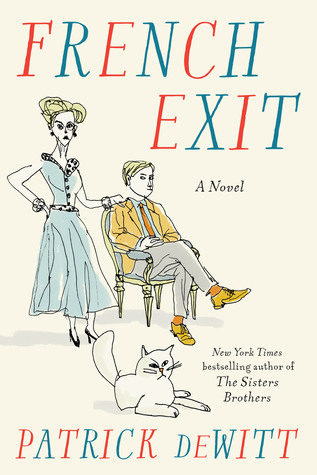
Firstly French Exit by Patrick de Witt (2018), which induced an existential crisis because I thought I read his novel The Sisters Brothers fairly recently, but when I checked it turns out it was nine years ago. Where is my life going??

Anyway, once I stopped panicking about my imminent death, I sat down to this short novel which the cover quotes assured me was funny/comic/Noel Coward-esque etc. And it was, but there was a strong vein of sadness running through it too.

Frances Price lives with her adult son Malcolm in New York, and seems determined to blow her late husband’s ill-gotten gains as rapidly as possible. Eventually it reaches the point where they will be evicted from their townhouse:

“It was grotesque to see a person such as Frances exposed in this way, and Mr Baker was peeved to be a party to it. He told her, ‘I spoke to you about this as a possibility for seven years, and as an eventuality for three. What did you think was going to happen? What was your plan?’

She exhaled. ‘My plan was to die before the money ran out. But I kept and keep not dying, and here I am.’”

So Frances comes up with another plan, to leg it to Paris and live in her friend Joan’s apartment. Malcolm will go with her, because it doesn’t occur to him to do otherwise, despite his girlfriend Susan’s weary protestations:

“Malcolm was unafraid of social discomfort, which is not to say he courted it; but it was common enough that he assumed it requisite, and endured it without grievance.”

The other presence on this international adventure will be their cat, Small Frank, named after Frances’ husband. There’s more to Small Frank than meets the eye, a fact accepted by Frances, Malcolm, and the psychic Madeleine that they meet on the cruise ship:

“Madeleine stood. ‘Sorry.’ Pointing to Small Frank, she asked, ‘Do you not know?’

‘We know.’ said Frances.”

Although seemingly set in contemporary times, French Exit has an atemporal quality. The cruise ship, the lack of mobile phones, use of paper money (admittedly euros not francs) and no reference to the internet mean it could easily be many years earlier.

There’s a cast of eccentric characters both on the ship and in the French capital, but this stayed the right side of idiosyncratic for me, without seeming self-consciously quirky. Frances is wonderfully spiky which stops the story being too saccharine.

As we learn more about her life and Malcolm’s upbringing, there is a lot to consider about the emotional damage people can wreak on each other. However, as Frances and Malcolm adjust to their new surroundings what comes through most strongly is the human need for acceptance and friendship, and all we can give one another if we’re open to it.

The sadness in French Exit stopped me from wholeheartedly viewing this as a comic novel, and so it wasn’t quite what I expected. But this is no bad thing, and I found it a delightful, fully-rounded tale of unique individuals working out how to get by alongside other people, while still setting their own terms.

“The heart takes care of itself. We allow ourselves contentment; our heart brings us ease in its good time.”

French Exit was made into a film in 2021. I’ve not seen it but the dialogue in this trailer is straight out of the book:

Early Morning Riser (2021) by Katherine Heiny is not my usual sort of read at all, but Susan’s review made it sound so enticing that I snapped up a copy when I saw it in the charity shop. I’m glad I did, because it was just what I was looking for at this moment in time: a well-written book about idiosyncratic people, muddling through alongside each other, not sentimental and not bitter either.

The story begins in 2002, with young teacher Jane meeting Boyne City’s local lothario Duncan:

“He was of medium height, medium build, wearing nothing more distinctive than jeans and a denim shirt, yet he seemed to stand out vividly, like the subject of a photo with a blurred background.”

They start dating and there is much humour derived from Duncan’s past with just about every woman in town, and the neighbouring towns too. He’s not manipulative or unpleasant, and he seems pretty honest (unless you’re waiting for him to finish restoring your furniture) – although he probably doesn’t have much choice in a town where everyone knows everyone else’s business.

“It had seemed even before dinner that Mrs Elgin had wanted to say something, and finally she laid down her fork and said to Duncan, ‘I’m sorry but, but how is it possible that you don’t remember having sex with me after a Grateful Dead concert in nineteen ninety-four?’

Doctor Elgin was struggling to open a bottle of prosecco, and at that moment his thumb slipped and the cork popped off with a surprised-sounding ping.

Duncan looked up from his plate. ‘I went to thirteen Grateful Dead concerts in 1994. Can you be more specific?’”

What I thought was clever is that Heiny doesn’t try and convince the reader of Duncan’s charm. Often when there is a love interest, authors try and get the reader onside, and of course, if you’re not as keen on the character as those in the story are, it’s not going to work. Instead, everyone in Early Morning Riser is presented simply as they are, and no-one is expected to be otherwise.

This includes Duncan’s domestic-goddess ex-wife Aggie, her inflexible husband Gary, and warm-hearted Jimmy, Duncan’s apprentice who has an unspecified learning difficulty. Jane also makes a good friend, Freida, who miraculously is among the very few women not to have experienced the sexual delights of Duncan:

“Freida settled herself on the couch next to Jane and took out her mandolin. Part of being friends with Freida meant getting used to her playing the mandolin all the time – softly if people were talking, louder if they weren’t. If the conversation got heated, she would strum faster; if they were all tired, she would play something soothing. It was like having a constant soundtrack to your life, or maybe a mandolin-playing Greek chorus, because sometimes she sang, too – little snatches of lyrics that always seem to fit the occasion.”

Personally that would drive me to absolute distraction, but the people of Boyne City are much nicer than me and don’t seem to mind.

We follow everyone up to 2019; through births, deaths, joys and griefs. It is a novel resolutely about ordinary life and the value of such. People behave well and behave badly. They make wise decisions and poor decisions. They’re kind to each other and not so kind. They’re recognisably human.

“The joy is in the dailiness. The joy is having someone who will stop you from hitting the snooze button on the alarm endlessly. The joy is the smell of someone else’s cooking. The joy is knowing you can call someone and ask him to pick up a gallon of milk on his way over. The joy is having someone to watch Kitchen Nightmares with, because it really is no good when you watch it by yourself. The joy is hoping (however unrealistically) that someone else will unload the dishwasher. The joy is having someone listen to the weird cough your car has developed and reassure you that it doesn’t sound expensive. The joy is saying how much you want a glass of wine and having someone tell you, ‘Go ahead you deserve it!’ (Although it’s possible to achieve the last one with a pet and a little imagination.)”

Although the relationship between Jane and Duncan centres the story, romantic love is not the focus of Early Morning Riser. Rather, it is about family in all its guises: blood relatives, children, parents, lovers, friends, those we choose and those who choose us, those we somehow end up sharing lives with and we’re not quite sure how or why. It’s a warm-hearted read and an absolute joy.

To end, in honour of Freida, a song that goes heavy on the mandolin:

Novella a Day in May 2022 No.26

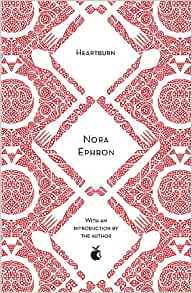
Heartburn – Nora Ephron (1983) 179 pages

Earlier in the month, Simon, my fellow Novella a Day in May-er, reviewed Heartburn by Nora Ephron. When I subsequently saw a copy in my favourite charity bookshop I decided it was A Sign. (Admittedly I’ll decide practically anything is A Sign if it means I get to buy a book off the back of it 😀 )

I’ve never read Nora Ephron because I’m not a huge fan of rom-coms (I especially don’t understand You’ve Got Mail. Tom Hanks essentially plays Jeff Bezos, who destroys Meg Ryan’s lovely family bookshop, yet apparently that’s all OK and they get together anyway???) But the quotes Simon pulled were so entertaining that I thought I’d enjoy her novel more, which was a correct assumption.

Heartburn is a fictional account of the breakdown of Nora’s second marriage to her husband Carl Bernstein (as in Woodward and Bernstein, as in Watergate). Her alter ego in this novel is Rachel, a cookery writer who is seven months pregnant and married to Mark:

“Every afternoon, Mark would emerge from his office over the garage and say he was going out to buy socks, and every evening he would come home empty-handed and say, you would not believe how hard it is to find a decent pair of socks in this city. Four weeks it took me to catch on! Inexcusable, especially since it was exactly the sort of thing my first husband said when he came home after spending the afternoon in bed with my best friend Brenda, who subsequently and as a result became my mortal enemy.

[…]

It is of course hideously ironic that the occasion for my total conversion to fidelity was my marriage to Mark, but timing has never been my strong point.”

This matter-of-fact, self-deprecating style continues throughout the novel. Rachel takes us through the painful aftermath of discovering her husband cheating as she sees friends, returns to her beloved New York from the decidedly unloved Washington, catches up with her therapy group and shares recipes with the reader.

Rachel is not remotely self-pitying but then nor does she pity anyone else:

“Show me a woman who cries when the trees lose their leaves in autumn and I’ll show you a real asshole.”

“Beware of men who cry. It’s true that men who cry are sensitive to and in touch with feelings, but the only feelings they tend to be sensitive to and in touch with are their own.”

This sometimes goes too far and there are some discriminatory comments, thankfully very few but still surprising in a book from the 1980s.

Ephron’s humour stays the right side of pithy, and doesn’t descend into bitterness. Ultimately, I think she wanted to make the reader laugh and through doing so change the story from one of anguish and pain.

“That’s the catch about betrayal, of course: that it feels good, that there’s something immensely pleasurable about moving from a complicated relationship which involves minor atrocities on both sides to a nice, neat, simple one where one person has done something so horrible and unforgivable that the other person is immediately absolved of all the low grade sins of sloth, envy, gluttony, avarice and I forget the other three.”

There’s very little plot here, and I think the main enjoyment is not from the story (which is pretty ordinary) or the characterisation (which isn’t complex) but from a strong authorial voice, so distinct and entertaining.

“It has a happy ending, but that’s because I insist on happy endings.”

Heartburn was adapted by Nora Ephron into a screenplay for this 1986 film, which I find surprising as this trailer seems to bear only a passing resemblance to the book. Two strong leads though…

Novella a Day in May 2022 No.6

In Pious Memory – Margery Sharp (1967) 160 pages

Today Simon and I are both reviewing In Pious Memory by Margery Sharp, given that Simon had recently acquired a copy, and I’d been meaning to drag mine out of the TBR since Ali’s wonderful review for Novellas in November.

I’m a big fan of Margery Sharp and I enjoyed In Pious Memory a lot. It has her gentle sense of the ridiculous and her fond acceptance of human foibles to the fore, making it a solid comfort read.

It opens with the death of Arthur Prelude, a man who, while inoffensive, seems to have been a monumental bore to all who knew him personally, giving all his energies to his professional life.

“His giant intellect was housed in but an average body –  indeed rather below average; average only in the sense of being unremarkable: all the more startling therefore was the effect when on rostrum or at banquet board he suddenly rose to his feet and let his intellect loose like a line from a mouse-trap. Mrs Prelude naturally never witnessed this transformation herself, she was always at home in the hotel bedroom sterilising his inhaling-apparatus with water boiled over a portable methylated-spirit stove; but other wives told her about it.”

His wife was utterly devoted, his adult children a lot more clear-sighted:

“‘Well. of course,’ said Elizabeth. ‘Mother’s of her generation. She behaved quite marvellously, after the crash, and if she’s been crying ever since, it’s only natural.’

‘As it’s natural for us to remain dry eyed?’

‘I suppose so,’ said Elizabeth. ‘After all we didn’t know father very well.’”

Despite Elizabeth and William’s resolution that “‘We must all be very kind to mother, and find her that flat in Hove at once.’”, their younger sister Lydia – determinedly romantic, and set for a career on the stage – decides her father is wandering around the Alps and needs to be found. In this endeavour, she enlists the help of her cousin Toby, and they go biking off across mainland Europe.

Meanwhile, Arthur Prelude is becoming a lot more likable in death than in life, as fictitious memories of his warmth and affection grow and take on a life of their own:

‘We should have lied to mother sooner,’ said Elizabeth.

‘How could we, while father was still alive?’ countered William.

Will Mrs Prelude be able to see past the false memories of her crashing bore husband towards new romantic opportunities? Will Lydia and Toby find Arthur wandering round the mountains in amnesiac shock? Will William get married and will Elizabeth avoid marriage? Absolutely nothing of serious consequence occurs, thank goodness.

In Pious Memory gently ribs questionable veneration of the dead and reminds us all to appreciate the now, imperfect as it may be.

You can read Simon’s thoughts on this novella here.