Murder Tide – Stella Blómkvist (transl. Quentin Bates) Blog Tour

Today I’m taking part in a blog tour for Corylus Books, a lovely indie publisher with a focus on translated crime fiction.

Murder Tide (2017, transl. Quentin Bates 2024) is the third Stella Blómkvist mystery I’ve read as part of Corylus’ blog tours and I enjoyed reacquainting myself with her world: her daughter Sóley Árdís; the deepening relationship with Rannveig; her cousin Sissi; newshound Máki; and of course her antagonistic relationship with the local police.

Here is the blurb from Corylus Books:

“Left to drown by the rising tide at the dock by Reykjavík’s Grótta lighthouse, the ruthless businessman with a murky history of his own had always had a talent for making enemies.

The police have their suspect – who calls in Stella Blómkvist to fight his corner as he furiously protests his innocence. Yet this angry fisherman had every reason to bear the dead man a grudge.

It’s a busy summer for razor-tongued, no-nonsense lawyer Stella. A young woman looking for a long-lost parent finds more than she bargained for. An old adversary calls from prison, looking for Stella to   broker a dangerous deal with the police to put one of the city’s untouchable crime lords behind bars at long last.

Is the mysterious medium right, warning that deep waters are waiting to drag Stella into the depths?”

Murder Tide is grounded in the realities of Iceland in 2011. Grímúlfur, the murdered man, was nicknamed the ‘Quota King’ and made a lot of money out of Iceland’s financial crash in 2008. People who took out enormous foreign currency loans had to hand over their businesses to the banks, who then sold on the loans to their cronies who had the loans written off. Grímúlfur was one of the cronies and he bought fishing quota rights too.

“‘The quota system has split the country for the last two decades, as it has provided a chosen few with great wealth just as it has wrecked many rural communities and added to the inequality and injustice in Icelandic society,’ Máki writes.”

Stella’s client is a fisherman who suffered under this system, and she soon finds out that as well as the many who Grímúlfur ripped off, his family bear him some pretty significant grudges too.

At the same time she is helping a young woman called Úlfhildur find her birth father, who unfortunately for Úlfhildur seems to be a truly sinister man married to a threatening woman, who together run a cult.

Her third client is the decidedly dodgy Sævar whose case highlights police corruption and reinforces Stella’s cynical world view:

“Bitter experience has taught me that there’s nobody in this world who can be trusted. It’s all about uncertainty and coincidence.”

The three strands in Murder Tide are woven together well and even my poor brain managed to keep track of what was happening. The societal commentary felt intrinsic to the plot rather than slowing it down, and I whizzed through this pacy story.

Stella felt more likable in this book and the habit she has of referring to brand names and labouring over material possessions has eased off a bit. She’s leading a slightly more settled life as she and Rannveig continue the relationship which began in Murder Under the Midnight Sun. But Stella’s domestic life is generally in the background, as she tears around working just as hard as ever.

She really does need to stop sexually assaulting people though. This time it was for a different reason than her own gratification, but for a character who is supposed to follow her own moral compass in opposition to self-serving businessmen and corrupt police officers, I would really welcome her incorporating informed consent into her world view.

However, this isn’t a significant part of Murder Tide so please don’t be put off! What worked especially well was the menace of characters and genuine sense of danger, alongside humour. Chapters frequently end with a quote from Stella’s mother, a woman who seems to have had an aphorism for every occasion, ranging from the insightful to the clichéd, the incomprehensible to the remarkably plain-speaking. These really made me smile and kept the character of Stella grounded in a more recognisable reality, while she rode motorbikes at speed, visited career criminals in prisons and exposed corruption with the help of Sissi’s technical expertise.

The tone is also carefully balanced. There were some very dark aspects to Murder Tide, and Blómkvist is expert at conveying these clearly, without ever being gratuitous or voyeuristically gruesome.

As always with Stella’s stories, the pace and plotting worked seamlessly. But what I especially enjoyed in Murder Tide was the deepening characterisation of Stella, and I’m looking forward to seeing where she goes next.

Here are the stops from the rest of the tour, so do check out how other bloggers got on with Murder Tide:

Novella a Day in May 2025: No.16

Tokyo Express – Seichō Matsumoto (1958 transl. Jesse Kirkwood 2022) 149 pages

Tokyo Express is very much a howdunit and whydunit, as the whodunnit is seemingly fairly obvious from the start. This was my first time reading crime master Seichō Matsumoto and I was hugely impressed.

A young couple are found dead on Kashii beach near a shrine, having drunk cyanide. The local Fukuoka police are quick to decide a double suicide. There is nothing to suggest otherwise, but one of the team, Torigai Jūtarō, a long-standing and rather dishevelled detective, isn’t so sure.

“His overcoat was as battered as the clothes beneath it, his face unshaven, and his tie twisted and worn.”

Reminiscent of Lieutenant Columbo (whom he predates), Torigai is sharp-minded and unegotistical too. He starts trying to unravel how the couple came to be on the beach at that time. The young woman called Toki is dressed in a kimono and was a waitress at a restaurant in Akasaka; the man in Western clothes was Kenichi Sayama, an employee at Ministry X, currently under investigation for corruption. They were witnessed getting on the titular train by two of Toki’s colleagues, and it seems pretty clear that their bearing witness was engineered by a businessman called Tatsuo Yasuda.

Quicky Torigai establishes that a lot rests on that train journey and the timings of what happened when. He’s also baffled by a receipt from the buffet car found on Sayama’s body which recorded a food order for just one person.

“A scene formed in Torigai’s mind: the dark silhouette of a man, silently and briskly leading a woman to the beach, and the woman saying: What a lonely place.”

When Kiichi Mihara turns up from Tokyo, an outwardly very different detective takes over. The case is attracting attention due to the corruption in the Ministry, and Mihara works for the Second Division which investigates white collar crime.

“There was something in his cordial tone that reminded Torigai of an insurance salesman.”

The two investigators agree that the deaths are suspicious, and they also realise Yasuda is likely involved. However, trying to crack his alibi about where he was and when proves extremely difficult.

“Yasuda was always consulting the railway timetable. Did that perhaps mean he knew it secrets? In any case, his familiarity with the train times had to signify something. What if Yasuda’s entire alibi was built on it?”

This is one of the most procedural of police procedurals I’ve ever read. Everything hinges on the tight timing of trains, ferries and planes (a premise that would not remotely work in the UK as it depends on all the transport running to time, which as Magnus Mills pointed in out in my earlier read this month, will never occur). Torigai fades into the background, as Mihara tries to pick it all apart but keeps hitting brick walls.

“That crack in the wall had been nothing but a mirage. Mihara felt crushed. He held his head in his hands and, for a moment, could only stare at the piece of paper in front of him.”

I knew a bit about Tokyo Express before reading it, including that all the timings are based on the actual timetables of the time in the novel, and I wondered if it would be impossible to follow/bogged down in the logistics. But Seichō Matsumoto does a great job of carrying the reader along and there’s even a few surprises in store. The relationship between the two detectives is warm and endearing. I don’t know if they appeared in his subsequent novels, but even if not, I’d be keen to read more by this author.

“Mihara liked to ride the trams of Tokyo. Often, he would board without a specific destination in mind. Odd as it might seem, whenever he was at a loss for ideas, he would simply sit on the tram and allow his thoughts to roam. The tram’s steady trundle, its gentle swaying, induced in him an almost euphoric state of contemplation.”

Blog Tour: Black Storms – Teresa Solana (2010, transl. Peter Bush 2024)

Today I’m taking part in a blog tour for Corylus Books, a lovely indie publisher with a focus on translated crime fiction. For those of us in the northern hemisphere the nights are drawing in, and settling down with a crime novel that opens on All Saints Eve (Hallowe’en) felt like a perfect read for this time of year.

Here is the blurb from Corylus Books:

“Who murders an elderly professor in his university office – and why? Norma Forester of the Barcelona police force is handed the case and word from the top is to resolve it as quickly and as quietly as she can. Set against the backdrop of one of the most vibrant and exciting cities in Europe, Black Storms also highlights the darker side of Barcelona and its past, overshadowed by the bitter Civil War of the 1930s.

The past also touches Norma Forester, the granddaughter of an English International Brigades volunteer who didn’t survive to see his Spanish daughter.

This first novel in Teresa Solana’s is a fast-paced crime story that balances the hunt for a killer with Norma Forester’s colourful and complex personal life. She’s surrounded by her forensic pathologist husband, her hippy mother, and her anarchist squatter daughter whose father is Norma’s husband’s gay brother. Then there are Norma’s police colleagues and superiors – plus an occasional lover she can’t resist meeting.”

Black Storms begins with the murder from the point of view of the murderer. This wasn’t gory or gratuitous. There had also been a brief but effective portrayal of the victim, Professor Francesc Paradella who was an expert on the Spanish Civil War, which definitely evoked my sympathy without being sentimental.

We’re then taken to a birthday dinner at Deputy Inspector Norma Forester’s family home. I really enjoyed the portrait of Norma’s family, full of somewhat eccentric characters without seeming unrealistically colourful.

Her mother Mimí looks like “an old Hollywood actress who’d gone to seed or an eccentric fortune teller.”, in contrast to Isabel, her conservative mother-in-law. Her daughter Violeta briefly returns from living in a squat and also visiting is Aunt Margarida, Mimí’s step-cousin and a nun aka my favourite character:

she’d been living comfortably isolated from the world and its problems for eight years, reciting ancient prayers behind those impenetrable stone walls. However, occasionally, she did miss the freedom of her secular life and, now and then, invented an excuse to go out and took advantage of her escape to go to bingo sessions, drink cocktails in Boades and hit the town with Mimí.”

I also liked Norma’s husband, principled forensic examiner Octavi, angry that because the Professor was from a powerful family, his death is treated more seriously than others.

“There were class differences even among the dead: upper-class corpses that led to frantic investigations and second-class corpses that were processed routinely.”

The legacy of the Civil War is part of Norma and Octavi’s home, not only through the family history but in their present. Senta, Norma’s grandmother mistakes outside noises for those of conflict and becomes highly distressed. It’s a brief scene but so moving in how it demonstrates the enduring trauma of war.

The reader soon knows who the murder is, someone pathetic and seedy, and very believable. The mystery of Black Storms is not therefore whodunit, but why. The why enables Solana to look at the long shadows cast by the Spanish Civil War and the enduring corruption in society.

My knowledge of the Spanish Civil War is shockingly rudimentary and Solana did a great job of weaving the history throughout the story without ever info-dumping. Past events are evoked through characters; there is an excellent scene between Norma, whose grandfather was killed by state execution, and Gabriel, her second-in-command, whose grandfather was killed by FAI anarchists.

The most severe condemnation is saved for how the legacy has been mishandled: “the circus orchestrated in the corridors of power had succeeded in drowning the transition in a mist of amnesia”.

But the novel is also resolutely contemporary and Barcelona is wonderfully evoked, even the less salubrious sides: “A city for tourists with cirrhotic livers looking for cheap alcohol.” Ouch!

From the start Black Storms had an assured style and Solana is so accomplished in how she weaves together a crime plot, the legacy of the Spanish Civil War, and contemporary social commentary. It never felt remotely laboured and the story pace was never weighed down by the importance of the issues highlighted. I thought Black Storms was a hugely impressive novel. And now I want another in the series to be translated, because I am already missing Aunt Margarida!

Here are the stops from the rest of the tour, so do check out how other bloggers got on with Black Storms:

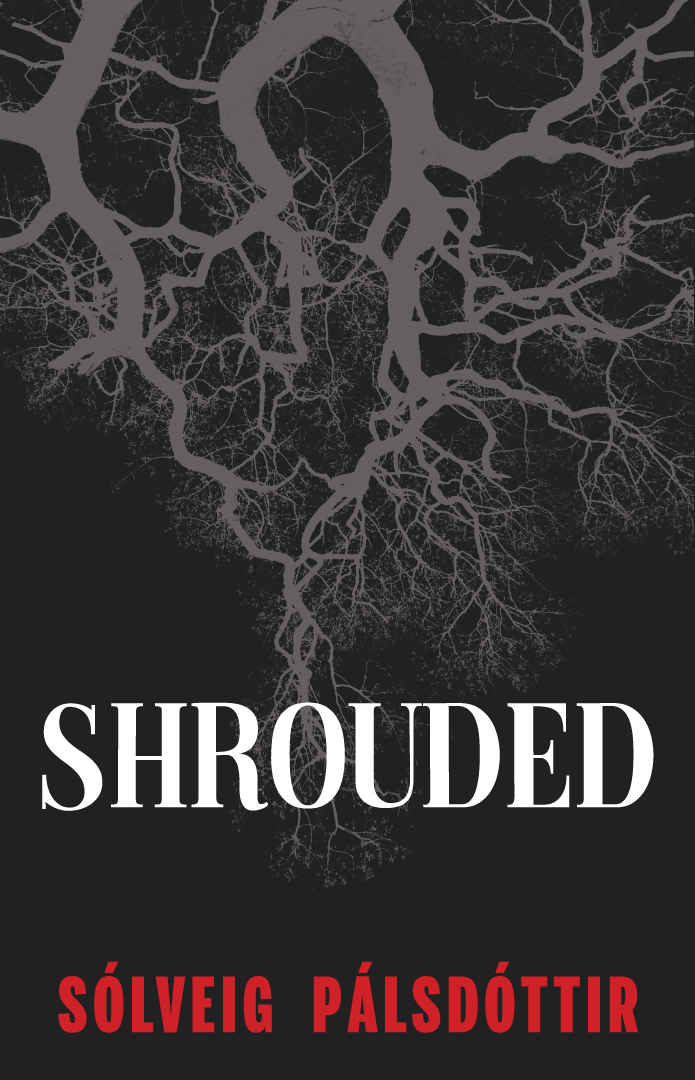
Shrouded – Sólveig Pálsdóttir (transl. Quentin Bates) blog tour

I’m always a bit trepidatious about agreeing to blog tours, which is why I don’t do many. What if I don’t enjoy the book? I only blog about books I like so what if I have to drop out? Thankfully Corylus Books have never done me wrong, consistently offering excellent crime novels in translation.

When they suggested Shrouded by Sólveig Pálsdóttir (2023, transl. Quentin Bates 2023), I had two questions: did it matter that I hadn’t read the others in the series? Was it gory (I can’t do gore)? Reassured on both counts, I’m so glad I took the opportunity to join in because I found much to enjoy in this novel.

My allotted date for the tour was 1 August so this is also my first post for Women in Translation Month (#WITMonth), a wonderful and well-established event running for the whole of August.

Here is the blurb from Corylus Books:

“A retired, reclusive woman is found on a bitter winter morning, clubbed to death in Reykjavik’s old graveyard. Detectives Guðgeir and Elsa Guðrún face one of their toughest cases yet, as they try to piece together the details of Arnhildur’s austere life in her Red House in the oldest part of the city.

Why was this solitary, private woman attending séances, and why was she determined to keep her severe financial difficulties so secret? Could the truth be buried deep in her past and a long history of family enmity, or could there be something more? Now a stranger keeps a watchful eye on the graveyard and Arnhildur’s house.

With the detectives running out of leads, could the Medium, blessed and cursed with uncanny abilities, shed any light on Arnhildur’s lonely death?”

The story opens with Arnhildur preparing to go to a séance. We are privy to her thoughts, her frustrations and her little vanities. In a very short space, Pálsdóttir creates a sense of Arnhildur so that when she is murdered, the injustice is fully realised. Although the reader is witness to the murder, it isn’t remotely gory or gratuitous. It’s a responsible and carefully balanced portrait which insists that the murder of an older woman, someone seemingly entirely ordinary, is taken seriously.

Having not read the rest of the series, when police detectives Guðgeir and Elsa Guðrún arrive to investigate I was expecting some clunky exposition to bring readers up to speed. This never happened, and instead we are presented with an established working relationship, respectful and gently teasing, in which we are expected to draw our own conclusions regarding the personalities of the individuals and the dynamic between them.

“‘It’s never this dark in Akureyri,’ Elsa Guðrún assured him, a tie between her teeth as she pulled her brown hair back into a ponytail.

‘Really?’ Guðgeir grinned. This north country pride that some would describe as conceit had always amused him. ‘All the same, it’s a good way further north than Reykjavík.’

Elsa Guðrún wasn’t going to accept Guðgeir’s straightforward geographical point.”

The relationships with the wider team are well drawn, with a sense of professionals rubbing along together as best they can with some tensions and frustrations – in other words, most people’s working lives. There is humour too, and I particularly enjoyed tightly-wound senior officer Særós’ penchant for Insta-type inspiration:

“As always, the week’s aphorism hung on the wall behind her, a print out with black letters on white in a simple IKEA frame. This week it said, Always be the best possible version of yourself.”

Arnhildur was resistant to change and technology, which means no mobiles with sophisticated GPS, laptops or tablets of hers are available to aid the investigation. This made for a police procedural that felt pleasingly traditional while still rooted in the modern world.

One shortcut that might have been available was the presence of Valthór, a medium. I know some readers whose hearts sink at the presence of a psychic in detective stories, but Pálsdóttir never uses the character as an easy way to resolve any plot, despite one of her detectives being open to the possibility of Valthór’s skills:

“Growing up in the west of Iceland, he had been aware that most older people had some belief in an afterlife, and that there were a few people with the ability to converse with the dead. Many of them also believed in premonitions, dreams and prophecies. The people with whom Guðgeir had grown up had fought for their existence, in close touch with the brutal forces of nature that regularly demanded people’s lives. These people had been more down-to-earth than any Guðgeir knew today, and he was still convinced that there was much about the world that could be neither felt nor seen.”

Valthór is a really affecting character, truly suffering in the aftermath of Arnhildur’s death and he enables a continued emotional resonance within the story as Guðgeir and Elsa Guðrún pragmatically and doggedly work to solve the crime.

They discover aspects of Arnhildur’s past that led to her estrangement from her family, and truly disturbing events touching her life before she died. There are a couple of very sinister characters that are deeply unnerving in their believability.

Shrouded is a quick pacy read that I whizzed through on a train journey to Liverpool. Initially I was smugly congratulating myself that I’d guessed certain elements and I was somewhat surprised that a novel which seemed so accomplished had resolved things rather straightforwardly. However, I was far too quick to pat myself on the back 😀 I’d made all the assumptions and deductions Pálsdóttir had guided the reader towards, and I’d missed others entirely, which meant the very end made for a surprising and really satisfying conclusion.

Shrouded is responsible in its treatment of the victim, it’s never sensationalist. It has plenty to say about how people who don’t easily fit in are treated. It demonstrates the complexities of relationships between flawed people (ie all of us) without having characters behave in ridiculous ways.

I realise I’m making it sound dull when it really isn’t! It makes important points without losing sight of the story. I really enjoyed Shrouded and now I need to read the preceding novels in the series; my TBR is never going down, is it…?

Here are the rest of the stops on the blog tour so do check out how other readers found Shrouded:

Murder Under the Midnight Sun – Stella Blómkvist (transl. Quentin Bates) Blog Tour

Today I’m taking part in a blog tour for Corylus Books, a lovely indie publisher with a focus on translated crime fiction. Back in September last year I took part in a blog tour for Murder at the Residence by Stella Blómkvist so I was looking forward to reacquainting myself with the tenacious lawyer in Murder Under the Midnight Sun. This novel was published in Iceland in 2015 and translated by Quentin Bates in 2023. The identity of the author remains a mystery…

Here is the blurb from Corylus Books:

“What does a woman do when her husband’s charged with the frenzied killing of her father and her best friend? She calls in Stella Blómkvist to investigate – however unwelcome the truth could turn out to be.

Smart, ruthless and with a flexible moral code all of her own, Stella Blómkvist is also dealing with a desperate deathbed request to track down a young woman who vanished a decade ago.

It looks like a dead end, but she agrees to pick up the stone-cold trail – and she never gives up, even if the police did a long time ago.

Then there’s the mystery behind the arm that emerges from an ice cap, with a mysterious ruby ring on one frozen finger? How does this connect to another unexplained disappearance, and why were the police at the time so keen to write it off as a tragic accident?”

As the blurb demonstrates, and as with Murder at the Residence, Stella finds herself with several plates to spin. Murder Under the Midnight Sun packs a lot into just 214 pages without ever seeming relentless or overwhelming. It’s expertly paced.

The Icelandic setting plays a part in the police’s indifference to the historic disappearance of a young British holidaymaker.

“People have vanished in Iceland before and never been found, without any indication of foul play.”

[…]

She’s far from the only missing person that Iceland’s natural world hasn’t given back.”

If anything, this serves to heighten Stella’s determination as she’s more than happy to butt up against the police, often with the help of her friend, the news blogger Máki. It’s through Máki that Stella finds herself increasingly caught up in Cold War intrigues that want to stay buried, and early on there’s a stunning set piece whereby Stella nearly ends up buried herself, down an icy crevasse.

The past and present are woven together seamlessly and the smaller population of Iceland make the connections between characters seem less contrived than they could in a more populous setting. The modern day murder of Stella’s friend Rannveig’s father and best friend was just convoluted enough to keep me guessing while being resolved satisfactorily in a short novel.

My one reservation – which I didn’t have with the previous novel – was Stella’s conduct in her private life. I’ve absolutely no issue with her being a woman who goes after what she wants. But when what she wants is a woman in a highly vulnerable state, and when her method of getting that woman is to ply her with strong alcohol, I’m not alongside. I don’t have to like everything about a protagonist to enjoy a novel and I did really enjoy Murder Under the Midnight Sun. If Stella can just be more respectful of informed sexual consent in future, that would make my enjoyment unreserved.

That aside, I did like Stella’s relentless pursuit of answers and her humorous self-belief:

“My cousin Sissi gazes at me with frank admiration in his eyes.

‘You’re one of a kind,’ he says.

I smile demurely. I agree entirely with his sentiment.”

Fingers crossed for more Stella translations!

Here are the stops from the rest of the tour, so do check out how other bloggers got on with Murder Under the Midnight Sun:

Murder at the Residence – Stella Blómkvist (transl. Quentin Bates) Blog Tour

Today I’m taking part in a blog tour for Corylus Books, a lovely indie publisher with a focus on translated crime fiction. The novel Murder at the Residence offers an enduring mystery aside from the story: Stella Blómkvist is the name of the protagonist, not the author. Apparently there’s lots of speculation but it’s never been confirmed who writes this popular series. Murder at the Residence was published in 2012, the first of a second wave of Stella books, after a break since 2006.

Here is the blurb from Corylus Books:

“It’s New Year and Iceland is still reeling from the effects of the financial crash when a notorious financier is found beaten to death after a high-profile reception at the President’s residence. The police are certain they have the killer – or do they? Determined to get to the truth, maverick lawyer Stella Blómkvist isn’t so sure.

A stripper disappears from one of the city’s seediest nightspots, and nobody but Stella seems interested in finding her. A drug mule cooling his heels in a prison cell refuses to speak to anyone but Stella – although she has never heard of him. An old man makes a deathbed confession and request for Stella to find the family he lost long ago.

With a sharp tongue and a moral compass all of her own, Stella Blómkvist has a talent for attracting trouble and she’s as at home in the corridors of power as in the dark corners of Reykjavík’s underworld.

Stella Blómkvist delivers an explosive mix of murder, intrigue and surprise, and is one of Iceland’s best-loved crime series.”

The start of the novel sees Stella cruising for a New Year hook up. Her voice throughout is direct and no nonsense, and this includes articulating her sexual needs clearly. Sadly for Stella she doesn’t find a hottie to see the year in with, but she does meet Dagnija and Ilona, two Latvian women brought to Iceland on empty promises and finding themselves dragged into sex work. When Ilona disappears, Dagnija asks for Stella’s help.

Stella’s pretty busy, what with a dying man asking her to find his adopted daughter, a drug courier to defend, a young injured activist to support, and a family christening ending with the discovery of a dead body:

“The murder in the church at Bessastaðir was naturally the lead news item on both TV channels. Understandable, as it’s been a few centuries since there was last a murder at Bessastaðir. That’s as far as we know. And the President was in residence that weekend.

The body is that of a well-known financier.”

The financier Benedikt Björgúlfsson seems no great loss, but the story is bound up in the political situation in Iceland at the time:

“There were anonymous claims online that Benedikt must have been murdered by someone who had been with him at the President’s reception on Friday. The conclusion is that the guilty party has to be among society’s most powerful individuals. Others argue that this murder is the man on the street fighting back, that this is a foretaste of what other wealthy banksters can expect if the courts don’t get round to locking them up.”

As the various strands of Stella’s work start to come together, Murder at the Residence brilliantly portrays how political machinations and police corruption should concern everybody, because they affect everything. And while the story evokes its Iceland setting beautifully, it is sadly universal.

“Presumably you know the Icelandic politicians never, ever, resign due to poor judgement in their work. Taking responsibility for their own mistakes is something that simply missing from their genetic makeup.”

“Are wealthy playboys with reputations in ruins still Iceland’s heroes?”

Living in the UK means I’m not sure there was really a need to specify Iceland(ic) in those sentences….

Anyway, while Stella is (rightly) cynical regarding those in power, she’s not embittered like me 😀 So her voice remains clear-sighted and resolute but never alienating.

“It’s the familiar old song about bad foreigners making every effort to destroy Iceland’s innocence. But it’s on the overblown side this time. Our own homegrown criminals have long been perfectly capable of shovelling illegal drugs into the country. Not that they haven’t formed a few alliances along the way with European mafiosi.”

She has a softer side too – there is a budding romance, and also her young daughter Sóley Árdís to provide some work/life balance.

Murder at the Residence is expertly plotted and I just about kept up! If you’re the sort of reader who keeps notes and makes character lists when they read, those habits would serve you very well here.

The personal and political, plot and characterisation were all finely balanced. The story was also clear about the violence and corruption in the world Stella was investigating, but never gratuitous. I really enjoyed Stella’s distinctive voice and I’d love to spend more time with her. Fingers crossed more translations will follow.

Here are the stops from the rest of the tour, so do check out how other bloggers got on with Murder at the Residence:

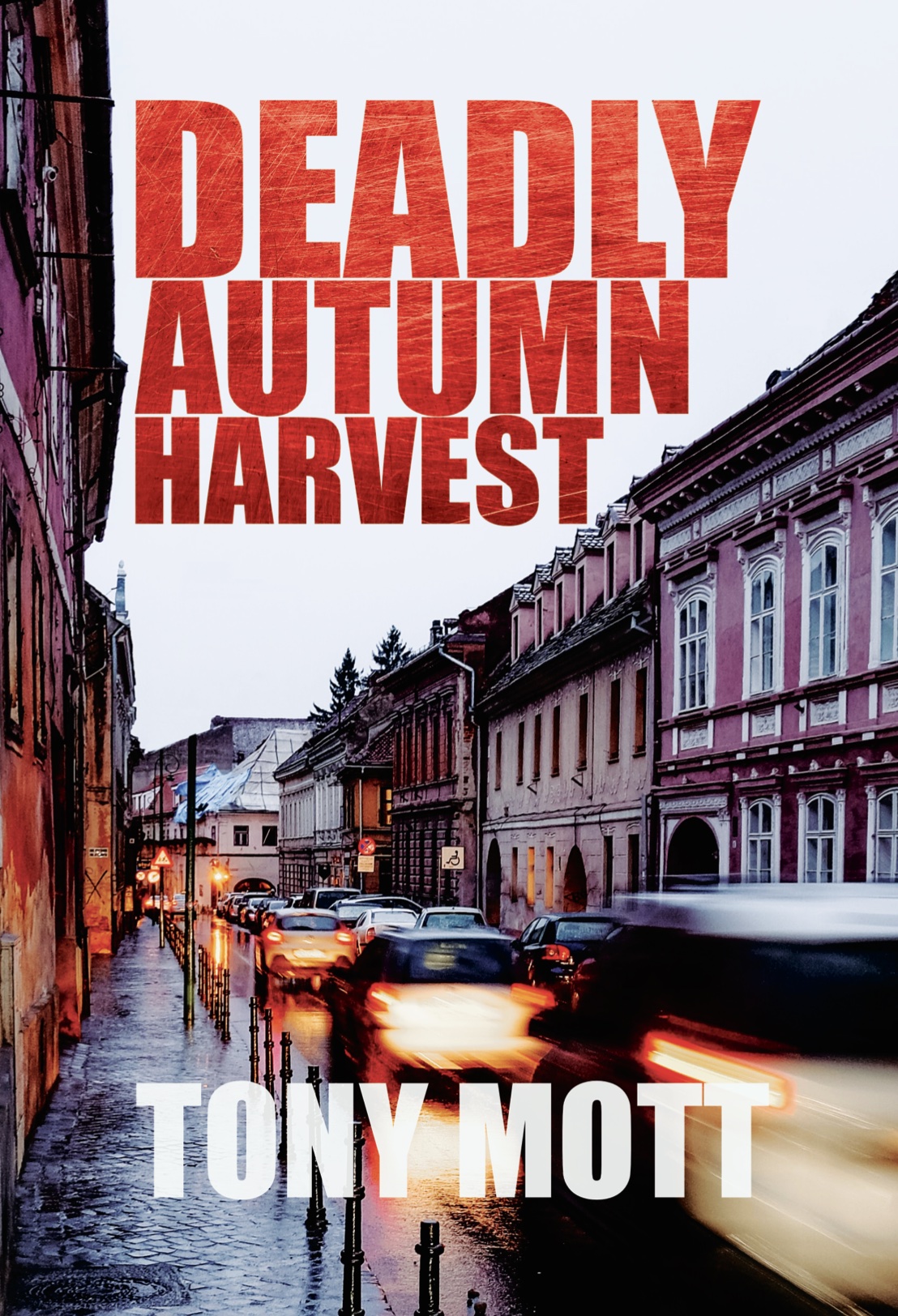
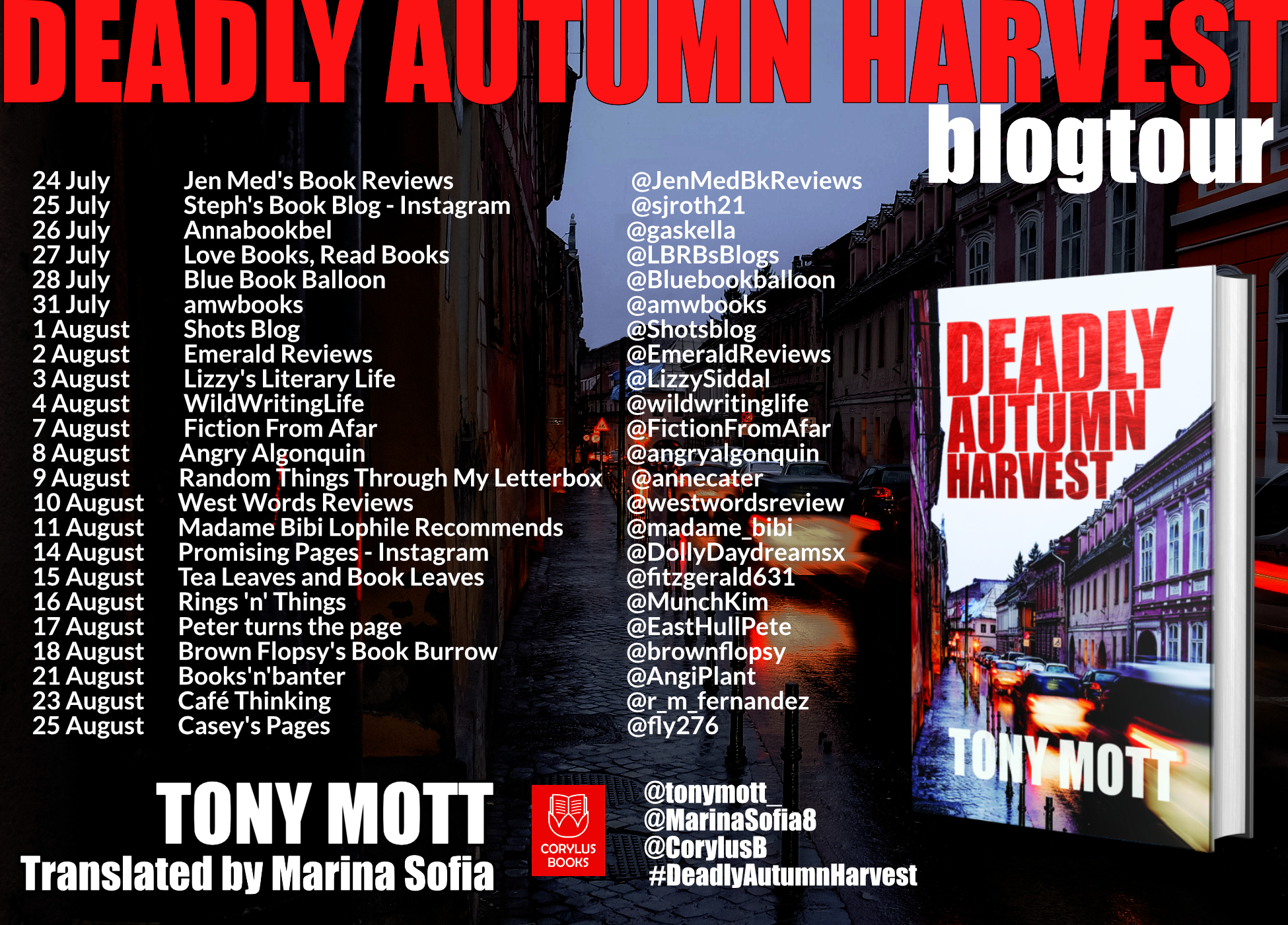
Deadly Autumn Harvest – Tony Mott (transl. Marina Sofia) Blog Tour

When I took part in a blog tour for Corylus Books earlier in the year, it was for a novella, which helpfully chimed with my Novella a Day in May reading. The bookish stars have aligned again for my taking part in a Corylus Books blog tour, as Deadly Autumn Harvest (2020) by Romanian author Tony Mott fits perfectly with my plans for #WITMonth reading, translated as it is by lovely blogger Marina Sofia (2023).

Here is the blurb from Corylus Books:

“A series of bizarre murders rocks the beautiful Carpathian town of Braşov. At first there’s nothing obvious that links what look like random killings. With the police still smarting from the scandal of having failed to act in a previous case of a serial kidnapper and killer, they bring in forensic pathologist Gigi Alexa to figure out if several murderers are at work – or if they have another serial killer on their hands. Ambitious, tough, and not one to suffer fools gladly, Gigi fights to be taken seriously in a society that maintains old-fashioned attitudes to the roles of women. She and the police team struggle to establish a pattern, especially when resources are diverted to investigating a possible terrorist plot. With the clock ticking, Gigi stumbles across what looks to be a far-fetched theory – just as she realises that she could be on the murderer’s to-kill list.”

I don’t read much contemporary crime because I don’t want to read about women being killed in various gruesome ways. I’m relieved to say I thought Deadly Autumn Harvest got the balance right between giving enough detail so that the horrors were realised, but with nothing being gratuitous. There was a responsibility in how the victims were portrayed, so you got a sense of them as people and the injustice in how their lives ended.

Forensic pathologist Gigi Alexa is an intriguing figure too. Cascading curly blonde hair and resolutely dressed in bright colours, I thought she was an idiosyncratic and believable investigator, good at her job and super-committed, yet not entirely detached:

“Usually, by the time she got to see the bodies, they had been drained of any semblance of life or a back story, they were mere puzzles to be solved. But today it had all been a little too close for comfort.”

She’s also a scientist who is not above a bit of superstition:

“Three bad omens. She counted them. First, she stumbled over her slippers as she got out of bed, so she went to the bathroom in her bare feet. Then she stepped into the sand that Morty had scattered from his litter tray. Thirdly, once she got into the kitchen, her coffee machine refused to get going so she would have to boil up Greek coffee instead. Three signs of bad luck on a Tuesday – no doubt more would follow.”

As Gigi and her team investigate the murders, she has to contend with various frustrations in the male-dominated environment. She’s not surrounded by idiots though. I liked her relationship with her boss CI Matei, and Emil, her colleague in pathology. There was also some humour (alongside remembrance of previous toxicity) in the reappearance of her impeccably turned-out ex, Superintendent Vlad Tomescu. (Slight spoiler, skip the next sentence and quote if you don’t want to know!) Gigi becomes single during the novel and her sardonic reflections on this state also lightened the tone:

“She didn’t miss him at all. It would be a while yet before she started missing the warmth of someone to curl up with in bed. Maybe during the winter. Except maybe by then she would have invested in an electric blanket.”

The mystery is very well-paced and the novel isn’t overlong at just 225 pages. We are there at the moment of the killings at various points, before we are returned Gigi and her team’s investigation. Although I’d be amazed if anyone guesses the connection before Gigi, we’re given a fair chance to guess the perpetrator. I’d like to proclaim I worked out who did it, but I suspected absolutely everyone at some point 😀

Deadly Autumn Harvest is a quick, compelling read with a truly chilling murderer pursued by a team of believable, well-rounded investigators.  

Finally I should just say that Deadly Autumn Harvest definitely made me want to visit Braşov! I’ve never been, it sounds absolutely beautiful and with Gigi and her team on the case there won’t be any serial killers left to spoil my holiday – perfect.

Here are the stops from the rest of the tour, so do check out how other bloggers got on with Deadly Autumn Harvest:

Skin Deep – Antonia Lassa (transl. Jacky Collins) Blog Tour

After eleven years of blogging, it’s finally happening: I’m taking part in a blog tour 😀

And most delightfully, it coincides perfectly with my month of daily novellas. Skin Deep by Antonia Lassa (2023 transl. Jacky Collins 2023) comes in at 114 pages, making this Novella a Day in May 2023 – No.24.

One reason I don’t do blog tours usually is because I only blog about books I enjoy, so I can’t guarantee to take part. However, I trusted wonderful indie Corylus Books to see me right, and they did 😊 I thought Skin Deep was a great read.

It’s a challenge to have a detective story in so few words but the story didn’t feel diminished in any way by this. Yes, the solution is straightforward but I would much rather that than an overly convoluted, protracted story where I lose all sight of what’s happening and why on earth the person was killed in the first place.

Here is the blurb from Corylus Books:

“When police arrest eccentric loner Émile Gassiat for the murder of a wealthy woman in a shabby seaside apartment in Biarritz, Inspector Canonne is certain he has put the killer behind bars. Now he just needs to prove it. But he has not reckoned with the young man’s friends, who bring in lawyer-turned-investigator Larten to head for the desolate out-of-season south-west of France to dig deep into what really happened.

Larten’s hunt for the truth takes him back to the bustle of Paris as he seeks to demonstrate that the man in prison is innocent, despite all the evidence – and to uncover the true killer behind a series of bizarre murders.

Skin Deep is Antonia Lassa’s first novel to appear in English.”

All three protagonists are very believable and well-drawn. Although Canonne leaps to a lazy conclusion regarding the killer, he doesn’t doggedly stick to it. There is a lightness of touch in his portrait, including his contemplations of life and relationships, triggered by his missing tooth.

“The moment they went into the apartment, Canonne said to himself that they had got their man. The reason being that the place was impeccably tidy, more like the methodically kept home of a cold blooded serial-killer rather than a young man of twenty-six.”

This othering of Émile Gassiat because his lifestyle and sexual preferences don’t fit the stereotype of those of a good-looking young man is part of the wider themes in the book around difference and acceptance.

Larten is the perfect detective for the job in this regard, as he is comfortable with being viewed as Other and uses it to his advantage:

“Just as a small question-mark can alter the course and meaning of an entire sentence, no matter how complex and articulate it might be, Larten wanted those feminine touches that he included in his appearance or in his clothing, to act as a question mark at the end of each of the ‘sentences’ that constituted his identity. Something that would trouble others, getting them to question their own identity or fall for his charms. An invitation to dive into the unknown.”

He’s also a competent and driven detective who balances detailed investigation with an acute understanding of people.

“Larten could only add his own intuition, an argument that was not worth much in court but to which he clung. His intuition had failed him on very few occasions in his life, perhaps because he was a good wine taster.”

Skin Deep is such an accomplished crime novella. It balances poetic passages and societal commentary alongside characterization and plot with ease. Both the seedy seaside and cosmopolitan city were clearly evoked. I’m not a huge reader of contemporary crime and when I do read it, it is usually in translation – I would love to read a series of Larten novels as this camper-van dwelling wine enthusiast completely won me over.

Here are the stops from the rest of the tour, do check out the reviews for this great read:

Novella a Day in May #8

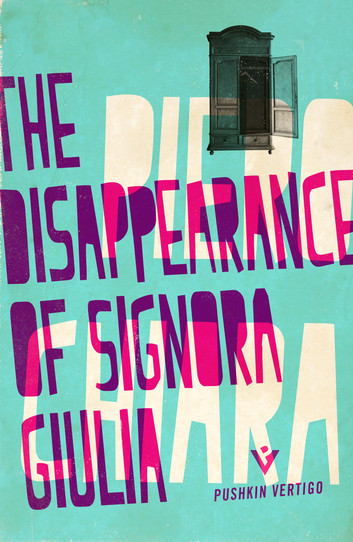
The Disappearance of Signora Giulia – Piero Chiara (1970, trans. Jill Foulston 2015) 122 pages

The Disappearance of Signora Giulia was initially published in an Italian newspaper as a serial and is now available in English translation thanks to Pushkin, as part of their Vertigo imprint. It is a quick, snappy crime thriller that does not aim for trite resolution but rather an exploration beneath the surface of a life to the murky depths.

Corrado Sciancalelpre is “blessed with a special form of intuition, that peculiar mental agility that enables great policemen to delve into the minds of criminals.”

Thankfully, he is also happy married and liked in the town in northern Lombardy where he works – no tortured alcoholic with a secret past here.

A powerful lawyer, Esengrini, asks Sciancalelpre to investigate the titular vanishing of his wife. Every Thursday, Guilia has been going to Milan to visit their daughter at boarding school, but now she has failed to return and two bags of her things are missing too. Sciancalelpre agrees and what follows is essentially a police procedural, but the short length of the story ensures the pacing remains tight.

Sciancalelpre is resolutely unsentimental but not without sympathy. The more he investigates, the more he feels for the missing woman:

“He didn’t say ‘Poor Signora Giulia to Esengrini when he visited him in his office every few days towards evening. With Esengrini, he spoke only of the undeniably disappointing results of a search conducted throughout the whole of Italy with Signora Giulia’s photo.”

It’s impossible to say much more about a crime novella without including spoilers. Suffice to say there are plenty of red herrings, people and relationships who are not what they seem. The Disappearance of Signora Giulia is a diverting read, when you’re in the mood for a crime novel you’ll finish quickly. It is not a simple tale though, and the resolution is a complex one that leaves questions unanswered. This wasn’t a source of frustration but rather felt realistic.

I really enjoyed this, Chiara’s first novel to be translated into English despite his huge popularity in Italy, and I hope there will be many more translations to follow.

“The clever men at Oxford/Know all that there is to be knowed./But they none of them know one half as much/As intelligent Mr. Toad!” (Kenneth Grahame, The Wind in the Willows)

I’m in Oxford at the moment, a city I love.  I thought I would look this week at novels set in Oxford, and although there are lots to choose from (I guess lots of writers chose to evoke their alma mater) I’ve picked two crime novels, as Oxford seems to encourage this type of story.  I’m not sure why this occurs, but maybe it’s because it’s seen as such a respectable institution and it’s fun to think of a seething mass of violence and intrigue below the calm façade.  Here’s a picture of Oxford’s most famous fictional detective, to compensate for the fact that I’m not looking at any Colin Dexter novels:

Image

Image from (http://www.dailymail.co.uk/femail/article-1101952/So-did-Morse-lie-love-In-final-seasonal-serial-young-Morses-secret-admirer-reveals-identity–learn-truth-mysterious-car-crash.html)

Firstly, The Case of the Gilded Fly by Edmund Crispin.  This was the first in a series of novels featuring the sleuthing Oxford don Gervase Fen, and is from the Golden Age of Detective fiction, written in 1944.  The opening paragraph struck a chord with me:

“To the unwary traveller, Didcot signifies the imminence of his arrival at Oxford; to the more experienced, another half-hour at least of frustration.  And travellers in general are divided into these two classes; the first apologetically haul down their luggage from the racks on to the seats, where it remains until the end of the journey, an encumbrance and a mass of sharp, unexpected edges; the second continue to stare gloomily out of the window at the woods and fields into which, by some witless godling, the station has been inexplicably dumped”

Well, the woods and fields may be much less evident, but otherwise… seventy years on and nothing changes.  Travelling on this train are Gervase Fen, his friend Sir Richard Freeman who is Chief Constable of Oxfordshire and wishes he was a don (while Fen wishes he was police officer) and various members of a drama group, who will return to London with their numbers somewhat diminished. Fen is a likeable, eccentric don, whose “normal overplus of energy …led him to undertake all manner of commitments and then gloomily to complain that he was overburdened with work and that nobody seemed to care”; he distracts himself on the train by wishing for “’A crime! …A really splendidly complicated crime!’ And he began to invent imaginary crimes and solve them with unbelievable rapidity.”

The first murder, of uber-bitch Yseult Haskell, takes place in a room in college close to Fen’s office, and so much to his delight he is distracted from his work on minor eighteenth-century satirists to investigate:

“His usually slightly fantastic naivety had completely disappeared, and its place was taken by a rather formidable , ice-cold concentration. Sir Richard, who knew the signs, looked up from his conference with the Inspector and sighed.  At the opening of the investigation, the mood was invariable, as always when Fen was concentrating particularly hard; when he was not interested in what was going on, he relapsed into a particularly irritating form of boisterous gaiety; when he had discovered anything of importance he quickly became melancholy […] and when an investigation was finally concluded, he became sunk in such a state of profound gloom it was days before he could be aroused from it.  Moreover these perverse and chameleon-like habits tended not unnaturally to get on people’s nerves.”

I’m not going to say too much about the plot as its nearly impossible not to give spoilers.  But if you think the eccentric Fen is someone you’d like to spend time with do look at The Case of the Gilded Fly.  I loved the dry, yet gentle humour in the writing, and it was a well-paced, easy read.  My favourite character however, was one of the minor players; unlike a lot of detectives, Fen does not have a complicated romantic life filled with encounters with unsuitable lovers, but is married to the brilliantly indulgent Mrs Fen:

“After she had greeted the Inspector with a slow, pleasant smile, Fen seized up the gun and handed it to her, saying:

‘Dolly, would you mind committing suicide for a moment?’

‘Certainly,’ Mrs Fen remained unperturbed at this alarming request, and took the gun in her right hand, with her forefinger on the trigger; then she pointed it at her right temple.

‘There!’ said Fen triumphantly.

‘Shall I pull the trigger?’ asked Mrs Fen.

‘By all means,’ he said absently, but Sir Richard surged up from his chair crying hoarsely: ‘Don’t! It’s loaded!’ and snatched the gun away from her.  She smiled at him. ‘Thank you, Sir Richard,” she said benignly, ‘but Gervase is hopelessly forgetful, and I shouldn’t have dreamed of doing such a thing.  Is that all I can do for you gentlemen?’”

What a woman. Next, a much more recent tale (2005) whose title tells you exactly what to expect: The Oxford Murders by Guillermo Martinez (trans. Sonia Soto). The novel is narrated by a postgraduate mathematics student, who shortly after arriving in England finds his landlady murdered, discovering the body at the same time as his hero, Professor Arthur Seldom “a rare case of mathematical genius”. The Professor is there because he received a note telling him that something would happen “the first of the series” followed with a mathematical symbol, a circle.  As more people die, Seldom continues to receive notes ending with symbols, and believes the murderer is taunting him specifically as he wrote a book on mathematics where he argues that “except in crime novels and films, the logic behind serial murders…is generally very rudimentary…the patterns are very crude, typified by monotony, repetition, and the overwhelming majority are based on some traumatic experience or childhood fixation”. Some serial killers may take that as a challenge…

The two start working together, using their academic approaches to try and decipher the logic of the murders.  There’s a lot of maths talk, but it’s not overwhelming even for someone like me whose dealings with numbers is limited entirely to their monthly budget.  The combination works well and doesn’t feel forced:

“There is a theoretical parallel between mathematics and criminology; as Inspector Petersen said, we both make conjectures.  But when you set out a hypothesis about the real world, you inevitably introduce an irreversible element of action, which always has consequences.”

Can they make their hypotheses apply in the real world and solve the symbolic series in time to prevent more murders?  What do the symbols really represent?  The Oxford Murders is a short novel and not particularly complex despite the setting in elite mathematics; it’s well written but if you’re a crime aficionado you may find it a bit too straightforward.

The Oxford Murders was made into a film a few years back; from this trailer I would say it’s a fairly faithful adaptation:

http://www.youtube.com/watch?v=V8edqqoXcg4

Here’s my attempt at a vaguely mathematical end: from the shaded area of a Venn diagram of Oxford and books, here is a picture of one of the most beautiful libraries you’ll ever see – the Radcliffe Camera in central Oxford.  The picture’s wonky because it was blowing a gale and I was up the top of the tower of St Mary the Virgin, where the wind was so strong I thought I, or at the very least my phone, was about to get whipped off the viewing balcony into the square below.  Thankfully we both made it back intact.

Image