“Keep the circus going inside you.” (David Niven)

I really enjoyed Elisa Shua Dusapin’s debut novel Winter in Sokcho so I was looking forward to picking up Vladivostok Circus (2022, transl. Aneesa Abbas Higgins 2024) for Women in Translation Month this year. The two novels share the setting of tourist attractions out of season, and of carefully evoked relationships defined as much by distances as by intimacies.

Nathalie is twenty-two and has graduated in costume design in Belgium. She arrives in Vladisvostok – a place she knows from childhood – to spend time with an acrobat trio who are working on their Russian bar performance. They will be performing at Ulan-Ude, seeking to perform a triple jump four times in a row.

“They communicate in Russian, constantly interrupting each other. Anton gives directions, demonstrates a move to Nino, who listens, hands on hips, visibly impatient. Anna climbs back onto the bar. Their movements synchronise. Anna sets the beat, a rhythmic pulse, rising and falling, like a breath being pushed out and sucked back into the lungs, a beating heart at the centre of the ring.”

Ukrainian trampoline champion Anna is their new ‘flyer’ after the previous acrobat, Igor, was injured in an accident five years previously. Nino is from a German circus family and has worked with Anton since he was eight years old. They are both haunted by what happened with Igor.

The four of them are left in the empty winter circus with manager Leon, and Dusapin expertly portrays the barren environment absent of tourists and glitter, smelling of the departed animals.

Nathalie feels awkward from the start, when she arrives before she is expected. She is unsure of her designs and she talks too much, straining the polite interest of the men. Anna is openly hostile and there is a shaved cat called Buck wandering around, adored by Leon. The atmosphere is unsettling and uneasy.

“By the end of the evening, they all have their headphones on. They each go back to their own room listening to music. I put my headphones on too, but without any music. I sit there, focusing on the sounds inside my own head. It makes me feel closer to the others somehow.”

Gradually however, the relationships deepen. This occurs in a believable way, by increments and without sentimentality.

“‘Aren’t you ever scared?’ I ask after a while.

‘All the time,’ he says. ‘I’m terrified with every new jump. Scared of getting hurt. Scared of hurting Anna. I’m scared of the audience too; I get stage fright.’”

Physical forms are flawed in this novel: Anna worries she is too heavy, Anton is nearing retirement, both men nurse injuries and Nathalie has psoriasis. This emphasises human frailty, building tension throughout this short novel as the group strive for their bodies to achieve this dangerous spectacle.

I think Winter in Sokcho is the stronger novel and if you’ve not read this author before then I would recommend that as the place to start. But there is still plenty to enjoy in Vladivostok Circus; Dusapin is so good at creating an unnerving quality to her settings and characterisation which somehow still manages to be entirely believable and warm.

“It occurs to me that my materials can have an impact on their act too. Smoothing out the skin, tapering the body, enabling it to rise more quickly and to a greater height. And at the same time, accelerating the fall.”

“I am merely the canvas on which women paint their dreams.” (Rudolph Valentino)

I’m going through a bit of a reading slump at the moment, not a terrible one as I’m finding I can focus on my comfort reads, but I’m struggling with anything that needs more concentration. It’s very frustrating.

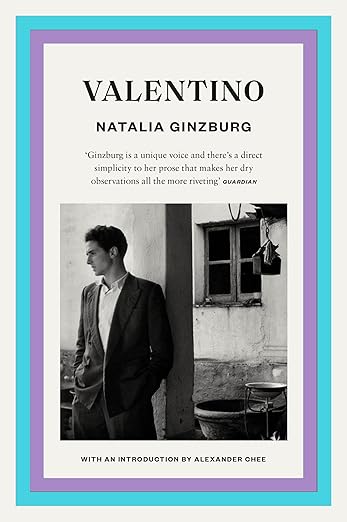
I wanted to take part in August’s Women in Translation Month, so I was hoping to recover my reading mojo in time. Having enjoyed All Our Yesterdays and The Dry Heart by Natalia Ginzburg previously, I thought her direct style would suit my addled brain well. Valentino (1957 transl. Avril Bardoni 1987)) is essentially a short story, just 62 pages in my edition (a Daunt Books reissue) and I whizzed through it on a short train journey to visit a friend in Sussex.

The story is narrated by Caterina, sister of the titular character:

“My father believed that [Valentino] was destined to become a man of consequence. There was little enough reason to believe this, but he believed it all the same and had done ever since Valentino was a small boy and perhaps found it difficult to break the habit.”

Valentino is vain and feckless, entirely undeserving of the faith his parents put in him and the sacrifices the whole family have made to finance his medical studies. He fritters away his time and routinely gets engaged to ‘teenagers wearing jaunty little berets’.

So when he announces his latest engagement, no-one takes it particularly seriously:

“It had happened so often already that when he announced he was getting married within the month nobody believed him, and my mother cleaned the dining room wearily and put on the grey silk reserved for her pupils’ examinations at the Conservatory and for meeting Valentino’s perspective brides.”

However, this engagement to Maddelena sticks. She is older, unattractive and incredibly rich. Valentino’s parents are heartbroken at his avariciousness being made so apparent. Caterina is more equanimous and she soon realises that Maddelena is caring and hard-working. Valentino is not worthy of his bride.

“It was not easy to explain to my sister Clara the turn that events had taken. That a woman had appeared with lashings of money and a moustache who was willing to pay for the privilege of marrying Valentino and that he had agreed.”

What follows is a carefully realised study of the family members and their dynamics, particularly around Valentino’s marriage. Caterina’s direct voice conveys the hurt Valentino inflicts, not through cruelty but through utter obliviousness and self-focus, without demonising him.

In such a short space, Ginzburg achieves a really moving portrait of familial relationships and how these exist under the pressures exerted by society.  There is sadness in the tale but also a deadpan humour. Caterina presents the situation without judgement, enabling a real depth to the characterisation.

Ginzburg is such an intelligent, insightful writer who never seeks to alienate readers with her cleverness. She presents knotty complexity with a deceptive simplicity of style. If you’ve never read her, Valentino is a good place to start.

“My emotions at that time were neither profound nor melancholic and I was confident that sooner or later things would improve for me.”

To end, Rudolph Valentino playing ‘a youthful libertine’ and dancing a tango, over 100 years ago:

Novella a Day in May 2025: No.13

Bear – Marian Engel (1976) 167 pages

Back when I was an undergrad in English literature, my tutor accused me of being squeamish on the subject of incest in Jacobean drama and skirting round it. My argument (and he did like it when I argued with him, he was a very sweet man) was that it was more interesting to consider incest as metaphor for Jacobean political corruption and the decay of society rather than just a play about a brother and sister with a warped relationship. The reason I mention this now is that in Bear by Marian Engel, a woman has sex with a bear.

Now maybe my tutor would think I’m being squeamish about bestiality here, but I really don’t think that it is what Engel is writing about or interested in. For me, Bear is a novel about a woman learning self-acceptance, and how to live her life on her own terms.

Lou is a librarian and archivist working for the Historical Institute, where she stays buried in her basement office:

“For although she loved old shabby things, things that had already been loved and suffered, objects with a past, when she saw that her arms were slug-pale and her fingerprints grained with old, old ink, that the detritus with which she bedizened her bulletin boards was curled and valueless, when she found that her eyes would no longer focus in the light, she was always ashamed, for the image of the Good Life long ago stamped on her soul was quite different from this, and she suffered in contrast.”

She is lonely and her life is unsatisfying, particularly romantically. When the Institute is bequeathed an estate in a remote part of Canada, Lou is asked to travel there in order to take an inventory. What she isn’t told until she gets there is that the inventory includes a bear.

The house of Colonel Jocelyn Cary is isolated and strange, octagonal and filled with ephemera. Lou works steadily and there are some lovely descriptions of the library. Gradually she and the bear grow used to one another. Throughout the story the bear remains unknowable, quite a sad creature. He isn’t anthropomorphised and in this way Lou has to take responsibility for all her actions. She can’t claim to be responding to the bear.

“In case the bear was disappointed (for she had discovered she could paint any face on him that she wanted, while his actual range of expression was a mystery), she went out, plastered with mosquito lotion, and took him down to the shallowest part of the channel, where the water was warm.”

The main healing that occurs for Lou is through having to leave her basement office and interact with the natural world to survive. She has to run a boat, cook from scratch, fish, and share her environment with various creatures for company.

“She settled into a routine. She worked all morning, then in the afternoon disappeared into the bush to walk on carpets of trilliums and little yellow lilies; hepatica and bunchberries. The basswoods had put out huge leaves. Often, scarved and gloved against the black flies, she lingered by the beaver pond. The goshawks stared at her from their barkless elm with impenetrable eyes.”

Bear is the story of Lou reconsidering her choices and learning to listen to her own voice when she experiences the world away from other people (particularly men), surrounded by wildness. Her vulnerability is moving and emotionally engaging. What psychological change occurs for her is believable and unsentimental, while remaining hopeful.

From looking online, it seems a shame in a way that Bear features bear sex, because although it’s actually a tiny part of the story, of course it’s that for which the novel is known. It is a fable – in real life Lou would have likely been killed by the bear fairly quickly. Engel’s writing is much more subtle and the themes so much more complex than some summaries would suggest. Probably I have obfuscated a bit, but I’m certain my tutor won’t read this post 😉

“Is a life that can now be considered an absence a life?”

Those of you who follow Dorian Stuber on social media will know he’s a great advocate for this novel. You can read an essay he wrote on it here.

“The cat is, above all things, a dramatist.” (Margaret Benson)

This is my contribution to Reading the Meow hosted by Mallika at Literary Potpourri, a fantastic week-long celebration of literature inspired by our feline friends!

A Cat, A Man and Two Women by Junichiro Tanizaki (1936, transl. Paul McCarthy 2015) is published by the ever-wonderful Daunt Books and I really liked the simple cover:

There seems to have been a flurry in recent years of slightly whimsical stories about cats and I thought ACAMATW would be one of these, I’m not sure why. The prospect was fine with me, I don’t mind whimsy if I’m in the right mood and I adore cats. But in fact this wasn’t whimsical at all. It was a psychological study – albeit a gentle one – of three people and the catalyst (no pun intended but I’m happy its there 😀 ) of their shared pet.

I would just like to pause (paws?) here to let you know that my typing is being severely hampered by my calico cat sitting on my lap, demanding attention – and my tuxedo cat (her brother) has just arrived and there’s a bit of a turf war ensuing…

The titular cat of this novella is Lily, adored companion of Shozo. The story opens with his ex-wife Shinako appealing to his new wife Fukuko to let her have Lily. Her letter emphasises Shozo’s adoration of Lily and Shinako deliberately sets a cat among the pigeons (ha! I’m only a little bit sorry for this 😀 ) of the new marriage,

Even Shozo, feckless in the extreme, notices the change.  

“Could Fukuko be jealous of Lily? He considered this possibility for a moment but then dismissed it as making no sense. After all, Fukuko herself was basically fond of cats. When Shozo was living with his former wife, Shinako, he had sometimes mentioned her occasional jealousy of the cat to Fukuko who had always made rather scornful fun of this silliness.”

Shozo requests his wife cook meals she doesn’t enjoy, so he can share them with Lily. I’m not surprised Fukuko is annoyed:

“Fukuko had been prepared to sacrifice her own taste for her husband’s sake, while in fact it was for the cat that she cooked; she had become a companion to the cat.”

(Update: turf war won by the tuxedo. Calico has stalked off in disgust. Tuxedo determined to rest on my dominant hand and impede my typing.)

The tensions in the marriage centre around Lily, but really have nothing to do with her. She merely highlights Shozo’s lack of drive and inability to engage fully in relationships, except with his cat.

“When he heard people with no knowledge of a cat’s character saying that cats were not as loving as dogs, that they were cold and selfish, he always thought to himself how impossible it was to understand the charm and lovableness of a cat if one had not, like him spent many years living alone with one.”

Shozo isn’t unsympathetic. His mother is manipulative and choosing Lily seems to be one of the rare independent choices Shozo has made. He has had a longer relationship with Lily than either of his wives and his bond with the cat is meaningful to him.

“It was Lily, with whom he’d lived so long, who was more intimately bound up with many memories of his; who formed, in fact, an important part of Shozo’s past.”

Tanizaki does a great job of portraying Lily as a very believable feline, without attributing human motivations or emotions to her. He leaves this to his three human protagonists, who fail to see she is not a strategist in these adult negotiations.

Shinako gets her wish, and the cat she was indifferent to arrives at her sister’s home, where Shinako now has a room. Gradually, she finds herself discovering new emotional territory, thanks to Lily:

“When she thought of the link that bound them together, her anger faded; and she felt, rather, that both of them were to be pitied.”

“Other people had told her so often that she was hard hearted, she had come to believe it herself. But when she considered how much trouble she had put herself to recently for Lily’s sake, she was surprised, wondering where these warm and gentle feelings had been hiding all this time.”

But will Shozo want his cat back? Will Shozo and Fukuko’s marriage survive without Lily to blame for the irritations and lack of understanding?

Tanizaki has a great understanding of cats and of people which makes this novella really shine. The humour is gentle and the psychological observations astute. The ending is left very open which didn’t wholly work for me but this is a minor quibble in regard to this engaging and insightful novella.

ACAMATW was adapted into the film A Cat, Shozo and Two Women in 1956. The summary on Wikipedia makes me think the filmmakers opted for a less open-ended conclusion to the story. From this clip the cat actor looks a lot more tolerant than my two would be 😀

“Everything that mattered had happened already” (Natalia Ginzburg)

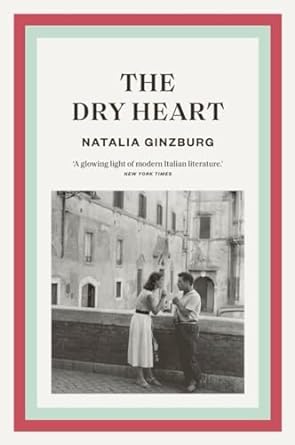
Last year I read All Our Yesterdays, which was my first experience of Natalia Ginzburg’s writing, and I absolutely loved her unfussy, direct style. The Dry Heart (1947 transl. Frances Frenaye 1952) is a much shorter work at just 108 pages but it packs a real punch.

On the first page, the unnamed narrator is with her husband in their home:

“I took the revolver out of his desk drawer and shot him between the eyes. But for a long time already I had known that sooner or later I should do something of the sort.”

And so this is a whydunit rather than a whodunit, as we are taken back to a time when a young, naïve girl marries a man who she knows does not love her:

“When a girl is very much alone and leads a tiresome and monotonous existence, with worn gloves and very little spending money, she may let her imagination run wild and find herself defenceless before all the errors and pitfalls which imagination has devised to deceive her.”

Initially her husband Alberto is interested in her, but not romantically. He reads Rilke to her and listens to all she has to say. But he is in love with Giovanna and he never pretends otherwise. They marry despite ambivalence on both sides.

She has friends, including Francesca who lives more independently and freely; and Augusto who is her husband’s friend but also kind and genuine towards her.  Yet the narrator still seems very isolated, and lonely within her marriage. Alberto obfuscates and disregards her feelings. Who she is and how his behaviour impacts on her is of no consequence to him.  

“I wanted to know a lot more about his feelings for me, but I couldn’t talk to him for long about anything important because it bored him to try and get to the bottom of things and turn them over and over the way I did.”

The simple, direct language lends itself to the length of the novella and also emphasises youth of narrator. The complexity of The Dry Heart lies in the characterisation and builds an intriguing portrait of a marriage.

Despite having undertaken such a violent act, the narrator doesn’t ask for sympathy, and doesn’t justify herself. She presents what happened without a trace of sentimentality or self-pity. Possibly she is detached and deeply traumatised, but as the reader comes to her at the point of the shooting, we don’t know if this voice is one of trauma or long-established.

By refusing to have the narrator engage in self-justification and avoiding any sense of authorial knowingness or psychological explanation, Ginzburg firmly places the why in the readers hands. It’s a masterstroke: she highlights patriarchal oppression, psychological warfare in marriage, the pitiable choices available for women and the danger of dismissing fellow human beings, without being remotely heavy-handed.    

The Dry Heart is hugely impressive and I’m looking forward to exploring Ginzburg further, thanks to the wonderful Daunt Books who are doing such a great job reissuing her work in translation.

It’s probably a mistake to follow every meandering of our feelings and waste time listening to every echo from within. That, in fact, is no way to live.”

To end, from a dry heart to a cold one:

“I think of a writer as a river: you reflect what passes before you.” (Natalia Ginzburg)

A desperate scrabbling attempt to get a final post written for Women in Translation Month!

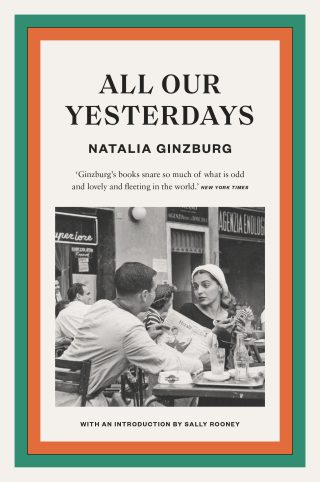
Daunt Books are such an interesting publisher and I was keen to read Natalia Ginzburg having heard wonderful things in the blogosphere, so I swooped on All Our Yesterdays (1952, transl. Angus Davidson 1956) when it turned up in my local charity bookshop. I think I’d read somewhere that this wasn’t the best place to start with this author, but I absolutely loved it.

The novel follows two families living in a northern Italian town from the 1930s, through the war years to peacetime. Although the blurb on the French flaps of my edition suggests Anna, the daughter of the poorer family, is the protagonist, really Ginzburg follows them all to a greater or lesser extent, with no overarching plot other than the sequence of years.

Although this approach sounds like a shortcoming, it works so well. It’s not a documentary novel but it gestures towards this with an omniscient neutral(ish) viewpoint and only reported speech. This felt unusual to read, but is so clever in capturing the everyday experiences of those living through extraordinary circumstances.

Anna’s siblings are Concettina, Ippolito, and Giustino. Concettina is popular with boys but struggles to find a purpose in life; Ippolito channels his energies into anti-Fascist activities with his friend from the richer family across the road:

“Emanuele and Ippolito did not even know Italy, they had never seen anything except their own little town, and they imagined the whole of Italy to be like their own little town, an Italy of teachers and accountants with a few workmen thrown in, but even the workmen and the accountants became rather like teachers in their imagination.”

Their lives are equally dictated by world events and by commonplace ones. Anna falls pregnant by her boyfriend and marries an eccentric older man, Cenzo Rena, moving with him to the southern village of Borgo San Costanzo. Her affair with her self-involved, callow boyfriend was no great passion, and while her marriage to Cenzo Rena attracts approbation, he is a warmer, more generous man than the one her own age.

“She was alone with Giuma’s face that gave her a stab of pain in her heart, and every day she would be going back with Giuma amongst the bushes on the river bank, every day she would see again that face with the rumpled forelock and the tightly closed eyelids, that face that had lost all trace both of words and of thoughts of her.”

These are people destined to be on the outskirts of war. Cenzo Rena holds a lot of sway in his local area and does help Jewish people fleeing the Nazi occupation, but on the whole the story of All Our Yesterdays is not one involving soldiers or revolutionaries. It is about ordinary people and for them the conflicts of war are reported facts not lived experience. The latter for them includes a lot of mundanity:

“And the bread in town was rationed and was a kind of soft, grey dough that you couldn’t ever digest, the bread was like the soap and the soap was like the bread, both washing and eating had become very difficult.”

Yet this doesn’t mean the story isn’t affecting, or that the characters avoid tragedy. There are some truly tragic events that are hugely affecting. Ginzburg manages to be even-handed in her treatment of her characters but not detached. Her writing is warm but unsentimental as she demonstrates that flawed people are as worthy of love and mourning as idealised ones.

In case I’ve made it sound unremittingly serious, I should mention that there humour in All Our Yesterdays too. There are romantic entanglements that are treated with a degree of levity, and eccentric housekeepers/family retainers with various foibles. All life is here.

I can’t think of another writer who approaches Ginzburg’s style, and looking back on it I can’t explain how she does what she does. This was a story that snuck up on me, the deceptively simple storytelling drawing me in more than I realised until I was totally immersed. An extraordinary novel.

“Fanfares of trumpets usually announced only small, futile things, it was away fate had of teasing people. You felt a great exultation and heard a loud fanfare of trumpets in the sky. But the serious things of life, on the contrary, took you by surprise, they spurted up all of a sudden like water.”

To end, of course there’s a very famous song I could post on the theme of Yesterday, but instead, to continue the mix of despair alongside levity: have you seen a parrot singing Creep by Radiohead?

Novella a Day in May 2023 – No.7

A Sunday in Ville-d’Avray – Dominique Barbéris (2019, trans. John Cullen 2021) 152 pages

For the first Sunday of this month of novella reading, a novella set on a Sunday! I was alerted to A Sunday in Ville-d’Avray by Jacqui’s excellent review and so I was delighted when I came across a copy in my local marvellous charity bookshop.

“On Sundays, you think about life.”

The narrator (referred to as Jane on the French flap blurb although I don’t remember her being named in the text) goes to visit her sister in the Parisian suburb of Ville d’Avray for the afternoon. The sisters have intermittent contact and Jane’s urbanite boyfriend Luc seems to have an ambiguous relationship with both his in-laws and the suburbs. For this visit she is alone:

“And so I was full of memories, I was in the melancholy state of mind that often comes over me when I go to see my sister, and I think I started by getting a little lost in Ville d’Avray, by driving through the provincial, peaceful streets of my sister’s neighbourhood, past private houses their gleaming bay windows, their porches, their phony airs (Art Deco villa, Norman country house), their gardens planted with rosebushes and cedars.”

Nothing really happens, and yet the afternoon is full of significance. The sisters sit out in the autumn afternoon and Claire Marie recounts a chaste affair with a man called Marc Hermann. He has both a mysterious past and present:

“She was almost sure that he was lying to her about a great many things, but she felt certain that he was alone and that his solitude was complete, so dense that she could perceive the space it occupied around him, and that solitude touched her heart.”

It is the atmosphere rather than the plot that gives this novella its power. It captures perfectly that quiet, subdued feeling of a Sunday afternoon, anticipating the activity of the week ahead. There is also an unsettling quality to it: the fading light as the sisters sit, the repeated references to the forests that surround the suburb where Claire Marie and Marc would walk; the fear of burglars and invasion.

Jane is at once the first-person narrator and the silent interlocutor. This is a novella of liminal spaces: temporal, geographical and psychological. Barbéris expertly holds the reader between these spaces in the story, destabilising the narrative.  Nothing overt is said or done, but gradually there is a sense of not trusting what we are being told. But should Jane not trust Claire Marie or should the reader not trust the narrator?

I’m sure the atmosphere of this novella will stay with me. A perfect Sunday afternoon read.

“Ever since the neighbour had mowed his lawn, the whole street smelled of cut grass. I don’t know why the smell of cut grass can give you such a feeling of sadness, and also such a violent desire to keep on living.”

Novella a Day in May 2023 – No.2

Winter in Sokcho – Elisa Shua Dusapin (2016 trans. Aneesa Abbas Higgins  2020) 154 pages

Day 2 and I’m delighted that yesterday Simon at Stuck in a Book posted that he’ll be joining me with his #ABookaDayinMay, surely adding many more titles to my TBR mountain 🙂

The narrative voice in Winter in Sokcho is an intriguing one: detached yet painfully intimate, ambiguous yet pragmatically clear. A nameless young woman records what happens to her, but it is up to the reader to decipher the meaning.

She works in a hotel in out of season Sokcho, a coastal tourist town sixty kilometres south of the border with North Korea. It is not a glamorous hotel even in peak season:

“Orange and green corridors, lit by blueish light bulbs. Old Park hadn’t moved on from the days after the war, when guests were lured like squids to their nets, dazzled by strings of blinking lights.”

“I loved this coastline, scarred as it was by the line of electrified barbed wire fencing along the shore.”

A guest arrives at the hotel, a French graphic novelist named Kerrand. Slowly he and the woman form a bond that is never quite articulated. It could be sexual. It could be father/daughter (her absent father is French too). He wants her to show him the area as she knows it, but it is a flawed premise from the start:

“He’d never understand what Sokcho was like. You had to be born here, live through the winters. The smells, the octopus. The isolation.”

The isolation both geographical and individual lends the story a bleakness that verges on Gothic, despite all the neon lights. A trip to the border is downright eerie; the other guest in the hotel is permanently swathed in bandages as she recovers from cosmetic surgery.

The pressures on women and their appearance bear heavily on the narrator. Her mother chastises her for eating too little, and she seems to have body dysmorphia/an eating disorder. Her boyfriend leaves for Seoul for a modelling career, casually accepting he’ll undertake facial surgery if that is what is needed for work, and urging her to do the same.

Like so much else in her life, she seems to feel somewhat detached from her boyfriend. There is a sense of everything in her life being a step removed. She has no friends, her mother is suffocating yet pitable and distances with her need to be carefully managed. The narrator speaks with Kerrand in English despite her French being more fluent.  

As her involvement with Kerrand grows, she feels an ambivalence around his drawings of women, which never make it into his published work:

“In bed later, I heard the pen scratching. I pinned myself against the thin wall. An gnawing sound,  irritating. Working its way under my skin. Stopping and starting. I pictured Kerrand, his fingers scurrying like spiders legs, his eyes travelling up, scrutinising the model, looking down at the paper again, looking back up to make sure his pen conveyed the truth of his vision, to keep her from vanishing while he traced the lines.”

This ambivalence moves towards an ending that is wholly ambiguous. It could be read several ways and I remain unsure as to what I think happened. This isn’t remotely unsatisfying but entirely apt. Winter in Sokcho is a compelling exploration of the unknown: in ourselves, in others, and in the forces of history we all live with. How we reconcile ourselves to this is for the individual to discover. I think the narrator did find a way, I’m just not sure what it was…

“You may have had your wars, I’m sure there are scars on your beaches, but that’s all in the past. Our beaches are still waiting for the end of a war that’s been going on for so long people have stopped believing it’s real. They build hotels, put up neon signs, but it’s all fake, we’re on a knife-edge, it could all give way at any moment.”

“Walk on by.” (Dionne Warwick)

This my second contribution- just in time!-  to the wonderful ReadIndies event which has been running all month, hosted by Karen and Lizzy.

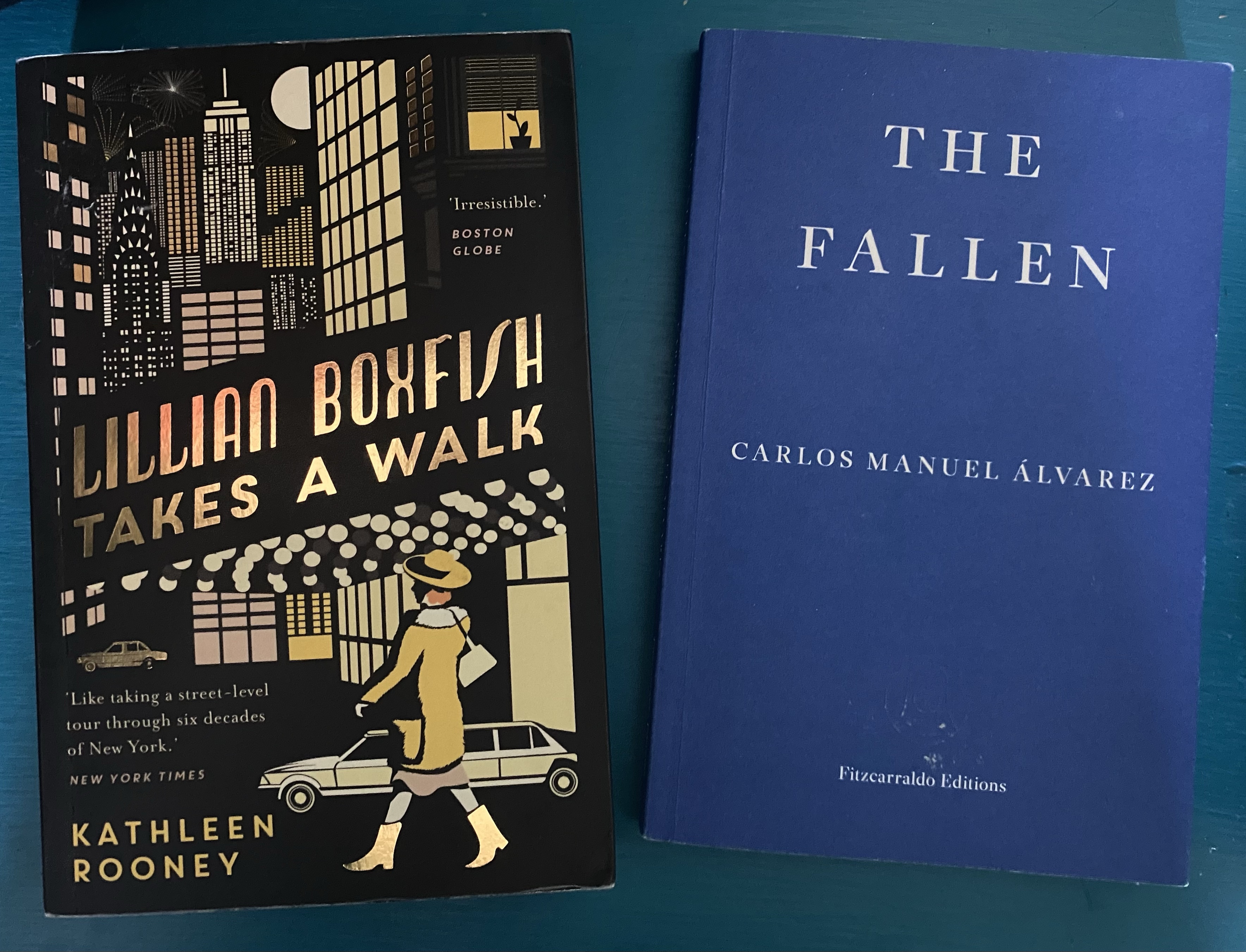
Initially I planned for this post to be two novellas published by Fitzcarraldo Editions, in honour of the event’s origins as Fitzcarraldo Fortnight. However, the second novella I read was so unrelentingly brutal and grubby – though expertly written and translated – that ultimately I couldn’t recommend it that much. So instead this post covers the initial Fitzcarraldo novella which I loved, and the independently published novel I read after the second novella in order to recover!

Firstly, The Fallen by Carlos Manuel Álvarez (2018 trans. Frank Wynne 2019) which forms a stop on my Around the Word in 80 Books challenge as it’s set in Cuba. The story follows one family over a short period, each member narrating a chapter at a time.

The mother, Mariana, is experiencing black-outs and fits, attributed to the treatment she had for womb cancer. Her husband Armando is a manager in a state-owned tourist hotel, committed to the communist ideals of the past even as the world moves on around him. His daughter María works with him and helps care for Mariana:

“I didn’t want to contradict her, I simply stood and watched. Just then, she hunched over and the strangest thing happened. Her face drained away, seemed to contract, like when you clench a fist, as though everything was drawing back around her nose. Her eyes fell, her forehead and mouth shrivelled and her cheeks began to wither. Then she burst into tears and collapsed.”

Meanwhile her brother Diego is completing his military service, devoid of any commitment to the cause:  

“Armando, indefatigable, continued inoculating me with his positive energy, his moral code, his inexhaustible optimism, injecting me with a radioactive material that, on contact with the real world, simply exploded like acid in a burst battery and was transformed into frustration. I’m eighteen years old but I feel like an old man.”

All the characters are flawed in their different ways but all are recognisably human and sympathetic. I felt most for poor Armando, surrounded by corruption that nobody cared about but him:

“The truth is, they were firing him because he refused to accept others stealing, but since they couldn’t tell him that, they told him they were dismissing him for stealing,”

The contrast between Armando and his children effectively  demonstrates the tension between the ideals of the past and the reality of the present. However, this is never done at the expense of characterisation the individual relationships. The tension within a family, vulnerable to disintegration as the health of its matriarch deteriorates, felt very real.

The polyphonic style builds up a picture of a loving family with all it’s frustrations, secrets and things left unsaid. It also demonstrates the differing responses of people to the same situation as we hear the same events given a different meaning by the various characters. This wasn’t at all frustrating as Álvarez managed to sustain an engaging and coherent narrative.

I really loved this novella. I thought the language was beautiful without obscuring the difficulties it was exploring for the family, and the device of using one family to explore wider Cuban society and history didn’t feel at all clunky or contrived.

“The acrid smell that tickled my grandfather’s nostrils still lingers. This is a pueblo fecund with the dry bittersweet dust of horseshit and with the sea a few kilometres away, even if we turn our back on it. The last street in the pueblo, the street that leads to the train station, the street where my grandfather settled, where my father started out in life, where later I started out, is broad but deserted, with much light on the asphalt, with light that trickles down the gutters and lighting the potholes, as though light were contained in a glass and the glass had tipped over. No one comes here.”

Secondly, the delightfully titled Lillian Boxfish Takes a Walk by Kathleen Rooney (2017) published by Daunt Books. This was a lovely escapist read – just the ticket after the second traumatic novella.

It’s New Year’s Eve in 1984, and the titular heroine is one year older than the century (although no-one knows this as she routinely lies about her age). Having moved to New York City when she started out on her career, she dons her fur coat (yuck) and her flame orange lipstick, to take a circuitous route around the city she loves – just about:

“The city I inhabit now is not the city that I moved to in 1926; It has become a mean-spirited action movie complete with repulsive plot twists and preposterous dialogue.

[…]

I love it here, this big rotten apple. I’m near my old haunts, my Sycamore trees, my trusty RH Macy’s.”

Lillian became an advertising copywriter for the famous store, the highest-paid woman in the industry in the 1930s, pioneering her own particular style:

“Nobody was funnier than I was, not for a long time, not for years. Mine was a voice that no one had heard speaking in advertisement before, and I got them to listen. To listen and then, more importantly, to act on what they’d heard.”

Lillian is based on the real person of Margaret Fishback, and the novel was written with the cooperation of Margaret’s family, with Lillian’s quoted copy actually belonging to Margaret.

Certainly Lillian’s memories of her life in New York seem authentic as she navigates a sexist working world unused to professional women. This may sound reminiscent of Mad Men, but I would say it’s not nearly as dark. It’s not totally light either – we learn Lillian had some very difficult times – but Lillian is resilient and peppy, and her voice rings out.

Like Mad Men though, Lillian Boxfish… brilliantly evokes a time and a place. You gain a wonderful sense of New York in the early decades of the twentieth century, with it’s rapid, optimistic growth, ever skywards.

“It was freshly built when Helen and I moved in, completed in 1926. The street noise then was different than now – everything was being constructed, going up, up, up. Progress is loud: riveters riveting, radios blaring.”

We hear about Lillian’s friends, her marriage to the dashing Max (contrary to all her plans) and raising her son Gian. But most of all we hear about Lillian’s relationship with herself, and it is one that has not always been easy:

“But there was no way to know, and no way to go back. I could not revise. I had been who I had been, and so I largely remained.”

Still, Lillian remains undaunted and in her ninth decade she remains interested in people. She encounters a few on her night-time perambulation, seemingly enjoying chatting about the mundane as much as she does the more dramatic encounters. Her career long behind her, she retains her pithy turn of phrase:

“Salt and pepper hair shellacked into an oceanic sweep above his leonine face. Like so many public television people, he was a former radio guide, with a voice made for broadcasting: even his name sounded like an avuncular chuckle.”

I really enjoyed my time with Lillian. Her voice was distinct, unique and entertaining. She described the love of her life – New York City – with clearsighted affection. A formidable woman, and a likable one.

“I am not going to stay off the street. Not when the street is the only thing that still consistently interests me, aside from maybe my son and my cat. The only place that feels vibrant and lively. Where things collide. Where the future comes from.”

To end, Lillian is haunted by a song she keeps hearing on the streets, a rap that she enjoys. Finally, it is identified for her: