Thank you to everyone who left such kind and encouraging comments on my last post, I really do appreciate it. My brain is feeling less fried from anxiety at impending unemployment, but the slog of job applications means I still didn’t manage as much reading or as many posts for September as I would have liked!
Still, this is one final contribution to Short Story September hosted by Lisa at ANZ Lit Lovers. It’s been such a great event and good encouragement to take some of the short story volumes off my shelf, which always seem to languish in favour of novels.
This one is a perfect example, as I’ve really enjoyed the novels by Deborah Levy that I’ve read (Hot Milk, Swimming Home and The Man Who Saw Everything) and also her volumes of autobiography. She is so precise and incisive, but never cold, and has a way with startling imagery. All of which are definite strengths in short story form, and I was not disappointed by the ten stories in Black Vodka (2013), published by the ever-wonderful AndOtherStories.
Lisa wisely asked us to focus on one story in a collection, which is a great approach as writing about short story collections can be a real challenge. However, for this collection my tired brain struggled to formulate a post on just one, due to Levy’s precise way of writing. It’s very difficult to go into any detail with the stories in this collection, so I’ll just attempt to give a flavour of a few.
The collection is thematically linked through explorations of love in many guises. It opens with the titular story of an advertising executive falling for his colleague’s archaeologist girlfriend.
“There is nothing that feels as good as breathing near someone you desire. The past of my youth was not a good place to be. Is it strange then, that I am attracted to a woman who is obsessed with digging up the past?”
The man is vulnerable and the story describes the delicate moves towards one another made by two people unsure of each other and themselves. The fragility of the self is another recurring theme, as people struggle to sustain identities.
In Vienna, again there is a vulnerable man, unsure of where he lives or who he is after the disintegration of his marriage. His lover, the married Magret, is business-like and forthright. There is a sad humour in the contrast between his fragility and her determination not to be involved beyond the physical act.
“He nods, as if he is a secretary taking notes from an inscrutable Executive Director who wears purple lipstick to frighten the more timid of her staff. She rips the silver foil from a carton of langoustines and slides them into the microwave that still has the price taped to the side. He watches her bend her long neck to check the minutes and seconds and then fold her arms against the pearl-grey cashmere that hugs her small breasts. While she waits she tells him she has no idea why her husband has bought her a microwave.”
While most of the stories are grounded in the everyday – however unsettling that is, especially when feelings are overwhelming – Cave Girl has a slight magical realism edge as a brother tries to cope with his sister changed beyond all recognition.
“My sister Cass thinks that ice cubes in the shape of hearts will change her life.”
A highly readable collection, inventive and moving, sad and funny, where nothing is tied up neatly.
To end, a surprisingly fully-clothed performance from Eugene Hütz and Gogol Bordello 😀
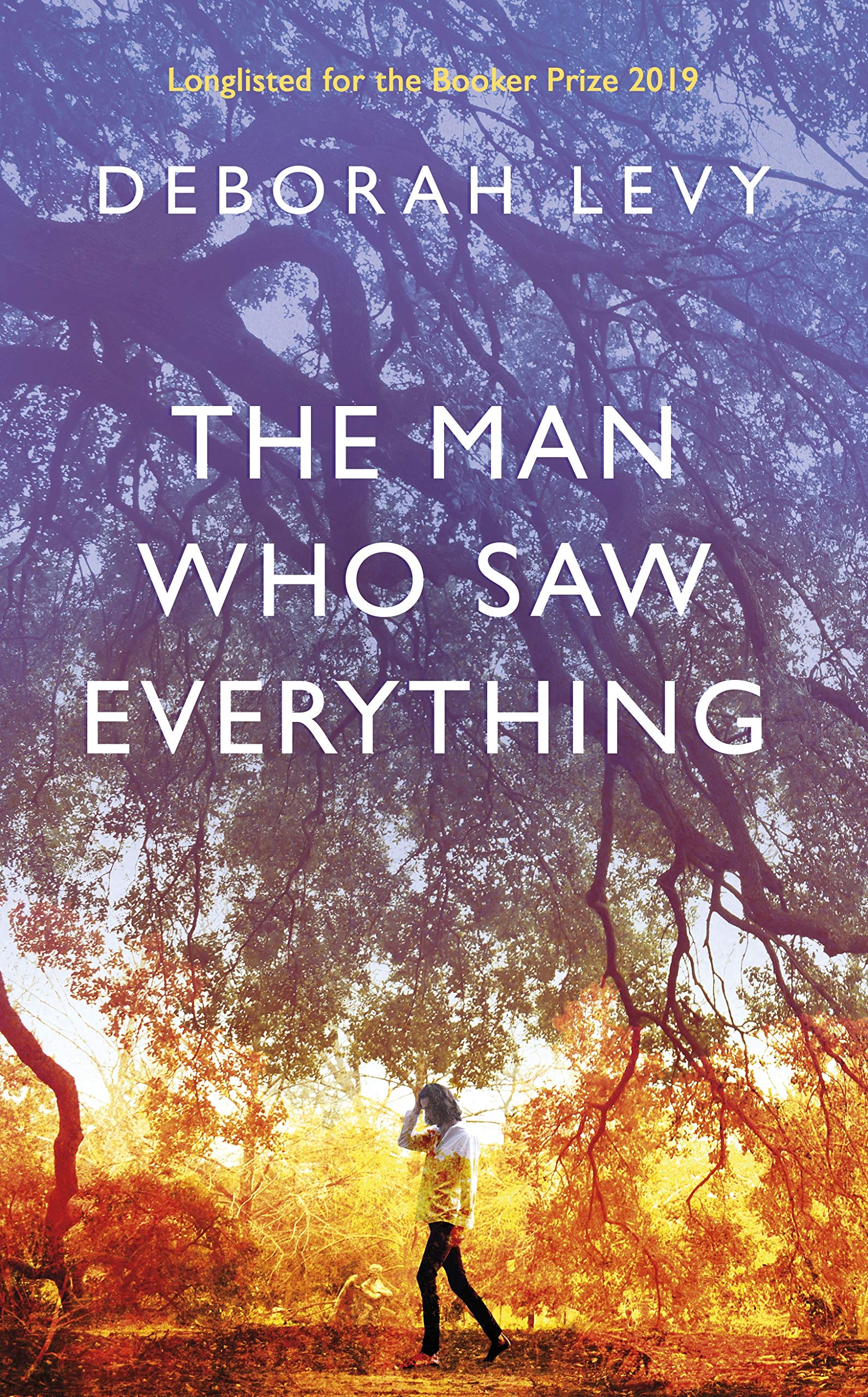
The Man Who Saw Everything – Deborah Levy (2019) 200 pages
I really love Deborah Levy’s work. Her writing is so clear and direct – both in fiction and non-fiction – but never feels simplistic or superficial. She’s incisive and thoughtful, managing to convey the complexities of human beings with such precision.
In The Man Who Wasn’t There, she explores the interplay between personal and political histories and how these are constantly being rewritten entirely subjectively.
The titular man is Saul Adler, a self-obsessed historian. At the start of the novel Saul is 23 years old and his lover Jennifer Moreau wants to take his picture on the Abbey Road crossing à la The Beatles and millions of subsequent Beatles fans. He is knocked down but only superficially injured. However, there are certain anachronistic details that don’t add up for an event taking place in 1988…
Saul returns home with Jennifer, they sleep together and then break up. He then visits the GDR as part of his PhD research into male tyranny, and becomes romantically entangled with a brother and sister.
“I told him that my mother’s fatal accident and my minor accident had become blurred in my mind and how I was still insatiably angry with the driver who had run her over. I regarded him as her assassin. Time passing had not made my mother’s death less vivid. All the same I had not really been paying attention when I crossed the road.”
The destabilising sense of time collapsing in on itself continues, as Saul knows things about his own future and East Germany’s future that he couldn’t possibly know:
“He did not believe me and neither did I totally believe myself. I had planted three types of tomato in another time. Someone had planted the tomatoes with me in the future soil of East Anglia. His hair is silver and he wears it in a bun on top of his head. His fingernails are bitten down. We are kneeling on the earth, his fingers on my back, massaging my spine while he tells me we should plant the apple trees before it rains and the fields flood.”
In the second half of the novel, Saul is knocked over again on Abbey Road, this time in 2016, and is hospitalised. As he drifts in and out of consciousness he tries to piece together his life from half-remembered events and the people that surround his bedside. There are recurring images and references linking the two timelines but these destabilise as much as they anchor.
“A wind from another time. It broke with it the salt sentence seaweed and oysters. And wolf. A child’s knitted blanket. Folded over the back of a cheerful stop time and place all mixed up. Now. Then. There. Here.”
The Man Who Wasn’t There is a political novel, raising questions about tyranny, patriarchy, state surveillance, internalised surveillance… but never at the expense of its characters. It shows how we cannot live outside of history and how the big issues end up intrinsically bound up in all our lives.
Levy captures with wit and compassion the drive to construct a coherent narrative in order to understand our lives and the world we live in, while showing how impossible such an undertaking is.
“It was true my wings were wounded. It was true I had no idea how to endure being alive and everything that comes with it. Responsibility. Love. Death. Sex. Loneliness. History. I knew he did not hold my tears against me. That was a big thing to know.”
To end, the glorious Nina Simone singing a track from Abbey Road:
November is full of wonderful reading events and I’ve been through the TBR pulling out possibilities for Novellas in November, German Lit Month, Margaret Atwood Reading Month and AusReading Month. Given my current reading and blogging pace it’s highly unlikely that I’ll manage them all, but I’m starting today with a post for Nonfiction November hosted by Doing Dewey.
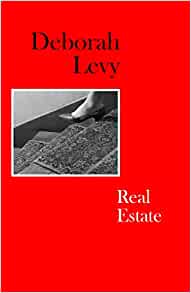
In many ways this is the least likely of all the events for me to take part in, as I read practically no nonfiction. However, last year I read the first two in Deborah Levy’s ‘living autobiography’ trilogy and absolutely loved them. The bibliophile’s crack-den that is the charity bookshop across the road from my flat never lets me down, and when saw the third instalment in there recently of course I swooped.
Real Estate (2021) sees Levy still living in the flat she moved to when her marriage ended, but as her children leave for university and beyond, she is trying to work out what makes a home, and whether she wants one.
“I was also searching for a house in which I could live and work and make a world at my own pace, but even in my imagination this home was blurred, undefined, not real, or not realistic, or lacked realism. I yearned for a grand old house (I had now added an oval fireplace to its architecture) and a pomegranate tree in the garden. It had fountains and wells, remarkable circular stairways, mosaic floors, traces of the rituals of all who had left there before me. That is to say the house was lively, it had enjoyed a life. It was a loving house.
[…] The odd thing was that every time I tried to see myself inside this grand old house, I felt sad.”
The themes from The Cost of Living and Things I Don’t Want to Know continue, as Levy considers how to live in a way that supports her work and enables her to authentically create her own space in middle-age, in a society that undervalues ageing and especially ageing women.
In Real Estate Levy is looking at the spaces she creates both internally and externally, and the challenge to have both reflecting and supporting the other.
“An extended family of friends and their children, an expanded family rather than a nuclear family, which in this phase of my life seemed a happier way to live. If I wanted a spare room for every friend, my flat could not support this idea. If I wanted a fireplace in every room, there were no fireplaces in my flat. So what was I going to do with all this wanting?”
She takes a fellowship in Paris for a while, living in an apartment she barely furnishes, knowing it will be transitory and focussing on her work. She visits Berlin and Mumbai and holidays in Greece. The various changes of scene don’t enable Levy to reach any conclusions about where to live, or how to reconcile her desires and needs with the practicalities entailed in bricks and mortar. But that’s not the point of these exploratory, reflective living autobiographies. Perhaps the point is that there is no answer – as we evolve and change, so do our needs, and perhaps so does the best place for us to be.
With this volume as with the previous two, Levy is a witty and challenging writer, so much fun while not shying away from serious issues and a strong feminist sensibility:
“Are women real estate owned by patriarchy?… Who owns the deeds to the land in that transaction?”
I particularly enjoyed this encounter at a literary party which she gatecrashes in London:
“A male writer of some note, but not in my own hierarchy of note, had knocked back a few too many gin cocktails. This liberated his desire to find a female writer in the room to undermine […] The truth was that he viewed every female writer as a sitting tenant on his land.”
Real Estate has been marketed as the final volume of Levy’s living autobiography and I really hope that’s not the case. She’s wonderful company.
To end, my own perennial real estate quandary is: do I leave my little London flat for somewhere cheaper so I can have a garden? I’ve been debating this for years and I will leave in the end, but here’s a warning about the perils of leaving London for a trip to the Home Counties (a bit sweary so do avoid if you’re not keen, but the lyric ‘Could you be my big spoon or are you just a bigot in Wetherspoons?’ meant I really wanted to share 😀 )
This week I’m joining in with Nonfiction November hosted by What’s Nonfiction. Despite not being a big non-fiction reader, I’ve been inspired by the month long event and also by Novellas in November, hosted by Cathy at 746 Books and BookishBeck. So I’m reading some short nonfiction to take part in both at once 😊
I’ve really enjoyed the novels by Deborah Levy that I’ve read: Swimming Home and Hot Milk. The first two volumes of her ‘living autobiography’ have been languishing in the TBR, so I’m grateful these two reading events prompted me to pick them up.
The first volume, Things I Don’t Want to Know (2013, 163 pages) is a response to George Orwell’s essay Why I Write, using the same headings (political purpose/historical impulse/sheer egoism/aesthetic enthusiasm). However, I think it’s also very much in conversation with Virginia Woolf’s A Room of One’s Own, as Levy considers what it means to be a professional writer for women in the twenty-first century.
“A female writer cannot afford to feel her life too clearly. If she does, she will write in a rage when she should write calmly.”
Yet the ‘living autobiography’ is written in the midst of events, without the distance of hindsight. This means the writing has an immediacy and is highly engaging, but there is also the discipline and consideration that comes from Levy being such a highly skilled writer.
The two sections that bookend the essay see Levy in Majorca at a time when she is deeply unhappy, finding herself crying on escalators. She escapes to Palma to think about her life, and also her art and the influence of other female artists. With Zofia Kalinska she observes:
“Content should be bigger than form – yes, but that was a subversive note to a writer like myself, who had always experimented with form, but it is the wrong note for a writer who has never experimented with form.”
While Things I Don’t Want to Know doesn’t follow a usual form for essay or memoir – it’s non-linear, never sets out a clearly-stated argument and hops between memories and broader observations – the content does remain bigger than form, because Levy’s observations are so sharp and her memories clear-sighted and unsentimental.
If I’m making this sound very heavy then I’m doing Levy a disservice, because she is humorous and has a wonderfully light touch. For example, she repeatedly returns to Duras in her artistic considerations, but wonders:
“Was Marguerite Duras suggesting that women are not so much a dark continent as a well-lit suburb?”
There is a strong feminist sensibility that runs throughout Things I Don’t Want to Know. In responding to Orwell, Levy highlights the very different experience of trying to work alongside the particular expectations and responsibilities faced by many women.
“We were to be Strong Modern Women while be subjected to all kinds of humiliations, both economic and domestic. If we felt guilty about everything most of the time, we were not sure what it was we had actually done wrong.”
In the Historical Impulse section, Levy reflects on her childhood in South Africa, where her father was imprisoned for being part of the African National Congress. As a child much of what is happening goes over her head though she also picks up on plenty; I found her portrait of her godmother’s daughter (who has to hide her relationship with her Indian boyfriend) very affecting:
“Melissa was the first person in my life who had encouraged me to speak up. With her blue painted-on eyes and blonde beehive that was nearly as tall as I was, she was spirited and brave and making the best of her lot. I couldn’t hear her but I knew her words were to do with saying things out loud, owning up to the things I wished for, being in the world and not being defeated by it.”
In the Sheer Egoism section, Levy moves to England with her family, and starts scribbling on paper napkins in cafes, not sure what she is doing but certain she has to write.
“Writing made me feel wiser than I actually was. Wise and sad. That was what I thought writers should be. I was sad anyway, much sadder than the sentences I wrote. I was a sad girl impersonating a sad girl.”
The Cost of Living sees Levy leaving her marriage and moving into a flat with her daughters. We learn very little about her husband or her marriage – which I was quite happy about – and instead Levy takes us with her as she considers what she wants from life and how she wants to live.
“Chaos is supposed to be what we most fear but I have come to believe it might be what we most want.”
The flat is not glamorous – visitors are creeped out by the communal areas Levy nicknames The Corridors of Love. She buys some plants, fixes her own plumbing, and works to her own hours.
“After all the heavy lifting, it was shock to be figuring out how to land the cadence of one single sentence”
Levy does not give the impression of being happy – she is grieving the breakdown of her marriage and she is very aware that she has not taken the easy choice – but she is living authentically. It is more sustainable and rewarding than fleeting happiness.
“To become the person someone else had imagined for us is not freedom – it is to mortgage our life to someone else’s fear.”
The strong themes of feminism, womanhood and the life of a writer established in Things I Don’t Want to Know continue through this volume. Levy has left behind the roles of Wife and Homemaker. She remains a mother but her children are older and don’t need her quite as they did.
“It was possible that femininity, as I had been taught it, had come to an end. Femininity, as a cultural personality, was no longer expressive for me. It was obvious that femininity, as written by men and performed by women, was the exhausted phantom that still haunted the early twenty-first century.”
Levy is a daughter and the section about her mother dying is very moving. She is also a friend and therefore not alone: her friend Celia helps her by providing the writing shed where her late husband (the poet Adrian Mitchell) used to work. Levy writes there trying to stay warm and listening to apples thud onto the roof.
At no point is The Cost of Living didactic. Levy doesn’t suggest for one moment that anyone should make the same choices she has. The title is literal and metaphorical: she has to work to earn money as this is a very real concern, but simultaneously to feel she is truly living there has been the cost of her marriage. All choices bring associated costs.
But with the right choices those costs are price worth paying. Levy is living her truth, has friends and fun, and she finds great meaning in her work:
“It is always the struggle to find language that tells me it is alive, vital, of great importance.”
I really loved both these volumes. Levy is so wise, funny and readable. She is never boring or pedestrian. The interesting choices she has made in life are reflected in the engaging choices she makes with her writing. I’m looking forward to reading the third volume of these memoirs, Real Estate, which was published this year.
To end, a song about a woman assessing her life choices:
It’s Mother’s Day today here in the UK and in Ireland, Nigeria, Jersey, Guernsey & the Isle of Man. The shops have never been so awash with pastel bouquets; trying to find a non-twee arrangement for a woman who would think I had lost my mind if I presented her with such has proved an epic quest.
Sometimes I worry my mother and I have a weird relationship (we definitely do). The run up to today has also been a cause of tension, as its my birthday, and we both think the other person should be the focus of the celebration* (I mean, 41 years old, who cares?) There’s nothing like reading about dysfunctional relationships to make you feel comparatively better about your own, so here are 2 short novels that expertly portray difficult, strange but loving mother/daughter relationships.
Firstly, Hot Milk by Deborah Levy (2016). Sofia and her mother Rose are in the south of Spain, desperately hoping (at least, Sofia is) that the unconventional approach of Dr Gomez will cure Rose of her various and variable health problems. The two of them have a claustrophobically co-dependent relationship, and while Sofia admits “I want a bigger life.” she is unable to tear herself away from her mother, physically and emotionally:
“I dared not move to a less painful position because I knew that she was scared and that I had to pretend not to be. She had no God to plead to for mercy or luck. It would be true to say she depended instead on human kindness and painkillers.”
Dr Gomez’s approach is psychological as well as physical, and he orders Sofia to spend time away from her mother. As the sun beats down, Sofia has time to think. Back in London, she works in a coffee shop and sleeps in what basically amounts to a cupboard on the premises. She has given up her PhD in social anthropology, but still thinks like a social anthropologist, such as when considering a woman she is interested in:
“Who is Ingrid Bauer? What are her beliefs and sacred ceremonies? Does she have economic autonomy? What are her rituals with menstrual blood? How does she react to the winter season? What is her attitude to beggars? Does she believe she has a soul? If she does, is it embodied by anything else? A bird or a tiger? Does she have an app for Uber on her smartphone? Her lips are so soft.”
We are entirely inside Sofia’s head and it is a suffocating, fascinating place to be. She is a mixture of insight and naivety, self-knowledge and self-delusion, but she starts to peel back a few layers of her life.
“Anything covered is always interesting. There is never nothing beneath something that is covered.”
The relationship between Sofia and Rose is as suffocating as the heat that surrounds them, but Levy builds this up in small, telling details.
“Sometimes, I find myself limping. It’s as if my body remembers the way I walk with my mother. Memory is not always reliable. It is not the whole truth. Even I know that.”
This idea of subjective truth permeates the novel. If Rose is a hypochondriac, or if she is deliberately manipulating or daughter, or if she is truly unwell, the result is the same. The truth of Rose, of Sofia, of their individual identities and relationship together will shift and change constantly. There is understanding but they don’t necessarily know one another, or themselves.
“I have more of an ear for the language of symptoms and side effects, because that is my mother’s language. Perhaps it is my mother tongue.”
Levy is not interested in making Sofia or Rose likeable, yet both are sympathetic. They are both floundering, and this is described in beautiful precise prose.
“She had catalogued over a billion words but she could not find words for how her own wishes for herself had been dispersed in the winds and storms of a world not arranged to her advantage.”
Hot Milk has stayed with me long after I finished it. It is not a novel that ties things up neatly, because Levy would never be so trite, but that does not mean it is not satisfying. It’s a brilliant, disturbing story that creates an oppressive atmosphere and believable characters. A fully realised story in a small space: my favourite kind of writing.
Secondly, My Name is Lucy Barton by Elizabeth Strout (2016). I haven’t read Olive Kitteridge, which won Strout the Pulitzer Prize, but I definitely will now because the writing in Lucy Barton was perfection. Like Hot Milk, it’s a short tale (thanks to terrible London traffic I read the whole thing on an arduous journey to work one morning) but fully realised.
Lucy is looking back on when she was hospitalised with appendicitis. In a time before mobile phones and other digital communication (sometime in the 1980s) she feels isolated and so her husband asks her mother to visit her. Her mother has never been on a plane but she is a determined character and gets herself from the fields of Illinois to the concrete jungle of New York, to ask her daughter questions like:
“‘Wizzle, how can you live with no sky?’”
They haven’t seen each other in many years yet Lucy is happy to see her. The estrangement has emerged rather than been absolutely decided upon, but estrangement it most certainly is. Lucy’s childhood was not a happy one and we gradually learn this through her recollections – most certainly not through any open discussion with her mother.
“There are times now, and my life has changed so completely, that I think back on the early years and I find myself thinking: It was not that bad. Perhaps it was not. But there are times too – unexpected – when walking down a sunny sidewalk, or watching the top of a tree bend in the wind, or seeing a November sky close down over the East River, I am suddenly filled with the knowledge of darkness so deep that a sound might escape my mouth, and I will step into the nearest clothing store to talk with a stranger about the shape of sweaters newly arrived.”
Lucy’s family was also incredibly poor, and yet it is this that has made her a college graduate and a writer, escaping her home town, something her brother and sister have not managed.
“There are elements that determine paths taken, and we can seldom find them or point to them accurately, but I have sometimes thought how I would stay late at school, where it was warm, just to be warm.”
Her mother regales her with anecdotes about families in their home town, but they never address the issues in their own family. It is never fully articulated exactly what went on, but it seems Lucy’s father had PTSD following the war, and was given to violent fits of temper.
“I took Vicky away in the fields until it was dark and we became more afraid of the dark than our own home, I still am not sure it’s a true memory, except I do know it, I think. I mean: It is true. Ask anyone who knew us.”
Not explicitly explaining what happened is a master stroke by Strout. The idea of unreliable memory is a recurring one and she effectively captures how family history is a mix of shared differing memories, understanding, bafflement, conflict and love. We rarely sit down and objectively explain our families and who we are to ourselves at length; it’s too close to see and insights come in flashes rather than long interior monologues. Lucy understands as best she can, and she accepts what she can.
“ ‘Lucy comes from nothing.’ I took no offense, and really, I take none now. But I think: No one in this world comes from nothing.”
Strout is a wonderful writer. She is interested in people and in presenting them in their unfinished state – there is a feeling her characters can surprise you, as we surprise each other and ourselves, because no-one is wholly consistent or coherent all of the time. She writes simply but beautifully.
“Lonely was the first flavour I had tasted in my life, and it was always there, hidden in the crevices of my mouth, reminding me.”
To end, my mother combines her mothering of me with that of my brother, who was a big Mr T fan when we were wee. But that’s really no justification for what follows:
We’re having a mini-heatwave in Britain at the moment. Yes, the annual 3 days of summer have finally arrived, hooray! Compared to Spain which is currently experiencing temperatures in the mid-40s we’re positively Artic, but it still counts. I’m taking the lead from my cats, who wait til I appear in order to throw themselves on the floor like Norma Desmond fainting on a chaise longue, to convey to me that its positively balmy and their water dishes need refilling (they’re immigrant cats from NZ, I think their years with me have turned them into Northern hemisphere wusses). This week I’m looking at novels set in summer, quickly before Autumn starts (ie next week).
This is from The Long Hot Summer so it’s totally relevant and not at all gratuitous *cough*
Firstly, Swimming Home by Deborah Levy (2011) set in France in 1994, where Joe, a poet, his wife Isabel, a war correspondent, and their teenage daughter Nina are on holiday with family friends Mitchell and Laura. One day, a naked young woman is floating in their pool. She is Kitty Finch, and Isabel surprises everyone by asking her to stay.
“The young woman was a window waiting to be climbed through. A window that she guessed was a little broken anyway. She couldn’t be sure of this, but it seemed to her that Joe Jacobs had already wedged his foot into the crack and his wife helped him.”
Deborah Levy has a piercing gaze for middle-class mores and Swimming Home could have been a sharp social satire:
“Couples were always keen to return to the task of trying to destroy their lifelong partners while pretending to have their best interests at heart.”
But with the arrival of fragile, destructive Kitty, the novel shifts into a psychological examination of the family unit and the individuals who comprise it. Kitty’s arrival exposes all the faultlines running through the relationships and Levy explores this in a delicate, subtle way, never resorting to caricature or cliche. Isabel is a successful journalist but an absent mother:
“She had attempted to be someone she didn’t really understand. A powerful but fragile female character. If she knew that to be forceful was not the same as being powerful and to be gentle was not the same as being fragile, she did not know how to use this knowledge in her own life or what it added up to, or even how it made sitting alone at a table laid for two on a Saturday night feel better.”
Joe is vain but has also struggled with depression in the past and seems on the precipice of something overwhelming. Nina is coming to terms with her screwed-up parents “Flawed and hostile but still a family” and her burgeoning sexuality. Mitchell and Laura’s business is flagging and they are financially desperate.
Swimming Home is a short novel (157 pages in my edition) that packs a significant punch. The beauty of Levy’s language sometimes belies its violence:
“She was not a poet. She was a poem. She was about to snap in half.”
It is a novel about the psychological warfare that can take place in the most ordinary of families:
“The truth was her husband had the final word because he wrote words and then he put full stops at the end of them.”
and it is about loss and grief and trying to make sense of ourselves and others, and the desperate need to be loved.
I thought Swimming Home was brilliantly written and acutely observed. Levy’s not a comfortable read but in some ways she is reassuring. Everyone’s messed up, and yet somehow we endure.
“This was not so much an unspoken secret pact between them, more like having a tiny splinter of glass in the sole of her foot, always there, slightly painful, but she could live with it.”
Another non-gratuitous clip from The Long Hot Summer…
Secondly, In a Summer Season by Elizabeth Taylor (1961), another of Taylor’s beautifully observed, funny, sad and wholly original gems. Kate is a middle-aged widow, who much to everyone’s surprise has remarried the feckless, significantly younger Dermot. They live in the commuter belt with the slightly batty, cello-playing aunt Ethel, who writes long letters to her friend Gertrude (they were suffragettes together) and who observes Kate thusly:
“A typically English woman, I should say – young for her age, rather inhibited (heretofore), too satirical, with one half of her mind held back always to observe and pass judgement. This temperate climate has its effect – ripeness comes slowly and all sorts of delicate issues find shelter to grow in and so confuse the picture.”
This ‘ripeness’ is a somewhat surprising theme for a Taylor novel; she doesn’t shy away from the fact that Dermot and Kate have a mutually satisfying sex life and this is probably what keeps them together. For their lives are fully of perfectly ordinary but difficult to manage tensions, which create disharmony in their home. Kate’s daughter Louisa is in love with the local curate, who is seen as too High Church for the vicinity:
“This derisive atmosphere [Louisa] could not thrive in. The love there was in the house seemed fitful, leaving uneasiness.”
Kate’s son Tom is a local lothario who seems to want to be tamed by the return of childhood friend Araminta*, who is ambivalent about him at best. He is struggling with the expectations that come with going into the family business.
“ ‘This bloody, damned family gathering,’ he thought furiously. ‘The mix-up of the age groups, the cramping fools, the this, the that, the rubbishy tedium of it all, with the bloody everlasting chatter, sitting for hours at the table with pins and needles in my feet, all the sodding knives and forks. Aunt Ethel with her surreptitious pill taking. ‘Have you seen anything of old so-and-so lately?’ ‘No, old son, I can’t off-hand say I bloody well have.’ “
Dermot never earns any money, his mother Edwina is interfering, their cook Mrs Meacock only makes American cuisine and seems set to leave on travels again… and then old family friend Charles (father of Araminta) starts to confuse Kate’s feelings.
In a Summer Season is an absolute treat. In Taylor’s writing no one word is wasted. She observes unblinkingly but compassionately and while she doesn’t shy away from tragedy, her gentle humour brings a fine balance to the story. It’s pretty easy to see how things will play out in In a Summer Season, but this doesn’t matter. The reader is in the hands of a master craftsman and the joy is the journey.
“She would keep his remark in mind for later and bring it out in the solitude of her bedroom and enjoy it privately, like a biscuit saved from tea.”
To end, Mr Weller in his short-lived Brideshead phase. (This being a book blog, I’m sure some of you will note the video was shot in Cambridge and Brideshead’s set in Oxford, so I’m asking in advance for you to please forgive my lazy shorthand). Because nothing says summer like a man taking a big bite out of a weeping willow:
*This is why children are not in charge of their own names: when I was nine I was adamant I would change my name to Araminta, because I’d just read Moondial. Now I think about it, it’s never too late…






 madame bibi lophile recommends