“Small and growing businesses are the beating heart of our economy and the soul of our communities.” (Mary Portas)

I’ve finished at work now and my leaving gift was bookshop.org vouchers (to quote my colleague: “Tell me what you want so you don’t get some rubbish you’ll never use” 😀 ) which of course I started spending the same day! My first purchase was two novellas because it is #NovNov after all, hosted by hosted by Cathy and Bookish Beck.

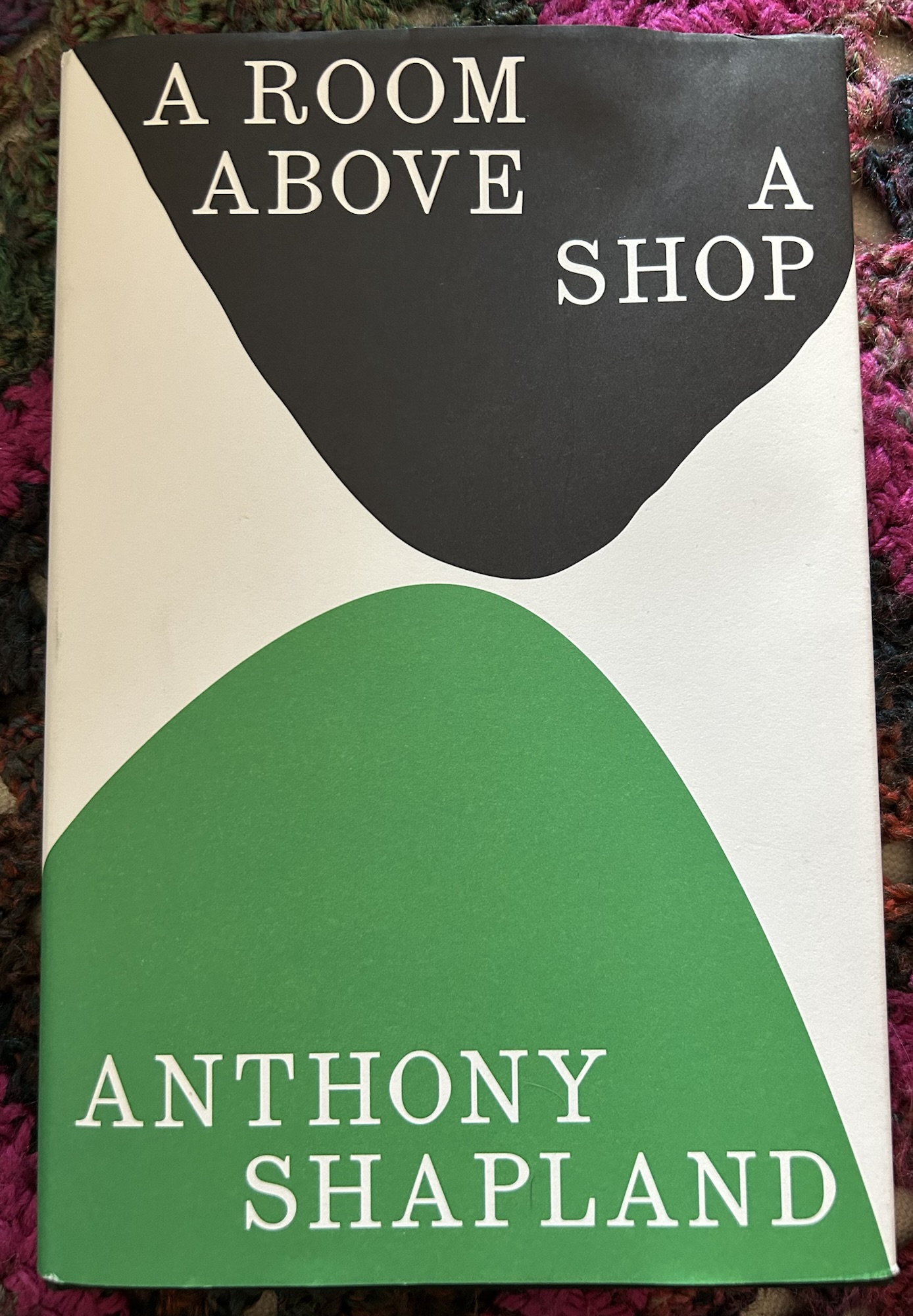
It was Susan’s review of A Room Above a Shop by Anthony Shapland (2025) which made it a must-read for me, and my astronomical expectations were met entirely. It’s a beautifully written, carefully observed and deeply moving novel.
M has inherited a hardware shop from his father. Part of the place for years and providing a community service, everyone knows who he is without knowing him at all.

“Keeping shop hours, he is the ear of the village, the listener. They never register his life at all, upstairs in that one room.”

He meets B, somewhat younger than him, in the pub, and invites him to meet on Carn Bugail on New Year’s Eve.

“He’s not quite sure what he’s walking towards. A pulling and pushing – his instinct says go; his anxiety says stay. Either choice feels wrong. He can’t not act.”

They know it is the start of something, they know there is attraction between them, but they live in a small community, still reeling from miners’ strikes and with increasing homophobia driven by a fear of a new illness, HIV.

“Paid work is fragile, rare. Divisions still run deep; picket-angry graffiti still visible, disloyal homes shunned. Pockets are empty, borrowing and mending and patching. Everything feels temporary. Desperate.”

When B takes a job at M’s shop and moves into the spare space upstairs, little more than a cupboard but useful for appearances’ sake, they build a life together. But it is a hidden life which takes place behind closed doors, and runs beneath the performance they undertake each day as colleagues in the shop. It is both familiar and filled with tension.

“This hill is a bright map of his childhood. A play track for stunt bikes, a den, a place to be lost, to disappear with siblings. Or away from them. A place to loiter and mitch dull school days out until the bell. The place to be alone with this feeling that he’s different to the others.”

Shapland achieves something remarkable in just 145 pages, with plenty of space on the page. He crafts a fully realised portrait of two people and their relationship within a clearly evoked setting. The historical details are light touches, just enough to give a flavour of the time and certainly enough to build the pressure that M and B are living under.

His writing is incredibly precise, so although the story is short, it is not a quick read. Every single word carries its full weight to create beautiful sentences. I found myself double-checking the author bio to see if he was poet as he writes with such sparse care, but apparently not.

A Room Above a Shop is so moving. Witnessing the silences that surround M and B, the way they are unable to make the most everyday, harmless expressions of love and care towards one another, or to have their relationship acknowledged by anyone other than themselves, is quietly devastating.

“No word or deed reaches the ground from this floating platform, on this mattress, this raft, on this ocean adrift in the afternoon sun. This room lightly tethered by stairs.”

To end, a scene of coming out in a 1980s Welsh mining village from Pride, and apparently pretty accurate of the real-life person’s experience:
“Waiting for something to happen in the deathly, unhappy silence.” (Edna O’Brien, The Country Girls)

This is the first of what I hope will be a few posts for Cathy’s annual Reading Ireland Month aka The Begorrathon.

I really enjoyed August is a Wicked Month by Edna O’Brien when I read it a few years ago, and resolved to read The Country Girls trilogy. Admittedly it’s taken me a while but I have finally picked up the first in the trilogy, and O’Brien’s debut novel, The Country Girls (1960). Cathy and Kim are also hosting A Year with Edna O’Brien throughout 2025 so I’m joining in with that too 🙂

The girls of the title are Cait and Baba, growing up in 1950s rural Ireland, and the tale is told by Cait. Once again, I found O’Brien so intensely readable. She is great at small details that illuminate so much, without overwriting:

“Slowly I slid onto the floor and the linoleum was cold on the soles of my feet. My toes curled up instinctively. I owned slippers but Mama made me save them for when I was visiting my aunts and cousins; and we had rugs but they were rolled up and kept in drawers until visitors came in the summer-time from Dublin.”

Cait lives with her parents and man-of-all-work Hickey, on their farm which is hanging on by a thread, not helped by her father going on frequent alcohol benders. Her mother is loving but they all live in fear of her father’s return and the violence he brings.

“Her right shoulder sloped more than her left from carrying buckets. She was dragged down from heavy work, working to keep the place going, and at night-time making lampshades and fire-screens to make the house prettier.”

Baba’s family is better off financially, but they have their own sadnesses including her mother also self-medicating with alcohol. Baba can be a spiteful bully, but Cait experiences a growing awareness of how much Baba needs her too.

“Coy, pretty, malicious Baba was my friend and the person whom I feared most after my father.”

Village life is not idyllic in O’Brien’s world. There is a lot of poverty, there is violence, deep unhappiness and gossip. The girls are subject to the sexual attentions of much older men, even as they are at school.

Cait is academic and wins a scholarship to a convent school. Baba’s family pay for her to have a place too, and so the girls leave their village for the first time.

Baba despises the school with her whole being:

“Jesus, tis hell. I won’t stick it for a week. I’ll drink Lysol or any damn thing to get out of here. I’d rather be a Protestant.”

O’Brien brilliantly creates the cold, the disgusting food, the boredom and the oppressive rules laid down by the nuns.

“The whole dormitory was crying. You could hear the sobbing and choking under the covers. Smothered crying.

The head of my bed backed onto the head of another girl’s bed; and in the dark a hand came through the rungs and put a bun on my pillow.”

Eventually Baba engineers a way for her and Cait to leave, which to my twenty-first century eyes was very funny, but perhaps contributed to the banning of the book in Ireland and the burning of it by a priest when it was first published.

So in disgrace, the girls make their way to Dublin and all the seductions of city life, which Baba in particular is keen to embrace.

“Forever more I would be restless for crowds and lights and noise.”

The scandal The Country Girls created in 1960 seems very dated now. The only part I found concerning was a relationship that Cait begins with Mr Gentleman, a married man much older than she is, when she is still at school. This continues throughout the novel; it remains unconsummated but is wholly inappropriate and what we would now call grooming.

Apparently O’Brien wrote this in three weeks which is just extraordinary. Her evocations of environment and people, her ear for dialogue and her fluidity of style are all so well observed.

The novel ends on an anti-climax which initially I found an odd decision, but reflecting on it I think it is one of its strengths. It emphasises O’Brien’s choice to write about the realities of life for young women at that time, the life she knew. It insists on its truth, more than overly dramatic scenes, to engage the reader.

I’m looking forward to catching up with Cait and Baba in The Lonely Girl – hopefully it won’t take me another two years!

“I was not sorry to be leaving the old village. It was dead and tired and old and crumbling and falling down. The shops needed paint and there seemed to be fewer geraniums in the upstairs windows than there had been when I was a child.”

To end, a great interview with the author from the time of her memoir being published. She discusses The Country Girls around 11 minutes in:

Novella a Day in May 2023 – No.9

The Hotel – Elizabeth Bowen (1927) 175 pages

The Hotel ticks a lot of boxes for me: interwar setting, repressed Brits abroad, characters thrown together through transient living arrangements, and of course novella length. My concern was that it’s Elizabeth Bowen’s debut novel and her prose can be pretty impenetrable at the best of times, let alone when she’s still honing her craft. However that proved unfounded as I found this an easier read by Bowen standards – I really enjoyed it.

The titular institution is located on the Italian riviera and is filled with genteel Brits, mainly women. The novel opens with the fallout from a row between two perfect examples of such: the companions Miss Pym and Miss Fitzgerald. The former ends up walking to tennis courts with Mrs Kerr, quite a coup as Mrs Kerr holds all the power among the hotel residents. The reasons for her occupying this elevated position are never quite clear, but her absolute self-assurance and manipulativeness surely contribute.

Mrs Kerr is looking for Sydney Warren, a beautiful, studious young woman whose family are worried about her. Sydney has come away with her cousin Tessa Bellamy, who has a vague malady:  

“She was distressed by any suggestion of impermanence; she was a lonely woman. One had to have Something in one’s life. She lay on a velvet sofa in her bedroom with the head pulled round away from the window and wished that she were religious woman and that it would be time for lunch and that Sydney would soon come in.”

The start of the novel is full of these pithy sketches of the residents. I especially enjoyed the elderly sisters-in-law Mrs and Miss Pinkerton:

“They were more closely allied to one another in the memory of Edward’s than they had either of them been to Edward himself…. Cherished little animosities reinforced their ties to one another; Rosina maintained to herself implacably that if she had been Edward’s wife she would have borne him children; Louisa was aware enough of this to be a little markedly generous to Rosina, who was not in a position to refuse anything that might be offered.”

They are hugely affronted by the arrival of an Anglican clergyman, James Milton, who unwittingly uses their reserved bathroom. Bowen is a brilliant observer of the manners and social customs of the hotel, treating it all with a wry affection:

“Beyond, down the long perspective to the foot of the stairs, one could see visitors take form with blank faces, then compose themselves for an entrance. Some who thought punctuality rather suburban would gaze into the unfilled immensity of the room for a moment, then vanish repelled. Others would advance swimmingly and talk from table to table across the emptiness, familiarly, like a party of pioneers. Men came in without their wives and did not always look up when these entered. Women appearing before their husbands remained alert, gazed into an opposite space resentfully, and ate with an air of temporising off the tips of their forks.”

Romantic relationships are treated with a great deal of scepticism in the novel: the pretty Lawrence sisters look to make pragmatic marriages; Mrs Lee-Mitterson panders to her ridiculous self-centred husband; it’s mentioned more than once how incompatible men and women are. It wouldn’t be a stretch at all to take a queer theory reading to many of the relationships in The Hotel, and it could also be read as demonstrating the value and endurance of platonic friendship.

The early character sketches and scene setting of The Hotel were completely wonderful, but for me the novella didn’t quite live up to this initial promise.  I was drawn into the various relationships and shifting allegiances, and the disarray caused by the arrival of Mrs Kerr’s much anticipated, determinedly aloof son Ronald was very enjoyable.  I think what stopped me unreservedly loving this was that I did find the characters ultimately quite distancing – Sydney Warren is meant to be reserved and a bit cold but I felt this distance as a reader too.

But still there was so much to enjoy and I found it a real treat.

“Notwithstanding the slight sense of degeneracy induced by reading novels before luncheon she had been enjoying Jude the Obscure.”

Novella a Day in May 2023 – No.1

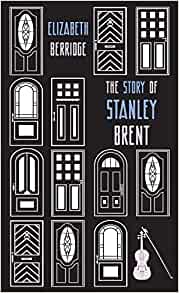
The Story of Stanley Brent – Elizabeth Berridge (1945) 75 pages

Oh dear, I am so behind on everyone’s blogs and of course my own blogging. I hope everyone is well and reading lots of lovely books, and that those in the northern hemisphere are enjoying the longer, lighter days. I’m really hoping May sees me catching up with the blogosphere, and against my better judgement I’m going to give my annual Novella a Day in May a bash too…

Elizabeth Berridge is a writer that I really wanted to get to, and thankfully she has a couple of novellas to her name, so this month seemed the perfect time. The Story of Stanley Brent was her debut and at 75 pages it just makes my criteria for a novella* rather than a short story (in modern editions, my old edition is a bit shorter so I’m starting the month by cheating 😀 )

Opening five years into the last century with a proposal of marriage hastily undertaken on an aunt’s landing, Berridge expertly sets up the themes of her novella: domesticity, social awkwardness, romantic hopes butting up against worldly realities (in this instance, not being able to embrace fully as Ada is in a dressing gown and risks her decency).

The proposal brings out the very different characters of the titular protagonist and his betrothed:

“Ada saved quietly and fiercely for a good home, Stanley lived in the moment and hoped for some stroke of luck, content with the right to kiss his fiancé and hold her hand without reproach, to sit out dances with her. She was promised to him, that was enough.”

Things being enough while Ada hopes for more, will continue through their marriage. Stanley, so determinedly placed by Berridge at the centre of the story, is rarely the leading man of his own life. He drifts into middle management but doesn’t drive the estate agency in any direction and fails to keep up with the changing world. The First World War happens away from him, unable to join up due to a back problem. The Great Strike has a limited impact on his life beyond the train disruption challenging his commuting routine.

His lack of reflection or insight has traumatic consequences for Ada on their wedding night. The impact of total sexual ignorance is dealt with frankly by Berridge, reminding me of Ian McEwan’s On Chesil Beach:

“That her body, washed meticulously and yet ignored by her, should attain such an importance, should cause a good and decent man like Stanley to be so – so bestial and undignified, was shattering. If Stanley could not be trusted, who could? And yet her friends who were married seemed happy enough, they had children… at this a fierce fearful doubt struck her. Suppose they, as Stanley had said, taut and angry, his patience gone, suppose they enjoyed this hateful and frightening thing?”

Somehow the couple recover, conceive two children, and things tick along. Ada has an extra-marital affair, Stanley drinks more heavily over the years. They are lives of quiet desperation, and I felt Stanley’s story was a sad one, all the more so because he didn’t seem to realise he had the power to make it a different one.  

“He shook his head. It was all too big for him, he must keep to the small things, the concrete reasons, solid as stepping stones in turbulent waters.”

His father-in-law is another powerless, sad man in the story, one who plays an unfinished tune on the violins he makes and mends. A melancholy refrain in the book but somehow I didn’t find TSOSB depressing. It ends on a hopeful note, but one which may or may not be realised.

I was so impressed by this first encounter with Elizabeth Berridge and it definitely made me keen to read more. I have Across the Common by her and it’s fewer than 200 pages so maybe I’ll even manage it later this month 😊

Someone less impressed than me was a previous owner of my very old secondhand copy, who inscribed it with the following:

“Berthe, from Mother. Sorry, a very bad choice. No Spiritual Outlook. October 1945.”

I would love to have known how Berthe found it. I hope she enjoyed it more than her mother did.

*70-200 pages

“You think your pain and your heartbreak are unprecedented in the history of the world, but then you read.” (James Baldwin)

Trigger warning: mention of rape, domestic violence, racist violence

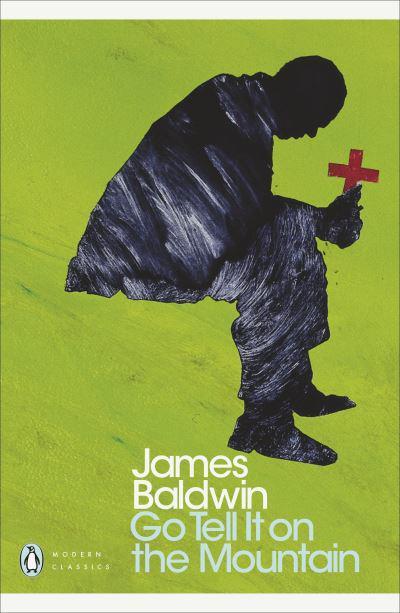
I was delighted when Go Tell It on the Mountain was selected for today’s review-a-long, as it has sat in my TBR for ages. I also really enjoyed October’s Vanity Fair review-a-long, and I fell in love with James Baldwin’s writing when I read Giovanni’s Room for the 1956 Club, back in October 2020.

Despite these various motivators, I was still worried I wouldn’t manage to join in, as my reading is slowly improving but still very poor, and my blogging is essentially non-existent. However, Go Tell It on the Mountain (1953) proved a good choice, as despite being a really tough read in terms of subject matter, it’s only 256 pages in my edition, can be read in an afternoon, and is full of Baldwin’s lyrical beauty.

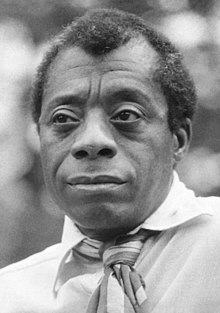
Photo by Allan Warren, courtesy Wikimedia Commons

The remaining obstacle is that it feels impossible to write about Go Tell It on the Mountain. It’s such a richly complex book and tackles such enormous themes, that I’m not even going to manage to approach doing it justice. So what follows is a few random thoughts 😊

The novel opens:

“Everyone had always said that John would be a preacher when he grew up, just like his father. It had been said so often that John, without ever thinking about it, had come to believe it himself. Not until the morning of his fourteenth birthday did he really begin to think about it, and by then it was already too late.”

John’s father Gabriel Grimes preaches at the Temple of the Fire Baptized, a Pentecostal storefront church in Harlem. John is ambivalent about religion, finding it restrictive and acutely aware of the temptations all around him;

“For John excelled in school, though not, like Elisha, in mathematics or basketball, and it was said that he had a Great Future. He might become a Great Leader of His People. John was not much interested in his people and still less in leading them anywhere, but the phrase so often repeated rose in his mind like a great brass gate, opening outward for him on a world where people did not live in the darkness of his father’s house, did not pray to Jesus in the darkness of his father’s church, where he would eat good food, and wear fine clothes, and go to the movies as often as he wished.”

However, he does have faith. We follow John throughout his birthday as goes to the cinema and enjoys Central Park, but also attends church:

“The Sunday morning service began when Brother Elisha sat down at the piano and raised a song. This moment and this music had been with John, so it seemed, since he had first drawn breath.”

Aged fourteen, John is still finding out who he is. This is bound up in religion and church, but also in his academic accomplishments which mark him out at school and within his family; and his rejection of his father as a masculine role model who demonstrates violence and hypocrisy, beating his family often.

“His father’s arm, rising and falling, might make him cry, and that voice might cause him to tremble; yet his father could never be entirely the victor, for John cherished something that his father could not reach. It was his hatred and his intelligence that he cherished, the one feeding the other.”

In the second part of the novel the prayers of John’s father, mother and aunt are powerfully explored. I don’t want to say too much about the plot here, as the characterisations first introduced through John’s point of view are so sensitively deepened through this second part, including that of his abusive father (who remains wholly unlikeable, but a fully realised character). As a reader I enjoyed watching these complex adults emerge without any foreknowledge.

John’s parents are the first generation since emancipation, and the trauma of slavery is just within lived experience, as GTIOTM is set in 1935. The depictions of racism, every day and institutional, are enraging.

“She looked out into the quiet, sunny streets, and for the first time in her life, she hated it all—the white city, the white world. She could not, that day, think of one decent white person in the whole world. She sat there, and she hoped that one day God, with tortures inconceivable, would grind them utterly into humility, and make them know that black boys and black girls, whom they treated with such condescension, such disdain, and such good humor, had hearts like human beings, too, more human hearts than theirs.”

Through John’s aunt Florence and his mother Elizabeth, Baldwin explores the additional patriarchal oppression women have to contend with. Florence’s academia is ignored to prioritise Gabriel’s, despite her desire for learning and his total disregard for it. Pregnancy outside of wedlock is left for the women to deal with. A woman who is gang-raped by white men is outcast:

“No man would approach her in honor because she was a living reproach”

There is a lot of compassion throughout the novel for female experience. With everyone there is a sense of things unspoken, in contrast to the vocal exuberance of preaching, and this is particularly true for the female characters.

“And he knew again that she was not saying everything she meant; in a kind of secret language she was telling him today something that he must remember and understand tomorrow. He watched her face, his heart swollen with love for her and with an anguish, not yet his own, that he did not understand and that frightened him.”

The final part of the novel follows John experiencing vivid religious visions, but I felt the ending was ambiguous, undermining the fervour. Baldwin demonstrates that human experience is subject to unpredictable forces, both internal and external, and I felt any certainty John believed in one day could be undone tomorrow. (For one thing, John doesn’t seem to acknowledge sexual attraction to Elisha, though as readers it seems to be there.)

As I mentioned at the beginning. I’ve found Go Tell It on the Mountain almost impossible to write about. I hope these few thoughts and extensive quotes have given some sense of it though! Baldwin is such gorgeous writer even with such harrowing subject matters: skilled but approachable, angry and compassionate, humane and unsentimental.

Now to dig If Beale Street Could Talk out of the TBR…

I’ll add in links to the other bloggers taking part today as I find them. Early signs are I’m out on a limb with this one, so please do check out the other reviews 🙂 :

Fiction Fan

Katrina

Rose

Kelly

Novella a Day in May 2020 #21

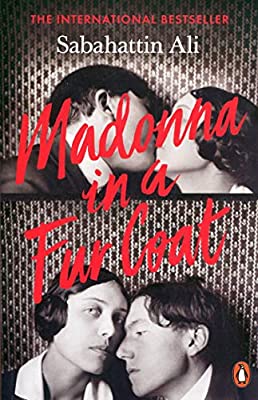
Madonna in a Fur Coat – Sabahattin Ali (1943, trans. Maureen Freely and Alexander Dawe 2016) 168 pages

Madonna in a Fur Coat is set mainly in Berlin, but is bookended by scenes in Ankara, so I’m counting it as another stop on my Around the World in 80 Books reading challenge, hosted by Hard Book Habit (who unfortunately don’t seem to be blogging any more). It feels a bit of a cheat to count it as Turkey but I’m so behind on the challenge that I’m taking a few liberties!

Continuing yesterday’s theme of an elegy for a young love affair, Madonna in a Fur Coat tells the romance of a Turkish man with a visual artist in 1920s Berlin. The novel begins in 1930s Ankara, where the narrator visits his unremarkable colleague at home, and is struck by the disregard his family show him.  

“It seemed impossible that a man like Raif Efendi – what sort of man that might be, I had no idea, but I was sure he was not as he seemed – that a man like this would shrink away from those closest to him.”

He feels there must be more to his quiet colleague, who is fluent in German, than meets the eye.

“Why, when we are reluctant even to describe a wedge of cheese we are seeing for the first time, do we draw our final conclusions from our first encounters with people, and happily dismiss them?”

Raif knows he may die and so he asks the narrator to destroy a notebook, which of course the narrator reads. It was written ten years after the events it documents and describes how, as a young man, Raif stayed in Berlin to learn soap manufacturing, a career he is far from committed to. One day, visiting a gallery, he becomes mesmerised by a portrait of a woman in the titular garment:

“All I can say is that she wore a strange, formidable, haughty and almost wild expression, one that I had never seen before on a woman. But while that face was utterly new to me, I couldn’t help but feel I had seen her many times before.”

He visits daily to stare at the picture, and eventually meets Maria Puder, the woman who painted the self-portrait. They begin an intense, but largely platonic relationship. Raif is inexperienced and shy:

“If I ever met a woman I found attractive, my first thought was to run away.”

While Maria is determined and self-reliant:

“This all ends the moment you want something from me.”

My tolerance for young, earnest love affairs is pretty minimal, being old and sceptical myself 😀 Yet I was able to follow the relationship between Raif and Maria with interest because I wanted to see how it was that Raif ended up ill, poor and disregarded back in Ankara; and because Maria is a well-drawn woman rather than bland love object:

“I was only too aware that I still knew next to nothing about her. My judgements were formed of my own dreams and illusions. At the same time, I was absolutely sure they would not deceive me.”

Madonna in a Fur Coat is a sad tale of lives half-lived, of ill-advised restraint and missed opportunities. I didn’t find it depressing, but it’s certainly a melancholic and mournful read.

Kim from Reading Matters reviewed this novella back in January, you can read her excellent review here.

Novella a Day in May 2020 #12

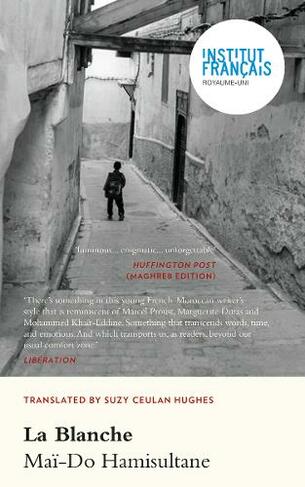
La Blanche – Mai-Do Hamisultane (2013, trans. Suzi Ceulan Hughes 2019) 80 pages

La Blanche is set largely in Casablanca, and so forms another stop on my much-neglected Around the World in 80 Books reading challenge, hosted by Hard Book Habit who sadly don’t seem to be blogging any more but it’s a great challenge so do join in if you can!

 La Blanche is narrated by a young woman whose grandfather was murdered in their home in 1992. Along with her mother she flees Morocco to France, but following a painful break-up of a relationship finds herself heading back to the land of her birth.

“It rained heavily in the night. Torrential summer rain. I didn’t sleep a wink. Perhaps partly too, because I’m anxious about going back to Morocco. It’s as though I’d been bracketing off my childhood for years. Once I’d arrived in France I’d never thought about my childhood in Casablanca again. I’d left it all over there, apart from a little scrap of white paper, folded in four, that I always keep with me.”

The narrative moves back and forth across time, building a picture of her privileged childhood in Casablanca, the violence that shattered it, and the psychological fall-out from a disintegrating romantic relationship as an adult. This is handled expertly and is never confusing, blending together with ease to create a fully realised portrait of this young woman’s life.

The language is taut and every word placed carefully – hence this novella only comes in at 80 pages – but the story is in no way underwritten. Hamisultane has a startling and inventive way of writing, such as here, when the narrator awakes to realise her lover has left:

“It’s morning. The bed is empty. Light is flowing across the room. I close the shutters because I’m afraid it might flow straight though my body.”

It’s so impressive that La Blanche was a debut novel. The time shifts, language and characterisation are handled so deftly making for a satisfying and evocative read.

“My grandfather wakes me.

It is dawn.

He’s taking me out with him.

‘As quick as you can,’ he says to me. ‘While we can still see the morning dew beading the blooms on the rose bushes.’”

Novella a Day in May #10

Grief is the Thing with Feathers – Max Porter (2015, 114 pages)

Max Porter’s first novel Grief is the Thing with Feathers was published to much fanfare in 2015,which is encouraging in today’s increasingly conservative publishing industry, as this novella is a true original. In fact, it’s difficult to call it a novella, as its more like a patchwork of prose, poetry, monologue, fantasy and the commonplace.

A woman has died suddenly, leaving behind a husband and two young boys, reeling with grief. Into their shattered lives comes Crow:

“I find humans dull except in grief. There are very few in health, disaster, famine, atrocity. Splendour or normality that interest me (interest ME!) but the motherless children do. Motherless children are pure crow. For a sentimental bird it is ripe, rich and delicious to raid such a nest.”

Crow is far from sentimental: he is foul-mouthed, aggressive and terrifying. He is also exactly what the family need; particularly a family headed by a Ted Hughes scholar.

“In the middle, yours truly. A smack of black plumage and a stench of death. Ta-daa!”

The voices alternate between Crow, Dad and Boys. The mixed narrative, compiled of short passages and lots of white space on the page effectively captures the disorientation and incoherence of grief. We never know exactly what Crow is: metaphor, collective fantasy, actual manifestation. The oversized bird, the madness and uncontrollable force of grief, exists alongside Dad trying to keep a hold on the everyday concerns of raising two boys:

“There was very little division between their imaginary and real worlds, and people talked of coping mechanisms and childhood and time. Many people said ‘You need time’, when what we needed was washing powder, nit shampoo, football stickers, batteries, bows, arrows, bows, arrows.”

The Boys are not distinguished from each other. They play and pretend, they are violent and angry and thoughtful and decent. Their passages are the most poem-like:

“Dad has gone. Crow is in the bathroom

where he often is because he likes the

acoustics. We are crowded by the closed

door listening. He is speaking very slowly,

very clearly. He sounds old-fashioned, like

Dad’s vinyl recording of Dylan Thomas.”

Grief is the Thing with Feathers deserves all its plaudits and then some. It is a taut, beautifully written, experimental exploration of grief which effectively captures the fallout of a death on a family. It is brave, tender, unsentimental and deeply moving. Cathy over at 746 Books wrote recently of the theatrical adaptation which looks amazing. I’m sure this tale will transfer powerfully to stage.

“They offer me a space on the sofa next to them and the pain of them being so naturally kind is like appendicitis. I need to double over and hold myself because they are so kind and keep regenerating and recharging their kindness without any input from me.”


Image from here

“Would you like a little cheesy-pineapple one?” (Beverly, Abigail’s Party, 1977)

Trigger warning: This post mentions rape

Here’s my contribution to the 1977 Club, hosted by Kaggsy at Kaggsy’s Bookish Ramblings and Simon at Stuck in a Book. It’s running all week, do join in!

Firstly, Penelope Fitzgerald’s first novel, The Golden Child, which she published aged 60 (it’s never too late, budding writers!) This is a typically slim Fitzgerald novel, just 189 pages, and while I didn’t love it as much as the others by her which I’ve read (The Bookshop; At Freddies) there’s still a lot to enjoy.

The title refers to an exhibit that is on loan to a London museum. It is hugely popular with people queueing for hours on end to see the tiny dead Garamatian king covered in gold, and his ball of gold twine. The story concentrates on behind the scenes: the relationships and internal politics of the museum.

“At the sight of his tiresomely energetic subordinate, Hawthorne-Mannering felt his thin blood rise, like faint green sap, with distaste. He closed his eyes, so as not to see Waring Smith.”

It is from the energetic Waring Smith’s viewpoint that the story unfolds. He realises that certain deals have been done, certain backs have been scratched, in order for the museum to gain the exhibit.

“He had a glimpse for the first time of the murky origins of the great golden attraction: hostilities in the Middle East, North African politics, the ill-coordinated activities of the Hopeforth-Best tobacco company. Perhaps similar forces and similar shoddy undertakings controlled every area of his life. Was it his duty to think about the report more deeply and, in that case, do something about it?”

Things take a sinister turn when someone tries to strangle him with the golden twine, and two of his colleagues end up dead in highly suspicious circumstances. Waring Smith is sent on a farcical trip to the USSR (as it then was) to consult with an expert regarding the exhibit. On his return, he becomes embroiled with Special Branch, and has to decipher a code on a clay tablet which might hold a clue as to what on earth is going on.

“The Museum, slumberous by day, sleepless by night, began to seem to him a place of dread. Apart from the two recent deaths, how many violent ways there were in the myriad of rooms of getting rid of a human being! The dizzy stairs, the plaster-grinders in the cast room, the poisons of conservation, the vast incinerators underground!”

There’s a great deal to enjoy in The Golden Child but it doesn’t quite work as a mystery – some of the solving takes place ‘off-screen’ and Waring Smith is then told about it, so it doesn’t quite match what it sets itself up to be. Its strengths are Fitzgerald’s wit and her satire of politics big (The Cold War) and small (workplace); it’s a quick, fun read.

Image from here

Disclaimer, and a note for those of you who, like me, were born around the time of this Club: I’m aware that part of my enjoyment of this novel came about because of a very specific reason, which may have coloured my view somewhat. As a child one of my favourite TV programmes was The Baker Street Boys, which showed what the Baker Street Irregulars got up to when they weren’t helping out a certain world-famous detective. My favourite episode was The Adventure of the Winged Scarab, involving mystery, museums and mummies. Anyone else who remembers this series fondly can indulge in a nostalgia-fest because I’ve just discovered some kind soul has uploaded the whole lot to YouTube.

Image from here

Secondly, Injury Time by Beryl Bainbridge, which is set over the course of one evening. Edward has agreed that his mistress Binny can give a dinner party and he will invite his colleague Simpson and Simpson’s wife Muriel along.

“He gave her so little, he denied her the simple pleasures a wife took for granted – that business of cooking his meals, remembering his sister’s birthday, putting intricate little bundles of socks into his drawer.”

I loved that line which comes early in the novel and so I settled into what I fully expected to be full of the joys of Bainbridge: acerbic wit, idiosyncratic characters, acute social observation. For much of the novel, this is exactly what Injury Time provided. None of the characters seem to know exactly what they want and the changes taking place in 1970s Britain leave them all slightly baffled.

“It was astonishing how fashionable it was to be unfaithful. He often wondered if it had anything to do with going without a hat. No sooner had the homburgs and the bowlers disappeared from the City than everyone grew their hair longer, and after that nothing was sacred.”

The dinner party never really takes place. Binny is an appalling housekeeper and her home is filthy (Bainbridge based Binny on herself and Edward on a lawyer she had an affair with). Before anyone arrives she’s thrown the hoover into the backyard and stuffed the pudding behind the fridge.

“Though most of her life she had rushed headlong into danger and excitement, she had travelled first-class, so to speak, with a carriage attendant within call. The world was less predictable now…in her day dreams, usually accompanied by a panic-stricken Edward, she was always being blown up in aeroplanes or going down in ships.”

The less predictable world erupts violently into the evening of Binny, Edward, Simpson, Muriel and Binny’s inebriated friend Alma. It’s here that I have a bit of trouble with Injury Time. A character is raped. For me, this jarred uncomfortably in what until that point had been a funny, sharp novel puncturing 1970s social mores and pretensions. The rape itself is dealt with oddly: it’s part of a section that verges on surreal and is filled with non-sequiturs; the character it happens to is weirdly detached, which may be shock but this is never made clear. Looking at reviews online, I was really surprised that so few reviewers even mentioned this event. For many Injury Time remains an unproblematic comic novel. So I wouldn’t want to put anyone off reading it; I adore Bainbridge and still do, but for me how the rape was portrayed and contextualised was a problem.

I don’t want to end on a downer when so much of Injury Time is funny, so I’ll end with this quote which is pure Bainbridge. I wonder how far Binny was based on her and whether she actually did this?

“There had been too that incident when he couldn’t see Binny because he wanted to prune his roses, and she’d threatened to come round in the night and set fire to his garden, Later, a small corner of the lawn had been found mysteriously singed, but nothing had been proved.”

To end, the UK number one from this week in 1977. AHA!

“If you have the words, there’s always a chance that you’ll find the way.” (Seamus Heaney)

This is a contribution to Reading Ireland 2017 aka the Begorrathon, hosted by Cathy at 746 Books and Niall at Raging Fluff – do join in!

I’ve decided to make debut novels featuring a crime the theme of the post (the first choice isn’t quite a crime novel, hence that rather cumbersome explanation). It was with regret that I decided the following quote – so thematically apt – was too long to pick as a title:

“There are three states of legality in Irish law. There is all this stuff here under “That’s grand”; then it moves into “Ah, now, don’t push it”; and finally to “Right! You’re taking the piss.” And that’s where the police sweep in.” (Dara O’Briain)

Firstly, The Glorious Heresies, Lisa McInerney’s debut novel which won the Bailey’s Prize in 2016 (the 2017 longlist was announced yesterday). Set in Cork, it tells the story of Robbie O’Donvan’s death – an almost homeless drug addict who theoretically could disappear with few people noticing – and the fractures that radiate out across the city from this one act.

McInerney is interested in the members of society who are simultaneously vilified and ignored. So the people affected by Robbie’s death include a teenage drug dealer, his alcoholic father, their paedophile neighbour, Robbie’s prostitute girlfriend. If this sounds depressing, it really isn’t due to McInerney’s comic voice and eye for beauty where there should be none.

“The rain cleared off in the evening, Tony walked down to the off-licence and stood outside it like a child with tuppence to his name outside the toy shop. If he pressed his nose to the glass, he may well have been able to smell it. The heady warmth of the thought seeped through his hell and into his bones and lifted his onto his toes and rose off him like holy water off the devil’s shoulders.”

She doesn’t shy away from the reality of the situation, but presents it in a complex way, so Tony’s alcoholism is seen through his own eyes as self-medication for the pressures he is under, and we also shown the catastrophic impact this has on his son, Ryan. All the people in the novel are self-aware enough to know the damage they are doing to themselves and others but they are powerless to stop it:

“How could you be two people in five years? How could you undergo such a metamorphosis – whore to saint – and paint the slattern back over the scar tissue only a few short years later?”

McInerney manages to covey insight without ever sitting in judgement on her characters. This moment stood out for me as the tragedy of people who are in so much pain, yet unable to articulate to themselves or others:

“And for the beat before he wordlessly left her she grasped something of what he was trying to say, And that it might have been nice to have someone like him, someone who got it, someone who might have stood by her and bawled her out of it when she stepped out of line.”

The city of Cork is an additional, pervasive character in the novel, surrounding, influencing and directing all the other characters:

“Jimmy had watched the city long enough to know that it would right itself, sooner or later, and that the silence following Robbie O’Donovan’s death was just a long, caught breath”

“The city runs on macro, but what’s that, except the breathing, beating, swallowing, sweating agonies and ecstasies of a hundred thousand little lives?”

I haven’t mentioned much plot-wise regarding The Glorious Heresies, because to me this was the least interesting part of the novel (but still excellent).  How Robbie O’Donovan’s death is dealt with in practical terms is the bare bones of what McInerney is writing about. As a series of characters studies of people and their city, The Glorious Heresies is warm, affectionate, brutal, bleak and incisive.

Secondly, In the Woods by Tana French (2007), the first of her Dublin Murder Squad series, focussing on detectives Rob Ryan and Cassie Maddox as they investigate the murder of 12 year old Katy Devlin. I’m not a great one for crime novels but I was persuaded by Lady Fancifull to give French a try. I’m glad I did, but first I had to make it through an appallingly overwritten prologue; I have no idea what French’s editors were thinking, letting her start with a passage which includes a description of a forest thus:

“It’s silence is a pointillist conspiracy of a million tiny noises”

Having waded through such pretentious nonsense, I was rewarded with an accomplished debut crime novel. Rob Ryan is asked to investigate the murder of a child in his home town just outside Dublin, his superiors unaware that when he was twelve, he was found in the same woods as the victim, bloodied and amnesiac, with his two best friends lost forever. If this sounds a bit clichéd, French has fun with it:

“And I suppose, if I’m being honest, it appealed to both my ego and to my sense of the picturesque, the idea of carrying this strange charged secret through the case unsuspected. I suppose it felt, at the time, like the kind of thing that enigmatic Central Casting maverick would have done.”

Maverick coppery 101

As Rob and his partner Cassie investigate Katy’s murder, they discover family secrets and political conspiracies, but did these lead to the death of a twelve year old girl, excited to be going to ballet school?

“All these private, parallel dimensions, underlying such an innocuous little estate; all these self-contained worlds layered onto the same space. I thought of the dark strata of archaeology underfoot; of the fox outside my window, calling out to a city that barely overlapped with mine.”

In the Woods was a good read and filled with believable characters, which bodes well for the rest of the Dublin Murder Squad novels as French focusses on a different person each time. Some quibbles: it was too long and (I feel like I say this all the time) could have done with a heavier-handed edit. The voice of Rob Ryan sometimes felt distinctly feminine but at least he wasn’t an alpha-male detective type. This aside, French’s talent is evident and I’m sure she’s gone from strength to strength in her subsequent novels.

To end, the cop with the least convincing Irish accent of all time, but the performance still won an Oscar, because it’s Lord High Commander Sir Sean Connery 😀

https://www.youtube.com/watch?v=ACAdVvO1KMw