“I refuse to join any club that would have me as a member.” (Groucho Marx)

I’m not a big reader of crime fiction (outside of the golden age), but Susan’s review of A Little London Scandal by Miranda Emmerson (2020) piqued my interest. At the time I bought a copy for my Dad’s wife, and then when I saw the paperback in a charity shop recently I swooped. It turns out Miranda Emmerson has adopted Wales as her home country, living in south Wales with her family and completing a PhD at the University of Cardiff. Which means the month of Reading Wales aka the Dewithon, hosted by Paula at Book Jotter, is the perfect time to pick this up!
Set in 1960s Soho, Emmerson brilliantly evokes the area before the gentrification and chain stores that characterise the area today. Anna Tredway works as a dresser in the Galaxy Theatre with faded and disillusioned actors. She lives alone above a café and is missing her partner Aloysius who is in Jamaica following a family bereavement.

“Anna had her neighbourhood. Covent Garden for raspberries and carrots – even at five o’clock in the morning. Seven Dials for rags – shift dresses and corduroy skirts and a hundred shades of polyester blouse. Monmouth St for coffee bars – so many coffee bars – musicians and actors and students out on dates. The city thought itself a monument to pleasure, but its citizens knew better.”

Anna is drawn into a very different side of London society when a male sex worker, fleeing a police raid, is found dead in Waterloo Gardens, in the grounds of the Hellenic Club. The Hellenic is one of the men-only clubs around Pall Mall, and its members include Richard Wallis, an MP who has just managed to hang onto a seat despite being caught up in a previous scandal with another sex worker:

“He was still a little staggered by the way in which influence could appear in someone’s life. Power, really. And, then, how quickly it could disappear. What he felt now were the ripples of something he used to have.”

Anna knows Nik Christou from the café. A young, vulnerable sex worker, gentle and intelligent, far away from his home in the north of England.

“Nik liked to notice mistakes in things. He loved to sit in the pictures and watch the same film over and over again. Thinking about the people in it and if it all made sense. If the guilty were guilty and the innocent, innocent.”

When Nik is arrested for the murder, Anna can’t let it go. She works with DS Hayes, a policeman with whom she has a spiky relationship, to fight Nik’s corner.

They make an enjoyable and recognisably human team. It became apparent that I’d missed a previous book with these characters (Miss Treadway and the Field of Stars) but it didn’t matter. A Little London Scandal can stand entirely on its own and the characterisation was strong enough for those of us that missed the first instalment.

Anna is well-meaning but uncertain and aware of her limitations. Hayes is not a typical 1960s policeman but managed not to seem anachronistic:

“He couldn’t banter. His dirty jokes would have seemed tame in the mouth of a 12-year-old. He never physically hurt a suspect and he refused – uncomfortably and with an enormous amount of embarrassment -to take bribes. Every day he was a policeman and every day he somehow failed at being a policeman.”

I also really liked the portrayal of Wallis’ wife Merrian, stuck in the role of a perfect MPs wife – domestic, supportive and silent – and failing to perform:

“Merrian sat for a while in the hall and watched the dust motes move in the shadow of the stained glass above the door. She felt calm when she sat in darkness. When the house was still, when she was alone, no one could get at her.”

Emmerson weaves this disparate cast together expertly. The situations never feel forced and the societal pressures on them all  – at a time of change when things aren’t changing quite fast enough – are evoked believably through the characters’ experiences rather than using them as clunky pawns to hammer home certain points.

“The memory of not knowing what to do in certain places. The fear of getting it wrong. It infects people, like a cold.”

The crime/thriller aspects were well-paced and not predictable. But it was the characters and societal commentary which kept me reading. I was really rooting for these flawed, sympathetic people to find some peace.

“Sometimes that whole world turns out to be exactly what you thought it would and still it’s just a bit shocking.”

To end, a 1960s song about Anna:

“I have the strange habit of wanting to climb Snowdon once a year.” (Gerbrand Bakker)

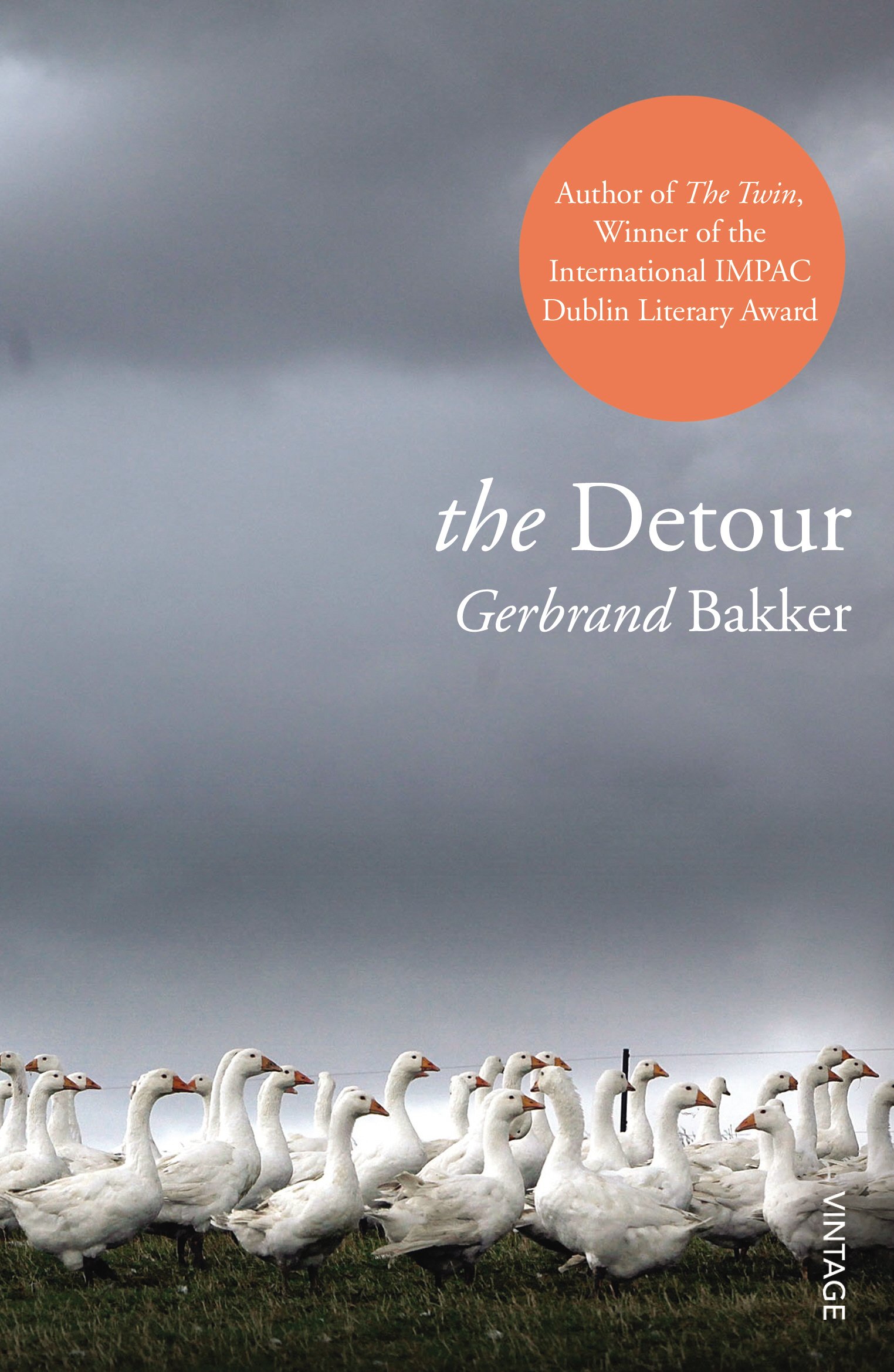
This is my contribution to Dewithon 2023, hosted by the lovely Paula over at Book Jotter. Dewithon is an annual celebration of literature by and about writers from Wales – I’ve interpreted the brief pretty broadly this year as I’ve picked a novel by a Dutch writer, but it evokes its North Wales setting beautifully.

The Detour by Gerbrand Bakker (2010 trans. David Colmer 2012) is a quiet, melancholic novel, that shows without telling. I’d previously read The Twin by this author and found this similar in its themes of isolation and troubled relationships, and a refusal to judge its protagonists.

Emilie rents a cottage in rural Wales, fleeing from her husband in Amsterdam after her affair with a student at the university where she taught is exposed. Her backstory is revealed gradually, without explanations of how or why things happened. We just know how it is she has found herself somewhere unexpected and unplanned.

Bakker maintains a delicate balance between a recognisable portrait of this part of Wales, capturing its beauty without sentimentality; and then also having a slightly surreal, unpredictable element threatening to break through at various times too:

“It was just those geese; they were peculiar. Had she rented the geese too? And one morning a large flock of black sheep suddenly appeared in the field beside the road, every one with a white blaze and a long white-tipped tail. On her land. Who did they belong to?”

“Then she saw the mountain for the first time and realised what a vast landscape existed behind her house and how small an area she had moved in until that moment. […] The next day she bought an Ordnance Survey map at an outdoor shop in Caernarfon. Scale: 1-25,000.”

There is quite an emphasis on Emilie’s body and at first I approached this with some weariness, but it became apparent that this focus was there for a reason. Emilie seems to be very reliant on paracetamol…

Other characters cross her path: a slightly menacing neighbour, a doctor addicted to his cigarettes, a chatty hairdresser, as well as a young man, Bradwen, who turns up with his dog Sam and then never leaves. Emilie and Bradwen both seem to need something which the other provides, without anything being agreed or explicitly stated.

“I don’t think I want to know anything about him at all, she thought. He just has to be here.”

There is also a thread of tension as Emilie’s husband leaves home with a police detective in order to find her. His relationship with his in-laws provides some humour in what is otherwise quite a sombre novel (aside from some pithy observations on the vagaries of Escape to the Country):

“‘If you ask me, you’ve got plenty to hide,’ the mother said. ‘You turned out to be an arsonist, after all.’

The husband sighed.”

There is very little plot in The Detour but I found it a compelling read and whizzed through it in a couple of hours. Bakker trusts his readers not to need everything spelled out for them, and he creates complex, flawed characters that are presented as they are, without asking the reader to like or dislike them. He obviously has a great affection for Wales too, so I’m pleased to have read this for Dewithon 2023.

“That mountain, she thought, I have to keep an eye on Mount Snowdon, then I’ll know where I am.”

You can read an interview with Gerbrand Bakker about The Detour with Wales Arts Review here.

To end, this has absolutely nothing to do with the post, but I’m finally getting properly back to theatre-going after being somewhat intermittent since lockdown lifted. Recently I saw Standing at the Sky’s Edge, which I completely loved. Among a hugely talented cast, I thought Faith Omole particularly shone:

“I like to think if I’d stuck with cricket I could have been a Welsh Ian Botham.” (Nicky Wire, Manic Street Preachers)

Well, it’s strange times indeed that we are living through my bookish friends. May you all, and your families and friends, stay safe and well.

My blogging was already decidedly scarce although I kept making (wasted) efforts to get it back on track. Now with all that is happening my workload is through the roof (those tips on how to fill your hours during home working/isolation etc are completely wasted on me) and what hours I do have to spare I’m finding it hard to read in due to all the anxious feelings.

I have started doing yoga every morning though, which I’ve been claiming I’m about to do for at least the last eleventy million years, so its not all bad 😀 (and for anyone else feeling anxious, it seriously helps. If nothing else swearing at the perfect vision of the instructor as you sweatily try to wrap your ankles round your head is a great stress reliever.)

Anyway, I read a wonderful novella a while ago in preparation for the Wales Readathon 2020 aka Dewithon hosted by the lovely Paula at Book Jotter. Originally I was going to pair it with How Green Was My Valley by Richard Llewellyn but sadly that classic remains unread on my shelves due to the aforementioned brain chatter. Instead, here is just one book but it’s totally deserving of a post all to itself.

Cove by Cynan Jones (2016) is only 95 pages long and shows how intense such a tight form can be. The writing is lyrical, precise, beautiful. Every word carries its full weight.

A man is adrift at sea, having been struck by lightning. He is disoriented and in pain.

“His mouth is crusted with salt. He does not know where he is. There is a pyroclast of fine dried ash across his skin.

When he comes to, the strongest thing he feels is the tingling in his hands. It feels as if they are distant things, strange ringing bells. Finds out anew he cannot move his arms. He does not remember getting back into the kayak. Does not understand. The ground is moving. Is sure that if he moves he will abolish himself. Holds on to himself like a thought coming out of sleep.”

Gradually, a sense of where he is and what he needs to do to survive emerges:

“Saw on his skin, a grey dust above the point his arm had lain in the water, felt the knowledge of it flutter, float inside him. A sense of himself, a fly trapped the wrong side of the glass.”

We stay with the man as he assesses what resources he has; what state he is in physically; and as his memories gradually return, hazy and confused, Eventually he has a sense of a particular reason that he must return home, but will he make it?

“When he saw the address label on the bag he saw his name. It was like looking into an empty cup. Then he heard a voice say it. The knowledge it gave down was as delicate as an image sitting on the surface of the water, disrupting as he moved to reach it.

He let it go, instinctively.”

Cove is a stunning novella that occupies a space between prose and poetry. Its economy and lyricism make it poetic, its clear plot pulls you through the story. 

I’ve not done Cove justice at all as my brain is kaput, so all I can do is urge you to read it for yourselves 😊

To end, if you’d like to embrace some Welsh culture but are also finding reading a struggle, I can recommend an excellent Welsh language tv thriller, Hidden (it’s bilingual on BBC4). Both series (I’ve just finished watching the second) are pared back and tense. You always know who did it; the interest is in the quiet, steady way the police piece it together and the psychological portraits of all involved. They are also a really, really tough watch, so now might not be the best time, but for future times when we’re feeling more robust…