Troubling Love – Elena Ferrante (1992 trans. Anne Goldstein 2006) 139 pages
Although the popularity of Elena Ferrante’s Neapolitan quartet baffled me a bit, I had better luck with her stand-alone novella The Lost Daughter. This meant I was keen to try Troubling Love, and having finished it I did think that maybe I should give the quartet another try…
Delia’s mother Amalia has died in odd circumstances – drowned, found wearing only her bra, a glamourous one that Delia thinks it out of keeping with her mother’s style. As she returns home to Naples from Rome for the funeral, Delia finds herself reflecting on her past and trying to piece together what happened with her mother, both then and more recently.
“The streets of topographic memory seemed to me unstable, like a carbonated drink that, if shaken, bubbles up and overflows. I felt the city coming apart in the heat, in the dusty grey light, and I went over in my mind the story of childhood and adolescence that impelled me to wander along the Veterinaria to the Botanic Gardens, or over the cobbles of the market of Sant’Antonio Abate, which were always damp and strewn with rotting vegetables.”
Delia reflects on her childhood and her abusive father, who possessively and violently guarded his attractive wife. Delia’s memories of her painful home life are conflicted and contradictory. She despises her father but also harbours a lot of anger and resentment towards her mother.
“We, on the other hand, thought that our father, because of everything he did to her, should leave the house one morning and be burned to death or crushed or drowned. We thought it and hated her, because she was the linchpin of these thoughts.”
The past and present become overlaid as Delia visits her (still violent) father and meets a childhood friend she hasn’t seen in years. She chases a man through the streets thinking he has the answers as to what her mother was doing before she died. As she explores further, memory and identity become confused and less clearly delineated.
“Sometimes that place, which belonged to a less reliable memory, consisted of a dimly lighted staircase and a wrought-iron banister. At other times it was a patch of light striped by bars and covered by a fine screen, which I observed crouching underground, in the company of a child named Antonio, who held me tightly by the hand. The sounds that accompanied it, like the soundtrack of a film, were pure commotion, sudden banging, as of things formerly in order that abruptly collapse.”
Troubling Love isn’t so much a mystery story as an exploration of grief, memory, identity, and the slippery nature of all of these things. It doesn’t offer easy answers. It looks at how so much of this is bound up with family, and how this can be difficult to reconcile.
“Childhood is a tissue of lies that endure in the past tense: at least, mine was like that.”
Troubling Love was adapted to film in 1995. I’ve not seen it, but the trailer looks faithful:
August is Women in Translation month, hosted by Meytal at Biblibio. I’ve been faithfully reading translated fiction throughout the month but I have failed miserably at blogging about any of it. Usually when bloggers disappear for a bit they’ve gone on holiday/fallen in love/started a new job. I have no such exciting excuses – I’m at the same job, feeling bitter about a lack of holiday & the nearest I’ve got to romance is shamelessly objectifying Tom Burke in the new Cormoran Strike adaptations on the BBC:
In a bid to catch up, here is a quick summary of the 6 novels I’ve read in translation, all quite short but all punching well above their weight in terms of powerful, affecting stories. They also include 2 more stops (France & Greece) on my much neglected Around the World in 80 Books Reading Challenge hosted by Hard Book Habit.
Colette – The Other One (1929, trans. from French by Elizabeth Tait & Roger Senhouse 1960)
Given I’m such a Francophile, it came as a great surprise to me that I hadn’t yet visited France as part of #AW80Books so I’ve rectified the situation with Colette’s tale of infidelity and complex family dynamics over the course of a summer in a villa in France.
Fanny is married to Farou, and awaits his return in a villa where she lives with her stepson Jean and companion Jane, with whom Jean is in love. Fanny subsequently comes to realise that Jane is one of Farou’s many extra-marital dalliances.
It’s a slim novel (157 pages in my edition) and in a sense very little happens. What The Other One offers is a beautifully written, subtle exploration of the psychological complexities that exist between people who are inextricably bound up in one another’s lives, with all the love and pain that can entail.
“Fanny turned on Jane her Paris smile, well made-up and full-lipped, and Jane, whose fair hair lit up a corner of the room, was instantly extinguished.”
Marguerite Duras – La Douleur (1985, trans. from French by Barbara Bray 1986)
I’m overcompensating now by staying France, with Duras’ typical mix of autobiography and fiction, regarding her war experiences. At the start of La Douleur she writes that the work is based on diaries she discovered which she doesn’t remember writing. The six stories/diaries move back and forth across the period of the war and create the sense of a fragmented narrative which explores the desolation and destruction of war and the impossibility of telling a tale of such insurmountable human loss in only one way. I found it incredibly powerful.
“Suddenly freedom is bitter. I’ve just come to know the total loss of hope and the emptiness that follows; you don’t remember, it creates no memory. I think I feel a slight regret at having failed to die while still living. But go on walking, I move from the street to the sidewalk, then back into the street. I walk, my feet walk.”
Sun-Mi Hwang – The Hen Who Dreamed She Could Fly (2000, trans. from Korean Chi-Young Kim 2013)
This is the story of a hen named Sprout. She decides she wants more from life than laying eggs to be taken away: she wants to live in the wild and raise a chick.
This fable is incredibly clever, in that you can read it to a child but there is plenty for adults here too. It’s a story written with great lightness of touch, and as such the lessons it teaches are various, depending on what you find in it. It could be about (for starters): going your own way in life, questioning authority, facing fears, attitudes to immigrants, the value of empathy, adoptive families, familial love, finding freedom…
“Sprout was the best name in the world. A sprout grew into a leaf and embraced the wind and the sun before falling and rotting and turning into mulch for bringing fragrant flowers into bloom. Sprout wanted to do something with her life, just like the sprouts on the acacia tree. That was why she’d named herself after them. Nobody called her Sprout, and she knew her life wasn’t like a sprout’s, but still the name made her feel good. It was her secret.”
The edition by Oneworld books also features lovely illustrations by Nomoco, worth seeking out.
Penelope S Delta – A Tale Without a Name (1911, trans. from Greek by Mika Provata-Carlone 2013)
Another fable, and another lovely edition from Pushkin Press whose description explains that this is ‘one of Greece’s best loved stories.’ It tells of an indulgent arrogant king who takes his nation into ruin and the son and daughter who bring it back to prosperity under a policy of meaningful employment for the greater good.
“Time always passes. But if you consume yourself in idle things you waste it; whereas if you do work that has a purpose, you make good use of time.”
It’s also a militaristic tale – much emphasis on vanquishing enemies and building armies – but ultimately it is about social responsibility. I don’t think it’s a stretch to see it as deeply political: Delta’s father was a mayor who narrowly avoided execution, her diplomat lover was assassinated and she killed herself the day the Nazis reached Athens. A Tale Without a Name presents complex political ideas in a deceptively simple style.
Han Kang – Human Acts (2014, trans. Deborah Smith 2016)
This novel caused me to deviate from a wholly WITMonth August, as I was so upset by it that I had to read a British Library Crime Classic to recover. I approached it wholly ignorant of the political turmoil that South Korea had experienced in the 1980s. Kang pitches us into the student uprising in Gwangju in 1980. It begins with a boy searching for the body of his friend amongst the piles of corpses that a brutal regime creates.
“Why would you sing the national anthem for people who’d been killed by soldiers? Why cover the coffin in the Taegukgi? As though it wasn’t the nation itself that murdered them.”
Human Acts follows various people all connected to the uprising, and Kang absolutely does not pull her punches. What the piles of bodies mean in human terms is explored fully both in terms of the emotional ramifications and the hard reality of how to deal with so many bodies. It’s a novel that deals with extreme brutality in sensitive, subtle prose.
“Their faces had been covered in white paint, erased. I swiftly shrank back. Necks tipped back, those dazzling white faces were angled towards the thicket. Staring out into the empty air, their features a perfect blank.”
The novel contains scenes of torture that are hard to bear, but never gratuitous. In the final part of the novel, Kang explains her own links to the story, and how this is not quite fiction. It’s astonishing that someone personally affected by the tragedy can write something so carefully constructed, but this is what she has achieved. The story is crafted but absolutely unflinching in looking at atrocities inflicted by governments and their devastating fallout.
“She had no faith in humanity. The look in someone’s eyes, the beliefs they espoused, the eloquence with which they did so, were, she knew, no guarantee of anything. She knew the only life left to her was one hemmed in by niggling doubts and cold questions.”
Elena Ferrante – The Lost Daughter (2006, trans. from Italian Ann Goldstein 2007)
Finally, I’m a bit undecided about the Neapolitan quartet and feel slightly baffled as to why its garnered quite so much praise, but I did enjoy this novella from Ferrante and those who love the quartet will find much that is familiar here: a flawed female narrator, conflicts with loved ones, a sense of violence close to the surface.
Leda takes a holiday alone in southern Italy. She is disturbed by a loud extended Neapolitan family and a certain event draws her into their sphere. During the course of the holiday she reflects on her life and the repercussions of the choices she has taken, on herself, her marriage and her daughters.
“My daughters make a constant effort to be the reverse of me. They are clever, they are competent, their father is starting them out on his path. Determined and terrified, they advance like whirlwinds through the world, they will manage better than us, their parents.”
Leda isn’t likeable but the narrative is compelling and pulls you along to deliver a short sharp shock.
As regular readers will know, I need no encouragement to indulge in an 80s pop video. Here’s one that was a massive hit in the original German and in English translation. It’s about nuclear war; of course we have no worries about such an event now…
Last week I mentioned the indulgence of good friends, so this week I thought I would look at novels capturing female friendships. I’ll try and redress the balance at some point by looking at male friendships, but this week, in the words of Lesley Knope, its ovaries before brovaries 😀
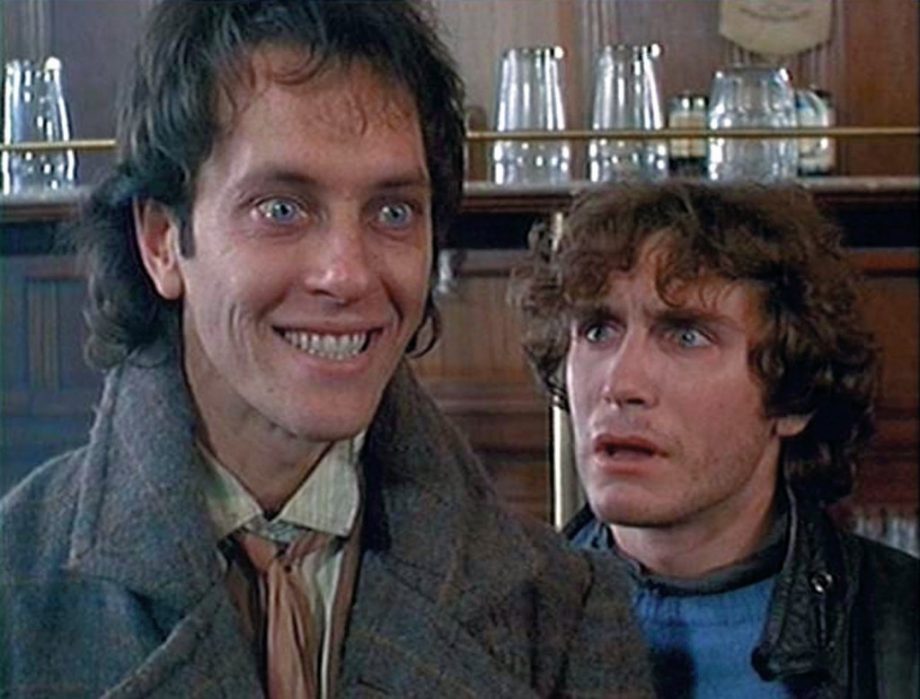
Firstly, Animals, the second novel from Emma Jane Unsworth, described on the cover by Caitlin Moran as “Withnail with girls”, which pretty much sums it up. Laura lives with her friend Tyler, a one-woman tornado:
“She didn’t just change the temperature of rooms, she changed their entire chemical make-up so that anyone in the room would only be aware that the room was an extension of her and she was the thrumming nucleus.”
Tyler is indulgent, defensive, funny, clever – a total nightmare with whom Laura feels an immediate bond:
“Someone who sees right to your backbone and simultaneously feels their backbone acknowledged.”
But Laura is in love with Jim and is planning to get married, introducing a tension into the women’s friendship. Tyler wants life to continue as it is, Laura is not so sure. It’s not plot-heavy, as Tyler and Laura ricochet from one substance-fuelled experience to another, it’s funny and sad and so very believable:
“And there it was, as always, swinging my way: The Night. With its deals, promises and gauntlets, by turns many things: nemesis, ally, co-conspirator, master of persuasion. It tosses its promises before you like scraps on the road, crumbs leading into the forest: pubs, parties, booze, drugs, dancing, karaoke…”
Amongst all this eventful partying, there is an elegiac quality to Animals: both the women are in their thirties and there’s a sense that their life together cannot continue for much longer, and that it might not be so entertaining if it did:
“Next to the sink, two folded banknotes balanced on a rung of the towel rail, drying. I stood and looked into the bowl before I flushed, recalling the adage of a girl I’d once worked with: White piss good; amber piss bad. Orwellian in its visceral simplicity. Meanwhile the liquid I had dispatched into the toilet bowl was almost ochre.”
A great film, but not a wise lifestyle choice, kids
The bawdy chaos of Animals is presented through considered, inventive storytelling; Unsworth’s voice is compelling and like Laura on a night out with Tyler, I found myself carried along for the ride.
Secondly, the publishing phenomenon that is Elena’s Ferrante’s My Brilliant Friend (tr. Ann Goldstein, Europa editions 2012) and one more stop on my Around the World in 80 Books reading challenge, hosted by Hard Book Habit. This is the first in a quartet known as the Neapolitan novels which have sold millions worldwide, no doubt to the chagrin of authors everywhere stuck on a PR treadmill, as Ferrante remains determinedly anonymous. The novels detail the friendship between Elena and Lila from the 1950s onwards.
“She stopped to wait for me, and when I reached her she gave me her hand. This gesture changed everything between us forever.”
I’m grateful to Kate’s recent review which tempered my expectations somewhat. While I did like the novel, I think had I gone in with the astronomical expectations created by all the hype I would have been disappointed. As it was, I went in with moderate expectations and enjoyed being pulled into the poor Neapolitan neighbourhood Ferrante so vividly evokes. Elena summarises: “I feel no nostalgia for our childhood: it was full of violence.” She’s not wrong. Violence between strangers, friends and families seems to be constant. The poverty and accompanying lack of horizons takes its toll:
“At the Bar Solara, in the heat, between gambling losses and troublesome drunkenness, people often reached the point of disperazione – a word that in dialect meant having lost all hope but also being broke – and hence of fights.”
Within this environment, Lila and Elena form a friendship that is full of the unspoken. Elena is mesmerised by Lila, who is tough, independent, and highly intelligent. Despite the time they spend together, the core of Lila – what she really wants, her hopes and dreams – remain mysterious to Elena.
“Would she always do the things I was supposed to do, before and better than me? She eluded me when I followed her and meanwhile stayed close on my heels in order to pass me by?”
It is this competitiveness, this desire to be like Lila, which spurs Elena on, to the point where this motivation becomes indistinguishable from her own preferences. She continues at school long after Lila leaves, her academic commitment a mixture of wanting to outstrip Lila, wanting to do well because it is what Lila wants, and wanting to do well for herself. Ferrante has an excellent understanding of how these early friendships are so vitally important, how they form us in ways we barely understand and how quickly it is impossible to say what feels intrinsic to us and what is the influence of others. She captures the ambivalence of friendships that are formed out of deep love and conflict:
“When school started again, on the one hand I suffered because I knew I wouldn’t have time for Lila anymore, on the other I hoped to detach myself from the sum of the misdeeds and compliances and cowardly acts of the people we knew, whom we loved, whom we carried – she, Pasquale, Rino, I, all of us – in or blood.”
While I’m not quite ready to proclaim myself a fully paid-up Ferrante acolyte, the quartet supposedly gets better as it goes along, so by book four I could well be (Marina Sofia has written a really interesting review of the quartet here).
To end, two celebrities (one of whom plays the aforementioned Lesley Knope) who claim to be BFFs and I actually believe them:




 madame bibi lophile recommends