“If one cannot command attention by one’s admirable qualities one can at least be a nuisance.” (Margery Allingham)

Although I read a lot of golden age detective fiction as it is my go-to comfort read, I rarely blog on it. I’m making an exception this week though, as The Crime at Black Dudley, the first Albert Campion mystery by Margery Allingham, was published in 1929. This makes it perfect for the 1929 Club, running all week and hosted by Simon and Kaggsy.

In this first outing, Campion is not the primary detective. This role falls instead to George Abbershaw:

“He was a smallish man, chubby and solemn, with a choir-boy expression and a head of ridiculous bright-red curls which gave him a somewhat fantastic appearance.

[…]

His book on pathology, treated with special reference to fatal wounds and the means of ascertaining their probable causes, was a standard work, and in view of his many services to the police in the past his name was well known and his opinion respected at the Yard.

At the moment he was on holiday, and the unusual care which he took over his toilet suggested that he had not come down to Black Dudley solely for the sake of recuperating in the Suffolk air.

Much to his own secret surprise and perplexity, he had fallen in love.

He recognized the symptoms at once and made no attempt at self-deception, but with his usual methodical thoroughness set himself to remove the disturbing emotion by one or other of the only two methods known to mankind – disillusionment or marriage.”

So George heads to a somewhat foreboding enormous country pile, home of Wyatt Petrie, an academic, and his uncle Colonel Coombe (there always seem to be Colonels in GA mysteries don’t there? They seem to have been much more prolific then.) There is to be a party of Bright Young Things descending for the weekend.

An isolated country house, a closed circle of characters not entirely well-known to one another, what could go wrong…? Early on, George is drawn to a wall display:

“Yet it was the actual centre-piece which commanded immediate interest. Mounted on a crimson plaque, at the point where the lance-heads made a narrow circle, was a long, fifteenth-century Italian dagger. The hilt was an exquisite piece of workmanship, beautifully chased and encrusted at the upper end with uncut jewels, but it was not this that first struck the onlooker. The blade of the Black Dudley Dagger was its most remarkable feature. Under a foot long, it was very slender and exquisitely graceful, fashioned from the steel that had in it a curious greenish tinge which lent the whole weapon an unmistakably sinister appearance. It seemed to shine out of the dark background like a living and malignant thing.”

How on earth will the murder take place? What weapon will possibly be used? That’s right, Colonel Coombe is poisoned. Only kidding, of course he’s stabbed with the heavily foreshadowed Black Dudley Dagger.

However, that is not the only dampener on the party. Two men, sinister associates of the deceased, proclaim that no-one is allowed to leave until a missing item is returned to them. They succeed in convincing everyone of their seriousness through direct and effective means. (One of them is German and my heart sank a bit, anticipating caricatured xenophobic villainy, but thankfully although there is some it’s not extensive, and it soon becomes apparent that *small spoiler* he is not the true villain).

What will George do? Can he unmask the murderer? Can he protect his beloved Meggie long enough to propose? Well, among the party is one Albert Campion. George finds him foolish and irritating. Silly George! It’s obvious to the reader that there is More To Albert Than Meets The Eye…

“Everybody looked at Mr Campion. He was leaning up against the balustrade, his fair hair hanging over his eyes, and for the first time it dawned upon Abbershaw that he was fully dressed, and not, as might have been expected, in the dinner-jacket he had worn on the previous evening.

His explanation was characteristic.

‘Most extraordinary,’ he said, in his slightly high-pitched voice. ‘The fellow set on me. Picked me up and started doing exercises with me as if I were a dumb-bell. I thought it was one of you fellows joking at first, but when he began to jump on me it percolated through that I was being massacred. Butchered to make a butler’s beano, in fact.’

He paused and smiled fatuously.”

The main flaw of The Crime at Black Dudley is that mysterious, capable, comic Campion is so clearly the hero that the story feels a bit unbalanced and lacking when he’s not around. He dominates until he suddenly doesn’t – leaving the story before the end. George sees it through for the reader, but it makes for something of an anti-climax.

However, that quibble aside, The Crime at Black Dudley is a very enjoyable golden age mystery. As well as the tropes already mentioned, there are trapdoors, secret passageways and international criminal gangs. It’s a short fun read, and it made me keen to spend more time with perplexing Campion. As the Bright Young Things might say, (but probably never did) even if it’s not entirely the cat’s pyjamas it is still a crashing good lark.


From the silly to the serious, and my usual disclaimer that I know Ernest Hemingway was a fairly terrible human. He treated women badly, he loved blood sports which is abhorrent, I have no doubt that had we ever met, Hemingway and I would have viewed each other with mutual contempt. I also know that I just adore his writing, in a way I can’t fully explain. I do like pared-back style, but there’s something indefinable in his writing that I just find so moving. A Farewell to Arms was published in 1929 and it opens:

“In the late summer of that year we lived in a house in a village that looked across the river and the plain to the mountains. In the bed of the river there were pebbles and boulders, dry and white in the sun, and the water was clear and swiftly moving and blue in the channels. Troops went by the house and down the road and the dust they raised powdered the leaves of the trees. The trunks of the trees too were dusty and the leaves fell early that year and we saw the troops marching along the road and the dust rising and leaves, stirred by the breeze, falling and the soldiers marching and afterwards the road bare and white except for the leaves.”

If I tell you I was already inexplicably tearful by the time I reached the end of that passage you know you’re not going to get a coherent or balanced review of this book in any way 😀

The novel follows the story of Frederic Henry, an American volunteer paramedic in Italy during the First World War, and his relationship with Catherine Barkley, an English nurse. Initially I found their behaviour rather silly, but then I had to remind myself that they were very young, and living through traumatic circumstances.

“I went out the door and suddenly I felt lonely and empty. I had treated seeing Catherine very lightly, I had gotten somewhat drunk and had nearly forgotten to come but when I could not see her there I was feeling lonely and hollow.”

“‘I’ll say just what you wish and I’ll do what you wish and then you will never want any other girls, will you?’ She looked at me very happily. ‘I’ll do what you want and say what you want and then I’ll be a great success, won’t I?’”

No Catherine, that’s a truly terrible idea. Familiarise yourself with feminist theory and pull yourself together!

I thought Hemingway’s iceberg style of writing, not spelling everything out and trusting the reader to fill in gaps, worked extremely well throughout. Being so matter-of-fact about war, death and injury drove home its seriousness rather than treating it lightly. It meant that nothing was made easier by a more descriptive or metaphorical style.  Here Henry is wounded badly (skip the next quote if you’re at all squeamish!):

“I sat up straight and as I did so something inside my head moved like the weights on a doll’s eyes and it hit me inside behind my eyeballs. My legs felt warm and wet and my shoes were wet and warm inside. I knew that I was hit and leaned over and put my hand on my knee. My knee wasn’t there. My hand went in and my knee was down on my shin. I wiped my hand on my shirt and another floating light came very slowly down and I looked at my leg and was very afraid.”

A Farewell to Arms is not relentlessly bleak though. There are touches of humour between Henry and his friends, or in Henry’s observations of his medical care:

“I have noticed that doctors who fail in the practice of medicine have a tendency to seek one another’s company and aid in consultation. A doctor who cannot take out your appendix properly will recommend to you a doctor who will be unable to remove your tonsils with success. These were three such doctors.”

It’s also not bitter. Henry becomes disillusioned with the war but again, the iceberg style works well in presenting the hopelessness and destruction of ideals, without being cynical or maudlin, such as Henry’s conversation with his friend who is a priest:

‘I had hoped for something.’

‘Defeat?’

‘No. Something more.’

‘There isn’t anything more. Except victory. It may be worse.’

‘I hoped for a long time for victory.’

‘Me too.’

‘Now I don’t know.’

‘It has to be one or the other.’

‘I don’t believe in victory anymore.’

‘I don’t. But I don’t believe in defeat. Though it may be better.’

‘What do you believe in?’

‘In sleep,’ I said. He stood up.

It occurred to me towards the end of the novel, when Henry uses a racial slur, that until that point I hadn’t really considered whether I liked any of characters. At that point I reflected that I didn’t much. Catherine is somewhat underwritten, the first-person narrative reflecting Henry’s youthful egotism in love, and Henry himself wasn’t particularly easy to warm to. But actually this was irrelevant. Hemingway wasn’t asking the reader to like or not like his characters. He was presenting them as they were, as flawed humans caught up in violence and destruction, and pointing out utter futility of it all.

“I did not say anything. I was always embarrassed by the words sacred, glorious and sacrifice and the expression in vain. We had heard them, sometimes standing in the rain almost out of earshot, so that only the shouted words came through, and had read them, on proclamations that were slapped up by billposters over other proclamations, now for a long time, and I had seen nothing sacred, and the things that were glorious had no glory and the sacrifices were like the stockyards at Chicago if nothing was done with the meat except to bury it. There were many words that you could not stand to hear and finally only the names of places had dignity.”

To end, the trailer for the 1932 film adaptation starring Gary Cooper:

“The difficulty of writing a second novel is directly proportional to how successful the first novel was, it seems.” (Khaled Hosseini)

A few weeks ago I went to the Royal Society of Literature’s panel at the British Library as part of their move to find the Nation’s Favourite Second Novel (as they pointed out on the night, this had caused no end of confusion as lots of people thought they were seeking out the Nation’s Second Favourite novel).  You can read all about the unsurprising but deserving winner here.

I’d thought growing up in London, with a mother who instructed me in no uncertain terms when I was about six that I was never to approach famous people even if they were Adam Ant, meant I was celebrity immune. But apparently this is because I’m crossing paths with the wrong type of celebrity. Put me in a room where Evie Wyld is on the panel and Eimear McBride is in the audience and the result is mass evacuation because I have spontaneously combusted with excitement.

Anyhoo….this rambling preamble is to say I’ve chosen second novels as the theme for this post, one from the RSL list and one off-piste.

Firstly, Thirst by Kerry Hudson (2015) which I was looking forward to because I’d really enjoyed Tony Hogan Bought Me an Ice Cream Float Before He Stole My Ma. It tells the story of Alena and Dave as they fall in love over the course of a hot summer in London.

“he’d forgotten the sickness, right down to the soles of your feet, of wanting. To want and maybe allow yourself to have it and maybe be wanted back. He’d forgotten how terrifying wanting and having could be.”

It’s a sweet story, and about two people who aren’t often represented in literature: someone on low wage living above a kebab shop and an illegal immigrant. It’s a simple tale in many ways, charting the course of a romantic relationship. But there are potential complexities from the past of both Dave and Alena. Neither has behaved particularly well, and their secrets threaten the happiness they find with each other. Alena especially is in genuine danger:

“Dave only ran in the mornings but she was running all the time. She sustained herself on a diet of him, his kisses, his voice, his nearness. She sustained herself on promises, and silent deals and thoughts of three days time.”

Thirst is not as strong as Tony Hogan, which had verve and raw tenderness that this doesn’t quite match.  However, it’s a touching story and Hudson’s talent lifts the story above its rather simple premise. She excels at capturing beauty in places where it’s seldom recognised. She has a compassionate but unsentimental understanding of people and of both the damage and healing that can occur through love.

“As if she knew, lurking in the dark parts that had stayed, unbidden, inside her, that as soon as autumn did come, bringing the reek of dead leaves and fires and a cold that whispered across your skin like a lie, her old bad luck would be back too.”

Secondly, from the RSL second novels list, Fiesta: The Sun Also Rises by Ernest Hemingway (1926). This thinly-disguised biography describes the lives of American ex-pats living in Paris in the 1920s, who then travel to Pamplona to see the running of the bulls and enjoy the fiesta.

“We ate dinner at Madame Lecomte’s restaurant on the far side of the island. It was crowded with Americans and we had to stand up and wait for a place. Someone had put it in the American Women’s Club list as a quaint restaurant on the Paris quais as yet untouched by Americans so we had to wait forty five minutes for a table.”

It is narrated by Jake, a veteran whose war wound has rendered him impotent. He is in love with aristocratic Brett Ashley who ricochets from man to man.

“The dancing kept up, the drinking kept up, the noise went on. The things that happened could only have happened during a fiesta. Everything became quite unreal finally and it seemed as if nothing could have any consequences.”

There is also much evidence of Hemingway’s love of bullfighting, which thankfully is not dwelt upon; there was only one passage that this blood-sport adverse reader had to skip.  Jake loves the bullfight so much he is accepted by the aficionados as one of their own:

 “Somehow it was taken for granted that an American could not have aficion. He might simulate it or confuse it with excitement, but he could not really have it. When they saw that I had aficion, and there was no password, no set questions that could bring it out, rather it was a sort of spiritual examination”

At first I thought this might be the end of my love affair with Hemingway. His simple prose style which offers such distilled beauty in his later writing seemed too basic here. But then I realised this was absolutely a stroke of genius. The novel is about the lost generation, the title taken from Ecclesiastes, referring to the insignificance and transience of humans:

One generation passeth away, and another generation cometh: but the earth abideth for ever. The sun also ariseth, and the sun goeth down, and hasteth to his place where he arose.

The simple, almost detached, documentary style of the novel effectively captures the numb rootlessness of a generation who have endured great trauma and are now surviving without knowing exactly what their purpose is. This isn’t depressing – there is humour, such as the wise aphorism I’ll certainly bear in mind: “Road to hell paved with unbought stuffed dogs.” But there is bleakness to it, not least the anti-Semitism voiced by some characters, foreshadowing the devastation of the Holocaust.

Fiesta is a brilliantly observed, deceptively simple portrait of a particular group at a particular time, but with something to say beyond its immediate context, about the struggle of the individual to find meaning in the world.

“There was much wine, an ignored tension, and a feeling of things coming that could not prevent happening. Under the wine I lost the disgusted feeling and was happy. It seemed they were all such nice people.”

To end, totally unrelated to the post: over Easter I was given a delicious haul of cheese and now I’ve eaten so much I’m worried I’ve become half-human, half-dairy product:

https://www.youtube.com/watch?v=2UWepLNUEiA


“But what first, Debbie, attracted you to the millionaire Paul Daniels?” (Mrs Merton/Caroline Aherne)

Caroline Aherne, actor and writer, creator of the comedic brilliance that was The Royle Family, died on Saturday.  And so 2016 continues as forerunner for the most rubbish year in recent memory. If the political situation and the death of a yet another great person this year is getting you down, I would prescribe YouTubing  Caroline’s career for some solace.

If you enjoy someone’s work, there is a consolation that they leave this behind when they are no longer around, so I thought I would look at two novelists last works which were published in their lifetimes.

Firstly, The Old Man and the Sea by Ernest Hemingway (1952), fulfilling the sea-based tale requirement of the Around the World in 80 Books reading challenge hosted by Hard Book Habit. And so my inexplicable love affair with Hemingway continues. I’ve written before about how much I want to dislike Hemingway, but I just adore his writing. Like all great love affairs, we are wholly incompatible, and yet I find myself drawn back time and time again, whilst knowing I cannot change him. The Old Man and the Sea did not succeed in breaking the spell.

Hemingway, rocking a chunky knit to give his best salty old sea dog impression

Hemingway, rocking a chunky knit to give his best salty old sea dog impression

The titular old man is Santiago, a Cuban fisherman who sails in the Gulf Stream and has gone 84 days without catching a fish.

“Everything about him was old except his eyes and they were the same colour as the sea and were cheerful and undefeated.”

Manolin, a young boy, has known the fisherman his whole life and loves him, and it is through his eyes that we first see Santiago:

“His shirt had been patched so many times that it was like the sail and the patches were faded to many different shades by the sun. The old man’s head was very old though and with his eyes closed there was no life in his face. The newspaper lay across his knees and the weight of his arm held it there in the evening breeze. He was barefooted.

The boy left him there and when he came back the old man was still asleep.

“Wake up old man,” the boy said and put his hand on one of the old man’s knees.

The old man opened his eyes and for a moment he was coming back from a long way away. Then he smiled.”

They head out to fish separately – Manolin is banned from accompanying Santiago due to his salao bad luck – and what follows is the story of Santiago’s lone sea journey. The descriptions have Hemingway’s trademark pinpoint accuracy but this exists alongside metaphorical beauty, which absolutely captures the water and the isolation of the sailor.

“The old man knew he was going far out and he left the smell of the land behind and rowed out into the clean early morning smell of the ocean. He saw the phosphorescence of the Gulf weed in the water as he rowed over the part of the ocean that the fishermen called the great well because there was a sudden deep of seven hundred fathoms where all sorts of fish congregated because of the swirl the current made against the steep walls of the floor of the ocean.”

“The sea was very dark and the light made prisms in the water. The myriad flecks of the plankton were annulled now by the high sun and it was only the great deep prisms in the blue water that the old man saw now with his lines going straight down into the water that was a mile deep.”

The fisherman succeeds in hooking a “great fish” but is unable to bring it aboard, and so is towed by the marlin farther and farther out to sea, as he waits for the fish to die. I can’t say much more as it is only novella length (you can read the full text here) so I’ll just say that The Old Man and the Sea is extraordinary: fable, allegory, elegy, a meditative page-turner which I found truly moving.

“He looked across the sea and knew how alone he was now. But he could see the prisms in the deep dark water and the line stretching ahead and the strange undulation of the calm. The clouds were building up now for the trade wind and he looked ahead and saw a flight of wild ducks etching themselves against the sky over the water, then blurring, then etching again and he knew no man was ever alone on the sea.”

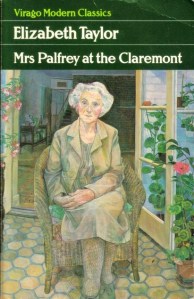
Secondly, Mrs Palfrey at the Claremont by Elizabeth Taylor.

Image from here

Following the death of her beloved husband, Mrs Palfrey moves to the Claremont Hotel on the Cromwell Road “The porch pillars had been recently painted; there were spotted laurels in the window boxes; clean curtains – a front of emphatic respectability.” to see out her days.

“She was a tall woman with big bones and a noble face, dark eyebrows and a neatly folded jowl. She would have made a distinguished-looking man and, sometimes, wearing evening dress, looked like some famous general in drag.”

Mrs Palfrey and her fellow permanent residents at the hotel are desperately trying to avoid a nursing home and rub along together in a mix of boredom, gossip and barely suppressed disdain. Although Taylor is interested in aging and how to find meaning in a world that considers you finished, this isn’t a depressing novel , but rather a gentle comedy with a melancholic tinge.

“Soon, there was a soft, slapping sound as Mr Osmond shuffled a pack of cards for a game of patience: against this, the knitting sounds, and sighs, and stomach gurglings (quickly coughed over).

‘Well, another Sunday nearly gone,’ Mrs Post said quickly, to cover a little fart. She had presence of mind.”

Mrs Palfrey is a resolute soul, who refuses to feel sorry for herself. Part of the generation who lived through both World Wars, she gets on with things.

 “She felt a determination about the lilac trees. They were to be a part of her rules, her code of behaviour. Be independent; never give way to melancholy; never touch capital. And she had abided by the rules.”

On a walk around London, she has a fall and is rescued by a young man, Ludo. He is shaggy-haired, scruffily dressed, good-looking and a wannabe writer. They end up forming an unlikely friendship and the nuances, contradictions, tensions and tenderness between the two are beautifully observed. Taylor is a wonderful writer: sharp, observant, funny and real. She put me in mind of Barbara Pym, and the blurb on the back of my copy of this novel compares her to Jane Austen.  Certainly if you like those, you’ll find a lot to love here.

 “She could glimpse bed-sitting rooms – like Ludo’s some of them – where once cooks had attended ranges, rattling dampers, hooking off hot-plates, skimming stock pots, while listening to housemaids’ gossip bought from above stairs. Mrs Palfrey went slowly by, imagining those days, which were almost clearer to her than this present structure of honeycomb housing and the isolation of each cell, because they were the days that belonged to her being young, and so were the clearest of all to her.”

To end, if you think Ernest Hemingway and Elizabeth Taylor are an unlikely pairing, here’s a heavy metal band and an orchestra performing a song named after a Hemingway novel:

“When you’re a Jet/You’re a Jet all the way /From your first cigarette /To your last dyin’ day.” (West Side Story)

This is a loooong post – strap in people, and bring Kendal mint cake.

download

These days I don’t generally socialise as part of a group (unless it’s a work do, an experience that Dante forgot to include in his descriptions of the circles of hell) but in the last week I’ve been out with two sets of friends, which was a lovely change. For this reason, in this post I thought I’d look  at writers who have famously been part of a group.

Firstly, A Moveable Feast by Ernest Hemingway, which was published after his death and recalls his time as a young man in Paris during the interwar period, part of une generation perdue, or lost generation:

“’’That’s what you are. That’s what you all are,’ Miss Stein said. ‘All of you young people who served in the war. You are a lost generation.’

‘Really?’ I said.

‘You are,’ she insisted. ‘You have no respect for anything. You drink yourselves to death…’”

Miss Stein is of course Gertrude Stein, and her literary salon attracts some of the greatest writers of the generation: F Scott Fitzgerald, Ezra Pound, Ford Maddox Ford (a less than flattering portrait), Hilaire Belloc, James Joyce… it really is astonishing that these minds were all in the same place at the same time.

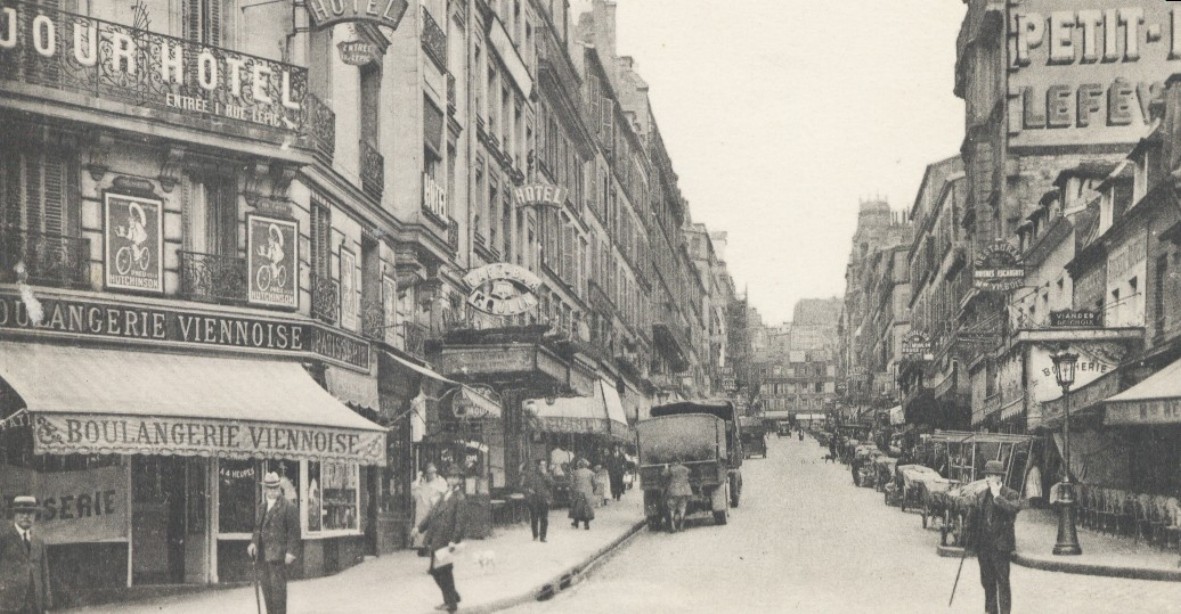
Montmartre in 1925

Montmartre in 1925

Image from here.

I can’t tell you how much I want to dislike Hemingway. He was macho, into bloodsports, treated women appallingly… but his writing just takes my breath away.  A Moveable Feast gives some insight into his craft; his drive to write what is true and to distil his writing into the sparse style he became so famous for:

“Since I had started to break down all my writing and get rid of all facility and try to make instead of describe, writing had been wonderful to do. But it was very difficult, and I did not know how I would ever write anything as long as a novel. It often took me a full morning of work to write a paragraph.”

He is filled with the arrogance and uncertainty of youth, completely committed to his craft:

“I’ve seen you beauty, and you belong to me now, whoever you are waiting for and if I never see you again I thought. You belong to me and all Paris belongs to me and I belong to this notebook and pencil.”

 “I would stand and look out over the roofs of Paris and think, ‘Do not worry. You have always written before and you will write now. All you have to do is write one true sentence. Write the truest sentence you know.’”

Ernest_Hemingway_Writing_at_Campsite_in_Kenya_-_NARA_-_192655

While he is sitting in cafes trying to write one true sentence, the young Hemingway comes into contact with various writers also trying to perfect their craft, including one of my favourite poets, Ezra Pound:

“Ezra was kinder and more Christian about people than I was. His own writing, when he would hit it right, was so perfect, and he was so sincere in his mistakes and so enamoured of his errors, and so kind to people, that I always thought of him as a sort of saint. He was also irascible, but so perhaps have been many saints.”

I just don’t understand how a person unfailingly described by all who knew him as being so generous, supportive and kind could also be such a massive fascist. It does make me feel a bit better about liking his poetry though. He also provides many of the episodes of comic relief in A Moveable Feast:

“I had heard complaining all my life. I found I could go on writing and that it was no worse than other noises, certainly better than Ezra learning to play the bassoon.”

Hemingway and his first wife were poverty-stricken in this period, and one of the places that offers succour is the now-famous English language bookshop Shakespeare and Company under the auspices of Sylvia Beach:

“On a cold windswept street, this was a warm, cheerful place with a big stove in winter , tables and shelves of books, new books in the window, and photographs on the wall of famous writers both dead and living.”

From within this perfect bookshop, Sylvia lends Hemingway and Hadley money and books, and helps create the man who would write this about F Scott Fitzgerald:

F_Scott_Fitzgerald_and_wife_Zelda_September_1921

“His talent was as natural as the pattern that was made by the dust on a butterfly’s wings. At one time he understood it no more than the butterfly did and he did not know when it was brushed or marred. Later he became conscious of his damaged wings and of their construction and he learned to think and he could not fly any more because the love of flight was gone and he could only remember when it had been effortless.”

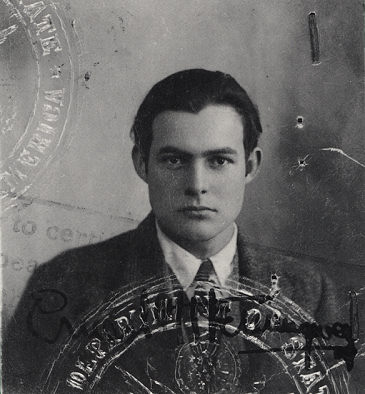
If that passage doesn’t want to make you weep at the tragic beauty of it all, then I don’t know if we can be friends.  Damn you Hemingway, you’ve made me love you just like all those other women who should have kept well away.  Thank goodness we didn’t meet when you looked like this:

ernest-hemingway1

Or things could have got messy. (Seriously, who looks like that in a passport photo? I look like I’m out on day-release in mine).

Woody Allen explored the attraction of this group of writers in Midnight in Paris. I liked the film, but even a friend who loathed it admitted Corey Stoll did a great job as Hemingway:

“But Paris was a very old city and we were young and nothing was simple there, not even poverty, nor sudden money, not the moonlight, nor right and wrong, nor the breathing of someone who lay beside you in the moonlight.”

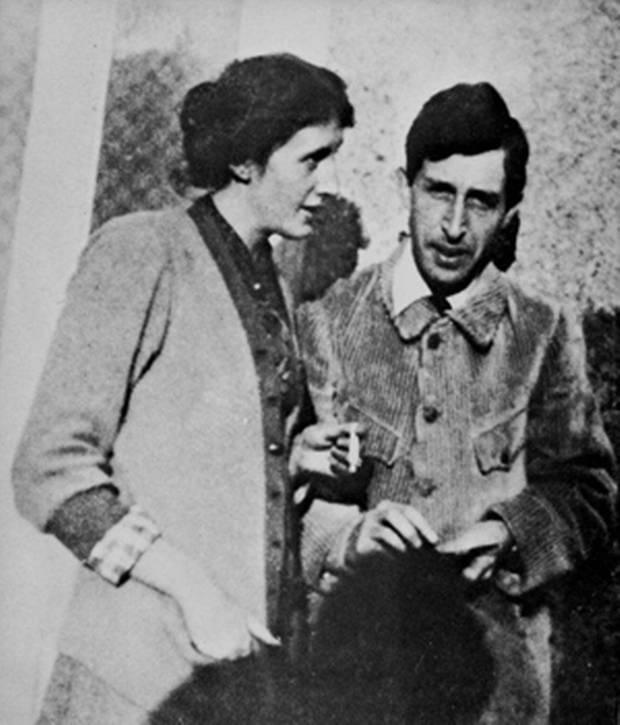
Secondly, The Wise Virgins by Leonard Woolf, who was part of the Bloomsbury group, and in his second (final) novel portrays his wife, Virginia.  He is also in the privileged position of being one of the few male authors published by Persephone Books, and their lovely edition of this novel includes an endpaper print by Vanessa Bell, Virginia’s sister.

Virginia and Leonard Woolf

Virginia and Leonard Woolf

Image from here

Harry Davis moves with his family into the stultifying suburban society of Richstead (Richmond/Hampstead) where he is introduced to the Garlands and their four daughters, who do nothing all day because that is all they are expected to do:

 “Harry felt the dull sense of depression creeping over him again. ‘It’s so bad,’ he said, ‘to be comfortable. That’s why you want to go on forever in the same place.’

‘But I like being comfortable,’ said Ethel decisively. ‘I don’t think it’s bad at all.’

Harry remained silent; he couldn’t think of anything more to say. Gwen watched his rather heavy face. She could not make him out; she was not sure whether she liked him or hated him at first sight. He seemed to be exceedingly ill-mannered, she thought.”

Harry is an artist, and wants so much more.  He meets the intellectual, free-thinking Camilla (seen as representing Virginia) and falls in love.  While I think reading the novel for biographical ‘clues’ misses the point and would prevent enjoying the novel fully, it’s not difficult to imagine Virginia agreeing with some of Camilla’s sentiments:

“’There’s so much from marriage from which I recoil. It seems to shut women up and out. I won’t be tied by the pettiness and the conventionalities of life. There must be some way out. One must live one’s own life’”

The difficulty is, most of the characters are too vacuous, lazy and pretentious to tread their own path. They’re not terrible people, but the Bloomsbury set seem to sit around all day trying to be clever, while the suburban set obsess over flowers. Apparently some found Camilla-as-Virginia offensive, but if that was what Woolf was doing, Leonard-as-Harry fares little better, too weak to ever seize the life he imagines, lacking the courage of his own convictions:

“He turned over, and lay flat, burying his face in the grass. Harry felt as if he himself were turning into stone. He just managed to say:

‘You think her absolutely cold?’

‘She’s a woman and a virgin: isn’t that enough?…What they want is to be desired – that’s all. And when they get that from some poor devil with a straight back and a clean face, they think they are in love with him, and he marries, to be disappointed.”

If all this sounds terribly tedious, it isn’t.  Woolf satirises early twentieth-century society and shows how it denies sexuality and oppresses men and women, but especially women.  It could be a bleak novel – none of the characters really know what they want or how to break free – but I think we’re not meant to take them as seriously as they take themselves. While it’s not a broad comedic novel, The Wise Virgins has plenty of humour in it:

“This gentleman was undoubtedly a clergyman; his red nose and the causes of it had made it difficult for him to be a minister of Christ for any long time in one place…his life had its advantages, he used to affirm in his more secular moments, because he never had to write a new sermon; one congregation after another listened to the same four which had escaped the wear and tear of wandering with their author up and down England.”

The Wise Virgins is about a denial of desires both individual and collective, and how damaging it can be. The Bloomsbury group in real-life were much more sexually liberated, and while I’m not sure the result was damage-limitation, it did result in some beautiful art:

Vanessa Bell painted by Duncan Grant

Vanessa Bell painted by Duncan Grant

Image from here

You made it to the end of this post! Thanks for reading, and here is your reward: