Novella a Day in May 2022 No.18

Explorers of the New Century – Magnus Mills (2005) 184 pages

I remember really enjoying Magnus Mills’ debut novel The Restraint of Beasts when it was published to great acclaim at the end of the 1990s. I know I read some of his work after that, but then lost track. Explorers of the New Century reminded me of what I had enjoyed so much previously: the dry deadpan humour, the unnerving slightly surreal setting, the feeling that anything could happen, among a group of men brought together by work.

Much in Explorers of the New Century is left unexplained. As we follow two expeditions attempting to reach the “Agreed Furthest Point” first, we have no idea when or where this is. It is very reminiscent of the Antarctic explorations in the early 20th century; one group have resolutely English-sounding names, led by Johns who speaks in the most English of ways:

“Now it’s far too cold to stand here making speeches. I’ve no time for such flummery, so without further ado I think will make an immediate start.”

The other group have names that sound more Scandinavian, led by a man called Tostig. Mills is drawing on our knowledge of Scott and Amundsen but there’s nothing to suggest that this is alternative history, or taking place in any known geographical location.

“The sun was already part way through its slow crawl along the southern horizon. It appeared as a dull red orb offering little in the way of warmth, and providing light for only a few short hours.”

Initially the descriptions of the two expeditions seem fairly familiar, despite an unnerving, unknowable quality that Mills is so good at. The setting up of camp, the annoyances and friendly gestures shared by the men, the rationing and struggles with the terrain, are all reminiscent of imperialist exploration narratives.

“Johns is a true man of enterprise, but like other great explorers he is also fragrantly self-seeking. In his case, I’m afraid ambition has achieved the upper hand.”

However, just over halfway through the story features a significant twist, bringing the darkness of colonialism to the fore. This twist means I can’t say much more about the novella, but I greatly enjoyed reacquainting myself with Mills’ unique vision. Although Explorers of the New Century is a bleak tale, there is a lot of dry humour too.

“Suddenly Medleycott sat up and peered through the slit of the tent flaps.

‘It’s pitch blackout there now,’ he announced. ‘Yet what sights we’ve beheld since our journey began! Think of them! The leaden moon floating on a shimmering sea! Sunrise and sunset rolled together into one fiery hue! The burnished skies! The majestic beams spreading over the dip of the hill! Don’t they make a wonderful spectacle?’

‘Can’t say I’ve ever noticed,’ replied Sargent.”

Mills never allows the humour to let his characters off the hook though. Explorers of the New Century could be read as a fable, and like a fable it has a strong moral core. It isn’t heavy-handed in the telling, but remains challengingly elusive.

Novella a Day in May #29

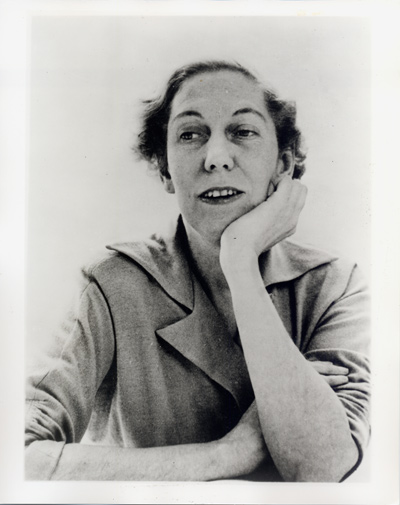
It’s thanks to this mini-project that I finally read Eudora Welty, as I had two of her novellas in the TBR. I’m glad I did, as the latter of these two has definitely whetted my appetite for more of her work.

Eudora-Welty-1962

The Robber Bridegroom (1942, 185 pages)

I enjoyed this reworking of The Brothers Grimm tale which Welty sets in eighteenth century Mississippi. Clement Musgrove arrives back home:

“As his foot touched the shore, the sun sank into the river the colour of blood, and at once a wind sprang up and covered the sky with black, yellow, and green clouds the size of whales, which moved across the face of the moon.”

With this foreboding change in the weather, he finds himself sharing a room with real-life keelboater Mike Fink, and Jamie Lockhart, a gentleman robber. Lockhart saves Musgrove’s life, and so is invited back to his home, which he shares with his horrible wife, who predictably is wicked stepmother to the beautiful Rosamond. Rosamond isn’t perfect though:

“As for Rosamond, she did not mean to tell anything but the truth, but when she opened her mouth in answer to a question, the lies would simply fall out like diamonds and pearls.”

The tale unfolds along familiar lines, with theft, mistaken identity, illicit love and people thought to be dead when they’re not, all in the surrounds of a forest. While I thought The Robber Bridegroom was vividly told and entertaining, I wasn’t sure what Welty was really doing with the tale. Rosamond is given sexual agency which would be a departure for many fairytales; and it’s grounded in a historical reality which adds to the mythology around the Southern states pre-Civil War. It’s an interesting tale but I felt Welty could have done more with it, pushed it a bit further into something truly original but still grounded in fable.

“The only thing that could possibly keep her from being totally happy was that she had never seen her lover’s face. But then the heart cannot live without something to sorrow and be curious over.”

The Ponder Heart (1954, 132 pages)

This, however, I adored. It featured a truly idiosyncratic, distinctive narrator and was funny, unsettling and compulsively readable.

Edna Earle Ponder lives in Clay County, Mississippi, and is proud of being a Ponder and running the town hotel. She is telling the tale of her Uncle Daniel to a silent interlocutor.

“I don’t run the Beulah Hotel for nothing: I size people up: I’m sizing you up right now. People come here, pass through this book, in and out, over the years – and in the whole shooting-match, I don’t care from where or how far they’ve come, not one can hold a candle to Uncle Daniel for looks or manners. If he ever did thing to be sorry for, it’s more than he ever intended.”

Her Uncle Daniel dresses all in white and has a tendency to give away money. His father tries to get him committed; Daniel has a lovely time in the institution and his father ends up committed instead. Then there is an ill-fated marriage to the wonderfully monikered Teacake Magee.

“As for Uncle Daniel, he went right ahead, attracting love and friendship with the best will and the lightest heart in the world. He loved being happy! He loved happiness like I love tea.”

Teacake Magee proves impervious to Uncle Daniel’s charms after 2 months and they split up (we’re never quite sure why) and then Daniel marries Bonnie Dee without his family knowing.

“I wish you could have seen Bonnie Dee! I wish you could. I guess I’d known she was living, but I’d never given her a real good look. She was just now getting her breath. Baby yellow hair, downy – like one of those dandelion puffballs you can blow and tell the time by. And not a grain beneath. Now, Uncle Daniel may not have a whole lot of brains, but what’s there is Ponder, and no mistake about it. But poor little Bonnie Dee!”

And from this marriage the trouble starts. Welty builds her story expertly: you know something bad has happened, you don’t quite know what, by whom or to whom. As it is revealed, it is totally believable and an awful comic tragedy, told in the inimitable style of Edna Earle.

“I’m the go-between, that’s what I am, between my family and the world. I hardly ever get a word in for myself.”

She’s vain and arrogant about her position as a Ponder; she looks down on people and is racist; she’s appalling in lots of ways but Edna Earle spins a good yarn.

“What Uncle Daniel did was just bestow his [love] all around quick – men, women and children. Love! There’s always somebody wants it. Uncle Daniel knew that. He’s smart in way you aren’t, child.”

I was truly sorry to leave The Ponder Heart behind.