“Writing is not a profession but a vocation of unhappiness.” (Georges Simenon)

November is the month of many reading events, and I definitely won’t manage them all, but I’m starting with Novellas in November, hosted by Cathy at 746 Books and BookishBeck.

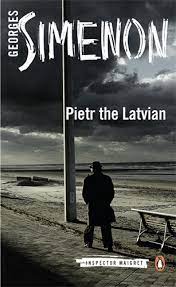
I’m taking this as a good opportunity to carry on with my much-neglected Le Monde’s 100 Books of the Century reading challenge, reading Pietr the Latvian by Georges Simenon (1930, transl. David Bellos 2013) which is No.84 in the list.

This was Maigret’s first outing and Simenon clearly had a very thorough understanding of his policeman from the start. Like many Maigret stories it is novella length, coming in at 162 pages in my English translation.

“Not that he looked like a cartoon policeman. He didn’t have a moustache and he didn’t wear heavy boots. His clothes were well cut and made of fairly light worsted. He shaved every day and looked after his hands.

But his frame was proletarian. He was a big, bony man. Iron muscle shaped his jacket sleeves and quickly wore through knew trousers. He had a way of imposing himself just by standing there. His assertive presence had often irked many of his own colleagues.”

In this first story, Maigret is in pursuit of a thief and conman, Pietr the Latvian, who may not even be from Latvia. (I was anticipating some xenophobia, which there wasn’t in the novel, but be warned there is Antisemitism at points.)

There is intelligence that Pietr has travelled to Paris from the Netherlands and Maigret is tasked with apprehending him. At the Gare du Nord he thinks he spots Pietr, but is then called to a train to identify the body of a man who also matches the description.

Following the first man takes Maigret into the world of well-heeled Parisian hotels:

“Maigret persisted in being a big black unmoving stain amidst the gilding, the chandeliers, the comings and goings of silk evening gowns, fur coats and perfumed, sparkling silhouettes.”

Things become more complex as Maigret follows various leads around the first man. His unshowy, procedural approach is evident from the start as he doggedly pursues evidence throughout Paris and to Fécamp at the coast. The conman knows Maigret is closing in and the danger grows.

I’ve not read all the Maigrets as there are at least eleventy million of them, but I would say from my limited knowledge that this isn’t the strongest. For such a short novel, it is repetitive at times and I wonder if this is because it was published firstly as a serial. In that format the repetitions would work well, but in the novel they weakened the story and it could have done with an edit with the new format in mind.

However, there is still so much to enjoy. The evocation of Paris, the character of Maigret and the novella length make this a quick, entertaining read. Simenon’s affection for his creation is evident and this makes his Detective Chief Inspector so appealing.

“The Latvian was on a tightrope and still putting on a show of balance. In response to Maigret’s pipe he lit a cigar.”
Novella a Day in May 2023 – No.30

Four Soldiers – Hubert Mingarelli (2003 transl. Sam Taylor 2018) 155 pages

I really loved Hubert Mingarelli’s A Meal in Winter when I read it six years ago and so I was overjoyed to find a copy of Four Soldiers in my beloved local charity bookshop. This had a lot in common with its predecessor, being a sparse tale of servicemen which focussed on their humanity rather than their role in conflict. But it was resolutely its own tale too.

The four soldiers are friends thrown together by circumstance during the Russian Civil War in 1919. Resourceful, skilled Pavel, naïve gentle giant Kyabine, quiet, thoughtful Sifra and the narrator Benia. They keep each other company during the tedium of waiting for orders, close to the Romanian border:

“Because we didn’t know where we would be tomorrow. We had come out of the forest, the winter was over, but we didn’t know how much time we would stay here, nor where we would have to go next. The war wasn’t over, but as usual we didn’t know anything about the army’s operations. It was better not to think about it. We could already count ourselves lucky to have found this pond.”

What is so striking about the soldiers is how terribly young they are. We are never told their ages, but their behaviour, their lack of experience, their superstitions – all emphasise that they are little more than children caught up in something far beyond their control, for which they may have to pay the highest price.

Their concerns are ordinary, not political or idealistic. They play dice; they swim; they smoke; Pavel has nightmares; they take turns to sleep with a watch that contains a picture of a woman that they think brings them luck.

Mingarelli doesn’t seek to explain how they ended up there or what they hope for beyond it. By focussing on the present he is able to convey how caught they are by circumstance, how hope lingers but is unexpressed.  

“Barely had we finished drinking that tea before we became nostalgic for it. But, all the same, it was better than no tea at all.”

The simplicity of the plot, imagery and prose is so finely balanced. Mingarelli conveys a vital story that needs no adornment while at the same time driving home its importance and universality.

“I advanced. But I did so evermore sadly. The sadness was stronger than me. It was because of the smell of potatoes slung over my shoulder. It didn’t evoke anything precise, that smell. Not one specific event, in any case. What it evoked was just a distant time.”

Four Soldiers isn’t remotely sentimental or sensationalist, and it’s the ordinariness it depicts that makes it so devastating, and humane.

“The silence and the darkness covered us.

Then suddenly, almost in a whisper: ‘I wrote at the end that we had a good day.’

It was very strange and sweet to hear him say that, because, my God, it was true, wasn’t it? It had been a good day.”

Susan at A Life in Books, a great champion of novellas whose reviews are a significant contributor to my ever-spiralling TBR, has written about Four Soldiers here.

Novella a Day in May 2023 – No.23

Marie – Madeleine Bourdouxhe (1943 trans. Faith Evans 1997) 141 pages

The striking cover of Marie and the fact that it is published by Daunt Books was enough to convince me to pick up this novella, and I’m so glad I did. I’m not familiar with Belgian writer Madeleine Bourdouxhe’s work but the afterword explained she was a friend of Simone de Beauvoir and Victor Serge, among others, and she was part of the resistance during the war, so I’m glad to have finally discovered her.

Marie was published in 1943 and details the sexual awakening of a young married housewife (the original title was A La Recherche de Marie, maybe it was felt Anglophone readers wouldn’t get the reference to Proust?) It has an elegiac tone at times – not only for Marie but for everyone she encounters and for the city of Paris – and I felt the spectre of war was certainly present.

It begins with Marie and her husband Jean on holiday in the south of France, away from their Parisian home:

“It wasn’t as hot as earlier on, but as the afternoon came to an end, everything remained steeped in torpor, retaining the heat of the whole day. There is something ineffable around Marie that was making her happy. Jean was next to her, serving her coffee, giving her a cigarette: and intimate little scene, on the balcony of a hotel, overlooking the sea.”

Marie seems very devoted to her husband, but the authorial voice – which shifts between tenses –  suggests he not entirely worthy:

“There was definitely strength in his character – or rather, there were bouts of strength. Jean had a way of claiming his due, or more than his due: a somewhat egotistical way of deciding, of drinking, of eating, of sitting, of occupying his place.”

During this holiday Marie finds herself strongly sexually attracted to a man around ten years younger than her. Their affair continues beyond the holiday season and Bourdouxhe is wonderful at minutely analysing unspoken moments between people:

“They mutually accept this great silence, and the richness, the sincerity that lies within it. They also know that in that moment they are seeing everything from the same point of view and that, for both of them, that red sail on the sea stands out as clearly, as harshly, as cruelly, as the thing that is deep inside them.”

There is a lot to this seemingly straightforward tale. The lover remains nameless and none of the characters are as fully drawn as Marie. She is absolutely Bourdouxhe’s focus, through which she explores the roles of women, sexuality, agency, choice.

The war also creates a sense of foreboding for everyone the story touches. Having googled, I know the town that Marie and Jean find themselves in at one point was 90% destroyed in 1940.

Marie is a woman with a rich inner life and a sensual response to her surroundings. As she starts to externalise some of this, Bourdouxhe shows how unknown people can be even to those closest to them, the pressure of societal forces for women, and the challenge in making an inner and outer life congruous with one another.

Marie is a powerful novella and I’m looking forward to exploring this author further.

“She weeps the strange, bitter tears of an exhausted woman who is gradually letting herself be worn out by a symbol.”

Novella a Day in May 2023 – No.17

Count d’Orgel’s Ball – Raymond Radiguet (1924, trans. 1989 Annapaola Cancogni) 160 pages

Raymond Radiguet was only twenty when he died, having published two novels, of which Count d’Orgel’s Ball was the second, some poetry and a play. He had led a life that brought him into contact with the foremost artists of the day, including Picasso and his lover Jean Cocteau, who wrote the foreword to the NYRB Classics edition I read.

This made me a bit trepidatious in approaching this novella, wondering if it was a piece of juvenilia that wouldn’t have otherwise garnered much attention. But I shouldn’t be so ageist, because I really found a lot to enjoy in Count d’Orgel’s Ball.

It tells the story of a love triangle amongst the beautiful and privileged in the 1920s. Mahaut is from an old family, and desperate for love when she marries young:

“She recovered some of the freshness of her early childhood when, at eighteen, she married Count Anne d’Orgel, one of our country’s best names. She fell madly in love with her husband who, in return showed her much gratitude and the warmest friendship, which he himself took for love.”

She adores her sociable and brilliant husband, who is fairly harmless but entirely vacuous:

“Nobody knew the reason for his prestige or, at least, for his brilliant reputation. His name had little to do with it since talent comes first even amongst those who worship names.”

Into their world comes François de Séryeuse, a young man not entirely enthralled by the Count’s charm and prestige. This works in his favour and the three spend more and more time together.

“He [the Count] adopted people more than he made friends with them. In return, he demanded a lot. He wanted to lead the way, to be in control.”

The Count doesn’t sustain control though, as François and Mahaut fall in love. For me this was the weakest point of the novella. Radiguet is excellent at observing people and social situations; he is incisive regarding pretention and social mores. Where the story falters for me is in creating fully rounded characters and the emotional ties between them. But perhaps I’m being unfair, as Radiguet is describing a world filled with shallow and/or naïve people. He doesn’t view them as having great emotional depth:

“It would be safe to say that François’ ideas on love were ready made. But since he had made them himself, he believed they were cut to size. He did not realise he had cut them out of limp feelings.”

The writing style is fluid and often scathing. It’s so readable and entirely unflinching in its view of a particular part of society at a particular time.

I thought there were a few rough edges at points in Count D’Orgel’s Ball; a tendency to tell rather than show, and characters as vehicles for social satire rather than fully recognisable people. But these are little quibbles and having written this novella at nineteen, I can only wonder what Radiguet would have achieved had he lived longer.

“Happiness is like good health: one is not aware of it.”

Novella a Day in May 2023 – No.13

Lost Profile – Françoise Sagan (1974 trans. Joanna Kilmartin 1976) 142 pages

This novella follows a young woman, Josée, as she leaves her abusive husband Alan and is drawn into the orbit of the controlling Julius A.Cram, all within the social sphere of incredibly rich Parisian socialites.  

Sagan has very little time for this echelon of society:

“We talked of this and that, in other words nothing, with the tact that characterises well-bred people once they are at table. It seems that it only takes a knife, a fork, a plate and the appearance of the first course to induce a kind of discretion.”

Josée does very little at the start of the novel and seems to drift around, content to be entirely idle, which makes her vulnerable. She blames herself for her husband’s abuse and then in leaving him finds herself controlled by another man, albeit in a very different way. Julius is an enigmatic character who also seems to operate on the periphery of their social set. Both are lonely in their way, and the people they pass time with are entirely self-involved, so with the exception of her friend Didier, there is no-one to warn Josée of the danger she is in.

“It was an idiosyncrasy common to each individual member of that little set to refer to all the rest as ‘the others’, as though he or she were a paragon of virtue and a superior intelligence who had strayed into a bunch of contemptible socialites.”

As Josée tries to get her life together, the reader has greater awareness than she does herself. We can what is happening in her circumstances that she remains blissfully unaware of, and we can see how these circumstances will play out. She is incisive and clearsighted regarding others, but not remotely self-reflective:

“They were an amiable couple, great friends of Irène Debout, who, having exiled themselves far from Paris out of a grotesque affectation for the simple life, spent their time when they came to the capital, roughly 100 times a year, extolling the charms of solitude. They lived for their weekend house parties.”

Lost Profile is a slight tale, but I always enjoy Sagan’s writing. This was mainly enjoyable for the bitchy portraits of the rich and idle – a quick read, just the right length for the subject matter.

“Perhaps, one day, I too would reach the point of being able to tolerate only a sort of carbon copy of myself, black and white, colourless and spineless. Ah yes, the time would come when I would bicycle without ever leaving my bathroom, chewing pills the while to send my feelings to sleep. Muscled legs and flabby heart, a serene face and a dead soul.”

I’ve mentioned before the terrible 1970s/early 80s Penguin covers for Sagan’s work, and this one is no exception:

Novella a Day in May 2023 – No.11

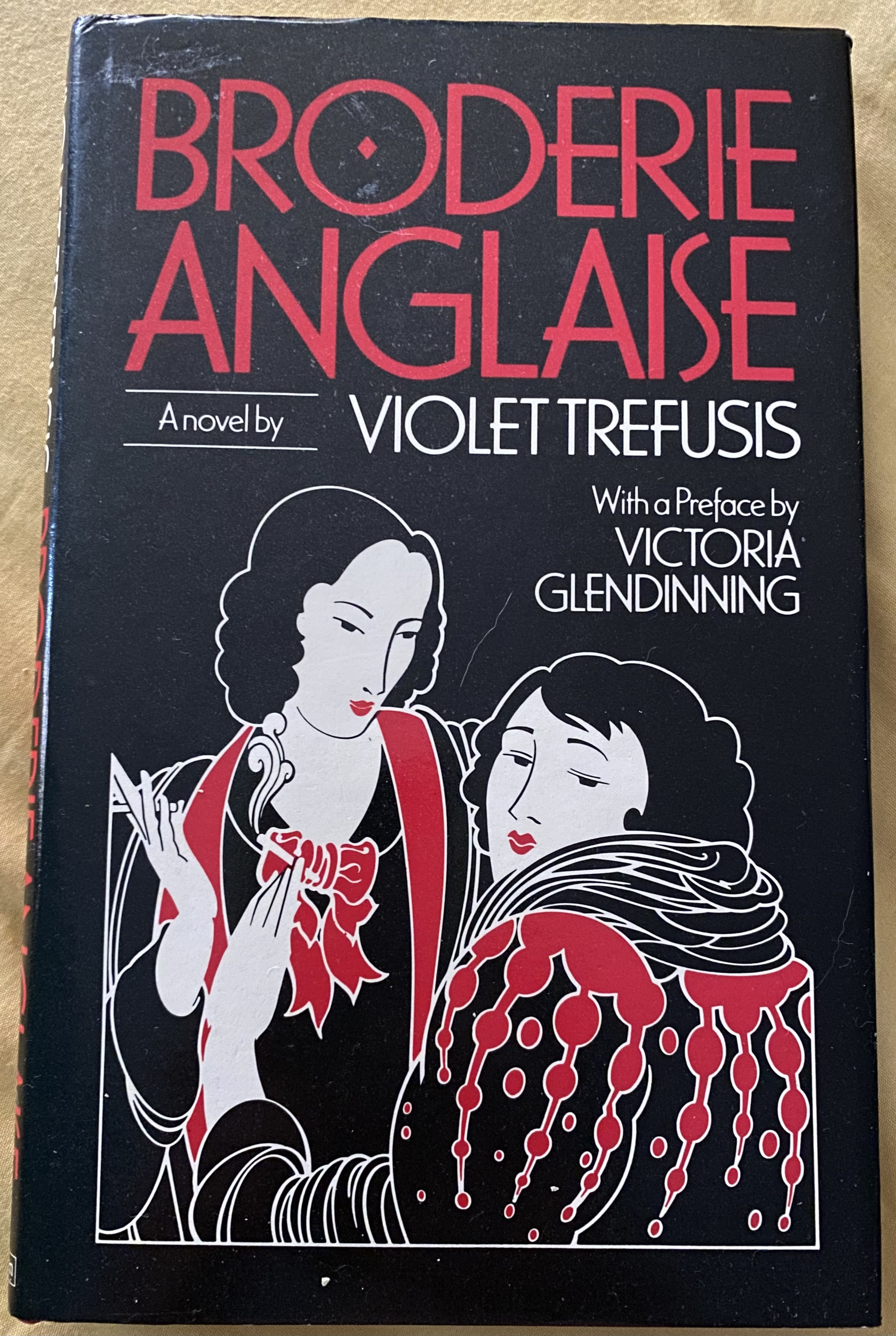
Broderie Anglaise – Violet Trefusis (1935 trans. Harcourt Brace Jovanovich Inc. 1985) 120 pages

My main reason for picking up Broderie Anglaise was an interest in Violet Trefusis because of her links to Vita Sackville-West, and through her, Virginia Woolf, rather than the novella itself. Although I did enjoy Hunt the Slipper when I read it a few years ago, I was primarily interested to see the characters of Vita and Virginia as conjured in this novella, and the portrait of Knole, Vita’s ancestral home.

Alexa is a celebrated English writer (no prizes for guessing who she represents) who is having an affair with Lord Shorne (Vita). Casting a long shadow over their liaison is his broken heart from a relationship with Anne, a distant cousin (Violet).

“He said to himself that this was exactly the companion he needed – humane and sympathetic and at the same time rather sexless.”

It’s worth noting that Broderie Anglaise was published in French and only translated for the Anglophone market in 1985. Victoria Glendinning says in her preface to this edition that she doesn’t think Vita or Virginia were aware of the novella’s existence. So although the portraits can be quite acidic at times, it’s definitely an easier read knowing that no-one they represented ever read them.

It’s difficult to convey the mind of a genius when you are not a genius. Trefusis wisely glosses over Alexa’s writing and sticks to her anxieties around her affair, and more mundane concerns:

“Alexa went and sat by the window, at the mercy of the light, now no one else was there. A sluggish drizzle was falling. She looked up at the sky. Its full, baroque clouds were like a gathering of Marlborough’s contemporaries – all scrolls and whorls, from their wigs to their shoes. The sky’s not very imaginative, she thought, it always reminds me of something.”

The first part of the novella is Alexa’s anticipation of meeting Anne, when a mutual (oblivious) friend arranges a meeting. She reflects on her affair with John and what little she knows of Anne. The affair is not romanticised; it’s treated with some degree of irony and humour.

“Arm in arm they went up the slippery staircase that led to the state apartments. Alexa supported him. He was the Lord, the ravisher. She was about to become his mistress. They had to go through eight drawing rooms in all – a long way for a couple who had been drinking.”

Violet definitely doesn’t idolise either Vita or herself in the character of Anne. I felt she treated all three as flawed people, struggling to understand the circumstances they found themselves in.

Where she did portray a monstrous person was in the character of Lady Shorne (Lady Sackville). Controlling, intrusive, inappropriate, surrounding herself with trappings – she was truly malevolent.

“The tiny room, cluttered with carefully illuminated pieces of amber, each one lit up from within by its own mocking flame; her hostess, sitting motionless like a big spider in the middle of her web – all combined to make Alexa ill at ease.”

Broderie Anglaise is slight, but it’s definitely worth a read, particularly for those with an interest in Woolf/VSW. The portrait of Lord Shorne’s home Otterways has echoes of Orlando’s estate, being as they are both portraits of Knole. It’s also interesting to see how the Russian Princess of Orlando (Violet) chose to portray herself given a chance. She can be a witty and precise observer:

“‘I use up all my vital force in my books. There’s nothing left over for life,’ she suggested, with the famous touching smile which was so admired in the literary world but which John found exasperating because it was to be seen in all her photographs.”

Ultimately I felt Violet wasn’t overly settling scores here, but rather making a plea for not idolising lovers, even when they are from glamorous families, or are the foremost writer of their generation. She suggests that truly seeing people and situations may be painful, but it is really the only way towards enduring and authentic relationships.

Although she does use a play on words at the end to give herself the final say. And why not, it’s her novella after all 😀

“This was just the sort of thing that irritated him most. She was sentimental when she should have been satirical, obstinate when she should have been amenable.”

Novella a Day in May 2023 – No.7

A Sunday in Ville-d’Avray – Dominique Barbéris (2019, trans. John Cullen 2021) 152 pages

For the first Sunday of this month of novella reading, a novella set on a Sunday! I was alerted to A Sunday in Ville-d’Avray by Jacqui’s excellent review and so I was delighted when I came across a copy in my local marvellous charity bookshop.

“On Sundays, you think about life.”

The narrator (referred to as Jane on the French flap blurb although I don’t remember her being named in the text) goes to visit her sister in the Parisian suburb of Ville d’Avray for the afternoon. The sisters have intermittent contact and Jane’s urbanite boyfriend Luc seems to have an ambiguous relationship with both his in-laws and the suburbs. For this visit she is alone:

“And so I was full of memories, I was in the melancholy state of mind that often comes over me when I go to see my sister, and I think I started by getting a little lost in Ville d’Avray, by driving through the provincial, peaceful streets of my sister’s neighbourhood, past private houses their gleaming bay windows, their porches, their phony airs (Art Deco villa, Norman country house), their gardens planted with rosebushes and cedars.”

Nothing really happens, and yet the afternoon is full of significance. The sisters sit out in the autumn afternoon and Claire Marie recounts a chaste affair with a man called Marc Hermann. He has both a mysterious past and present:

“She was almost sure that he was lying to her about a great many things, but she felt certain that he was alone and that his solitude was complete, so dense that she could perceive the space it occupied around him, and that solitude touched her heart.”

It is the atmosphere rather than the plot that gives this novella its power. It captures perfectly that quiet, subdued feeling of a Sunday afternoon, anticipating the activity of the week ahead. There is also an unsettling quality to it: the fading light as the sisters sit, the repeated references to the forests that surround the suburb where Claire Marie and Marc would walk; the fear of burglars and invasion.

Jane is at once the first-person narrator and the silent interlocutor. This is a novella of liminal spaces: temporal, geographical and psychological. Barbéris expertly holds the reader between these spaces in the story, destabilising the narrative.  Nothing overt is said or done, but gradually there is a sense of not trusting what we are being told. But should Jane not trust Claire Marie or should the reader not trust the narrator?

I’m sure the atmosphere of this novella will stay with me. A perfect Sunday afternoon read.

“Ever since the neighbour had mowed his lawn, the whole street smelled of cut grass. I don’t know why the smell of cut grass can give you such a feeling of sadness, and also such a violent desire to keep on living.”

Novella a Day in May 2023 – No.2

Winter in Sokcho – Elisa Shua Dusapin (2016 trans. Aneesa Abbas Higgins  2020) 154 pages

Day 2 and I’m delighted that yesterday Simon at Stuck in a Book posted that he’ll be joining me with his #ABookaDayinMay, surely adding many more titles to my TBR mountain 🙂

The narrative voice in Winter in Sokcho is an intriguing one: detached yet painfully intimate, ambiguous yet pragmatically clear. A nameless young woman records what happens to her, but it is up to the reader to decipher the meaning.

She works in a hotel in out of season Sokcho, a coastal tourist town sixty kilometres south of the border with North Korea. It is not a glamorous hotel even in peak season:

“Orange and green corridors, lit by blueish light bulbs. Old Park hadn’t moved on from the days after the war, when guests were lured like squids to their nets, dazzled by strings of blinking lights.”

“I loved this coastline, scarred as it was by the line of electrified barbed wire fencing along the shore.”

A guest arrives at the hotel, a French graphic novelist named Kerrand. Slowly he and the woman form a bond that is never quite articulated. It could be sexual. It could be father/daughter (her absent father is French too). He wants her to show him the area as she knows it, but it is a flawed premise from the start:

“He’d never understand what Sokcho was like. You had to be born here, live through the winters. The smells, the octopus. The isolation.”

The isolation both geographical and individual lends the story a bleakness that verges on Gothic, despite all the neon lights. A trip to the border is downright eerie; the other guest in the hotel is permanently swathed in bandages as she recovers from cosmetic surgery.

The pressures on women and their appearance bear heavily on the narrator. Her mother chastises her for eating too little, and she seems to have body dysmorphia/an eating disorder. Her boyfriend leaves for Seoul for a modelling career, casually accepting he’ll undertake facial surgery if that is what is needed for work, and urging her to do the same.

Like so much else in her life, she seems to feel somewhat detached from her boyfriend. There is a sense of everything in her life being a step removed. She has no friends, her mother is suffocating yet pitable and distances with her need to be carefully managed. The narrator speaks with Kerrand in English despite her French being more fluent.  

As her involvement with Kerrand grows, she feels an ambivalence around his drawings of women, which never make it into his published work:

“In bed later, I heard the pen scratching. I pinned myself against the thin wall. An gnawing sound,  irritating. Working its way under my skin. Stopping and starting. I pictured Kerrand, his fingers scurrying like spiders legs, his eyes travelling up, scrutinising the model, looking down at the paper again, looking back up to make sure his pen conveyed the truth of his vision, to keep her from vanishing while he traced the lines.”

This ambivalence moves towards an ending that is wholly ambiguous. It could be read several ways and I remain unsure as to what I think happened. This isn’t remotely unsatisfying but entirely apt. Winter in Sokcho is a compelling exploration of the unknown: in ourselves, in others, and in the forces of history we all live with. How we reconcile ourselves to this is for the individual to discover. I think the narrator did find a way, I’m just not sure what it was…

“You may have had your wars, I’m sure there are scars on your beaches, but that’s all in the past. Our beaches are still waiting for the end of a war that’s been going on for so long people have stopped believing it’s real. They build hotels, put up neon signs, but it’s all fake, we’re on a knife-edge, it could all give way at any moment.”

Novella a Day in May 2019 #22

The Cat – Colette (1933, trans. Antonia White, 1953) 96 pages

Back in January when I wasn’t sure I’d manage NADIM this year (I’m still not sure – 9 posts to go!) I did a week of novellas by Colette. I loved immersing myself in her writing that week so I couldn’t resist including another of her novellas this month.

The Cat is familiar Colette territory: a young, slightly feckless couple failing to communicate. The difference is that there are three beings in this marriage: Alain, Camille, and Alain’s Russian Blue cat Saha.

Alain is from old money that is rapidly dwindling; Camille is new money that is much more abundant.

“Alain listened to her, not bored, but not indulgent either. He had known her for several years and classified her as a typical modern girl. He knew the way she drove a car, a little to fast and a little too well; her eye alert and her scarlet mouth always ready to swear violently at a taxi driver. He knew that she lied unblushingly”

They desire one another but they don’t communicate in any meaningful way. Alain almost seems to despise Camille at times – finding her tacky and invasive – unlike his pedigree cat, whom he adores. The three of them move temporarily to a friend’s flat while their home is being refurbished:

“He was incessantly and increasingly aware of his repugnance at the idea of making a place for this young woman, this outsider, in his own home. He nursed this resentment and fed it with secret soliloquies and the sullen contemplation of their new dwelling.”

For Camille, the resentments and disappointments which begin to build in their marriage become focussed towards Saha. As she points out, it is worse than another woman. Saha isn’t a competitor, but Alain loves her unconditionally and has an easy sensual relationship with his cat, whereas his sexual relationship with Camille is complicated by his feelings of contempt.

“As soon as he turned out the light, the cat began to trample delicately on her friend’s chest. Each time she pressed down her feet, one single claw pierced the silk of the pyjamas, catching the skin just enough for Alain to feel an uneasy pleasure.”

Spoiler alert: I must admit I did what I never do and skipped to the end of this story before reading very far, to check the cat wasn’t killed. I couldn’t face a story where that happened. But thankfully Colette is more subtle than that. Saha doesn’t die, which means the failures in the human relationship occur not in the rage of grief, but in something more subdued and sadder. Saha is a focus for the confused, antagonistic feelings the young couple have for one another. The cat brings these feelings to the surface more quickly than perhaps they would have done without her, but there is no doubt they would have occurred at some point.

You don’t need to be a cat lover to enjoy this story. It is a study of a young, naïve, selfish couple and the unthinking damage they do to one another, while professing their love. This being Colette, alongside the psychological insights, there are beautiful descriptions of the natural world:

“High in the sky a hazy moon held court, looking larger than usual through the mist of the first warm days. A single tree – a poplar with newly opened glossy leaves – caught the moonlight and trickled with as many sparkles as a waterfall. A silver shadow leapt out of a clump of bushes and glided like a fish against Alain’s ankles.

‘Ah! There you are Saha! I was looking for you. Why didn’t you appear at table tonight?’”

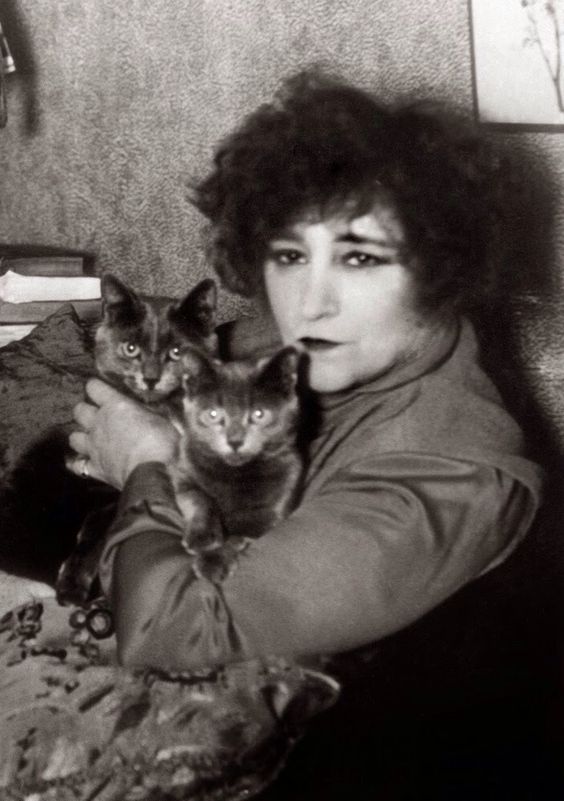
To end, here’s the lady herself with a couple of her beloved pets:

Novella a Day in May 2019 #19

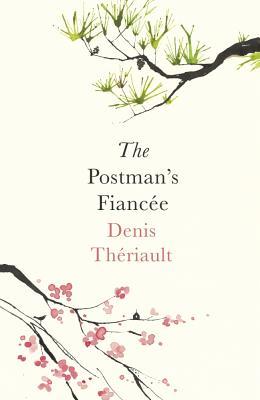
The Postman’s Fiancée – Denis Theriault (2016, trans. John Cullen 2017) 197 pages

(This post contains spoilers for The Peculiar Life of a Lonely Postman so don’t read on if you’ve any plans to read that novella.)

As Naomi pointed out, last year’s NADIM didn’t include a single Canadian author, so I’d planned on a few this year. But as my first post for NADIM 2019 explained, the best laid plans… Still, I have managed to include one, and here it is 😊

I really liked The Peculiar Life of a Lonely Postman when I read it a few years back. This sequel is told from the point of view of Tania, the waitress who loves Bilodo (the title character of the first book) and picks up the story shortly before Bilodo’s accident, carrying the tale on further.

As readers of the first book will know, Bilodo’s quiet, gentle existence appeals to Tania as she brings him his lunch each day:

“Tania could happily imagine him leading a monastic existence dedicated to calligraphy, saving himself physically and spiritually for the fortunate pilgrimess who would know how to find a pathway to his soul – a role for which Tania considered herself eminently qualified.”

Unfortunately Bilodo has no idea of her feelings until a cruel practical joke. Before they can talk it through, Bilodo is hit by a truck. This is where the first novella ends. In this sequel, he is given CPR by Tania and ultimately survives, but with no memory of recent years. Tania convinces him they were a couple, and engaged to be married.

“For that was the way she saw the matter: a case of confusion on the part of Destiny. In Tania’s eyes, she and Bilodo had been fated to meet and fall in love, and their botched romantic union stemmed from a karmic dysfunction which she felt it her legitimate right to remedy.”

And this is where my problems with this sequel begin. I wasn’t happy that the weird, metaphysical ending of The Peculiar Life of a Lonely Postman seemed to be undermined and explained away, but Theriault does rescue this by the end of The Postman’s Fiancee, so I can let that go…

My main reservation was with what Tania is doing. In The Peculiar Life of a Lonely Postman Bilodo isn’t behaving well: he’s steaming open people’s private letters and reading them before he delivers their post. Not great, but within that novella it’s sort of OK. But Tania is manipulating and deceiving someone she professes to love, while they have amnesia. There’s really nothing that makes that OK. While I don’t mind reading about people not behaving well, here it made me uncomfortable because I think we’re supposed to be rooting for Tania and for her and Bilodo to get together. And while Theriault is a highly accomplished and subtle writer, I couldn’t quite embrace the circumstances in this story.

Tania isn’t despicable so she does have reservations about what she’s doing:

“Wasn’t she wrong to interfere with his mind that way, and by doing so wasn’t she committing some kind of mental rape?”

But she finds herself unable to stop. What readers of the first novella know, and what Tania comes to realise, is that Bilodo’s life was a bit more complicated than the monastic existence she’d imagined for him. As the circumstances of Bilodo’s life start to catch up with them, how much longer will Tania be able to sustain the fiction of the life she desperately wants? And will Bilodo ever regain his memory?

The Postman’s Fiancee is about loneliness and the fantasies we project for ourselves and on to others. It’s about recognising people for who they are and all their complications, rather than who we wish they were. It’s well written, nicely paced and with excellent characterisation and so I do still recommend this both as a sequel and as a stand-alone novella, but the actions of poor despairing Tania did limit my enjoyment of it somewhat.