This week’s post is about novels which build on the untold stories of other novels. This was prompted by last week’s post where I looked at the The Plague by Albert Camus. I mentioned that there were essentially no women in the book but I neglected to say that there is another significant group missing from this Algeria-set tale: Arabs. In The Plague, Camus makes reference to events depicted in The Outsider (L’Etranger):
“Grand had personally witnessed an odd scene that took place at the tobacconist’s. An animated conversation was in progress and the woman behind the counter started airing her views about a murder case that had created some stir in Algiers. A young commercial employee had killed an Algerian on a beach”
The Arab killed by Meursault in The Outsider is nameless. In The Meursault Investigation (2014, tr. John Cullen, 2015) Algerian writer Kamel Daoud has given him a name and expanded the events of The Outsider to show the fallout from the murder on the victim’s family.
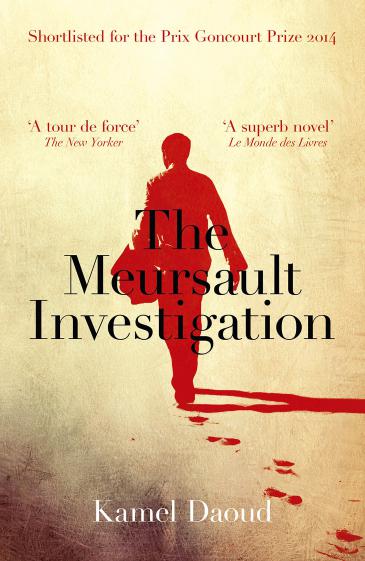
“Well, the original guy was such a good storyteller, he managed to make
people forget his crime, whereas the other one was a poor illiterate God created apparently for the sole purpose of taking a bullet and returning to dust – an anonymous person who didn’t even have the time to be given a name.”
Told by Harun, the victim’s brother, to a silent interlocutor in a bar, the story brings home the emotional fallout of a person – famous yet anonymous – being killed:
“My brother Musa was capable of parting the sea, and yet he died in insignificance, like a common bit player, on a beach that today has disappeared”
Yet it also questions why, in this touchstone of twentieth-century literature, those in the story and the readers of it do not interrogate what is depicted more:
“the court preferred judging a man who didn’t weep over his mother’s death to judging a man who killed an Arab”
The Meursault Investigation, despite its slim size (142 pages in my edition) is a hugely ambitious work. Obviously it is in conversation with The Outsider (from the outset with the opening line “Mama’s still alive today”, echoing Camus’s opener of “Mother died today”) but it is using this a starting point to explore issues around colonialism, post-colonialism, language (Daoud writes in French, not Arabic):
“I’m going to take the stones from the old houses the colonists left behind, remove them one by one, and build my own house, my own language. The murderer’s words and expressions are my unclaimed goods. Besides, the country’s littered with words that don’t belong to anyone anymore. You see them on the facades of old stores, in yellowing books, on people’s faces, or transformed by the strange creole decolonisation produces.”
Big themes, but Daoud explores them with a lightness of touch and a dry humour which stops it becoming unbearably heavy. Like Camus, he raises questions without offering trite answers. A worthy companion to the classic which inspired it.
“I’m philosophising? Yes, yes I am. Your hero had a good understanding of that sort of thing; whether or not to commit murder is the only proper question for a philosopher, the only one he ought to ask. All the rest is chit chat. However, I’m only a man sitting in a bar. It’s the end of the day, the stars are coming out one by one, and the night has already given the sky a positively exhilarating depth.”
Both the books I’ve picked this week are quite serious, so let’s pause and spend some time with a drunk raconteur slightly less coherent than Harun:
Secondly, March by Geraldine Brooks (2006) the story of the missing father in Little Women, which won the Pulitzer. Prize-winning novels can be a mixed bag, and leave me feeling more than a little peevish*, wondering if the judges and I have even read the same book. Not in this instance, as March is both beautifully written and very readable. But firstly, I need to get something off my chest. This is my edition:
That Richard and Judy Book Club sticker is permanent. PERMANENT. O monstrous disfigurement! Removable stickers are bad enough: they’re not really removable, they leave a sticky mess and no matter how much I scrub, even if the sticky bit goes, there’s always a weird, oleaginous*disc-shaped mark left on the cover. They never tell me anything I want to know – in this case, that I’m reading something recommended by Richard and Judy. Why, publishers? WHY? No-one wants this! NO-ONE.
*deep breath*
Back to March, which gives voice to the absent father in Little Women, and the year he spends away from home fighting in the American Civil War. A man of strong convictions who sees his family’s poverty as part of a wider cause and follows a vegan diet meaning all his little women have to do the same, he begins the war with ideals challenged but intact:
“If war can ever be said to be just, then this war is so; it is action for a moral cause, with the most rigorous of intellectual underpinnings. And yet everywhere I turn, I see injustice done in the waging of it.”
Brooks does not pull her punches on these injustices; at times March was harsh reading. March reflects on his life and how he has come to be involved in the fighting, which includes a violent awakening to the horrors of slavery. Unsurprisingly, the horrors continue during the conflict and March has to take difficult decisions that challenge his beliefs not only in social justice and moral causes, but in who he is as a man. At the same time, the portrait of Marmee is extended and complicated beyond the source novel. She is angry:
“I only let him do to me what men have ever done to women: march off to empty glory and hollow acclaim and leave us behind to pick up the pieces. The broken cities, the burned barns, the innocent injured beasts, the ruined bodies of the boys we bore and the men we lay with.”
Although Brooks doesn’t dwell on this, there is also the suggestion that Marmee is racist. Despite participating in the underground railway and supporting emancipation, when she arrives in Washington to see her husband and encounters free black people, she wonders: “are there no end to these people?” A bold move by Brooks, but one that results in flawed, complex characters who are wholly believable.
March is a sad book, but not depressing. Ultimately it is about endurance, against the odds, and how we hold together even when feeling utterly broken. Like Little Women, it is also about family, whether they are physically with us or not:
“One day I hope to go back. To my wife, to my girls, but also to the man of moral certainty that I was…that innocent man, who knew with such clear confidence exactly what it was he was meant to do”
To end, what my own family sadly lacks is a catchy theme tune:
* Following last week’s post comments: today’s blog post was brought to you by the words peevish and oleaginous, thanks to Kate at booksaremyfavouriteandbest 🙂
 madame bibi lophile recommends