“They laugh at me because I’m different; I laugh at them because they’re all the same.” (Kurt Cobain)

Dear reader, it’s been so long.  I’ve missed you, but the preparation for finals and my last piece of coursework took over.  Now I have finished writing the definitive essay on Cary Grant’s performance of gender ambiguity (OK, I’ve written an essay on Cary Grant’s performance of gender ambiguity) I have a brief respite which I choose to spend blogging. Away we go:

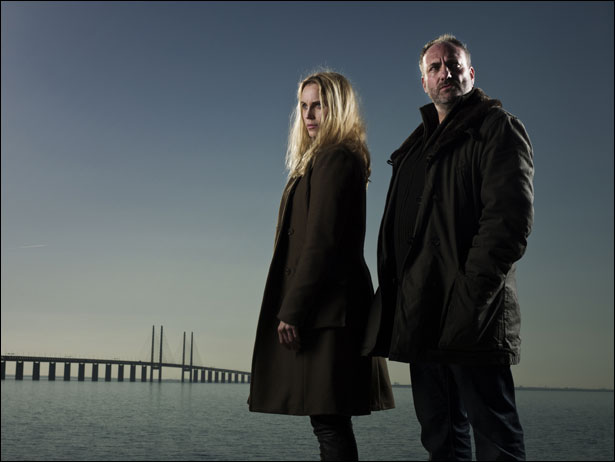
The Bridge concluded almost two months ago and I’m still bereft.  In my day off between coursework and revision I’ve been watching BBC4’s replacement foreign-language thriller Salamander, and although excellent, it’s not The Bridge:
Image

(Image from http://www.noblepr.co.uk/Press_Releases/arrowfilms/thebridge.htm )

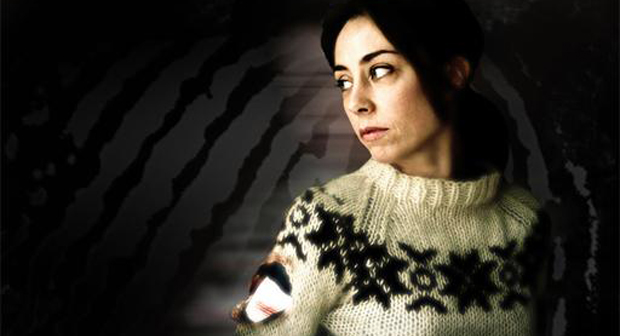
I love Saga, I love Martin, I love the way their relationship developed in the second season, I love Saga.  I know I’ve said I love Saga twice, but this is because I have a girl-crush, the like of which I haven’t experienced since The Killing’s Sarah Lund:
Image

(Image from http://www.krishk.com/2014/01/top-socially-challenged-detectives/ )

How I wish I was effortlessly cool and Nordic, with scrappy long hair, Faroe Isle jumpers, leather trousers and emotional reticence.  Unfortunately I’m perennially uncool, I’m British, my hair is an inch long, I look terrible in chunky jumpers and leather trousers and I’m emotionally incontinent.  Otherwise the similarities between me and these two women are really quite remarkable.

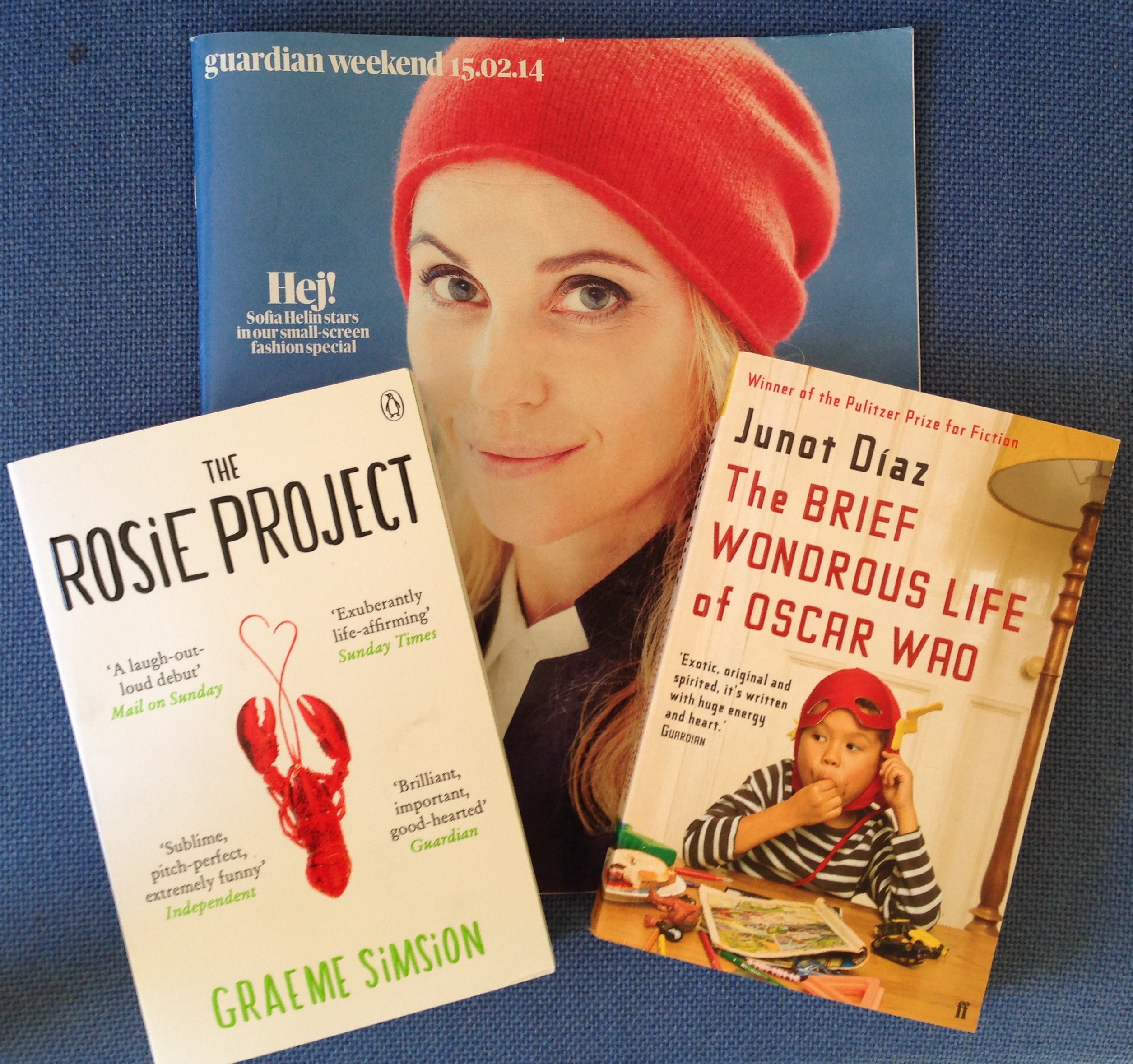
Now, I know the socially inept detective is becoming something of a cliché, but I’m a huge fan of many of them (see here for how I excited I became over Sherlock) and I miss Saga.  It was this which prompted me to start reading The Rosie Project by Graeme Simsion (Penguin, 2013) the day after The Bridge finished.  It’s not a detective novel, but it does have a main protagonist who is highly intelligent, socially awkward, inflexible, unable to read social cues and has a tendency to respond to things that are said literally.  Perfect, just what I needed to fill the Saga-shaped hole in my life. Don Tillman is a geneticist who wants to get married.  Having tried dating and found that “the probability of success did not justify the effort and negative experiences” (how many single people out there can relate to that statement?)Don devises a questionnaire “a purpose-built, scientifically valid instrument incorporating current best practice to filter out the time wasters, the disorganised, the ice-cream discriminators, the visual-harassment complainers, the crystal gazers, the horoscope readers, the fashion obsessives, the religious fanatics, the vegans, the sports watchers, the creationists, the smokers, the scientifically illiterate, the homeopaths, leaving, ideally, the perfect partner, or, realistically, a manageable shortlist of candidates”.  Into Don’s life breezes Rosie, who it’s safe to say, does not fit his criteria for the ideal mate. She is chaotic, confrontational, encourages him to drink, watches sport and is a smoker. They are perfect for one another.

““Where do you hide the corkscrew?” she asked.

“Wine is not scheduled for Tuesdays.”

“Fuck that,” said Rosie.

There was a certain logic underlying Rosie’s response.

[…]I announced the change. “Time has been redefined. Previous rules no longer apply.  Alcohol is hereby declared mandatory in the Rosie Time Zone.””

Although Don is unusual, in many ways his situation is ordinary: so many people spend time constructing their ideal mate they forget to think about the relationship they want, missing what’s actually in their lives, and who it’s worth compromising a bit of ourselves for. Simsion looks at this aspect of oh-so-human folly with a comic eye, and there are some hugely funny scenes as Don tries to get to grips with situations where he is hopelessly out of his depth: attending a “formal” function in top hat and tails, practising sex positions with his teaching skeleton and being walked in on by his boss.  Because Don is aware of the humour but doesn’t quite get it, the scenes are told in an utterly deadpan style that is hilarious, but you’re never laughing at Don, just the situations he finds himself in. This is because you are completely rooting for the character. Simsion manages quite a feat with Don: a resolutely pragmatic, measured voice that still manages to create a person that you really feel for, and a novel of real warmth and humanity. Simultaneously, Don exposes the fakery that goes along with social skills and fitting in – the office politics, the lies and infidelities – that he is incapable of, making you question what is of real value, rather than what just makes life easier.   If you’d told me I’d like a book I would describe as “sweet and romantic” I’d tell you (with a raised eyebrow of scepticism, reader) that it really wasn’t my taste.  But, just like Don, I stepped outside my comfort zone, tried something new, and was completely won over.

For my second social outcast I’ve chosen the Pulitzer Prize winning novel The Brief Wondrous Life of Oscar Wao by Junot Diaz (Faber, 2008). Poor Oscar: he’s massively nerdy and all he wants is to love and be loved.  “Oscar showed the genius his grandmother insisted was part of the family patrimony.  Could write in Elvish, …knew more about the Marvel Universe than Stan Lee, was a role-playing game fanatic….Perhaps if like me he’d been able to hide his otakuness maybe shit would have been easier for him, but he couldn’t.  Dude wore his nerdiness like a Jedi wore his light sabre or a Lensman her lens.  Couldn’t have passed for Normal if he’d wanted to.” An incurable romantic who dreams of becoming the “Dominican Tolkien”, Oscar’s life will never play out how he wants it to.

He lives with his mother Beli and rebellious sister Lola, and as we learn about all three of them, we learn about the recent history of the Dominican Republic and its impact on a family.  The novel makes frequent use of footnotes, which generally I dislike but which worked well here, detailing political history in the distinctly non-academic (though learned) voice of Yuniour, Lola’s boyfriend, serial womaniser and narrator.  The family are thought to be under the sway of a fuku “the Curse and Doom of the New World”, and certainly all are subject to violence and hardship, Beli in Dominica and her son and daughter in the United States.

There is a touch of magic realism as the family are also protected by a guardian animal that appears to them in times of extreme distress: “there appeared at her side a creature that would have been an amiable mongoose if not for its golden lion eyes and the absolute black of its pelt.  This one was quite large for its species and placed its intelligent little paws on her chest and stared down at her.  You have to rise.”  The Brief Wondrous Life of Oscar Wao has plenty to say about the immigrant experience, the price of assimilation and the inability to assimilate to the societies we find ourselves in, and the self-definition we express through the language we use. The novel has references I didn’t get: Spanish phrases and nerd-allusions, but it didn’t matter.  The refusal to be sentimental and the triumph of human spirit in the face of violence and tragedy meant this novel really spoke to me even if I didn’t grasp all the intricacies. It was funny and tragic, and truly moving.

Here are the books with the lovely Sofia Helin who plays Saga (you can tell it’s the actor & not the character because she’s smiling):
Image

“We can be heroes, just for one day” (David Bowie)

This year is the bicentenary of Jane Austen’s “own darling child”, Pride and Prejudice.   This has led to a flurry of promotion and events created around, above & beyond this much neglected classic –barely read, rarely adapted and little known, it’s great that so much interest is being focussed at Austen’s most obscure novel…  I jest of course, and while any attention directed towards books and reading is a positive thing, it’s not like P&P needs any marketing; a certain wet shirt ensured this perennially popular classic was seared into the consciousness of a whole new generation of TV viewers and subsequent readers. Plus there’s the whole Pride and Prejudice and Zombie Ghost Vampires or whatever it’s called.  So I thought this was an apt time to dedicate a post to unsung heroes: books/characters/authors which for whatever reason haven’t garnered as much attention as they might.

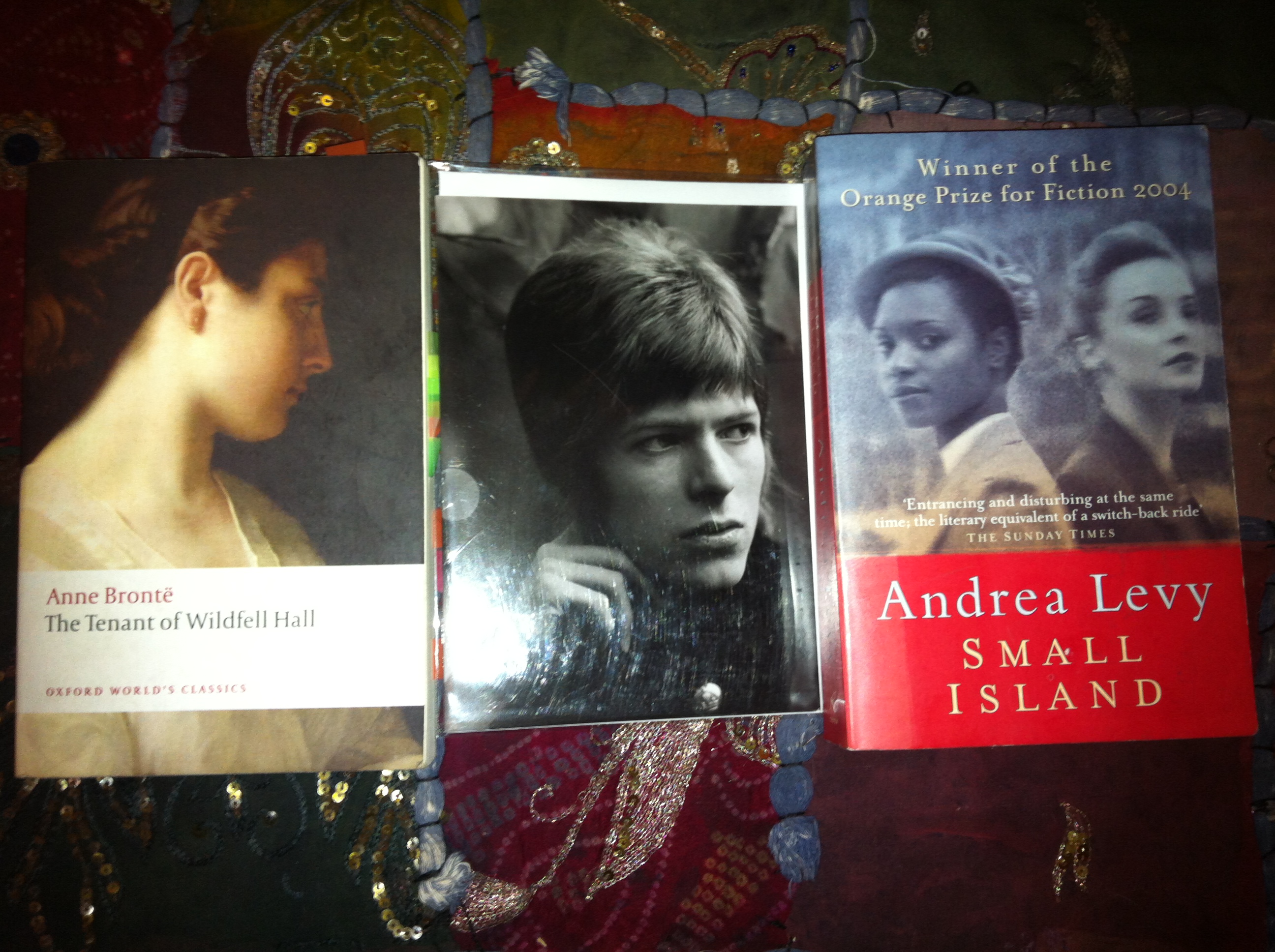
Firstly, Anne Bronte, particularly The Tenant of Wildfell Hall (published 1848, my edition 2008 Oxford World’s Classics).  The least known and least read of the Bronte sisters, I think the inevitable lumping together of her with Charlotte and Emily does her no favours.  She is a very different writer, with little of the gothic, romantic sensibilities of her sisters.  Anne actually sits more comfortably amongst the Victorian realist fiction of writers like Eliot and Gaskell, and in that way was a much more modern writer than Charlotte and Emily.  The Tenant of Wildfell Hall takes on some pretty major issues that Victorian Britain would have preferred to have ignored: alcoholism, domestic abuse, the complete lack of legal rights for women, the damaging effects of believing boys & girls should be educated differently, single parenthood.  Unsurprisingly, it was perceived as scandalous on its publication in 1848 and torn apart by those guardians of good taste, the critics.

Helen, a young widow, arrives in the town of Linden-Car with her young son, and attracts the attention of a farmer, Gilbert Markham.  He pursues her despite the fact that she is extremely spiky (proof that you don’t have to be a giggling hair-flicking moron to get your man/woman/whoever you fancy) and she eventually gives him her diary to read, which details her young adulthood in Regency England, an experience a million miles away from Austen’s Regency romance. Helen had married the charming Arthur Huntingdon, who turns out to be an alcoholic, abusive, unfaithful rake (unfortunately those gorgeous breeches and big white shirts can only cover so much).  When Helen sees the effect this profligate behaviour is having on her young son she flees.  Back in the present day of the novel, she learns that Huntingdon is dying, and returns to him.  I don’t think it’s a massive SPOILER to say he dies, allowing Helen and Markham to live happily ever after. This really isn’t a fairytale romance, though.

From the start Helen struggles to maintain a sense of herself as an individual, and her own integrity. Two years into the marriage, she realises the love of a good woman has not rescued him, and “how much of my higher and better self is indeed unmarried” – a scandalous thought for Victorian Britain but a reality for many couples who would be educated separately in different disciplines, barely know each other before marriage and then find they had no common language.  Jane Eyre and Wuthering Heights are high gothic romance, and while Tenant features a woman alone in a huge house in desolate surroundings, (fierce winds and thorny trees abound) it is more interested in the harsh realities of being married to the wrong man when “the ‘romance’ of our attachment is worn away”.  As Huntingdon’s alcoholism escalates so does his abuse of Helen, and she is left in a situation where legally she cannot divorce her husband (although he can her) and her child would be left with his wholly unsuitable father as guardian. He can beat her legally, and all her wealth is judged to belong to him.  Tenant is utterly damning of this situation, and if you’ll permit me the anachronistic term, Helen’s bid for freedom and a life on her own terms makes her a feminist icon.  Once she achieves her freedom she doesn’t become a simpering Victorian “angel in the home” but ultimately drives her second marriage when she passes Markham a winter rose: “Look Gilbert, it is still as fresh and blooming as a flower can be, with the cold snow even now on its petals.  Will you have it?” The subtext is clear: Helen is no young blushing virgin, a romance heroine, but an experienced woman, choosing to marry for love (and presumably, sexual attraction) though she need not because she is financially independent.  Anne Bronte gives us a much more complex heroine than those wailing women running around on moors (just kidding, JE and WH fans).

So why are Anne Bronte and Helen unsung heroes?  There are difficulties with the book: Anne Bronte was clearly still learning her craft (but, I would argue, so was Emily) and it is flawed.  The separate voices in the book aren’t distinct, and don’t always ring true in terms of how people speak.  Emily was much better at this, and Charlotte was much more skilled in the craft of novel writing.  Helen is a character with a highly developed sense of right and wrong, and this sometimes proves tricky for readers now, in that a character entrenched in Victorian morality can seemly judgemental to the point of priggishness.  But it would take a heart of stone not to root for this brave, resolute and strong woman, and I urge you to give Tenant a go.  The legal and educational situation may have changed but the story of a struggle for individual fulfilment against societal pressures remains timeless.  And there’s a bit of romance too.

Incidentally, for those of you who enjoyed the BBC adaptation of P&P, they also did a very decent version of Tenant just a year later; Tara FitzGerald portrayed Helen, with Toby Stephens as Markham and Rupert Graves as Huntingdon (the first two of whom acted together again a decade later in the BBC’s Jane Eyre, fact fans), a gorgeous and hugely talented cast who did the characters great justice (dir. Mike Barker).

Secondly, I thought I’d look at a portrayal of an everyman hero, the type of person who is unsung in life, if not in the novel.  The sub-theme of this post is clearly men called Gilbert, as I’ve chosen Gilbert Joseph from Andrea Levy’s Small Island (2004, Review Books).  Andrea Levy is not an unsung author, thankfully, as she’s brilliant and fully deserves the recognition she receives.  Small Island won the Orange Prize for Fiction in 2004, proving that sometimes these awards panels actually get it right.

It’s really hard to give a plot summary of the book without giving away some major spoilers, so I’ll avoid it all together.  Purposely vague description to follow: the book looks at post-war Britain, and the experiences of interconnected characters following the migration to Britain by people from Caribbean.  Queenie rents out her rooms to the new arrivals and encounters racism by association; Gilbert and Hortense are married immigrants, and quickly realise their experience is not going to be the one they were promised before they left Jamaica.  The three of them, and Queenie’s husband Bernard, take turns to tell the story, having chapters to themselves at a time.  The book is divided into Before and 1948, showing how the events of the war have far-reaching consequences on a personal level, not just national and political.

The character of Gilbert demonstrates that heroism is something that is not just found in extreme actions and extreme circumstances, such as war, but in the quiet, unassuming actions of the everyday.  He finds himself in a cold, unwelcoming country, miles away from home, part of a nation that has used him as a soldier and then abandoned him, with a wife who looks down on him and where he is subjected to racism daily.  And within these awful circumstances Gilbert doesn’t get ground down, and he doesn’t get bitter.  Instead at the end of the novel he does something selfless and noble, and utterly believeable, and he also stands up for himself:

“You know what your trouble is, man?” he said.  “Your white skin.  You think it makes you better than me.  You think it gives you the right to lord it over a black man.  But you know what it make you?  You wan’ know what your white skin make you man?  It make you white.  That is all, man.  White.  No better, no worse than me – just white.”

I can’t fully explain what makes Gilbert such a hero without ruining the story for you, but I highly recommend this readable, insightful novel and if you read it I’m sure you’ll agree with me.  Gilbert shows the greatness of ordinary people – we all know a Gilbert, and the least he deserves is to be recognised as a hero, which within the pages of Small Island, he is.

Here are the books alongside a hero of mine, David Bowie, who provided the title of this post.  Like P&P, he also celebrated an anniversary this month (66th birthday on 8 January): see, there is a method buried somewhere amongst these rambling posts, I promise……

Image