Novella a Day in May 2025: No.20

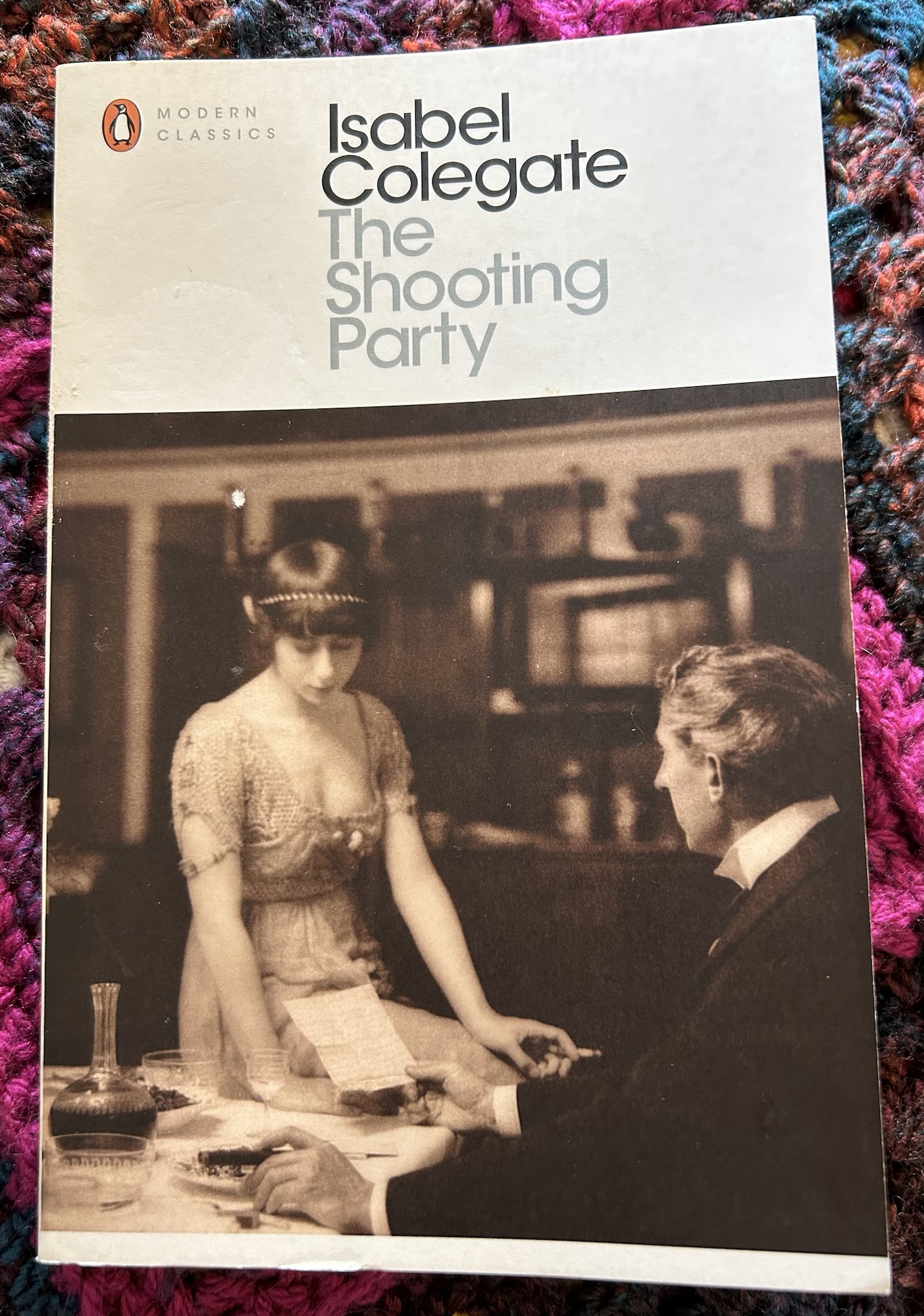
The Shooting Party – Isabel Colegate (1980) 191 pages

I’ll get my complaint about The Shooting Party out of the way first: there were about eleventy-million characters, far too many for a novella, and trying to keep them straight made my brain hurt. If ever a book needed a family tree/character list at the beginning it was this one. But other than that I really enjoyed it, so on with the post!

The Shooting Party was written in the latter part of the twentieth century but captures a bygone age just before the outbreak of World War I.  Colegate relies on our knowledge as readers that the lives she presents are on the brink of being changed irrevocably.

“I can’t say I positively want a war; and yet one gets the feeling sometimes – life is so extraordinarily pleasant for those of us who are fortunate enough to have been born in the right place – ought it to be so extraordinarily pleasant? – and for so few of us? And isn’t there sometimes a kind of satiety about it all – and at the same time greed?”

The titular event is taking place at Sir Randolph Nettleby’s Oxfordshire estate. Over the course of three days a group of privileged people will convene in the slaughter of hundreds of birds. It is absolutely grotesque, but thankfully Colegate spends very little time on the details of bloodsports, being more interested in the relationships between the characters. There were a few passages I skipped but it remained very readable.

Sir Randolph is aware that the world is changing. He despairs at the falling away of the old order as the world becomes increasingly mechanised and industrialised. The country estates are losing workers and he worries at the decline of the countryside.

He is quite a gentle patriarch in many ways, despite being so much a man of his time. Colegate doesn’t laugh at her characters, but there is humour throughout and I don’t think we’re supposed to take them entirely seriously all the time:

“Sir Randolph, unlike Minnie who aspired to it, considered cosmopolitanism a vice. It was alright to know your way around Paris, Sir Randolph thought, and to visit Italian picture galleries or the relics of the classical world, but generally speaking a man should stick to one country and be proud of it. If one wanted to travel there was always the Empire.”

His grandson Osbert doesn’t do well at school and the family are despairing at getting him ready for Eton, yet it is Sir Randolph who sticks up for him:

“Sir Randolph said, ‘Leave him alone. There’s no malice in him. Give him time and he’ll come along all right.’ He spoke as he might have spoken of one of his black, curly-coated retrievers, and like the retrievers Osbert in due course came along.”

Osbert has a pet duck named Elfrida Beetle and a source of tension throughout the novel is whether she will survive or get caught up with the wild ducks that the party are determined to shoot to pieces. There is also an impending sense of doom, beyond the war, as we know from the start of the novel that there is “an error of judgement, which resulted in a death”. Yet the final day of the shoot starts peaceably enough, as Sir Randolph reflects in his study:

“Freed from time, he felt influenced towards the familiar state of watchful calm, from which he was aroused by the slow crescendo and then rapid diminuendo of the breakfast gone being sounded by Rogers, an acknowledged master on the instrument.”

His wife Minnie was a favourite of the now-dead King, (another character reflects: “A pity English royalty was always so philistine.”) and like her husband she has a strong sense of duty and decorum. Unlike her husband she’s also quite a frivolous character, but this suits her role as hostess and she sees more than she says. She gets on well with her granddaughter Cicely, who shares her silliness, if not her circumspection.

“Olivia did not find Cecily boring. She liked her liveliness and suspected her of having more courage than she herself had ever had. Cecily might well choose to be unconventional; something to which Olivia had never aspired, in her actions at least. Her thoughts, generally speaking, she kept to herself.”

Olivia is Lady Lilburn married to Bob, a man so dull that even as I’ve just finished the reading the novella I can’t remember anything about him except a funny scene with him fussing over cufflinks. Another couple are Lord and Lady Hartlip, long married and quite prepared to indulge each other’s extra-marital dalliances. Where Lord Hartlip draws the line is Lady Hartlip’s compulsive gambling, which she has learnt to hide from him. Thus Colegate shows that privilege and comfort don’t equal happiness for all. In fact, happiness seems elusive to so many of these characters.

Apparently one of criticisms of The Shooting Party on publication was that it tried to shoehorn in all the Edwardian political issues and the characters were ciphers in service of these. I think this is a little unfair. As I mentioned at the start, there are soooo many characters that I can see where this criticism came from: a rich Jewish businessman subject to Anti-Semitism; a member of European aristocracy; bored wives; flighty debs; gamekeepers entrenched in the social order; a new generation coming up of self-made men… but I found them all believable and Colegate is interested in the person behind the type.

Colegate evokes the daily routines of life in a large country estate so well, and balances the inevitable elegiac quality with the practicalities of living; the sad desperation of some of the characters with humour. As the day moves on personalities are exposed and relationships change forever.

Blog Tour: Nightingale & Co by Charlotte Printz (2023, transl. Marina Sofia 2024)

I do enjoy a cosy crime novel, and one with a 1960s Berlin setting ticked so many boxes I jumped at the chance to take part in this blog tour from the ever-wonderful Corylus Books.  I hope they carry on asking me to take part in these tours even though I feel like my posts for their books are getting very formulaic: “I loved it! I want more translations!” Take a guess as to whether this one will be any different… 😉

Nightingale & Co. is the first in a series written by Charlotte Printz and translated by a blogger many of you know, Marina Sofia. Here is the blurb from Corylus Books:

“Berlin, August 1961.

Since the death of her beloved father, Carla has been running the Nightingale & Co detective agency by herself. It’s a far from easy job for a female investigator.

When the chaotic, fun-loving Wallie shows up at the door, claiming to be her half-sister, Carla’s world is turned upside down. Wallie needs Carla – the Berlin Wall has been built overnight, leaving her unable to return to her flat in East Berlin.

Carla certainly doesn’t need Wallie, with her secret double life and unorthodox methods for getting results. Yet the mismatched pair must find a way to work together when one of their clients is accused of murdering her husband.

Nightingale & Co is the first in a cosy historical crime series featuring the sisters of the Nightingale & Co detective agency in 1960s Berlin.”

The story gets off to a fun, engaging start. Carla receives a call from her aunt Lulu telling her she’s waving an airgun on the set of the Billy Wilder film One, Two, Three, seemingly in a deeply flawed attempt to secure a role. As Carla sets off across Berlin at pace, the 1960s city is evoked organically, without seeming like an info-dump.

This trailer for the film includes some external shots:

Yet despite the joy of these opening scenes, we are quickly shown the psychological impact of living in Berlin as the Wall goes up:

“‘They’re building a wall,’ said Lulu. The words were like a punch to her stomach. Carla felt faint. Ulbricht had lied to them. That was why there were so many guards at the Brandenburg Gate yesterday. How naïve of them to believe it was merely for the film set.”

Carla lives with her mother in the same building that houses the agency her father built. The domestic scenes with her bitter, passive-aggressive, baiting parent were so well-realised. Printz really captured the psychological warfare that people can tie themselves into, unable to see an escape route however desperately they want one. Carla is also grieving her father, who died in the crash which left her with enduring head injury symptoms.

When her half-sister Wallie arrives having been cut off from her home in the East by the rapid installation of the Wall, she couldn’t be more different. Physically Carla is compared to Audrey Hepburn, Wallie to Marilyn Monroe. Wallie gives free rein to all her appetites and doesn’t mind dubious means to achieve her ends, while Carla is controlled and keen to remain above reproach. Carla’s mother is entirely charmed by Wallie, although she believes her to be a cousin of her dead husband.

In less skilled hands the contrasting sisters could seem cliched and merely vehicles for dramatic tension. But both Carla and Wallie were entirely believable and well-rounded. The tensions between them arising from Carla not knowing about Wallie’s existence until she turns up on the doorstep, and what this means for her memories of her father, was lightened by their very different attitudes. Their growing but begrudging respect for one another as they find themselves an effective team made them an endearing pair.

The central strand of the story concerns Alma, a beautiful rich woman who asks the agency for help due to her husband’s domestic violence. Carla is sympathetic but realistic about Alma’s options:

“I’m afraid that’s no motive for divorce. A man who beats his wife is regarded by the courts as quick tempered and they usually advise the wife not to annoy him.”

The 1960s are a time of change but some changes aren’t occurring quickly enough. (I was reminded this week that it wasn’t until 1975 that women in Britain were allowed their own mortgage!)

When Alma’s husband is killed and her subsequent behaviour leads to her arrest, the sisters investigate. The plot is satisfyingly complex without being overly convoluted and frustrating.

The shadows of the war, less than twenty years previous, still loom large and Printz manages to capture how the fallout is interwoven with the modernising present.

 “Hadn’t they learnt anything from the past? It wasn’t enough to just stand there and repeat slogans. Everyone had to contribute.”

It’s hard to judge a translation when you don’t speak both languages, but I was struck by how Marina Sofia managed a sensitive balance in providing an English translation that flowed so well, yet also kept sense of place and contributed to Berlin being evoked so clearly in my mind. The significances of formal/informal address were conveyed without any clunkiness.

What I really enjoyed in Nightingale & Co was the mix of compassion and cynicism displayed by both the sisters in their different ways. It made them, and the story, humane without being sentimental, hopeful in the face of horrors.

“In the end, that was all that anyone wanted: forgiveness. And to be loved. Which made everyone predictable.”

So in summary: I loved it! I want more translations!

Here are the rest of the stops on the tour, do check out how other bloggers found Nightingale & Co:

“One of the luckiest things that can happen to you in life is, I think, to have a happy childhood.” (Agatha Christie)

My Name is Leon by Kit de Waal was published to great acclaim in 2016, and it was one of those books I kept meaning to read but putting off. I thought the story of a boy in the 1980s care system, trying to be reunited with his baby brother who has been adopted, would be unbearably sad.

Kit de Waal grew up in Birmingham with an Irish mother and father from St Kitts, and she holds dual Irish/British citizenship. So I decided that this year’s Reading Ireland 2024 aka the Begorrathon, hosted by Cathy at 746 Books was the time to finally get to it, and I’m so glad I did!

At the start of the novel Leon is almost nine years old and living with his mum Carol, with his father absent in prison. Carol’s just had a baby, Jake, who has blonde hair and blue eyes, unlike Leon who is mixed race. Leon is devoted to his younger sibling, and tries to take care of him as best he can.

“After a few weeks, Carol says Leon can’t go to school because it’s too wet and rainy. That means Leon can play all day and put the television on and make toast if he’s hungry. Carol leaves him in charge when she goes to the phone box and when she comes back she’s out of breath and asks him if the baby’s alright. Leon would never let anything happen to the baby so she worries for nothing.”

A child’s point of view is hard to get right but I thought de Waal created a really authentic voice for Leon (if you look at her Wiki page you’ll see her lifetime of experience that led to her writing this novel.) Leon is old beyond his years, but there is still so much he doesn’t understand.

“He hopes that Jake won’t grow up to be like his dad and say dangerous things in a quiet voice. Leon only smiled because it was polite. If the man comes back, Leon won’t smile a second time. He will be on his guard and he’ll protect Carol and Jake and then he won’t get shouted out.”

Carol has a complete breakdown, and so Leon and his brother are put into foster care, a situation Leon is familiar with.

“Social workers have two pretend faces, Pretend Happy and Pretend Sad. They’re not supposed to get angry so they make angry into sad. This time, they’re pretending to care about him and Jake and his mum.”

Maureen is the experienced carer who takes them both in and I thought she was a wonderful creation. Loving and caring, tough and optimistic. She’s flawed but she gets the important things – authentic, deep care for a child – right.

“He’s heard Maureen swearing loads of times, like when she called Margaret Thatcher a bloody cow because of the miners. And once she said Margaret Thatcher could kiss her arse and Leon laughed and got caught earwigging. Maureen says that if he keeps listening to people’s private conversations his ears will shrivel into prunes and drop off. Leon always checks his ears at night just in case.”

When a couple adopt Jake, we witness Leon’s heart shattering. Maureen objects to the siblings being split up, but the decision by social services is that it is better to have one child adopted – the blonde-haired, blue-eyed baby – than none at all. And in case this seems like a period piece, just a few years ago, a social worker told someone I know that children aged over seven and in care were ‘on the scrap heap’ because the majority only want to adopt babies.

“Maureen wipes Leon’s face with the corner of her dressing gown but because it’s made of the same silky stuff as the cushions his face is still wet and begins to itch.

‘You will be alright, Leon. You will be alright.’

Leon uses the tea towel again because it’s better for tears.”

The rest of the novel sees Leon plotting to reunite his family. This involves stealing money and stockpiling supplies. He’s confused, troubled, and furious. He’s intelligent, kind and vulnerable.

At the same time, he has many adults who care for him. Maureen and her purple-haired sister Sylvia; The Zebra his social worker “but out of all the social workers he’s ever had, she looks at him the most. And when he looks away, she stops speaking until he turns round.” When he discovers the local allotments, he makes friends with further adults. Tufty provides a black male role model, and there is also Mr Devlin, an Irish man whose traumatic past the reader picks up more quickly than Leon.

de Waal balances this story perfectly. The urban setting (which some readers on goodreads have assumed is London but I definitely thought was Birmingham, including the Handsworth riots), is evoked with authentic 1980s details including Curly Wurlys and BMXs. The realities of Leon’s life, racism, and police brutality are not shied away from, but they are shown to sit alongside kindness, compassion and selflessness.

“Leon eats his toast sitting on the carpet by the patio doors. It’s supposed to be summertime but the sky is the same colour as the garden slabs, dull and grey, like the road to school, the cut-through to the precinct or the dirty lane between the tower blocks and maisonettes.”

All the adults in Leon’s young life are flawed, but none are judged harshly. Carol is shown to be extremely unwell. The social workers take damaging decisions but it’s not through disregard of the children. Those who care for Leon make mistakes and struggle to take care of themselves at times, while providing love and respite for a young person with the odds stacked against him.

My Name is Leon is a story of someone learning how to mend a broken heart at an age when you really wish they had no idea of such pain. It’s a story of resilience and all that human beings can give one another, despite our myriad imperfections. I shoudn’t have left it lingering in the TBR for so long.

To end, the trailer for the BBC adaptation of My Name is Leon, which I’ll try and find to watch now. The cast looks stellar – Lenny Henry (who narrated the audiobook and bought the rights), Christopher Eccleston and the peerless Monica Dolan alongside Cole Martin in his first acting role as Leon:

“I must love a loathed enemy.” (Romeo and Juliet, Act 1 Scene V)

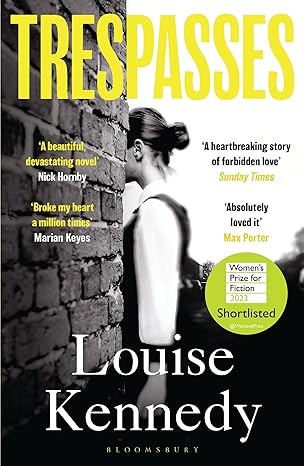
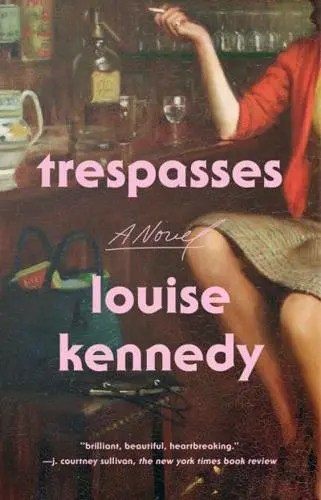
I’m not sure there’s much I can add to the cacophony of praise that Trespasses by Louise Kennedy (2022) has garnered. In fact I did consider not writing a post at all. But in the end because it moved me so much I thought I’d jot a few thoughts down as part of Reading Ireland 2024 aka the Begorrathon, hosted by Cathy at 746 Books. It’s also a stop on my Around the World in 80 Books reading challenge.

A summary of the plot doesn’t do this finely-crafted tale justice.

Cushla Lavery is a Catholic teacher, twenty-four years old and working at a school in a garrison town in 1970s Northern Ireland. She also helps out at her family’s pub, which is where she meets Michael Agnew – around twice her age, Protestant, and married. The attraction is instant and mutual.

“Countless times she had replayed the evening in her head, searching for the word or gesture or pronunciation that had repelled him, that had shown she was too young, too unsophisticated, too Catholic. It seemed piteous now that she had opened her college Irish books at Penny’s messy, elegant table, desperate to impress him. Perhaps she had been too obviously besotted with him.”

They know they have to keep their relationship secret. At the height of the Troubles, they are different religions and Michael already attracts attention through his work as a barrister defending those accused of killing members of the Royal Ulster Constabulary (RUC).

This is a time when politics and violence are woven through the daily lives of people in an immediate way. Cushla has to tread carefully around British soldiers in the pub, the threat of their brutality insidious and palpable. On the way to a party with her colleague and friend Gerry, they are stopped at an army checkpoint. At the flat where Cushla and Michael meet, she tells him not to sit with the lights on and curtains open, and her trepidation is not only due to their forbidden relationship…

Meanwhile, other aspects of life don’t stop. Her grieving mother Gina is self-medicating with gin. A boy in Cushla’s class, Davy McGeown, is bullied because he is from a mixed-marriage family and he ‘smells’ – his mother can’t hang the washing out because the neighbours throw dog dirt at it. His vulnerability is noticed by the priest Father Slattery, who everyone knows shouldn’t be left alone with children.

“Michael said there were all kinds of families. Cushla’s was an unhappy one. What was his like?”

The strain of daily life, living under the misuse of power both political and religious, is brilliantly realised. The narrative is incredibly tense, and the 1970s details are vivid.

The contrast of these tensions with the tender love between Cushla and Michael is subtly portrayed and never jars. Their relationship is believable, and while Michael is known to be “Fond of the women, by all accounts. Sure he’d charm the knickers off you.” he never seems creepy. Cushla is young but not naïve. They know what they have is unlikely to end well and yet they cling to it, the human need for love asserting itself over all that would seek to subdue it.

“She was overcome with a feeling of utter defeat. She wanted to lie on her bed and sleep, but had been unable to say no to him. It wasn’t because he had been kind to her. It was because each time she saw him she was afraid it would be the last time.”

It was the resilience Kennedy portrays which ultimately I found so moving. Not only with Cushla and Michael but in those that surround them, and particularly with Davy McGeown, a bright child caught up in a situation he barely comprehends.

“Booby trap. Incendiary device. Gelignite. Nitroglycerine. Petrol bomb. Rubber bullets. Saracen. Internment. The Special Powers Act. Vanguard. The vocabulary of a seven-year-old child now.”

Kennedy is not remotely sentimental but she is compassionate. She doesn’t judge people or the situation. Through creating recognisable, fully realised characters struggling to live the best way they can, Trespasses is a stunning exploration of the endurance of human spirit.

“For the umpteenth time Cushla wished her parents had called her Anne or Margaret or Rose – not Mary, with its connotations of Marian shrines and rosaries – any name that didn’t mark her out as so obviously a Catholic. She felt guilty for the thought which, she realised, also marked her as a Catholic.”

“I refuse to join any club that would have me as a member.” (Groucho Marx)

I’m not a big reader of crime fiction (outside of the golden age), but Susan’s review of A Little London Scandal by Miranda Emmerson (2020) piqued my interest. At the time I bought a copy for my Dad’s wife, and then when I saw the paperback in a charity shop recently I swooped. It turns out Miranda Emmerson has adopted Wales as her home country, living in south Wales with her family and completing a PhD at the University of Cardiff. Which means the month of Reading Wales aka the Dewithon, hosted by Paula at Book Jotter, is the perfect time to pick this up!

Set in 1960s Soho, Emmerson brilliantly evokes the area before the gentrification and chain stores that characterise the area today. Anna Tredway works as a dresser in the Galaxy Theatre with faded and disillusioned actors. She lives alone above a café and is missing her partner Aloysius who is in Jamaica following a family bereavement.

“Anna had her neighbourhood. Covent Garden for raspberries and carrots – even at five o’clock in the morning. Seven Dials for rags – shift dresses and corduroy skirts and a hundred shades of polyester blouse. Monmouth St for coffee bars – so many coffee bars – musicians and actors and students out on dates. The city thought itself a monument to pleasure, but its citizens knew better.”

Anna is drawn into a very different side of London society when a male sex worker, fleeing a police raid, is found dead in Waterloo Gardens, in the grounds of the Hellenic Club. The Hellenic is one of the men-only clubs around Pall Mall, and its members include Richard Wallis, an MP who has just managed to hang onto a seat despite being caught up in a previous scandal with another sex worker:

“He was still a little staggered by the way in which influence could appear in someone’s life. Power, really. And, then, how quickly it could disappear. What he felt now were the ripples of something he used to have.”

Anna knows Nik Christou from the café. A young, vulnerable sex worker, gentle and intelligent, far away from his home in the north of England.

“Nik liked to notice mistakes in things. He loved to sit in the pictures and watch the same film over and over again. Thinking about the people in it and if it all made sense. If the guilty were guilty and the innocent, innocent.”

When Nik is arrested for the murder, Anna can’t let it go. She works with DS Hayes, a policeman with whom she has a spiky relationship, to fight Nik’s corner.

They make an enjoyable and recognisably human team. It became apparent that I’d missed a previous book with these characters (Miss Treadway and the Field of Stars) but it didn’t matter. A Little London Scandal can stand entirely on its own and the characterisation was strong enough for those of us that missed the first instalment.

Anna is well-meaning but uncertain and aware of her limitations. Hayes is not a typical 1960s policeman but managed not to seem anachronistic:

“He couldn’t banter. His dirty jokes would have seemed tame in the mouth of a 12-year-old. He never physically hurt a suspect and he refused – uncomfortably and with an enormous amount of embarrassment -to take bribes. Every day he was a policeman and every day he somehow failed at being a policeman.”

I also really liked the portrayal of Wallis’ wife Merrian, stuck in the role of a perfect MPs wife – domestic, supportive and silent – and failing to perform:

“Merrian sat for a while in the hall and watched the dust motes move in the shadow of the stained glass above the door. She felt calm when she sat in darkness. When the house was still, when she was alone, no one could get at her.”

Emmerson weaves this disparate cast together expertly. The situations never feel forced and the societal pressures on them all  – at a time of change when things aren’t changing quite fast enough – are evoked believably through the characters’ experiences rather than using them as clunky pawns to hammer home certain points.

“The memory of not knowing what to do in certain places. The fear of getting it wrong. It infects people, like a cold.”

The crime/thriller aspects were well-paced and not predictable. But it was the characters and societal commentary which kept me reading. I was really rooting for these flawed, sympathetic people to find some peace.

“Sometimes that whole world turns out to be exactly what you thought it would and still it’s just a bit shocking.”

To end, a 1960s song about Anna:

“A great doctor must have a huge heart and a distended aorta through which pumps a vast lake of compassion and human kindness.” (Adam Kay)

I really want to increase my blogging in 2023 – as I’m an incredibly strong-willed person who always achieves any goal they set, I have absolutely no doubt I will achieve this aim 😀

Anyway, the wonderful reading events that take place are always an incentive to help me on my way, and in January Annabel runs her enticing Nordic FINDS month.

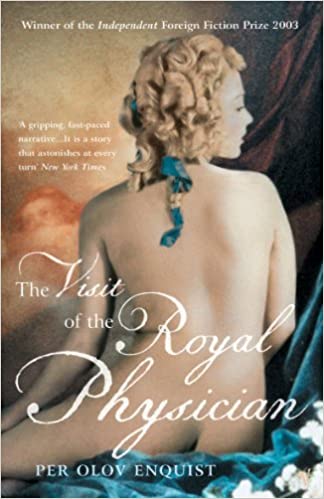
This meant that I have finally pulled a book from the TBR that has been languishing there for years: The Visit of the Royal Physician by Swedish author Per Olov Enquist (1999 trans. Tiina Nunnally 2001). A historical novel set in the 18th-century Danish courts, it tells the story of King Christian VII’s mental ill health, his marriage to Caroline Mathilde (sister to George III) and her affair with the titular German doctor, Johann Friedrich Struensee.

TVOTRP is hugely lauded, winning the August prize and the Independent Foreign Fiction Prize. This meant I went in with unfairly high expectations and at first I wasn’t sure this novel was for me. I suppose TVOTRP would be classed as a documentary novel, and initially I found this style distancing. However, by the end I was very much involved in this sad tale of people sacrificed to political power struggles where there is no room for humanity.

Even if the historical events are unfamiliar, the reader knows it will end with the execution of Struensee, as this is where the novel begins. We’re then taken back to his arrival at court, a man of the Enlightenment, viewed with some degree of suspicion by those resistant to change.

King Frederik V dies in his forties, and there is a vivid scene of him on his deathbed with his son, being abusive until the end. Christian is sixteen when he becomes King Christian VII and he is already struggling to comprehend reality.

“Christian explained, in a stubborn attempt to make sense of things, that he understood the court to be a theatre, that he had to learn his lines, and that he would be punished if he didn’t know them by heart.”

But was he one person or two?”

Enquist demonstrates so clearly that it would be some sort miracle if Christian managed to stay well in the environment of the court. He is not only abused by his family but by the courtiers; he is physically and mentally tortured.

Caroline Mathilde is 15 when they marry.

“Afterwards everyone agreed that it was unfortunate that she did indeed have talents. If the proper assessment had been made from the outset, namely that she possessed some talents, then the entire catastrophe might have been averted.

But no one could have predicted this.”

These teenagers are not expected to rule Denmark. They are expected to be figureheads and provide heirs, and not get in the way of the power-hungry politicians that surround them. When Struensee arrives in court, he poses a huge threat despite not appearing to want power at all. Firstly, he genuinely cares about Christian:

“It was understood that something had happened. The German doctor with the blonde hair, the quick but wary smile and the kindly eyes, had become somebody. Since he had no title and could not be placed within a precise hierarchy, this caused uneasiness.

Attempts were made to decipher him. He was not easy to decipher. He was friendly, discreet, and refused to make use of his power, or at least what was considered to be power.

People didn’t understand him.”

Secondly, he is a man of the Enlightenment, deeply threatening to Puritan courtiers like the advisor Guldberg, who is slowly growing his influence. Thirdly, he sleeps with the Queen:

“Christian, Caroline Mathilde, Struensee. Those three.

They seem to be observing each other with curiosity and suspicion. The court observed them too. As they observed the court. Everyone seemed to be waiting.”

The tension builds as the reader knows this situation will absolutely not be tolerated. And it seems such a travesty. The King is happy and cared for; the Queen is happy and fulfilled; the person taking decisions on behalf of the ruler is progressive, liberal, and trying to improve the situation of the masses. Why not let it continue?

Struensee is not naïve and he is filled with a sense of foreboding. Meanwhile, Caroline Mathilde seems to believe they can outwit the malevolent forces that are closing in…

“Her analysis surprised him.

He thought that her extremely lucid, extremely brutal view of the mechanisms of power had been born at the English court. No, she told him, I lived in a cloister. Then where had she learned all this? She was not one of those that Brandt, with some scorn, used to call ‘the female schemers’.

Struensee understood that she saw a different kind of pattern to his.”

The style of TVOTRP is really interesting. As I mentioned earlier, it’s a documentary style, but with an omniscient narrator so there is space given to the feelings and motivations of all the characters. The sentences are generally choppy, but often also poetic. Enquist balances these opposing approaches expertly. I never quite got past that initial distance I felt and so this stopped me absolutely loving the novel, but I did think it was an excellent and compassionate exploration of the pressures of public life and the dangers for those trying to change entrenched power structures.

Although not a depressing novel, it did seem desperately sad, for all concerned.

“The revolution that Struensee initiated was quickly stopped. It took only a few weeks for everything to revert to the way it was before, or to even earlier times. It was as if his 632 decrees, issued during the two years known as the ‘Struensee era’ were paper swallows, some which landed, while others were still hovering low over the surface of the field and hadn’t yet managed to alight on the Danish landscape.”

To end, I saw A Royal Affair (which tells the same story but isn’t an adaptation of this novel) when it came out in 2012. I don’t remember much of it now but I do remember enjoying it and thinking all three leads were excellent. From this trailer I would say Christian is portrayed less sympathetically than Enquist saw him, but it definitely looks worth a re-watch:

“I’m the greatest thing that ever lived! I’m the king of the world! I’m a bad man. I’m the prettiest thing that ever lived.” (Muhammad Ali)

As usual, I’m a bit behind the times: here is my post to commemorate the death of Olympian/activist/philanthropist/iconic legend Muhammad Ali on 3 June, whose memorial was last Friday.

c8c7ccdd-25ee-454b-bd57-8cd8566212a8-1630x2040

Image from here

I thought I would therefore theme this post around ‘greatest’.  Just over a week ago Lisa McInerney won this year’s Bailey’s Prize for her debut novel The Glorious Heresies, so I’ve decided to look at Half of a Yellow Sun by Chimamanda Ngozi Adichie which won the Baileys (then the Orange) in 1997 and was chosen as the prize’s Best of the Best in 2015. I’ve paired it with Midnight’s Children by Salman Rushdie which won the 1981 Booker, and then in 1993 (25 years of the Booker) and 2008 (40 years of the Booker),  it won the Best of the Bookers (the latter by public vote). They are also two more stops on my Around the World in 80 Books Reading Challenge, hosted by Hard Book Habit– away we go!

Half of a Yellow Sun is set in Nigeria during the civil war of the 1960s, when there was an attempt to establish Biafra as an independent nation. Focusing on two sisters, Olanna and Kainene, their partners Odenigbo and Richard, and Olanna and Odenigbo’s houseboy Ugwu, the war is explored through its varied but monumental impact on all their lives.

Before the war, Olanna and Odenigbo live a privileged middle class life in the university town of Nsukka, entertaining in the evenings with friends who debate issues of post-colonial identity:

“‘I am Nigerian because a white man created Nigeria and gave me that identity. I am black because the white man constructed black to be as different from as possible from his white. But I was Igbo before the white man came.’”

Ugwu joins them and is mesmerised by their sophistication, and the worlds they open for him through the books they provide. However, Adichie shows that the legacy of colonialism is deep-rooted:

“Master’s English was music, but what Ugwu was hearing now, from this woman, was magic. Hers was a superior language, a luminous language, the kind her heard on Master’s radio, rolling out with clipped precision. It reminded him of slicing a yam with a newly sharpened knife, the easy perfection in every slice.”

As the Igbo people try to establish Biafra and civil war escalates, Olanna, Odenigbo and Ugwu’s lives are ripped apart and Adichie does not pull her punches. There is forced conscription, rape as a weapon, starvation and mutilation. However, there is also reconciliation between the estranged sisters, and Adichie’s focus is not on horrors but on how the human spirit survives against overwhelming odds:

“The war would continue without them. Olanna exhaled, filled with frothy rage. It was the very sense of being inconsequential that pushed her from extreme fear to extreme fury. She had to matter. She would no longer exist limply, waiting to die.”

Adichie is a hugely popular and successful author, and I feel the hype is fully deserved: she’s a brilliant writer. I whizzed through this book – she manages to write a compelling, political, angry, compassionate and highly moving page-turner. What a feat.

Half of a Yellow Sun was adapted into a film in 2013, apparently not that successfully despite a seemingly perfect cast including smoking hot eye candy hugely talented actor Chiwetel Ejiofor:

On to Midnight’s Children by Salman Rushdie (1981) which like Half of a Yellow Sun was the author’s second novel: so much for the ‘difficult second novel’ theory. It’s taken me about twenty years to read Midnight’s Children, which works out as 6% of a page per day. It’s been quite a ride.

rhpsf

I jest of course, but it did take me 3 goes spread over 20 years to get into this novel.  Normally I would have resigned it to the DNF pile (which is tiny, my TBR aspires to be that size one day – never going to happen) but I kept persevering because people who loved it really loved it and it always cropped up on various book lists (including Le Monde’s , which forms one of my reading challenges).

Now that I’ve read it, I can’t say I loved it – something about Rushdie’s style meant this was always a tough read for me – but I did find it impressive. Midnight’s Children is hugely ambitious, tackling themes around nation-making, history writing, colonialism and culture. Seemingly impossible within one novel, but Rushdie and his massive brain are clearly equal to the task. The story is narrated by Saleem Sinai who is born on the stroke of midnight on 15 August 1947, the exact moment that India gained independence from Britain.

“Thanks to the occult tyrannies if those blandly saluting clocks I had been mysteriously handcuffed to history, my destinies indissolubly chained to those of my country. For the next three decades, there was to be no escape.”

Saleem’s story, and that of his family, becomes the story of the nation of India. The novel makes heavy use of magical realism, and I think this is Rushdie’s masterstroke. It would be impossible to explore such enormous themes and multiple events if the novel were entirely grounded in a recognisable reality. By allowing for magic realism, Rushdie can take the story in any direction he needs to.

Saleem discovers that all the children born into India between midnight and 1am on the day of Independence have special powers – his own being telepathy, powered by his enormous nose and blocked sinuses (told you there was magic realism).

“the children of midnight were also the children of the time: fathered, you understand, by history. It can happen. Especially in a country which is itself a sort of dream.”

“Midnight has many children; the offspring of Independence were not all human, Violence, corruption, poverty, generals, chaos, greed and pepperpots…I had to go into exile to learn that the children of midnight were more varied than I – even I – had dreamed.”

Saleem is a self-acknowledged unreliable narrator. His memory fails him at times, regarding both events in his own life and those in the wider political history of India. What Rushdie is questioning is the narratives we are all within – family, nation, history, culture – and how there is no one reality for any of us.

“Family history, of course, has its proper dietary laws. One is supposed to swallow and digest only the permitted parts of it, the halal portions of the past, drained of their redness, their blood. Unfortunately this makes the story less juicy, so I am about to become the first and only member of my family to flout the laws of halal. Letting no blood escape from the body of the tale, I arrive at the unspeakable part; and, undaunted, press on.”

I realise I may have made Midnight’s Children sound like a heavy read, and in some ways it is, but it also has a gentle humour running through it to lighten the tone.  I’ve certainly never read anything else like it.

“One day, perhaps, the world may taste the pickles of history. They may be too strong for some palates, their smell is overpowering, tears may rise to eyes; I hope nevertheless that it will be possible to say of them that they possess the authentic taste of truth”

To end, I can’t help wishing the dress code for book award ceremonies was monochrome cat suits and that winners collected their awards by emerging from a fog of dry ice: