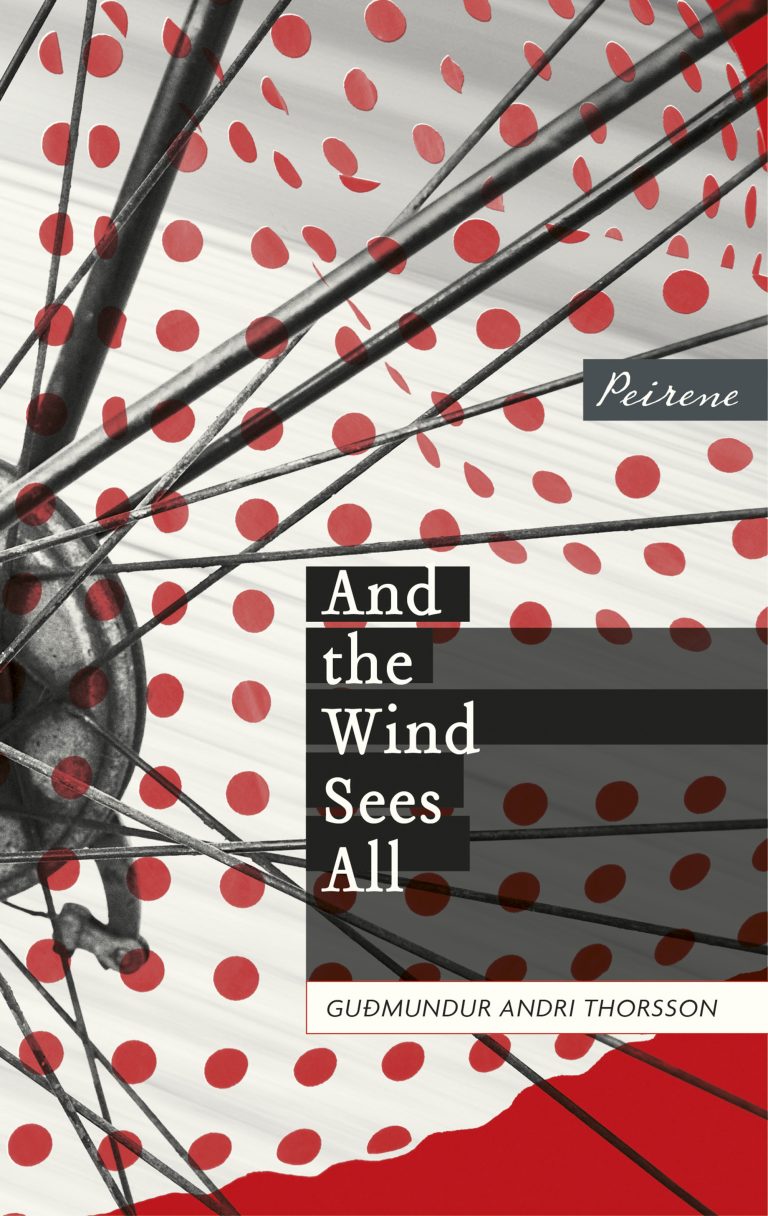
My final novella of May is And the Wind Sees All by Guðmundur Andri Thorsson (2011, transl. Björg Árnadóttir and Andrew Cauthery 2018), published by the ever-reliable Peirene Press.
The entire novel takes place within two minutes: the time it takes Kata, conductor of the village choir, to cycle down the main street of Valeryi in her polka dot dress.
“Everything is singing in the bright light. The sun sings, the sea, fish, telegraph poles, cows, flies, horses, dogs, the old red bicycle Kalli and Sidda gave her. She feels the day will come when her brown hair will once again have its red lustre. Once again her eyes will sparkle. Once again she’ll sing inside herself as she plays the clarinet. Once again there will be life in her existence. Once again she will be loved.”
We don’t find out why Kata has lost her sparkle until towards the end of the novella. In the meantime, as the residents of the northern Icelandic village see her go by, we get glimpses of their lives and a picture of the community.
The chapters are told from different people’s viewpoints but characters recur – as they would in such a small community – along with images and themes, weaving the fragmentary experiences into a whole.
One of the most harrowing stories belongs to Svenni, and yet his chapter begins quite lightly:
“Svenni lives in one of those houses that look like a man with his trousers hitched up far too high – a little house on big foundations.”
We learn that reticent “good bloke” Svenni, a surprise participant in the choir, has traumatic reasons for keeping himself to himself.
There are lighter moments too, such as Lalli the Puffin being so-called because he owns the Puffin restaurant, but also because “he struts and darts his eyes around like an inquisitive puffin. The villagers are all familiar with his distinctive waddle and smile to themselves when they see him.”
And there are moments in between, like the fragile reunion of two middle-aged people who had been teenage lovers back when they “presented their pain to each other” and are now taking a walk.
The coastal Icelandic setting of the fictional village is beautifully evoked throughout:
“The village is not just the movement of the surf and a life of work, the clattering of a motorboat, or dogs that lie in the sun with their heads on their paws. It’s not only the smell of the sea, oil, guano, life and death, the fish and the funny house names. It’s also a chronicle that moves softly through the streets, preserving in elemental image of the village created piece by piece over the course of centuries.”
The back of my copy refers to “relaxing Nordic hygge in a novel” – I disagree. And the Wind Sees All is not a harrowing novel but it’s not escapist either. There are villagers with traumatic pasts, there is self-medicating with alcohol, there is addiction and heartbreak. There’s also love and friendship. Thorsson shows how these experiences sit amongst a beautiful village, where the community is coming together for a choir concert. It all exists simultaneously, within the two minutes of Kata’s bike ride.
Moonstone:the boy who never was – Sjón (2013 trans. Vicotoria Cribb 2016) 144 pages
I really loved Sjón’s novella The Blue Fox when I read it back in 2016, and since then I’ve failed to pick up anything by him at all. Moonstone was good choice for a return as I found this novella lyrical and involving.
(I should warn anyone picking up this novella that it opens with a very explicit scene, and given that one of the characters is referred to as ‘the boy’ I thought I’d been plunged straight into the details of a sexual assault. Thankfully that was not the case.)
Máni Steinn Karlsson is living in Iceland in 1918, a time of profound change. The Katla volcano erupts:
The volcano is painting the night sky every shade of red, from scarlet through violet to crimson, before exploding the canvas with flares of bonfire yellow and gaseous blue.
The influenza epidemic takes hold:
“The young people glance around, and only now does it dawn on them how many members of the audience have been taken ill: every other face is chalk-white; lips are blue, foreheads glazed with sweat, nostrils red, eyes sunken and wet. Silence falls on the gathering.”
and Iceland votes to be independent from Denmark.
Máni is an outsider, raised by a foster mother, isolated at school and gay at a time when this was illegal in Iceland. He escapes to the cinema, and through this new medium become fixated with Sóla G, a young girl around his own age:
“It was when the girl stood up to leave that it happened. The instant her shadow fell on the screen they merged – she and the character in the film. She looked around and the beam of light projected Musidora’s features onto her own.
The boy froze in his seat. They were identical.”
As Máni carries on with his life through these extraordinary circumstances, he is brought closer to Sóla G and to the dangers of living in ways that society deems unacceptable, the least of which is his love of cinema.
Sjón’s writing is crystal clear and beautifully evocative. He balances reality and fantasy with delicate precision, each blending into the other, without ever losing his characters or the impact of his story. [Slight spoiler in the next sentence, please skip if you prefer!] The metaphysical ending may not be to everyone’s taste but I thought it worked perfectly and found it truly moving.
“He’d had no inkling that when the pestilence took hold Reykjavík would empty and convey the impression that nothing was happening at all; that the town would become an abandoned set that he Máni Steinn could envisage as the backdrop for whatever sensational plot he cared to devise, or, more accurately, for the kind of sinister events that in a film would be staged in this sort of village of the damned – for these days the real stories of being acted out behind closed doors. And they are darker than a youthful mind can begin to imagine.”
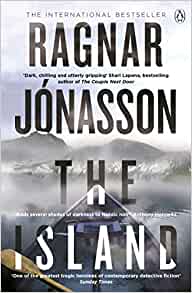
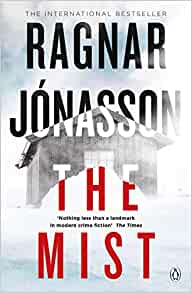
For my second contribution to Annabel’s Nordic FINDS month I’m looking at the second and third instalments in Ragnar Jónasson’s Hidden Iceland series, The Island and The Mist.
I know I enjoyed the first instalment of this series featuring police detective Hulda Hermannsdóttir, The Darkness, but I can’t remember anything about it. Thankfully you don’t need to have read it (or remember it) to enjoy the sequels.
These are quick, straightforward reads. Sometimes I find the phrasing a bit too straightforward with some clichéd phrases – I don’t know if this is Jónasson’s style or a translation decision – but Hulda is an appealing lead and the emphasis is on the mystery not sensationalist gore, which is very welcome. I’m not a big reader of contemporary crime so I don’t want an overly convoluted plot and I want characters that behave like real people in real (admittedly extreme) circumstances, both which The Island and The Mist deliver.
The Island (2016, trans. Victoria Cribb 2019) starts with a brief, highly unnerving prologue in 1988, before taking us back a year to 1987. Benedikt and his unnamed girlfriend are staying at her family’s holiday home:
“He was going to enjoy their stay, this weekend adventure in the middle of nowhere. The sense of isolation was enhanced by the thought that nobody knew they were there; they had a whole valley to themselves. It really was like a dream.”
This being a crime novel, anything idyllic fills the reader with a sense of deep foreboding and sure enough, the girl is found murdered. Hulda is a CID detective, tenacious and thorough, but she’s up against a traditional, sexist system:
“Her boss, Snorri, was an old school detective, quiet yet firm, with an aversion to modern technology”
He’s kind, but he tells her in no uncertain terms that her colleague Lýdur will be promoted above her, what with him having the obligatory Y chromosome and all. We see Lýdurtake some very dubious decisions in his investigation into the girl’s murder.
Fast forward to 1997: Hulda has experienced a horrific family tragedy, and is living alone in a small, expensive flat in Reykjavik. Four friends – Dagur, Alexandra, Klara and (eek!) Benedikt are having a reunion on a remote island:
It was her first visit to the Westman Islands, the little archipelago of some fifteen volcanic islands and innumerable stacks and skerries that jutted dramatically out of the sea off the south coast of Iceland. […] Now, Heimaey was home to a thriving fishing industry but Alexandra could see the volcanic cone, still brown and ominously bare of vegetation, brooding above the white buildings of the town.
Only three of them will return.
Hulda, now middle-aged and wondering what her career has left to offer her, is dispatched to investigate. Inevitably she has to dig up what happened ten years previously and whether the motive for the latest murder lies in the past. An additional complication is that Lýdur is now her boss with his own reasons for wanting Hulda to reach conclusions as quickly and thoughtlessly as he does. But Hulda is her own woman and we’re never in any doubt she’ll find her way to the truth.
Although I did guess whodunit, there was an additional twist that took me by surprise and was genuinely a bit shocking.
If I rarely read contemporary crime, I never read contemporary thrillers, but this is what The Mist (2017, trans. Victoria Cribb 2020) turned out to be, and I really enjoyed it. I think it helped that it’s a quick read; I probably couldn’t have sustained a long, tense story. The first two thirds of the novel are the deeply tense unfolding of events, and the last third is Hulda piecing together the crime scene in a fairly straightforward way.
It’s set around the same time as the opening events of The Island – Christmas 1987/February 1988 – and so at first I wondered if the UK publishing of these books was out of order, in the same way as Jónasson’s Dark Iceland series, but looking at publication dates it seems he decided to move back and forth in time with Hulda.
Hulda has hit a dead-end with her investigation of a young woman’s disappearance, and so she is sent to investigate a crime scene in a remote farmhouse in the east of the country. We’re then taken back to two months previously: Erla and Einar live in the farmhouse on land that Einar’s family have farmed for generations. Erla loves her husband but has always missed city life in Reykjavik.
“She was overwhelmed by the familiar feeling of emptiness that assailed her whenever something ran out and she knew she had no chance of replacing it. She was stranded here. To describe the feeling as emptiness didn’t really do it justice; it would be true to say she felt almost like a prisoner up here in the wilderness.
All talk of claustrophobia was forbidden on farm, though; it was a feeling they had to ignore, because otherwise it could so easily have become unbearable.
Suffocating…”
Erla and Einar’s familiar Christmas routine is interrupted by the arrival of a stranger, Leó. How he has reached them and what he is doing stranded in the middle of nowhere during a blizzard at a time when nearly everyone is at home, he can’t really explain. To send him away would be to send him to his death, and so Einar invites him to stay, despite Erla’s deep mistrust of the unknown man.
“It would be a white Christmas, as usual. Stiflingly white. And now this intruder had entered their peaceful home and poisoned the atmosphere. You couldn’t describe it any other way. He’d poisoned it. The wind whined outside – hardly a harbinger of peace on earth and goodwill to all men.”
The strain builds between the three people as they spend the night together in the remote, old-fashioned farmhouse, with electricity and phone lines both down and the snow relentlessly falling. Jónasson expertly maintains the tension, exacerbated by the persistent, inhospitable weather.
“In winter, not a day passed when she didn’t witness something that sent a shiver down her spine. She didn’t believe in ghosts, but the isolation, the silence, the damned darkness, they all combined to amplify every creak of the floorboards and walls, the moaning of the wind, the flicker of light and shadow, to the extent that she sometimes wondered if maybe she should believe in ghosts after all; if maybe that would make life bearable.”
Despite the minor reservations I mentioned earlier I do enjoy Jónasson’s writing. Hulda is believable and although she’s a-detective-with-a-tragic-past-who’s-overinvested-in-their-work she’s not destructive or self-pitying. She’s honest and humane and likable. In The Mist we learn more about what happened to bring her to the circumstances of The Island.
“But then that’s what her job was like at times, a game played out in the grey borderlands between day and night. No victory was ever sweet enough; her work was never really done. She could expect no praise or reward. The riddle had been solved to general indifference.”
But a large part of the appeal for me is that Jónasson is great at evoking the Icelandic landscape. I never feel like the stories could occur anywhere else.
“Ellidaey appeared ahead, looking just like the pictures she’d seen; the single white speck shining amidst the green pasture gradually resolving itself into a house. Behind it the grassy slope reared up like a crest of a wave. As they drew closer, the black cliffs with their splashes of white bird droppings didn’t look as if they offered the visitor anyway up from the sea.”
To end, one of my favourite songs, which conveniently happens to be about mist (and also shares a name with my friend’s childhood hamster) :
This my second contribution to the wonderful #ReadIndies2 events hosted by Kaggsy and Lizzy.
This time I’ve chosen two novels linked by the theme of communities.
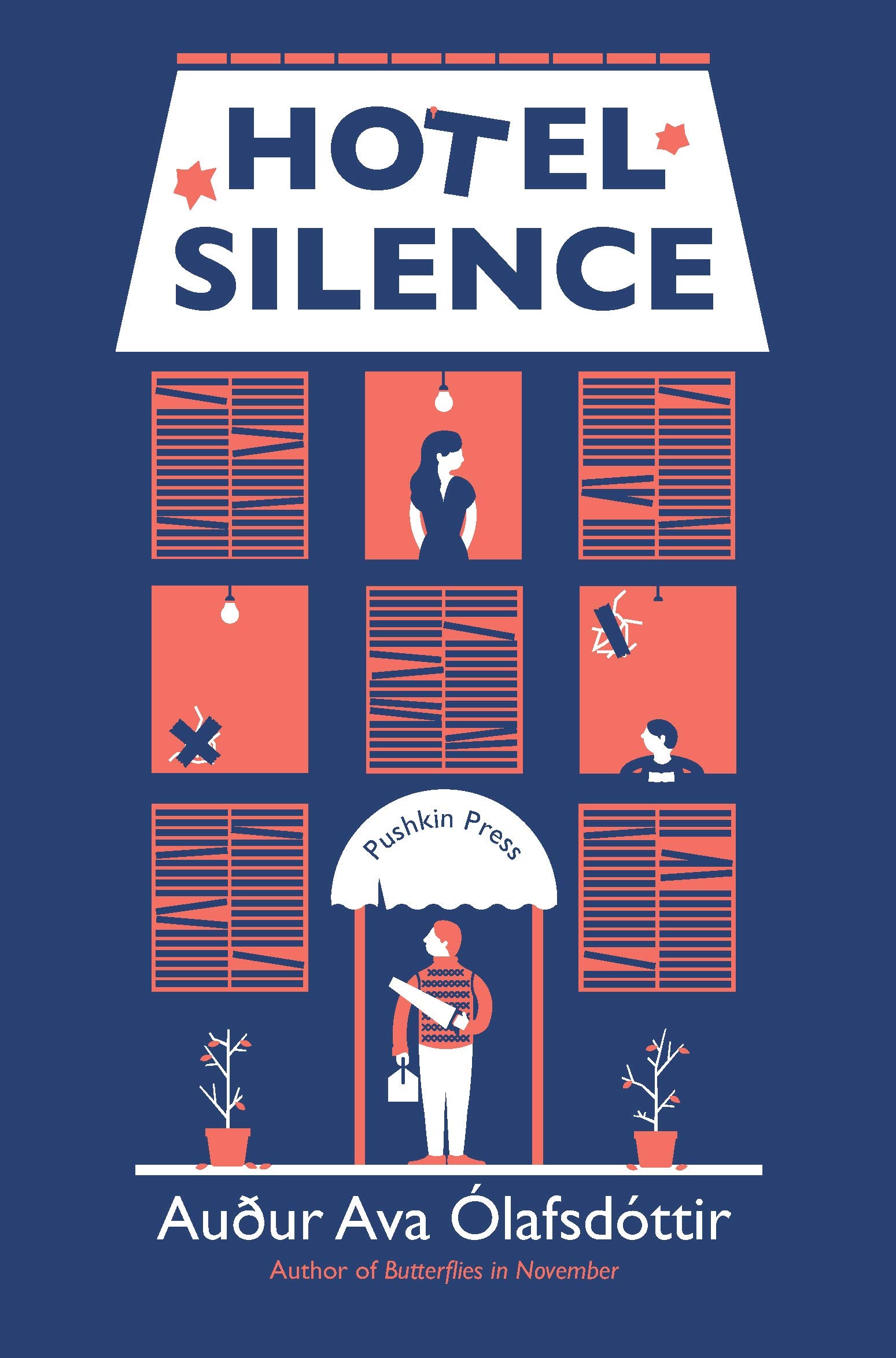
Firstly, Hotel Silence by Auður Ava Ólafsdóttir (2016 trans. Brian FitzGibbon 2018) published by Pushkin Press. I wrote about Butterflies in Novemberby this author in my previous post, explaining that I’d also enjoyed Miss Iceland. Unlike both these novels, Hotel Silence features a male narrator and is set away from Iceland.
Jónas Ebeneser is just shy of 50 and his wife has left him, telling him that his daughter, Gudrun Waterlily, is not his. His elderly mother has dementia and is fixated on war. All this has prompted a significant crisis:
“Will the world miss me? No. Will the world be any poorer without me? No. Will the world survive without me? Yes. Is the world a better place than when I came into it? No. What have I done to improve it? Nothing.”
So he decides to end his life. But because he doesn’t want Gudrun Waterlily to find his body, he decides to do so in another country. He flies to an unnamed country that has just seen the end of conflict:
“The situation is said to be precarious, and it is unclear whether the ceasefire will hold. It seems ideal”
The first section, Flesh ends with his arrival at the titular hotel. The second part, Scars, forms the rest of the book, in which Jónas finds his skills as a handyman in great demand as an entire generation of men has been wiped out.
He helps May and Fifi, the young siblings who run the hotel, and gets roped in to making western saloon doors for the nearby Restaurant Limbo where he takes his meals. Word spreads, and Jónas begins to heal, albeit with scar tissue – not a return to what was before.
“My unhappiness is at best inane when compared to the ruins and dust that lie outside my window.”
He also assists with healing in others, as he helps May and Fifi rebuild their hotel. There is a mosaic of cultural significance somewhere in the building, but also more prosaically rooms that need rewiring and painting. The brother and sister hope to see tourists back soon, although to a very different hotel than before the war, as the uncovered shop postcards attest:
“What strikes me are the bright colours, the vibrant blue sky and golden sand; the world was still in colour back then and people didn’t know what was in store, they’re alive, both their legs are of the same length, they have plans for the future, maybe they’re going to change cars or kitchen units or take a trip abroad.”
Hotel Silence shows the power of community to heal both collectively and for the individuals within it. It is about how hope doesn’t mean a diminishment of pain, but a way to live alongside it. And it’s about how both hope and healing can be found in the most unexpected places, if we can find the strength to stay open to such possibilities.
Secondly, Esperanza Street by Niyati Keni (2015) published by AndOtherStories, a not-for-profit publisher whose website explains: “And Other Stories publishes some of the best in contemporary writing, including many translations. We aim to push people’s reading limits and help them discover authors of adventurous and inspiring writing.”
They are a publisher I really enjoy, one where I’ll pick up a novel simply because it’s one of theirs, which is exactly what I did with Esperanza Street. The story is one of a community in a port town in the Philippines, told by Joseph, an eight-year old houseboy: “Esperanza, one of the oldest streets in Puerto, its heartbeat made up of a thousand smaller pulses, lulled us with its apparent constancy.”
Joseph’s mother has died, and shortly before this his father takes him to Mary Morelos’ house to work. Mary is kind but exacting, and Joseph gets to know her sons, good-looking mechanic Dub and artistic Benny as well as the cook America.
We follow Joseph and the inhabitants of the street through the next few years, beginning in 1981 with the Marcos’ in power. It’s a poor but busy area with food stalls, coffee shops and beauty parlours, and I thought Keni achieved a good balance of evoking the environment without indulging in poverty porn:
“from the gate, I watched the street turn to velvet and everything become rich, convivial. In a line stretching from the brow of the hill down to the jetty, the lamps came on in clusters, their yellow light seeping through the smoke that layered upwards from the braziers.”
The threat of redevelopment hangs over Esperanza Street. Local gangster Eddie Casama has left the area behind through his accumulation of wealth – though his mistress lives in the area – and he has an interest in seeing the area change. “he looked like the kind of man who’d let his kids ride on his back at weekends.” Yet his potential for violence and disregard for others is never in doubt.
There isn’t a huge amount of plot to Esperanza Street, though there several strands that we watch unfold. The inhabitants of the street are subject to their own passions and also to external forces of politics and money, all of which determine their fates. Joseph is an intelligent boy and both Mary and his father are anxious that he finishes school, but there will be events that loom large in his life along the way.
“I read with the hope something would finally arrive that would illuminate everything, a single piece of knowledge that would show how my life would unfold.”
Keni grew up in London though she has travelled a lot in the Philippines, so I would be interested to know how accurate her portrayal of the area is. It’s certainly a fully realised fictional portrait, which I found very evocative.
To end, a song named after a street near where I live:
This is a contribution to the wonderful #ReadIndies2 events hosted by Kaggsy and Lizzy.
The two books for this post were buried in my TBR, so I’ve put them together as they are linked by the theme of friendship.
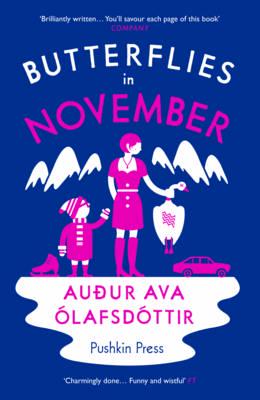
Firstly, Butterflies in November by Auður Ava Ólafsdóttir (2004 trans. Brian FitzGibbon 2013) published by Pushkin Press (which I thought was an indie, then panicked that it had been bought by Penguin, but which Lizzy has helpfully reassured me is definitely an indie!)
I really enjoyed Miss Iceland by this author so I was looking forward to this. Like Miss Iceland, this novel has a central female protagonist whose voice is bone dry, determinedly going her own way.
At the start of the novel, the unnamed narrator returns home to her husband after a meeting with her lover, one of her translation clients as she speaks 11 languages. She doesn’t seem especially attached to either man:
“After we had slept together for the first time, he looked surprised when I handed him the bill with the VAT clearly highlighted.”
Her husband announces he is leaving, to be with his pregnant girlfriend. This doesn’t seem like any great loss, given that as he’s going, he details her failure to live up to his ideals of womanhood:
“‘The amount of times I’ve prayed to God to ask him to make you buy a skirt suit.’
‘Wouldn’t it have been simpler just to ask me?’”
She moves to a new apartment but her wet blanket husband keeps turning up, so she starts daydreaming of foreign travel somewhere warm. However, her best friend Auður is pregnant with twins, and needs to stay in hospital for the late stages of the pregnancy. This means she finds herself driving round the Icelandic ring road which circles the whole island, with Auður’s son Tumi:
“a deaf four-year-old clairvoyant boy with poor eyesight and one leg three centimetres shorter than the other, which makes him limp when he is only wearing his socks.”
There seems little worry that Tumi will miss any education, as his teacher demonstrates ableism, gender stereotyping and racism, all within a remarkably short conversation.
The plan is to travel east to a prefab cottage that she won in a lottery for the Association for the Deaf. This involves her returning homewards, and we get glimpses of her past which may explain some of her detachment, although things are never fully explained.
What follows is a road trip story – funded by her and Tumi winning another lottery, which they split 50/50 – whereby the two meet a variety of characters. My personal favourite was the Estonian choir who kept turning up. There are also some lovers, as predicted by a clairvoyant at the start of the novel:
“three men in your life over a distance of 300 kilometres, three dead animals, three minor accidents or mishaps, although you aren’t necessarily directly involved in them, animals will be maimed, but the men and women will survive. However, it is clear three animals will die before you meet the man of your life.”
The animals: suffice to say there were passages I had to skip. But skipping those didn’t detract from the overall story at all so I would still recommend this novel, even if you share my sensitivities.
Tumi is a sweet, self-possessed boy “He always stands at the back of the group, avoiding conflict.” and I thought his relationship with the narrator was nicely evoked without sentimentalism.
Looking on goodreads, the reviews for this are a very mixed bag. My tolerance from whimsy is pretty high and I don’t mind things left unexplained, so I enjoyed this novel, and I do really like Ólafsdóttir’s detached female voices.
“A relationship for me is all about the right body and the right smell, the home is a shell for the body, not a place for exchanging existential views and having discussions. Even though you still have to load the washing machine and cook for the body.”
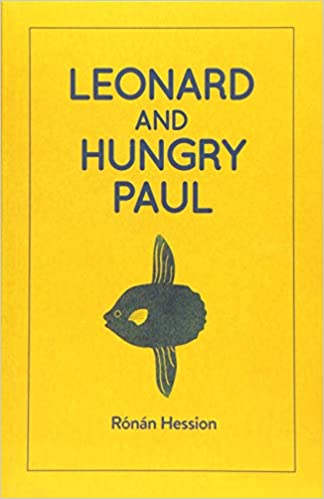
Secondly, Leonard and Hungry Paul by Rónán Hession published by Bluemoose Books, an independent publisher based in Hebden Bridge, whose manifesto explains “At Bluemoose our aim is to publish cracking stories that engage and inspire.”
I tried to read L&HP back in the summer and totally failed, but it had a lot of positive reviews in the blogosphere and so I gave it another shot. Now my reading is recovering somewhat I zipped through it with ease, so I’m sure my earlier troubles were indicative of my reading slump and not Hession’s writing.
The titular friends are men around their mid-thirties, who are easily overlooked. Leonard is grieving his mother, who he lived with in the family home until she died, never moving out because they got on well and there was no reason to. I found this relationship very touching. So often parent/child relationships are dramatized as being full of unspoken judgements and resentments, and it was a pleasant change to see someone who loved his parent, but also liked and respected them.
“Had he the courage, Leonard would have spoken up and said that his mother looked after everyone in her life as though they were her garden birds: that is to say, with unconditional pleasure and generosity.”
Leonard’s grief is of the quiet, ordinary kind where you still get up and go to work every day, carrying a deep sadness with you. In other words, the type pretty much everyone experiences.
“Leonard took off his noise-cancelling society-repelling headphones and went to the kitchenette for a mid-morning cup, even though he always disliked the awkward wait for the water to boil and the prospect of kettle-related time-killing small talk.”
I am with you Leonard.
Hungry Paul – whose attributive adjective is never explained – still lives at home with his parents, happy to bumble along, working as a casual postman and seeing Leonard regularly for their boardgame nights.
“He had no interest in, or capacity for, mental chatter. He had no internal narrator. When he saw a dog he just saw a dog, without his mind adding that it should be on a lead or that its tongue was hanging out like a rasher.”
Paul’s quiet stillness comes into its own when his mother insists he join her as a volunteer hospital visitor. While his extrovert mother chats away happily with one patient, Paul becomes the only one another patient will tolerate “He sat there calmly, simply sharing the moment with the woman.”
Not very much happens in L&HP but there is enough plot to pull the reader along. Paul’s sister Grace is getting married; Leonard begins a tentative romance; Hungry Paul enters a competition at the Chamber of Commerce. Really though, the novel isn’t so much about what happens as providing a glimpse into ordinary, quiet lives, and showing how they are worthy of attention:
“Their friendship was not just one of convenience between two quiet, solitary men with few other options, it was a pact. A pact to resist the vortex of busyness and insensitivity that had engulfed the rest of the world. It was a pact of simplicity, which stood against the forces of competitiveness and noise.”
I found L&HP to be a paean to the kindness and the gentleness found in the everyday small gesture:
“She was a person for whom kindness was a very ordinary thing, who believed that the only acceptable excuse for not having a bird feeder in the back garden was that you had one in the front garden”
(Or in my case, because you live in a London flat and the management company have banned them because the rats feast on them ☹)
It’s not an overly worthy novel though, there is plenty of humour. No-one is put down, but the absurdities of people are gently ribbed, such as Leonard’s colleague “Okey dokey. This will take just one minutiae. Take a load off, compadre,’ said Greg, unable to complete one conventional sentence.”
As an introvert who despairs at the relentless noise of modern life (why do shops think blaring out music will entice you to spend more time and money there? Why are cinema volumes now kept at ear-bleeding decibel levels?!) and who firmly believes in the meaning of the everyday, I was definitely the target audience for L&HP. If this sounds like you too, then I think you’ll enjoy this novel.
“We live in an age of cacophony. Everyone talking and thinking out loud, with no space or oxygen left for quiet statements and silence.”
To end, one of the best TV theme songs ever, all about being a friend:
After a somewhat harrowing start to my WITMonth reading, this week I have two novels from Pushkin Press which I found much easier-going. That’s not to say they are the lightest of reads though, as they deal with serious themes: trying to carve a space as a female artist in a patriarchal society, and bereavement.
Firstly, Miss Iceland by Auður Ava Ólafsdóttir (2018, trans. Brian FitzGibbon 2019). Set in the 1960s, Hekla is young woman named after a volcano, who leaves her remote town to move to Reykjavík in the hope of realising her dream of becoming a writer.
The story begins with her coach journey to the city as she attempts to read Ulysses in its original language (quite an undertaking even when it’s written in your first language):
“How many pages would it take to overtake the tractor if James Joyce were a passenger on the road to Reykjavík?”
This witty and serious woman also has to fend off the attentions of an older man who says he can get a place in the Miss Iceland contest:
“We’re looking for unattached maidens, sublimely endowed with both clean-limbedness and comeliness”
Bleugh. Hekla is not remotely interested. She goes to stay with her schoolfriend Ísey who is married and has started a family, a situation about which she seems conflicted:
“I didn’t know it would be so wonderful to be a mother. Having a baby has been the best experience of my life. I’m so happy. There’s nothing missing in my life. Your letters have kept me alive. I’m so lonely. Sometimes I feel like I’m a terrible mother.”
Ísey wanted to write too and her sections have a lovely phrasing and style. There’s no doubt she has talent but her choices have been made and at this moment in time they preclude writing. Hekla is much more single-minded, but she may struggle to get her voice heard as much as Ísey, because their society does not favour independent-minded female writers.
To pay the bills Hekla takes a job as a waitress at the Hotel Borg. The more experienced staff tell her tales of female staff getting fired because of the attention of male customers, and which stores have backdoor exits she can use to escape if she is followed.
Ólafsdóttir effectively demonstrates how the patriarchy supresses men too. Hekla’s best friend is Jón John, who is gay and sees his prospects for a happy life as being fairly hopeless. He is used by men for sex before they return home to their wives, and while he wants to be a costume designer the lack of opportunity means he fishes on trawlers:
“The most handsome boy in Dalir told me he that he loved boys.
We kept each other’s secrets.
We were equals.”
Miss Iceland isn’t a bleak tale because Hekla is so resilient, and I’ve probably made it sound much sadder than it is. Jón John is a very forlorn character who really moved me, but Hekla is pragmatic to the point of detachment. She is entirely honest with her boyfriend, failed poet Starkadur (a reference to Cold Comfort Farm?) that her interest in him is purely physical. In this way she reminded me of another fictional artist, Margery Sharp’s Martha.
Despite Miss Iceland being told from Hekla’s point of view, in some ways I finished it in a similar position to Starkadur, feeling quite distant from her as a character. Ísey and Jón John are much more engaging. However, I think that is clever writing on the part of Ólafsdóttir rather than a flaw in the novel. Hekla is a writer, she has that slight detachment when she is with people of only wanting to get back to her typewriter.
“In my dream world the most important things would be: a sheet of paper, fountain pen and a male body. When we’ve finished making love, he’s welcome to ask if he can refill the fountain pen with ink for me.”
Miss Iceland ends with a two major pragmatic decisions about how to navigate a society which will not allow free expression of who you are. It’s not optimistic but nor is it defeatist. It is frustrating though, which I think was exactly the point.
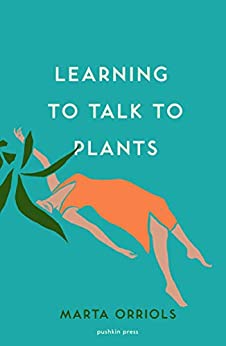
Secondly, Learning to Talk to Plants by Catalan writer Marta Orriols (2018, trans. Mara Faye Lethem 2020). I spend a lot of my working life talking about and dealing with grief, and I thought this was an excellent exploration of one woman’s first year grieving for her partner.
Paula Cid is a neonatologist who loves her job. Her partner Mauro has been killed in road traffic collision.
“I often think and speak of Mauro using the adverbs before and after, to avoid past tense.”
What no-one knows is that Paula and Mauro had been going through a tough time in their relationship, and the day he died he had told her he was leaving her for a younger woman.
“You liked to buy me shoes. I never told you but I wasn’t crazy about the ones you chose for me….They were shoes for a woman who didn’t have my feet, or my style that wasn’t really a style. They were shoes for a woman who wasn’t me.”
Paula was such a well-realised character, I really liked her and I really liked the fact that she didn’t always behave well, even though she was a fundamentally decent person. She throws herself into her work, which is not entirely commendable despite how vital her work is. She is a bit of a pain to her colleagues. She is not always easy with her father and her friends. She resents any suggestion that her grief is similar to anyone else’s:
“My pain is mine and the only possible unit for measuring or calibrating it is the intimacy of everything that compromised the how. How I loved him, how he loved me. How we were, uniquely, no longer us and, therefore, how I could uniquely grieve him.”
Reasonable, I think.
What I also liked is how Learning to Talk to Plants didn’t skirt round the issue of sex. Paula is in early middle-age, she is not ready to renounce her sex life, even though society thinks it an unseemly way for a grieving woman to behave:
“Pleasure that appears just four weeks after losing your partner forever feels too bold”
However, Learning to Talk to Plants is not about Paula’s relationship with men, or even with Mauro. It is about her relationship with herself, about taking the time to nuture herself, and rediscovering hope, however abstract:
“You said talking to plants was a private, transformative act, an act of faith for those who don’t believe in miracles. I get up, take a breath, and add to my list: Learn to talk to plants.”
Learning to Talk to Plants skilfully avoids cliché, mawkishness or sentimentality. I did feel sorry for those plants though…
To end, one of the younger members of my family has been channelling Axl Rose in her attire this week, despite having no idea who he is (probably for the best). Here is the Postmodern Jukebox version of Sweet Child O’Mine:
Or, you know, don’t. A friend of mine from the east coast of America asked me last week why all the weather reports in the UK were focussing on snowmageddon when really, very little happened. A German colleague is baffled every year by our total inability to deal with anything above a flurry. I have no answers for them. What I do have, in honour of the snow that barely made an appearance last week, is novels where there is serious snow. Snow that means business. Snow you have to dig yourself out of. If only because then I get to include this gif:
Firstly Snowblind by Ragnar Jonasson (2010, tr.2015 Quentin Bates 2015). I’m not a huge reader of crime fiction set any time after the middle of the last century, but I was convinced by the enthusiastic reviews of FictionFan and Sarah from Hard Book Habit, and the promise that this was like a golden age crime novel but with a contemporary, Icelandic setting (the author translated Agatha Christie into Icelandic when he was 17).
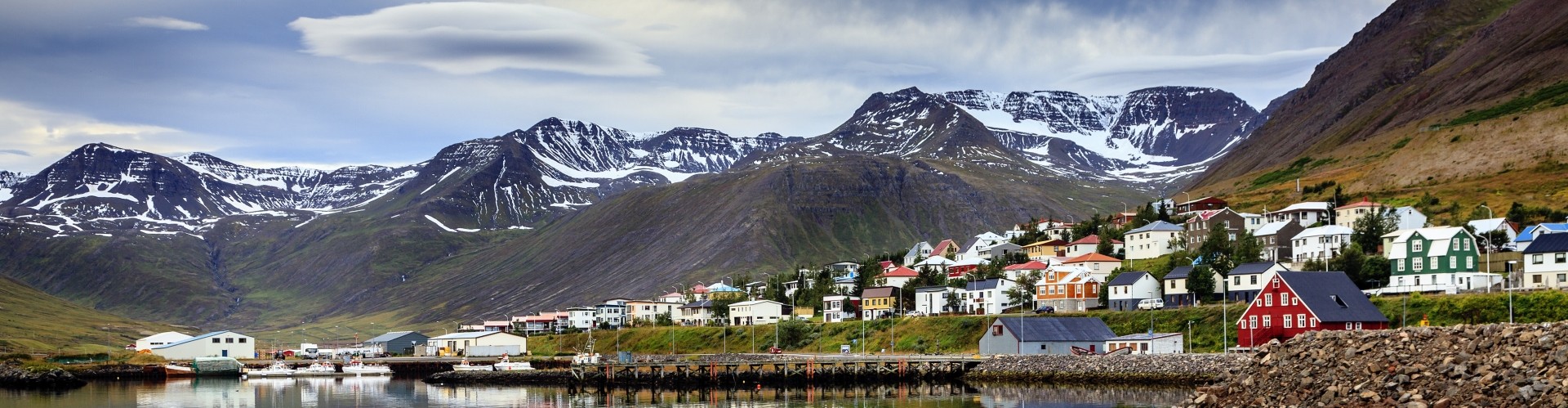
Rookie copper Ari Thor Arason leaves Reykjavik and his girlfriend behind to take a posting in the remote town of Siglufjordur, in the far north of Iceland. A place so small you don’t need to drive to get around, and only accessible via a mountain pass.
“On the right were the snow white mountains, magnificent and formidable, while on the other side was a terrifying, sheer drop onto the expanse of Skagafjordur. One mistake on a patch of ice and there would be no tomorrow…he relaxed as the tunnel entrance finally approached. They had made it all the way in one piece. But his relief was short-lived. He expected a broad, well-lit modern tunnel, but what lay in front of him looked forbidding. It was a narrow single track. Ari Thor later learned it had been carved through the mountainside more than forty years ago when there were only a few tunnels in Iceland. It didn’t help that water dripped here and there from the unseen rock ceiling above. Ari Thor suddenly felt himself struck by a feeling he had never experienced before – an overwhelming claustrophobia.”
As Ari Thor settles into life in place where everyone knows everyone and no-one locks their doors, a local celebrity falls down some stairs whilst drunk and dies (or did he? or was he?) When a woman is found close to death, bleeding out in the snow in her garden, the police start to suspect that the two may be linked. As “every winter is a heavy winter in Siglufjordur”, the mountain pass is soon made unpassable through an avalanche, and so essentially what Jonasson has done is use the snow to create a claustrophobic, tense, locked-room murder mystery (please commend me on my enormous restraint in avoiding snow-based puns like ‘chilling’ or ‘unsettling’, despite the fact it is both those things).
Snowblind is a short novel (252 pages in my edition) and so I can’t say much more without spoilers. What I will say is that it feels resolutely contemporary with references to the financial crash which devastated Iceland at the time (although for the once-busy port of Siglufjordur, “if there’s a recession here, it comes from the sea”) whilst at the same time being part of a tradition of non-gory, page-turning whodunits. Siglufjordur itself is wonderfully evoked, with a real sense of place created, whilst at the same time becoming a fictional other, and somewhat eerie.
“This peaceful little town was being compressed by the snow, no longer a familiar winter embrace but a threat like never before. The white was no longer pure, but tinged blood red.”
Secondly, Miss Smilla’s Feeling for Snow by Peter Hoeg (1992, tr. F David 1993) and one more stop on my Around the World in 80 Books Reading Challenge, hosted by Hard Book Habit (new year’s resolution from now on – stop being so euro-centric with this challenge). I distinctly remember all the hype around this novel when it first came out. Not that I’m slow on the uptake, but 24 years later, I’ve finally read it. These days we are awash with antisocial-genius detectives but back in the day Smilla Jaspersen may have been more of a novelty:
“I feel the same way about solitude as some people feel about the blessing of the church. It’s the light of grace for me.”
Smilla does need people, even if she doesn’t like to admit it, and when her neighbour, six year old Isiah, falls to his death from a roof, she is galvanised to act:
“Isiah’s death is an irregularity, an eruption that produced a fissure. That fissure has set me free. For a brief time, and I can’t explain how, I have been set in motion, I have become a foreign body skating on top of the ice.”
Smilla, half-Greenlandic, can read the snow and she knows Isiah’s last footprints tell a different story to the one the authorities are spinning. This is a theme throughout the novel, which is as much a commentary on post-colonial power structures as it a detective story. Smilla has a history of far left political activism and is not easily cowed by those trying to silence her. I found her a believable, idiosyncratic heroine and really enjoyed her matter-of-fact voice:
“The knives I keep in my apartment are just sharp enough to open envelopes with… I don’t need anything sharper. Otherwise, on bad days, it might easily occur to me that I could always go and stand in the bathroom and slit my throat. Against such a contingency it’s nice to have the added security of needing to go downstairs and borrow a decent knife from a neighbour.”
My quibble would be that I thought the story lost momentum a bit when Smilla left Denmark and journeyed towards Greenland; I think the return to the land of her childhood was inevitable so maybe it needed a heavier edit earlier in the novel. But overall, an intriguing premise for an intelligent mystery with a strong political message.
“Reading snow is like listening to music. To describe what you’ve read is to try and explain music in writing.”
To end, the unintentionally hilarious trailer for the film adaptation. So very earnest, so very heavy-handed 😀 (and yet still following the Hollywood tradition of whitewashing, unless Julia Ormond is part-indigenous Greenlander?)







 madame bibi lophile recommends