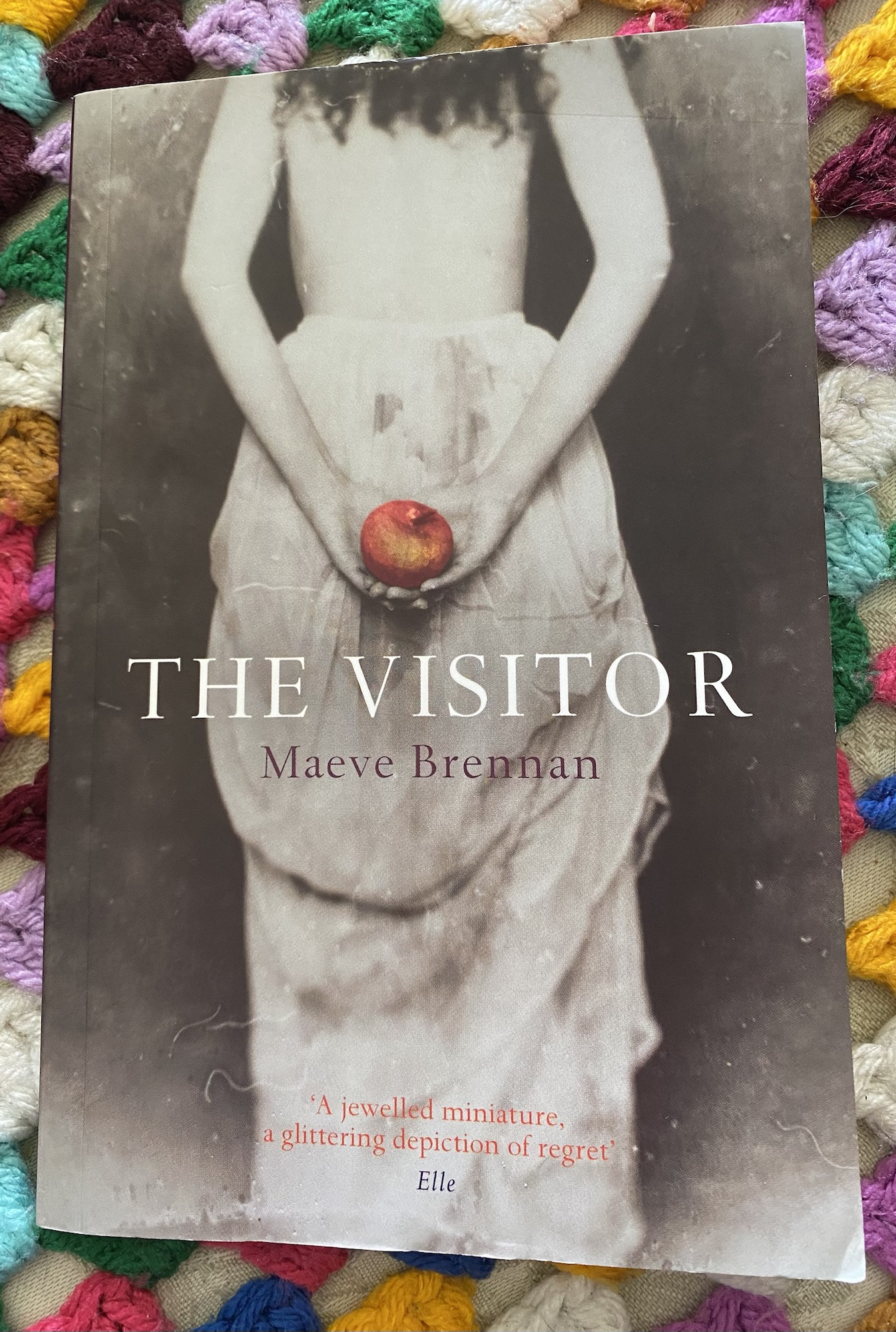
I received my copy of The Visitor by Maeve Brennan (written in the 1940s, published after her death in 2000) from lovely Karen at Kaggsy’s Bookish Ramblings, having read her wonderful review. I’d not read Brennan before and I was really keen to; having now read this 81 page novella I definitely want to explore her writing further.
Twenty-two year old Anastasia King returns to her grandmother’s house in Dublin, having spent six years in Paris with her mother who has now died.
“She was still the same, with her delicate and ruminative and ladylike face, and her hands clasped formerly in front of her. Anastasia thought, She is waiting for me to make some mistake.”
Little does Anastasia know she has already made the mistake by leaving with her mother. Her grandmother is entirely unforgiving and inflexible about the hurt caused to her son who has also died, and makes no allowances for Anastasia having been the child of the marriage.
Anastasia expects to be able to live with her grandmother as she has nowhere else to go, but her grandmother has other ideas. She does not view this house as Anastasia’s home any longer and is determined to keep her in the titular role. Her imperviousness and lack of welcome border on Gothic and I was reminded of Janet in O Caledonia by Elspeth Barker. The Visitor lacks the overt Gothic tones of that novel but they share the dislocation of a young adult in her own home and the almost eeriness that evokes.
“She turned and looked at the mirror, but it reflected only empty chairs, and the firelight played indifferently on polished furniture as it had once across her parents’ faces. There is the background, and it is exactly the same.”
Her grandmother’s elderly housekeeper Katharine does her best to welcome Anastasia, but her kindness is vastly outweighed by Mrs King’s seemingly endless bitterness. Brennan adds complexity to the tale with the introduction of old family friend Miss Kilbride. Anastasia’s actions towards Miss Kilbride stop the story becoming fairytale-like or straightforward. By portraying human beings in all their complexities Brennan doesn’t allow trite conclusions to be reached.
I don’t want to say too much about the novella as it’s so short, but its length doesn’t mean it lacks power. The loveless, withholding atmosphere that Mrs King creates is masterfully drawn and really gets under the reader’s skin. The ending is ambiguous and adds to the feeling of dislocation throughout the story. Brennan doesn’t waste a single word.
“Home is a place in the mind. When it is empty, it frets. It is fretful with memory, faces and places and times gone by. Beloved images rise up in disobedience and make a mirror for emptiness.”
As I mentioned in my last post, I’m disappointed not to be doing my novella a day in May project this year, but for my sanity something had to give! Simon is undertaking a book a day for the month which I’m sure will give me many ideas for next year 😊
I still plan to focus on novellas this month though, and last year when I read Small Things Like These by Claire Keegan, a few people mentioned that I read needed to read Foster. How right they were, it’s an extraordinary novella.
Apparently it started life as a New Yorker short story (it has two copyright dates) and although I haven’t read that version, as a novella I would say it is completely realised in just 88 pages.
A young girl is taken to the west of Ireland to live with the Kinsellas, her aunt and uncle, as her mother is heavily pregnant and struggling with the number of children she has to care for. Her father gambles away the family heifer and there isn’t enough food to go round, or time for adequate physical or emotional care.
At the place where she is to spend the summer, chores are achieved daily on the farm and within the home. There is enough food and enough care.
“Her hands are like my mother’s hands but there is something else in them too, something I had never felt before and have no name for. I feel at such a loss for words but this is a new place, and new words are needed.”
Although the time is never specified, it seems to be around the 1970s/early 1980s as there is a discussion of hunger strikers. The narrator is nameless and we’re not sure of her age, but I would say somewhere around nine to eleven years old.
“I am in a spot where I can neither be what I always am nor turn into what I could be.”
Keegan trusts the reader not to need everything spelled out. We get a sense of the wider family dynamics and the feelings of various family members without them being explicitly stated. The slowly building bonds of trust and affection between the young narrator and the Kinsellas are so delicately evoked and tenderly realised.
A stunning scene sees the narrator and Mr Kinsella walking along the beach. When they turn around to walk back, he can only see her footprints
“’You must have carried me there.’
[..]
We stand then, to pause and look back out at the water.
‘See, there’s three lights now where there was only two before.’
I look out across the sea. There, the two lights are blinking as before, but with another, steady light, shining in between.
‘Can you see it?’ he says.
‘I can,’ I say. ‘It’s there.’
And that is when he puts his arms around me and gathers me into them as though I were his own.”
There is also the gradual understanding by the narrator that a life is possible, and exists, beyond that which she has always known.
“But this is a different type of house. Here there is room, and time to think. There may even be money to spare.”
Throughout, there is an awareness that this is a temporary time, with a defined end date. The situation cannot endure and the narrator and the Kinsellas will have to part.
Foster is a stunning novella. A deeply moving and perfectly crafted gem, complete in itself, down to the final devastating line.
I’ve not seen the film adaptation of Foster, but it looks faithful, and beautifully shot:
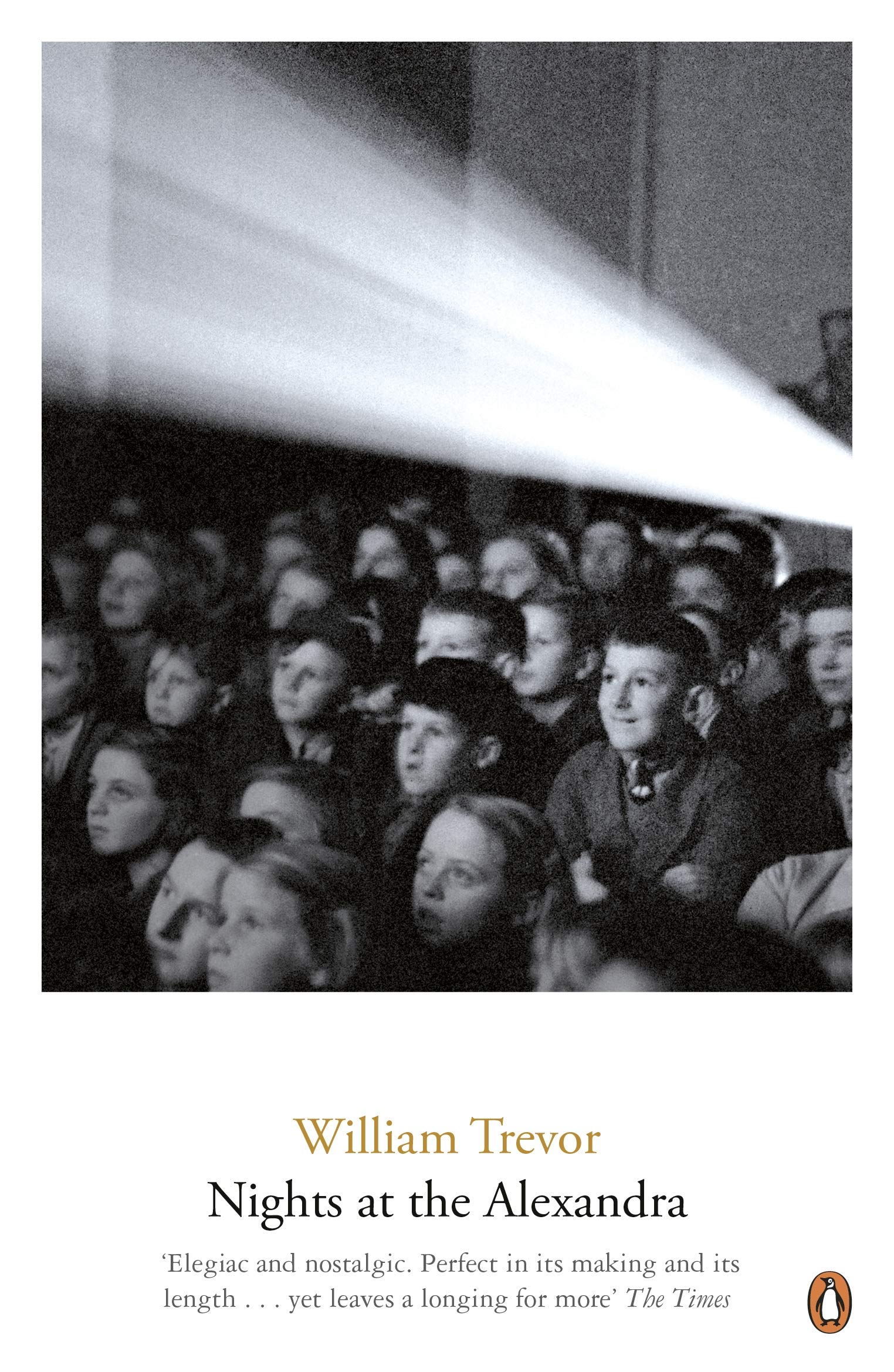
Nights at the Alexandra – William Trevor (1987) 71 pages
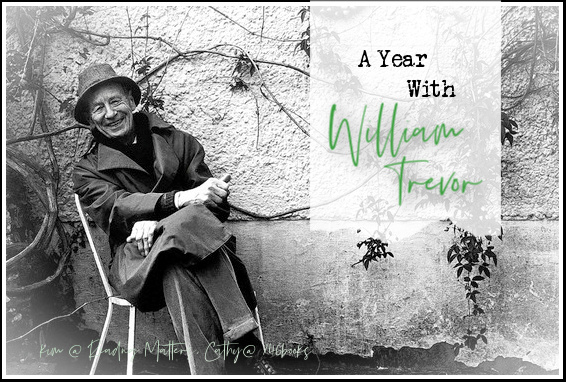
Many of you will be aware that Cathy at 746 Books and Kim at Reading Matters are hosting their wonderful A Year with William Trevor reading event throughout 2023.
It opens with 58 year-old Harry remembering his life as a young adult, just about to leave school, during World War II. The Messingers – she English, he German – have moved to Ireland to avoid the prejudice their relationship would encounter in their countries of birth. She is much younger than her husband, and glamourous.
“I remember that more distinctly than any other moment in my life. She was already in the car when she spoke, and her tone of voice was not one normally employed when making a request. With a gentle imperiousness, she commanded what she wished, and before she drove away she glanced at me once, a smile flickering across her thin features.”
Harry is from a Protestant family, living in a Catholic town. He is expected to follow his father into the timberyard business – something his elder sister has already done by working in the office and which she bitterly resents.
“The family atmosphere was as it always was: my grandmothers silent in their dislike of one another, my brothers sniggering, my mother tired. Annie resentful, my father ebullient after an hour or so in the back bar of Viney’s hotel.”
Harry does not want to follow his father in any way. He is desperate for something else, without knowing what it is. The Messingers – particularly Mrs Messinger – with their large house, cigarettes and tea, affection and childlessness, stories and difference, offer this to Harry.
They offer him further escape when Mr Messinger decides to build the titular cinema in the town, named after his wife. Harry is able to have a job, and refuse the timberyard once and for all.
Nights at the Alexandra has such a subtle and finely-wrought tone. The relationships between the characters are beautifully evoked and in less-skilled hands could have easily descended into cliché. Instead Trevor gives us a story of human lives with all their pain and love, longing and helplessness, that somehow grants his characters some peace too. There are also moments of deadpan humour:
“My father lent his observations weight through his slow delivery of them, his tone suggesting revelations of import yet to come. But invariably this promise remained unfulfilled.”
Now, it could be said Reader, that my tears are not worth very much. I’ve always been a crier anyway, and currently I’m bereaved and pre-menopausal, so it doesn’t take much to set me off. But I wept at the end of Nights at the Alexandra. It was so completely realised, so moving and poetic, unsentimental and sympathetic. Perfection.
Small Things Like These – Claire Keegan (2021) 110 pages
Claire Keegan’s short story collection Antarctica was the only work of hers I had read, but I remembered being really impressed by it. When Small Things Like These got so much love in blogosphere I knew I needed to pick her up again. Thankfully the planets aligned and I found a copy of it in a charity shop the very month I was focussing on novellas 😊
Bill Furlong is a coal merchant who lives a quiet life with his wife and young daughters in a 1980s Irish town. However, there is something in his past that means Bill has a sense of being an outsider. Perhaps it is this that means his compassion for people who are finding life harder and are homeless or struggling to make ends meet, or may be self-medicating with alcohol, is in contrast to those around him.
“Some nights, Furlong lay there with Eileen going over small things like these. Other times, after a day of heavy lifting or being delayed by a puncture and getting soaked out on the road, he’d come home and eat his fill and fall into bed early, then wake in the night sensing Eileen, heavy in sleep, at his side – and there he’d lie with his mind going round in circles, agitating, before finally he’d have to go down and put the kettle on, for tea.”
There is a Magdalene laundry in the town, and events conspire so that Bill becomes aware of the horrors that are taking place, sanctioned by state and church. His wife voices the general attitude when she says:
“‘If you want to get on in life, there’s things you have to ignore, so you can keep on.’”
However for Bill it is not so easy. The revelation comes at a time when he is questioning the purpose of his life, the daily toils and the wider meaning. So it is understandable that he is the one to break out from the conspiracy of wilful ignorance and silence that allows the abuse to continue.
“What would life be like, he wondered, if they were given time to think and reflect over things? Might their lives be different or much the same – or would they just lose the run of themselves?”
There is no way that the physical and psychological torture of the laundries can be captured in a 110 page novella, if ever, although there a couple of very distressing scenes. But I don’t think this is Keegan’s point. Instead she uses our pre-existing knowledge of the laundries to focus on putting us in the position of an ordinary person at that time. She demonstrates why he might take action, and what he could lose by doing so. The ambiguous ending, not without hope but not suggesting that Bill will avoid devastation, doesn’t allow for easy resolution.
Keegan is asking the reader to consider: what would you do? How much will you stand for, and how much are you prepared to lose? Knowing that throughout history atrocities have taken place while societies looked away, it is a powerful and enduring challenge.
“It would be the easiest thing in the world to lose everything, Furlong knew.”
This is slightly odd review, because what I think works about this novella is also why I have reservations about recommending it. But it absolutely worked for me, so I decided to include it when I only write about books I recommend.
Eimear McBride writes stream of consciousness novels. I’m fine with this style but I know it’s really off-putting for lots of people. If you are one of those but were thinking of giving McBride a try, I would say this is not the place to start. Strange Hotel doesn’t have the verve of A Girl is a Half-Formed Thing or The Lesser Bohemians. But these disclaimers aside, here is why I think it worked.
I would say Strange Hotel is a novel about grief. We follow an unnamed woman as she checks into hotels in Avignon, Prague, Oslo, Auckland and Austin. We never know why she is in any of these places. She drinks too easily and she sleeps with men she does not want to see again.
“Times have changed, she notes, as is her wont on those occasions of which, of late, there have been more than a few. Another unzipped bag, in another uninteresting hotel room, upon which she stares indifferently down at the folded clothes, or the shampoo congealing into them if she’s been unlucky which, on this occasion, she has not.”
She has a list of places she is working through, possibly as some sort of pilgrimage, possibly not.
She is both articulate and inarticulate, and the reader has to try and piece together what is going on for her. It’s not easy, and in that sense we are very much in the place she finds herself:
“Why is the world always such work? It’s harder to let the words into her body now or, maybe, out. They used to form and reform themselves in order to dole out whatever she had in mind, whatever meanings her body inclined to make them make. Now, they barely carry meaning beyond the literal wattle and daub. This does, occasionally, make her wistful for the savagery of before when, beholden to no one, the words did whatever they pleased. She wouldn’t mind going back to that.”
A lot of my job is concerned with grief and bereavement and I’ve recently experienced a personal bereavement. I think Strange Hotel brilliantly captures the disorientation, the unreality, the betweenness, the holding pattern of grief.
Hotels are a perfect setting for this theme, and stream of consciousness is the perfect style. The formality in tone that wasn’t apparent in McBride’s previous novels also captures the detachment and default behaviour the bereaved can find themselves experiencing.
I read Strange Hotel at exactly the right time, there was a lot that resonated. McBride is brilliant at what she does and she uses a difficult style expertly.
“The solitary purpose of keeping the world at the far end of a very long sentence.”
The Hotel ticks a lot of boxes for me: interwar setting, repressed Brits abroad, characters thrown together through transient living arrangements, and of course novella length. My concern was that it’s Elizabeth Bowen’s debut novel and her prose can be pretty impenetrable at the best of times, let alone when she’s still honing her craft. However that proved unfounded as I found this an easier read by Bowen standards – I really enjoyed it.
The titular institution is located on the Italian riviera and is filled with genteel Brits, mainly women. The novel opens with the fallout from a row between two perfect examples of such: the companions Miss Pym and Miss Fitzgerald. The former ends up walking to tennis courts with Mrs Kerr, quite a coup as Mrs Kerr holds all the power among the hotel residents. The reasons for her occupying this elevated position are never quite clear, but her absolute self-assurance and manipulativeness surely contribute.
Mrs Kerr is looking for Sydney Warren, a beautiful, studious young woman whose family are worried about her. Sydney has come away with her cousin Tessa Bellamy, who has a vague malady:
“She was distressed by any suggestion of impermanence; she was a lonely woman. One had to have Something in one’s life. She lay on a velvet sofa in her bedroom with the head pulled round away from the window and wished that she were religious woman and that it would be time for lunch and that Sydney would soon come in.”
The start of the novel is full of these pithy sketches of the residents. I especially enjoyed the elderly sisters-in-law Mrs and Miss Pinkerton:
“They were more closely allied to one another in the memory of Edward’s than they had either of them been to Edward himself…. Cherished little animosities reinforced their ties to one another; Rosina maintained to herself implacably that if she had been Edward’s wife she would have borne him children; Louisa was aware enough of this to be a little markedly generous to Rosina, who was not in a position to refuse anything that might be offered.”
They are hugely affronted by the arrival of an Anglican clergyman, James Milton, who unwittingly uses their reserved bathroom. Bowen is a brilliant observer of the manners and social customs of the hotel, treating it all with a wry affection:
“Beyond, down the long perspective to the foot of the stairs, one could see visitors take form with blank faces, then compose themselves for an entrance. Some who thought punctuality rather suburban would gaze into the unfilled immensity of the room for a moment, then vanish repelled. Others would advance swimmingly and talk from table to table across the emptiness, familiarly, like a party of pioneers. Men came in without their wives and did not always look up when these entered. Women appearing before their husbands remained alert, gazed into an opposite space resentfully, and ate with an air of temporising off the tips of their forks.”
Romantic relationships are treated with a great deal of scepticism in the novel: the pretty Lawrence sisters look to make pragmatic marriages; Mrs Lee-Mitterson panders to her ridiculous self-centred husband; it’s mentioned more than once how incompatible men and women are. It wouldn’t be a stretch at all to take a queer theory reading to many of the relationships in The Hotel, and it could also be read as demonstrating the value and endurance of platonic friendship.
The early character sketches and scene setting of The Hotel were completely wonderful, but for me the novella didn’t quite live up to this initial promise. I was drawn into the various relationships and shifting allegiances, and the disarray caused by the arrival of Mrs Kerr’s much anticipated, determinedly aloof son Ronald was very enjoyable. I think what stopped me unreservedly loving this was that I did find the characters ultimately quite distancing – Sydney Warren is meant to be reserved and a bit cold but I felt this distance as a reader too.
But still there was so much to enjoy and I found it a real treat.
“Notwithstanding the slight sense of degeneracy induced by reading novels before luncheon she had been enjoying Jude the Obscure.”
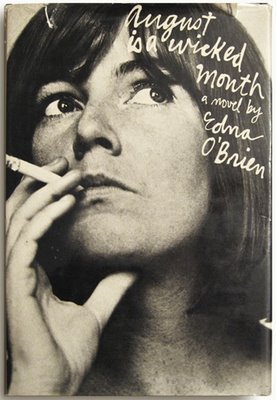
Many, many years ago, decades even, when I was a sixth-former (that’s Year 12, kids) my English teacher gave out a list of suggested reading for A levels. Somewhat surprisingly, I didn’t finish it entirely (although just in case that seems worryingly off-brand, I should say my name still went round to the teachers on a list as the pupil who borrowed most library books that year) and I can remember the few that escaped me. One was August is a Wicked Month, and having read it now I’m a bit surprised it was on a sixth-form reading list. Because it is explicit. But it’s also very realistic so maybe my teachers thought it was responsible reading 😀
Ellen is in her late twenties and her ex-husband has taken their son camping. Ellen is not good at being alone and managing feelings:
‘I’ll just be,’ she said. A rare thing for her, racked as she was with anxiety, wondering always what would happen next, if an affair would be eternal, or if she loved her son over much, or if the wheels of a car they sat in would fly off and leave them half dead on the roadside.
So she decides to go to the south of France for sun and anonymous sex:
“She had been brought up to believe in punishment; sin in a field and the long awful spell in the Magdalen laundry scrubbing it out, down on her knees getting cleansed. She longed to be free and young and naked with all the men in the world making love to her, all at once. Was that why he ran?”
Written in 1965, this is not a tale of the joys of sexual liberation and freedom. Despite the setting, the tale is not glamorous. Ellen falls in with a crowd that includes a film star, but its all lonely and sad and isolating. She may as well have stayed away,
“She wanted to go home, not to London to the pipes of light but home to the race to which she belonged: and then she shivered uncontrollably, knowing that their thoughts were no longer hers. She had vanished back into childhood and the dark springs of her terrors.”
Everything Ellen does seems a misstep but not comically so. Her confused interactions with people, failed flirtations and disappointing sex just serve to highlight the inadequacy of human communication and the tendency to look for solace in precisely the wrong places.
This was the first Edna O’Brien I’ve read and I thought her writing was wonderful. She has a way of building images in a way that is so startling and disconcerting, but recognisable:
“Yellow all around, the lemons in the trees like lobes of light, the odd lit bulb, and his face yellow like parchment, from age. His blue eyes were not dead but were something worse. They had the sick look of eyes that will wounded and for whom death would be a relief.”
She can also be incredibly spiky and unforgiving:
“Her hands were long and white and soft. Hands into which cream and money had been poured and unlike the face they were able to be beautiful without showing the umbrage of the unloved.”
The only misstep for me was an event towards the end that seemed unnecessarily dramatic and as if there wasn’t enough faith in Ellen’s story as it stood to carry the novella. But a minor quibble overall – I’ll definitely be seeking out the Country Girls trilogy after this.
I’ve chosen two short novels that feature pretty unsympathetic protagonists. In both instances the writing was so good it kept me right alongside them, and maybe it’s the after-effects of covid (it probably is) but they both made me cry.
Night Boat to Tangier (2019) is only 214 pages in my edition, with lots of dialogue and spaces on the page, yet it still manages to be a fully realised portrait of two men in middle age, coming to terms with regret.
Charlie and Maurice sit in the port of Algeciras looking for a young woman they expect to turn up there at some point:
“Two Irishmen sombre in the dark light of the terminal make gestures of long sufferance and woe – they are born to such gestures, and offer them easily.”
Quite quickly we realise that Charlie and Maurice are not to be messed with. They accost a young man named Benny and the threat they pose is both insidious and comic:
“The stories we could tell, Benny. Did you ever try and buy 350 goats off a fella in Marrakesh, did you?
On credit.
In a Cork accent.”
The narrative moves back and forth in time, and we learn how it is that these two men have ended up bound together, why one has a limp and the other a damaged eye, who the girl is they are looking for and how they made their money.
What I enjoyed was the affection the two men had for each other, as easily expressed as their violence.
“Is it me or was I something like a Matt Dillon-type in my younger days?
You were the bulb off him, Charlie. But come here. Have you seen Mickey Rourke lately?
Think I saw him on the number eight going up MacCurtain Street. Top-right-hand seat, overhead the driver.
He’s after leaving himself go something shockin’.
He is, yeah. They nearly had to turf him off the number eight.”
That interaction reminded me of the easy, bordering surreal, dialogue in Roddy Doyle’s Two Pints novellas, but overall it was of Samuel Beckett that Night Boat put me in mind. The two males waiting for someone without knowing when they will arrive, the nihilism and humour, a sense of despair and endurance of hope…
But Night Boat is absolutely its own story. Barry brilliantly evokes the two men as they are in 2018 and as they were in the late 90s/early 00s, showing how their life choices caused such pressure that it took all their strength not to fracture irrevocably. Charlie and Maurice are not very commendable but neither are they one-dimensional baddies. They are deeply flawed and also deeply vulnerable.
Barry writes simply but also has some startling turns of phrase:
“Charlie’s smile is, of its own right, an enlivened thing. It travels the terminal as though disembodied from him. It leaves a woven lace of hysterical menace in its wake.”
“A troubled silence descends – the old times are shifting again; they are rearranging like faultlines.”
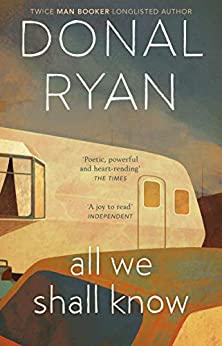
Secondly, All We Shall Know by Donal Ryan (2016). I only started reading Ryan a few years ago but he’s quickly become one of my favourite authors. He writes beautifully, but with a pared-back style, and he always demonstrates such compassionate understanding. I thought his quote about this quality was a suitable title for this post about questionable characters.
Melody Shee narrates the story, and she is not a sympathetic character, as she tells us from the off:
‘Martin Toppy is the son of a famous Traveller and the father of my unborn child. He’s seventeen, I’m thirty-three. I was his teacher. I’d have killed myself by now if I was brave enough.”
The novel follows Melody from twelve weeks of pregnancy through to giving birth, as she reflects on her adolescence and early marriage, her relationship with her parents and her history of appalling decision-making.
Her mother was probably depressed, although this is never said, and had a difficult relationship with Melody’s father, which Melody emulated to try and please her mother. She feels guilty about this now, as her father is possibly the nicest man ever:
“There’s no kindness in me. I can feel it, and think about it, but I can never act it, or be it, the way my father is, the way he’s selfless without effort, a man who has kindness in the marrow of his bones, a soul with barely a blemish.”
She married Pat, her childhood sweetheart, and they seem to have spent most of their time verbally destroying one another:
“The boy who’d grown to adulthood beside me, curled around me, stunting himself, stunting me, a twisted tangle of boughs, hunched and bowed and facing inwards.”
“We merged over time into one person, I think, and it’s easy to be cruel to oneself.”
The pregnancy due to another man is the final straw, and they break up, leaving Melody alone in the house, in a town where everyone knows each other’s business. She finds herself strongly drawn to Mary Crothery, a Traveller woman who, although she lives with her family, is somewhat ostracised from her community. As Melody teaches Mary to read, the two form a close bond, and it’s this that pushes the narrative forward as they both anticipate and cope with life-changing events.
Alongside the current day pregnancy and this relationship with Mary, Melody recalls the heart-breaking story of her childhood best friend, Breedie Flynn. While as a reader it is possible to see the cruelty of young adults who don’t comprehend the damage they are doing as unthinking, it is still an all too believable tragedy, and Melody’s intense guilt and grief don’t seem at all misplaced.
Ryan has made a brave choice in centring a woman who has wreaked so much damage on other people’s lives. But Melody isn’t remotely self-pitying or self-justifying, and in a wholly misguided way, she tries to do better. What I haven’t captured here is that she and Mary are both very funny. Melody literally screaming her frustrations at small town judgement and gossip, and Mary’s snarky asides lift the story and stop it being bleak. It’s not depressing, it’s human and messy and there’s sadness and cruelty and love.
I adore Donal Ryan’s writing and even if this story doesn’t appeal, I’d urge you to seek out his work. His writing is so sensitive and precise, and so readable.
“I’m frightened about what will reach my father’s ears, and how his heart will speed and slow in worry and fear, and how he’ll want to help but won’t know how, so will stand at the window, and watch the weather, and wait.”
To end, Cathy’s post about her favourite Irish films reminded me how much I love The Commitments and hadn’t watched it in years – something being stuck on the sofa with covid gave me a chance to remedy. Robert Arkins, who played Jimmy Rabbitte, sang a few songs on the soundtrack, but wasn’t shown singing in the film. I thought he did a great version of Slip Away, but I couldn’t find decent footage of that, so here he is singing Treat Her Right:
Thank you to everyone who left kind comments last week. Covid is dragging on with me but I do seem to be slowly improving – it’s not been great, despite my being tripled vaxxed (and very careful). I sincerely hope you all stay safe and well. Here is my second contribution to Reading Ireland Month 2022 aka The Begorrathon, hosted by Cathy at 746 Books. Do join in with the event if you can!
My choice this week was inspired by the Brian Moore at 100 readalong which Cathy also hosted throughout last year. I really wanted to join in, but my reading was pitiful. It’s not massively improved now to be honest, but it has improved enough that I was finally able to pick up this lovely hardback edition out of the TBR pile:
The only other Brian Moore I’ve read was The Colour of Blood, which I didn’t massively get on with. I didn’t dislike it, and I could tell it was really well written, but I just didn’t connect with it. All the Brian Moore love during last year’s event persuaded me to give him another try and I’m so glad I did. I Am Mary Dunne (1968) was an expertly written, engaging read and a complex character portrait.
We spend a day with the titular 32-year-old narrator, and it’s a bad day she’s having. A receptionist at her hairdressers asks for her name and she finds it escapes her. This sends her into a spiral of anxiety and reminiscences.
“When people say they remember everything that happened in their lives, they’re deceiving themselves. I mean if I were to try and tell anyone the story of my life so far, wouldn’t it come out as fragmentary and faded as those old snapshot albums, scrapbooks, and bundles of letters everyone keeps in some bottom drawer or other?”
She has been married three times, changing her name each time. With each of her husbands, escape seems to be motivating factor driving the marriage. She marries Jimmy in order to leave Canada and escape her home; she marries Hat to escape Jimmy; and she marries Tee because she wants to escape Hat, although with her third husband she also finds love and sexual satisfaction.
The narrative is fragmented, flicking back and forth between her past and present. We gradually piece together her life but Mary remains somewhat unknowable. Her husbands and her friend Janice – with whom she rows in restaurant – are more fully realised. It’s a really clever piece of writing by Moore, where as readers we don’t get to know Mary despite the first-person narrative, because she doesn’t know herself.
“ ‘You’re an ingenue type.’ It was my acting epitaph, although I did not know it at the time. And in real life it’s no different. I play an ingenue role, with special shadings demanded by each suitor.”
Mary is attractive and Moore demonstrates how her physicality means people project their fantasies on to her. Because Mary is so obscure to herself, she easily gets lost in other people’s versions of her. She believes her first husband when he calls her insatiable, and she believes her second husband when he says she is a cold virgin. She accepts an older woman with a crush calling her Maria and attempting a Pygmalion scenario, and a full obliteration of her name through her third marriage “I am introduced to everyone as Mrs Terence Lavery”.
But Mary is not wholly sympathetic. She doesn’t always behave well, or kindly. She uses derogatory terms that I’m pretty sure would have been outdated and offensive in 1968. She sheds friends like she sheds identities. She changes people’s names too: Jimmy, Hat, and Tee are her husbands’ abbreviated names; the older Miss MacIver becomes Mackie. A man with a long-standing crush is amazed she doesn’t remember a nickname she gave him.
Mary refers frequently to an evil twin throughout the day, the part of her that behaves badly which she attributes to PMS. She says things she doesn’t mean and shakes uncontrollably. Part of the ambiguity around Mary is that by the end of the novel, I didn’t know if she was having a really bad day compounded by PMS (or PMDD); or whether she was seriously unwell. I did enjoy this bitchy thought that popped into her head about the portraits in her husband’s study:
“When I think of it, the arrogance of a man who could do the trivial work he does under the scrutiny of the likes of Tolstoy and Yeats. Proust gave up a world for his work. Terence wouldn’t even give up a party.”
I Am Mary Dunne sees the narrator having an existential crisis, fearing obliteration without any idea of who is being obliterated.
“I am beginning to die because some future me cannot keep me in mind.”
Yet I didn’t feel particularly hopeful by the end that the assertion in the novel’s title was any further realised than at the start of the story. It wasn’t a depressing tale, but Mary still seemed to have no idea of who she was. It was one of those stories that left me wondering what happened the next day, after the novel finished…
“I am no longer Mary Dunne, or Mary Phelan, or Mary Bell, or even Mary Lavery. I am a changeling who has changed too often and there are moments when I cannot find my way back.”
To end, a song about shifting identities by a master of reinvention:
A little while ago I saw an epidemiologist on tv saying that eventually everyone will have had covid. And I thought, ‘no thank you all the same’, and carried on distancing as far as I could and wearing a mask. You can guess what’s happened, Reader. This post is brought to you from my covid-addled brain, apologies in advance if it’s even more waffly and incoherent than usual…
I’ve chosen two late novels by Molly Keane for this post and I really enjoyed revisiting this author who isn’t like anyone else. Her evocation of moneyed families in early twentieth-century Ireland is so deeply strange and disturbing, I always feel a sense of trepidation opening one of her stories…
Good Behaviour was published in 1981, when Keane had not published a novel for 29 years and nothing at all since the play Dazzling Prospect 20 years earlier. It was a huge success and shortlisted for the Booker Prize. It is a blistering, dark comedy of manners, perfectly paced and sharply observed.
It begins:
“Rose smelt the air, considering what she smelt; a miasma of unspoken criticism and disparagement fogged the air between us.”
I knew from that line that I’d love Good Behaviour, and now having finished the novel I can say it sets up the story and themes brilliantly: the domestic setting, sense of things rotting, the odd power dynamics, the uneasy roles, the undercurrents of anger.
Someone dies early on, in a way that leaves the reader uncertain as to how far they were nudged towards it, and this sense of not quite trusting that we are being given the full story continues as we are taken back in time by Aroon St Charles, daughter of an aristocratic family living in Temple Alice, a decaying pile, with her indifferent mother and philandering father.
“Behind him the green luminous gloom of glass within glass retreated inside the doors of a breakfront cabinet that filled one end of the dining room. Mummie had lined it with grey linen, so that all the glass objects floated and were lost in its spaces. It was like water or air at his back, as though the end wall were open to air or water. The austere outdoor look I knew had melted from him into the air, like the glass in the cupboard. Sitting there, he seemed extraordinarily dulled, dulled and happy.”
The novel is Aroon describing her childhood and early adulthood amongst the trappings of her class in 1920s Ireland. This being Keane, of course there is hunting and horses, but aside from a few pages where I thought the litany of dead animals was never going to end, it wasn’t too bad for squeamish readers such as myself.
Aroon does not fit in: she is not her adored brother Hubert; she is not physically adept; she is not charming and witty; and she is not beautiful. She enjoys food and is tall, in a time where women were expected to be flat-chested and dainty. She is not rich and so no men are interested in her. Her father likes her but is absent in various different ways throughout her life; her mother is at best indifferent to her but often mentally abusive.
“I turned away, my loneliness walking with me, taller than my own height as a shadow is tall – and irremediable as my height was.”
Aroon is a complex creation. At times I felt she couldn’t possibly be as naïve as her narration would have us believe. Did she really think the housekeeper was rubbing her father’s missing leg under the bedclothes to relieve phantom pain? Does she really not realise her brother is gay and his best friend is his lover? Does she really think she is concussed rather than completely sloshed? This isn’t me viewing it with twenty-first century eyes; other characters are perfectly aware of her father’s behaviour, the full extent of the housekeeper’s role, and her brother’s sexuality. They try to tell her but she doesn’t hear it and blunders on regardless.
Whether or not Aroon is an unreliable narrator or just hopelessly naïve, this characterisation is a master-stroke by Keane in balancing out the pitch black comedy of Good Behaviour. Aroon’s voice is so credulous, the novel written with such a light touch, that it means you whizz through the story without becoming hopelessly depressed at how grim Aroon’s situation is or how deeply unpleasant many of the people are. Good Behaviour is both eminently readable and deeply disturbing.
Queen Lear (also known as Loving and Giving, which I tell you so you don’t make the same mistake as me and end up blissfully unaware that you own two copies of the same novel) was published in 1988. Like Good Behaviour it features a female protagonist, Nicandra (named after her father’s favourite horse “the first Nicandra”), daughter of gentry, lonely and unhappy.
The story opens with eight-year-old Nicandra doing a round of the enormous home she lives in, visiting her parents and servants, barely tolerated by all. Again, the opening is lovely piece of scene-setting, telling the reader all we need to know about the characters and setting.
Nicandra’s mother is glamorous and engaging, and entirely uninterested in her daughter:
“When she was absent, the shadow of her presence was the assurance of a world of love. To earn her displeasure was to forgo all delight; through the days Nicandra devised love tokens, as much to stimulate interest towards herself as to express her deep affection.”
In one particularly unpleasant scene, Maman ties Nicandra to a chair, not to be released until she eats the cold spinach she hates. Her Aunt Tossie rescues her, much to Nicandra’s dismay, who was trying to psych herself up to eating the spinach and making this sacrifice for her mother.
In a novel full of selfish, unpleasant people, Aunt Tossie was the nearest I got to actually liking someone:
“She enjoyed nearly everything, even widow’s weeds, as her married life had not been as exciting as she might have wished”
That day, her mother runs off with one of the servants. She doesn’t say goodbye to her child, and no-one explains to Nicandra what has happened.
“Whatever it was that had come over her family today, Nicandra could not guess at. She had done her utmost to excite, please, soothe, serve; yet everything had gone awry. Pigeons, butterfly, bantams, Maman, Aunt Tossie – she had given her all to each, only Dada was left.”
From these inauspicious beginnings, the novel jumps forward to Nicandra as a young woman in the interwar years. Unsurprisingly, she has grown up naïve and desperate for love. She remains almost wilfully blind to everyone else’s relentless self-focus, to the extent where it’s hard to feel for her. She seems so determinedly oblivious as to be as self-obsessed as everyone else.
There are also repeated references to her childhood bullying of Silly-Willie, a child on the estate who initially seems to have learning difficulties, expressed in the derogatory terms of the 1920s/1930s. Despite these prejudices, he grows up to essentially run the entire estate – albeit in a dilapidated condition due to Dada racing through money. Nicandra struggles with this arrangement as “a little incident” between them, buried in the past, is something she feels extremely uncomfortable about.
Nicandra of course falls for the first charming bounder to show her any interest, desperately seeking his love as she once did her mother’s, with about the same level of reciprocity.
“Although in manners bound, he held and played with her hand for the rest of the drive home, he felt he could have done instead with a nice talk about hunting.”
With very little else to occupy her, Nicandra marries Andrew. He enjoys her beauty and money, as well as an affair with her best friend Lal (this isn’t really a spoiler as the prospect is introduced almost simultaneously with the awful characters).
There are some very nasty elements for a novel titled Loving and Giving: the bullying, and Andrew’s crass and cruel suggestion of how Nicandra should procure money from her family for an abortion (that she doesn’t want) “say it’s to drain the West Bog”. Repulsive.
What stops Loving and Giving from being absolutely relentlessly bleak in its portrayal of “cheap and amusing” lives where “tragedy gets tidied away” is the humour. We aren’t supposed to take these characters particularly seriously, or think that they are admirable or lead remotely useful lives. I particularly liked this pithy comment on the butler’s behaviour:
“the slight upwards twist he gave to the bottle took the place of the wry smile he would never allow himself to give”
And this observation on family politics:
“Properly speaking, Aunt Tossie should have presented Nicandra at court, which she would have greatly enjoyed doing. Dada, however, raised every obstacle and objection he could think of to baulk this plan because, as he put it, (only to himself), the dear old girl might feel her oats and something unfortunate could happen.”
Molly Keane is pretty blistering in her characterisation of the upper classes and in portraying the lives they live. Her novels are almost Gothic – certainly there are ruined buildings, hauntings from the past, almost ghoulish characters – but no supernatural elements. I enjoy her original phrasing and sharp observation, I even enjoy her awful characters (some of them anyway) when I’m in the right mood. I do find I need a palate cleanser afterwards though!
To end, a song about a family house, albeit a very different one to the those which Keane’s characters live in, and which provided the title of last week’s post:







 madame bibi lophile recommends