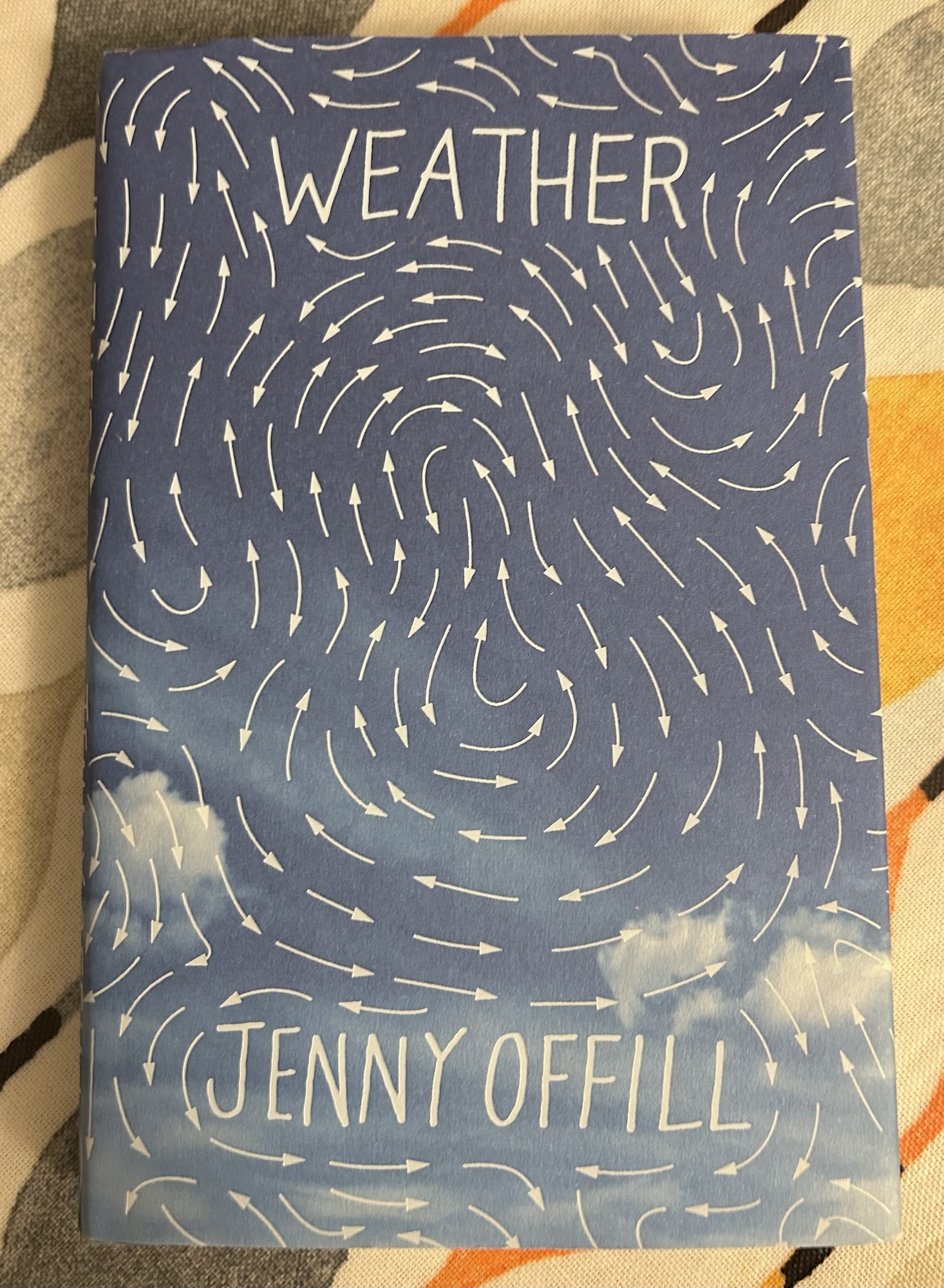
Weather – Jenny Offill (2020) 201 pages
I have broken my self-imposed page limit for defining a novella (70-200 pages) by including Jenny Offill’s Weather, which breaches by one whole page. I regret nothing: I had really enjoyed her Dept. of Speculation when I read it for this project back in 2020 and was pleased to be picking her up again.
Lizzie is a college librarian, looked down upon by other librarians because she doesn’t have formal qualifications. She has a lovely husband Ben, and a son Eli. Her brother Henry, now sober, reappears and her mother rings occasionally causing tensions but nothing extraordinary. Still, family life can be exhausting:
“I’m too tired for any of it. The compromise is that we all eat ice cream and watch videos of goats screaming like women.”
Lizzie takes a job with her old college professor Sylvia, who hosts a podcast about climate change.
“Once I took Eli. We stood and looked at some kind of meadowland. He waited patiently until we could go back to the car.
Children cannot abide a vista, Sylvia said.”
Wading through Sylvia’s email correspondence is heavy-going “I’m really hoping all these people who write to Sylvia are crazy, not depressed.” and in the wake of ongoing environmental destruction and the election of a President whose second term we are now in, Lizzie starts to become a doomsday prepper.
“My book ordering history is definitely going to get me flagged by some evil government algorithm. Lots and lots of books about Vichy France and the French Resistance and more books than any civilian could possibly need about spycraft and fascism. Luckily, there is a Jean Rhys novel in there and a book for Eli called How to Draw Robots. That’ll throw them off the scent.”
But while Weather is absolutely about anxiety and fear of what is happening now and what will happen in the future, Lizzie’s voice remains witty and self-deprecating:
“Then one day I have to run to catch a bus. I am so out of breath when I get there that I know in a flash all my preparations for the apocalypse are doomed. I will die early and ignobly.”
Like the Dept. of Speculation, Weather is written in a fragmentary style, with the focus primarily on the female narrator. We remain inside her head as she struggles to sustain family life, work, and the wider demands of living now. I thought Offill balanced all of this expertly.
The humour never detracted from the seriousness of the wider issues, but it also carefully portrayed Lizzie trying to find a way to live when the world – both big and small – seems overwhelming.
“My husband is reading the Stoics before breakfast. That can’t be good, can it?”
 madame bibi lophile recommends