Under the Tripoli Sky – Kamal Ben Hameda (2011, trans. Adriana Hunter 2014) 104 pages
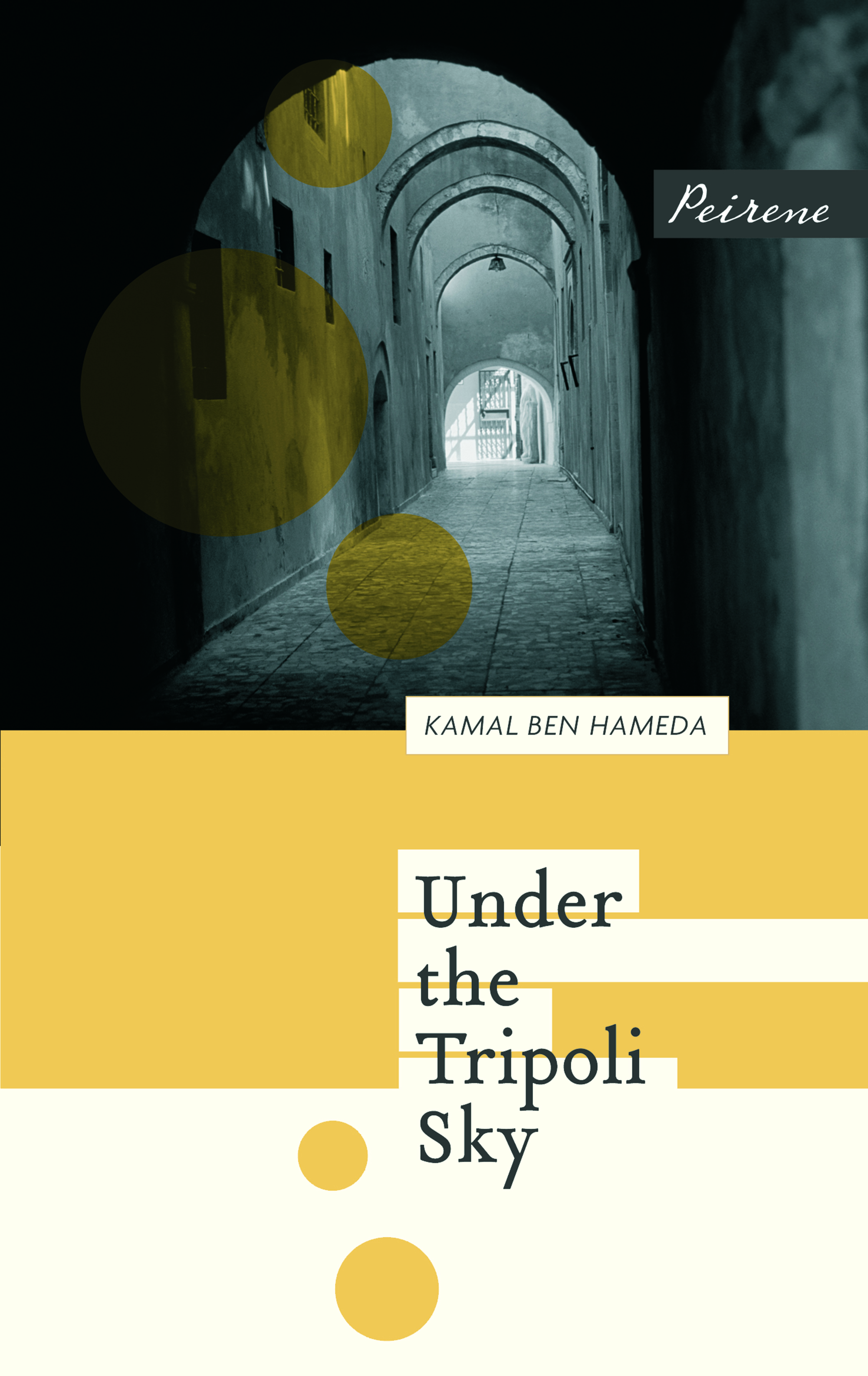
Under the Tripoli Sky by Kamal Ben Hameda is published by Peirene Press who specialise in publishing contemporary European novellas, aimed to be read in one sitting. Under the Tripoli Sky (written in French by a Libyan author now living in Holland) is part of their Coming of Age series. It’s also one more stop on my Around the World in 80 Books Reading challenge, hosted by Hard Book Habit.
Hadachinou is a young boy living in Libya before the revolution of 1969. The novella details his experience growing up in Tripoli surrounded by women: his mother, her friends, their daughters. Through a series of sketches he builds up an evocative, affectionate but unsentimental view of the lives of women where men are either absent or a drunken threat:
“My father, a solitary man given to prayer, shut himself away in the small bedroom at the back of the house when he came home from his shop or from the mosque. … As for Uncle Hadi, he spent nights in the company of other drunkards. ‘If their young wives want some fun and relaxation, they have to search for it elsewhere,’ Aunt Nafissa often commented, with her usual bitterness towards the male gender.”
The women don’t really notice Hadachinou and so he is given extraordinary access to their lives and experience.
“The tea ceremony was the only part of the day when my mother and her friends could live their lives in real time and tell their own stories. At last they could talk about dreams, longings and anxieties all in the same breath, and their bodies were at peace.”
He also moves across other boundaries in the city, attending mosque, synagogue and church. There is a sense of an exile looking back, and Tripoli with its heat, light, and bustling activity is beautifully realised. What also adds to a sense of Hadachinou recalling with longing, is the focus on food. This is not the story to read if you are on a diet. As homemakers, a great deal of the women’s lives are given over to preparing food, and Hadachinou describes the various meals in mouth-watering detail:
“Signora Filomena would take us to the pizzeria, where each of us could salivate over his or her choice of either a pizza with tomatoes and oregano flavoured anchovies, or an ice-cream with a subtle vanilla taste set off by crunchy slivers of bitter chocolate. She herself preferred the bar opposite and its famous sandwiches: grilled sardines between two slices of crusty bread whose dough was impregnated with olive oil infused with garlic and red chillies.”
Peirene’s inclusion of this as a coming of age story is understandable. Hadachinou undergoes his circumcision early in the novella; he also experiences awakening sexual desire. But while he is moving towards adulthood, this is very much a portrait of a city and a community on the brink of enormous change. It is stunningly written, capturing a society about to be torn asunder.
“Another person’s eyes are your origins and your kingdom. But other people can’t see you if they’re blinded by their search for an illusion…”
 madame bibi lophile recommends