Blaming was Elizabeth Taylor’s last novel and features all of her characteristic wit, sharp observation, compassion and lack of sentimentality.
It is the story of a relationship between Amy, a middle-class, middle-aged housewife, and a younger American novelist, Martha:
“Amy seemed to have remained at the age of seventeen, or thereabouts; but it was the English girlhood of her own class and time. The like never come again, Martha, much younger and American, decided.”
They meet on a cruise, and at a desperate time for Amy, Martha is there for her. They have nothing else in common except this shared experience, and when she returns home Amy has no plans to ever see Martha again. Martha has other ideas, and what follows is a brilliant dissection of a relationship built out of a sense of obligation, of politeness, and of unspoken, unacknowledged needs.
What makes this tale so compelling in its characterisation and circumstance is that Martha isn’t a monster. She’s not horrible or domineering or rude, but she’s unaware, a bit selfish and slightly irritating. It’s all so ordinary, and Amy is at a total loss as to what to do:
“Lolling back in her chair, steadily eating biscuits as if to satisfy a long-felt need, Martha dropped crumbs onto her lap, and occasionally brushed them off onto the carpet. She is going to be untidy about the place, Amy was thinking. Two long days. She glanced up at the clock. What could she do with her for all that time? The long evening ahead for instance. They could not – surely – just talk all the time.”
In her portrayal of Amy’s life and wider family, Taylor captures how relatives can also feel a sense of obligation, and even affection, that at the same time is arduous and would easier to live without. Her daughter-in-law and son like Amy well enough, she in turn likes her slightly irritating grandchildren. It would be easier for them all not to spend time together, but that is not how families work:
“He knew she was weeping for herself, not for his mother. She had never been drawn to her – no cosy women’s chats; but in spite of warmth, their relationship was exemplary […]
‘We will make some good plans,’ James said reassuringly. ‘It’s nice of you to care so much. Certainly a long weekend some time can’t be too terrible a strain on anyone.’
So nothing was done.”
In Blaming, Taylor demonstrates how the deepest pain that people experience can – and most often does – live alongside, the boring, the banal, the everyday. She shows how guilt is a powerful motivator for people who aren’t good or bad, just ordinary and fairly decent.
Blaming is a novel where you can sit back knowing you are in the hands of a masterful artist. Taylor is a brilliant, incisive writer, intelligent and humane. Any work of hers is a gift to the reader.
Caroline Aherne, actor and writer, creator of the comedic brilliance that was The Royle Family, died on Saturday. And so 2016 continues as forerunner for the most rubbish year in recent memory. If the political situation and the death of a yet another great person this year is getting you down, I would prescribe YouTubing Caroline’s career for some solace.
If you enjoy someone’s work, there is a consolation that they leave this behind when they are no longer around, so I thought I would look at two novelists last works which were published in their lifetimes.
Firstly, The Old Man and the Sea by Ernest Hemingway (1952), fulfilling the sea-based tale requirement of the Around the World in 80 Books reading challenge hosted by Hard Book Habit. And so my inexplicable love affair with Hemingway continues. I’ve written before about how much I want to dislike Hemingway, but I just adore his writing. Like all great love affairs, we are wholly incompatible, and yet I find myself drawn back time and time again, whilst knowing I cannot change him. The Old Man and the Sea did not succeed in breaking the spell.
Hemingway, rocking a chunky knit to give his best salty old sea dog impression
The titular old man is Santiago, a Cuban fisherman who sails in the Gulf Stream and has gone 84 days without catching a fish.
“Everything about him was old except his eyes and they were the same colour as the sea and were cheerful and undefeated.”
Manolin, a young boy, has known the fisherman his whole life and loves him, and it is through his eyes that we first see Santiago:
“His shirt had been patched so many times that it was like the sail and the patches were faded to many different shades by the sun. The old man’s head was very old though and with his eyes closed there was no life in his face. The newspaper lay across his knees and the weight of his arm held it there in the evening breeze. He was barefooted.
The boy left him there and when he came back the old man was still asleep.
“Wake up old man,” the boy said and put his hand on one of the old man’s knees.
The old man opened his eyes and for a moment he was coming back from a long way away. Then he smiled.”
They head out to fish separately – Manolin is banned from accompanying Santiago due to his salao bad luck – and what follows is the story of Santiago’s lone sea journey. The descriptions have Hemingway’s trademark pinpoint accuracy but this exists alongside metaphorical beauty, which absolutely captures the water and the isolation of the sailor.
“The old man knew he was going far out and he left the smell of the land behind and rowed out into the clean early morning smell of the ocean. He saw the phosphorescence of the Gulf weed in the water as he rowed over the part of the ocean that the fishermen called the great well because there was a sudden deep of seven hundred fathoms where all sorts of fish congregated because of the swirl the current made against the steep walls of the floor of the ocean.”
“The sea was very dark and the light made prisms in the water. The myriad flecks of the plankton were annulled now by the high sun and it was only the great deep prisms in the blue water that the old man saw now with his lines going straight down into the water that was a mile deep.”
The fisherman succeeds in hooking a “great fish” but is unable to bring it aboard, and so is towed by the marlin farther and farther out to sea, as he waits for the fish to die. I can’t say much more as it is only novella length (you can read the full text here) so I’ll just say that The Old Man and the Sea is extraordinary: fable, allegory, elegy, a meditative page-turner which I found truly moving.
“He looked across the sea and knew how alone he was now. But he could see the prisms in the deep dark water and the line stretching ahead and the strange undulation of the calm. The clouds were building up now for the trade wind and he looked ahead and saw a flight of wild ducks etching themselves against the sky over the water, then blurring, then etching again and he knew no man was ever alone on the sea.”
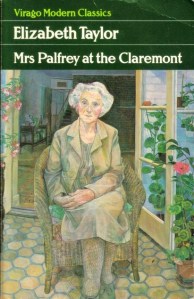
Secondly, Mrs Palfrey at the Claremont by Elizabeth Taylor.
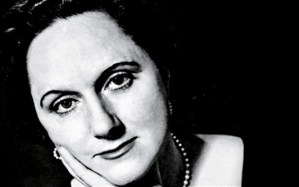
Elizabeth Taylor, the one who didn’t keep marrying Richard Burton
Following the death of her beloved husband, Mrs Palfrey moves to the Claremont Hotel on the Cromwell Road “The porch pillars had been recently painted; there were spotted laurels in the window boxes; clean curtains – a front of emphatic respectability.” to see out her days.
“She was a tall woman with big bones and a noble face, dark eyebrows and a neatly folded jowl. She would have made a distinguished-looking man and, sometimes, wearing evening dress, looked like some famous general in drag.”
Mrs Palfrey and her fellow permanent residents at the hotel are desperately trying to avoid a nursing home and rub along together in a mix of boredom, gossip and barely suppressed disdain. Although Taylor is interested in aging and how to find meaning in a world that considers you finished, this isn’t a depressing novel , but rather a gentle comedy with a melancholic tinge.
“Soon, there was a soft, slapping sound as Mr Osmond shuffled a pack of cards for a game of patience: against this, the knitting sounds, and sighs, and stomach gurglings (quickly coughed over).
‘Well, another Sunday nearly gone,’ Mrs Post said quickly, to cover a little fart. She had presence of mind.”
Mrs Palfrey is a resolute soul, who refuses to feel sorry for herself. Part of the generation who lived through both World Wars, she gets on with things.
“She felt a determination about the lilac trees. They were to be a part of her rules, her code of behaviour. Be independent; never give way to melancholy; never touch capital. And she had abided by the rules.”
On a walk around London, she has a fall and is rescued by a young man, Ludo. He is shaggy-haired, scruffily dressed, good-looking and a wannabe writer. They end up forming an unlikely friendship and the nuances, contradictions, tensions and tenderness between the two are beautifully observed. Taylor is a wonderful writer: sharp, observant, funny and real. She put me in mind of Barbara Pym, and the blurb on the back of my copy of this novel compares her to Jane Austen. Certainly if you like those, you’ll find a lot to love here.
“She could glimpse bed-sitting rooms – like Ludo’s some of them – where once cooks had attended ranges, rattling dampers, hooking off hot-plates, skimming stock pots, while listening to housemaids’ gossip bought from above stairs. Mrs Palfrey went slowly by, imagining those days, which were almost clearer to her than this present structure of honeycomb housing and the isolation of each cell, because they were the days that belonged to her being young, and so were the clearest of all to her.”
To end, if you think Ernest Hemingway and Elizabeth Taylor are an unlikely pairing, here’s a heavy metal band and an orchestra performing a song named after a Hemingway novel:


 madame bibi lophile recommends