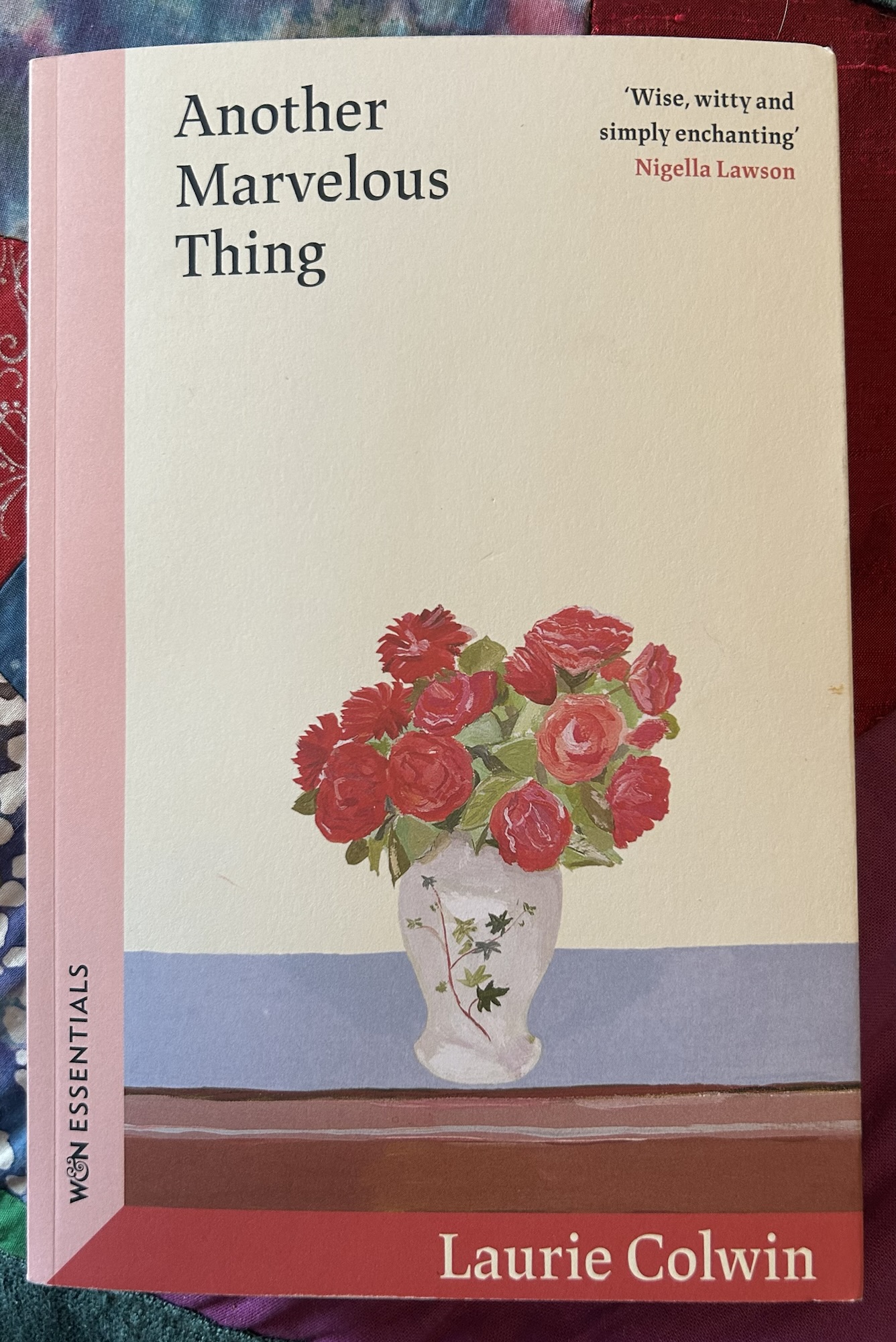
Another Marvellous Thing – Laurie Colwin (1986) 130 pages
Last year a Waterstones opened up a few minutes walk from where I live. I try and ration my visits but you can probably guess how that’s working out 😀 Browsing there was how I found out about Laurie Colwin, who until now had somehow passed me by. I tend to treat jacket blurbs with a mountain of salt, but anyone described as “The Barbara Pym of 1970s New York” (Jonathan Lethem) was going to have me snatching their work from the shelf.
In Another Marvellous Thing Billy and Francis have an affair, despite both being married to other people. Francis is quite a bit older than Billy, though we’re never really told their ages. Both are involved in the field of economics but have wildly different views. They are wildly different in just about every way.
“It would never work. We both know it. She is to relentlessly dour, and too fond of silence. I prefer false cheer to no cheer and I like conversation over dinner no matter what.”
The first chapter is narrated in the first person by Francis, before shifting to a third person narrator for the remainder:
“In movies men have mistresses who soothe and pet them, who are consoling, passionate, and ornamental. But I have a mistress who is mostly grumpy. Traditional things mean nothing to her. She does not flirt, cajole, or wear fancy underwear.”
Despite the bafflement they both have for why they are involved with one another, their affair is rooted in love.
“We are as faithful as the Canada goose, more or less. She is an absolute fact of my life.”
“She did not want to have these feelings: she had been so much happier when she had been unaware she had them.”
Billy and Francis are also markedly different to each other’s spouses:
“Billy, unlike my gregarious party-giving wife, thinks that there is no hell more hellish than the hell of social life.”
“He has the body of a young boy in the air of a genius or someone constantly preoccupied by the intense pressure of a rarified mental life. Together he and Billy look not so much like husband and wife as co-conspirators.”
In other words, they are both much better suited to those they are married to. This means that Another Marvellous Thing avoids the pitfalls of a will-they-won’t-they get together plotline, and instead is more interested in these two disparate characters, and a year or so of their lives together.
“The topic of her dissertation turned Francis glassy-eyed: his passion for Billy did not mitigate his indifference to the medieval wool trade.”
Despite Billy’s interiority keeping her somewhat unknown to Francis, as a reader I loved her character. She was so idiosyncratic and believable, with her refusal to conform to societal expectations:
“‘A vision of radiant loveliness,’ Francis said.
‘I’m so sorry,’ Billy said. ‘The laundry ruined my filmy peignoir.’”
Unlike Francis who is quite equanimous about being unfaithful, Billy feels horribly guilty. Later in the book the affair has finished and the chapters focus on her life afterwards, where we see much more vulnerability than she allowed Francis to witness.
“In one of her snootier moments, my mistress said to me: ‘My furnishings are interior. I care about what I think about.’”
All in all I enjoyed my first experience of Colwin’s writing. There were so many great one-liners and it did feel very New York. But the wit didn’t stop emotional truth being fully realised, particularly with Billy and her husband Grey in the later chapters. I’ll look forward to exploring her further.
“Being in love, he often felt, was like having a bird caught in his hair.”
 madame bibi lophile recommends