November is the month of many reading events, and I definitely won’t manage them all, but I’m starting with Novellas in November, hosted by Cathy at 746 Books and BookishBeck.
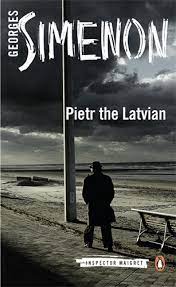
I’m taking this as a good opportunity to carry on with my much-neglected Le Monde’s 100 Books of the Century reading challenge, reading Pietr the Latvian by Georges Simenon (1930, transl. David Bellos 2013) which is No.84 in the list.
This was Maigret’s first outing and Simenon clearly had a very thorough understanding of his policeman from the start. Like many Maigret stories it is novella length, coming in at 162 pages in my English translation.
“Not that he looked like a cartoon policeman. He didn’t have a moustache and he didn’t wear heavy boots. His clothes were well cut and made of fairly light worsted. He shaved every day and looked after his hands.
But his frame was proletarian. He was a big, bony man. Iron muscle shaped his jacket sleeves and quickly wore through knew trousers. He had a way of imposing himself just by standing there. His assertive presence had often irked many of his own colleagues.”
In this first story, Maigret is in pursuit of a thief and conman, Pietr the Latvian, who may not even be from Latvia. (I was anticipating some xenophobia, which there wasn’t in the novel, but be warned there is Antisemitism at points.)
There is intelligence that Pietr has travelled to Paris from the Netherlands and Maigret is tasked with apprehending him. At the Gare du Nord he thinks he spots Pietr, but is then called to a train to identify the body of a man who also matches the description.
Following the first man takes Maigret into the world of well-heeled Parisian hotels:
“Maigret persisted in being a big black unmoving stain amidst the gilding, the chandeliers, the comings and goings of silk evening gowns, fur coats and perfumed, sparkling silhouettes.”
Things become more complex as Maigret follows various leads around the first man. His unshowy, procedural approach is evident from the start as he doggedly pursues evidence throughout Paris and to Fécamp at the coast. The conman knows Maigret is closing in and the danger grows.
I’ve not read all the Maigrets as there are at least eleventy million of them, but I would say from my limited knowledge that this isn’t the strongest. For such a short novel, it is repetitive at times and I wonder if this is because it was published firstly as a serial. In that format the repetitions would work well, but in the novel they weakened the story and it could have done with an edit with the new format in mind.
However, there is still so much to enjoy. The evocation of Paris, the character of Maigret and the novella length make this a quick, entertaining read. Simenon’s affection for his creation is evident and this makes his Detective Chief Inspector so appealing.
“The Latvian was on a tightrope and still putting on a show of balance. In response to Maigret’s pipe he lit a cigar.”
Mallika at Literary Potpourri’s wonderful event Reading the Meow has been running all week, do check out all the great posts prompted by our feline friends! Here is my post just in time…
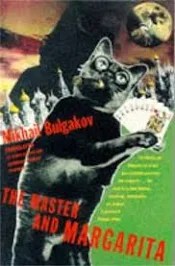
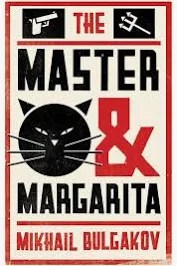
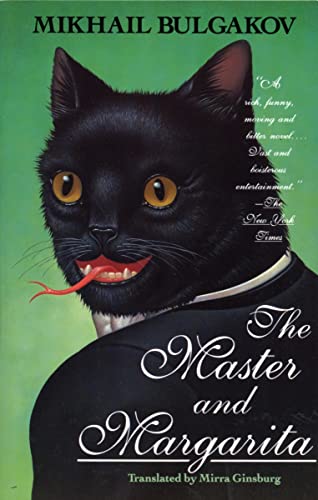
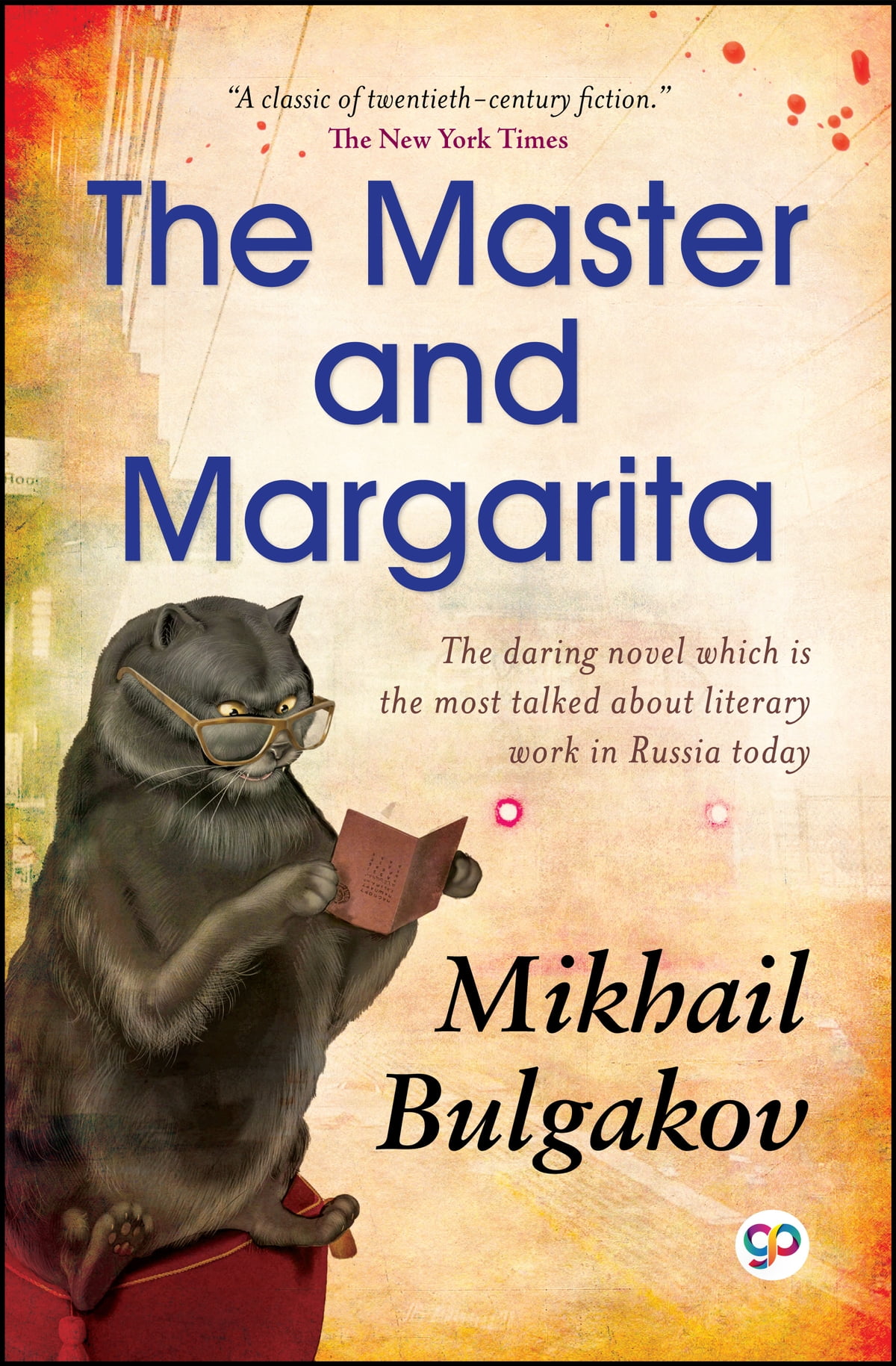
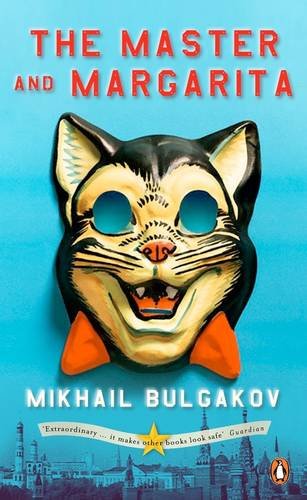
I’m grateful to Reading the Meow for finally getting me to pick up The Master and Margarita by Mikhail Bulgakov (finished in 1940, published in 1966) which is part of my Le Monde’s 100 Books of the Century Reading Challenge and has been languishing in my TBR for years. Although not ostensibly a book about cats, one does feature prominently as these various edition covers will attest:
The reason it had lain unread for so long was because I’m (aptly) a big scaredy-cat. I was really intimidated by this classic of twentieth-century fiction and I thought it would be far too complex and clever for me to understand. Which as it turned out, was broadly correct. I’m sure I didn’t pick up all the allusions and references, even with the notes in the back of my edition to help me (Alma Classics, trans. Hugh Aplin 2020 – I definitely recommend this edition and translation). However, I still found it very readable and a lot to enjoy, especially regarding Behemoth, the character that meant I was reading it this week particularly.
The Devil arrives in 1930s Moscow as a Professor Woland, along with his entourage: red headed, bizarrely dressed Korovyev; sinister vampiric Azazello; beautiful Hella; and Behemoth, an enormous cat that walks on his hindlegs, talks, drinks vodka and plays chess.
The proceed to wreak havoc for three days in a series of carnivalesque scenes, using the greed and corruption of people against them. It’s absolute chaos and carnage, but brilliantly Bulgakov shows that the devil doesn’t have to push very hard for all this to occur.
At the start of the novel, Woland predicts the shocking and absurd death of Berlioz, head of Massolit, a literary organisation. Once people hear of his death, this description of a barrage of statements in order to get Berlioz’s apartment is a good example of how Bulgakov balances social realism, satire, the comic and the desperate throughout:
“In them were included entreaties, threats, slanders, denunciations, promises to carry out refurbishment at people’s own expense, references to unbearably crowded conditions and the impossibility of living in the same apartment as villains. Among other things, there was a description, stunning in its artistic power, of the theft of some ravioli, which had been stuffed directly into a jacket pocket, in apartment No.31, two vows to commit suicide and one confession to a secret pregnancy.”
Meanwhile, Margarita, beautiful and unhappily married, is distressed because her lover, The Master, has committed himself to an institution and renounced his writing.
This is interspersed with the story of Pontius Pilate and Yeshua (Jesus), with the two stories echoing one another, and it emerges that this was the novel The Master was writing.
It is through the titular characters that Bulgakov prevents his satire becoming too bitter and alienating. Their devotion to each other and Margarita’s belief in The Master’s work is truly touching.
I don’t really want to say too much more as The Master and Margarita is such a complex, riotous piece of work that I think the more I try and pin it down the more I’ll tie myself in knots! It tackles the biggest of big themes; religion, state oppression, the role of art, love, faith, good and evil, how to live… It is a deeply serious work that isn’t afraid to be comical too.
But as this post is prompted by Behemoth, here is my favourite scene with him, getting ready for Satan’s Grand Ball on Good Friday and trying to distract from the fact that he is losing at chess:
“Standing on his hind legs and covered in dust, the cat was meanwhile bowing in greeting before Margarita. Around the cat’s neck there was now a white dress tie, done up in a bow, and on his chest a ladies mother-of-pearl opera glass on a strap. In addition, the cat’s whiskers were gilt.
‘Now what’s all this?’ exclaimed Woland. ‘Why have you gilded your whiskers? And why the devil do you need a tie if you’ve got no trousers on?’
‘A cat isn’t meant to wear trousers, Messire,’ replied the cat with great dignity. ‘Perhaps you’ll require me to don boots as well? Only in fairy tales is there a puss in boots, Messire. But have you ever seen anyone at a ball without a tie? I don’t intend to find myself in a comical situation and risk being thrown out on my ear! Everyone adorns himself in whatever way he can. Consider what has been said to apply to the opera glasses too, Messire!’
‘But the whiskers?’
‘I don’t understand why,’ retorted the cat drily, ‘When shaving today Azazello and Korovyev could sprinkle themselves with white powder – and in what way it’s better than the gold? I’ve powdered my whiskers, that’s all!’
[…]
‘Oh, the rogue, the rogue,’ said Woland shaking his head, ‘every time he’s in a hopeless position in the game he starts talking to distract you, like the very worst charlatan on the bridge. Sit down immediately and stop this verbal diarrhoea.’
‘I will sit down,’ replied the cat sitting down, ‘but I must object with regards your final point. My speeches are by no means diarrhoea, and you’re so good as to express yourself in the presence of a lady, but a series of soundly packaged syllogisms which would be appreciated on their merits by such connoisseurs as Sextus Empiricus, Martianus Capella even, who knows, Aristotle himself.’
‘The kings in check,’ said Woland.
‘As you will, as you will,’ responded the cat, and began looking at the board through the opera glass.”
I think overall I probably admire The Master and Margarita more than love it, and I enjoyed Bulgakov’s A Country Doctor’s Notebook more. But there is so much in this extraordinary, unique novel that will stay with me, and I’m sure it will reward repeat readings too.
To end, I tried to get my two moggies to pose with the book. With typical cattitude, they flatly refused 😀 So it’s back to 80s pop videos:
I hardly ever read sci-fi and if we discount dystopian fiction then I basically never read it at all. However, I enjoyed HG Wells’ Ann Veronica when I read it back in 2019, and said it had encouraged me to try his science fiction. I then promptly ignored this impetus for four years 😀
One of the benefits of novellas is that you can dip your reading toe into stories you might not otherwise try, and probably if The War of the Worlds was 500 pages I would never have come to it, despite it being part of my Le Monde’s 100 Books of the Century Reading Challenge. At 180 pages it was much less intimidating, and I really enjoyed it.
It opens:
“No one would have believed in the last years of the nineteenth century that this world was being watched keenly and closely by intelligences greater than man’s and yet as mortal as his own; that as men busied themselves about their various concerns they were scrutinised and studied, perhaps almost as narrowly as a man with a microscope might scrutinise the transient creatures that swarm and multiply in a drop of water. With infinite complacency men went to and fro over this globe about their little affairs, serene in their assurance of their empire over matter.”
I thought that was a brilliant piece of scene-setting, balancing a huge unknown menace alongside the determinedly everyday. This is something Wells does throughout, firstly in the initial reactions to the invasion:
“I saw my neighbour gardening, chatted with him for a time, and then strolled in to breakfast. It was a most unexceptional morning. My neighbour was of opinion that the troops would be able to capture or to destroy the Martians during the day.”
And secondly in the geography of the novel. It particularly resonated with me as it was places I knew well, having been part of where I grew up. He chooses central and south London, but also a big focus on suburbs like Leatherhead, Chobham, Walton-on-Thames (which aren’t where I grew up but I know them well, being nearby). It seems they haven’t changed massively in 125 years and were still recognisable, the main difference seeming to be cars rather than horse and carts. He couldn’t have picked places any more settled, to throw the extraordinary Martian invasion into the sharpest relief. I thought it was a masterstroke.
He also manages to make the Martians truly terrifying without demonising them, which I wasn’t expecting at all. Despite knowing Wells’ progressive views, as a Victorian novel I expected some sense of moral superiority to be asserted, rather than a challenge to imperialism:
“And before we judge of them too harshly we must remember what ruthless and utter destruction our own species has wrought […] Are we such apostles of mercy as to complain if the Martians warred in the same spirit?”
If I’ve made this sound a very heavy read, it really isn’t. Wells manages to create a tense narrative while driving his political points home, but at the same time he has a fairly light touch and even some moments of levity:
“At the sight of the sea, Mrs. Elphinstone, in spite of the assurances of her sister-in-law, gave way to panic. She had never been out of England before, she would rather die than trust herself friendless in a foreign country, and so forth. She seemed, poor woman, to imagine that the French and the Martians might prove very similar.”
The War of the Worlds was a ripping yarn, succinctly told, with a social conscience. A great read.
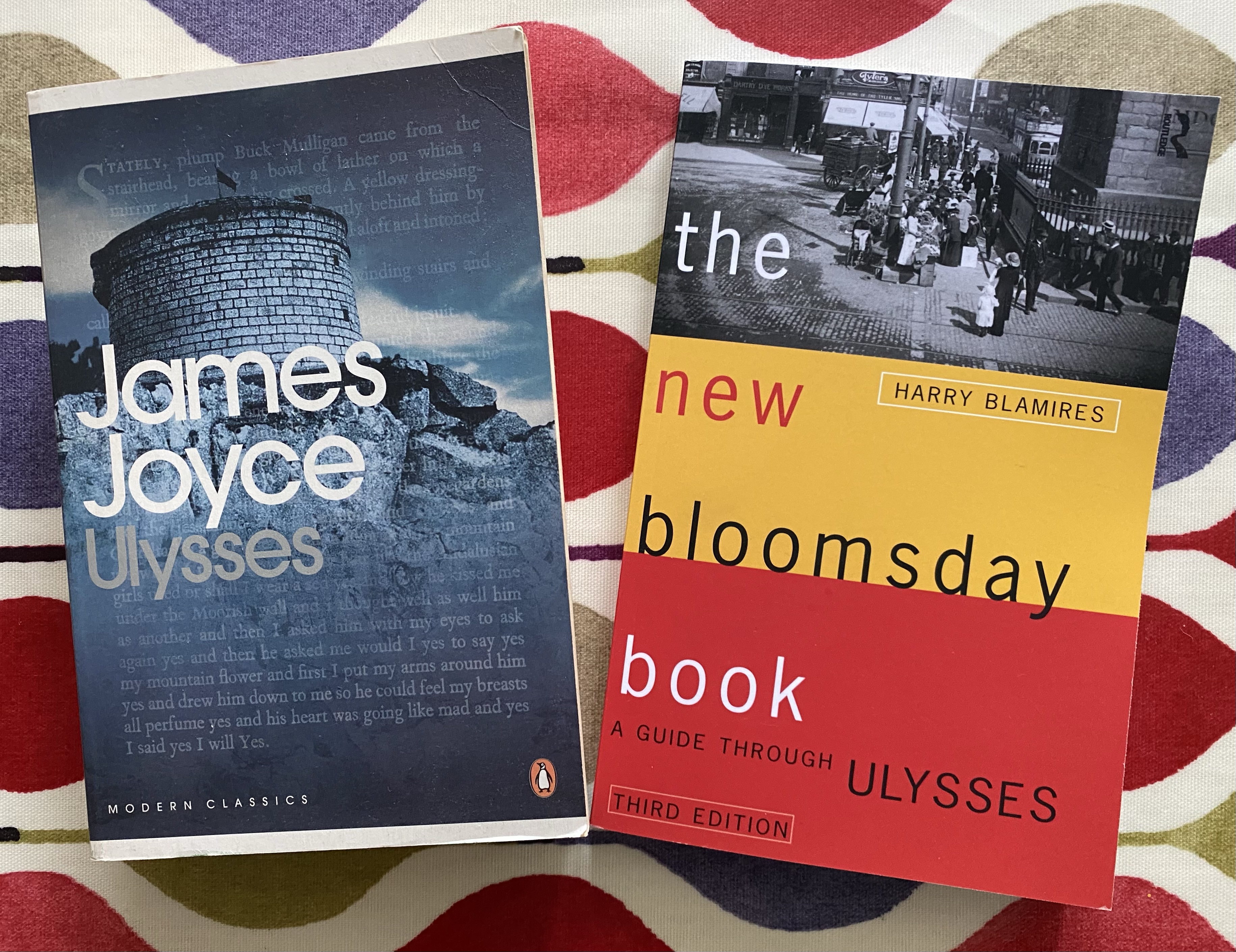
Today is Bloomsday, and the centenary of the publication of James Joyce’s Ulysses. I decided this meant I couldn’t put it off any longer and 2022 would be the year I finally cracked the spine on this tome (metaphorically of course – I don’t crack spines, I’m not an animal.)
When I read War and Peace back in 2017, I opted out of a review-type book post, intimidated at the thought of trying to say anything remotely coherent or interesting about such a revered novel. Instead I opted for a reading diary. Now here I am with a similarly revered, equally intimidating cornerstone of literature. There’s no way I can say anything useful about Ulysses, especially in its centenary year with all the celebratory events happening.
And so I present my Ulysses reading diary, neither coherent nor interesting! In fact, to manage any expectation of intellectual engagement with the genius of Joyce in this post, I should confess that the first hurdle I had to overcome in approaching the text was to get the Ulysses 31 theme tune out of my head (it’s probably unnecessary to explain here that I am a child of the 80s…)
Day 1
“Ulysses, Ulysseeeeees, soaring through all the galaxieeeeees….” Pesky earworm.
Normally if I’m told a book is difficult, I arrogantly assume I can do it. But Ulysses is genuinely intimidating. What I need to remind myself is:
I really love James Joyce. Genuinely, Dubliners is one of my favourite-ever books. So I might even enjoy Ulysses.
Other people have done it. I’ve even met some of them. Lovely bloggers left encouraging comments on my previous post where I explained what I planned to do. It’s definitely do-able.
I am not going in unarmed. I have The New Bloomsday Book: A Guide Through Ulysses by Harry Blamires (3rd ed. 1996) at my side. I’m almost certain I read on twitter that this was a good thing, and surely twitter is never wrong??
I’ve read the 80+ page introduction to my edition and now wonder if I should gain degrees in Classical Civilisation/Modernism/European History/Religious Studies before even attempting this novel.
I’ll start tomorrow.
Pages read: None. Pages remaining: 933
Day 2
OK, possibly I overreacted. I think maybe I knew too much in advance. In the end, I was amazed I could make it to the end of a single sentence. But so far Ulysses is beautiful yet also sordid, and very readable. I’m glad I’ve got the reading companion though, as there was complex word play around the word ‘melon’ that I definitely wouldn’t have picked up on my own.
Pages read: 140 Pages remaining: 793
Day 3
For such a learned, intellectual novel, Ulysses also manages to be emotionally affecting. Now I’m just under a quarter of the way through I’m finding Leopold Bloom very moving. There’s something pathetic about him, and isolated and sad, even among the crowds of Dublin.
“I was happier then. Or was that I? Or am I now I? Twentyeight I was. She twentythree. When we left Lombard street west something changed. Could never like it again after Rudy. Can’t bring back time. Like holding water in your hand. Would you go back to then? Just beginning then. Would you? Are you not happy in your home you poor little naughty boy? Wants to sew on buttons for me. I must answer. Write it in the library.
Grafton street gay with housed awnings lured his senses. Muslin prints, silkdames and dowagers, jingle of harnesses, hoofthuds lowringing in the baking causeway. Thick feet that woman has in the white stockings. Hope the rain mucks them up on her.”
Pages read: 218 Pages remaining: 715
Day 4
Fair to say my pace has slackened off today. I woke up with the book on my face, which upon removal revealed two hungry cats giving me the death stare.
Pages read: 250 Pages remaining: 683
Days 5, 6, 7
I’m sure a more attentive reader would get a lot more out of Ulysses, but as an inattentive reader I’m still really enjoying it. I especially like the section which the companion tells me corresponds with The Wandering Rocks in Homer. It’s 19 sections where, by following many characters for a short time, Joyce creates the hustle and bustle of the afternoon of 16 June 1904 in Dublin. He does this as much through the inner lives of his characters and their interactions with one another, as with description. Having said that, here are some descriptions which caught me:
“Two carfuls of tourists passed slowly, their women sitting fore, gripping the handrests. Palefaces. Men’s arms frankly round their stunted forms. They looked from Trinity to the blind columned porch of the bank of Ireland where pigeons roocoocooed.”
“Stephen Dedalus watched through the webbed window the lapidary’s fingers prove a timedulled chain. Dust webbed the window and the showtrays. Dust darkened the toiling fingers with their vulture nails. Dust slept on dull coils of bronze and silver, lozenges of cinnabar, on rubies, leprous and winedark stones.
Born all in the dark wormy earth, cold specks of fire, evil, lights shining in the darkness. Where fallen archangels flung the stars of their brows. Muddy swinesnouts, hands, root and root, gripe and wrest them.”
“Moored under the trees of Charleville Mall Father Conmee saw a turfbarge, a towhorse with pendent head, a bargeman with a hat of dirty straw seated amidships, smoking and staring at a branch of poplar above him. It was idyllic: and Father Conmee reflected on the providence of the Creator who had made turf to be in bogs whence men might dig it out and bring it to town and hamlet to make fires in the houses of poor people.”
I’m very grateful for the companion guide. I’m reading part of Ulysses then the corresponding section in the guide, and this isn’t nearly as tedious as I anticipated. It reassures me that I’m picking up a lot, and it’s highlighting the things I didn’t have hope of recognising.
Among all this learning, my most significant take away is: I’m going to start using the phrase “I beg your parsnips.”
Pages read: 403 Pages remaining: 530
Day 8, 9, 10
More than 100 pages of very unpleasant scenes, filled with boorish, racist, drunk men. An effective contrast to Bloom’s sober gentleness and moderation, (although also some questionable voyeurism from him) but I was very glad to leave it behind.
I wasn’t keen on the following section set out like a play either, and Bloom and Stephen’s hallucinations weren’t the most pleasant reading.
It’s hot, my hayfever is terrible, I’m sleep deprived and grumpy so not the best reader right now. Don’t listen to me.
Pages read: 704 Pages remaining: 229
Days 11, 12
Thank goodness – back on a much more straightforward narrative (or as near to one as you get with Joyce) and I’m enjoying Ulysses again. (I don’t normally mind experimental narratives so I’m blaming my hayfever brain.) Lovely scenes between Bloom and Dedalus.
“Literally astounded at this piece of intelligence Bloom reflected. Though they didn’t see eye to eye in everything a certain analogy there somehow was as if both their minds were travelling, so to speak, in the one train of thought.”
Which is then followed by 50-odd pages of (surprisingly explicit, even by today’s standards) almost punctuation-free stream of consciousness – a brave choice to end and a masterstroke.
“…I dont like books with a Molly in them like that one he brought me about the one from Flanders a whore always shoplifting anything she could cloth and stuff and yards of it O this blanket is too heavy on me thats better I havent even one decent nightdress this thing gets all rolled under me…”
Pages read: 933 Pages remaining: zero!
So that’s me all done! And one of the Big Scary Tomes ticked off my Le Monde’s 100 Books of the Century Reading Challenge. While it doesn’t yet occupy a special place in my heart like Dubliners, I still got so much from Ulysses. It’s such an achievement to be simultaneously so epic and so determinedly everyday. I would definitely read it again, and I’d love to go to the Bloomsday events in Dublin, which I’m sure would mean I’d enjoy a re-read even more.
To end, an opportunity to indulge myself with one of the loves of my life, because here Kate Bush is singing Molly Bloom’s soliloquy:
P.S Virginia Woolf did modify her view of Ulysses at a later date: “very much more impressive than I judged. Still I think there is virtue & some lasting truth in first impressions; so I don’t cancell mine. I must read some of the chapters again. Probably the final beauty of writing is never felt by contemporaries”
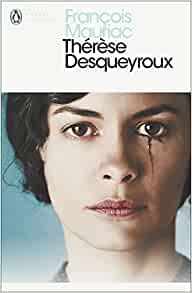
The novella opens with Thérèse Desqueyroux being acquitted of trying to poison her husband.
“The smell of fog and of baking bread was not merely the ordinary evening smell of an insignificant country town, it was the sweet savour of life given back to her at long last. She closed her eyes and breathed deeply of the perfume of the sleeping earth, of wet, green grass. She tried not to listen to the little man with the short legs who never once addressed his daughter.”
As she journeys back to her home among pine forests in Landes in south-west France, she reflects on her marriage to Bernard and life so far.
“All around us was the silence: the silence of Argelouse! People who have never lived in that lost corner of the heath-country can have no idea what silence means. It stands like a wall about the house, and the house itself seems as though it was set solid in the dense mass of the forest, whence comes no sign of life, save occasionally the hooting of an owl. (At night I could almost believe that I heard the sob I was at such pains to stifle.)”
There is never any doubt that she tried to poison him. Her family know it and Bernard knows it. However, there is never an obvious reason given for her drastic action. It was an unhappy marriage, a strategic match between Catholic middle-class families, but Thérèse seems to have gone along with it happily enough, mainly due to her fondness for Bernard’s sister Anne (some commentators have suggested Thérèse is gay). She doesn’t love Bernard and she feels no desire for him, but surely history would be littered with bumped-off spouses if that were a reason for murder.
“When all was said, Bernard wasn’t so bad. There was nothing she detested more in novels than the delineation of extraordinary people who had no resemblance to anyone whom one met in normal life.”
When she returns to her husband, she is surprised to learn that the plan is for her to stay, but on what terms?
Thérèse Desqueyroux is a beautifully written, intriguing novel that raises questions without seeking trite answers, including who pays the price for male power; how to create agency when you have almost no choices; the nature of justice.
‘But if I did give you a reason it would seem untrue the moment I got it into words…’
As the cover of the Penguin Classics edition shows, this novella was adapted to film (for the second time) in 2012. This trailer suggests a wonderfully shot, faithful adaptation:
This is part of a series of occasional posts where I look at works from Le Monde’s 100 Books of the Century. The posts have been a bit too occasional, the challenge is taking me forever! I’m hoping this post will see me starting to build momentum again. Please see the separate page (link at the top) for the full list of books.
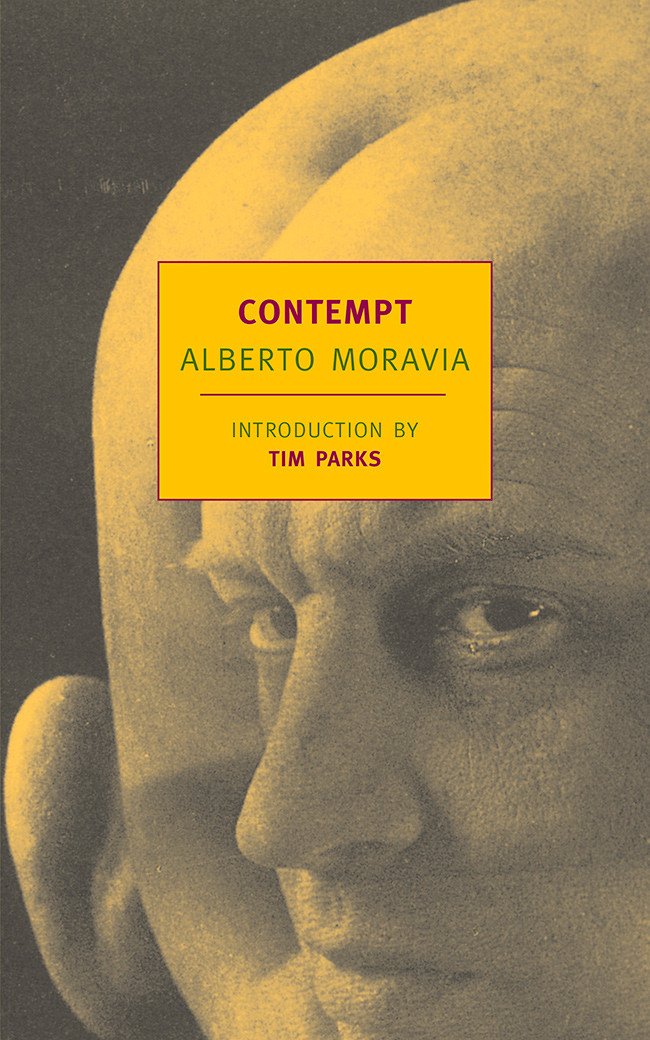
Contempt (Il disprezzo) by Alberto Moravia (1954 trans. Angus Davidson 1999) is a novel with a title that instructs the reader regarding the attitude to take to the narrator: Molteni is truly contemptible.
He is married to the gorgeous Emilia and at first they are very happy together, despite their poverty, as Molteni tries to make a living as a writer and earn enough to keep them in their modest home.
“Thus I never had so much to complain of as I did during the time when in truth – as I later came to realise – I was completely and profoundly happy.”
Gradually however, things start to unravel. They meet Battista, a crass, vulgar film producer. A seemingly innocuous event occurs but from this time Emilia starts to treat Molteni coolly. And so over the course of this short novel we see the disintegration of the marriage, the causes of which are entirely apparent to the reader but remain elusive to Molteni as he is so utterly self-absorbed.
He’s a terrible snob: he looks down on his wife for being less educated than him and has dreams of being a great writer. He feels his scriptwriting is beneath him yet he doesn’t really excel at that either, trying to write a film version of The Odyssey for co-producers with very different ideas. He’s so busy being intellectual that life is passing him by and he has no idea how incredibly stupid he is.
He has a degree of insight into abstract concepts, such as his decision to become a Communist, but is unable to translate it into meaningful action:
“Usually, in simpler, less cultivated people, this process occurs without their knowing it, in the dark depths of consciousness where, by a kind of mysterious alchemy, egoism is transmuted into altruism, hatred into love, fear into courage, but to me, accustomed as I was to observing and studying myself, the whole thing was clear and visible…yet I was aware the whole time I was being swayed by material, subjective factors, that I was transforming purely personal motives into universal reasons.”
The irony when he claims “I would never have become a Communist if I had not bought the lease of that over-expensive flat” completely passes him by.
And of course, he is completely blinded to the person he shares his life with. Emilia become progressively unhappier throughout the novel, which Molteni barely acknowledges, being so wrapped up in himself:
“Her beauty had about it a look of subjection, of reluctance, the cause of which I was at a loss to identify.”
It’s a short novel so I can’t say too much about plot, except things come to a head when the couple holiday with Battista in Capri, changing their lives irrevocably. Contempt shows how intellectualism and artistry carry a danger of relentless self-focus; coupled with Molteni’s material concerns, he loses all sight of people and human feelings, only realising where true meaning lies when it is too late.
I couldn’t have spent too much longer with Molteni but as a short, sharp novel, Contempt works well and has plenty of food for thought.
To end, the trailer for Jean-Luc Godard’s Le Mepris (1963), which was inspired by Contempt:
This is part of a series of occasional posts where I look at works from Le Monde’s 100 Books of the Century. Please see the separate page (link at the top) for the full list of books and an explanation of why I would do such a thing.
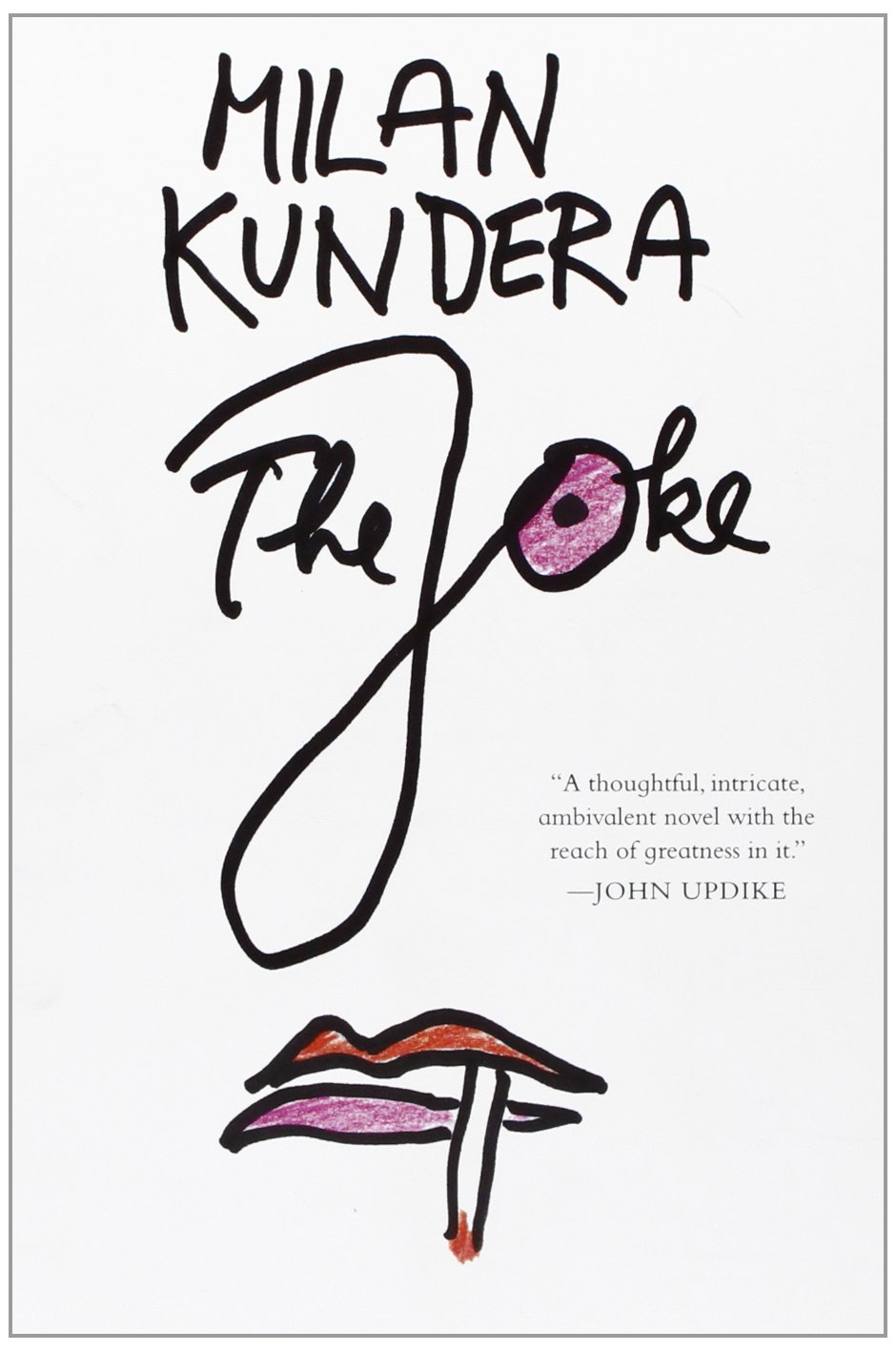
The Joke (1967; trans. Michael Henry Heim 1982*) is the first Milan Kundera I’ve read, as I found his massive intellectual-philosopher reputation intimidating to my tiny brain. However, I found this, his first novel, very readable so who knows, maybe I will tackle the cumbersomely-titled The Unbearable Lightness of Being at some point?
Ludvik lives in 1950s communist Czechoslovakia (as it then was) and is sulking when he sends his girlfriend, Marketa a facetious postcard:
“Optimism is the opium of the people! A healthy atmosphere stinks of stupidity! Long live Trotsky!”
Unfortunately, as we who live in the age of twitter know, irony is not always apparent in the written word and the authorities do not appreciate his sentiments. He is thrown out of the Party and sent to a labour camp with other political dissidents. The story is told from the viewpoint of Ludvik, his friend Jaroslav who is interested in Moravian culture, lecturer Kostka who is Christian in the face of Ludvik’s atheism, and journalist Helena who is used cruelly to facilitate a revenge act.
As Ludvik looks back on his interrupted career and the injustice he has suffered, Kundera offers an incisive commentary on the effect of repressive regimes, but also questions how far all of us can lose sight of ourselves in the face of societal pressures:
“When the Comrades branded my conduct and my smile as intellectual (another notorious pejorative of the times) I actually believed them. I couldn’t imagine (I wasn’t bold enough to imagine) that everyone else might be wrong, and that the Revolution itself, the spirit of the times, might be wrong, and I, an individual, might be right. I began keeping tabs on my smiles, and soon I felt a tiny crack opening up between the person I’d been and the person I should be (according to the spirit of the times) and tried to be.”
Ludvik attempts to enact a revenge for his treatment, but it does not go as planned. He realises that the man who has become the focus of his anger is only a man, and that the issues are larger than a single person.
“How would I explain I used my hatred to balance out the weight of evil I bore as a youth? How would I explain I considered him the embodiment of all the evil I had ever known? How would I explain I needed to hate him?”
Overall, the sense is of an almost Beckettian absurdity. There isn’t the surrealism of Beckett, but certainly the sense of futility and powerlessness of the individual in the face of an indifferent world. Kundera evokes this lightly, so The Joke is not a heavy read, although it considers huge themes. While the politics are particularly relevant to Europe in the last century, the story moves beyond the specific to challenge the role of the individual within structures in which we live, how much agency we have, and what responsibility that brings with it.
“what if history plays jokes? And all at once I realise how powerless I was to revoke my own joke: I myself and my life as a whole had been involved in a joke much more vast (all-embracing) and absolutely irrevocable.”
Kundera has been exiled in France since 1975 after criticising the repressive nature of the then Czech government. The Joke is not self-righteous or overly polemical: it portrays, Kundera writes in the introduction, a man “condemned to triviality”. While this ironical awareness distanced me from Ludvik somewhat and stopped me totally loving this novel, it also prevents The Joke being pompous, and instead funny, sad, tragic and wise.
To end, an apt song which I hope a book blogger who likes singers called Barry will enjoy even though it’snot Barry singing, and a video that is most definitely of a certain era (it wasn’t all repressive politics in the 1960s kids, there were psychotropic drugs too!):
*It’s worth seeking out a later translation of the novel, as Kundera was unhappy with the first English translations but has authorised the later ones
This is part of a series of occasional posts where I look at works from Le Monde’s 100 Books of the Century. Please see the separate page (link at the top) for the full list of books and an explanation of why I would do such a thing.
The Lost Honour of Katharina Blum or, how violence develops and where it can lead by Heinrich Boll (1974, tr. Leila Vennewitz 1975) is a satire on anti-communist paranoia written in a reportage style. If that summary and the cumbersome title of the novel makes you feel like this:
Stick with me. Boll manages to convey the story with a fast pace and a light touch which means that the narrative carries you along and you don’t feel bludgeoned with polemic. He also undercuts the objectivity that his narrator is proclaiming, questioning the facts that are presented, even when we know what has happened – that Katarina Blum has shot and killed Totges, a journalist for a (fictional) newspaper Die Zeitung.
“Let there not be too much talk about blood here, since only necessary differences in level are to regarded as inevitable; we would therefore direct the reader to television and movies and the appropriate musicals and gruesicals; if there is to be something fluid here, let it not be blood […] Totges was wearing an improvised sheikh costume concocted from a rather worn sheet, and the effect of a lot of blood on a lot of white is well known; a pistol is then sure to act almost like spray gun, and since in this instance the costume was made out of a large square of white cotton, modern painting or stage effects would seem to be more appropriate here than drainage. So be it. Those are the facts.”
How Katharina came to do such a thing is told from a variety of viewpoints, capturing the events of four days from when she meets Gotten, a bank robber and suspected radical at a party, to the time when she commits the murder. Die Zeitung spins its own story around events, outraged that one of their own has been killed. The newspaper reporting is comical:
“The pastor of Gemmelsbroich had the following to say: ‘I wouldn’t put anything past her. Her father was a Communist in disguise, and her mother, whom on compassionate grounds I employed for a time as a charwoman, stole the sacramental wine and carried on orgies in the sacristy with her lovers.’”
Yet at the same time this is the crux of satire. The newspaper is able to spin such tales, eagerly gobbled up by its readers, without censure. The print media both perpetuates and exacerbates the tragedy, as the lies spun around the ‘Red’ Gotten and Scarlet Woman Katharina cause the hard-working, honest Katharina to become so desperate as to take a life.
Of course, The Lost Honour of Katharina Blum was written over 40 years ago so the reality it portrays is barely recognisable now. An irresponsible sensationalist press, whipping up public feeling, vilifying marginalised groups, passing judgement on female sexuality…nope, can’t think of a single contemporary parallel.
“Everything will be done to avoid further blockages and unnecessary buildups of tension. It will probably not be possible to avoid them entirely.”
Much as I enjoyed the novel and fancy admire the brilliant mind of Kris Kristofferson, I think I’ll be skipping this made-for-TV adaptation (cue 80s-tastic trailer):
Let’s ignore the sexism of the title quote and focus on the sentiment (especially as Godwin was married to Mary Wollstonecraft who I like to think told him off for any gender assumptions) 🙂 I was prompted to think along these lines a few weeks ago when I watched the moving and joyous BBC4 documentary B is for Book.
I don’t generally write about children’s or YA fiction, but I felt quite inspired by the documentary showing the jubilant discovery and magic of the written word. My Le Monde’s 100 Books of the Century Reading Challenge has some kids books on it, so this week I’m channelling my inner child (not that difficult, tbh)
Firstly, The Little Prince by Antoine de Saint-Exupéry (1943), ranked number 4 on Le Monde’s list; it is the most translated French book and the fourth most translated book worldwide. And how is this for a CV: Wiki describes Antoine de Saint-Exupéry as “writer, poet, aristocrat, journalist, and pioneering aviator”. I feel so inadequate.
The Little Prince is narrated by an aviator who crashes in the desert, where he meets a visiting alien prince. The prince is from a planet where he lives alone, and which is so small that the sun is always setting:
“For as everyone knows, when it is noon in the United States the sun is setting over France. If you could get to France in a twinkling, you could watch the sunset right now. Unfortunately France is rather too far away. But on your tiny planet, little prince, you only had to move your chair a few steps. You could watch night fall whenever you liked.
‘One day,’ you said, ‘I watched the sunset forty-three times!’
And a little later you added:
‘You know, when one is that sad, one can get to love the sunset.’
‘Were you that sad, then, on the day of forty-three sunsets?’
But the prince made no answer.”
This melancholy tinge continues throughout the tale. The prince is a sad character and remains mysterious to the aviator. It is a children’s book though, and has some lovely touches to stir the imagination:
“On the morning of his departure he set his planet in good order. He carefully swept out his active volcanoes. He had two active volcanoes – which were very useful for heating up breakfast in the morning.”
The prince describes his travels, in which he has met six adults, also living alone on isolated tiny planets: a king (who rules over no-one), a vain man, an alcoholic, a businessman (who wants to own the stars), a lamplighter (who constantly lights a lamp for no purpose) and a cartographer (who has never been anywhere). Thus the story is a critique of adults placing meaning in acquisition and status rather than in emotional connection and adventure. The aviator is an adult himself but does not hold adults in high regard:
“Grownups love figures. When you describe a new friend to them, they never ask about important things. They never say: ‘What’s his voice like? What are his favourite games? Does he collect butterflies?’ Instead they demand ‘How old is he? How many brothers has he? How much does he weigh? How much does his father earn?’ Only then do they feel he know him.”
The Little Prince is a sweet, sad tale, one which will appeal to children for the adventure and imaginative leaps, but also has a great deal to offer adults, as a fable regarding a search for meaning in the world.
“You can only see things clearly with your heart. What is essential is invisible to the eye.”
It is also illustrated with gorgeous watercolours by the author (yet another string to his bow):
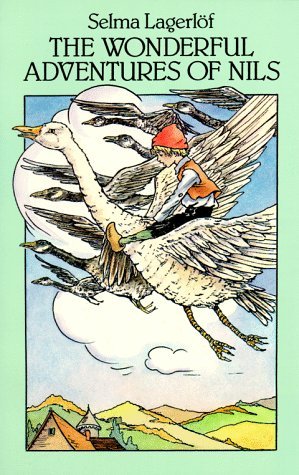
Secondly, The Wonderful Adventures of Nils by Selma Lagerlöf (1906–1907), number 68 on Le Monde’s list. This classic of Swedish literature has been immortalised on stamps, on currency, and Lagerlöf won the Nobel Prize for Literature.
Nils is a self-centred, lazy, cruel ungrateful boy. Bunking off church to stay at home, he gets on the wrong side of an elf. Everyone knows you don’t mess with elves, Nils. Of course the elf wreaks his revenge:
“For in the glass he saw plainly a little, little creature who was dressed in a hood and leather breeches.
“Why, that one is dressed exactly like me!” said the boy, clasping his hands in astonishment. And then he saw that the thing in the mirror did the same thing. Thereupon he began to pull his hair and pinch his arms and swing round; and instantly he did the same thing after him; he, who was seen in the mirror.
The boy ran around the glass several times, to see if there wasn’t a little man hidden behind it, but he found no one there, and then he began to shake with terror. For now he understood that the elf had bewitched him, and that the creature whose image he saw in the glass was – himself.”
Nils’ family goose, who has the excellent appellation of Morten Goosey-Gander, decides to follow a flock of wild geese on their migration to Lapland and Nils tags along, riding on Goosey-Gander’s back. As an elf, Nils finds he can understand animals’ speech, and learns to be kind rather than torture them.
“The wild geese challenged the white goosey-gander to take part in all kinds of sports. They had swimming races, running races, and flying races with him. The big tame one did his level best to hold his own, but the clever wild geese beat him every time. All the while, the boy sat on the goosey-gander’s back and encouraged him, and he had as much fun as the rest.”
Lagerlöf was commissioned to write this by the National Teachers Association, so in the course of reading about Nils’ journey, you learn about wildlife and Swedish geography: win/win.
“Just as the first spring showers pattered against the ground, there arose such shouts of joy from all the small birds in groves and pastures that the whole air rang with them, and the boy leaped high where he sat. ‘Now we’ll have rain. Rain gives us spring; spring gives us flowers and green leaves; green leaves and flowers give us worms and insects; worms and insects give us food; and plentiful, and good food is the best thing there is,’ sang the birds.”
“He didn’t know exactly where on earth he was: if he was in Skåne, in Småland, or in Blekinge. But just before reaching the swamp, he had glimpsed a large village, and thither he directed his steps. Nor was it long before he discovered a road. Soon he was in the village street, which was long, and had trees on both sides, and was bordered with garden after garden. The boy had come to one of the big cathedral towns, which are so common on the uplands, but can hardly be seen at all down in the plain.”
Nils’ wonderful adventures also include seeing off his arch-nemesis Smirre Fox and learning to think of others rather than being such a deeply unpleasant person. For a book with such a didactic purpose, it really doesn’t read as instructive and moralistic. The Wonderful Adventures of Nils is written with a real lightness of touch and is great fun.
To end, a taster of my favourite book from when I was a child:
As usual, I’m a bit behind the times: here is my post to commemorate the death of Olympian/activist/philanthropist/iconic legend Muhammad Ali on 3 June, whose memorial was last Friday.
I thought I would therefore theme this post around ‘greatest’. Just over a week ago Lisa McInerney won this year’s Bailey’s Prize for her debut novel The Glorious Heresies, so I’ve decided to look at Half of a Yellow Sun by Chimamanda Ngozi Adichie which won the Baileys (then the Orange) in 1997 and was chosen as the prize’s Best of the Best in 2015. I’ve paired it with Midnight’s Children by Salman Rushdie which won the 1981 Booker, and then in 1993 (25 years of the Booker) and 2008 (40 years of the Booker), it won the Best of the Bookers (the latter by public vote). They are also two more stops on my Around the World in 80 Books Reading Challenge, hosted by Hard Book Habit– away we go!
Half of a Yellow Sun is set in Nigeria during the civil war of the 1960s, when there was an attempt to establish Biafra as an independent nation. Focusing on two sisters, Olanna and Kainene, their partners Odenigbo and Richard, and Olanna and Odenigbo’s houseboy Ugwu, the war is explored through its varied but monumental impact on all their lives.
Before the war, Olanna and Odenigbo live a privileged middle class life in the university town of Nsukka, entertaining in the evenings with friends who debate issues of post-colonial identity:
“‘I am Nigerian because a white man created Nigeria and gave me that identity. I am black because the white man constructed black to be as different from as possible from his white. But I was Igbo before the white man came.’”
Ugwu joins them and is mesmerised by their sophistication, and the worlds they open for him through the books they provide. However, Adichie shows that the legacy of colonialism is deep-rooted:
“Master’s English was music, but what Ugwu was hearing now, from this woman, was magic. Hers was a superior language, a luminous language, the kind her heard on Master’s radio, rolling out with clipped precision. It reminded him of slicing a yam with a newly sharpened knife, the easy perfection in every slice.”
As the Igbo people try to establish Biafra and civil war escalates, Olanna, Odenigbo and Ugwu’s lives are ripped apart and Adichie does not pull her punches. There is forced conscription, rape as a weapon, starvation and mutilation. However, there is also reconciliation between the estranged sisters, and Adichie’s focus is not on horrors but on how the human spirit survives against overwhelming odds:
“The war would continue without them. Olanna exhaled, filled with frothy rage. It was the very sense of being inconsequential that pushed her from extreme fear to extreme fury. She had to matter. She would no longer exist limply, waiting to die.”
Adichie is a hugely popular and successful author, and I feel the hype is fully deserved: she’s a brilliant writer. I whizzed through this book – she manages to write a compelling, political, angry, compassionate and highly moving page-turner. What a feat.
Half of a Yellow Sun was adapted into a film in 2013, apparently not that successfully despite a seemingly perfect cast including smoking hot eye candy hugely talented actor Chiwetel Ejiofor:
On to Midnight’s Children by Salman Rushdie (1981) which like Half of a Yellow Sun was the author’s second novel: so much for the ‘difficult second novel’ theory. It’s taken me about twenty years to read Midnight’s Children, which works out as 6% of a page per day. It’s been quite a ride.
I jest of course, but it did take me 3 goes spread over 20 years to get into this novel. Normally I would have resigned it to the DNF pile (which is tiny, my TBR aspires to be that size one day – never going to happen) but I kept persevering because people who loved it really loved it and it always cropped up on various book lists (including Le Monde’s , which forms one of my reading challenges).
Now that I’ve read it, I can’t say I loved it – something about Rushdie’s style meant this was always a tough read for me – but I did find it impressive. Midnight’s Children is hugely ambitious, tackling themes around nation-making, history writing, colonialism and culture. Seemingly impossible within one novel, but Rushdie and his massive brain are clearly equal to the task. The story is narrated by Saleem Sinai who is born on the stroke of midnight on 15 August 1947, the exact moment that India gained independence from Britain.
“Thanks to the occult tyrannies if those blandly saluting clocks I had been mysteriously handcuffed to history, my destinies indissolubly chained to those of my country. For the next three decades, there was to be no escape.”
Saleem’s story, and that of his family, becomes the story of the nation of India. The novel makes heavy use of magical realism, and I think this is Rushdie’s masterstroke. It would be impossible to explore such enormous themes and multiple events if the novel were entirely grounded in a recognisable reality. By allowing for magic realism, Rushdie can take the story in any direction he needs to.
Saleem discovers that all the children born into India between midnight and 1am on the day of Independence have special powers – his own being telepathy, powered by his enormous nose and blocked sinuses (told you there was magic realism).
“the children of midnight were also the children of the time: fathered, you understand, by history. It can happen. Especially in a country which is itself a sort of dream.”
“Midnight has many children; the offspring of Independence were not all human, Violence, corruption, poverty, generals, chaos, greed and pepperpots…I had to go into exile to learn that the children of midnight were more varied than I – even I – had dreamed.”
Saleem is a self-acknowledged unreliable narrator. His memory fails him at times, regarding both events in his own life and those in the wider political history of India. What Rushdie is questioning is the narratives we are all within – family, nation, history, culture – and how there is no one reality for any of us.
“Family history, of course, has its proper dietary laws. One is supposed to swallow and digest only the permitted parts of it, the halal portions of the past, drained of their redness, their blood. Unfortunately this makes the story less juicy, so I am about to become the first and only member of my family to flout the laws of halal. Letting no blood escape from the body of the tale, I arrive at the unspeakable part; and, undaunted, press on.”
I realise I may have made Midnight’s Children sound like a heavy read, and in some ways it is, but it also has a gentle humour running through it to lighten the tone. I’ve certainly never read anything else like it.
“One day, perhaps, the world may taste the pickles of history. They may be too strong for some palates, their smell is overpowering, tears may rise to eyes; I hope nevertheless that it will be possible to say of them that they possess the authentic taste of truth”
To end, I can’t help wishing the dress code for book award ceremonies was monochrome cat suits and that winners collected their awards by emerging from a fog of dry ice:







 madame bibi lophile recommends