The Tendrils of the Vine – Colette (Le Monde’s 100 Books of the Century #59)

This is part of a series of occasional posts where I look at works from Le Monde’s 100 Books of the Century.  Please see the separate page (link at the top) for the full list of books and an explanation of why I would do such a thing.

When I first started this challenge, I thought it would never be complete as I have commitment issues Wikipedia told me that Tendrils of the Vine had never been translated.  Yesterday in my favourite charity bookshop (handily located across the road from my flat, so I don’t have to stagger far with my heavy loads/nightmarishly located across the road from my flat – if you had a problem with drug addiction you wouldn’t live opposite a crack den) I picked up a huge volume of The Collected Stories of Colette for £3.50, and was very excited to see Tendrils of the Vine translated within it (by Herma Briffault – and I see Wiki no longer makes its fallacious claim).

In fact , Tendrils of the Vine, proclaimed A Fable in the title, is only 1000 words long and I may have been able to struggle through with my appalling French.  The difficulty is, being only 1000 words long, I really can’t say too much about it without spoilers, so this will be an uncharacteristically short post from me 🙂

The story begins in typical fable fashion, describing how the nightingale got his song:

“While he slept, the vine’s gimlet feelers – those imperious and clinging tendrils whose sharp taste, like that of fresh sorrel, acts a stimulant and slakes the thirst, began to grow  so thickly during the night that the bird woke up to find himself bound fast, his feet hobbled in strong withes, his wings powerless…”

Nightingale_of_ancient_Uglich

The nightingale escapes, and sings relentlessly to keep himself awake through the Spring,  thereby avoiding the terrors of the vine.  I can’t say much more, except Colette then expands this into a truly creepy and oppressive tale. The fact that she does this in 1000 words within a pastoral fabulistic setting makes it like a short, sharp punch to the sternum. What a writer – I’m looking forward to reading the rest of my newly-acquired tome.

Colette, who when she wasn't writing, sat around being awesome

Colette, who when she wasn’t writing, sat around being awesome

Image from here

The Big Sleep – Raymond Chandler (Le Monde’s 100 Books of the Century #96)

This is part of a series of occasional posts where I look at works from Le Monde’s 100 Books of the Century. Please see the separate page (link at the top) for the full list of books and an explanation of why I would do such a thing.

Now that I have some of my life back after a period where I was deranged enough to both work and study full-time (what was I thinking???? etc etc ad infinitum) I’ve decided I need to get back on track with my reading challenge, and I’m easing myself in with the slim novel The Big Sleep by Raymond Chandler.

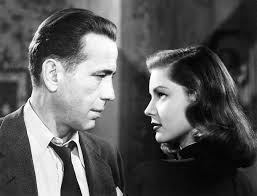
The Big Sleep is the first of Chandler’s novels, and the first I’ve read. It’s a mark of how far his style and the hardboiled detectives he created have become assimilated into modern culture that I could hear Humphrey Bogart’s voice in my head reading every word:

Having finished the novel it’s a source of constant disappointment to me that I don’t have Bogie’s voice in my head narrating my daily life, although admittedly if he did turn up he’d probably leave out of utter boredom:

“I walked to the kitchen. A cat appeared from nowhere, making his disgust at the lack of crunchies in his bowl known.  I poured a cup of tea. The kettle needed descaling but I couldn’t be bothered. I was out of milk. I debated whether to drink it black or go to the shop. The tea in the cup was as dark as the night outside. As dark as my soul. I put on my coat, knowing the wind outside would be colder than the welcome awaiting my return if the cat bowl remained empty.”

Hmm, it’s not really working, is it? Let’s see it done properly, with tales of blackmail, murder, riches and glamour in Los Angeles, rather than domestic banalities in south London. Private eye Philip Marlowe is summoned by the affluent and moribund General Sternwood:

“His long narrow body was wrapped – in that heat – in a travelling rug and a faded red bathrobe. His thin clawlike hands were folded loosely on the rug, purple-nailed. A few locks of dry white hair clung to his scalp like wild flowers fighting for life on a bare rock […] The General spoke again, slowly, using his strength as carefully as an out-of-work showgirl uses her last pair of good stockings.”

This is the real joy of Chandler, his much-parodied use of simile, inventive and atmospheric. The images he uses accentuate the world-weary knowingness of Marlowe: “Dead men are heavier than broken hearts.” but I must confess that my sheltered existence meant I didn’t always understand all of them: “Her face fell apart like a bride’s pie crust”. Whaaat? Anyone?

As Marlowe investigates the blackmail case the General has employed him to uncover, he is drawn into the seedy underbelly (I think the phrase ‘seedy underbelly’ was probably coined to describe Chandler’s oeuvre) of Los Angeles – “It seemed like a nice neighbourhood to have bad habits in”– pornography, drugs, murder, and of course, sexy ladies at every turn:

“She got up slowly and swayed towards me in a tight black dress that didn’t reflect any light. She had long thighs and she walked with a certain something I hadn’t often seen in bookstores.”

The plot is convoluted, with everyone double-crossing everyone else and Marlowe at the centre of it all, trying to hang on to some sort moral compass:

 “I got up feeling sluggish and tired and stood looking out of the windows, with a dark harsh taste of Sternwoods still in my mouth. I was as empty of life as a scarecrow’s pockets.”

He is compelling narrator, wise, brave and so much cooler than probably any of his readers (definitely me, as much as I wish I looked like this):

lauren-bacall-396150_960_720

This is a novel to accept on its own terms – one where atmosphere and style top anything else.  Famously, director Howard Hawks queried a plot-hole with Chandler when he was filming The Big Sleep. Chandler confirmed he had no idea as to the answer.  But for escapist entertainment, a quick read with a confident narrative voice (Humphrey Bogart’s to be precise), The Big Sleep is a great example of the hard-boiled genre.

“The coffee shop smell from next door came in at the windows with the soot but failed to make me hungry. So I got out my office bottle and took the drink and let my self-respect ride its own race.”

download (4)

The Murder of Roger Ackroyd – Agatha Christie (Le Monde’s 100 Books of the Century #49)

This is part of a series of occasional posts where I look at works from Le Monde’s 100 Books of the Century. Please see the separate page (link at the top) for the full list of books and an explanation of why I would do such a thing.

The great thing about this reading challenge, and the very reason I set myself to do it, is that it means I read books I wouldn’t have normally. Usually this is because I hadn’t heard of them, but in the case of The Murder of Roger Ackroyd, it was because I thought I didn’t like Agatha Christie. I spent a summer when I was about 14 reading a Poirot omnibus, and I thought it was poorly written, with thin plots, shallow characterisation and an annoying central protagonist (I believe Christie shared this opinion of Poirot!) Despite a general love of the Golden Age of Detective Fiction, I haven’t picked up a Christie since. So I owe Le Monde (and the attractive bookseller who assured me it was the best of the Poirot novels – how I miss you, Blackwells) a great deal of thanks, because I really enjoyed The Murder of Roger Ackroyd.

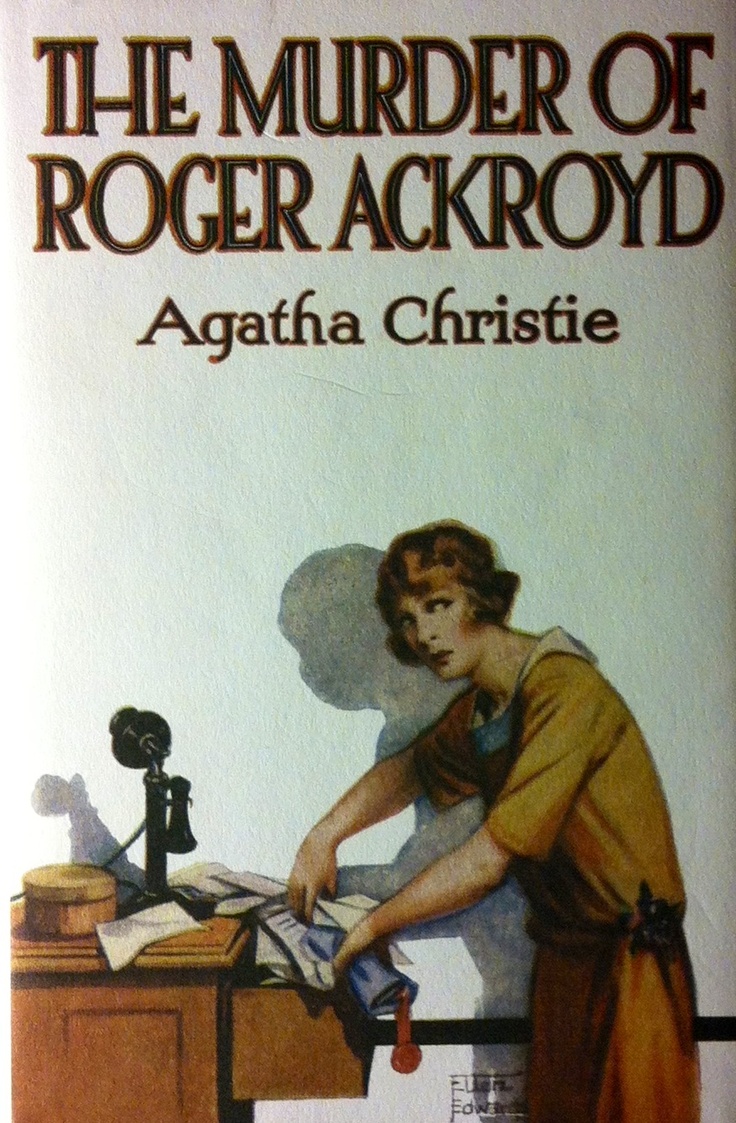
001 (5)

(Image from: http://www.pinterest.com/pin/249316529344895760/)

The story is narrated by Dr James Sheppard, the village GP who lives with his nosy sister, the character of whom was a prototype of Miss Marple.

“Our village. King’s Abbot, is, I imagine, very much like any other village. Our big town is Cranchester, nine miles away. We have a large railway station, a small post office, and two rival ‘General Stores.’ Able-bodied men are apt to leave the place early in life, but we are rich in unmarried ladies and retired military officers. Our hobbies and recreations can be summed up in the one word, ‘gossip.’”

Within this inter-war bucolic tranquility, Sheppard is called to the suicide of Mrs Ferrars, a wealthy widow who was engaged to the eponymous victim. She sent Ackroyd a letter explaining she was being blackmailed over the poisoning of her first husband, but Ackroyd is murdered before he finds out who the blackmailer was. Enter a certain Belgian detective to solve the crime. He is Sheppard’s new neighbour, and they meet when Poirot hurls a vegetable marrow over the garden fence:

“’I demand of you a thousand pardons, monsieur. I am without defence. For some months now I cultivate the marrows. This morning suddenly I enrage myself with these marrows. I send them to promenade themselves – alas! not only mentally but physically. I seize the biggest. I hurl him over the wall. Monsieur, I am ashamed. I prostrate myself.’

Before such profuse apologies, my anger was forced to melt. After all, the wretched vegetable hadn’t hit me. But I sincerely hoped that throwing large vegetables over walls was not our new friend’s hobby.”

From this unpromising beginning, the two team up to catch the murderer. It’s difficult to say any more without spoilers, but I thought the novel was good fun (as the marrow scene shows), well-paced (only 235 pages in my edition) and confidently knowing:

“’The essence of a detective story,’ I said, ‘is to have a rare poison – if possible something from South America, that nobody has ever heard of- something that one obscure tribe … use to poison their arrows with. Death is instantaneous, and Western science is powerless to detect it.Is that the kind of thing you mean?’

‘Yes. Is there really such a thing?’

I shook my head regretfully.”

Amongst this levity however, there is a dark undertone – someone has been murdered, after all. And although Christie’s novels are not brutal and bloody (this was published in 1926) she does not let reader forget the inhumanity people are capable of displaying toward each other. The ending of the novel was really quite dark, and I thought it all rather wonderful.

One of Christie’s great achievements in the novel is how she distinctive she makes the voice of Poirot; it captures his unique personality perfectly. Here, David Suchet, who has filmed all the Poirot novels for television, explains how he achieves Poirot’s voice:

Waiting for Godot – Samuel Beckett (Le Monde’s 100 Books of the Century #12)

This is part of a series of occasional posts where I look at works from Le Monde’s 100 Books of the Century.  Please see the separate page (link at the top) for the full list of books and an explanation of why I would do such a thing.

I have to start a post about a work by Samuel Beckett with a picture of the author, as he has the most incredible face:

Samuel Beckett 1976

(Image from: http://www.theguardian.com/culture/2014/jun/09/samuel-beckett-manuscript-first-novel-on-display )

Who wouldn’t want to read a work written by that face?  Well, as it turns out, a lot of people.  I remember years ago listening to radio phone in programme that was nothing to do with Waiting for Godot, yet somehow it came into the conversation, and it seemed that every listener, and the DJ,  had been tortured with the text by their English teachers.  They all hated it.  And yet Le Monde’s readers have voted it the 12th greatest book of the century. It’s also remained a perennial favourite on the stage, a recent production with real-life friends Sir Ian McKellen and Sir Patrick Stewart was an enormous success on both sides of the Atlantic:

I think Godot is just one of those plays that divides people.  It is baffling, incomprehensible, hugely funny and relentlessly serious, tragic, absurd and profound.  It features two rough sleepers, Vladimir and Estragon.  The stage is almost bare, the only set being a tree and a mound.  This is the only scene in both acts.  As the characters wait for Godot, they have conversations that are oblique, filled with non-sequiturs, verge on nonsense, and yet address issues about existence, human nature, the meaning of it all.  Famously, very little happens, Godot never arrives. Vivian Mercier, theatre critic for the Irish Times in the 1950s, summed it up: “a play in which nothing happens, twice.” This is theatre at its most basic and its most complex, its most theatrical and its determinedly least dramatic.

Estragon, sitting on a low mound, is trying to take off his boot. He pulls at it with both hands, panting.

He gives up, exhausted, rests, tries again.

As before.

Enter Vladimir.

ESTRAGON: (giving up again). Nothing to be done.

VLADIMIR: (advancing with short, stiff strides, legs wide apart). I’m beginning to come round to that opinion. All my life I’ve tried to put it from me, saying Vladimir, be reasonable, you haven’t yet tried everything. And I resumed the struggle. (He broods, musing on the struggle. Turning to Estragon.) So there you are again.

ESTRAGON: Am I?

VLADIMIR: I’m glad to see you back. I thought you were gone forever.

ESTRAGON: Me too.

I think this is why it’s so beloved of English teachers and potentially so despised by students.  It can simultaneously seem to contain everything, and nothing.  Try to pin it down and it will slip away from you.  This is why there are so many interpretations as to its meaning.  When I discussed Six Characters in Search of an Author by Luigi Pirandello (#53) I suggested that if you liked it, you might like Godot.  There are many similarities, mainly the absurdist quality, but whereas Six Characters was theatre about theatre, Godot is how theatre as a visual medium can represent the internal, the rarely articulated:

ESTRAGON: Let’s hang ourselves immediately!

VLADIMIR: From a bough? (They go towards the tree.) I wouldn’t trust it.

ESTRAGON: We can always try.

VLADIMIR: Go ahead.

ESTRAGON: After you.

VLADIMIR: No no, you first.

ESTRAGON: Why me?

VLADIMIR: You’re lighter than I am.

ESTRAGON: Just so!

VLADIMIR: I don’t understand.

ESTRAGON: Use your intelligence, can’t you?

Vladimir uses his intelligence.

VLADIMIR: (finally). I remain in the dark.

And this is where the audience remains, literally and figuratively.  If you like your plays plot-driven and tied up neatly at the end, avoid this play at all costs. But if you want to be made to think about questions to which there are no easy answers, and entertained along the way, you might find Waiting for Godot not as torturous as generations of schoolkids have come to believe.

Sadly, Rik Mayall died this week, at the age of 56.  In 1991 he and comedy partner Ade Edmonson took on the roles of Vladimir and Estragon:

A Room of One’s Own – Virginia Woolf (Le Monde’s 100 Books of the Century #69)

Today’s post is  the latest in a series of occasional posts where I look at works from Le Monde’s 100 Books of the Century.  Please see the separate page (link at the top) for the full list of books and an explanation of why I would do such a thing.

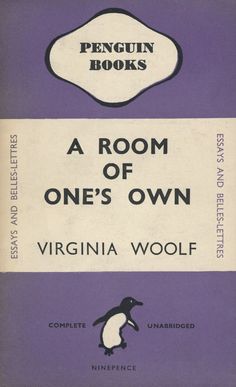
A Room of One’s Own grew out of lectures Virginia Woolf was asked to give at Newnham and Girton Colleges, Cambridge, in 1928. You can read the full essay in various places online. Women were only officially admitted to the university in 1948, and the fact that these talks were given 20 years previously shows just how ground-breaking Woolf was.  A Room of One’s Own is a vital proto-feminist text that remains relevant today.  The fact that you can buy bags, pillows, tea towels, deckchairs, mugs, notebooks ad infinitum with the book cover on is an indicator of how much the central image continues to speak to people, as well as the arguments themselves.

Image

(Image from: https://www.pinterest.com/particularbooks/postcards-from/)

The central image is: “a woman must have money and a room of her own if she is to write fiction.”  In other words, she needs a means to support herself, and space to reflect and think; she needs liberty, and these things have been traditionally denied to women.  They have been dependent on the men in their family for financial support, and not supposed to concern their pretty little heads with intellectual endeavour.  Woolf argues her points forcefully but wittily, you never feel you are being bludgeoned by polemic.  Take for example the opening paragraph:

“But, you may say, we asked you to speak about women and fiction – what, has that got to do with a room of one’s own? I will try to explain. When you asked me to speak about women and fiction I sat down on the banks of a river and began to wonder what the words meant. They might mean simply a few remarks about Fanny Burney; a few more about Jane Austen; a tribute to the Brontës and a sketch of Haworth Parsonage under snow; some witticisms if possible about Miss Mitford; a respectful allusion to George Eliot; a reference to Mrs Gaskell and one would have done.”

The paucity of women writers Woolf has at her disposal to refer to speaks volumes about the male dominance of writing up to this point, and the reliance on male point of view for literary portrayals of women:

“women have burnt like beacons in all the works of all the poets from the beginning of time — Clytemnestra, Antigone, Cleopatra, Lady Macbeth, Phedre, Cressida, Rosalind, Desdemona, the Duchess of Malfi, among the dramatists; then among the prose writers: Millamant, Clarissa, Becky Sharp, Anna Karenina, Emma Bovary, Madame de Guermantes … Indeed, if woman had no existence save in the fiction written by men, one would imagine her a person of the utmost importance; very various; heroic and mean; splendid and sordid; infinitely beautiful and hideous in the extreme; as great as a man, some think even greater.”

Of course, Woolf was a highly accomplished and inventive writer herself, and this is reflected in the lecture which is not traditionally academic but instead illustrated with fictional characters such as Judith Shakespeare, sister of the more famous William:

 “his extraordinarily gifted sister, let us suppose, remained at home. She was as adventurous, as imaginative, as agog to see the world as he was. But she was not sent to school. She had no chance of learning grammar and logic, let alone of reading Horace and Virgil. She picked up a book now and then, one of her brother’s perhaps, and read a few pages. But then her parents came in and told her to mend the stockings or mind the stew and not moon about with books and papers. […]She had the quickest fancy, a gift like her brother’s, for the tune of words. Like him, she had a taste for the theatre. She stood at the stage door; she wanted to act, she said. Men laughed in her face […]who shall measure the heat and violence of the poet’s heart when caught and tangled in a woman’s body? [She] killed herself one winter’s night and lies buried at some cross-roads where the omnibuses now stop outside the Elephant and Castle.”

As my extensive quoting shows, I think this is a fantastic essay, well worth reading. It isn’t flawless, it’s culturally biased towards the speaker and her audience: middle-class, white, Western women.  But Woolf never claims to have all the answers: “women and fiction remain, so far as I am concerned, unsolved problems.” (I think the idea of women as an unresolved problem is ironic and assertive, not derogatory?) A Room of One’s Own highlights enduring problems, relevant to both genders, of how to claim societal freedom that will permit individual voices to be heard. It also makes me very glad that I am a woman in this day and age; I may be embarrassed at how ridiculously over-educated I am (a perennial student) but at least I had the choice to become so.

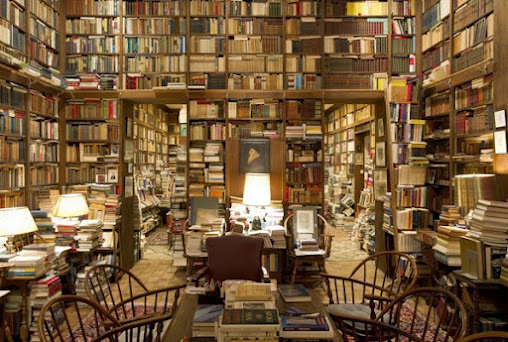
To end, a picture of a room I wish was my own – it could do with a few more books, though…

Image

(Image from http://pawilson.ca/are-there-some-books-you-keep-reading-over-and-over/ )

Bonjour Tristesse – Francoise Sagan (Le Monde’s 100 Books of the Century #41)

This is part of a series of occasional posts where I look at works from Le Monde’s 100 Books of the Century.  Please see the separate page (link at the top) for the full list of books and an explanation of why I would do such a thing.

Bonjour Tristesse by Francoise Sagan is a short novel (108 pages in my edition, the Penguin translation by Irene Ash), published in 1954 when the author was 18.  Yes, 18.  Apparently she failed to pass her exams for the Sorbonne and so decided to write a novel instead. As you do. And it’s a modern classic. I’m pretty sure I hate this woman.  Rest assured it’s jealousy plain and simple, not xenophobia – there’s a lot of nonsense talked about British attitudes to our neighbours across Le Manche, but despite the fact that I would be at least 5kg lighter if France wasn’t there (je t’aime fromage bleu)I for one am a true Francophile.  They are a great nation that has provided the world with at least two things guaranteed to cause uncontrollable dribbling in this blogger:

Image

Almond croissants (or croissants aux amandes if you will) (Image from www.belleepooque.co.uk)

Image

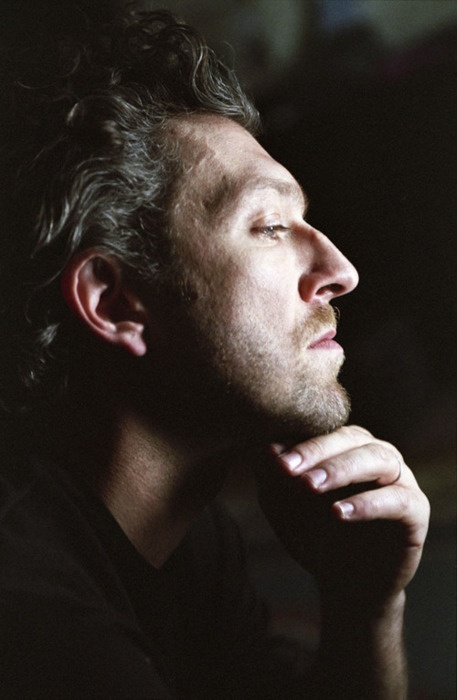
Vincent Cassel (Image from: https://www.pinterest.com/pin/277745501994347016/)

To those of you concerned that I am objectifying Mr Cassel, I would just like to reassure you that I’m objectifying the croissant so much more, believe me.

Now, where was I?  Oh yes, the extraordinary talent of Francoise Sagan.  While the protagonist is a precocious 17 year old, Cecile, (so far, so thinly disguised autobiography) the psychological insights into the characters are sophisticated and you don’t feel like you’re reading someone’s juvenilia.  Cecile is holidaying in the south of France with her father, an entirely vacuous widower whose temperament she shares:

“I soon noticed that he lived with a woman.  It took me rather longer to realise that it was a different one every six months.  But gradually his charm, my new easy life, and my own disposition led me to accept it.  He was a frivolous man, clever at business, always curious, quickly bored, and attractive to women.  It was easy to love him, for he was kind, generous, gay, and full of affection for me.  I cannot imagine a better or more amusing friend.”

And that is just the problem – he is a friend, not a parent.  He treats Cecile as a co-conspirator in life, buying her inappropriate dresses and taking her to casinos, talking to her as an equal:

 “He refused categorically all notions of fidelity and serious commitments.  He explained that they were arbitrary and sterile…I knew in his case they did not exclude either tenderness or devotion; feelings which came all the more easily to him since he was determined they should be transient…I was not at the age where fidelity was attractive.  I knew very little about love.”

Into this self-serving world comes Anne, a friend of Cecile’s dead mother.  She is cool and controlled:

“I think she rather despised us for our love of diversion and frivolity, as she despised all extremes.”

Yet, despite their differences, Cecile admires Anne and her father decides to marry this woman so different from himself.   The decision does not sit well with Cecile:

 “I thought of the lunch I had endured with clenched teeth, tortured by a feeling of resentment for which I despised and ridiculed myself.  Yes, it was for this I reproached Anne: she prevented me from liking myself.  I, who was so naturally meant for happiness and gaiety, had been forced into a world of self-criticism and guilty conscience, where, unaccustomed to introspection, I was completely lost.”

I don’t want to seem ageist, but clearly I am, as this self-ironising tone was not what I expected from such a young author.  Cecile is spoilt and self-focused, and decides to split up her father and Anne so that her life can continue how she wants it to.  She constantly vacillates, changing her mind and feelings with each moment, but her machinations regarding Anne move inexorably forward. The consequences are dramatic and will force Cecile to leave her childhood behind forever:

“Then gradually I begin to think of something else. But I do not like to take refuge in forgetfulness and frivolity instead of facing my memories and fighting them.”

Bonjour Tristesse is a melancholic novel (the title means Hello Sadness) about the prices we pay for the things we think we want.  Francoise Sagan creates a memorable protagonist in Cecile and an affecting story within remarkably few words.

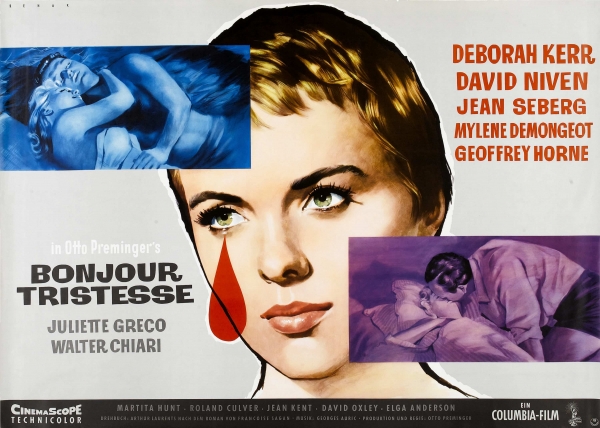
To end, the poster of the film adaptation made just four years after publication:

Image

(Image from: http://docublogger.typepad.com/seberg/page/2/ )

Six Characters in Search of an Author – Luigi Pirandello (Le Monde’s 100 Books of the Century #53)

This is the first in a series of occasional posts where I’ll be looking at works from Le Monde’s 100 Books of the Century.  Please see the separate page (link at the top) for the full list of books and an explanation of why I would do such a thing. I set myself the challenge in January and I’m only beginning to blog about it now; this does not bode well for my completing this challenge before I see in a century of my own…

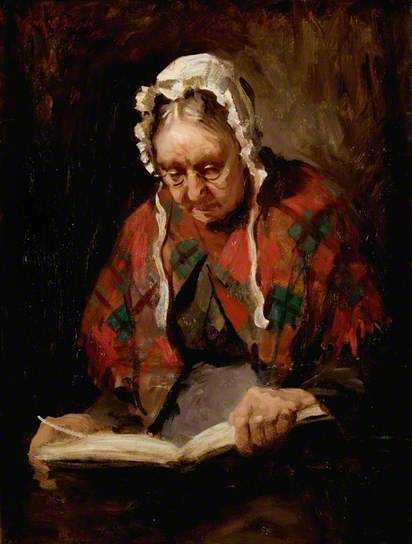
(c) Glasgow Museums; Supplied by The Public Catalogue Foundation

(Image from: http://www.bbc.co.uk/arts/yourpaintings/paintings/old-lady-reading-83754)

Six Characters in Search of an Author is a play by Luigi Pirandello, originally written in Italian and performed in 1921 (my copy translated by Frederick May, 1954).  It’s a play about itself, about the theatre, and although philosophical and reflective, it’s also very silly.

“Life is full of things that are infinitely absurd, things that, for all their impudent absurdity, have no need to masquerade as truth, because they are true”

“What the devil are you talking about?”

A producer is putting on a play with a group of actors, who are only identified by their roles: Leading Lady/Leading Man/Ingénue and so on.  As we are presented with what appears to be a rehearsal, there is a sense of the play being simultaneously constructed and deconstructed in front of us.  The ideas are complex and it’s definitely not a play to approach when you’re tired and/or in need of escapism, but Pirandello undercuts the potentially pretentious self-reflexive philosophising with a good dose of humour, having the Producer complain early on:

“We’re reduced to putting on plays by Pirandello? And if you understand his plays…you’re a better man than I am! He deliberately goes out of his way to annoy people, so that by the time the play’s through everybody’s fed up…actors, critics, audience, everybody!”

Well, you can’t say he didn’t warn us.  The rehearsal of the play by Pirandello is interrupted by the arrival of six characters – Father, Mother, Step-daughter, Son, Boy and Little Girl.  They want the Producer to help them, as “the author who created us as living beings, either couldn’t or wouldn’t put us materially into the world of art.” They start to tell their story while the actors look on, and the stage directions tell us: “The CHARACTERS should not, in fact, appear as phantasms, but as created realities, unchangeable creations of the imagination and, therefore, more real and more consistent than the ever-changing naturalness of the ACTORS.” As the actors and characters interact (and bitch at each other and argue about representation) the play presents complex philosophical questions about truth, reality and identity, and whether any of us really has any idea what on earth is going on:

“Each one of us has a whole world of things inside him… and each one of us has his own particular world. How can we understand each other if into the words I speak I put the sense and value of things as I understand them within myself… while at the same time whoever is listening to them inevitably assumes them to have  the sense and value that they have for him…. We think we understand each other… but we never really do understand!”

In this way, Pirandello admirably manages to interrogate the relationship of theatre to representation, reality to illusion, art to life.  There are lots of meta-moments (the whole play is really one big metatheatrical experience); my favourites were where he drew attention to the play’s own limitations, studiously ignoring the Producer’s directive that “When you’re here you have to respect the conventions of the theatre!” and a great moment where the Son walks off, refusing to act because “I’m a dramatically unrealised character”.

Six Characters in Search of an Author is a hugely complex work and at the same time a short, humorous play.  I really enjoyed it, but I also think I could re-read it and each time think that I understood nothing from my previous readings.  I also wouldn’t be surprised if someone entirely hated it, and they would not be alone: apparently the playwright had to leave the premiere performance through a side-exit to avoid the throng of haters.  If you’re a writer, actor, theatre-lover or philosophy enthusiast, you’ll find a lot to interest you in Six Characters in Search of an Author.  If you like Waiting for Godot or Rosencrantz and Guildenstern are Dead, then this play could be for you.

Phew!  After all that deep reflection on the nature of theatre and our existence, I think it must be time for shark cat on a Roomba: