“Compared to memory, every possession can only ever seem disappointing” (Giorgio Bassani)

This is my final post for the 1962 Club, hosted by Simon and Kaggsy, which has been running all week. It’s been a great event as always, and I’m really pleased it prompted me to pick the three I’ve read off the TBR pile at long last!

(Please note, despite the subject matter I’ve made a deliberate choice not to draw contemporary parallels. I think Lisa explained this decision really well in her blog post here.)

I adored Giorgio Bassani’s The Gold-Rimmed Spectacles (1958) when I read it last year, so I had high expectations when I approached The Garden of the Finzi-Continis (transl. Jamie McKendrick, 2007), the third book in his Romanzo di Ferrara cycle. It fully lived up to those expectations.

The unnamed narrator tells us in the Prologue that he is looking back from 1957 to a time before World War II. However the tone is more elegiac than nostalgic, as he also tells us that those he recalls perished in concentration camps.

Before the war the Finzi-Continis were a prosperous family, but the conflict destroyed them and all they owned. The large house is now squatted in, and the titular space:

“All the broad-canopied trees, limes, elms, beeches, poplars, plane trees, horse chestnuts, pines, firs, larches, cedars of Lebanon, cypresses, oaks, holm oaks, and even the palm trees and eucalyptuses planted in their hundreds by Josette Artom during the last two years of the first world war, were cut down for firewood, and for some time the land had returned to the state it was in when Moisè Finzi-Contini acquired it”

So it is with this knowledge that we then meet the younger, somewhat callow narrator, and follow his developing friendship with the younger Finzi-Contini’s, Alberto and Micòl, son and daughter of Professor Ermanno and Signor Olga.

Racial laws are coming into effect in Italy in the late 1930s, and this sees the narrator invited into the walled estate, as Jewish people are banned from places such as the local tennis club.

“They entirely left aside the existence of a far greater intimacy, a secret one, to be valued only by those who shared it, which derived from the fact that our two families, not by choice, but by virtue of a tradition more ancient than any possible memory, belonged to the same religious observance, or more accurately to the same ’School’”

Despite the growing pressures of the outside world, within the Finzi-Continis walls the narrator remembers a time where:

“The weather remained perfect, held in that state of magical suspension, of glassy, luminous, soft immobility which is the special gift of some of our autumns. In the garden it was hot, just slightly less than if it was summer.”

In this enchanted space the narrator falls for Micòl, but their relationship never develops, characterised by misunderstandings and ambiguity that they are too young to resolve. Being too young for what life throws at you is also shown through the political conversations with Giampi Malnate, an older Christian friend of Alberto, as well as an experience of terminal illness.

What I thought was so subtle and clever from Bassani is that nothing overly dramatic happens. Rather, things fade out. The huge events that we know are looming take place outside of the novel, and instead we are shown how we can take for granted the moments that seemingly have no wider ramifications. Except of course, they do. This is a formative time for the narrator.  

The Garden of the Finzi-Continis is not a plot-driven novel. It is a beautifully written evocation of a time before unimagined horrors. It is reflective and elegiac in tone without ever letting sentimentality lessen the portrait of a family obliterated by the Holocaust. It’s a truly devastating read.

The novel was adapted into a film in 1970, which won the Best Foreign Language Oscar that year. Has anyone seen it? It looks pretty faithful to the book so I’m interested to watch it:

“There are no ordinary cats.” (Colette)

Mallika at Literary Potpourri’s wonderful event  Reading the Meow has been running all week, do check out all the great posts prompted by our feline friends! Here is my post just in time…

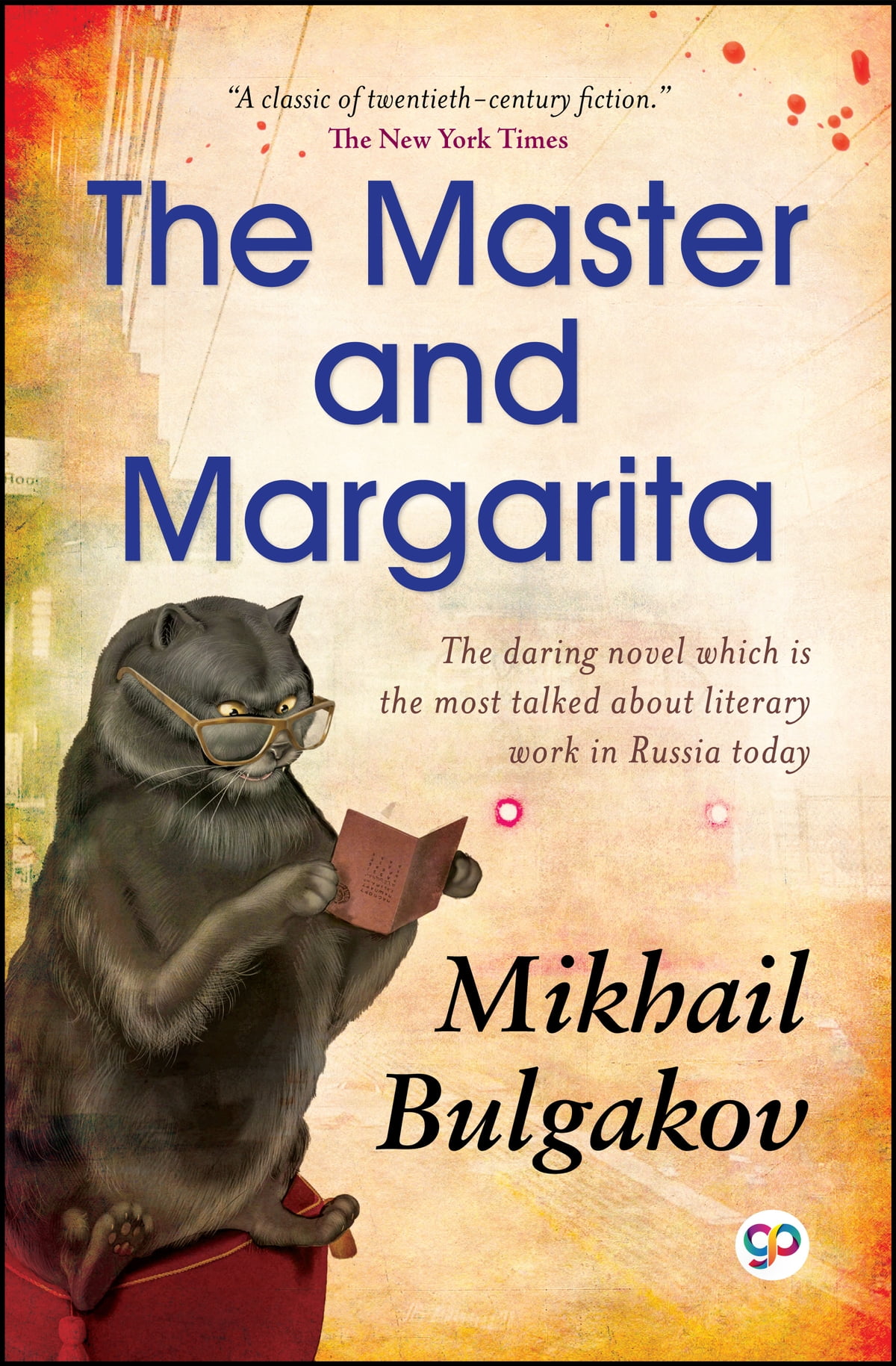
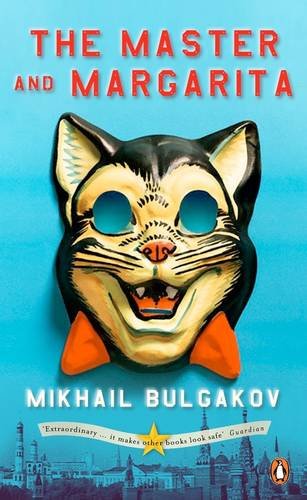
I’m grateful to Reading the Meow for finally getting me to pick up The Master and Margarita by Mikhail Bulgakov (finished in 1940, published in 1966) which is part of my Le Monde’s 100 Books of the Century Reading Challenge and has been languishing in my TBR for years. Although not ostensibly a book about cats, one does feature prominently as these various edition covers will attest:

The reason it had lain unread for so long was because I’m (aptly) a big scaredy-cat. I was really intimidated by this classic of twentieth-century fiction and I thought it would be far too complex and clever for me to understand. Which as it turned out, was broadly correct. I’m sure I didn’t pick up all the allusions and references, even with the notes in the back of my edition to help me (Alma Classics, trans. Hugh Aplin 2020 – I definitely recommend this edition and translation).  However, I still found it very readable and a lot to enjoy, especially regarding Behemoth, the character that meant I was reading it this week particularly.

The Devil arrives in 1930s Moscow as a Professor Woland, along with his entourage: red headed, bizarrely dressed Korovyev; sinister vampiric Azazello; beautiful Hella; and Behemoth, an enormous cat that walks on his hindlegs, talks, drinks vodka and plays chess.

The proceed to wreak havoc for three days in a series of carnivalesque scenes, using the greed and corruption of people against them.  It’s absolute chaos and carnage, but brilliantly Bulgakov shows that the devil doesn’t have to push very hard for all this to occur.

At the start of the novel, Woland predicts the shocking and absurd death of Berlioz, head of Massolit, a literary organisation. Once people hear of his death, this description of a barrage of statements in order to get Berlioz’s apartment is a good example of how Bulgakov balances social realism, satire, the comic and the desperate throughout:

“In them were included entreaties, threats, slanders, denunciations, promises to carry out refurbishment at people’s own expense, references to unbearably crowded conditions and the impossibility of living in the same apartment as villains. Among other things, there was a description, stunning in its artistic power, of the theft of some ravioli, which had been stuffed directly into a jacket pocket, in apartment No.31, two vows to commit suicide and one confession to a secret pregnancy.”

Meanwhile, Margarita, beautiful and unhappily married, is distressed because her lover, The Master, has committed himself to an institution and renounced his writing.

This is interspersed with the story of Pontius Pilate and Yeshua (Jesus), with the two stories echoing one another, and it emerges that this was the novel The Master was writing.

It is through the titular characters that Bulgakov prevents his satire becoming too bitter and alienating. Their devotion to each other and Margarita’s belief in The Master’s work is truly touching.

I don’t really want to say too much more as The Master and Margarita is such a complex, riotous piece of work that I think the more I try and pin it down the more I’ll tie myself in knots! It tackles the biggest of big themes; religion, state oppression, the role of art, love, faith, good and evil, how to live… It is a deeply serious work that isn’t afraid to be comical too.

But as this post is prompted by Behemoth, here is my favourite scene with him, getting ready for Satan’s Grand Ball on Good Friday and trying to distract from the fact that he is losing at chess:

“Standing on his hind legs and covered in dust, the cat was meanwhile bowing in greeting before Margarita. Around the cat’s neck there was now a white dress tie, done up in a bow, and on his chest a ladies mother-of-pearl opera glass on a strap. In addition, the cat’s whiskers were gilt.

‘Now what’s all this?’ exclaimed Woland. ‘Why have you gilded your whiskers? And why the devil do you need a tie if you’ve got no trousers on?’

‘A cat isn’t meant to wear trousers, Messire,’ replied the cat with great dignity. ‘Perhaps you’ll require me to don boots as well? Only in fairy tales is there a puss in boots, Messire. But have you ever seen anyone at a ball without a tie? I don’t intend to find myself in a comical situation and risk being thrown out on my ear! Everyone adorns himself in whatever way he can. Consider what has been said to apply to the opera glasses too, Messire!’

‘But the whiskers?’

‘I don’t understand why,’ retorted the cat drily, ‘When shaving today Azazello and Korovyev could sprinkle themselves with white powder – and in what way it’s better than the gold? I’ve powdered my whiskers, that’s all!’

[…]

‘Oh, the rogue, the rogue,’ said Woland shaking his head, ‘every time he’s in a hopeless position in the game he starts talking to distract you, like the very worst charlatan on the bridge. Sit down immediately and stop this verbal diarrhoea.’

‘I will sit down,’ replied the cat sitting down, ‘but I must object with regards your final point. My speeches are by no means diarrhoea, and you’re so good as to express yourself in the presence of a lady, but a series of soundly packaged syllogisms which would be appreciated on their merits by such connoisseurs as Sextus Empiricus, Martianus Capella even, who knows, Aristotle himself.’

‘The kings in check,’ said Woland.

‘As you will, as you will,’ responded the cat, and began looking at the board through the opera glass.”

I think overall I probably admire The Master and Margarita more than love it, and I enjoyed Bulgakov’s A Country Doctor’s Notebook more. But there is so much in this extraordinary, unique novel that will stay with me, and I’m sure it will reward repeat readings too.

To end, I tried to get my two moggies to pose with the book. With typical cattitude, they flatly refused 😀  So it’s back to 80s pop videos:

Novella a Day in May 2023 – No.30

Four Soldiers – Hubert Mingarelli (2003 transl. Sam Taylor 2018) 155 pages

I really loved Hubert Mingarelli’s A Meal in Winter when I read it six years ago and so I was overjoyed to find a copy of Four Soldiers in my beloved local charity bookshop. This had a lot in common with its predecessor, being a sparse tale of servicemen which focussed on their humanity rather than their role in conflict. But it was resolutely its own tale too.

The four soldiers are friends thrown together by circumstance during the Russian Civil War in 1919. Resourceful, skilled Pavel, naïve gentle giant Kyabine, quiet, thoughtful Sifra and the narrator Benia. They keep each other company during the tedium of waiting for orders, close to the Romanian border:

“Because we didn’t know where we would be tomorrow. We had come out of the forest, the winter was over, but we didn’t know how much time we would stay here, nor where we would have to go next. The war wasn’t over, but as usual we didn’t know anything about the army’s operations. It was better not to think about it. We could already count ourselves lucky to have found this pond.”

What is so striking about the soldiers is how terribly young they are. We are never told their ages, but their behaviour, their lack of experience, their superstitions – all emphasise that they are little more than children caught up in something far beyond their control, for which they may have to pay the highest price.

Their concerns are ordinary, not political or idealistic. They play dice; they swim; they smoke; Pavel has nightmares; they take turns to sleep with a watch that contains a picture of a woman that they think brings them luck.

Mingarelli doesn’t seek to explain how they ended up there or what they hope for beyond it. By focussing on the present he is able to convey how caught they are by circumstance, how hope lingers but is unexpressed.  

“Barely had we finished drinking that tea before we became nostalgic for it. But, all the same, it was better than no tea at all.”

The simplicity of the plot, imagery and prose is so finely balanced. Mingarelli conveys a vital story that needs no adornment while at the same time driving home its importance and universality.

“I advanced. But I did so evermore sadly. The sadness was stronger than me. It was because of the smell of potatoes slung over my shoulder. It didn’t evoke anything precise, that smell. Not one specific event, in any case. What it evoked was just a distant time.”

Four Soldiers isn’t remotely sentimental or sensationalist, and it’s the ordinariness it depicts that makes it so devastating, and humane.

“The silence and the darkness covered us.

Then suddenly, almost in a whisper: ‘I wrote at the end that we had a good day.’

It was very strange and sweet to hear him say that, because, my God, it was true, wasn’t it? It had been a good day.”

Susan at A Life in Books, a great champion of novellas whose reviews are a significant contributor to my ever-spiralling TBR, has written about Four Soldiers here.

Novella a Day in May 2023 – No.29

The Murderess – Alexandros Papadiamantis (1903, trans. Peter Levy 1983) 127 pages

Trigger warning: mentions infanticide

I’ve long been interested in how witches are portrayed. It’s seems so often bound up with women on the edge of (patriarchal) society – single, childless, conventionally unattractive, isolated; perhaps with the suggestion of healing knowledge that threatens male medical practitioners. It’s something brilliantly sent up in the Blackadder II episode Bells where Blackadder gives up on his doctor who prescribes courses of leeches for everything, and instead visits the wilds of Putney (!) to consult the wise woman:

In The Murderess, Alexandros Papadiamantis draws on some of these stock characteristics and makes his protagonist an older woman, a mother who is also a healer, whose actions cause her to become a murderer living in wild environments. Like many ghouls, she has several names: Hadoula, Jannis Frankissa, Frankojannou.

“She provided herbs, she made ointments, she gave massages, she cured the evil eye, she put together medicine for the sick, for anaemic girls, for pregnant women and women after childbirth and for those with women’s diseases.”

At the start of the novella she is completely sleep-deprived, helping her daughter care for her sickly newborn:

“For many nights Frankojannou had permitted herself no sleep. She had willed her sore eyes open, while she kept vigil beside this little creature who had no idea what trouble she was giving, or what torture she must undergo in her turn, if she survived.”

Papadiamantis takes us back and forth in time to show the oppression of a patriarchal society. Female babies mean dowries to be found, and once married, hard lives keeping homes and raising children, often with little or no support from male spouses.

Something inside Hadoula snaps, and she kills her granddaughter, unable to contend with the life the child will have ahead of her:

“Frankojannou’s brain really had begun to smoke. She had gone out of her mind in the end. It was the consequence of her proceeding to higher matters. She leant over the cradle.”

This is the start of her killing the young female babies and children of the island. It is set on Papadiamantis’ home island of Skiathos, its beauty contrasting with the horrors:

“Below her the river cut deep through the Acheilas ravine, and its stream filled all the deep valley with soft murmurs. In appearance it was motionless and lakelike, but in reality perpetually in motion under the tall and long-tressed planes. Among mosses and bushes and ferns it prattled secretly, kissed the trunks of trees, creeping like a serpent along the length of the valley, green-coloured from leafy reflections, kissing and biting at once the rocks and the roots, a murmuring, limpid stream, full of little crabs which ran to hide in piles of sand, while a shepherd, letting little lambs graze on the dewy greenery, came to lean down over the water.”

The Murderess is carefully balanced: it doesn’t condone Hadoula but nor does it make her a monster. She is a desperate woman driven by the life she has led and the oppression she foresees for women in her society, to undertake the most monstrous of acts.

Papadiamantis makes it clear she has lost her sanity (although she continues to act by her own rationality), and also that she has guilt and regret, but also never remotely excuses or justifies what she does.

The story has a fabulist element but without detracting from Hadoula’s murders. I felt the author was drawing on centuries of storytelling to reframe the witches of folklore and ask what it was in societies that had brought them to that role in the first place?

“But mostly she was gathering herbs to forget the grief which tormented her.”

A challenging and haunting tale.

Novella a Day in May 2023 – No.28

La Bastarda – Trifonia Melibea Obono (2016 trans. Lawrence Schimel 2018) 88 pages

My Around the World in 80 Books reading challenge is getting more difficult – but definitely possible – the closer I get to finishing, because I decided I’d only count books written by a person from that country, rather than just set there. This means I’m dependent on what is available in translation. So I was excited to come across La Bastarda, written by an author from Equatorial Guinea, and grateful to The Feminist Press for publishing it.

I didn’t realise until I’d finished it and googled further, that it’s a famous novella, banned in Equatorial Guinea and with its own Wikipedia page. It’s a wonderful read, so evocative and with a clear and compelling narrative voice. (The English translation also has a really interesting afterword by the historian Abosede George.)

The story is told by Okomo, who lives with her grandparents in a village close to the border with Gabon. The family is polygamous which makes the home crowded and busy, but she is isolated due to the circumstances of her birth:

“My mother got pregnant when she was nineteen and died while giving birth, her death brought about by witchcraft. From that moment I was declared a bastarda – a bastard daughter. I had been born before my father paid dowry in exchange for my mother. That’s why society looked at me with contempt and people called me ‘the daughter of an unmarried Fang woman’ or ‘the daughter of no man’.”

As an older teenager she is beginning to question the life mapped out for her and what she wants. She is keen to locate her father but this is absolutely forbidden by her grandfather Osá who lectures her on the history of the Fang people and her responsibilities:

“[My grandmother] told me to ask Osá if there were any women in our tribe since he had failed to mention any in his collection of heroes, but I didn’t obey.”

Okomo isn’t interested in her appearance or in marrying a man, running a home and having children, all of which are expected of her. She knows she may have an ally in her mother’s brother, the only person who has ever shown her any affection. But he is somewhat ostracised too:

“Uncle Marcelo was an isolated man who lived outside of society because he was a fam e mina or a ‘man-woman’ the men of the tribe accused him of this both in public and in private.”

While Okomo is trying to work all this out, she is drawn into the sphere of three older girls, and discovers her sexuality. She falls in love with Dina, who reciprocates her feelings. But in a small village, where same-sex relationships are taboo, theirs is a love with great risk attached to it.

La Bastarda is a tense narrative where the dangers for the girls and for Marcelo are made very clear. But it is also a story of first love, coming of age, self-discovery and the nurturing of chosen families. It addresses huge issues in such a short space without ever losing sight of the individual characters. A finely balanced story of defiance and resilience.

Novella a Day in May 2023 – No.25

Ms Ice Sandwich – Mieko Kawakami (2013 trans. Louise Heal Kawai 2017) 92 pages

A nine-year old boy tells the story of a short period of time where he has a crush on the young woman who works at the sandwich shop in the local shopping centre. He never speaks to her but lines up to stare at her and buy a sandwich.

“‘Ms Ice Sandwich’ is a name I made-up, of course. I thought of it minute I first saw her. Ms Ice Sandwich’s eyelids are always painted with a thick layer of a kind of electric blue, exactly the same colour as those hard ice lollies that have been sitting in our freezer since last summer. There’s one more awesome thing about her – if you watch when she looks down, there’s a sharp dark line above her eyes, as if when she closed her eyes, someone started to draw on two extra eyes with a felt-tip pen but stopped halfway. It’s the coolest thing.”

The story could so easily be creepy or at least unnerving but it really isn’t. He’s young, quite lonely, and navigating that period of older childhood as friends change and he tries to work out who he is. His mother is distracted, his elderly grandmother is extremely frail, and his father has died.

Child narrators are so difficult to get right, but I really thought Kawakami pulled it off. The boy uses the striking imagery that children sometimes access “Bicycles are lined up like mechanical goats.” without it feeling too knowing for someone of his age. I thought this was done especially well when he is trying to describe his feelings for Ms Ice Sandwich:

“Like when you’re holding a cat and you touch it soft belly. Or sticking your finger in a jar of jam and stirring, then slowly sinking in all the rest of your fingers. Or licking the sweet condensed milk at the bottom of your bowl of strawberries. Or when a blanket brushes the top of your feet. Or when butter turns transparent when it melts over your pancakes. As I stand gazing at Ms Ice Sandwich, all of these things are happening to me, one on top of the other, right there.”

The boy doesn’t try to build a relationship with Ms Ice Sandwich and I think it would have lessened the story if he did. Instead we see his gently burgeoning friendship with classmate Tutti, who is also bereaved for a parent, and some very touching scenes between him and his grandma, so delicately realised.

“The little bit of golden sun that shines through the shoji screens on the window lights up the white areas of Grandma’s quilt, making a faint shadow of leaves, and each time the wind blows outside, the shadow pattern of leaves shakes a little bit. I go over to Grandma and I hold my breath for a moment. The room goes very quiet.”

Ms Ice Sandwich captures a particular time in a young boy’s life with sensitivity and compassion. By capturing ordinary moments between people so precisely it demonstrates something universal that carries far beyond childhood.

Novella a Day in May 2023 – No.23

Marie – Madeleine Bourdouxhe (1943 trans. Faith Evans 1997) 141 pages

The striking cover of Marie and the fact that it is published by Daunt Books was enough to convince me to pick up this novella, and I’m so glad I did. I’m not familiar with Belgian writer Madeleine Bourdouxhe’s work but the afterword explained she was a friend of Simone de Beauvoir and Victor Serge, among others, and she was part of the resistance during the war, so I’m glad to have finally discovered her.

Marie was published in 1943 and details the sexual awakening of a young married housewife (the original title was A La Recherche de Marie, maybe it was felt Anglophone readers wouldn’t get the reference to Proust?) It has an elegiac tone at times – not only for Marie but for everyone she encounters and for the city of Paris – and I felt the spectre of war was certainly present.

It begins with Marie and her husband Jean on holiday in the south of France, away from their Parisian home:

“It wasn’t as hot as earlier on, but as the afternoon came to an end, everything remained steeped in torpor, retaining the heat of the whole day. There is something ineffable around Marie that was making her happy. Jean was next to her, serving her coffee, giving her a cigarette: and intimate little scene, on the balcony of a hotel, overlooking the sea.”

Marie seems very devoted to her husband, but the authorial voice – which shifts between tenses –  suggests he not entirely worthy:

“There was definitely strength in his character – or rather, there were bouts of strength. Jean had a way of claiming his due, or more than his due: a somewhat egotistical way of deciding, of drinking, of eating, of sitting, of occupying his place.”

During this holiday Marie finds herself strongly sexually attracted to a man around ten years younger than her. Their affair continues beyond the holiday season and Bourdouxhe is wonderful at minutely analysing unspoken moments between people:

“They mutually accept this great silence, and the richness, the sincerity that lies within it. They also know that in that moment they are seeing everything from the same point of view and that, for both of them, that red sail on the sea stands out as clearly, as harshly, as cruelly, as the thing that is deep inside them.”

There is a lot to this seemingly straightforward tale. The lover remains nameless and none of the characters are as fully drawn as Marie. She is absolutely Bourdouxhe’s focus, through which she explores the roles of women, sexuality, agency, choice.

The war also creates a sense of foreboding for everyone the story touches. Having googled, I know the town that Marie and Jean find themselves in at one point was 90% destroyed in 1940.

Marie is a woman with a rich inner life and a sensual response to her surroundings. As she starts to externalise some of this, Bourdouxhe shows how unknown people can be even to those closest to them, the pressure of societal forces for women, and the challenge in making an inner and outer life congruous with one another.

Marie is a powerful novella and I’m looking forward to exploring this author further.

“She weeps the strange, bitter tears of an exhausted woman who is gradually letting herself be worn out by a symbol.”

Novella a Day in May 2023 – No.20

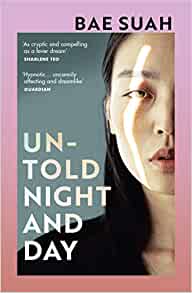
Untold Night and Day – Bae Suah (2013 trans. Deborah Smith 2020) 152 pages

When I see writing described as dreamlike, I often think of highly metaphorical language, perhaps with a heavy emphasis on sensory experience, and with an unreal quality. Untold Night and Day is definitely dreamlike, but not quite in the ways I’ve described.

It initially seems very much grounded in everyday experiences. Where it becomes dreamlike is that it follows its own logic, jumping about with recurring motifs, in a way that makes sense within itself but becomes more disconcerting the more you consider it.

“A man carrying a kitten in a birdcage pressed himself against the opposite wall of the alley to avoid her car. He was a preacher, a well-known figure in this alley; he went around surreptitiously stuffing pieces of paper bearing Bible verses into people’s pockets, so he’d been mistaken for a pickpocket and arrested more than once. While she waited for the lights to change at the end of the alley, the woman driving the green car took her hand off the wheel and raised a bottle of water to her lips. Still with the phone to her ear. Against the regular growl of the engine, the hum of the air conditioning.”

These images and characters recur throughout the novella, each time with their context slightly shifted. There are other repeated motifs, including to The Blind Owl, a deeply disturbing novella which I read back in 2019. The shifting repetitions unsettle the story but also ground it in its own world.

Ayami is a former actor who works at an audio theatre. We join her at the end of her last shift, in the oppressive heat of Seoul, where through the night she and her boss search for their missing friend Yeoni. The following day, she shows round a German writer who never wanted to be in Korea in the first place.

The two times echo each other and almost merge, but whenever the narrative almost seems on the verge of entirely disintegrating, it holds on to that interior logic and somehow pulls you along, trying to work out what is happening and where Yeoni could be.

“That was the secret of night and day existing simultaneously. Ayami discovered this through a single movement, bending down to pick up the pebble. And, remembering this simultaneous existence more vividly than she remembered herself, became unable to remember anything else.”

I realise this may be an entirely unhelpful review as I’ve not really said very much! But hopefully I’ve given a sense of why this novella is hard to describe and hard to review. I enjoyed it, but definitely not one to read when you’re in the mood for a linear plot and all questions answered at the end…

“I have to record whatever comes into my head in the same place it happens. Things occur to me as images, and as forms, not as words arranged into sentences. The images quickly dissipate after the moment’s passed, and once that happens there’s no way for me to capture them in language.”

Novella a Day in May 2023 – No.17

Count d’Orgel’s Ball – Raymond Radiguet (1924, trans. 1989 Annapaola Cancogni) 160 pages

Raymond Radiguet was only twenty when he died, having published two novels, of which Count d’Orgel’s Ball was the second, some poetry and a play. He had led a life that brought him into contact with the foremost artists of the day, including Picasso and his lover Jean Cocteau, who wrote the foreword to the NYRB Classics edition I read.

This made me a bit trepidatious in approaching this novella, wondering if it was a piece of juvenilia that wouldn’t have otherwise garnered much attention. But I shouldn’t be so ageist, because I really found a lot to enjoy in Count d’Orgel’s Ball.

It tells the story of a love triangle amongst the beautiful and privileged in the 1920s. Mahaut is from an old family, and desperate for love when she marries young:

“She recovered some of the freshness of her early childhood when, at eighteen, she married Count Anne d’Orgel, one of our country’s best names. She fell madly in love with her husband who, in return showed her much gratitude and the warmest friendship, which he himself took for love.”

She adores her sociable and brilliant husband, who is fairly harmless but entirely vacuous:

“Nobody knew the reason for his prestige or, at least, for his brilliant reputation. His name had little to do with it since talent comes first even amongst those who worship names.”

Into their world comes François de Séryeuse, a young man not entirely enthralled by the Count’s charm and prestige. This works in his favour and the three spend more and more time together.

“He [the Count] adopted people more than he made friends with them. In return, he demanded a lot. He wanted to lead the way, to be in control.”

The Count doesn’t sustain control though, as François and Mahaut fall in love. For me this was the weakest point of the novella. Radiguet is excellent at observing people and social situations; he is incisive regarding pretention and social mores. Where the story falters for me is in creating fully rounded characters and the emotional ties between them. But perhaps I’m being unfair, as Radiguet is describing a world filled with shallow and/or naïve people. He doesn’t view them as having great emotional depth:

“It would be safe to say that François’ ideas on love were ready made. But since he had made them himself, he believed they were cut to size. He did not realise he had cut them out of limp feelings.”

The writing style is fluid and often scathing. It’s so readable and entirely unflinching in its view of a particular part of society at a particular time.

I thought there were a few rough edges at points in Count D’Orgel’s Ball; a tendency to tell rather than show, and characters as vehicles for social satire rather than fully recognisable people. But these are little quibbles and having written this novella at nineteen, I can only wonder what Radiguet would have achieved had he lived longer.

“Happiness is like good health: one is not aware of it.”

Novella a Day in May 2023 – No.14

Moonstone: the boy who never was – Sjón (2013 trans. Vicotoria Cribb 2016) 144 pages

I really loved Sjón’s novella The Blue Fox when I read it back in 2016, and since then I’ve failed to pick up anything by him at all. Moonstone was good choice for a return as I found this novella lyrical and involving.  

(I should warn anyone picking up this novella that it opens with a very explicit scene, and given that one of the characters is referred to as ‘the boy’ I thought I’d been plunged straight into the details of a sexual assault. Thankfully that was not the case.)

Máni Steinn Karlsson is living in Iceland in 1918, a time of profound change. The Katla volcano erupts:

The volcano is painting the night sky every shade of red, from scarlet through violet to crimson, before exploding the canvas with flares of bonfire yellow and gaseous blue.

The influenza epidemic takes hold:

“The young people glance around, and only now does it dawn on them how many members of the audience have been taken ill: every other face is chalk-white; lips are blue, foreheads glazed with sweat, nostrils red, eyes sunken and wet. Silence falls on the gathering.”

and Iceland votes to be independent from Denmark.

Máni is an outsider, raised by a foster mother, isolated at school and gay at a time when this was illegal in Iceland. He escapes to the cinema, and through this new medium become fixated with Sóla G, a young girl around his own age:

“It was when the girl stood up to leave that it happened. The instant her shadow fell on the screen they merged – she and the character in the film. She looked around and the beam of light projected Musidora’s features onto her own.

The boy froze in his seat. They were identical.”

As Máni carries on with his life through these extraordinary circumstances, he is brought closer to Sóla G and to the dangers of living in ways that society deems unacceptable, the least of which is his love of cinema.

Sjón’s writing is crystal clear and beautifully evocative. He balances reality and fantasy with delicate precision, each blending into the other, without ever losing his characters or the impact of his story. [Slight spoiler in the next sentence, please skip if you prefer!] The metaphysical ending may not be to everyone’s taste but I thought it worked perfectly and found it truly moving.

“He’d had no inkling that when the pestilence took hold Reykjavík would empty and convey the impression that nothing was happening at all; that the town would become an abandoned set that he Máni Steinn could envisage as the backdrop for whatever sensational plot he cared to devise, or, more accurately, for the kind of sinister events that in a film would be staged in this sort of village of the damned – for these days the real stories of being acted out behind closed doors. And they are darker than a youthful mind can begin to imagine.”