The 1970 Club is running all week hosted by Karen at Kaggsy’s Bookish Ramblings and Simon at Stuck in a Book. The Club weeks are always great fun, so do check out the posts!

Whenever the club weeks are announced I always go straight to the TBR to see what I’ve got available. 1970 didn’t yield as many fruits as 1937 Club back in April, but it did offer four choices. Unfortunately I don’t think 1970 is my year as far as my TBR pile goes…two DNFs and a third I wish I had DNF’d rather than ploughed through. Thankfully the fourth I found to be excellent!
Daddy Was a Number Runner was the first novel by Louise Meriwether and widely acknowledged to be bona fide classic in its evocation of 1930s Harlem, through the eyes of a twelve-year-old girl, Francie Coffin. In the Foreword, James Baldwin writes:
“she has so truthfully conveyed what the world looks like from a black girl’s point of view, she has told everyone who can read or feel what it means to be a black man or woman in this country. She has achieved an assessment, in a deliberately minor key, of a major tragedy.”
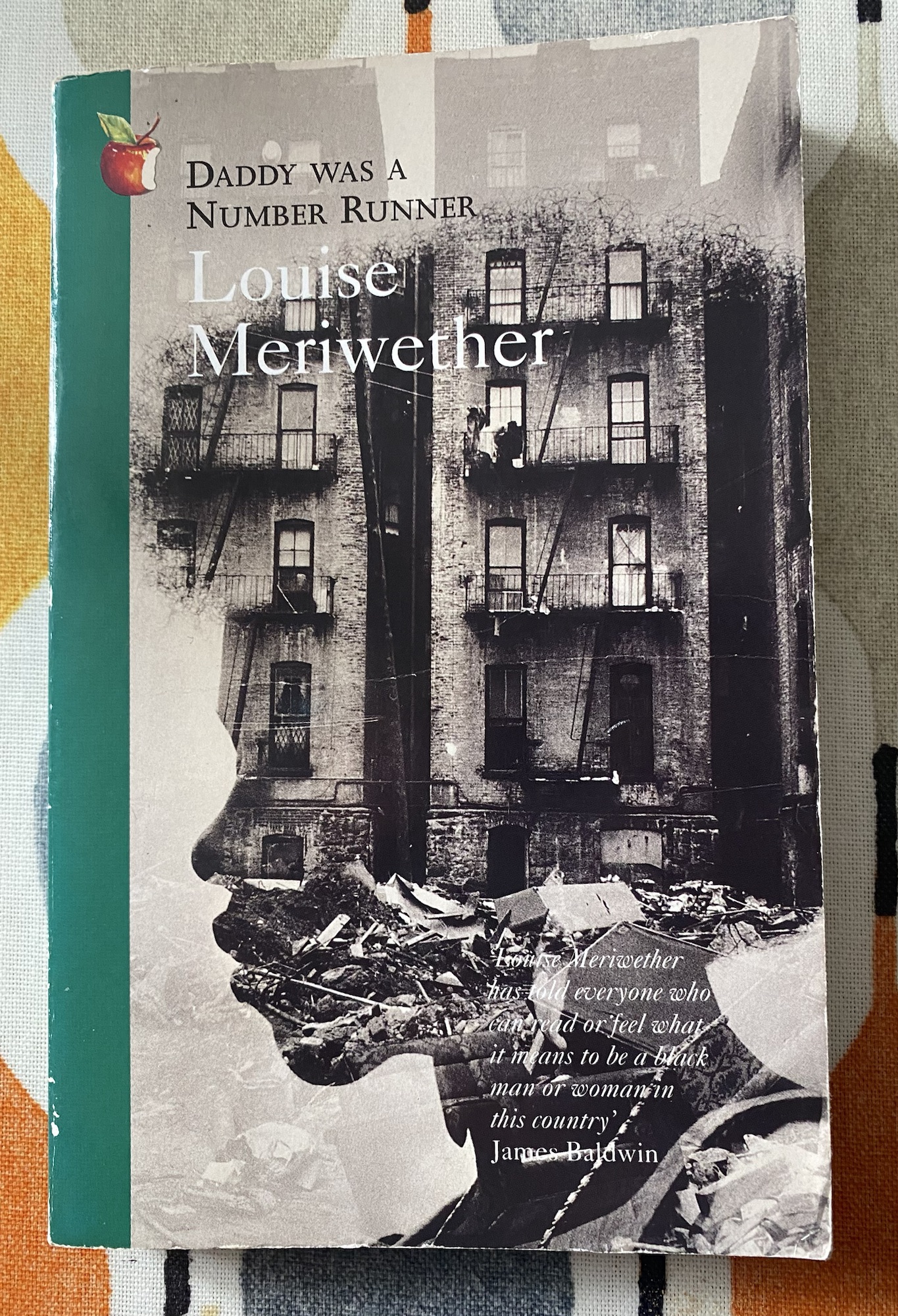
From the opening lines as Francie helps her father with his titular illegal lottery, her voice is so direct and distinctive. As she runs home to try and get to school on time, we are thrust into a hot summer’s day in Harlem.
“The air outside wasn’t much better. It was a hot, stifling day, June 2, 1934. The curbs were lined with garbage cans overflowing into the gutters, and a droopy horse pulling a vegetable wagon down the avenue had just deposited a steaming pile of manure in the middle of the street.
The sudden heat had emptied the tenements. Kids too young for school played on the sidewalks while their mamas leaned out of their windows searching for a cool breeze or sat for a moment on the fire escapes.”
Francie’s family are incredibly poor, and running the numbers brings some money in. If lotteries are a tax on hope, Harlem is full of hope. It’s also full of bed bugs, rats and roaches. Poor Francie is eaten alive every night and has to go armed into her favourite pastime:
“I was sitting at the dining room table reading a library book, armed with my usual supply of weapons. Tonight I had a hammer, a screwdriver, and two hairbrushes. When I heard a noise I threw the hammer toward the kitchen and the rats scurried back into their holes. When I got down to my last piece of ammunition I would give the dining room up to the rats and go on to bed.”
Reading and schooling are seen as a way out of the ghetto. Francie’s older brother Sterling is bright and just about staying in school. Her other brother, James Junior, found school hard and, much to the worry of his loving parents, he is running with the local gang:
“He wasn’t mean enough to be an Ebony Earl nohow. How could he ever mug anybody, good-natured and nice as he was. Why, when he smiled his whole face laughed. He wasn’t like old Sterling who didn’t like anybody and whose narrow, old man’s face was full of dark, secret shadows.”
Francie’s parents are loving and kind, and how they hold onto those traits against the relentless grind of poverty is a miracle.
“[Mother] was always either soaking clothes or scrubbing them or hanging them out on the line. With all of that activity we should have been super clean but somehow we weren’t.”
“Daddy played by ear and could swing any piece after he heard it only once.”
Francie’s father is proud and doesn’t want to accept state relief or for his wife to work. But eventually he has to give in on both counts:
“They don’t give you enough money to live on so you have to bootleg some kind of work, then they deduct that from your relief check, too. I wonder how they expect you to live. Didn’t I tell you I didn’t want to mess with those people?” But for once he didn’t shout, seeming to be more tired than angry.”
The structural racism faced by Francie, her family, and everyone she knows is brilliantly evoked. Meriwether displays it through various characters, and there is an enormous tragedy looming for several families. The fallout on children is vivid, through Francie but also her peers. Her best friend Sukie is always filled with fury, which young Francie fails to see is due – at least in part – to Sukie’s father seeking release in alcohol and her sweet sister China Doll working for a violent pimp who beats her in front of onlookers.
Meriwether also articulates issues directly to the reader in her portrayals of, or references to, real life characters who Francie encounters, such as Reverend Adam Clayton Powell, Father Divine, Marcus Garvey, and the Scottsboro case.
There is so much hardship in Daddy Was a Number Runner, and outside of the home Francie has to navigate violence and sexual attention from many that grows into assaults. There’s also a horrible scene with a cat. What stops the novel being unremittingly bleak is her loving parents; her love of books; and Francie’s resilient, honest, humorous, indignant voice.
“I walked to 110th St and looked across Central Park at the lights twinkling in the skyscrapers. That was another world, too, all those lights way over there and this spooky park standing between us. But what good would those lights do me anyway?”
 madame bibi lophile recommends