“We cannot know from whose mouths the echoes of our lives will chime.” (Doireann Ní Ghríofa, A Ghost in the Throat)

I felt quite intimidated approaching A Ghost in the Throat by Doireann Ní Ghríofa (2020) for Cathy’s Reading Ireland Month. A piece of auto-fiction woven around a 18th century Irish-language lament, it sounded quite a challenge. Well, I picked it up and absolutely whizzed through it, finding it so compelling and intensely readable.

“When we first met, I was a child, and she had been dead for centuries.”

At the start of the book, Doireann Ní Ghríofa has three small children and is in the relentless, hazy, exhausting world of trying to keep a home for her family. She captures brilliantly the physical and emotional demands – particularly on women and on women’s bodies – of parenting. I’ve never had children and her visceral (but not shocking or gratuitous) portrait felt very real and immersive.

She loves motherhood and she finds pleasures in the domestic day to day, despite the pressures and demands of both:

“I coax many small joys from my world: clean sheets snapping on the line, laughing myself breathless in the arms of my husband, a garden slide bought for a song from the classifieds, a picnic on the beach, three small heads of hair washed to a shine, shopping list after  completed shopping list – tick tick tick – all my miniscule victories.”

But we are in no doubt that Ní Ghríofa’s life is not easy. She needs support, female support, and she finds it with eighteenth-century poet Eibhlín Dubh Ní Chonaill and her lament for husband – Caoineadh Airt Uí Laoghaire (The Keen for Art Ó Laoghaire) – who was killed by the British.

As Doireann Ní Ghríofa reads and re-reads the poem she has loved since childhood, she despairs at the limited translations and lack of information about the author:

How swiftly the academic gaze places her in a masculine shadow.”

As an Irish-language poet herself, Ní Ghríofa has translated her own poems and so she begins to translate the lament. It becomes something of an obsession, or at least a preoccupation, haunting her sleep-deprived life:

“between the twin forces of milk and text, weeks that soon pour into months, and then into years.”

She also juggles the demands of her own writing:

“I watched poems hurrying towards me through the dark. The city had lit something in me, something that pulsed, vulnerable as a fontanelle, something that trembled, as I did, between bliss and exhaustion.”

Ní Ghríofa brilliantly weaves in aspects of the lament alongside her own life. We learn of the difficulties she experienced in the past, as well as the challenges of her life now. There is a repeated refrain “this is a female text” as she explores how women’s lives have been obscured and disregarded throughout the centuries, and particularly women’s narratives:

“literature composed by women was not stored in books but in female bodies, living repositories of poetry and song.”

One of my favourite examples was this one:

“A family calendar scrawled with biro and pencil marks, each in the same hand – this is a female text.”

Ní Ghríofa writes about her family while keeping them obscured, respecting their privacy. This echoes her attempts to piece together Eibhlín Dubh Ní Chonaill’s life, existing as it did in spaces between the records of the men in her family. Eibhlín Dubh Ní Chonaill remains obscure and Ní Ghríofa has to use her imagination to fill in the considerable gaps.

Another echo is that Ní Ghríofa clearly adores her husband and children, and at one point rues the fact that she can’t write poetry for her husband the way Eibhlín Dubh Ní Chonaill does for hers. But actually I thought these very simply expressed sentences were a lovely tribute to him:

“With him, at last, I began to laugh. He entered my life with neither fanfare nor glamour. There was no elopement. He simply fell into step by my side, with his easy smile, his old t-shirts, his worn jeans, and his steady footfall.”

Although time is never specified, there is a sense of Ní Ghríofa’s family growing older and her work on the translation nearing an end, despite the frustrations:

“Such dedication, if nothing else, has permitted me to grow in slow intimacy with the poet herself, to discover the particular swerve of her thoughts and the pulse of her language.”

The translation is given at the end of the book.

I thought A Ghost in the Throat was incredibly accomplished. It manages to simultaneously convey the horrors witnessed by Eibhlín Dubh Ní Chonaill for English-speaking readers; the challenges of twenty-first century motherhood and female artistry; and the broader themes of women’s voices, lives and creativity being marginalised, with such a light touch. The writing is poetic but never overwritten and Ní Ghríofa’s voice so warm, honest and engaging.

“I have held her and held her, only to find that she holds me too, close as ink on paper and steady as a pulse.”

To end, the author reading from her work while sat in her car:

“Words burst forth, recognised at last, while underneath other silences start to form.” (Annie Ernaux, The Years)

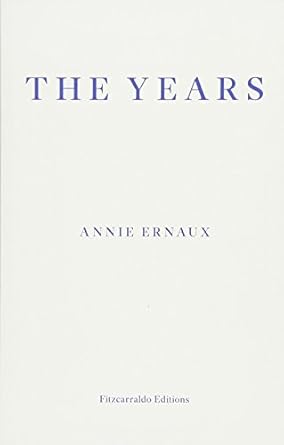
#ReadIndies is running all month hosted by Kaggsy and Lizzy and it has meant I’ve finally got to a book that I’ve been meaning to read for ages: The Years by Annie Ernaux (2008, transl. Alison L. Strayer 2018) published by Fitzcarraldo Editions.

A further incentive was that I really want to see the theatre adaptation which is currently running, and now I’ve read the book I have bought my ticket 😊

The Years is a book which deliberately avoids categorisation. Told in chronological order from 1941 to 2006 but in a fragmentary style, it is a memoir/autobiography/autofiction where Ernaux never uses the first person. She refers to ‘she’ for the more personal memories triggered by photographic images, and ‘we’ for considerations of the society and cultural influences experienced by ‘she’ at the time.

Growing up, she is aware of the poverty of her family, and dreams of escape. Ernaux captures so well the confusion of trying to find an authentic escape, trying to determine what she truly wants, alongside what advertising tells her she wants:

“Meanwhile, as we waited to be old enough to wear Rouge Baiser lipstick and perfume by Bourjois with a j as in joy, we collected plastic animals hidden in bags of coffee, and from Menier chocolate wrappers, Fables of La Fontaine stamps that we swapped with friends at break time.”

“It seems to her that education is more than just a way to escape poverty. It is a weapon of choice against stagnation in a kind of feminine condition that arouses her pity, the tendency to lose oneself in a man.”

There are strong feminist themes running throughout The Years, as she grows up on the brink of societal change. At the start:

“Nothing, not intelligence, education, or beauty mattered as much as a girl’s sexual reputation, that is, her value on the marriage market, which mothers scrupulously monitored as their mothers had done before them.”

Yet the 1960s are on their way… Ernaux pulls no punches in detailing the tyranny of menstrual cycles, and of “kitchen table abortions” before the contraceptive pill arrives and pregnancy terminations are legalised.

“Between the freedom of Bardot, the taunting of boys who claimed that virginity was bad for the health, and the dictates of Church and parents, we were left with no choices at all.”

The Years is lightened by humour too, such as this wry observation regarding her young feminist:

“Two future goals coexist inside her: (1) to be thin and blonde, (2) to be free, autonomous, and useful to the world. She dreams of herself as Mylène Demongeot and Simone de Beauvoir.”

The Years is a powerful evocation of a woman’s life at a specific time. Ernaux demonstrates so clearly how lives are bound up with the culture and the wider political forces in which they take place. It is impossible to consider the life in The Years without considering France in the same period. Yet this is an observation which occurs as she looks back, not at the time:

“Between what happens in the world and what happens to her, there is no point of convergence. They are two parallel series: one abstract, all information no sooner received them forgotten, the other all static shots.”

But as she grows older:

“What is most changed in her is the perception of time and her own location within it.”

And yet,plus ca change plus c’est la même chose, as Ernaux notes consumerism and its false promises endure:

“More than a sense of possession it was this feeling people sought on the shelves of Zara and H&M, instantly granted upon acquiring things, a supplement of being.”

The fragmentary style in The Years is perfect example of an experimental style being grounded by the story it wishes to tell, rather than being employed just for the sake of being different or to demonstrate the author’s cleverness. It conveys the experience of memory as well as the memories themselves. As a reader you are drawn into the layering of images, feelings and experiences in such a direct and immersive way, with all the intimacy of a first-person narrative despite the fact that Ernaux never articulates ‘I’.

“Everything will be erased in a second. The dictionary of words amassed between cradle and death bed, eliminated. All there will be is silence and no words to say it. Nothing will come out of the open mouth, neither I nor me. Language will continue to put the world into words. In conversation around a holiday table, we will be nothing but a first name, increasingly faceless, until we vanish into the vast anonymity of a distant generation.”

“Short stories consume you faster.” (Ali Smith)

‘Tis the season of gluttony and excess, but how about some amuse-bouche in the form of festive short stories, before settling down with a chunkster tome to while away the long winter evenings?

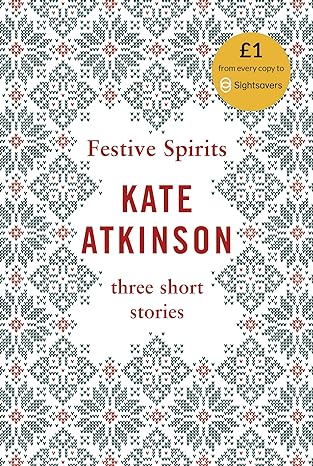
Festive Spirits by Kate Atkinson (2019) features three very short stories. It’s a small hardback which is sold in aid of Sightsavers.

Given their very concise length, I can’t say too much except they’re all as inventive and witty as you would expect from Atkinson.

In Lucy’s Day, a busy, exhausted mother attends her children’s nativity play.

“The Nativity was a dishevelled construct made mostly, as far as Lucy could tell, from lollipop sticks, cotton wool and hamster bedding. And lentils. The school used lentils a lot in its artwork, as well as pasta and beans. You could have made soup from some of the collages Beatrice and Maude brought home.”

In Festive Spirit, a woman reflects on her unhappy marriage to her successful husband and takes metaphysical steps in keeping with the time of year:

“When he was a boy he didn’t know anyone who got their hands dirty for a living. Now he was an MP everyone he knew had dirty hands.”

The final story, Small Mercies, returns to familiar domesticity and captures the sadness and loneliness experienced by so many at this time of year. But there is a glimmer of hope for middle-aged Gerald.

“It was difficult to make out his mother’s words, laced as they were with emotion and free alcohol.”

Festive Spirits is a quick but very worthwhile read. Kate Atkinson is great at short stories and these capture the time of year without sentimentality but also without any bitter irony. Highly enjoyable.

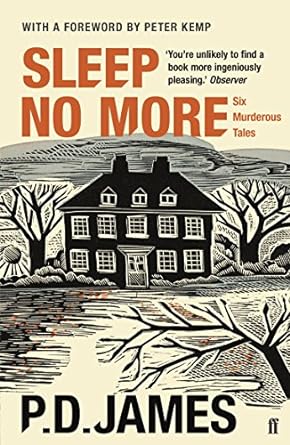
PD James’ collection Sleep No More: Six Murderous Tales (2017) features two stories set at this time of year. The Murder of Santa Claus is the longest in the collection and probably the weakest (the denouement is someone explaining to the murderer how they know they did it) but still so much to enjoy.

It begins with Charles Mickledore, an author of cosy crimes, (“I’m no HRF Keating, no Dick Francis, not even a PD James.”) looking back on Christmas 1939 when he was 16. He goes to stay with a distant relative, Victor Mickledore, in a country house, with other guests who don’t know each other that well.

There’s a faithful secretary, an aging starlet, the couple Victor booted out of their home, and a dashing pilot. There are long-held resentments regarding Victor possibly killing someone in his car and paying off his valet as an alibi.

“The paper tore apart without a bang and a small of object fell out and rolled over the carpet. I bent down and picked it up. Wrapped neatly in an oblong of paper was a small metal charm in the shape of a skull attached to a key ring; I had seen similar ones in gift shops. I opened the paper folded round it and saw a verse hand printed in capitals.”

The verse is a death threat of course, which Victor disregards and insists the Christmas traditions will go ahead as usual, including his routine of dressing up as Santa and delivering presents. The title tells us all will not end well…

It’s hard to write a satisfying whodunit in a short story form and as I mentioned, this was a bit clunky. But PD James is such a brilliant crime writer it was still highly readable, and she clearly had a lot of fun with the cosy crime tropes and characters. The Christmas setting made for a real treat too.

The first story in the collection, The Yo-Yo, also features an older man looking back on his youth and remembering a murder. The difference here being there is no mystery, as he witnessed the event directly.

“I found the yo-yo the day before Christmas Eve, in the way one does come across these long-forgotten relics of the past, while I was tidying up some of the unexamined papers which clutter my elderly life. It was my seventy-third birthday and I suppose I was overtaken by a fit of momento mori.”

It was Christmas years earlier in 1936 when he was being driven from his boarding school to spend the festive period with his indifferent grandmother, that the story takes place.

James expertly paces the story to the climax of the murder, and then demonstrates the fallout with equal precision. A recurring theme through all six stories is of people getting away with murder (no Commander Dalgliesh here to find the culprits!) and whether justice occurs only within the law, despite it, or not at all.

“We walked back to the car together, almost companionably, as if nothing had happened, as if that third person was walking by our side.”

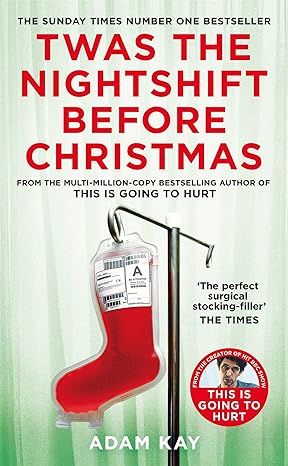
Finally, not short stories but an honourable mention to Adam Kay’s ‘Twas the Night Shift Before Christmas (2019) detailing his experiences working as a doctor over the Christmas period for several years. I haven’t read his hugely successful book This is Going to Hurt or watched the tv series with Ben Whishaw – having worked in the NHS for several years I find portrayals either inaccurate and infuriating or authentic and stress-inducing. I feared Kay’s would be the latter. But for some reason I was tempted by this little stocking filler, and he managed to take me right back, but entertain me rather than induce vicarious trauma. Highly recommended, as long as you don’t mind a lot of swearing 😀

“Sunday 26 December 2004

Full marks to the anaesthetist wearing a badge that says: ‘He sees you when you’re sleeping, he knows when you’re awake.’”

I really enjoyed my festive reads. Brona from This Reading Life has suggested we use the hashtag #ALiteraryChristmas for festive posts, so do join in if you’d like to!

To end, I’m never ahead of the game on anything, but this year I snapped up on pre-order the Christmas album by these two titans of contemporary folk music:

“The house allows one to dream in peace.” (Gaston Bachelard)

November is full of wonderful reading events and I’ve been through the TBR pulling out possibilities for Novellas in November, German Lit Month, Margaret Atwood Reading Month and AusReading Month. Given my current reading and blogging pace it’s highly unlikely that I’ll manage them all, but I’m starting today with a post for Nonfiction November hosted by Doing Dewey.

In many ways this is the least likely of all the events for me to take part in, as I read practically no nonfiction. However, last year I read the first two in Deborah Levy’s ‘living autobiography’ trilogy and absolutely loved them.  The bibliophile’s crack-den that is the charity bookshop across the road from my flat never lets me down, and when saw the third instalment in there recently of course I swooped.

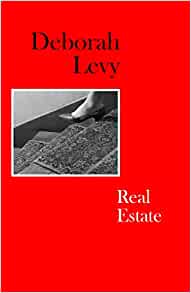
Real Estate (2021) sees Levy still living in the flat she moved to when her marriage ended, but as her children leave for university and beyond, she is trying to work out what makes a home, and whether she wants one.

“I was also searching for a house in which I could live and work and make a world at my own pace, but even in my imagination this home was blurred, undefined, not real, or not realistic, or lacked realism. I yearned for a grand old house (I had now added an oval fireplace to its architecture) and a pomegranate tree in the garden. It had fountains and wells, remarkable circular stairways, mosaic floors, traces of the rituals of all who had left there before me. That is to say the house was lively, it had enjoyed a life. It was a loving house.

[…] The odd thing was that every time I tried to see myself inside this grand old house, I felt sad.”

The themes from The Cost of Living and Things I Don’t Want to Know continue, as Levy considers how to live in a way that supports her work and enables her to authentically create her own space in middle-age, in a society that undervalues ageing and especially ageing women.

In Real Estate Levy is looking at the spaces she creates both internally and externally, and the challenge to have both reflecting and supporting the other.

“An extended family of friends and their children, an expanded family rather than a nuclear family, which in this phase of my life seemed a happier way to live. If I wanted a spare room for every friend, my flat could not support this idea. If I wanted a fireplace in every room, there were no fireplaces in my flat. So what was I going to do with all this wanting?”

She takes a fellowship in Paris for a while, living in an apartment she barely furnishes, knowing it will be transitory and focussing on her work. She visits Berlin and Mumbai and holidays in Greece. The various changes of scene don’t enable Levy to reach any conclusions about where to live, or how to reconcile her desires and needs with the practicalities entailed in bricks and mortar. But that’s not the point of these exploratory, reflective living autobiographies. Perhaps the point is that there is no answer – as we evolve and change, so do our needs, and perhaps so does the best place for us to be.

With this volume as with the previous two, Levy is a witty and challenging writer, so much fun while not shying away from serious issues and a strong feminist sensibility:

“Are women real estate owned by patriarchy?… Who owns the deeds to the land in that transaction?”

I particularly enjoyed this encounter at a literary party which she gatecrashes in London:

“A male writer of some note, but not in my own hierarchy of note, had knocked back a few too many gin cocktails. This liberated his desire to find a female writer in the room to undermine […] The truth was that he viewed every female writer as a sitting tenant on his land.”

Real Estate has been marketed as the final volume of Levy’s living autobiography and I really hope that’s not the case. She’s wonderful company.

To end, my own perennial real estate quandary is: do I leave my little London flat for somewhere cheaper so I can have a garden? I’ve been debating this for years and I will leave in the end, but here’s a warning about the perils of leaving London for a trip to the Home Counties (a bit sweary so do avoid if you’re not keen, but the lyric ‘Could you be my big spoon or are you just a bigot in Wetherspoons?’ meant I really wanted to share 😀 )

“A tree’s wood is also its memoir.” (Hope Jahren)

This week I’m joining in with Nonfiction November hosted by What’s Nonfiction. Despite not being a big non-fiction reader, I’ve been inspired by the month long event and also by Novellas in November, hosted by Cathy at 746 Books and BookishBeck. So I’m reading some short nonfiction to take part in both at once 😊

I’ve really enjoyed the novels by Deborah Levy that I’ve read: Swimming Home and Hot Milk. The first two volumes of her ‘living autobiography’ have been languishing in the TBR, so I’m grateful these two reading events prompted me to pick them up.

The first volume, Things I Don’t Want to Know (2013, 163 pages) is a response to George Orwell’s essay Why I Write, using the same headings (political purpose/historical impulse/sheer egoism/aesthetic enthusiasm). However, I think it’s also very much in conversation with Virginia Woolf’s A Room of One’s Own, as Levy considers what it means to be a professional writer for women in the twenty-first century.

“A female writer cannot afford to feel her life too clearly. If she does, she will write in a rage when she should write calmly.”

Yet the ‘living autobiography’ is written in the midst of events, without the distance of hindsight. This means the writing has an immediacy and is highly engaging, but there is also the discipline and consideration that comes from Levy being such a highly skilled writer.

The two sections that bookend the essay see Levy in Majorca at a time when she is deeply unhappy, finding herself crying on escalators. She escapes to Palma to think about her life, and also her art and the influence of other female artists. With Zofia Kalinska she observes:

“Content should be bigger than form – yes, but that was a subversive note to a writer like myself, who had always experimented with form, but it is the wrong note for a writer who has never experimented with form.”

While Things I Don’t Want to Know doesn’t follow a usual form for essay or memoir – it’s non-linear, never sets out a clearly-stated argument and hops between memories and broader observations – the content does remain bigger than form, because Levy’s observations are so sharp and her memories clear-sighted and unsentimental.

If I’m making this sound very heavy then I’m doing Levy a disservice, because she is humorous and has a wonderfully light touch. For example, she repeatedly returns to Duras in her artistic considerations, but wonders:

“Was Marguerite Duras suggesting that women are not so much a dark continent as a well-lit suburb?”

There is a strong feminist sensibility that runs throughout Things I Don’t Want to Know. In responding to Orwell, Levy highlights the very different experience of trying to work alongside the particular expectations and responsibilities faced by many women.

“We were to be Strong Modern Women while be subjected to all kinds of humiliations, both economic and domestic. If we felt guilty about everything most of the time, we were not sure what it was we had actually done wrong.”

In the Historical Impulse section, Levy reflects on her childhood in South Africa, where her father was imprisoned for being part of the African National Congress. As a child much of what is happening goes over her head though she also picks up on plenty; I found her portrait of her godmother’s daughter (who has to hide her relationship with her Indian boyfriend) very affecting:

“Melissa was the first person in my life who had encouraged me to speak up. With her blue painted-on eyes and blonde beehive that was nearly as tall as I was, she was spirited and brave and making the best of her lot. I couldn’t hear her but I knew her words were to do with saying things out loud, owning up to the things I wished for, being in the world and not being defeated by it.”

In the Sheer Egoism section, Levy moves to England with her family, and starts scribbling on paper napkins in cafes, not sure what she is doing but certain she has to write.

“Writing made me feel wiser than I actually was. Wise and sad. That was what I thought writers should be. I was sad anyway, much sadder than the sentences I wrote. I was a sad girl impersonating a sad girl.”

The Cost of Living sees Levy leaving her marriage and moving into a flat with her daughters. We learn very little about her husband or her marriage – which I was quite happy about – and instead Levy takes us with her as she considers what she wants from life and how she wants to live.

“Chaos is supposed to be what we most fear but I have come to believe it might be what we most want.”

The flat is not glamorous – visitors are creeped out by the communal areas Levy nicknames The Corridors of Love. She buys some plants, fixes her own plumbing, and works to her own hours.

“After all the heavy lifting, it was shock to be figuring out how to land the cadence of one single sentence”

Levy does not give the impression of being happy – she is grieving the breakdown of her marriage and she is very aware that she has not taken the easy choice – but she is living authentically. It is more sustainable and rewarding than fleeting happiness.

“To become the person someone else had imagined for us is not freedom – it is to mortgage our life to someone else’s fear.”

The strong themes of feminism, womanhood and the life of a writer established in Things I Don’t Want to Know continue through this volume. Levy has left behind the roles of Wife and Homemaker. She remains a mother but her children are older and don’t need her quite as they did.

“It was possible that femininity, as I had been taught it, had come to an end. Femininity, as a cultural personality, was no longer expressive for me. It was obvious that femininity, as written by men and performed by women, was the exhausted phantom that still haunted the early twenty-first century.”

Levy is a daughter and the section about her mother dying is very moving. She is also a friend and therefore not alone: her friend Celia helps her by providing the writing shed where her late husband (the poet Adrian Mitchell) used to work. Levy writes there trying to stay warm and listening to apples thud onto the roof.

At no point is The Cost of Living didactic. Levy doesn’t suggest for one moment that anyone should make the same choices she has. The title is literal and metaphorical: she has to work to earn money as this is a very real concern, but simultaneously to feel she is truly living there has been the cost of her marriage. All choices bring associated costs.

But with the right choices those costs are price worth paying. Levy is living her truth, has friends and fun, and she finds great meaning in her work:

“It is always the struggle to find language that tells me it is alive, vital, of great importance.”

I really loved both these volumes. Levy is so wise, funny and readable. She is never boring or pedestrian. The interesting choices she has made in life are reflected in the engaging choices she makes with her writing. I’m looking forward to reading the third volume of these memoirs, Real Estate, which was published this year.

To end, a song about a woman assessing her life choices: