“Men are my hobby—if I ever got married, I’d have to give it up.” (Mae West)

My last post was about a romantically-involved couple for Valentine’s Day; this week I thought I’d look at a single person status much distrusted throughout literature: that of the spinster. Both my spinsters are inhabitants of beautiful Bristol, which I’d like to claim was down to well thought-through post-planning on my part, but was actually a total coincidence.

My first choice is the wonderful Miss Mole, titular heroine of the 1930 novel by EH Young. Hannah is in her late thirties, alone and shabby and the envy of no-one, yet she is a robust character who finds ways to survive and even enjoy life.

“She judged herself by the shadow she chose to project for her own pleasure and it was her business in life – and one in which she usually failed – to make other people accept her creation. Yes, she failed, she failed! They would not look at the beautiful, the valuable Hannah Mole: they saw the substance and disapproved of it and she did not blame them: it was what she would have done herself and in the one case where she had concentrated on the fine shadow presented to her, she had been mistaken.”

She is not delusional, rather she refuses to see herself as others see her -and why should she?

“This capacity for waiting and believing that the good things were surely approaching had served Hannah very well through a life which most people would have found dull and disappointing. She refused to see it so: it would have been treachery to herself. Her life was almost her only possession and she was as tender with it as a mother”

There is a strong streak of mischief in Hannah Mole too, and she enjoys teasing her well-to-do cousin Lilla, who finds her a job as a housekeeper to the reverend Robert Corder and his daughters Ethel and Ruth. This is not a remotely romantic set-up though. Corder is good at his job but he is also vain and self-centred, and enjoys his position in society because it means few people challenge him. Hannah sees him unblinkingly, and he does not like her.

“it would have horrified him to learn that he could not judge a clever or plain woman fairly. A clever one challenged him to combat in which he might not be the victor and a plain one roused in him a primitive antagonism. In failing to please him, a woman virtually denied her sex and became offensive to those instincts which he did his best to ignore.”

Hannah decides to improve things for his unhappy daughters, and feels a bond with his dead wife as she sets out to do so. She will manage things successfully, but in her own inimitable way:

“Hannah was not scrupulous about truth. She was not convinced of its positive value as human beings knew it, she considered it a limiting and an embarrassing convention.”

Hannah is realistic, but also hopeful and not remotely self-pitying. We also learn early on that she is brave, rescuing a suicidal man by smashing a window. She and a fellow tenant in her boarding house, Mr Blenkinsop, conspire to improve things for the man’s family, despite appearing to communicate at cross-purposes a great deal of the time. As she makes things work out for those around her, I really wanted things to work out for Hannah too, despite a shadow from her past looming – I think I viewed her with more compassion than she allowed herself:

“The desires, the energy, the gaiety were there, but they were ruled by an ironic conception of herself”

I really enjoyed spending time with Miss Mole. It’s a gentle novel, but it also doesn’t hide away from the realities of life for single women who are no longer young and without much money in the first half of the twentieth century, and how a judgemental society limits their choices.
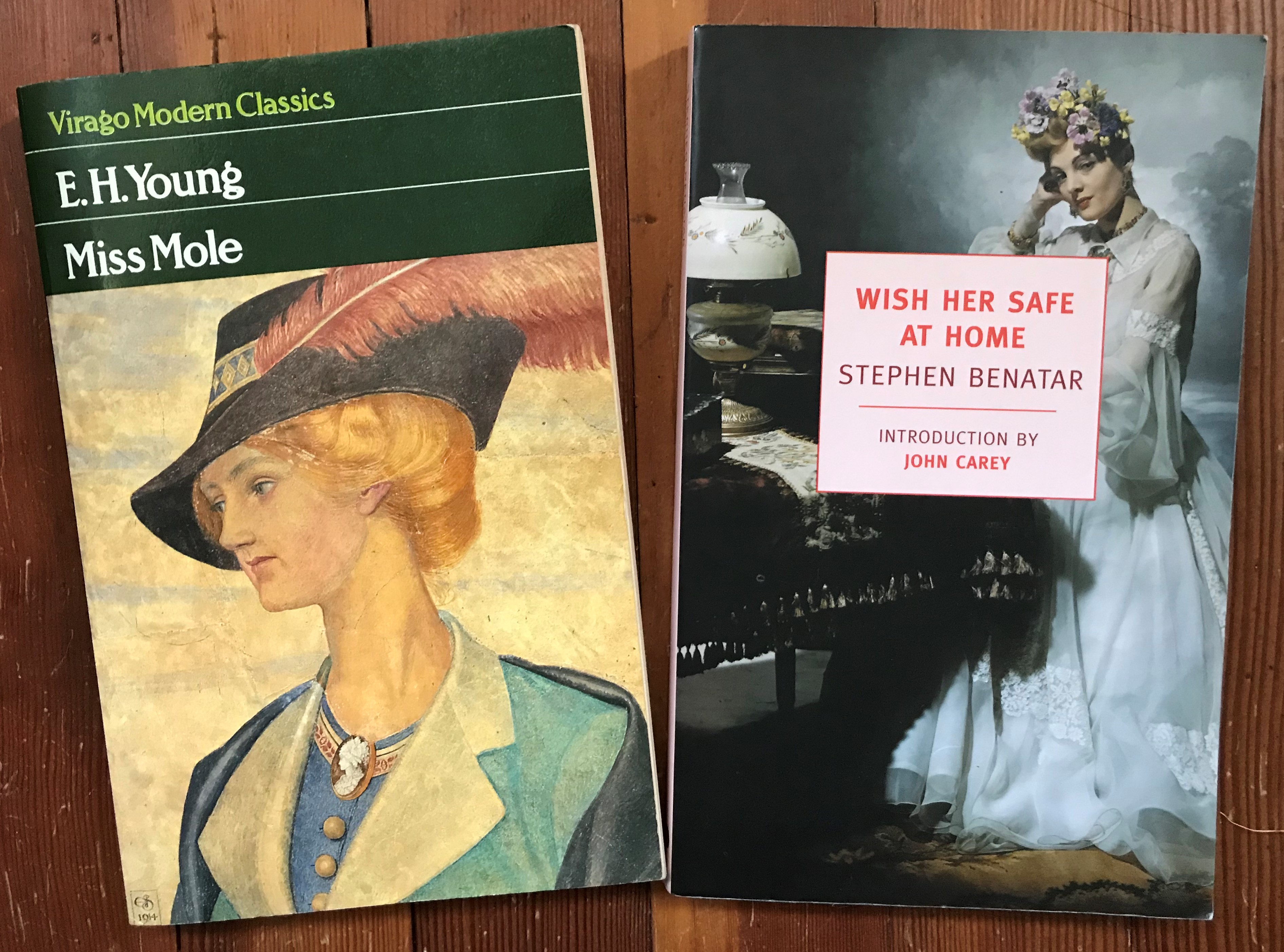
Secondly, a spinster who would probably have done better without much money, Rachel Waring in Wish Her Safe at Home by Stephen Benatar (1982).  Rachel is in her late 40s with a boring job and a flatshare in London. Then her Great Aunt Alicia dies and leaves her a house in Bristol, and everything changes.

“And the hitherto dull, diffident, middle-aged woman who said to the taxi driver ‘Paddington please,’ felt in some respects more like a girl of seventeen setting out for exotic climes”

Rachel moves into the house and is determined to make the best of this fresh start:

“I had often discovered the secret of happiness: courage on one occasion, acceptance on another, gratitude on a third. But this time there was rightness to it – certainty, simplicity – which in the past mightn’t have seemed quite so all-embracing. Gaiety, I told myself. Vivacity. Positive thinking. I could have cheered.”

Gradually however, this vivacity spills over into something more. She becomes obsessed with the slave trade reformer Horatio Gavin who lived in her house centuries ago. She sees a portrait in a shop she believes to be him:

“I saw the portrait in the window.

I laughed out loud. I laughed right there, standing on the pavement, a spontaneous burst of laughter that was partly the effect of my ecstatic recognition of him and partly an aid to his more sober recognition of me

Wish Her Safe At Home details Rachel’s descent into serious mental illness. It is brilliantly done. Rachel begins as eccentric and gradually becomes truly unwell. The description of seeing the portrait is a perfect example. Most of us at some point have lost our filter in public: suddenly laughing at something remembered, or saying something out loud which we didn’t mean to. There are often experiences that we believe to be serendipitous for one reason or another. But Rachel suddenly takes this experience a step further in believing the portrait recognises her.

A novel from the first-person perspective of someone who is losing their mind is a tough read. I found it really got under my skin, more than any novel I’ve read in a long time. The first-person perspective also works brilliantly in positioning the reader in a place not exactly like Rachel’s, but certainly confused and paranoid on her behalf. There is a young couple, Roger and Celia who seem to like Rachel – why? Are they after her house? Do they feel sorry for her? Are they playing her from the start? Are they completely oblivious? Rachel’s unreliable narration means we cannot be sure.

“I don’t know when the following dialogue took place. Somehow it seems cut adrift from time, like a rowboat quietly loosened from its moorings, while its occupant, entranced, oblivious to each hill or field or willow tree upon her way lies whitely gleaming in her rose embroidered silk, trailing a graceful hand and sweetly carolling beneath a canopy of green”

That passage is meant to be overblown: Rachel is such a desperate character. Her delusions are romantic and an attempt to grasp a life so far half-lived, before it is too late. There’s nothing vindictive or cruel in her, and she is so incredibly vulnerable.

“Sometimes I felt utterly convinced I had been singled out for glory.

But not always. Far more often I felt I simply didn’t stand a chance”

I’ve not remotely done justice to the power, skill and subtlety of Wish Her Safe At Home. All I can say is: read it.

To end, the trailer for the film that apparently inspired Wish Her Safe at Home. The Ghost and Mrs Muir has had a special place in my heart since childhood. In all the times I’ve seen it, it’s never occurred to me that Mrs Muir is mentally ill. Wish Her Safe at Home has made me question everything…

“Insanity – a perfectly rational adjustment to an insane world.” (R. D. Laing)

Some friends of mine recently got married in a beautiful venue, which used to be a mental health hospital. A lovely time was had by all. People were struck at how nice it was, and it got me wondering: why? Were they expecting the institution to be grim in itself, or was it the thought that somehow all that pain remains and would be felt? It seemed to be a bit of both. Clearly the idea of a place where mental health is treated is a powerful one. It’s no surprise then, that it’s proved a tempting choice for writers, so it’s led me to this week’s theme of novels set in mental health units. Rest assured Reader: although powerful, neither of my choices are depressing. At this time of year it can feel like everyone’s mental health is under siege and we just don’t need it. In fact, here’s a little pick-me-up for us all:

On with books! Firstly, All Dogs Are Blue by Rodrigo de Souza Leao (2008, trans.Zoe Perry and Stefan Tobler 2013). This novella is only 107 pages long but it is one of the most affecting and powerful pieces I have ever read. Rodrigo de Souza Leao died in a psychiatric clinic in Rio de Janeiro in 2009, shortly after this was published. All Dogs Are Blue takes the reader into life inside such an institution, and does so with an unblinking gaze, humour, warmth and blistering truth.

The narrator is 36-year-old man who has swallowed ‘a chip’ which alters his behaviour. This has led to his incarceration. There isn’t a plot, it wouldn’t make sense if there was. Instead, the narrator takes us through his daily experiences and reminiscences about his past.

“The Christian says hallelujah. She takes my hand. I take out my dick and can’t play snooker. I go back to my nine-by-twelve cubicle, where they put me to smile bayoneting my veins. Grab the flesh, stretch the flesh, shove another injection in.”

The narrator never tries to convince us of his sanity. Rather, we are given his world view, one which is sometimes shocking in its clarity amongst flights from reality:

“If it could bark and eat, what would a blue dog eat? Blue food? And if it got ill. Would it take blue medicine? A lot of medicines are blue, including Haldol. I take Haldol to be under no illusions that I’ll die mad one day, somewhere dirty, without any food.”

Despite detailing an individual in dire circumstances, All Dogs Are Blue is not a depressing book. This is because the narrator is resilient and self-aware, even as he experiences psychotic delusions. There is humour found in his hallucinatory companions, nineteenth century French writers:

“Rimbaud wasn’t used to modern stuff, He was a guy from another time. He had to learn everything. He’d never written another poem. But he was a good companion for wasting away the hours and for poker.”

Whereas Baudelaire can be a bit more moody.

De Souza Leao also writes with great beauty and poetry:

“Everything went green like the colour of my brother Bruno’s eyes and the colour of the sea. Rimbaud was happy and decided not to kill himself.

Everything went Van Gogh. The light of things changed.”

But the humour and the poetry do not detract from the pain. Rather, they capture it in the most effective way to draw you in to begin to understand an extreme experience that thankfully, most of us will not endure.

“I break everything because I’m made of shards and when the shards invite me to, I wreak havoc.”

Through an individual experience, the wider issue of how we treat the mentally ill is addressed. De Souza Leao doesn’t offer answers but he poses uncomfortable questions about institutionalised mental healthcare:

“Mostly, they only wanted you to keep your mouth shut all the time, like no-one deserved to hear you say anything noble or important.”

All Dogs Are Blue is a stunning, heartbreaking novella. It is also yet another example of the brilliant work being done by not-for-profit publishers And Other Stories bringing translated fiction to a wider audience.

Secondly, a novel which examines the impact on family when a member has enduring mental ill health, The Gravity of Love by Sara Stridsberg (2014, trans. Deborah Bragan-Turner 2016). I was inspired to pick this up after reading Kate’s wonderful review. It’s also another stop on my Around the World in 80 Books Reading challenge, hosted by Hard Book Habit. Narrated by Jackie, it tells of her relationship with her alcoholic father Jim, who is an inpatient at Beckomberga Hospital in Stockholm. This was one of the largest mental health hospitals in Europe, but was closed in 1995 as the focus on care shifted to the community.

Image from here

Jackie finds herself drawn to her father and to the hospital, visiting repeatedly throughout her young life, despite the pain it causes.

“The light that has always been in his eyes is there no longer. The beautiful, terrifying desolate light that spilled over, illuminating the night around him and betraying a special kind of intensity and recklessness, something unstoppable, a raging fire, the sheerest drop.”

Stridsberg is excellent at capturing the complexities of loving someone who is hell-bent on self-destruction; the contradictory state whereby the person and what they seem to promise constantly shifts and hope of a better future never quite dies.

“All at once he sounds like the Jim I find so hard to remember, the way he was before the alcohol, before the devastation; if there really is such a thing as before.”

Jim is treated with compassion but the selfishness of his behaviour is not shied away from. He is the alcoholic but the disease that affects far more than just him:

“Every morning, a great despondency in his chest that stretches out like a wasteland. A blazing sun within him, his blood screaming for the warmed brandy running through his veins.”

Jackie makes highly questionable decisions herself and while this is clearly due to Jim’s impact on her life, Stridsberg is wise enough to present these decisions as they stand and not pull them apart in trite pseudo-psychological interpretations. We never entirely understand what draws Jackie relentlessly back to Beckomberga, because she doesn’t entirely understand it herself.

“Each time I walk through the hospital gates the rest of the world slides away, like the tide that recedes to lay bare another shoreline”

The Gravity of Love is about families, about how they make us who we are and how we make us who we are. Stridsberg explores a variety of familial relationships with great subtlety, but it is also a story of individuals’ relationships with institutions. Jackie’s relationship with Beckomberga is complex, and similarly, the inpatients’ relationship with the hospital is shown to be ambivalent, both supportive and restrictive:

“People say that former patients keep returning to Clock-House Park at Beckomberga, that they stand under the trees with their hands pressed on the sun-bleached walls, as if the institution’s heart were still beating within – a weak human pulse against my hand when I touch the faint blood-red colour of the façade.”

The fate of the last patient of the hospital, Olaf, is a sad one and this description of his experience just absolutely floored me:

 “He has always walked alone with the stamp of illness imprinted under his skin, visible to all apart from himself. Whenever he has approached a girl she has shied away. Every time he has offered his hand to someone it has been construed as hostile and he has been banished back to the hospital.”

Although very different from All Dogs Are Blue, Stridsberg is similarly challenging in her questions around how we treat mental illness: institutionally, societally, politically and individually. A beautifully written, poetic novel that never lets the style detract from the substance.

To end, I promised a return to 80s pop videos this week, and so I thought I’d pick an artist who has been very open about his experience with bipolar disorder. The fact that I’ve been in love with him for 37 years did not influence my choice in the slightest 😉

“There’s no such thing as autobiography, there’s only art and lies” (Jeanette Winterson) or “The poets have been mysteriously silent on the subject of cheese.” (G. K. Chesterton)

Recently I fell subject to one of those viruses that seems never ending.  Basically for about two and half weeks I was behaving like this:

200

(Only with much less impressive cheekbones). I wouldn’t bother mentioning it, stoic that I am, except it meant I had to turn down a last-minute ticket to see Zoe Wanamaker in Stevie, Hugh Whitemore’s play about the life of the poet Stevie Smith.  I love Zoe Wanamaker and I’m sure she’d be great as the idiosyncratic Smith, so I did not take this in my stride:

200 (1)

(Only with much less impressive cheekbones). So to compensate for my loss, I’m going to look at two other instances where the lives of poets have been imagined, in a novel and in a play.

Firstly, John Clare (and to a lesser extend Alfred Lord Tennyson) as imagined by Adam Foulds in The Quickening Maze (Vintage, 2009), which was shortlisted for the Booker Prize in 2009.

NPG 1469; John Clare by William Hilton

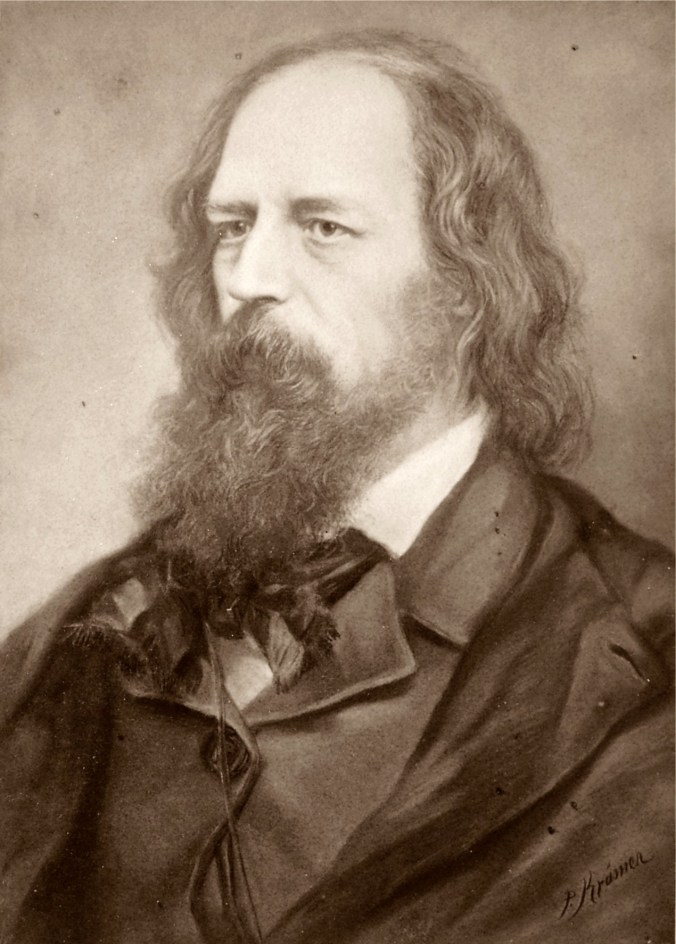
Alfred_Tennyson.

John Clare suffered with poor mental health for most of his adult life, and for a time was an inpatient at High Beach Asylum in Essex.  The Tennyson brothers move nearby as Septimus is being treated for depression, but thankfully this isn’t an excuse for Foulds to create conversations on the nature of poetry between the two versifiers (can you imagine? ‘What think you Clare, of this long poem of mine?’ ‘Will you permit me Alfred, to suggest In Memoriam is better name than My Friend Hallam What Died?’ Ugh.  OK, so Foulds would never be that bad, but sometimes these things can be so clumsy as to become comical).

Instead Foulds looks at the lives contained within and without the asylum, and the nature of their various freedoms and restraints.  Alongside the patients live the profligate Dr Allen, who has progressive ideas on treatment but lacks the focus to truly push things forward; his daughter Hannah, desperate for freedom but unsure how to get it other than by marrying; the grieving Tennyson yearning for his dead friend and for critical approval; and of course Clare, the ‘peasant poet’, determined to leave the built environment of the asylum for the forest beyond:

“As he worked in the admiral’s garden…being there, given time, the world revealed itself again in silence, coming to him. Gently it breathed around him its atmosphere: vulnerable, benign, full of secrets, his.  A lost thing returning. How it waited for him in eternity and almost knew him. He’d known and sung it all his life.”

Things begin to unravel: Clare becomes progressively more deluded, the doctor veers towards bankruptcy again, Hannah harbours fantasies regarding Tennyson which amount to nothing. But The Quickening Maze is a novel of quiet, closely observed drama of domestic life (despite the asylum and famous poets), rather than enormous, declamatory moments:

“From her window, Hannah could see Charles Seymour prowling outside the grounds, swishing his stick from side to side. Boredom, a sane frustration, a continuous mild anger: Hannah thought he looked like a friend, someone whose life was as empty and miserable as her own…he raised a hand to lift his hat and found he wasn’t wearing one.  He smiled and mimed instead. Hannah gazed for a moment down at his shoes and smiled also.”

Foulds is an accomplished poet himself, and this shows itself in tightly constructed prose full of startling images:

“She liked the pinch of absence, the hollow air, reminiscent of the real absence. She wanted to stay out there, to hang on her branch in the world until the cold had burned down to her bones. She could leave her scattered bones on the snow and depart like light.”

The result is a tightly plotted novel that maintains a contemplative, elegiac quality: perfect for the poets it captures.

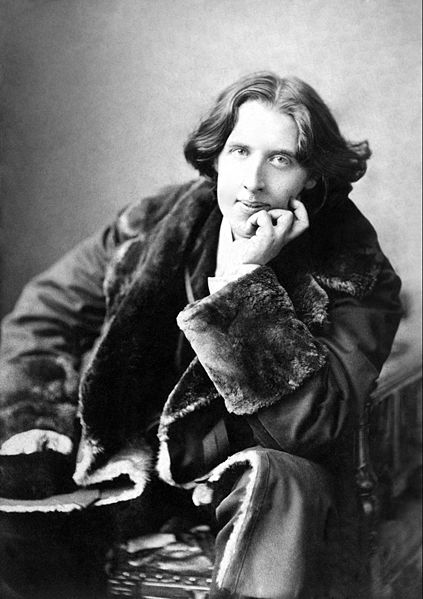
Secondly, Oscar Wilde, as imagined by David Hare in The Judas Kiss, which premiered at the Almeida in 1998.

423px-Napoleon_Sarony_-_Oscar_Wilde

The story of Oscar Wilde is so well-known, it can be difficult to imagine what more there is to be said on it.  What Hare gives his audience is an Oscar past his prime, bruised and sad, the architect of his own downfall.  The first act sees Wilde staying in London to face the court over allegations he is gay (which was illegal at the time) while his friends urge him to leave:

“Ross. Oscar, I’m afraid it’s out of the question. You simply do not have time.

Wilde. Do I not?

Ross. You are here to say your goodbyes to Bosie.

Wilde. Yes of course.  But a small drink, please, Robbie, you must not deny me.

Ross. Why, no.

Wilde. And then, of course I shall get going. I shall go on the instant.

Arthur. Do you want to taste, sir?

Wilde. Pour away. Hock tastes like hock, and seltzer like seltzer. Taste is not in the bottle. It resides in one’s mood. So today no doubt hock will taste like burnt ashes. Today I will drink to my own death.”

The knowledge we have of the outcome, rather than resigning us to Wilde’s fate, actually adds to the dramatic urgency.  I found myself desperately rooting for Ross, wishing Oscar would listen, that somehow the outcome would be different and he wouldn’t stay long enough to allow the courts to give him a two year sentence. But Wilde is stubborn, proud, defiant, and wonderful, as his selfish, weak lover Bosie testifies:

“You have wanted this thing. In some awful part your being, you love the idea of surrender.  You think there’s some hideous glamour in letting Fate propel you down from the heights!”

But Bosie doesn’t want Wilde to leave, rather stay and fight his battles for him with his father, the Marquess of Queensbury, who is  challenging Wide in court.  Between his own wilfulness and Bosie’s self-interest, Wilde agrees to stay…

In the second act we are in Italy with a Wilde after he has left prison and moved abroad “grown slack and fat and his face is ravaged by deprivation and alcohol”.  Bosie is enjoying himself with the local beauties, while Wilde is isolated and contemplative:

“I am shunned by you all, and my work goes unperformed, not because  of the sin – never because of the sin – but because I refuse to accept the lesson of the sin.”

The Judas Kiss is a tragic play, but not in the usual sense.  No-one dies, there is no physical violence, and yet we witness betrayal, destruction and loss.  It’s heart-breaking, and at the centre of it all is the great genius of Oscar Wilde, who we witness fading away.

To end, the words of a poet rather than words written about them. Wilde responded to this trauma through his art, and created The Ballad of Reading Gaol: